
Octave of Christmas, day eight. Solemnity of Mary Mother of God. H/T Megan Smith.
Author: Western Horse Watchers
‘Swamp Cancer’ Claims More Chincoteague Ponies
Four horses infected with the disease, formally known as pythiosis, did not respond to treatment and were put down last week, according to a syndicated report that appeared yesterday in the Winston-Salem Journal.
A veterinarian interviewed for the piece suggested that the ailment was spreading northward (from southern states) because of a ‘changing climate.’ Good grief.
Mustang Monday
On Big Summit WHT. Not a fight, just horses being horses. H/T Joe Hudspeth.
Fence Post Replaced, Finally
Four by six treated post failed in May, 2018, probably because one of the horses put his butt to the fence to scratch it. Installed October 2103, replaced 12/28/18.
Step 1: Gather tools and materials. Best way to carry eighty pound sacks of cement to the job site? Your tractor.

Step 2: Dig the hole. The fence tells you where.
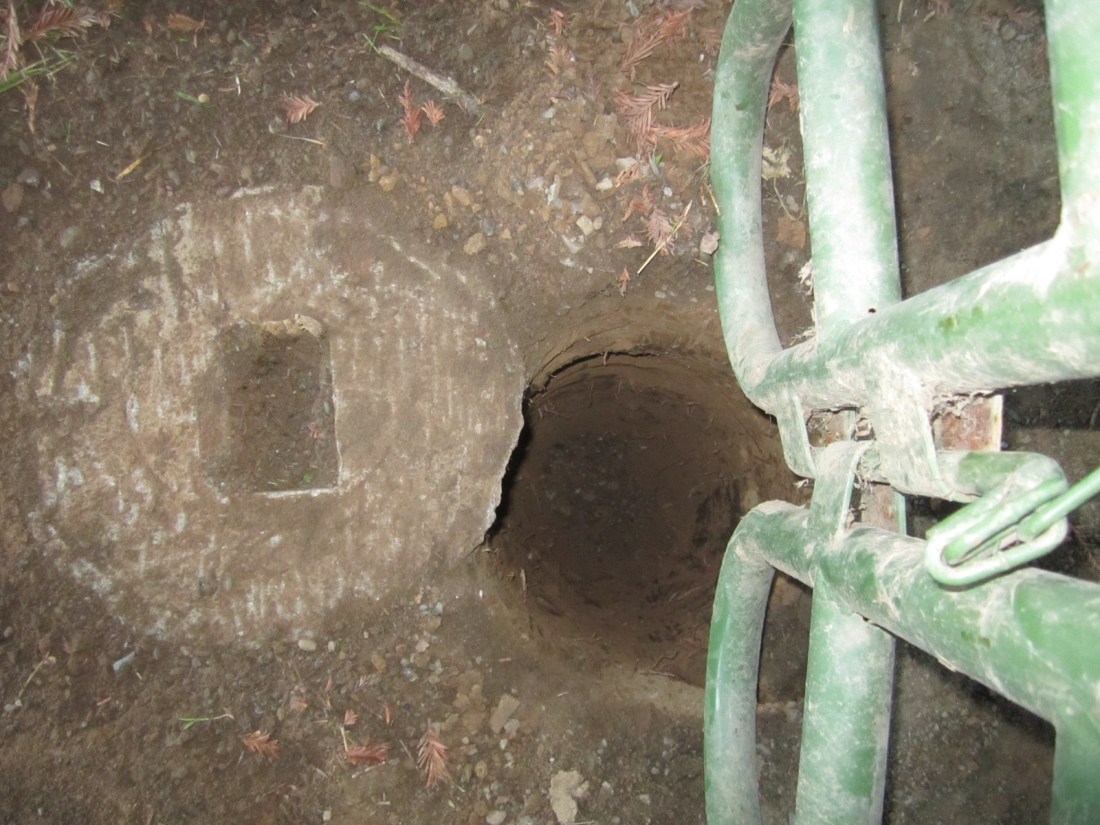
Step 3: Check depth of hole. Top of post should be at top of fence, in this case about 64″ above grade. Hole should be deep enough to place a few inches of gravel at the bottom so the post does not rest on soil. Don’t cut the post, dig the hole deeper.

Step 4: Use a level to plumb the post. Mix the cement and place in hole. In this photo, a wood block braces the new post against the old concrete.

Step 5: If your pipe panels have loop legs, be sure to press them into the concrete before it hardens. Make sure the depression can drain into the surrounding soil. Top of concrete should be slightly higher than grade, so rainwater runs away from the post.

Step 6: Secure the fence to the new post. A U-shaped metal strap with two 1/4″ lag bolts should work. You can see one near the top of the first post in this photo. The new post is next in line.

In this corral, the pipe panels are supported at every other junction. Steel rods were pounded into the ground where not supported to keep the horses from pushing those sections out (the pinned joints act like hinges). You can make the rods from #4 rebar or larger. Drive them in on the outside of the leg until flush with the top of the loop.
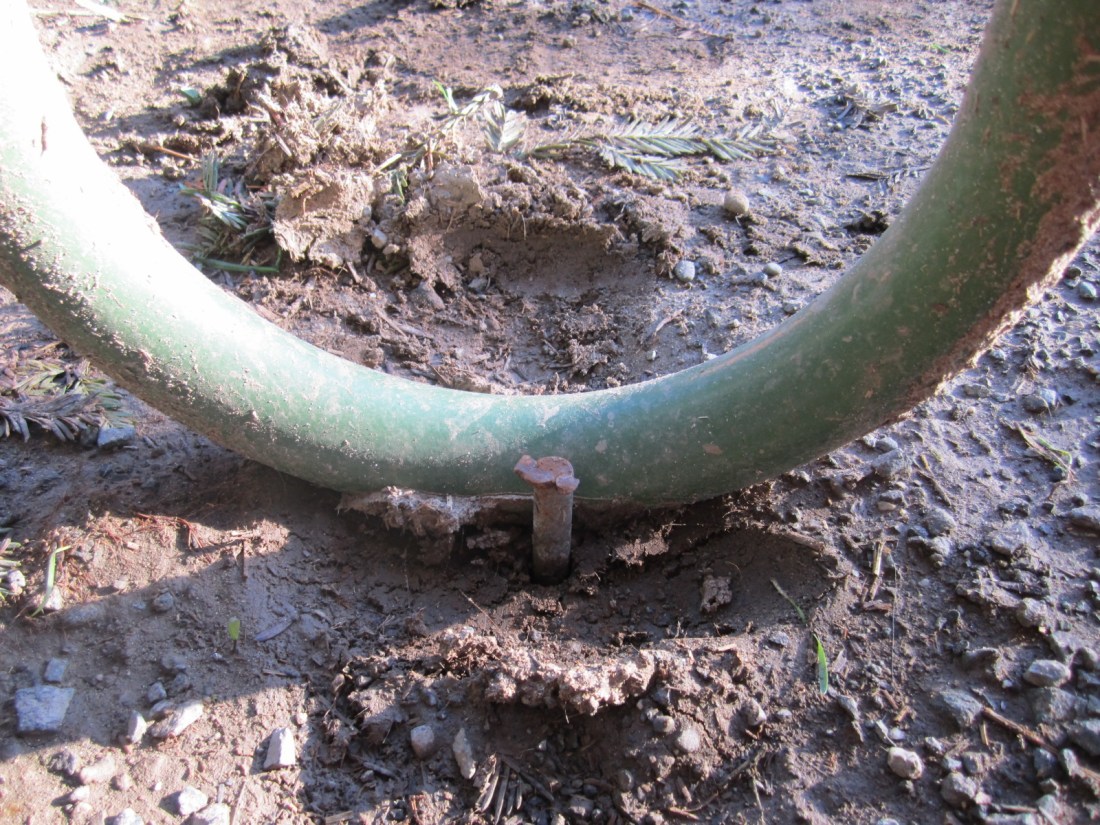
Technical note: The 4×6 posts in this corral were oriented with the broad side facing the pipe panels, to accommodate the U-shaped straps. The posts would do a better job of resisting the horses if their narrow side was put toward the fence. But you’d have to find another way to secure the panels to them, such as drilling holes through the vertical members and lagging them directly to the posts. Straps have more ‘give,’ which is nice when horses lean against the fence or ground conditions change from wet to dry. The face-to-face spacing between 6×6 posts on a 12′ gate can change 1/4″ or more between summer and winter in this area.
Joy to the World
Octave of Christmas, day six. Feast of The Holy Family. H/T Megan Smith.
In Search of the Salt River Horses
They’re overpopulated, don’t ya’ know? H/T Carol & Gary’s See America Tour.
Big Bands on Onaqui Mountains
No, it’s not Glenn Miller’s birthday. H/T Flyin T Hangin A.
RELATED: BLM Puts Crosshairs On Onaqui Mountain Horses.
Mustangs Share Trail with Hiker
On the south edge of Little Bookcliffs WHR. H/T Dylan Brewer.
O Come All Ye Faithful
Day four of the Octave of Christmas. H/T Megan Smith for the video.
South Dakota Sanctuary Stuck with Conservation Easement
The highest court in the state has upheld a circuit court decision to dismiss a lawsuit brought by the Black Hills Wild Horse Sanctuary to cancel a conservation easement granted to The Nature Conservancy. The easement limits the use of 8,300 acres of sanctuary land, according to a report that appeared today in the Washington Times.
The sanctuary received $230,000 in exchange for the easement.
The report did not indicate who owns the 8,300 acres, what uses were prohibited, and if the ruling would be appealed.
In a related story, seventeen wild horses arrived at the sanctuary in October after being removed from the Fort Polk army base in Louisiana.
Volunteers Seek Fencing for Sand Wash Horses
Commissioners in Moffat County, CO are concerned about public safety on state route 318 due to recent collisions between vehicles and wild horses. Personnel from Wild Horse Warriors have asked for fencing but officials want a solution that satisfies all stakeholders. Refer to this story, posted today by the Craig Press.
What Child Is This?
Day two of the Octave of Christmas. H/T Megan Smith.
Two-State Solution on Western Rangelands: Ain’t Gonna Happen
Not when the other party, and many of your so-called supporters, want you wiped off the map.

No goodwill, no peace.
RELATED: Arab-Israeli Conflict Plays Out on Western Rangelands.
On Her Timeline
Momma mustang on Christmas Day, freeze mark obscured by winter coat. Still can’t touch her. Worth the wait.

What is the Flehmen Response?
It’s a curling of the upper lip to enhance the sense of smell. Photo taken 12/25/18.

Heber Management Plan Drafted
A working group, chartered by Arizona State University, has created a blueprint for managing the 19,700 acre Heber Wild Horse Territory, according to a report that appeared today in the White Mountain Independent of Show Low, AZ.
The proposal, assembled by a diverse group of citizens under the guidance of professional facilitators, will be reviewed by the Forest Service.
A management plan was mandated in 2007 when the WHT was established. The goal is to balance the needs of horses, livestock and wildlife relative to the available resources.
Approximately 300 wild horses live in the territory, for a population density of 15 animals per thousand acres. That figure differs appreciably from the typical one animal per thousand acres on HMAs, many of which lie in the Great Basin.
The article did not indicate how many cattle are allowed in the WHT.
“There is also perception that ranchers don’t want any horses on the landscape because of alleged overgrazing from horses that impacts cattle forage abundance, water, etc.”
It’s not a perception, it’s the truth.
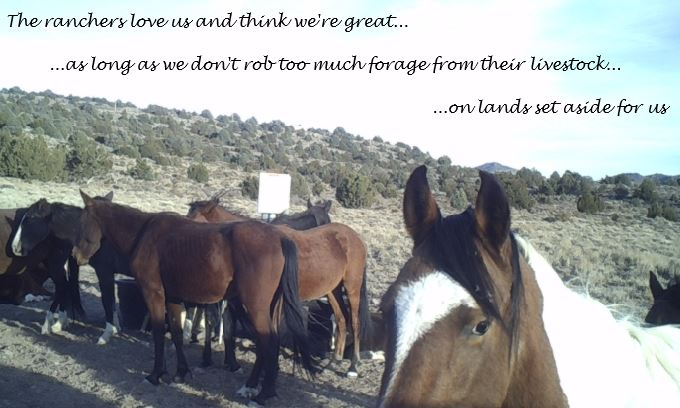
Things may turn out well for the horses if the stakeholders and regulatory agencies remember that’s it’s a HORSE TERRITORY not a cow territory.
RELATED: Conflict Between Livestock and Horses Plays Out at Heber WHT.
No Room at the Inn
The stars in the sky looked down where He lay, the little Lord Jesus asleep on the hay.
Placitas Horse Freed from Gully
A wild horse trapped in an arroyo near Placitas, NM was rescued by volunteers who called in a backhoe to cut a ramp so the horse could climb out. H/T JD Reynolds.
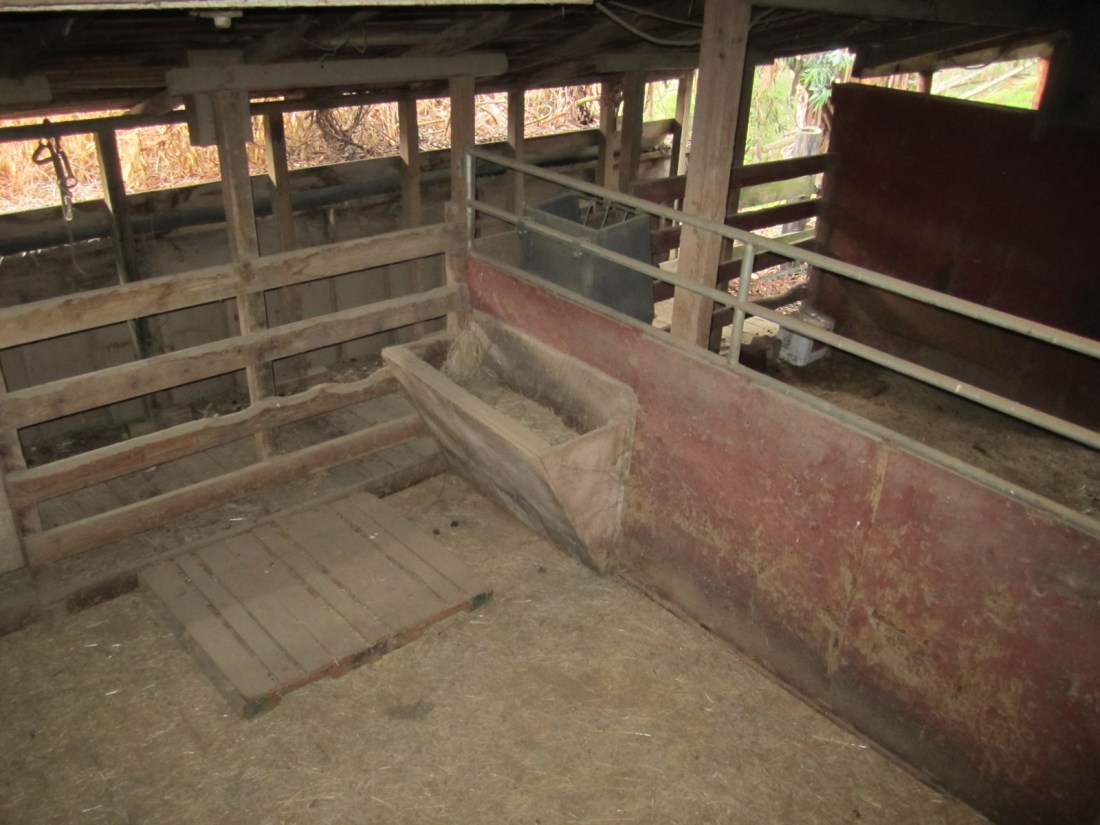
What is a Manger?
It’s a feeding trough for animals, commonly found in barns.
A light should be on in every room tonight. The inn may be full but there’s room in your home for a Savior, correct? In your heart?
Message of Christmas
Hell is real and people go there but it need not be you. Video produced in 2010 by Real Catholic TV, forerunner of Church Militant.

