
On the Virginia Range with John T. Linn.
Author: Western Horse Watchers
Fish Springs Context
The story of the roundup has been going around on socialist media for several weeks and many of the followers are upset, understandably.
But the report by KOLO News didn’t provide any background on the situation.
The local ‘advocacy’ group now crying “Foul!” actually called for the removal of ten bachelor stallions from the area a year ago.
When they’re not photographing the horses, they’re shooting them with contraceptives.
Who benefits from this? Certainly not the horses.
RELATED: BLM Nabs Fish Springs Mustangs.

AWHC Reviews 2019 Results
What exactly have they done to push back against the public-lands ranchers?
Not a damn thing.
Yet they’re doing everything they can to destroy the Virginia Range mustangs—the herd that defies the wild horse narrative and contradicts the lies of the BLM.
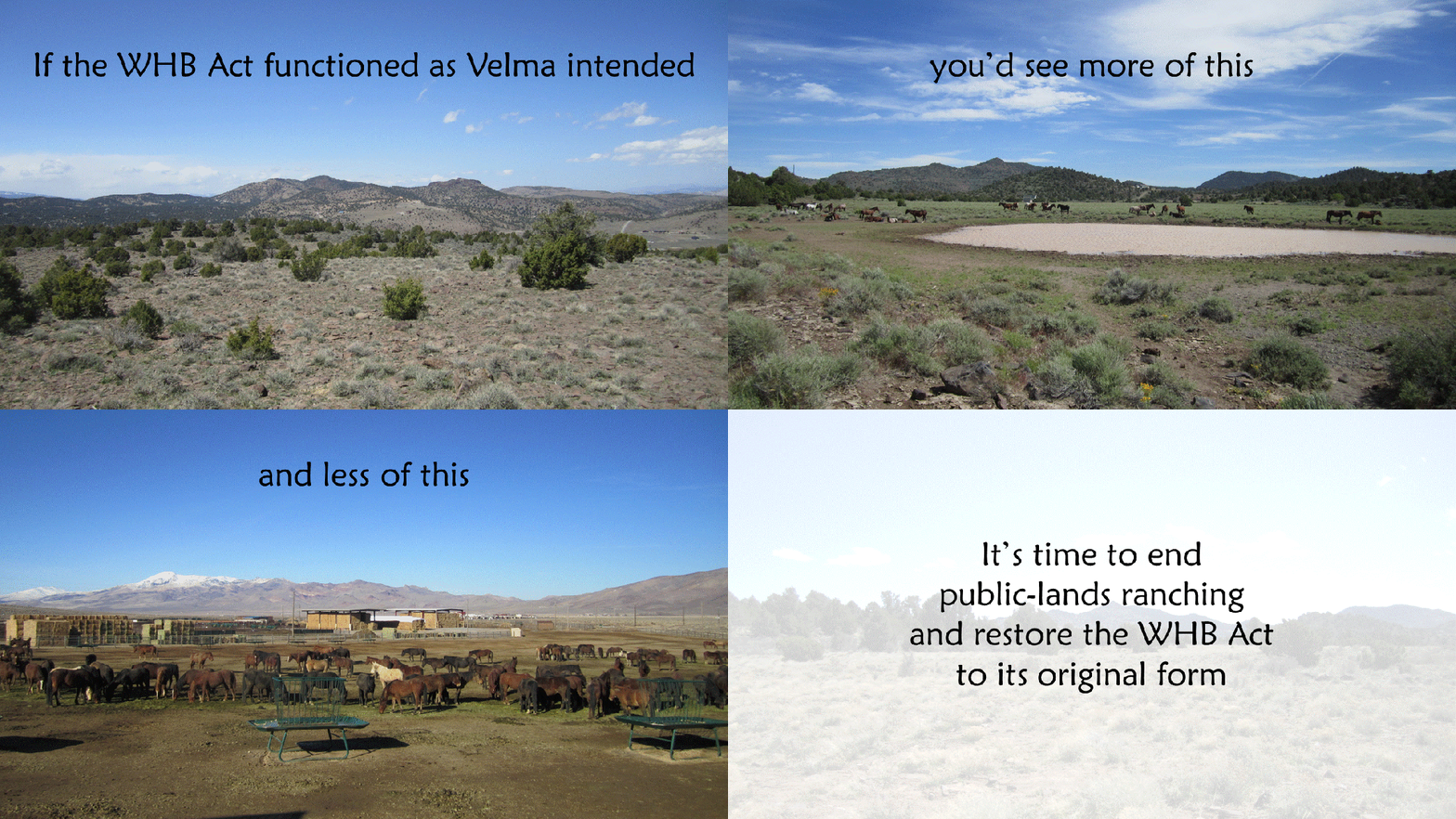
Velma would be shocked.
The organization is so far gone that it can only be salvaged by a complete change of leadership. Don’t give them a penny.
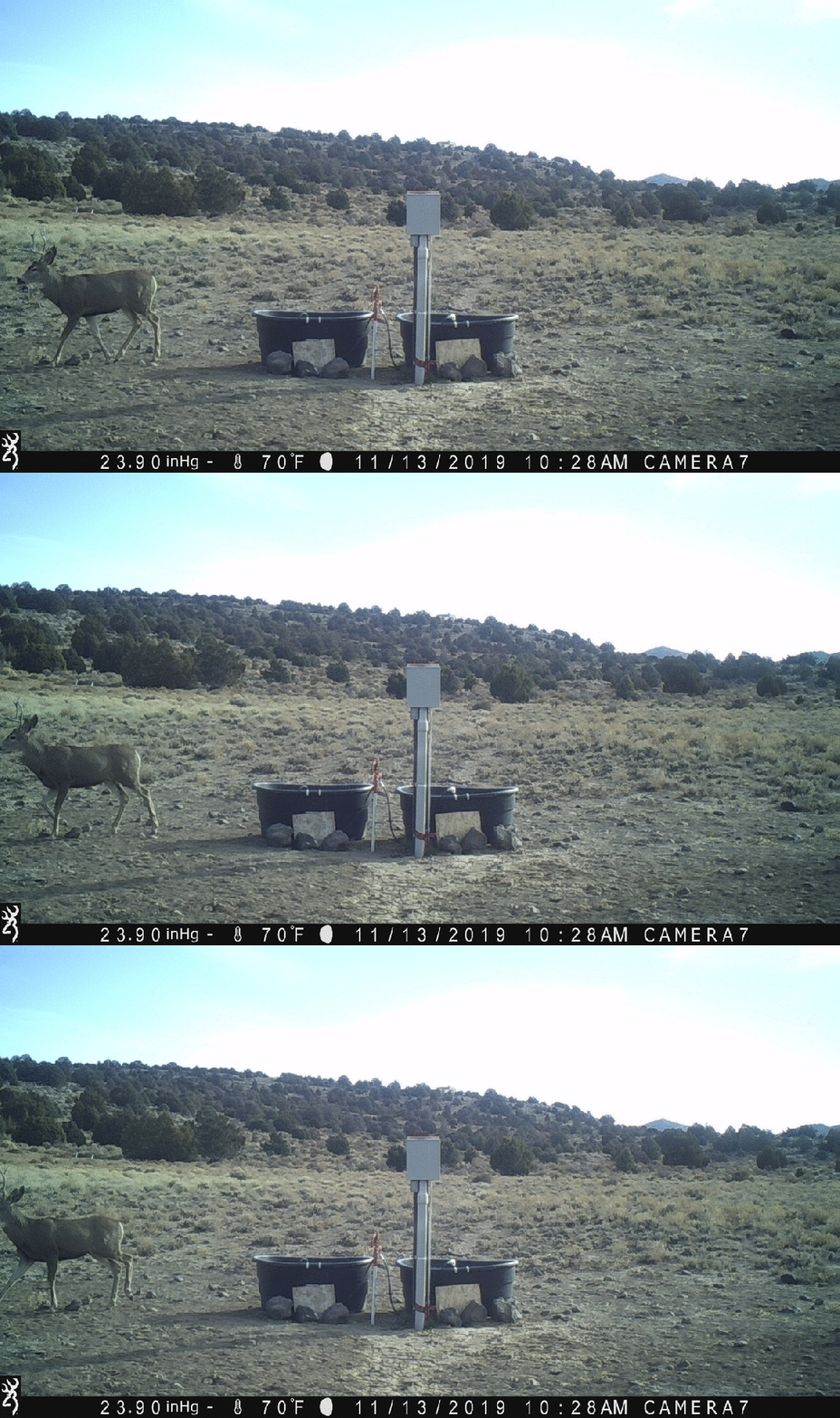
Late Season Travelers
Water system was still running in mid November but not for much longer. The shadows going off to the right at 12:30 were produced by lamps on the other trailcam.

BLM Nabs Fish Springs Mustangs
The incident began in late November with a phone call from a Douglas County resident and now 21 of the horses are in captivity at Palomino Valley.
The studs have been gelded and separated from the mares.
They will be auctioned next month, according to a report by KOLO News of Reno.
The horses lived in the Pine Nut Mountains Herd Area, south of the HMA, which was gathered earlier this year.
The local ‘advocacy’ group took a pro-ranching message to the WHBAB in October.
Marr Plan: Most Ignored Story of 2019?
The proposal would protect America’s wild horses by (OMG) removing privately owned cattle and sheep from public lands in the western U.S. You knew that, right?
RELATED: ‘Path Forward’ Opponents Gather at National Mall.

Always Vigilant
No coyotes in these photos but what lurks in the shadows? There is little if any livestock grazing on the Virginia Range, so these horses do have natural predators.

Coyote Lunch?
Trailcam shows this guy visiting the water tanks a few weeks before the incident.
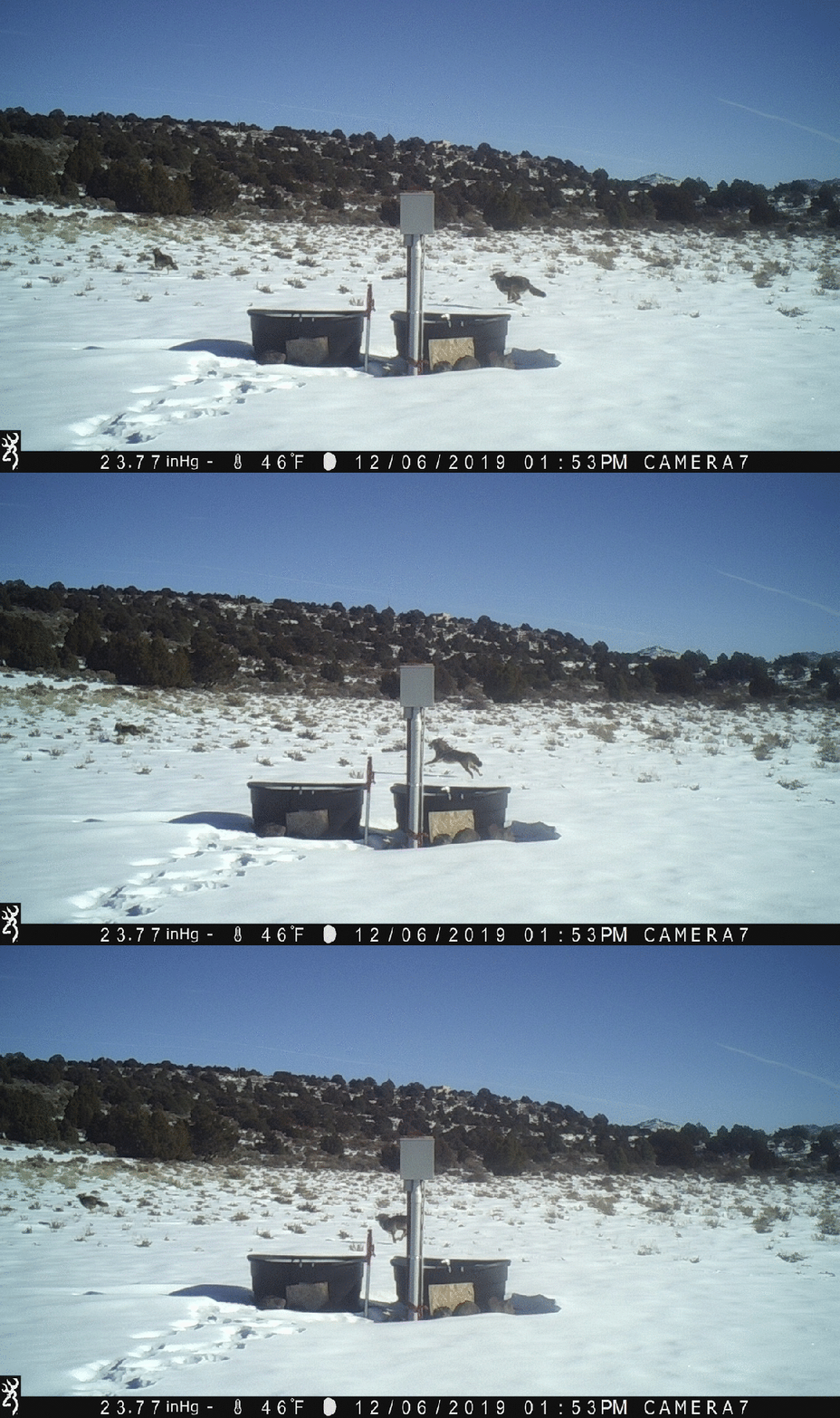
Coyotes at Water Tanks
Are these guys responsible for the deer carcass seen on Christmas Eve?
Top Story in Wild Horse World for 2019?
The year isn’t quite over, but almost certainly the top story would be the announcement on 04-22-19 of the ill-conceived ‘Path Forward’ and its eventual funding by Congress.
Honorable mentions would include the
- Shootings on Clark Mountain HA, Heber WHT and Floyd County
- Turmoil in Laramie County regarding the high-capacity adoption center
- Loss of Cedar Island Horses during Hurricane Dorian
Information about these and other events can be found in the Index.
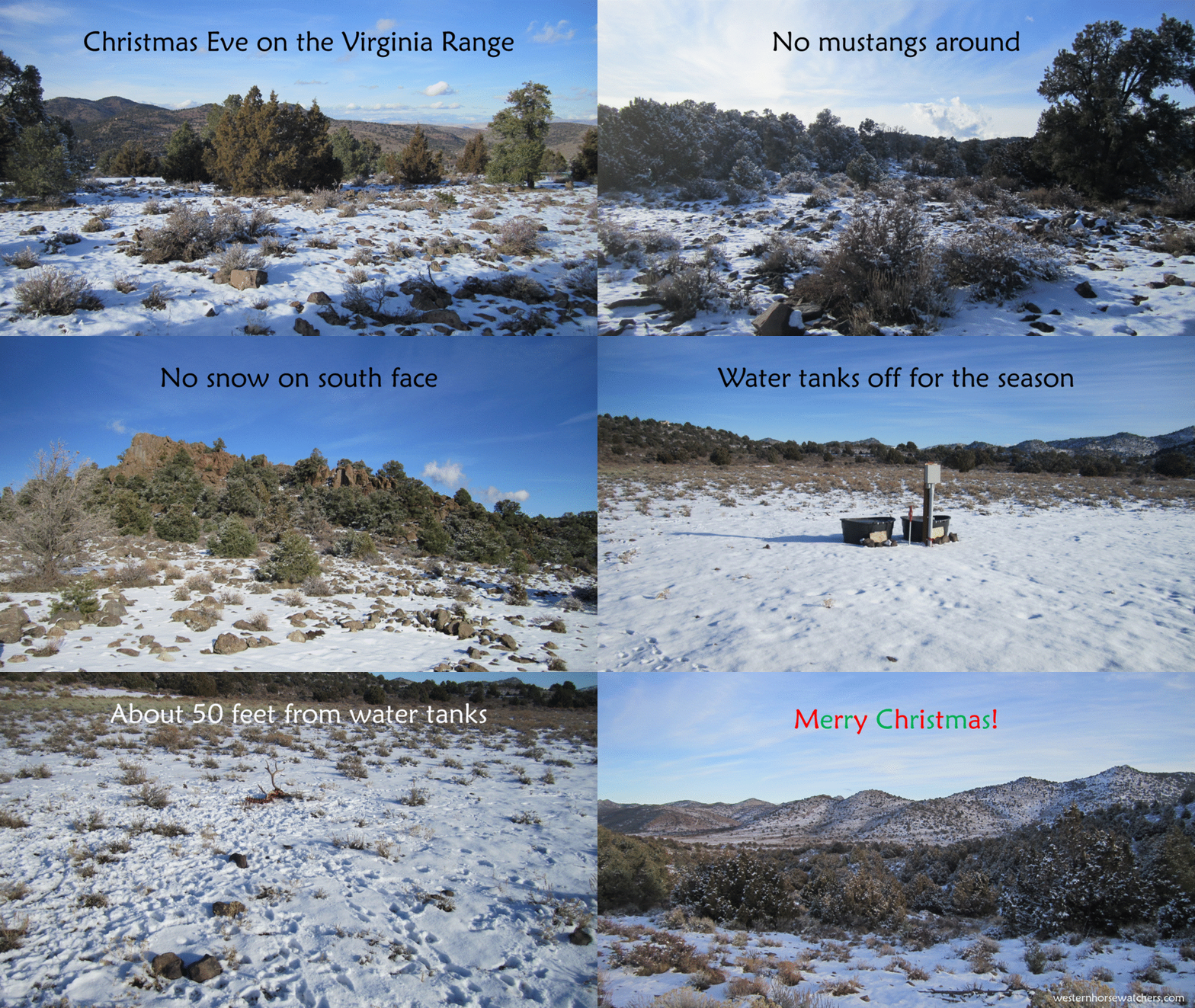
Old Man Winter Takes Over the Virginia Range
No wild horses to be found. They have probably moved to lower elevations.
Consent of the Governed
We still have a representative republic, so let your voice be heard.

Rescuers Trying to Move Floyd County Horses
WYMT News of Hazard, KY said today that personnel with Dumas Rescue are trying to get the survivors off the mountain but the effort has been complicated by the terrain.
One of the dead horses was taken to Lexington for a necropsy, according to the report.
A detective indicated that tips have been coming in but no suspects have been identified.
Mustang Monday
On Sand Wash Basin HMA with James Garrison.
Six More Horses Found Dead in Floyd County
WYMT News reported today that the remains of six more horses have been found, bringing the total to 21.
The reward has grown to $20,000.
Don’t Be Deceived: Public-Lands Ranching Is Big Business
An article published Thursday by Phys.org, a site hosted by the research and technology news service Science X, contains some interesting information about livestock grazing on public lands.
The piece discusses the conflict between wolves and ranchers and will give you a better understanding of why America’s wild horses have few if any natural predators, a charge leveled by the ranchers against the horses, whose cattle compete with the horses for food and water—on land set aside for the horses. (Yes, Virginia, it is insane.)
The rancher involved with the controversy, which plays out in northeast Washington, said he has lost $1 million since 2008 because of the wolves (75 to 100 cattle a year).
Most horse owners can relate to that—they would not want to find one of their horse kids ripped to shreds by a pack of wolves.
But there is a difference. The horse kids are on private land. The cattle are on public lands, which are subject to ‘multiple use’ and ‘sustained yield,’ ideals that may be hard to achieve in the grazing world. (See Paragraph 7, Section 102 of Title I in FLPMA.)
Why? Because livestock yield goes down as the wolf population goes up.
You see, the thriving ecological balance is really not a balance.

Using round numbers, the rancher has lost 100 head per year over a ten year period, with a value of $1 million. That puts the unit value at $1,000 per head.
With cattle futures trading around $120 per hundred weight, the value may be closer to $1,500 per head.

So when you see 2,144 cow/calf pairs grazing an allotment, you’re looking at a market value of at least $2.1 million, assuming that only the offspring are processed!
If the price is $1,500 per head, those animals will have a market value of $3.2 million.
These are not poor ranchers trying to eke out an existence on the high desert!
The cost to feed those 2,144 cow/calf pairs? Just $35,000.
The article goes on to say that the rancher in Washington state paid paid $4,177 to graze 736 cow/calf pairs on 80,000 acres. If that was in 2018, when the grazing fee was $1.42 per AUM, 2,944 AUMs would have been billed over a four month grazing season.
The value of the product would be somewhere between $736,000 and $1.1 million.
Now do you see why the ranchers want the horses off the range and why they supported the disastrous ‘Path Forward?’
For the record, most of the wild horses in Washington state were eradicated decades ago, although some can be found on tribal lands (such as Yakama and Colville). A point of departure in this regard would be the Horse Heaven Hills.
The article ends with a remark about the Colville Forest, where 34 livestock operators grazed 10,000 cattle last summer.
The market value of those animals would have been between ten and fifteen million dollars, and the ranchers would have paid just $57,000 to feed them, assuming a four month grazing season.
What do you suppose their P&L statements look like?
RELATED: This Is Why Wild Horses Have No Natural Predators.
UPDATE: The grazing fee in 2018 was $1.41 per AUM, not $1.42. The fee for 2019 is $1.35 per AUM, which may change on March 1 next year.
CBS Returns to Devil’s Garden
Four thousand was the number the Forest Service was throwing around last year before the roundup. Then they removed one thousand horses.
A 20% growth rate would put the herd at 3,600 this year.
But when this year’s roundup was announced, there were 1,800 horses at the WHT, from which 500 were removed.
So how many are out there now? Who knows.
Although the land was set aside for the horses, the government manages it primarily for livestock, privately owned, of course.
RELATED: Devil’s Garden Three-Strikers Up for Sale.
North Hills Roundup Ends?
The daily reports stopped yesterday, with 213 excess horses forced off their home range.
None of the captured animals were returned to the JMA and no deaths were reported.
As of today, the BLM has not issued a news release on the subject.
RELATED: Thriving Ecological Balance Coming to North Hills JMA.

The Ad Hoc Impeachment
It’s not about about evidence, it’s not about witnesses and it’s not about due process.
It’s about the Supreme Court and what happens to the liberal agenda when the Six Million Dollar Justice passes on to her eternal reward.
You see, there are some things in this country, such as the fundamental transformation, that are too important to be left to the voters.
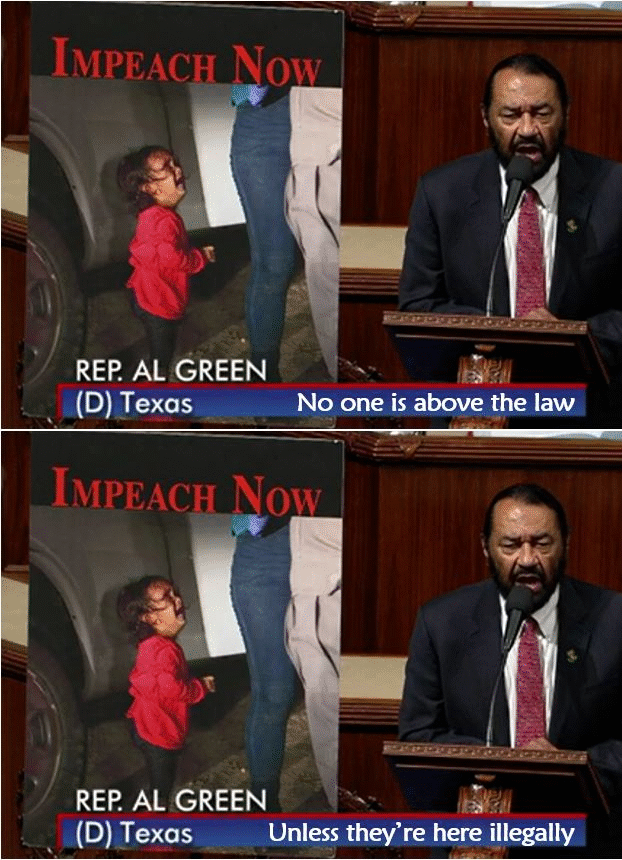
Just ask the residents of Laramie County.
RELATED: The Finest Health Care Money Can Buy.
Backers of ‘Path Forward’ Praise New Spending Bill
Refer to this story by The Washington Post, a publication known for its left-wing editorial bias and unabashed support of the liberal agenda.
The president and CEO of HSUS called the $21 million conditional authorization a “great start.” The VP of government affairs for NCBA complained that the amount was less than he hoped for but said it was a “good start.”
How would the article be written if wild horse eradication and public-lands ranching were enterprises of the Right?
RELATED: President Signs Spending Bills.


