You’ll have to visit areas set aside for wild horses to see that.
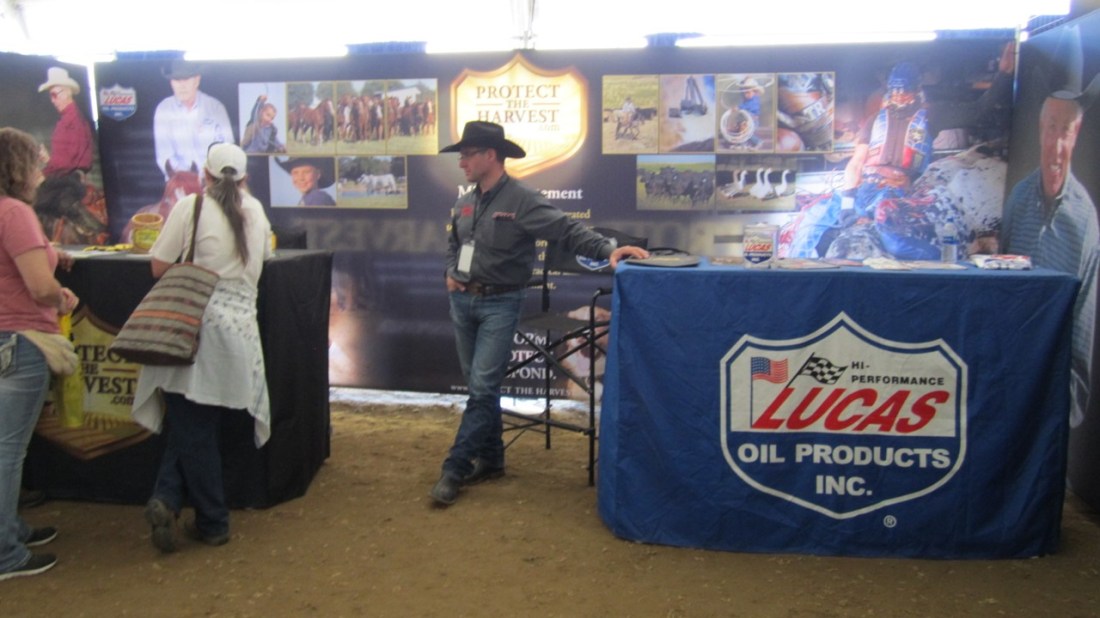
But there will probably be exhibits from other ranching advocacy groups.
RELATED: WSHE Still Set for June 11-13.
Western Horse Watchers Association
Exposing the Hypocrisy, Lies and Incompetence of the Wild Horse Advocates
You’ll have to visit areas set aside for wild horses to see that.
But there will probably be exhibits from other ranching advocacy groups.
RELATED: WSHE Still Set for June 11-13.
Family bands torn apart by helicopters.
Adopted horses dumped at kill pens.
Unwanted animals languishing in off-range corrals.
These problems could be avoided with contraceptives, according to the writer of an opinion piece in this evening’s online edition of the Las Vegas Review-Journal.
Why not end permitted grazing and shift the resources back to the horses?
That would be bad for the ranchers and those in the PZP supply chain.
No, they’re not escapees from the BLM off-range corrals. Probably Paiute (tribal).
Photo taken May 30, a few miles southeast of the corrals.
UPDATE: Video posted to YouTube.

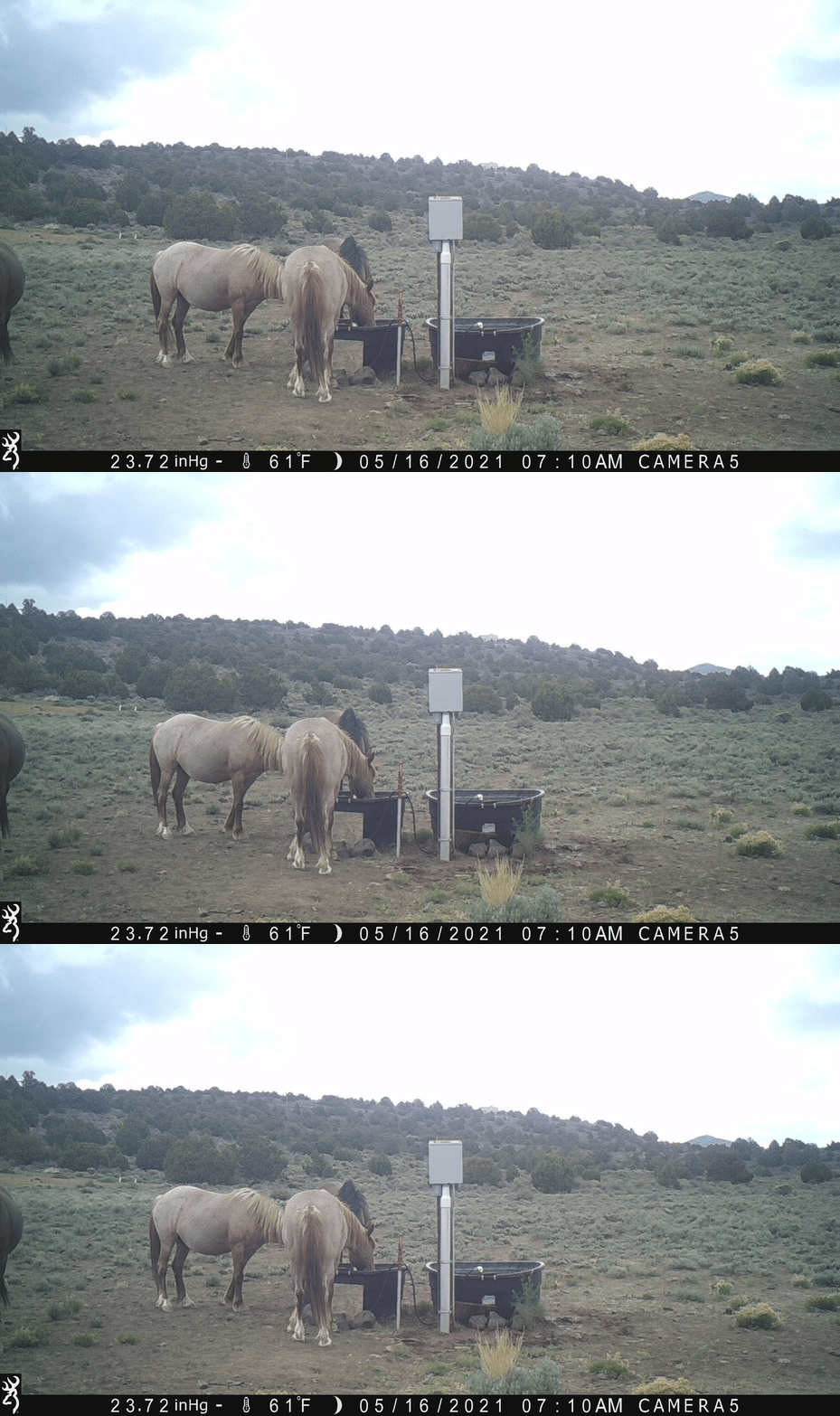
The trailcams snapped about 4,000 photos between mid April and the end of May, which is when you see more of the Virginia Range mustangs at the higher elevations.
This scene is typical: They come in, drink and are gone in two minutes.
The situation might be different if the water source was a spring, as the vegetation might be more appealing.
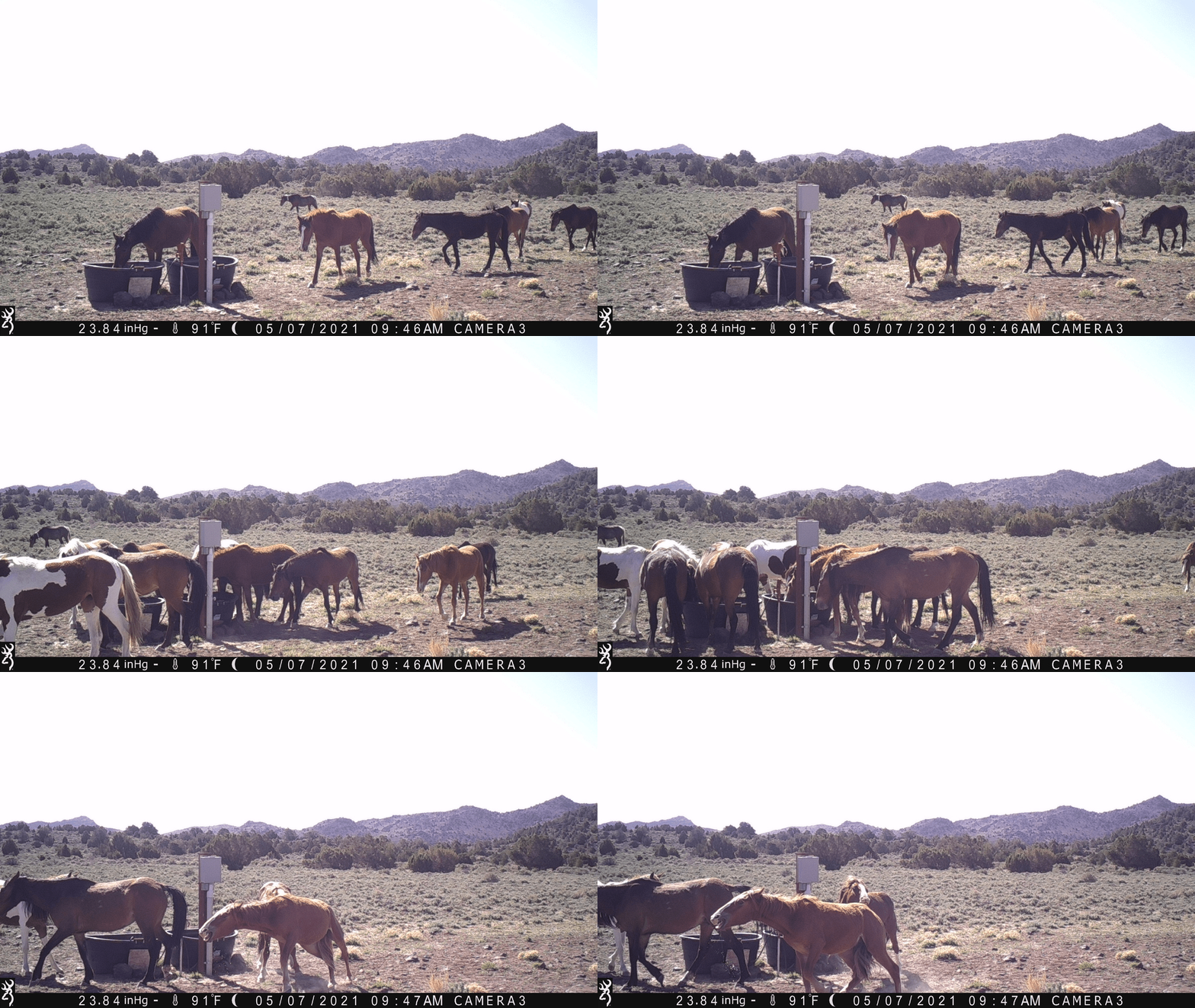
WARNING: Shows foals, might be offensive to some (most) advocacy groups.
Fertility control program shut off in 2016.
Last month, you bought a five bedroom home but just found out that four of the bedrooms have been reserved for illegal aliens.
Therefore, your wife needs to go on birth control to make sure your family does not outgrow its allocated share of the dwelling, previously referred to as ‘your house.’
Are you going to accept that?
The writer of a guest column in today’s edition of The Salt Lake Tribune does, only he’s talking about lands set aside for wild horses, not five bedroom homes.
The incident began on May 28. Gather stats through June 3:
The cumulative total on the gather page is 230, compared to 300 from the daily reports.
Although the goal has been reached, the operation has not been marked complete.
The number of burros shipped each day has not been reported, putting all of the animals in the unaccounted-for category.
RELATED: Centennial Roundup Day 5
Look at the citations under Authority on pages 7 and 8 of the Decision Record. Most of them refer to federal regulations—rules invented by the unelected bureaucracy, not the people’s representatives.
The bureaucrats never have to face the voters. Are they accessible to special interests?
This may explain why public policy—at least in the wild horse world—doesn’t reflect the will of the American people.
Facilities must be located in Colorado, Idaho, Kansas, Montana, Nebraska, Nevada, North Dakota, Oklahoma, Oregon, South Dakota, Utah, Washington or Wyoming and must have a capacity of 200 to 10,000 animals, according to a story posted today by KMVT News of Twin Falls, ID.
The initial contract period is one year, with renewal options of four and nine years.
Proposals must be submitted by July 19.
Western Horse Watchers was unable to find an announcement of the solicitation at the agency’s news site.
Thirty six photos in this sequence, ending with some snaking action in the background.
Timestamps are about 6-1/2 hours slow. Elevation 6,200 feet.

What is the historical name for the horse and where did this animal originate?
Why were thousands of free-roaming horses rounded up in the early 1900s?
Those are two of the Trivia Questions on page eight in the current edition of Horse Tales. Answers on page 19.
By the 1950s, their numbers had dropped to around 25,000. Who was hunting them from airplanes and poisoning their water holes?
You’ll have to go elsewhere for that answer.
The incident began on May 28. Gather stats through June 1:
The daily reports included a breakdown of jacks, jennies and foals through May 30 but only the totals after that.
Foals accounted for 13.9% of the animals caught though May 30.
The cumulative total on the gather page is 138, compared to 208 from the daily reports.
The number of burros shipped each day was not reported, putting all animals in the unaccounted-for category.
RELATED: SoCal Burro Removal Underway?
Alternative 1, the Proposed Action, has been approved for implementation, subject to a 30-day appeal period, according to a Decision Record signed on May 27.
The event was not announced on BLM’s news site.
Over the next ten years, the new resource enforcement plan will
Six HMAs are affected, as described in Section 1.2 of the Final EA.
The incident was set to begin on May 28 but the gather page has no data.
Operations today, not open to public observation, were to occur at the China Lake Naval Air Weapons Station.
No, the advocates did not invent an injectable retardant that can be administered with their darting equipment. Instead, it’s a chemical treatment sprayed on the ground to inhibit flame propagation, according to a story posted today by KPNX News of Phoenix.
RELATED: Arizona Fire Restrictions Good News for Wild Horses?
It’s great news, given that the advocates are working overtime to get rid of them.
Time stamps are about 6-1/2 hours slow.
RELATED: PZP Zealots Missed One.

A story in today’s online edition of the Tampa Bay Times highlights some of the horses and volunteers at the Wild Horse Rescue Center in Webster, FL.
Anybody who understands the reports and calculations on these pages knows the land can support way more than 27,000 wild horses and who’s getting rich at their expense.
RELATED: Adoption Incentive Fallout?
There will be much to see for horse enthusiasts but not no much for wild horse enthusiasts. Nevertheless it’s an opportunity to see what’s going on in the horse world.
The schedule is filling out and ticket prices have gone up since 2019.
Last year’s event was cancelled.
RELATED: Dates Set for 2021 WSHE.
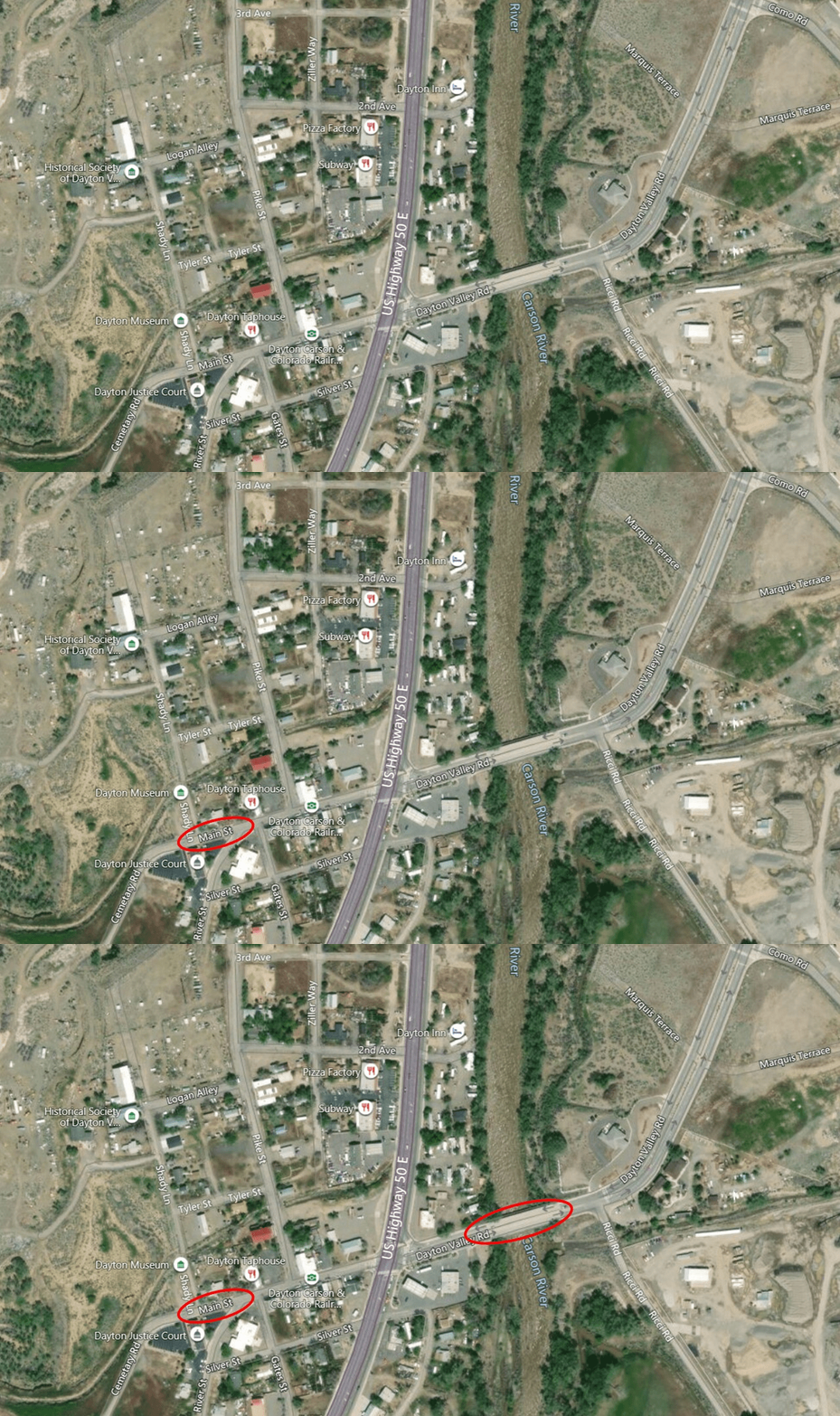
A story submitted yesterday by a reader of Carson Now describes the migration down Main Street and across the Carson River Bridge. The article does not give their destination or what other animals they might encounter at the end of the journey.
Perhaps they were coming off an allotment on the north side of Highway 50, heading for another on the south side. Just a guess. The highway generally runs east-west despite the north-south jog in the following image.
The Operator Information report in RAS shows four authorizations associated with Borda Land and Sheep, 2700069, 2700348, 2702960 and 2703505.
The Allotment Information report ties those authorizations to the Bagley Valley, Buckeye, Carson Plains and Pine Nut allotments.
The Authorization Use report for Carson Plains shows the last grazing season ending today, May 31 and another, on the Pine Nut allotment, starting tomorrow, June 1.
Borda holds all of the active AUMs in Pine Nut. So maybe they were migrating from Carson Plains to Pine Nut.
The Pine Nut Mountains HMA is also on the south side of the highway. Although grazing allotments and wild horse areas sometimes have similar names, Western Horse Watchers does not know if the two overlap. Would you be surprised if they did?
The Allotment Master report shows Pine Nut in the Improve category.
The Virginia Range, on the north side of 50, includes some BLM land.
UPDATE: Table 1 in a 2018 EA for wild horse management actions shows nine allotments intersecting the HMA but Pine Nut is not one of them.