Memo to Ms. Crawford: If you want to help these animals, stay home.
RELATED: Beware of the Advocates!

Western Horse Watchers Association
Exposing the Hypocrisy, Lies and Incompetence of the Wild Horse Advocates
Memo to Ms. Crawford: If you want to help these animals, stay home.
RELATED: Beware of the Advocates!
The incident began on September 1. Gather stats through September 3:
Helicopters were grounded on Day 2 due to weather.
Foals represented 16.0% of the horses gathered. Of the adults, 47.1% were male and 52.9% were female.
Body condition scores were not reported.
Day 3 ended with 16 unaccounted-for animals.
Other statistics:
RELATED: Sand Wash Roundup Begins.
The incident began on September 1, with nine horses captured, no deaths and none shipped, according to figures at the gather page.
Horses are drawn into the traps by water and hay.
The capture and removal goals are 450.
The AML is 364 and the pre-gather population is 1,037.
The statement occurs at 1:36 in the following video by KUSA News of Denver.
Could it be true? Yes, during the off season.
Table 2.1 in the Final EA for resource enforcement actions shows grazing seasons for allotments that overlap the HMA. The pastures in rows 1, 2, 4, 6 and 7 are inside the HMA and represent a shifting of resources from wild horses to public-lands ranchers.
Grazing does not occur in June, July and August, so during the summer, the horses are the majority consumer of food and water.
Gates and fences might impede their movement within their home range and some areas may be off limits to help them recover for the next grazing season. Most of the land does not meet standards for rangeland health.
The management plan assigns 79% of the authorized forage to privately owned livestock over a twelve month period, as explained in this report. The horses are the minority consumer of resources overall, next to wildlife.
The pre-gather population of 896 is unacceptable—the horses are robbing too much forage, sometimes referred to as ‘their food,’ from the ranchers.
That’s why they have to go. Resource enforcement.
Livestock AUMs may have been cut due to a temporary change in the weather but the horses are being permanently removed. When conditions improve, it’ll be business as usual, with the ranchers receiving the lion’s share of the resources.
The BLM rep in the video is not telling the whole story.
Would that be true for your favorite advocacy group?
A preliminary environmental assessment for a high-density animal feeding operation was released today for public review. The proposed facility would be built on private land north of Winnemucca, NV and east of the Highway 95/290 junction.
The corrals would cover 100 acres and have a capacity of 4,000 wild horses and burros, for a stocking rate of 40,000 animals per thousand acres.
Horses and burros removed from their home range would be held there until they are adopted or transferred to long-term pastures.
The operator would be JS Livestock of unknown city and state.

The word ‘shelter’ appears nowhere in the assessment.
Comments will be accepted through September 17, according to the news release.
They couldn’t convert an AML to AUMs if their lives depended on it, but they can tell you exactly how many cc’s of adjuvant to add to the PZP and how long to mix them.
They’re working with government to achieve and maintain AMLs by attrition, which means they’re trying to protect and preserve the lopsided resource allocations that strongly favor the public-lands ranchers—in areas set aside for wild horses.
Charlatans, every one of them.
The greatest threat to our public lands, and the animals living therein, is climate change, according to a story posted yesterday by Reuters.
The signatories to the ‘Path Forward‘—now revealed to be frauds—want you to accept the lie, join their darting army and help them get rid of wild horses.
To save the planet, of course.
RELATED: Support for ‘Path Forward’ Much Greater Than You Think.
The incident was delayed by rain but helicopters were flying by noon. Day 1 ended with 65 horses captured, no deaths and one escape, according figures at the gather page.
The capture goal is 783 and the removal goal is 733. The pre-gather population is 896.
RELATED: Sand Wash Roundup Delayed by Rain.
This result appeared earlier today in a Google search for ‘wild horse.’

Apparently, LinkedIn is a member-only service. Western Horse Watchers was unable to view the listing.
The job posting on Idealist is still active.
RELATED: Virginia Range Darting Program Coordinator Still Not Named?
Refer to this story by CBS News in Denver.
RELATED: Colorado Governor Seeks Delay of Sand Wash Roundup.
AMLs are small because most of the forage in wild horse areas has been assigned to privately owned livestock.
Roundups enforce those assignments.
If you shift the resources back to the horses, the AMLs are much higher. They represent the number of animals the areas could support if they were managed principally for wild horses, as specified in the statute. Western Horse Watchers calls them True AMLs.
The ranchers want to get rid of the horses so they can enjoy more of what their allotments have to offer.
Although the advocates protest the roundups, they, like the ranchers, want to see wild horse numbers go down, as a result of their fertility control programs, not helicopters.
They never contest the land-use plans and resource allocations arising therefrom.
They are in business to sell PZP. You see their influence when state and local officials call for humane management of these animals.
Instead of crashing the horses into pipe panels, stalk them with clipboards and darting rifles, drive birth rates to zero, and let the herds off.
There are few if any voices speaking in their defense.
Welcome to the love triangle on America’s public lands. It’s a big club but hopefully you’re not in it.

An unspecified number of wild horses will be removed from three HMAs in southeast Oregon, starting on September 8, due to inadequate food and water.
Helicopters will push the horses into the traps, according to the news release, and the incident will be open to public observation.
Around 100 horses will be returned to the area when conditions improve.
The pre-gather population is thought to be around 2,500.
The three HMAs cover approximately 956,000 acres and the 892 horses allowed by plan receive 10,704 AUMs per year. The stocking rate allowed by plan is 0.9 wild horses per thousand acres, slightly less than the target rate of one wild horse per thousand acres across all HMAs.
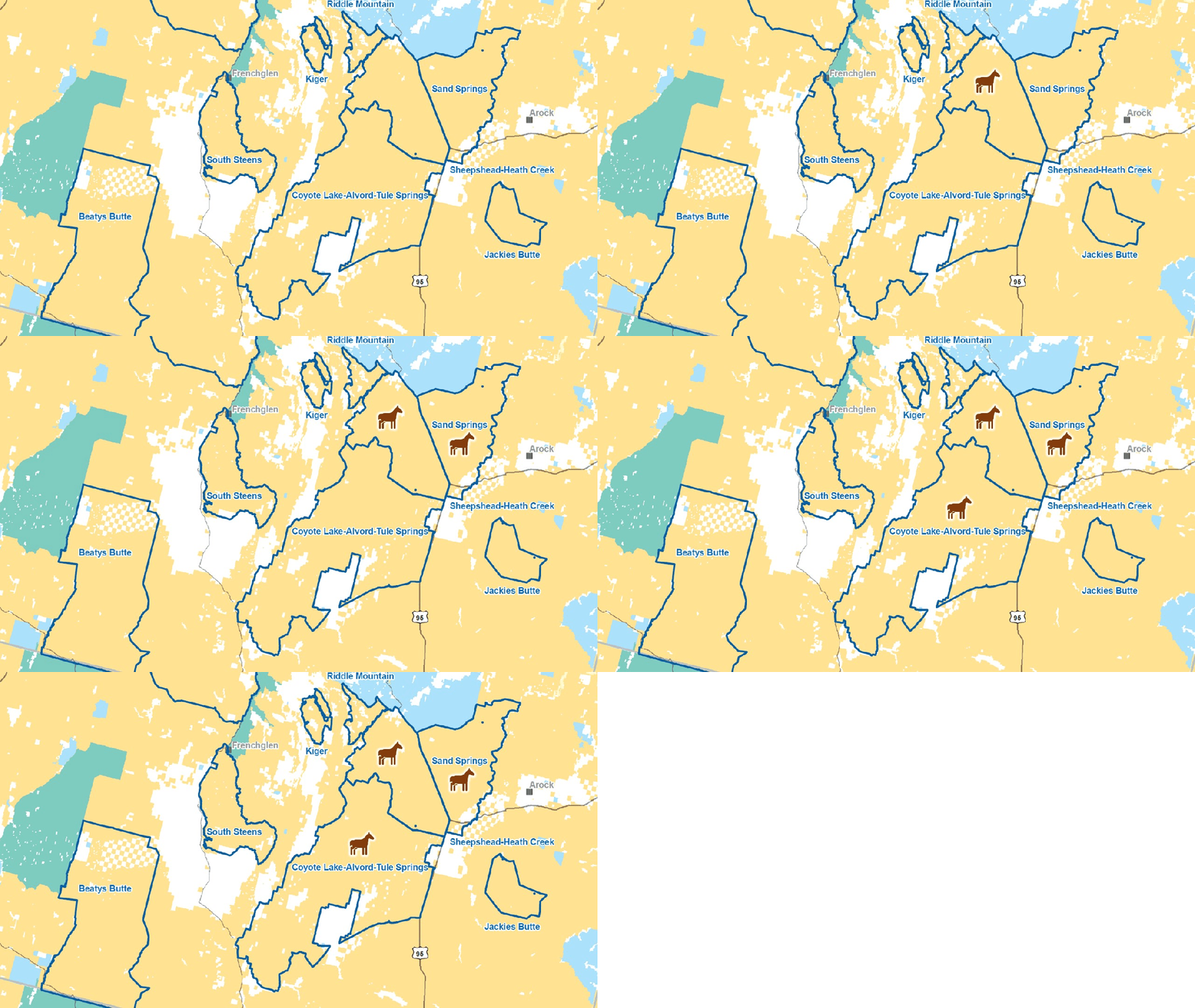
The HMAs intersect seven grazing allotments, discussed in these ‘Short End of Stick’ reports: Coyote Lake, Sheepshead, Sand Springs. Privately owned livestock receive an estimated 27,011 AUMs per year in the Complex, sometimes referred to as public lands set aside for wild horses.
Captured animals will be taken to the off-range corrals Bruneau, ID and Palomino Valley, NV.
Gather stats and daily reports will be posted to this page, which indicates a removal goal of up to 1,900.
The announcement said many of the horses are emaciated and dehydrated but will they disclose the body condition scores when the operation begins?
The forage assigned to livestock would support an additional 2,251 wild horses, for a True AML of 3,143, the number of animals the area could sustain if it was managed principally for wild horses.
RELATED: Barren Valley Gather EA Comes and Goes, No News Release.
The incident started on August 30 and ended on August 31, with 253 horses captured, 252 shipped and one death, according to the figures at the gather page. The removal goal was 220.
No activity had been reported earlier today.
Foals accounted for 21.7% of the horses gathered. Of the adults, 48% were males and 52% were females.
The operation, which separated the horses from 3,036 AUMs per year of their food, concluded with no unaccounted-for animals.
RELATED: Palomino Buttes Emergency Roundup Starts Next Week.
His letter to the DOI and BLM requested an immediate six-month moratorium on roundups, according to a report posted today by Craig Press.
But a story by AP News said the request was ignored and the incident will go on as planned, noting that grazing permittees in the HMA have “reduced their activity because of drought and overgrazing by mustangs.”
RELATED: Sand Wash Roundup Announced.
This map from InciWeb shows the location of the fire relative to South Lake Tahoe and the Nevada state line. Spread has mostly been to the east and northeast.
A story by Carson Now says a Type 1 incident command is headed to the area.
The Tamarack Fire, still burning, is 82% contained.
The Pine Nut Mountains HA, which includes the HMA, is off the map, just a few miles east of Minden, NV.
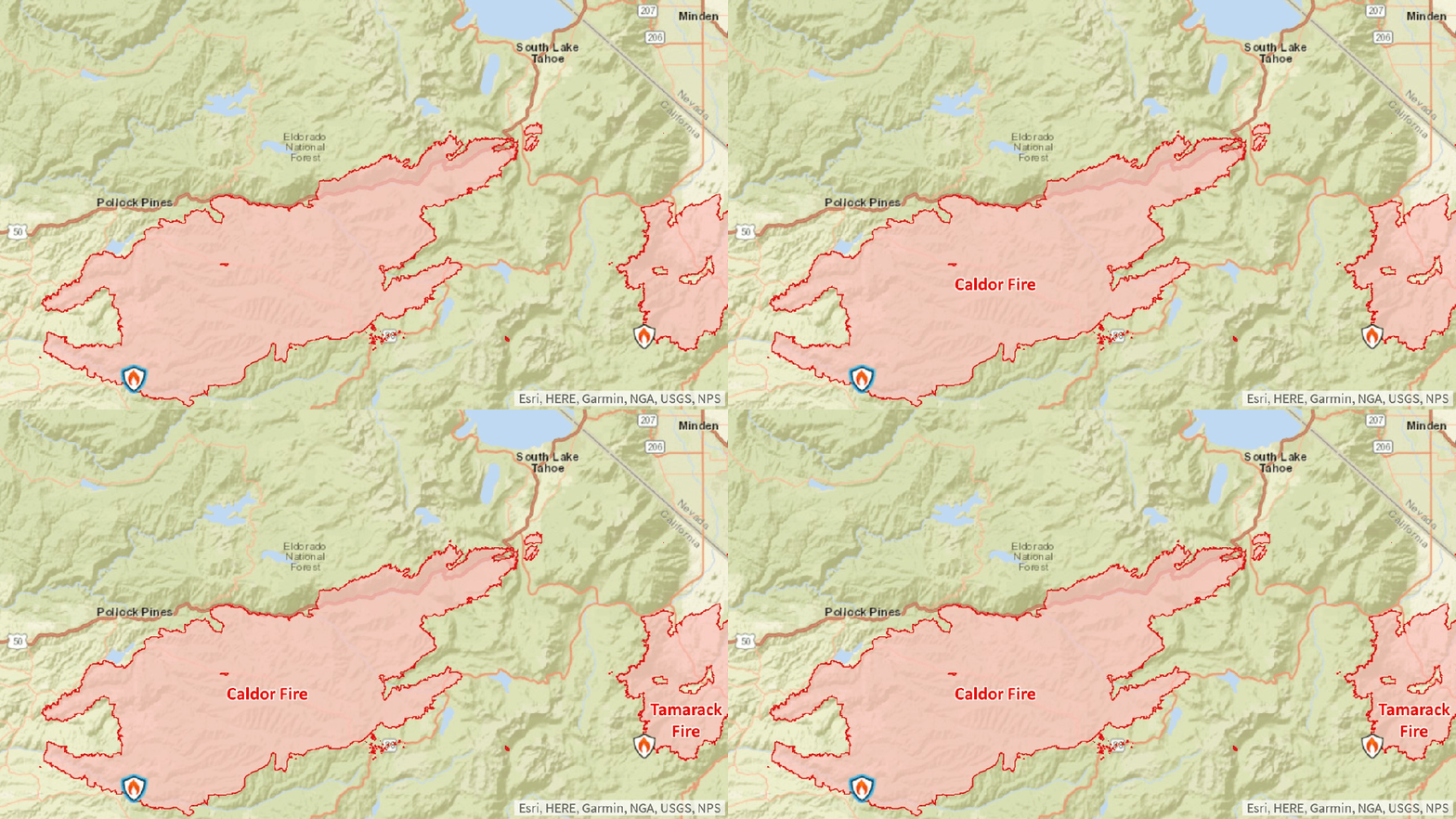
RELATED: Caldor Fire Closing in on Tahoe.
Snapshot of activity to date:
West Douglas HA
Paisley Desert HMA
Antelope Complex
Conger HMA
Flanigan HMA
Stone Cabin HMA
Stinkingwater HMA
Palomino Buttes HMA
Sand Wash Basin HMA
Barren Valley Complex
A planned roundup at Beatys Butte HMA was set to begin on August 1 but no activity has been reported.
The Owhyee Complex is on the schedule for a planned roundup beginning on September 1 but there has been no announcement.
A planned roundup is on the list for the Surprise Complex starting on September 27 but it has not been announced.
There are no wild horse areas in its path, unless it crosses the Nevada state line like the Tamarack Fire, but this thing has been growing by leaps and bounds over the past few days and now threatens a huge resort area, and all its investment, in South Lake Tahoe.
Where’s Pat Seekins and his Rocky Mountain Type 1 Team when you need them?
The Pine Nut Mountains wild horses and Virginia Range mustangs are likely in the fallout zone from the fire.
The incident ended today with 2,203 horses captured, 11 deaths and 2,192 shipped, according to the cumulative totals at the gather page. The numbers balance, so there are no unaccounted-for animals.
The figures in the daily reports yield 2,202 horses captured, 11 deaths and 2,186 shipped, leaving five unaccounted-for animals.
RELATED: Antelope Complex Emergency Roundup Starts This Weekend.
UPDATE: A BLM news release dated August 31 said 2,192 horses removed, which is not consistent with the data at the gather page.
The facility should be located in states east of the Mississippi River and at least 100 miles inland from the coast. Sites within 60 miles of an airport and access to major highways are preferred, according to the news release.
The incident began on August 2. Gather stats through August 29:
The roundup goal has been reached.
A stallion was put down on Day 28 due to injuries sustained in the gather. The death rate is 0.5%.
Foals accounted for 16.7% of the horses gathered. Of the adults, 42.3% were male and 57.7% were female.
Body condition scores were not reported.
The location of gather operations has not been specified. Four HMAs are involved.
Day 28 ended with 100 unaccounted-for animals. Field work will likely conclude in another day or two.
To date, 776 stallions and 1,058 mares have been captured, which may or may not reflect the distribution of males and females in the Complex.
Other statistics:
Theme for this year’s roundup: You can have your wild horse and burro program as long as it doesn’t interfere with the grazing program.
RELATED: Antelope Roundup Day 26.
 Western Horse Watchers Association