Virginia Range Darting Program Coordinator Named?

The job posting no longer appears on Idealist.

The staff directory at the Campaign Against America’s Wild Horses says Tracy Wilson joined the organization as a contractor to assist with fertility control data, database setup for new projects, and land trust projects.

She appears in this photo from the 2019 Western States Horse Expo wearing a ‘Stay Wild’ T-shirt.  (‘Get rid of them with pesticides’ would be more accurate.)

Wilson at 2019 WSHE 10-19-21

Wilson volunteered with Wild Horse Connection, a group that feeds and darts the Virginia Range mustangs.

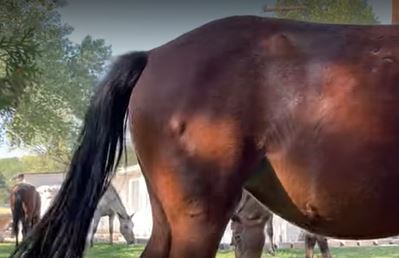
The trailcam photos below show some of their handiwork.  Click on image to open in new tab.

RELATED: Virginia Range Darting Program Coordinator Still Not Named?

Progression of Injuries VR 07-30-21

Advocates Peddle Their Pest Control Programs

The Senate Appropriations Committee has earmarked more than $10 million for the BLM to use fertility control instead of roundups, according to a report posted yesterday by KLAS News of Las Vegas.

VR Darting Injury 09-15-21

The advocates want to replace cruel and inhumane helicopter roundups with cruel and inhumane darting programs, putting the interests of livestock operators far above those of the horses.  Helicopters achieve the same results but in a much shorter timeframe.

Who’s doing the lobbying?  Who’s paying for it?  Why are you still giving them money?

The woman interviewed for the story, referred to only as a “wild horse advocate,” is the Director of Government Relations for the Campaign Against America’s Wild Horses, according to the staff directory.

RELATED: Roy, Like Most Advocates, Stuck on Stupid.

Devil’s Garden Roundup Ends

The operation was cut short due to “challenging horses and changing weather patterns,” according to the yesterday’s update, with 506 horses captured.

The removal goal was 600.

The cumulative total in the previous update was 468.  The final update said 19 horses were taken on October 15, followed by 18 on October 16, for a total of 505.

The number of deaths and the number of horses shipped were not reported.

Body condition scores were not provided.

The number of unaccounted-for animals cannot be determined.

Foals represented 12.7% of the horses captured.  Of the adults, 49.1% were male and 50.9% were female.

The low percentage of foals suggests the herd is not growing at a rate of 20% per year, a benchmark used by land managers to predict herd sizes.

Centennial Roundup Day 7

The incident began on October 9.  Gather stats through October 15:

  • Type: Emergency
  • Method: Helicopter
  • Horses captured: 214
  • Average daily take: 30.6
  • Capture goal: 250
  • Removal goal: 250
  • Returned: None
  • Deaths: 1 (not captured)
  • Shipped: 214

On Day 4, a mare was found in a hole where a Joshua Tree used to be, too weak to get up.  Following IM 2021-007 policy and procedures, the horse was put down.

Foals represented 13.1% of the horses captured.  Of the adults, 43.0% were male and 57.0% were female.

Body condition scores were not reported.

The low percentage of foals suggests the herd is not growing at a rate of 20% per year, a benchmark used by land managers to predict herd sizes.

Operations are taking place on the China Lake Naval Air Weapons Station.

Centennial HMA Map 11-07-21

Day 7 ended with no unaccounted-for animals.

Other statistics:

  • AML: 168
  • Forage assigned to horses: 2,016 AUMs per year
  • Pre-gather population: Unknown
  • Forage liberated to date: 2,568 AUMs per year
  • Water liberated to date: 2,140 gallons per day
  • Forage assigned to livestock: Unknown
  • Horses displaced from HMAs by livestock: Unknown
  • True AML: Unknown

RELATED: Centennial Roundup in Progress.

Optics of Wild Horse Roundups

A secondary purpose of roundups is to humiliate and demoralize.

The advocates, defeated a long time ago, repeat the lies of government and help them minimize herd sizes, with benefits accruing to the public-lands ranchers.

The wild horse documentary produced by Robert Redford et al, which opened last week, is the latest example.

Love Triangle on Americas Public Lands 08-19-21

Your host has no desire to see the film, the trailer was enough.  If you saw it and wrote a review, put a link in the comments.

Sun Rising or Setting on Virginia Range Mustangs?

No youngsters in these trailcam photos, thanks to the advocates.

The stocking rate on the Virginia Range was ten wild horses per thousand acres before they got involved, contradicting the government’s claim that western rangelands can only support one wild horse per thousand acres.

Now, they’re destroying the evidence.

Bureaucrats at the Nevada Department of Agriculture say the herd size, initially around 3,000, should be 300, ideally, and no more than 600, which works out to a stocking rate of one to two wild horses per thousand acres.

On BLM lands, which cover most of the state, AMLs and stocking rates are limited so areas set aside for wild horses can be filled with privately owned livestock, contrary to the provisions of the original statute.

Sunrise at Water Tanks 08-12-21

Rock Springs Roundup Day 11

The incident began on October 7.  Gather stats through October 17:

  • Type: Planned
  • Method: Helicopter
  • Horses captured: 285, up from 169 on Day 8
  • Average daily take: 25.9
  • Capture goal: 4,400
  • Removal goal: 3,500
  • Returned: None
  • Deaths: 4, up from 2 on Day 8
  • Shipped: 214, up from 127 on Day 8

Two deaths occurred on Day 8 that were not picked up in the last report.

One horse was put down on Day 9 due to injuries related to the roundup and another was euthanized due to pre-existing conditions.  The death rate through Day 11 is 1.4%.

Foals represented 22.1% of the horses captured.  Of the adults, 62.2% were male and 37.8% were female.

Body condition scores were not reported.

The location of gather ops was not given.  Five HMAs are involved in the roundup.

Rock Springs HMAs 10-13-21

Day 11 ended with 67 unaccounted-for animals.

Other statistics:

  • AML: 2,165 (across five HMAs)
  • Forage assigned to horses: 25,980 AUMs per year
  • Pre-gather population: 5,105
  • Forage liberated to date: 3,420 AUMs per year
  • Water liberated to date: 2,850 gallons per day
  • Forage assigned to livestock: 191,791 AUMs per year (estimated)
  • Horses displaced from HMAs by livestock: 15,982 (32% of off-range holding)
  • True AML: 18,147

RELATED: Rock Springs Roundup Day 8.

Devil’s Garden Roundup Day 29

The incident began on September 16.  Reports covering activity through October 14 have been posted to the Modoc news page:

  • Type: Planned
  • Method: Helicopter
  • Horses captured: 468, up from 428 on Day 27
  • Average daily take: 16.1
  • Capture goal: 600
  • Removal goal: 600
  • Returned: 1, no change from Day 27
  • Deaths: Unknown
  • Shipped: Unknown

Foals represented 13.5% of the horses captured.  Of the adults, 49.9% were males and 50.1% were female.

Body condition scores were not provided.

The death rate and number of unaccounted-for animals cannot be determined.

The low percentage of foals suggests the herd is not growing at a rate of 20% per year, a benchmark often used by land managers to predict herd sizes.

Other statistics:

  • AML: 402
  • Forage assigned to horses: 4,824 AUMs per year
  • Pre-gather population: 1,926
  • Forage liberated to date: 5,604 AUMs per year
  • Water liberated to date: 4,670 gallons per day
  • Forage assigned to livestock: 15,711 AUMs per year (estimated)
  • Horses displaced from WHT by livestock: 1,309 (2.6% of off-range holding)
  • True AML: 1,711

RELATED: Devil’s Garden Roundup Day 27.

Owyhee Roundup Day 5

The incident began on October 11.  Gather stats through October 15:

  • Type: Planned
  • Method: Helicopter
  • Horses captured: 190
  • Average daily take: 38.0
  • Capture goal: 947
  • Removal goal: 615
  • Returned: None
  • Deaths: 4
  • Shipped: 79

Two horses were put down on Day 4 and two more on Day 5 due to pre-existing conditions, including a foal that was malnourished.

All four deaths were justified by IM 2021-007, Euthanasia of Wild Horses and Burros Related to Acts of Mercy, Health or Safety.  The death rate through Day 5 is 2.1%.

Foals represented 16.8% of the horses captured.  Of the adults, 52.5% were male and 47.5% were female.

Body condition scores were not reported.

The location of gather ops was not given.  Five HMAs are involved in the roundup.

Owyhee Complex Map 10-04-21

Day 5 ended with 107 unaccounted-for animals.

Other statistics:

  • AML: 999 (across five HMAs)
  • Forage assigned to horses: 11,988 AUMs per year
  • Pre-gather population: 1,188
  • Forage liberated to date: 2,280 AUMs per year
  • Water liberated to date: 1,900 gallons per day
  • Forage assigned to livestock: Unknown
  • Horses displaced from Complex by livestock: Unknown
  • True AML: Unknown

RELATED: Owyhee Roundup Delayed.

USDA Seeks Greater Diversity in Beef Supply

With consumer prices rising, the government is taking steps to boost competition in the supply chain, according to a report posted this morning by AP News.

If startups can’t control their costs, they will need to find customers who will pay more for their beef or manage with a lower profit margin than the big companies.

But what if they didn’t have to pay market rates to feed the animals?

The value of an average 1,370-pound steer is about $1,630, but that amount must be split between the slaughterhouse, feed lot and the rancher, who typically bears the largest expense of raising the animal for more than a year.

Put wild horses in the feed lots and turn out more livestock.  Take a closer look at the ‘Path Forward.’  Approve the Rock Springs RMP amendments.  Initiate more such projects, perhaps on an emergency basis.

Supply goes up and costs come down, giving political cover to the one-horse pony, his ruinous policies and his illicit administration.

Rock Springs Roundup Day 8

The incident began on October 7.  Gather stats through October 14:

  • Type: Planned
  • Method: Helicopter
  • Horses captured: 169, up from 143 on Day 6
  • Average daily take: 21.1
  • Capture goal: 4,400
  • Removal goal: 3,500
  • Returned: None
  • Deaths: None
  • Shipped: 127, up from 111 on Day 6

Helicopters were grounded on Day 7 due to weather.

Foals represented 24.9% of the horses captured.  Of the adults, 70.1% were male and 29.9% were female.

Body condition scores were not reported.

Gather ops continued at Divide Basin.  Five HMAs are involved in the roundup.

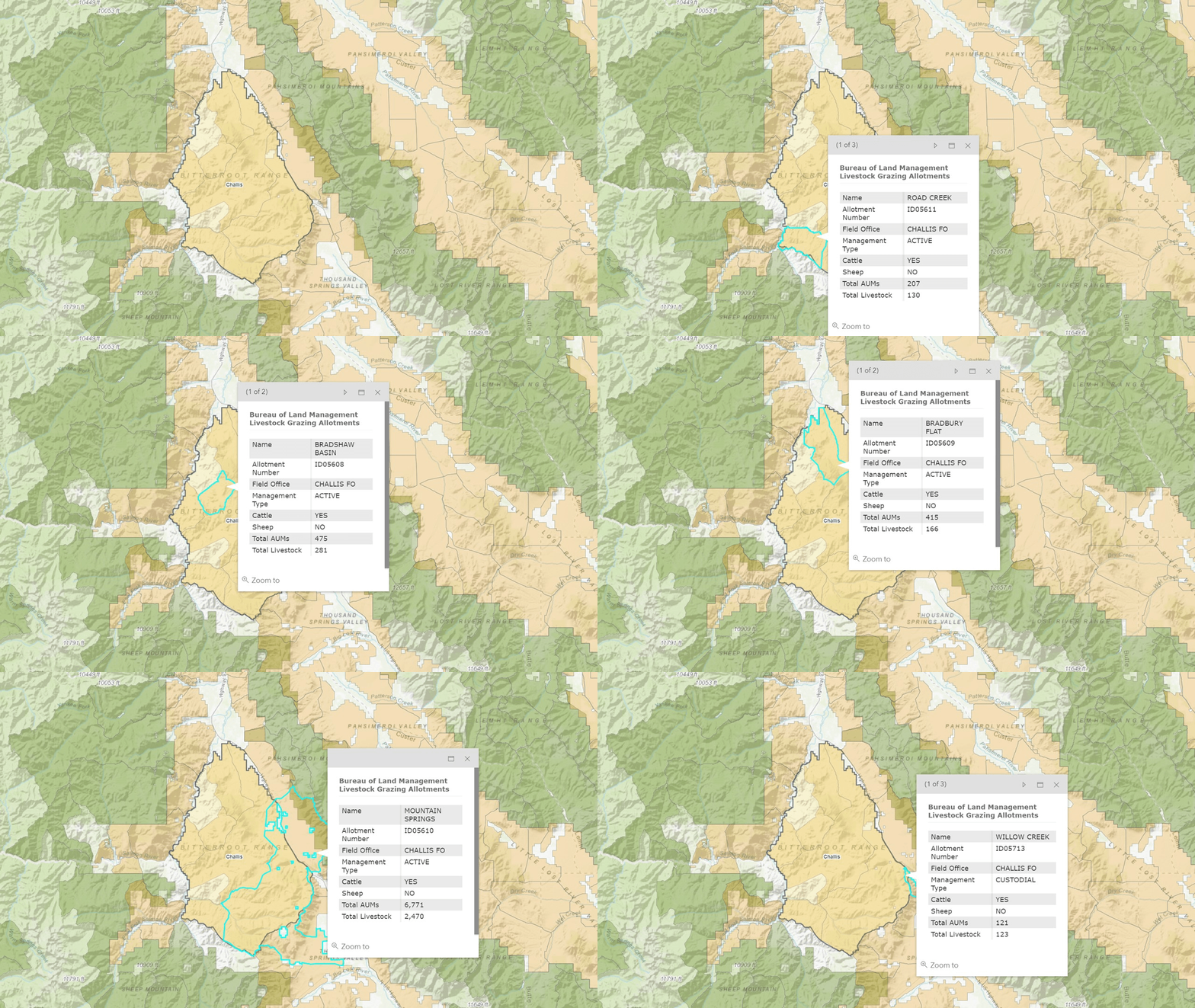
The Western Watersheds map shows the grazing allotments into which the HMAs have been divided.  Click on image to open in new tab.

Not shown are the HAs that fill the spaces between the HMAs, now managed almost exclusively for livestock.  They appear on pages eight and ten of the BLM map.

Rock Springs HMAs 10-13-21

Day 8 ended with 42 unaccounted-for animals.

Other statistics:

  • AML: 2,165 (across five HMAs)
  • Forage assigned to horses: 25,980 AUMs per year
  • Pre-gather population: 5,105
  • Forage liberated to date: 2,028 AUMs per year
  • Water liberated to date: 1,690 gallons per day
  • Forage assigned to livestock: 191,791 AUMs per year (estimated)
  • Horses displaced from HMAs by livestock: 15,982 (32% of off-range holding)
  • True AML: 18,147

RELATED: Rock Springs Roundup Day 6.

Surprise Complex Roundup Ends

The incident concluded on October 14, according to statement at the gather page, with 1,216 horses captured, 1,039 shipped, 156 returned and 21 dead.

Of the horses returned, 68 were treated with fertility control.

The removal goal of 1,050 was achieved.

Six HMAs were affected.

Wild horse roundups don’t restore thriving ecological balances.

They enforce the resource allocations of land-use plans, which usually put the interests of livestock operators far above those of the horses.

RELATED: Roundup Starts Next Week at Surprise Complex.

UPDATE: BLM news release issued October 15.