The first group of horses have been “saved,” according to a column in the Pagosa Daily Post, and are now in the hands of a trainer who can’t accomplish anything without a bag of alfalfa cubes over her shoulder.
RELATED: Mesa Verde Roundup Rebooted?

Western Horse Watchers Association
Exposing the Hypocrisy, Lies and Incompetence of the Wild Horse Advocates
The first group of horses have been “saved,” according to a column in the Pagosa Daily Post, and are now in the hands of a trainer who can’t accomplish anything without a bag of alfalfa cubes over her shoulder.
RELATED: Mesa Verde Roundup Rebooted?
The incident began on October 7. Gather stats through December 1:
A stallion suffered a broken leg and a mare suffered a ruptured uterus on Day 55 as a result of the roundup. A stallion was euthanized on Day 56 due to a pre-existing leg injury. The death rate is now 0.6%.
The cumulative total includes 1,066 stallions, 1,106 mares and 555 foals. The gather page shows 1,236 stallions.
1,236 + 1,106 + 555 = 2,897
Foals represented 20.4% of the horses captured. Of the adults, 49.1% were male and 50.9% were female.
Body condition scores were not reported.
Gather activity continued at Salt Wells Creek and Adobe Town. Five HMAs are involved in the roundup.

Day 56 ended with 171 unaccounted-for animals. The total number of horses removed is 2,727 – 46 = 2,681, which includes these animals.
Other statistics:
RELATED: Rock Springs Roundup Day 54.
The operation concluded on November 22, according to a statement at the gather page, with 12 horses captured, 12 shipped and none dead.
The removal goal was 73.
The incident began on September 16 and was billed as an emergency.
Their program is equivalent to a roundup of about 100 wild horses every year.
EXTRA CREDIT: Estimate the growth rate based on the number of foals in the video.
The loss of two mares on Day 53 is discussed in this article by Cowboy State Daily but that’s not the story.
The writer sourced some of the information from the Campaign Against America’s Wild Horses, architects of the industrial-scale darting program on the Virginia Range that’s equivalent to a roundup of 500 to 1,000 wild horses every year.
The way to avoid gather-related injuries and deaths is to end wild horse reproduction, not public-lands ranching, which is the cause of the removals.
Many of the advocates concur with that approach. Some send mixed messages.
Note that the author repeated the government’s figures without checking the math: “As of Sunday, BLM officials have gathered 2,478 horses (1,044 stallions, 1,001 mares and 503 foals), with the goal of rounding up 3,500 by the end of the year, if not sooner.”
Over 3,000 documents covering sixty years of history can now be accessed online, according to today’s announcement.
The records have been sorted by date, format, subject and creator.
Of course they do. The advocates have filled that role.
And they want you to think that getting rid of them with PZP is better than getting rid of them with helicopters.
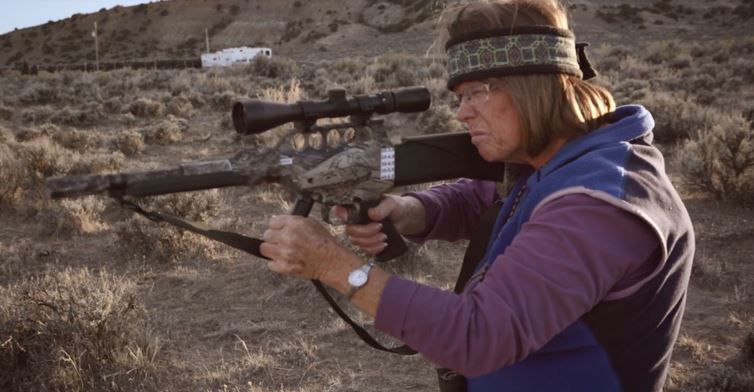
Fools! The ranchers and bureaucrats are laughing at you.
The incident began on October 7. Gather stats through November 29:
Two mares ran into panels and broke their necks on Day 53. A horse was euthanized on Day 54 due to a leg injury. The death rate is 0.5%.
The cumulative total includes 974 stallions, 1,001 mares and 503 foals. The gather page shows 1,044 stallions.
1,044 + 1,001 + 503 = 2,548
Foals represented 20.3% of the horses captured. Of the adults, 49.3% were male and 50.7% were female.
Body condition scores were not reported.
Gather activity continued at Salt Wells Creek and Adobe Town. Five HMAs are involved in the roundup.
Day 54 ended with 150 unaccounted-for animals. The total number of horses removed is 2,478 – 46 = 2,432, which includes these animals.
Other statistics:
RELATED: Rock Springs Roundup Day 52.
The incident was set to begin in October but has been postponed until early next year, according to a report by The Bulletin of Bend, OR, due to limited availability of panels used to make the traps and corrals.
RELATED: Big Summit Management Plan in the News.
Their motto is “Stay Wild.” Unfortunately, that only applies to the remnant.

The BLM retiree hired by the Campaign Against America’s Wild Horses said in a video included with the story last week by KLAS News that they are darting between 1,200 and 1,400 mares every year.
They are targeting every one of them—whether they need it or not—as suspected in the previous post, and the number of horses treated over the past two years is well in excess of the 2,000 stated in the article.
With the birth rate approaching zero, the only thing missing is a strategy to increase the death rate.
The long-term goal is not to eradicate these mustangs but to convince the bureaucrats that the technique is viable in other areas.
Almost certainly they are watching closely, and may be most surprised by the lack of public outcry.
The incident began on October 7. Gather stats through November 27:
Helicopters did not fly on Days 49, 50 and 51.
A horse was euthanized on Day 49 due to a leg injury. The death rate is 0.4%.
Foals represented 20.3% of the horses captured. Of the adults, 48.9% were male and 51.1% were female.
Body condition scores were not reported.
Forty five stallions were released on Day 51, which may be intended to increase the number of males relative to females. The practice, known as sex ratio skewing, slows reproduction and keeps the resource scales tipped in favor of the public-lands ranchers for longer periods of time.
The advocates prefer PZP darting.
Gather activity continued at Salt Wells Creek. Five HMAs are involved in the roundup.
Day 52 ended with 111 unaccounted-for animals.
Other statistics:
RELATED: Rock Springs Roundup Day 47.
“They are happening to remove these federally protected animals as competition for forage for commercial livestock,” according to the writer of a guest column in The Bulletin of Bend, OR.
Send your donations to her, not the advocates.
In an interview with MTN News, she said management of public lands should be balanced and fair, and the people should see themselves as a part of that process.
A report posted yesterday by KPAX TV of Missoula, MT did not include any remarks about wild horses and burros.
“We can’t be telling the public that the land can only support one wild horse per thousand acres when the Virginia Range is carrying ten.”
“Somebody needs to fix that.”
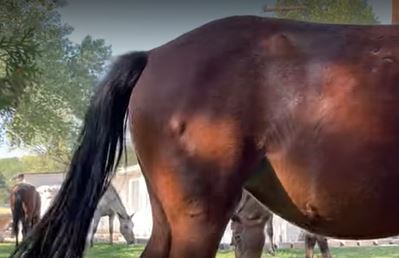
RELATED: Advocates Lying About Virginia Range Darting Program?
The story earlier this week by KLAS News said the advocates have applied over 2,000 doses in the past two years and that the herd size “right now is pretty stable,” suggesting that they’ve achieved achieve zero population growth.
Do those numbers make sense? How many horses would they have to eliminate each year to bring the birth rate in line with death rate?
Before they got involved in 2019, approximately 3,000 wild horses roamed on 300,000 acres.
The stocking rate was ten wild horses per thousand acres, well above the target rate of one wild horse per thousand acres that the BLM says is sustainable.
Trailcam photos posted on these pages over the last few years show the horses were in good condition (go to the Index and scroll down to Virginia Range).
The bureaucrats, eager to erase this outlier, said the area should have no more than 600 wild horses and, ideally, just 300, in line with the rancher-friendly management plans of the HMAs.
The advocates, agreeing with the narrative and happy to advance the ranching agenda, offered to help. Better to get rid of them with PZP than helicopters or bait.
The growth rate of a herd depends on the birth rate and death rate:
Growth rate = Birth rate – Death rate
To keep the herd size constant, the advocates shoot some of the mares with PZP darts, so the birth rate is roughly equal to the death rate.
To reduce the herd size, the advocates dart as many mares as possible, driving the birth rate to zero.
This is what the Salt River Wild Horse Darting Group has done, and based on trailcam evidence this year, appears to be what the Virginia Range darting team is doing: Only one foal was photographed this year, not seen in the months hence.
Both groups receive support from the Campaign Against America’s Wild Horses.
If a herd grows at a rate of 15% per year and the death rate is 5% per year, the birth rate must be 20% per year. In a herd of 3,000, 600 foals would be born and 150 horses would die.
If a herd grows at a rate of 20% per year and the death rate is 5% per year, the birth rate must be 25% per year. In a herd of 3,000, 750 foals would be born and 150 horses would die.
To keep the herd size stable, the advocates would have to prevent 450 births at a 15% growth rate and 600 births at a 20% growth rate.
This is equivalent to a roundup every year.

Over a two year period, 900 doses would be needed if the herd was growing at a rate of 15% per year and 1,200 doses would be required if the herd was growing at a rate of 20% per year.
The treatment is not 100% effective so the actual number of doses will be higher, but not over 2,000 as stated in the story.
How do you explain the discrepancy? The advocates weren’t hired to maintain the herd size, they were charged with drastic reduction.
Western Horse Watchers believes the herd was on its way to filling its niche and the growth rate was closer to 15% per year, maybe less, and not 20% per year, the rate used by land managers to predict herd sizes.
So the advocates should have been able to achieve ZPG with around 1,000 doses.
Given that they’ve used at least twice that many, wild horse numbers are probably going down, but they won’t admit it.
Worse, the story said that a mare can no longer reproduce after five to seven years of treatments (five are sufficient) so their goal may actually be sterilization, but they’re not going to acknowledge that either.
RELATED: AWHC Compromised?
He’s known for the 15 metal horses galloping across a ridge near Vantage, WA, among other things. The sculpture was never completed due to lack of funds.
The horses were supposed to spill out out of a 25,000-pound, 36-foot-diameter steel basket, according to a report by The Spokesman-Review of Spokane, WA.
RELATED: Artist Returns to Unfinished Sculpture Thirty Years Later.
The contest raised over $1,500, at $2 per vote, according to a story posted today by the Maryland Coast Dispatch.
RELATED: Assateague Name-That-Foal Contest Starts Next Week.
Assertions are best. Rock your opponents back on their heels.
If you want to help America’s wild horses, don’t focus on the horses. The advocates focus on the horses. Look upstream in the management process. Change the policies and plans that put ranching interests far above those of the horses.
RELATED: Rift in Wild Horse World, Origin of AMLs?
 Western Horse Watchers Association