BLM Offers $7.5 Million for WHB On-Range Partnerships

Grants awarded under this opportunity will support the agency’s mission of managing and protecting wild horses and burros on public lands, according to the news release.

Projects should align with the three tenets of rangeland management and could involve, for example, application of fertility control to slow herd growth, monitoring herd and land health, and improving rangeland habitat.

A useful topic in the area of land health would be to determine the forage allocations for wildlife, wild horses and livestock in every HMA and attach those results to existing pages about the HMAs, so the American people can see how resources are managed.

Then they will realize that overpopulation means more horses than allowed by plan, not more horses than the land can support, and that all of the off-range corrals could be emptied several times over if the ranchers were confined to their base properties or discouraged from using public lands by bringing grazing fees in line with market rates.

RELATED: BLM Offers $7.5 Million for WHB Adoption Partnerships.
Nevada WHR Roundup, Day 3

The incident began on December 8.  Results through December 10:

  • Scope: Nevada WHR
  • Purpose: Pest control, resource enforcement, rancher protection
  • Target: Horses
  • Type: Planned
  • Method: Helicopter
  • Category: Cruel and costly*
  • Better way: Get rid of them with ovary-killing pesticides*
  • Captured: 123, up from 60 on Day 1
  • Average daily take: 41.0
  • Capture goal: 350
  • Removal goal: 138
  • Returned: 1, up from zero on Day 1
  • Deaths: 2, up from 1 on Day 1
  • Shipped: 58, up from zero on Day 1

The capture total on Day 1 was changed from 59 to 60.

A stallion was released (escaped?) on Day 3.  No details were given.

A mare was dispatched on Day 2 due to a fractured radius (leg bone).

The death rate is 1.6%.

The capture total includes 36 stallions, 69 mares and 18 foals.

Youngsters represented 14.6% of the animals gathered.

Of the adults, 34.3% were male and 65.7% were female.

Body condition scores were not given.

The WHR is not subject to permitted grazing but surrounding lands are.

*According to advocates.

Nevada WHR with Allotments 12-11-23

Day 3 ended with 62 unaccounted-for animals.

Up to 106 mares will be treated with GonaCon Equine, a fertility control pesticide, before being returned the range with up to 106 stallions.

Other statistics:

  • Forage liberated to date: 1,464 AUMs per year
  • Water liberated to date: 1,220 gallons per day
  • Horses allowed by plan: 500
  • Pre-gather population: 438
  • Forage assigned to horses: 6,000 AUMs per year
  • Forage assigned to livestock: None
  • Horses displaced from HMA by permitted grazing: None
  • True AML: 500
  • Stocking rate at new AML: 0.4 wild horses per thousand acres
  • Horses displaced by drilling and mining: Ask the advocates

RELATED: Nevada WHR Roundup Begins.

How Many Wild Horses Can the East Range HA Support?

It’s the second of three areas identified for wild horses in the East Pershing Complex that’s now managed principally for livestock.

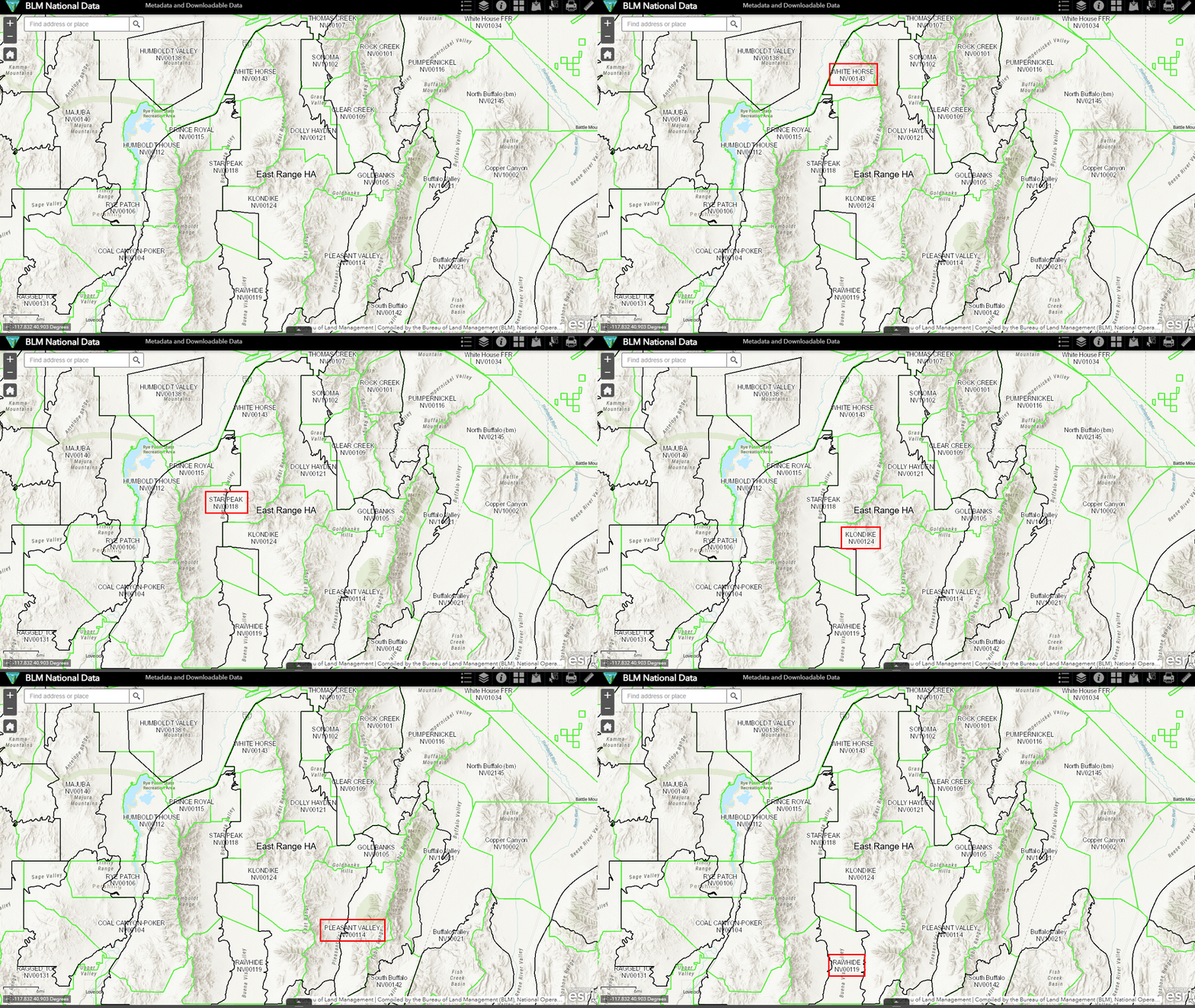
Table 9 in the Final EA for pest control and resource enforcement indicates seven allotments that intersect the HA.

The figures for overlap in the last column seem reasonable based on inspection of the parcels in the National Data Viewer.

The NDV indicates that the northern half of the HA is mostly checkerboard lands while the southern half is mostly public lands.

The Allotment Master Report provides management status, acreage and active AUMs.

East Range Calcs 12-09-23

Around 55% of the public lands are in the Improve category.

The condition of Klondike is unknown.  The custodial category is usually reserved for allotments covering a small percentage of public lands.

Low forage density in Star Peak and Dolly Hayden suggests they are not very useful from a grazing viewpoint.  Rawhide may be recovering from overuse, wildfire or some other deficiency.

The forage assigned to livestock inside the HA is 15,356 AUMs per year, equivalent to 1,280 wild horses.  The current AML is zero so the True AML would be 1,280.

The HA covers 451,904 total acres, including 321,328 public acres, so the stocking rate at the new AML would be four wild horses per thousand public acres.

This brings great embarrassment to land managers who for years have stated that public lands in the western U.S. can only support one wild horse per thousand acres (27,000 animals on 27 million acres).

These same managers collect 15,356 × 1.35 = $20,730 per year from ranching activity inside the HA, while spending 1,280 × 5 × 365 = $2,336,000 per year caring for the horses displaced thereby.

Would you say that’s a wise use of the public lands?

A 160-acre checkerboard parcel inside the HA and Dolly Hayden allotment was offered for sale earlier this year.  The listing included photos of wild horses.

The EA and related documentation can be found in the project folder at ePlanning.

RELATED: How Many Wild Horses Can the Sonoma Range HA Support?

East Range HA with Allotments 12-09-23

How Many Wild Horses Can the Sonoma Range HA Support?

It’s one of three areas identified for wild horses in the East Pershing Complex that’s now managed principally for livestock.

Table 9 in the Final EA for pest control and resource enforcement indicates eight allotments that overlap the HA.

The National Data Viewer suggests that roughly half of Thomas Creek is outside the HA so 50% was used for the amount of overlap instead of 100% as indicated in the table.

The other percentages look okay.

The Allotment Master Report provides management status, acreage and active AUMs.

Sonoma Range Calcs 12-08-23

Approximately 61% of the public acreage is in the Improve category.

The forage assigned to livestock inside the HA is 9,989 AUMs per year, enough to support 832 wild horses.  The current AML is zero so the True AML would be 832.

The HA covers 212,587 total acres, including 150,095 public acres, so the stocking rate at the new AML would be 5.5 wild horses per thousand public acres.

An assumption in the calculations above is that forage is evenly distributed across the allotments.  If 95% of Clear Creek is inside the HA, then so is 95% of the forage.

The base property tied to the Sonoma Allotment was on the market earlier this year for $11.2 million.

The base property tied to Clear Creek sold last year to J6 Ranches.

RELATED: Habitat Loss in the East Pershing Complex.

Sonoma Range HA with Allotments 12-08-23

Clan Alpine Confusion

The daily reports stopped on November 28 with 257 unaccounted-for horses.

Yesterday a report for November 29 was added, indicating 69 horses shipped and one death.

That leaves 187 unaccounted-for animals.

The sidebar at the gather page shows the release of 68 stallions but that figure does not appear in the daily reports.

The incident has not been marked complete and there has been no news release.

RELATED: Status of Clan Alpine Roundup?

Foal-Free Friday, Surveying the Adjectives Edition

Which of these terms, when used by the advocates, helps you believe that they really care about wild horses and that they’d never do anything harmful to the herds?

a. Cherished

b. Beloved

c. Innocent

d. Treasured

e. Iconic

f. Majestic

If you chose any of these words, and offered your financial support thereby, the joke’s on you because they’re beating the populations down with ovary-killing pesticides so ranchers can access most of their food and water.

RELATED: Foal-Free Friday, Defunding the Advocates Edition.

Adjectives for Pests 12-01-23

BLM Going Dark on McGregor Grazing Results?

The 2023 auction was announced on September 7 but results have not been posted.

The 2022 auction was announced on September 6 and results were published on October 27.

An email inquiry sent on December 4 has not been answered.

Why would they want to hide the results?

Because they give insight on market conditions and going rates for livestock grazing, which dwarf the current fee of $1.35 per AUM, suggesting that it’s ridiculously low and that the American people are not receiving a fair return for the use of public lands.

This brings great embarrassment to the bureaucrats and ranchers.

RTELATED: Price of Hay Unchanged, Still Too High.

Researchers to Study Mountain Lion Prey in Caliente Complex

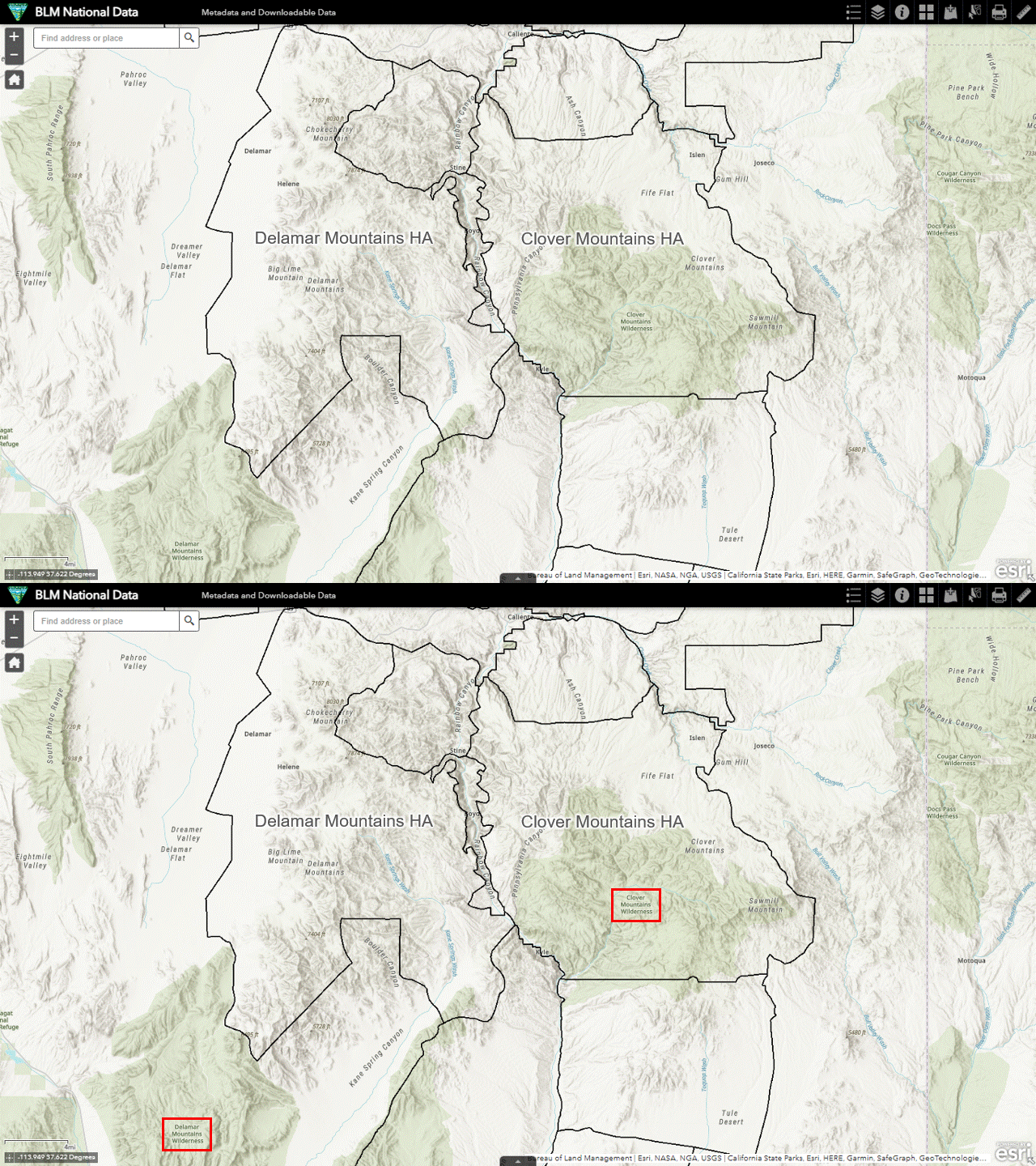
The Nevada Department of Wildlife, in partnership with Utah State University and the U.S. Geological Survey, has approached the BLM about monitoring prey selection in two HAs that overlap or are near designated wilderness areas in southeastern Nevada.

The researchers suspect that predation behavior will change after a sudden decrease in the equine population, as would result from a roundup, shifting toward native species such as mule deer, elk and bighorns.

That would be unwelcome news for big game hunters.

Could it also shift to nonnative species, such as privately owned cattle and sheep?

The area is subject to permitted grazing.

The answers seem obvious: If you’re a mountain lion and you lose a major food source, you change your diet, move to another area or die.

The study is not consistent with the claim that wild horses have no natural predators.

Data will be collected with trailcams.

The Draft EA was the only document copied to the project folder.

Comments will be accepted through December 14.

RELATED: Caliente Complex in Pictures.

Caliente Mountain Lion Study 12-06-23

Court Dismisses Salt River Legal Action

The case brought earlier this year by the Center for Biological Diversity, Arizona Sportsmen for Wildlife Conservation and the Arizona Wildlife Federation, alleging that wild horses were destroying the habitats of endangered species in the Tonto National Forest, has been tossed according to a report by KPNX News.

The decision does not protect the horses.  It may have alleviated the risk of forcible removal, but nonmotorized removal by the Salt River Wild Horse Darting Group, an affiliate of the Campaign Against America’s Wild Horses, will continue.

Simone Neterlands with Darting Rifle 09-02-23

The goal is to take the population of approximately 400 animals down to 200 in ten years, after which the mares will be sterile and the herd will be lost—forever.

RELATED: Coalition Sues Forest Service Over Salt River Horses.

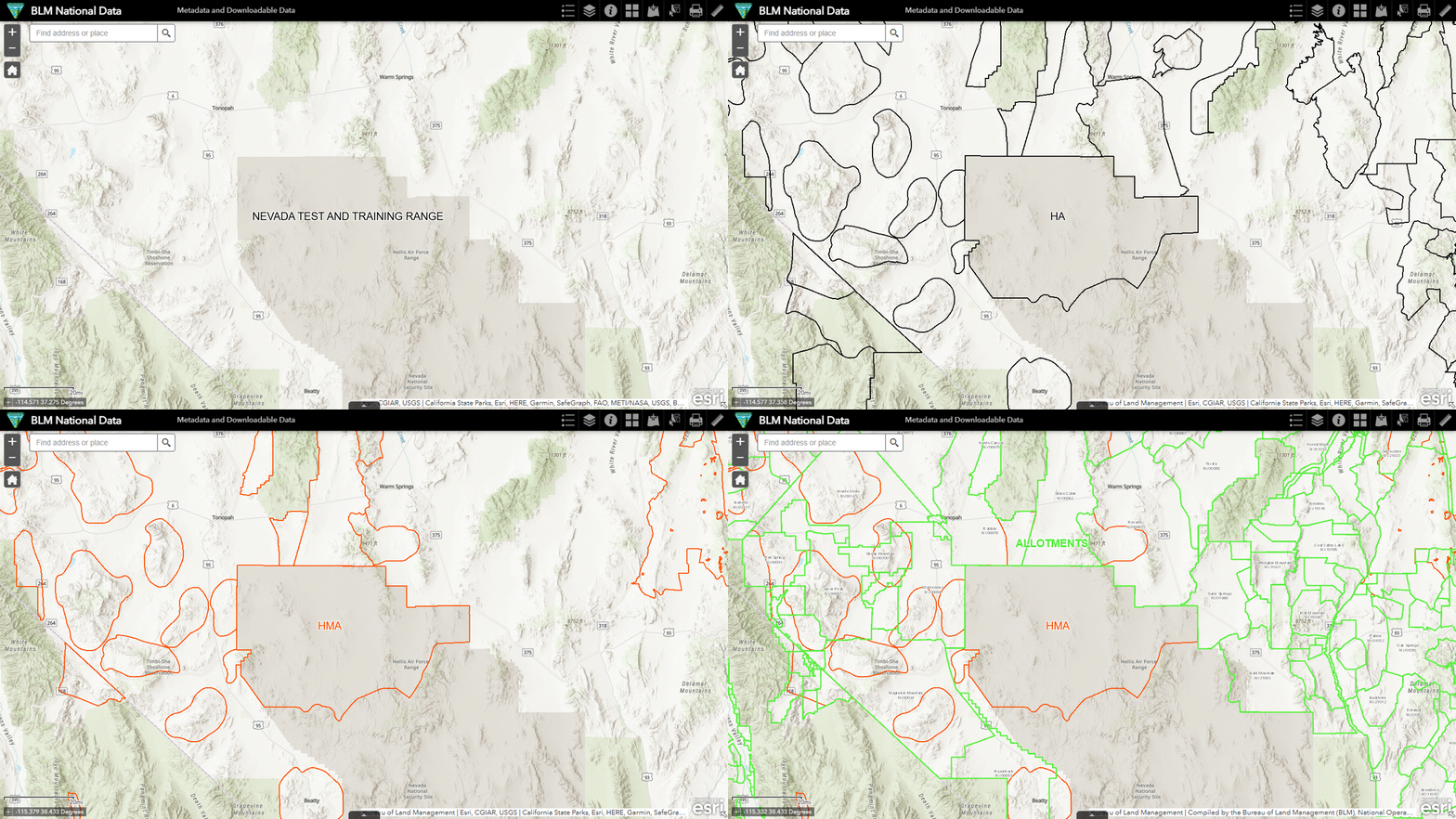
Nevada WHR Roundup Starts This Week

The FY24 schedule shows a December 7 start date but today’s news release indicates December 8.

The plan calls for the capture of 350 wild horses, removal of 138, treatment of up to 106 mares with GonaCon Equine (a fertility control pesticide) and the return of 212.

The current population is thought to be 438, within the AML of 300 – 500.

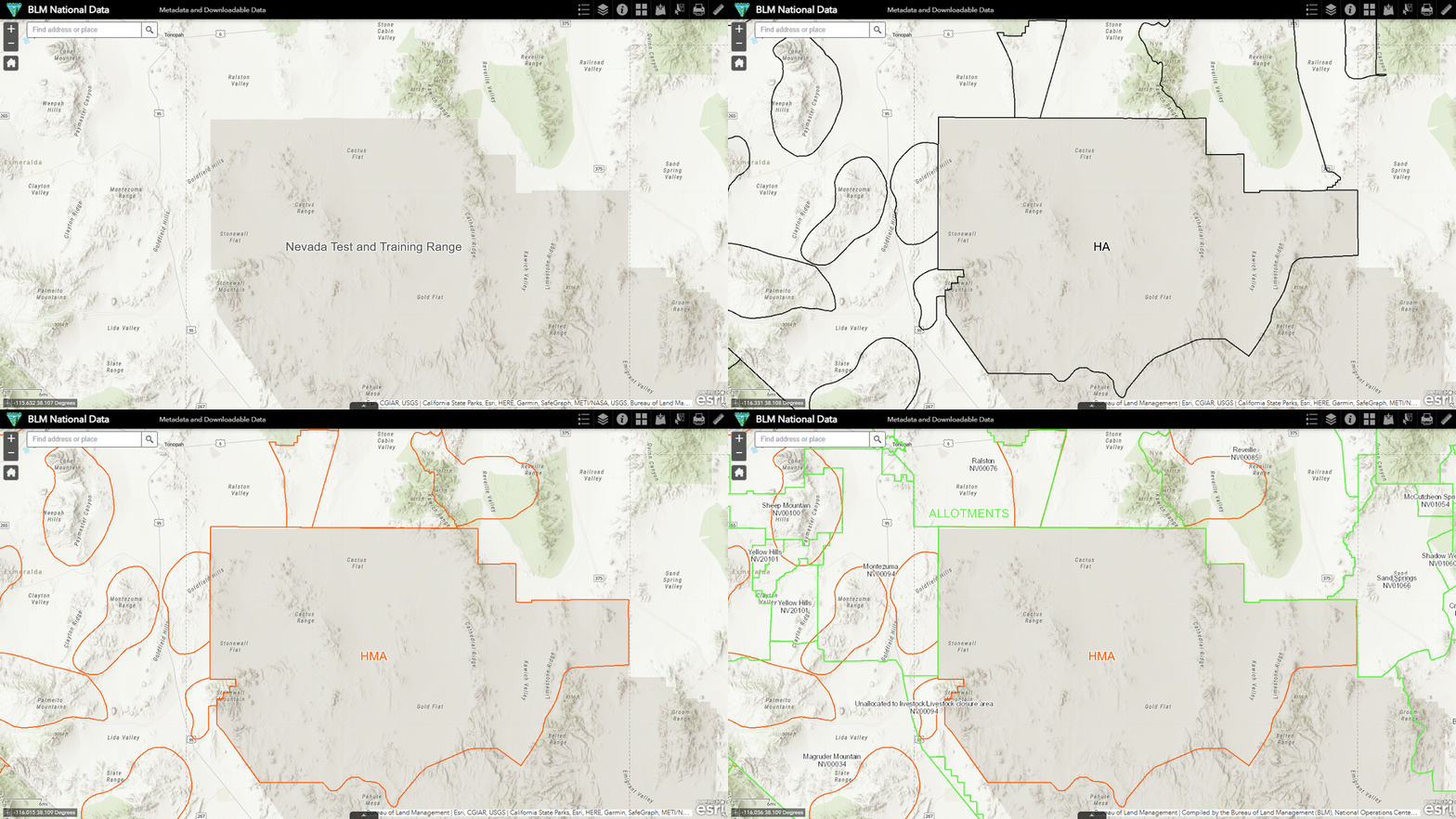
The WHR lies within the Nevada Test and Training Range so the incident will not be open to public observation.

Animals designated for removal will be taken to the Ridgecrest off-range corrals.

The WHR covers 1,301,637 acres of military land southeast of Tonopah and is not subject to permitted grazing but surrounding lands are.

A roundup two years ago removed horses and burros from the area.

Nevada WHR and Allotments 12-05-23

Virginia Range Darting Update for November 2023

The Campaign Against America’s Wild Horses, a leader in nonmotorized removal, indicated in the November report that 162 mares received 162 doses of Zonastat-H during the month, 31 given as a primer and 131 as a booster.

Over the life of the program, which began in 2019, 1,978 mares have received an astonishing 8,399 doses of the ovary-killing pesticide.

Of the 175 foals born this year in the primary target zone, 90 have died, in some cases with the aid of predators.

The current population is thought to be 3,479 with 350 horses listed as missing, compared to 3,498 with 338 listed as missing in October.

A goal for December is to “Continue to maximize booster treatments to mares across the Virginia Range to prevent pregnancies, allowing for continued population reduction.”

Better Way 10-25-23

Not discussed in the report:

  • Long-term population goal
  • Size of breeding population
  • Loss of genetic diversity
  • Herd demographics (average age of herd, sex ratio, percent foals)
  • Changes in death rates
  • Risk of sterility

The program is now in its fifth year and many of the mares are at the point of no return.

The report will be submitted to the Nevada Department of Agriculture.

The Virginia Range is subject to permitted grazing.

RELATED: Virginia Range Darting Update for October 2023.

Pesticide Pushers 07-17-23

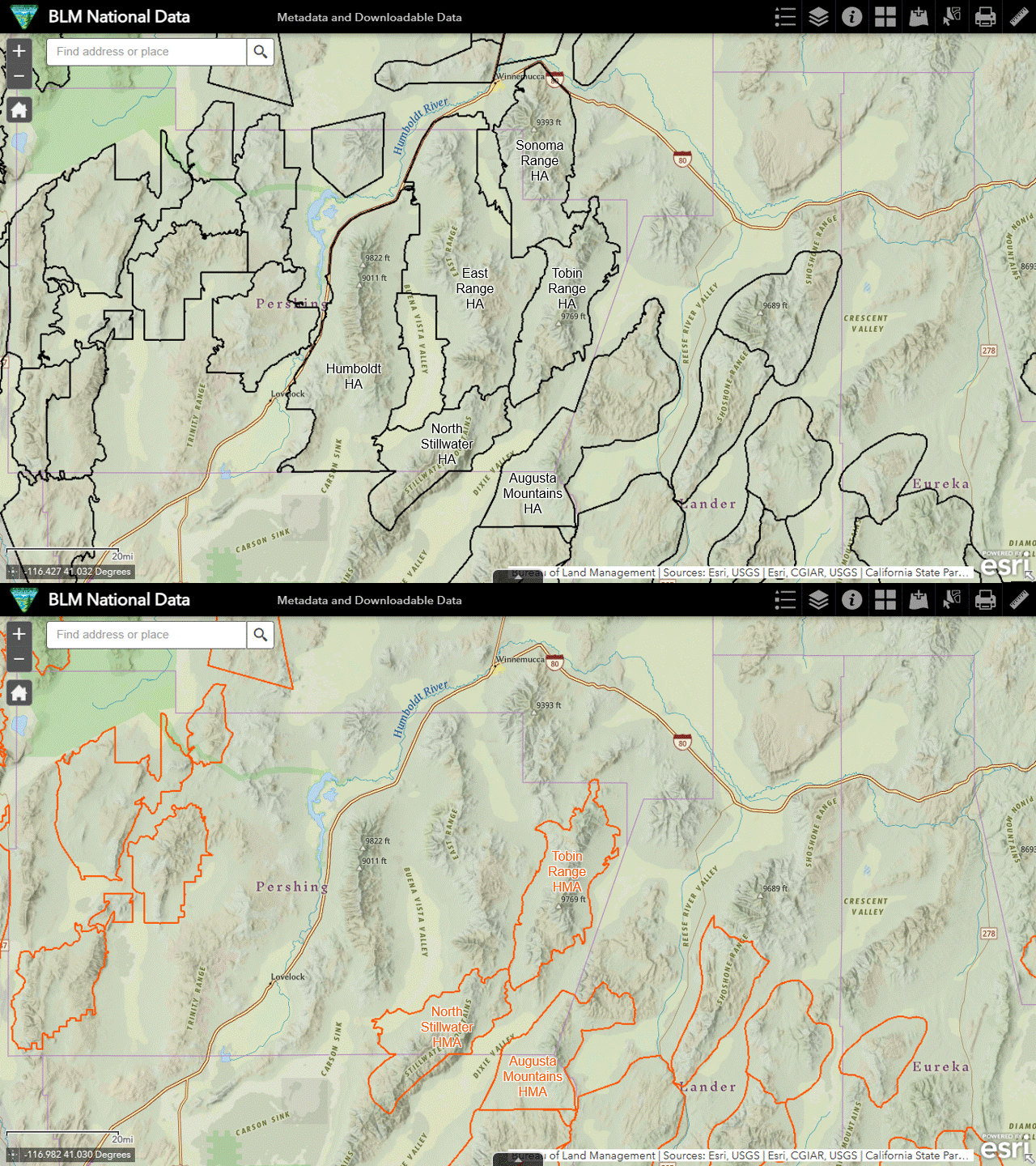
Introduction to the East Pershing Complex

The largest roundup of FY24 is scheduled to begin on December 28, with 2,875 wild horses to be captured and removed.

As of today, the incident has not been announced by the BLM and a gather page has not been created.

The Complex, consisting of three HMAs and four HAs, may get its name from the county in Nevada where the action will occur.

The roundup aligns with three tenets of rangeland management:

  • Pest control
  • Resource enforcement
  • Rancher protection

The advocates, defeated a long time ago and now desperate for a seat at the table, eagerly participate in the process.

Alternative B in the Final EA was authorized by the Humboldt Field Office in a 2018 Decision, minus the sterilization option.

You can find these documents in the project folder on ePlanning.

Figure 1 shows the HAs and HMAs.

Figure 2 shows the grazing allotments.

Section 3.12 in the EA discusses livestock grazing and resource apportionment.

How much forage has been assigned to the ranchers in the lawful home of wild horses?

Don’t look to the advocates for answers.