Explosion Spares Life of Spirit of the Wild Horse Director

Judy Barnes, founder of the nonprofit, was house-sitting in Santa Fe when the incident occurred, according to a story by KRQE News of Albuquerque, NM.

Her home was destroyed, along with $5,000 worth of horse supplies.

Investigators have not determined the cause.

Barnes has been looking after the free-roaming horses of Wild Horse Mesa for nearly twenty years.

RELATED: Wild Horse Mesa Confirmed.

Wild Burro Found Dead Near Pahrump, Reward Posted

The remains were discovered November 28 on private property near the Last Chance Mountain Range, according to a BLM news release.

The agency has offered $10,000 for information leading to the arrest and conviction of the person(s) responsible.

The Last Chance Mountains are in the Johnnie HMA, the lawful home of wild burros.

The HMA is not subject to permitted grazing.

Private lands are shown in white in the following map from the National Data Viewer.

Pahrump Burro Shooting 04-18-23

Should Wild Horses Be On or Off the Range?

Consider one such animal.

If he’s on the range, the government loses 12 AUMs per year × $1.35 = $16.20 per year in grazing fees but saves $5 per day × 365 = $1,825 per year in holding costs.

If he’s off the range, the government collects 12 AUMs per year × $1.35 = $16.20 per year in grazing fees but spends $5 per day × 365 = $1,825 per year in holding costs.

The price of hay has doubled in the last 18 months, so the cost of short-term holding is likely more than $5 per day.

The cost of long-term holding is around $2 per head per day.

There are currently around 62,000 animals in off-range holding, with about one third in short-term holding and two thirds in long-term holding.

For simplicity, let’s assume that the weighted average cost across all facilities is $3 per animal per day and that they’re all horses.

.33 × 5 + .67 × 2 ≅ 3

If they were returned to their lawful homes, the government would forfeit 62,000 × 12 × $1.35 = $1 million per year in grazing fees while saving 62,000 × 3 × 365 = $68 million per year in holding costs.

Who wouldn’t jump on that?  The bureaucrats, ranchers and advocates.

We need to beat down the population with helicopters and snuff out new life with PZP so ranchers can access most of the food and water in the lawful homes of wild horses.

The forage assigned to livestock in areas identified for wild horses would support more than 62,000 animals, enough to empty all of the off-range facilities several times over.

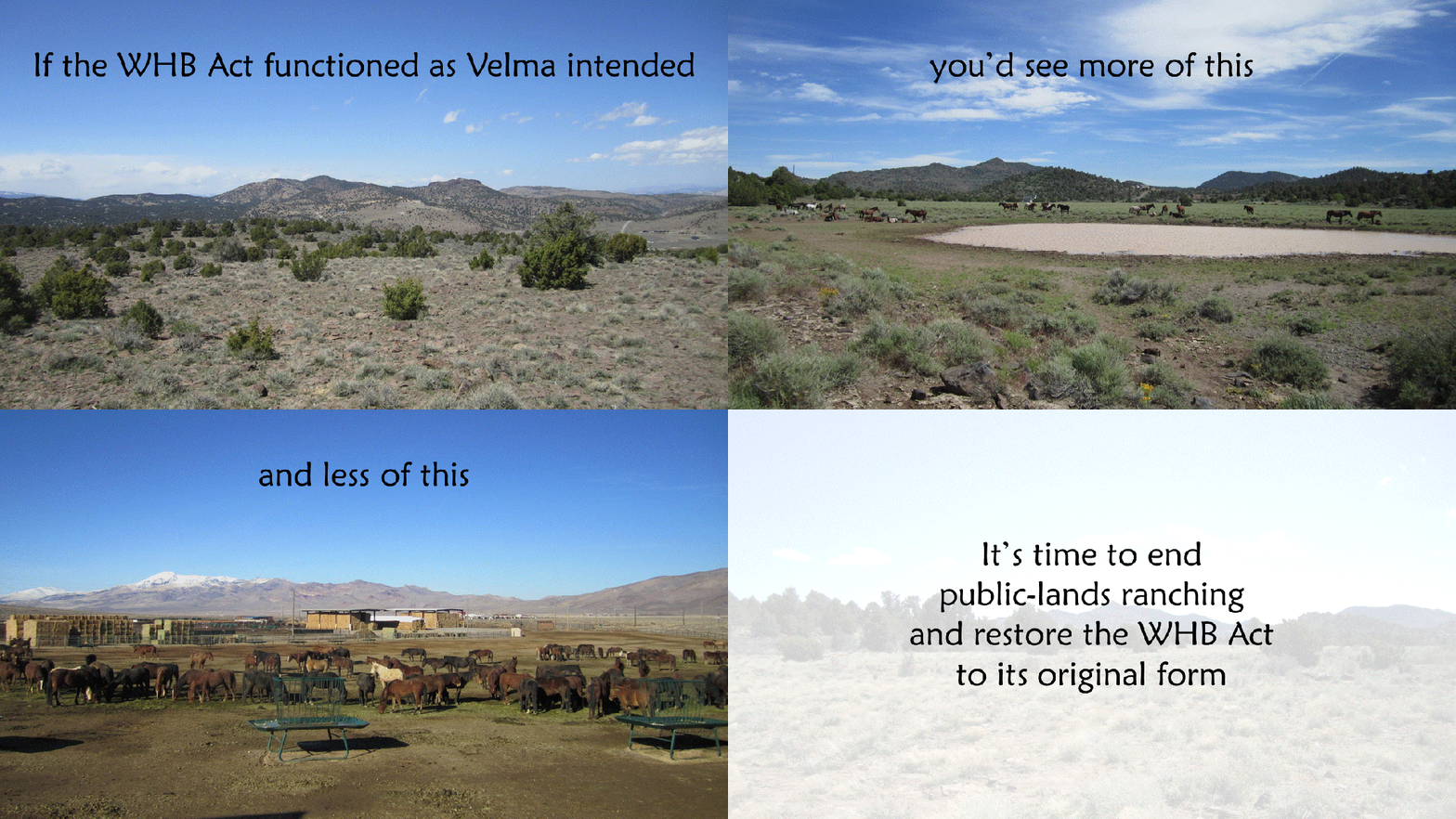
How to achieve?  Confine the ranchers to their base properties in a year-round off season and restore the WHB Act to its original form.

PSA 12-03-19

CAAWH Seeks More Land in Pine Nut Mountains?

The 3,335 acres acquired by the Campaign Against America’s Wild Horses were placed into a trust, according to an article in the April edition of Horse Tales by the real estate agent and PZP darter involved in the transaction.

She did not indicate if she benefitted financially from the deal.

There are no remarks about base properties, permitted grazing and active AUMs.

Now, CAAWH is searching for ways to raise funds to purchase another 6,000 acres.

Only about half of the land originally identified for the Pine Nut horses has an AML, as explained by the author at the beginning of the column.

Resources in the other half have been assigned to livestock, the driver of the safe, proven and reversible fertility control program.

RELATED: CAAWH Acquires Pine Nut Base Property?

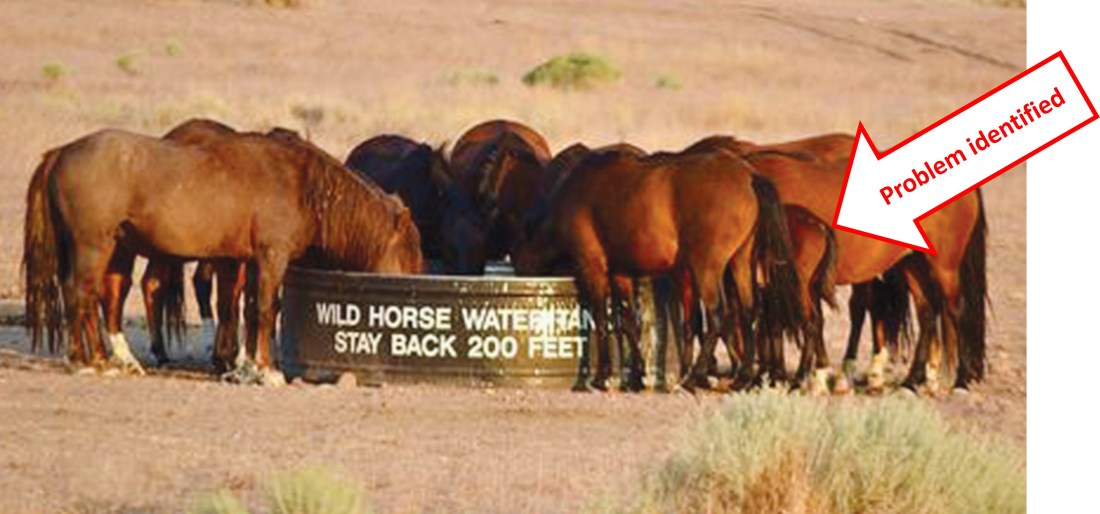
Problem Identified 04-16-23

Bureaucrats Trying to Amend FLPMA, Expand “Multiple Use?”

Only Congress can do that, but it won’t stop them from trying.

A new regulation, announced in a March 30 news release, would designate conservation as a use, on par with other uses of the public lands under FLPMA’s multiple-use and sustained-yield framework, but did not indicate what those other uses were.

The proposed rule, published in the Federal Register on April 3, establishes conservation leases to promote protection and restoration of public lands, while providing opportunities for public involvement.

It would also amend the ACEC regulations to ensure that the BLM gives priority to the designation and protection Areas of Critical Environmental Concern.

Comments will be accepted through June 20.  For more information, including a section-by-section discussion of the proposed rule, go to the Federal Register’s published document page.

The principal uses of public lands include, and are limited to, domestic livestock grazing, fish and wildlife development and utilization, mineral exploration and production, rights-of-way, outdoor recreation, and timber production, according to §1702(l) of FLPMA.

Conservation leases would be issued for a maximum of ten years, and a permittee would be any person that has a valid permit, right-of-way grant, lease, or other land use authorization from the BLM.

RELATED: New Reg Would Treat All Public Lands Like Grazing Allotments?

AML-1

Things That Make You Puke

Last year, she blew smoke up your butt about HMAPs.

This year, it’s habitat fragmentation.

Things That Make You Puke 04-15-23

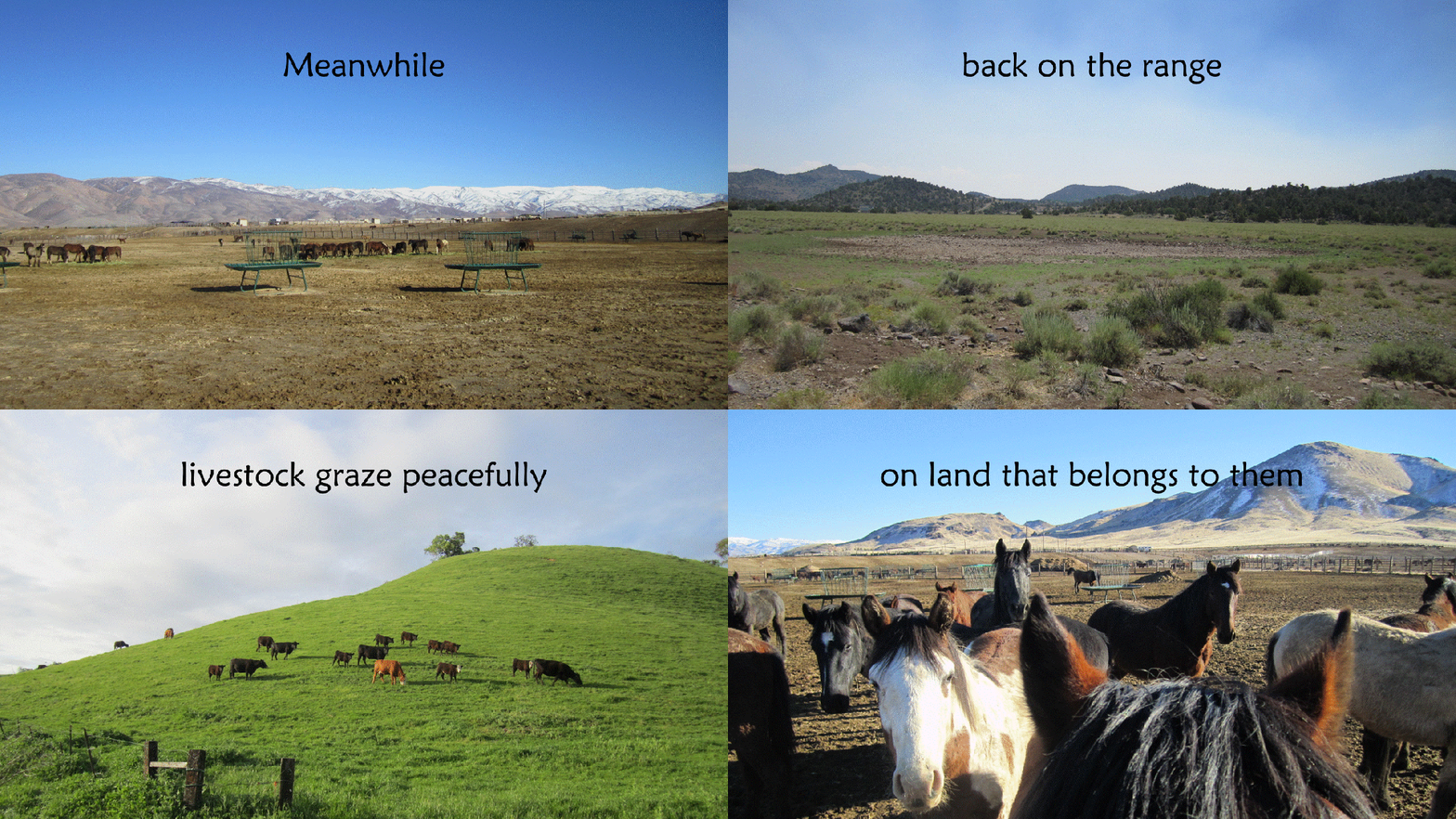
Anything to distract from the real problem, public-lands ranching, which devours entire HMAs and beyond, the driver of the overpopulation narrative and the reason why the off-range corrals and long-term pastures are flooded with “excess” animals.

Pummeling the mares with restricted-use pesticides only helps the ranchers.

PSA 12-07-19

Pryor Comments Pass 1,500

The Campaign Against America’s Wild Horses, a leader in the wild horse removal industry, has issued an Action Alert, reposted on the propaganda page of the Lucky Three Ranch, urging its followers to speak out against the proposed management plan, and they are now flooding the project with the same stupid comments.

The plan would cut the population in half, according to CAAWH, exactly what it’s trying to do on the Virginia Range, if not more.

These people are charlatans, no longer deserving of your financial support.

RELATED: Pryor Comments Pass 1,000.

Pryor Comments Pass 1500 04-15-23

TRNP Mares Sterile?

Do not be misled by this article that points the finger at GonaCon Equine.

PZP, the safe, proven and reversible fertility control vaccine endorsed by 98.6% of the wild horse advocates achieves the same result over a slightly longer timeframe.

As for the efficacy of GonaCon, Pendley indicated three years ago that it would inhibit the mares with one application.

RELATED: NPS Getting Rid of TRNP Wild Horses with GonaCon?

Shackleford Stallion Dies During Move to Rachel Carson Reserve

The incident occurred on April 12, while the animal was sedated, according to a report by WITN News of Greenville, NC.

Western Horse Watchers was unable to find an acknowledgment at the Cape Lookout news page.

The transfer would support the genetic viability and health at Rachel Carson.

Similar moves are carried out on rangelands in the American west, to boost genetic viability while keeping herd sizes small, a nod to the public-lands ranchers.

Genetic diversity can also be improved by allowing herd sizes to grow, exactly what the ranchers don’t want.

RELATED: Shackleford Herd Grew Slightly in 2022.

UPDATE: Park Service has acknowledged the loss.

Foal-Free Friday, Avoiding the “S-Words” Edition

The bureaucrats, ranchers and advocates are united in their belief that wild horse reproduction is the problem, not the reproduction rate.

If you’re at 3X AML, you’re not interested in slowing the growth rate but reversing it.

Given that AMLs are small relative to the available resources, the conflict between wild horses and privately owned livestock can be alleviated by confining the ranchers to their base properties in a year-round off season and expecting them to pay (OMG) the going rate to feed their animals, but that’s taboo in the Love Triangle and fringe groups like the Wild Horse Fire Brigade.

The decision earlier this week to test two new fertility control drugs is just the latest attempt to eradicate the pests in favor of the most noble and deserving nonnative species on America’s public lands.

What’s the difference between long-lasting contraception (that can be achieved with just one dose) and sterility?

Not much.  But you can’t call it sterility and you can’t refer to the experiments as sterilization research.  Off limits.

You can talk about self-boosting mares, but not in mixed company.

Using the Rule of 72 for a quick estimate, you need a growth rate of 72 ÷ 5 = 14.4% per year to double the herd size in five years.  If the death rate is six percent per year, the required birth rate is 20.4% per year.

You need a growth rate of 18% per year, and a birth rate of 24% per year, to double the herd size in four years, as some land managers and wild horse detractors claim.

What do the data indicate?  Consider the results from last year’s roundups that started on or after July 1 (after foaling season).  These figures are based on the daily reports, which may differ slightly from the cumulative totals posted to the gather pages.

Roundup Data After 2022 Foaling Season 04-13-23

The weighted average birth rate was 17.4%, implying a growth rate of 11.4% per year.

The death rate this year may be higher than normal, as previously discussed.

On average, one foal was born to every 2.6 mares.  Each mare produced 0.38 foals.

With the probability of a mare delivering a live foal slightly more than one out of three, the advocates target every animal they can get their sights on.

Why?  Because their goal is one of the S-words.

Hopefully their enmity and mettle will appeal to the bureaucrats and ranchers, who, like them, want the wild herds minimized and domestic herds maximized.

RELATED: Foal-Free Friday, Busting the Myth of Reversibility Edition.

Thriving Ecological Balance-3

Wyoming Wildlife Observers Speculate about Winterkill

With massive die-offs expected among antelope and deer, the fate of the state’s wild horses remains uncertain, according to a story dated April 11 by Cowboy State Daily.

So far, deep, hard-crusted snow has kept BLM field personnel from getting a clear idea of how the mustangs are doing, or how many may have killed by harsh conditions.

RELATED: More Wild Horses Lost This Winter Than Usual?

State Lawmakers Introduce Colorado Wild Horse Project

The bill would create the Wild Horse Management Project, a nonprofit, state-owned entity that manages and operates programs benefitting wild horses and supports wild horse management.

The project would provide state-level coordination, partnership development, and paid human resource development to support the work of those delivering contraceptives through darting, among other things.

Beware of the Advocates 01-21-23

Are you surprised by any of this?

Who do you suppose is pushing it?

A hearing by the Senate Agriculture & Natural Resources Committee has been set for April 20, according to the home page of SB23-275.

Decision Published for Fertility Control Research

The Decision Record, signed April 10, authorizes two of the three studies proposed last year, a three-year trial of the oocyte growth factor and a five-year test of a new form of porcine zona pellucida known as SpayVac, subject to a 30-day appeal period.

Both products were described as vaccines.

The option to conduct a four-year study of an intrauterine device known as the iUPOD was deferred to a later date, to be approved through a separate decision.

The research will take place at the Northern Nevada Correctional Facility in Carson City, according to today’s news release.

The Final EA and other supporting documents have been copied to the project folder.

RELATED: Draft EA for Fertility Control Research Out for Review.