Bypassing the American People

A story dated July 9 by Tri-State Livestock News describes the reaction of the National Cattlemen’s Beef Association to an executive order committing $500 million to expanding processing capacity in the beef industry.

The order was intended to promote competition in the American economy and directs the USDA to consider issuing new rules defining the “Product of the USA” label on beef so consumers have accurate, transparent information at the grocery store.

The term ‘rulemaking’ appears 21 times in the order.

In Sec. 5. (i) (ii), the Secretary of Agriculture shall consider initiating a rulemaking to define the conditions under which the labeling of meat products can bear voluntary statements indicating that the product is of United States origin, such as “Product of USA,” to ensure that consumers have accurate, transparent labels that enable them to choose products made in the United States.

The issue is not the labels.  As an aside, do you think producers of range-fed beef would welcome labels like this?

RANGE FED

PRODUCED ON PUBLIC LANDS

Ensuring that consumers have accurate information is the last thing on their minds.

The concern is the rulemaking.  The new rules will be created by the unelected bureaucracy, not your elected representatives.

They may be tied to a statute, or have the appearance of such, but you have no voice in the process.

Look at the rules affecting wild horses and burros.  Do they uphold the statute—which was crafted by your representatives—or contradict it?

So much for consent of the governed.
Onaqui DC Commentary

In Washington, DC with Marty Irby and colleagues.

Keep in mind that the rancher-friendly ‘Path Forward‘ will enforce resource allocations already on the books.  It changes nothing.

You have to look upstream in the management process at the land-use plans, federal regulations and the bureaucracy that writes them.

The American people and their representatives have been sidestepped.

RELATED: Onaqui DC Rally Tomorrow.

Black Mountain Roundup, Part 2, Day 122

The operation began on March 9, a resource enforcement action that follows a wild burro removal in 2020Gather stats through July 8:

  • Burros captured: 243, up from 209 on Day 111
  • Goal: 500
  • Returned: 0
  • Deaths: 0
  • Shipped: 209, up from 154 on Day 111

The cumulative total on the gather page is 246.

Foals accounted for 16.5% of the burros gathered.  Of the adults, 56.7% were male and 43.3% were female.

Fertility controls will not be applied and the incident is not open to public observation.

There are 34 burros in the unaccounted-for category.

Supplemental statistics:

  • AML: 478
  • Current population: Unknown
  • Forage liberated to date: 1,458 AUMs per year
  • Water liberated to date: 1,215 gallons per day
  • Burros displaced from HMA by privately owned livestock: 1,222
  • True AML: 1,700
  • Excess animals: Unknown

RELATED: Black Mountain Roundup, Part 2, Day 111.

Cibola-Trigo Roundup, Day 6

The operation began on July 4, a sequel to the nuisance roundup of 2020.

Gather stats through July 9:

  • Burros captured: 131
  • Goal: 200
  • Returned: 0
  • Deaths: 1
  • Shipped: 130

Foals accounted for 12.2% of the burros gathered.  Of the adults, 50.4% were male and 49.6% were female.

Fertility controls will not be applied and the incident is not open to public observation.

Data quality is good.  The number of unaccounted-for burros is zero.

RELATED: Cibola-Trigo Nuisance Roundup in Progress.

Assateague Name-That-Foal Contest Starts Next Week

Six foals were born this year, according to a report by the Maryland Coast Dispatch, providing more opportunities for public involvement.

The article said the current population is 83, which may include the mare lost last week.

The population was 78 in March.

That means a herd of 77 could only produce 6 foals, a 7.8% birth rate, five years into the adaptive phase of the management program, also known as the PZP-free phase.

The advocates are half right: The darting program is effective but definitely but not safe.

Capitulation to Ranching Agenda at Onaqui Mountain HMA

The video is fine, for the most part, but the description in YouTube says the roundup should be supplanted with “scientific, proven methods of humane, on the range management,” a plug for the fertility control program.

How do (1) stalking the mares and shooting them with darts every year, (2) driving birth rates to zero, and (3) letting the herds die off qualify as humane or protection?

How can you defend that when most of their food has been shifted to privately owned livestock?  How many horses have been cheated out of a spot on their home range by non-native, non-protected species?

The advocates are wrong and the Campaign Against America’s Wild Horses doesn’t deserve any of your hard-earned donations.

RELATED: Rallying for Onaqui Wild Horses or Privately Owned Livestock?

Cibola-Trigo Nuisance Roundup in Progress

The planned start date was June 25, according to the latest schedule, but the actual start date was July 4, according to the daily reports, with 64 animals taken through July 6.

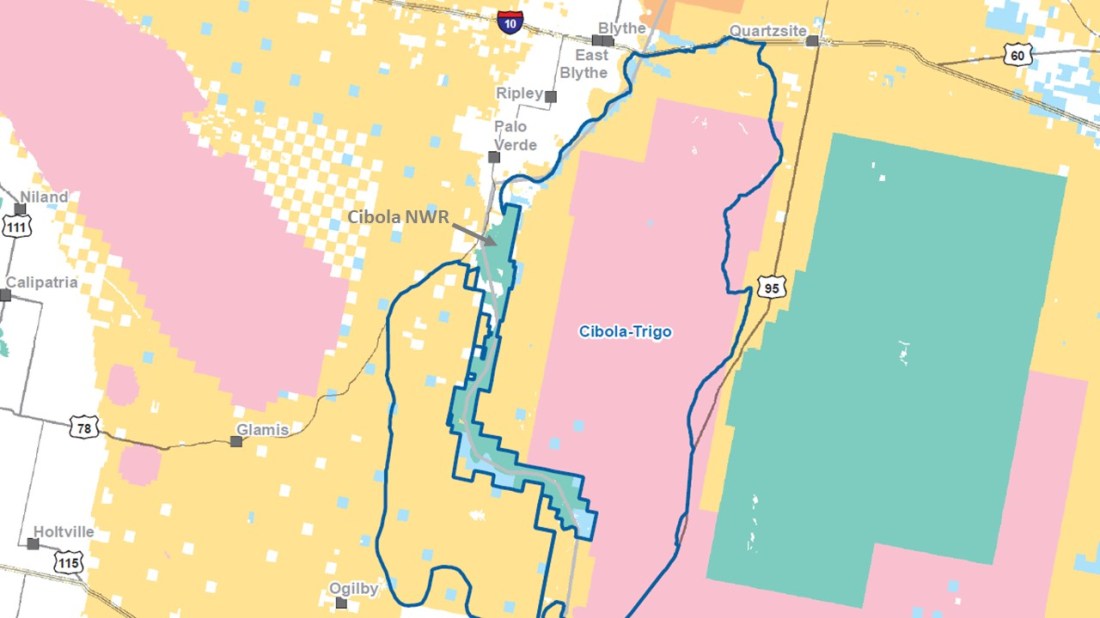
The operation, not announced at the BLM news site, involves public and private lands in and around the Cibola National Wildlife Refuge, west of the HMA.

The AML is 165 burros and 150 horses but only burros are targeted.

The removal goal is 200, to be achieved with bait and water traps.  The incident is not open to public observation.

Cibola-Trigo HMA Map 07-08-21

Captured animals will be taken to the off-range corrals in Florence, AZ.

Last year, around 300 burros were removed from the area.  The actual number is not clear due to data quality issues.

Mini-Roundup at Challis HMA?

A small group of horses has moved to the western side of the HMA, along Highway 75, prompting safety concerns for motorists and themselves, according to a story by the Idaho Mountain Express.

A BLM representative said that personnel with the Challis Field Office will probably conduct a bait-trap gather in the next few weeks to remove them from the area.

The report did not indicate if their current location was within the HMA.

Nearly three hundred wild horses were taken off the HMA in 2019, with 61 returned later that year.