The screen with a video feed has been replaced with a full featured home page.
New accounts can be created here.
RELATED: FRANK Livestreaming.

Western Horse Watchers Association
Exposing the Hypocrisy, Lies and Incompetence of the Wild Horse Advocates
The screen with a video feed has been replaced with a full featured home page.
New accounts can be created here.
RELATED: FRANK Livestreaming.
The event, hosted by the Salt River Wild Horse Management Group and the American Wild Horse Campaign, two unabashed proponents of PZP, will occur April 22, according to a story in today’s online edition of the White Mountain Independent.
RELATED: Heber Comment Period Ends This Week.
Interested parties can partner with the BLM to “improve the conditions for our nation’s wild horses and burros,” according to a news release issued today.
Grants will be awarded for both on-range and off-range projects, as described in the full announcement (click the Related Documents tab on this page).
Although ‘Perseverance,’ the rover, has demonstrated the advantages of a mobile fertility control platform, the drone has taken the idea to a whole new level.
“This is exactly what we’ve been praying for,” said one of the ranchers who witnessed the flight from a closed-circuit monitor.
“Those horses have been robbing us of our birthright for fifty years,” quipped another, “and it’s time somebody did something about it.”
A spokeswoman for one of the leading advocacy groups, who wished to remain anonymous, described the technology as “a breakthrough.”
RELATED: The Multiple-Use Mission of ‘Perseverance.’

A video feed is running but registrations have been halted due to attacks on the site.
RELATED: FRANK Launches Tomorrow.
The 30-day review period closes on April 22. The Draft EA for the new management plan and supporting documents can be accessed at the project page.
RELATED: Comments Invited on Draft EA for Heber Management Plan.
Near the Virginia Range with Roland Schumann.
Foals may be hard to find this year, thanks to the ‘advocacy’ groups.
Best time to see these animals in the higher elevations is May and June.
Water system back in service April 16.
RELATED: PZP Zealots Missed One.

Table 4 in the Draft EA does not provide allotment sizes and grazing seasons, nor the percentage of each allotment falling inside the Complex, so key management indicators for the five HMAs involved, such as forage allocations and stocking rates, can’t be determined.
That would be a substantive comment on the EA.
What are the management priorities in these HMAs? Do privately owned livestock receive better treatment than wild horses and burros?
The Proposed Action reads like a pest control program: Roundups, fertility control vaccines, intra-uterine devices, non-reproducing animals (males and females) and sex ratio skewing.
As for the allotments, RAS provides some information. Four are managed by the Black Rock Field Office and one by the Humboldt River Field Office.
The Allotment Master report for Black Rock shows three in the Improve category and one in the Maintain category, while the report for Humboldt River shows one in the Improve category.
Alder Creek
Paiute Meadows
Buffalo Hills
Soldier Meadows
Leadville
The total grazing area is 1,116,025 acres, with 1,062,012 acres in the Improve category.
That means 95% of the BLM grazing land associated with the Calico Complex does not meet standards for rangeland health.
As of today, there is no category for blaming substandard conditions on wild horses and burros.
RELATED: Comments Invited on Draft EA for Calico Gather Plan.
Communities served by the Colorado River and its artificial lakes may be facing a water shortage declaration, according to a report posted yesterday by AP News.
An observable effect of drought in the wild horse world might be a jump in emergency roundups, accompanied, perhaps, by AUM reductions in grazing allotments.
The author tries to link the situation to (man-made) climate change, a fake problem that started off as global cooling, which couldn’t be demonstrated, followed by a shift to global warming, also unproven, supplanted again by climate change so its adherents could play it both ways.
Frequently, the term appears with concerns of hotter temperatures, as in the story, suggesting that they still believe in the greenhouse effect and global warming.
Water vapor, belched into the atmosphere by industrial and commercial cooling towers, and also by evaporation from lakes, rivers and oceans, is a much more potent greenhouse gas than CO2 but you never hear about it!
RELATED: Dry Conditions in California Signal Trouble in Great Basin?
Refer to the column titled ‘Wild Horse Tales’ beginning on page 9 of the latest edition of Horse Tales, a monthly newspaper published in Gardnerville, NV.
RELATED: Pushing Back Against SJR3.
This scene at the Palomino Valley Off-Range Corrals, photographed yesterday, is a consequence of the resource management process, not a cause of it.
If you want to help America’s wild horses, look upstream in the management process, understand why they’re being removed from public lands and address those causes for a lasting solution.
RELATED: Many Foals at Palomino Valley Off-Range Corrals

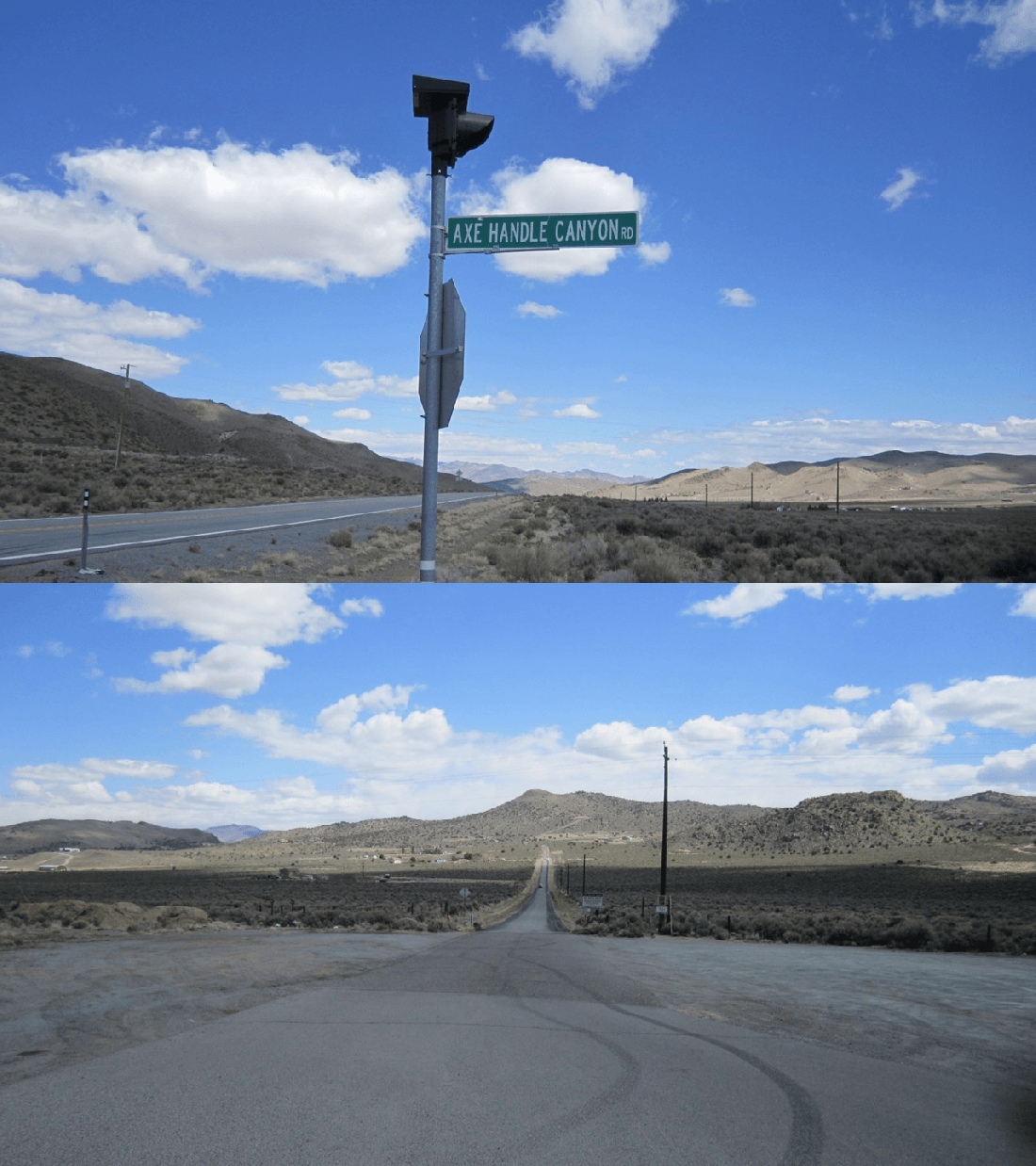
Everything needed for construction and test must have been hauled up this road.
How many have driven by without realizing the historical significance of the area?
RELATED: Palomino Valley’s Mysterious Exhaust Tubes.
The mares may have been captured at the Eagle or Silver King roundups earlier this year. Some looked like they were very close to foaling. Photos taken today.

The filly was found in an area where the Heber wild horses roam but was not identified as a member of the herd, according to a report by the White Mountain Independent of Show Low, AZ.
Residents that routinely observe the animals stated via socialist media that there was no evidence of foul play.
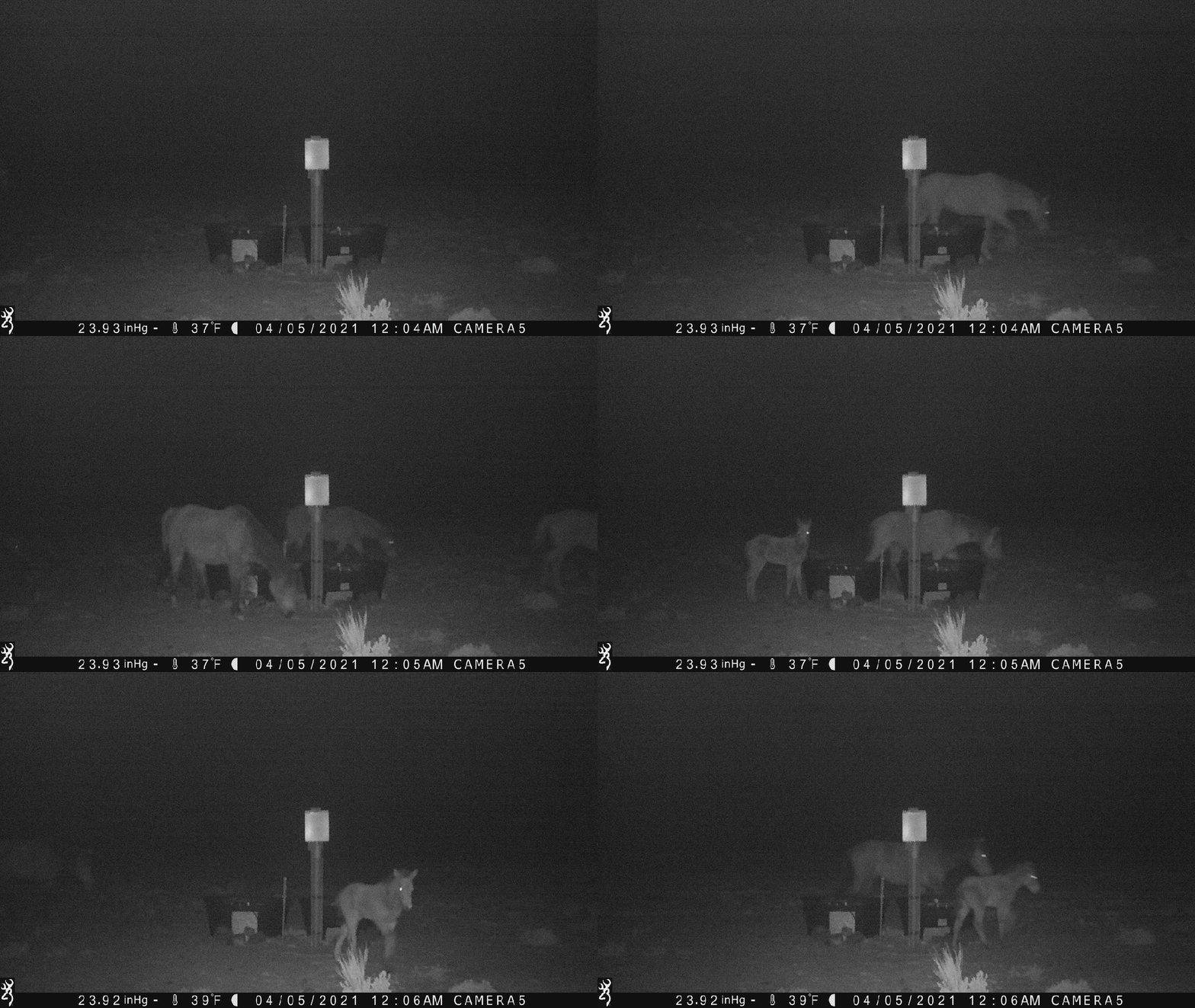
The presence of youngsters in this video represents a turning over of the genetic soil in the herd, some of whom—if they survive and can stay on the range—will start their own bands, continuing the process.
This characteristic, essential to herd viability and ruggedness, is dismissed by some of the ‘advocacy’ groups, who proudly interfere with breeding patterns.
Don’t give them a penny.
RELATED: Wild Horse Mesa Confirmed, Trajectory of a Fertility Control Program.
Perhaps they mean well. Maybe they’re shills for the public-lands ranchers.
Who knows.
What will be the condition of their horses when their journey is complete?
Do they understand that if livestock grazing was discontinued in a just a few dozen HMAs all wild horses could be removed from holding pens, not just 5,000?
If you want to help America’s wild horses, don’t focus on the horses.
Instead, look upstream in the management process, understand why they’re being removed from public lands and address those causes for a lasting solution.
A story posted this morning by the Maryland Coast Dispatch says that eight more are on the way.
With the fertility control program shut off five years ago, the birth rate may now be catching up with and surpassing the death rate. Refer to the chart in this post.
The fertility police often point to the island as a model of wild horse management.

 Western Horse Watchers Association