
In eastern Arizona with acemannw.
Month: February 2021
Forage Demand on the Virginia Range (or Anywhere Else)
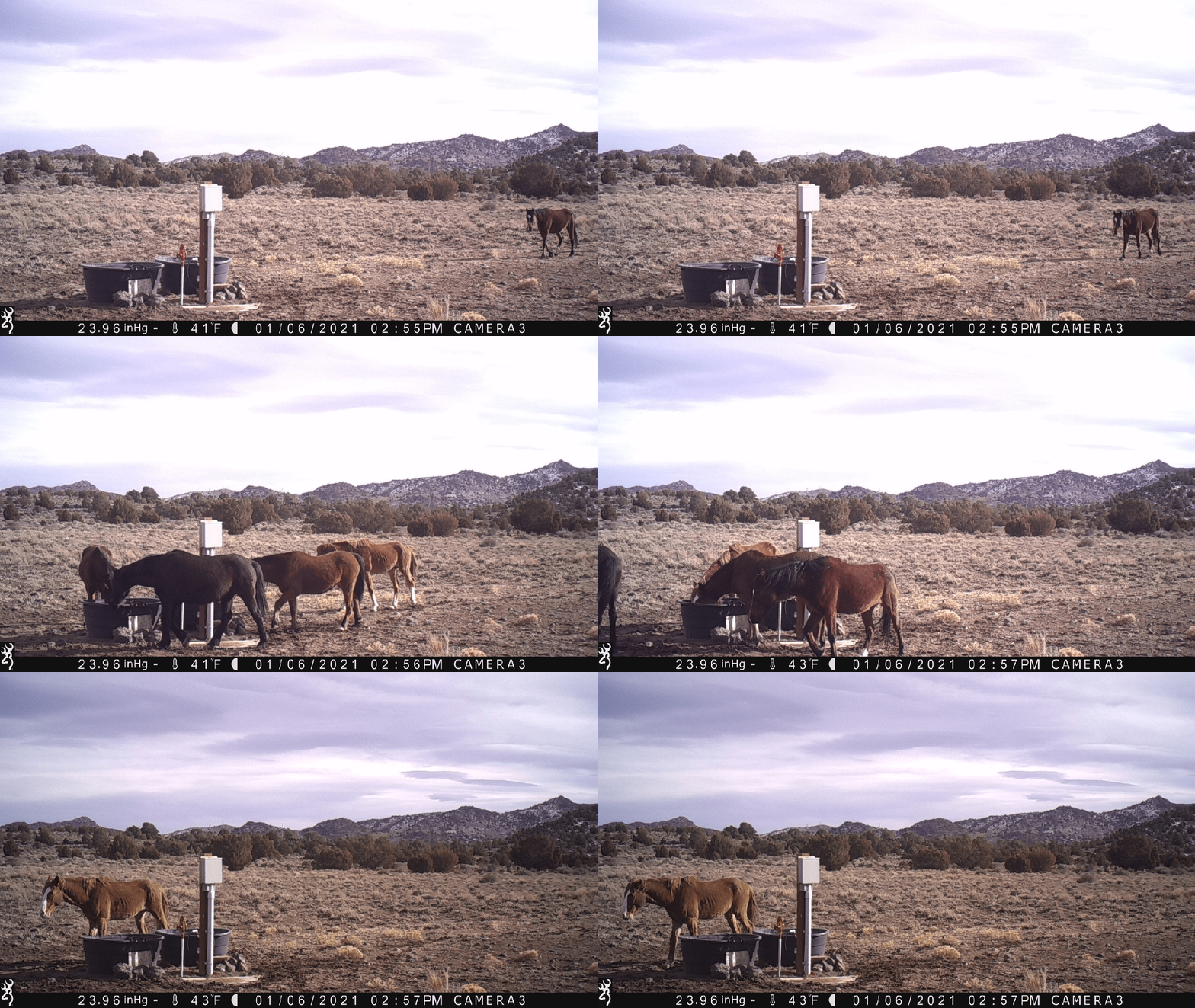
These guys need 4 × 12 = 48 AUMs per year. Forage supply is another question.
Silver King Roundup Day 7
The incident began on February 7. Gather stats through February 13:
- Horses captured: 213, up from 201 on Day 5
- Goal: 283
- Returned: 0
- Deaths: 3, up from 2 on Day 5
- Shipped: 173, up from 85 on Day 5
Helicopters were grounded on Day 7 due to weather.
One horse was put down on Day 6 as a result of pre-existing conditions. The overall death rate is now 1.4%, up from 1.0% on Day 5.
No foals have been caught to date. Roughly 48% of captured adults are male and 52% are female.
Body condition scores are not known.
The number of unaccounted-for animals is 37, down from 114 on Day 5.
Some of the mares will be treated with contraceptives and returned to the range, but no such activity has been reported. The effect on pre-born foals is not known.
Data quality has been good.
RELATED: Silver King Roundup Day 5.
Storey County Autonomous Zone in the News
The project was picked up today by Drudge. Both links pointed to a report by AP News that referred to the area as an ‘innovation zone,’ where companies would have powers like those of county government.

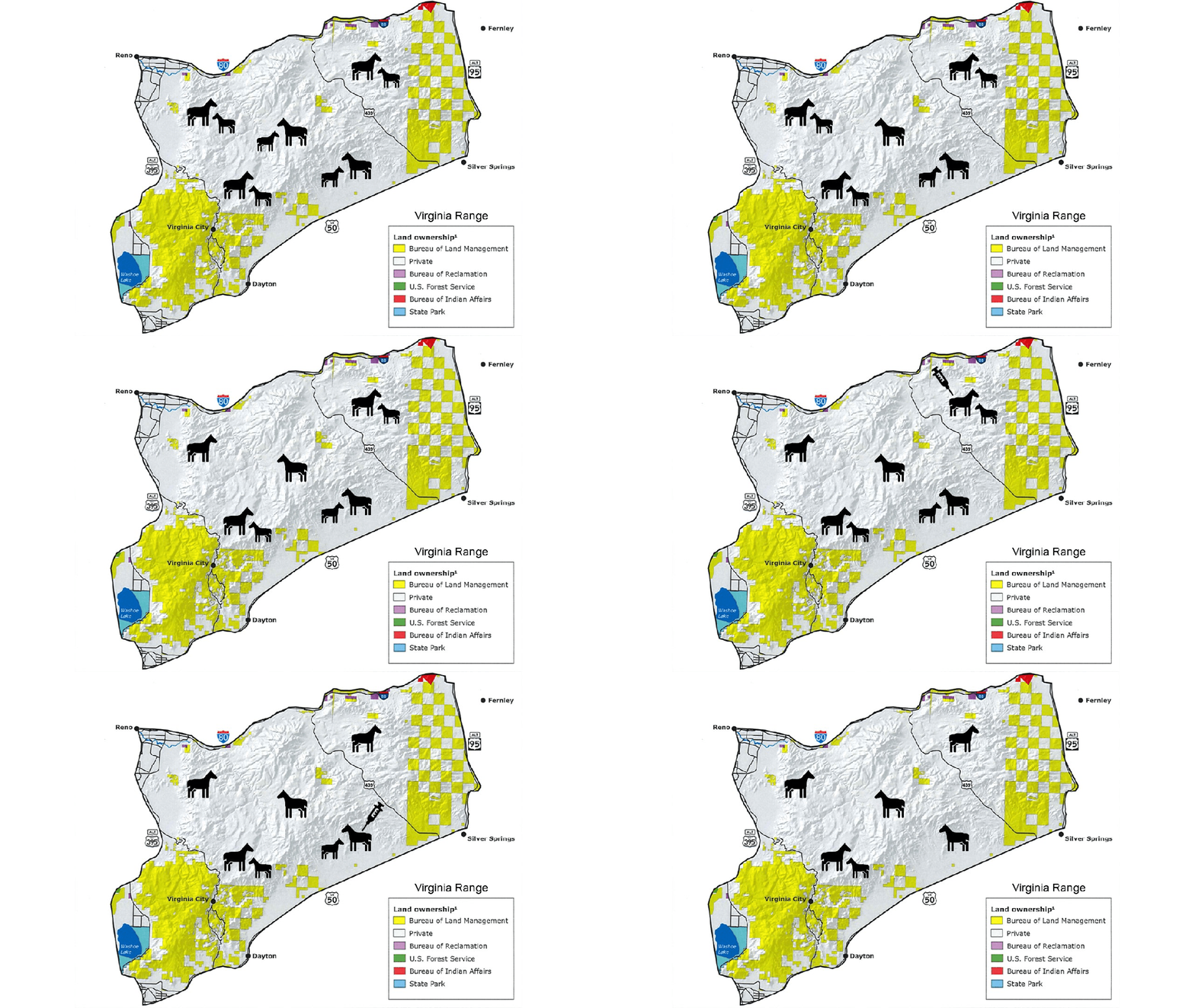
The story did not mention that the property, around 67,000 acres, is also inhabited by the Virginia Range mustangs.
RELATED: Horses of the Autonomous Zone.
Usurper Condemns ‘Seizure of Power’ in Burma
You can’t make this stuff up. The one-horse pony forces his way into office, then criticizes the Burmese military for doing the same thing.
Talk about the pot calling the kettle black.
The stories have common elements.
- Election fraud
- Government overthrow
- State of emergency
The voters did not remove Donald Trump from office, they affirmed his second term.
Nobody’s doing anything about it. You’re not even allowed to talk about it.
Just like the wild horse world.
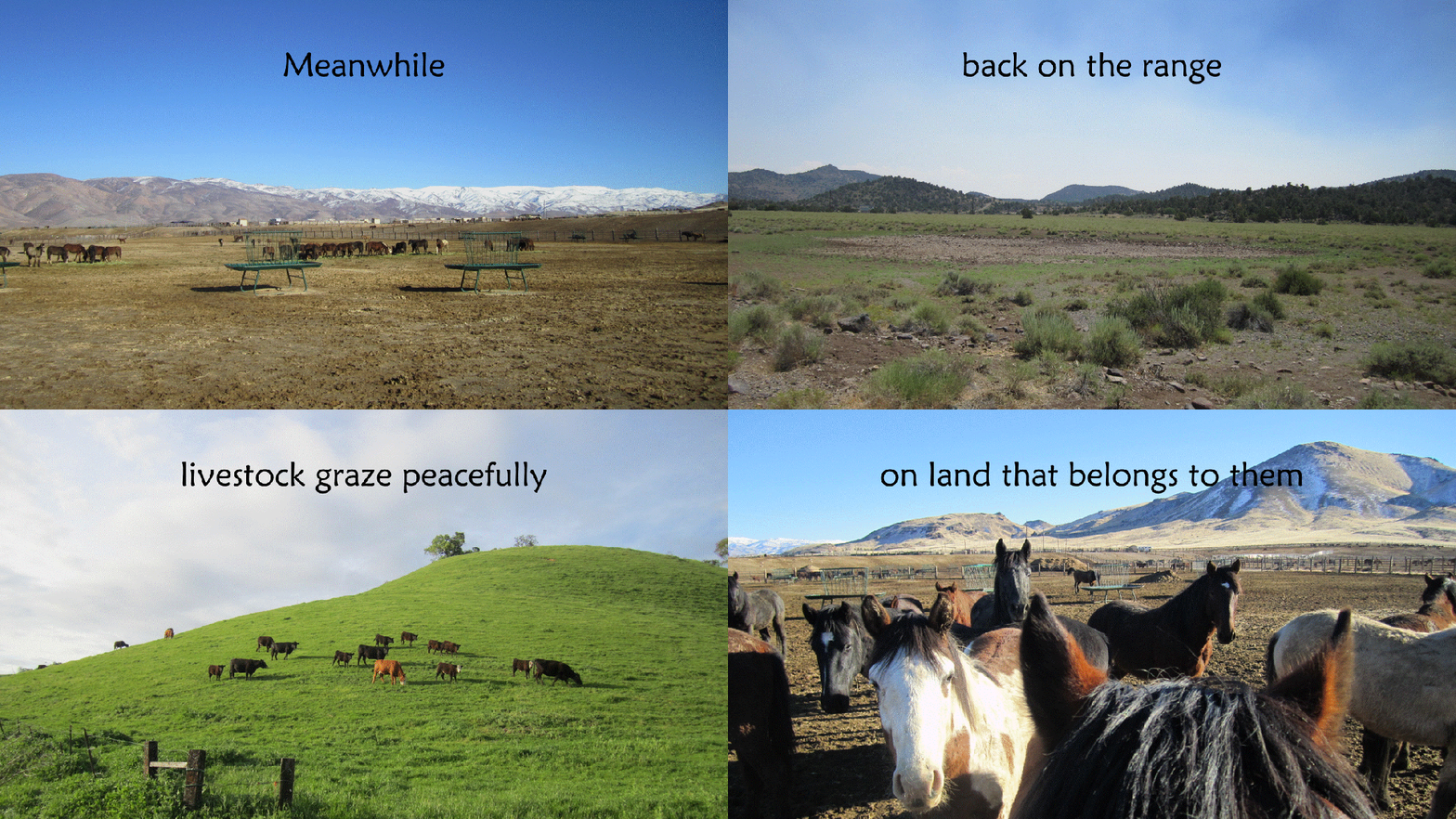
Be a good advocate. Don’t talk about privately owned cattle and sheep. Forget about resource allocations and management priorities on western rangelands.
Keep pushing for contraceptives, sanctuaries and relocation of wild horses into remote wilderness areas, so their food can be sold to public-lands ranchers.
Stocking Rates in ORPs
The Draft EA for resource enforcement actions in the Desatoya HMA says on page 61 (of the pdf) that off-range pastures are usually located in grass prairie regions of the United States, such as Oklahoma, Kansas, Iowa, Missouri, Nebraska and South Dakota.
Forage production is higher than the arid rangelands of the western U.S., with an average stocking rate of ten acres per animal. That’s 100 wild horses per thousand acres, compared to an average rate on all HMAs of one wild horse per thousand acres.
Those same pastures should be able to support 100 cow/calf pairs per thousand acres.
The carrying capacity of the land may be different.
Ideally, stocking rates should be less than carrying capacities, from a sustainability viewpoint, and carrying capacity may vary from year to year, depending on rainfall, soil conditions and other factors.
RELATED: Stocking Rates in the Great Basin.
Only Government Can Surpass Impact of PZP Zealots
Everybody wants to bash the BLM for mismanagement of America’s wild horses and burros, and rightly so.
Eighty percent or more of their food diverted to public-lands ranchers, with numerous roundups and growing numbers in long-term holding as a consequence.
Nobody wants to point a finger at the PZP zealots, and the so-called advocacy groups, who rank #2 in terms of their impact on those animals.
Nobody except Western Horse Watchers.
Effect of Socialism on America?
Just received an email titled ‘Nine Ways Socialism Will Morally Bankrupt America.’
Didn’t read it. The country already is morally bankrupt.
Where do you think the contraceptive mentality comes from in the wild horse world?
One hundred years ago, people would have gasped at the idea.
Silver King Growth Rate?
Gather operations through February 11 yielded 201 wild horses but no foals.
Do those numbers look like they came from a herd that’s growing at a rate of 20% per year? Or is it just too early in the foaling season?
As in the Eagle roundup, the majority of captured animals are female but what does that tell you about the herd at large?
RELATED: Wild Horse Growth Rates.
Silver King Roundup Day 5
The incident began on February 7. Gather stats through February 11:
- Horses captured: 201, up from 162 on Day 3
- Goal: 283
- Returned: 0
- Deaths: 2, none reported through Day 4
- Shipped: 85, up from 39 on Day 3
Two deaths occurred on Day 5 as a result of pre-existing conditions. The overall death rate is now 1.0%.
No foals have been caught to date. Roughly 47% of captured adults are male and 53% are female.
Body condition scores are not known.
The number of unaccounted-for animals is 114, down from 123 on Day 3.
Some of the mares will be returned to the range after treatment with contraceptives, but no such activity has been reported. The effect on pre-born foals is not known.
Data quality has been good.
Gather activity will likely conclude this week.
RELATED: Silver King Roundup Day 3.
Stocking Rates in the Great Basin
A comment received yesterday on the forage supply and demand post said the government allows one cow per 20 acres but did not say where.
Most of the grazing discussion on Western Horse Watchers involves the Great Basin, characterized by a desert climate, because that’s where most of America’s wild horses are found.
The stocking rate in the comment, which works out to 50 cows per thousand acres, seems rather high for the Great Basin. That’s equivalent to fifty wild horses per thousand acres—too high for year-round grazing in the high desert.
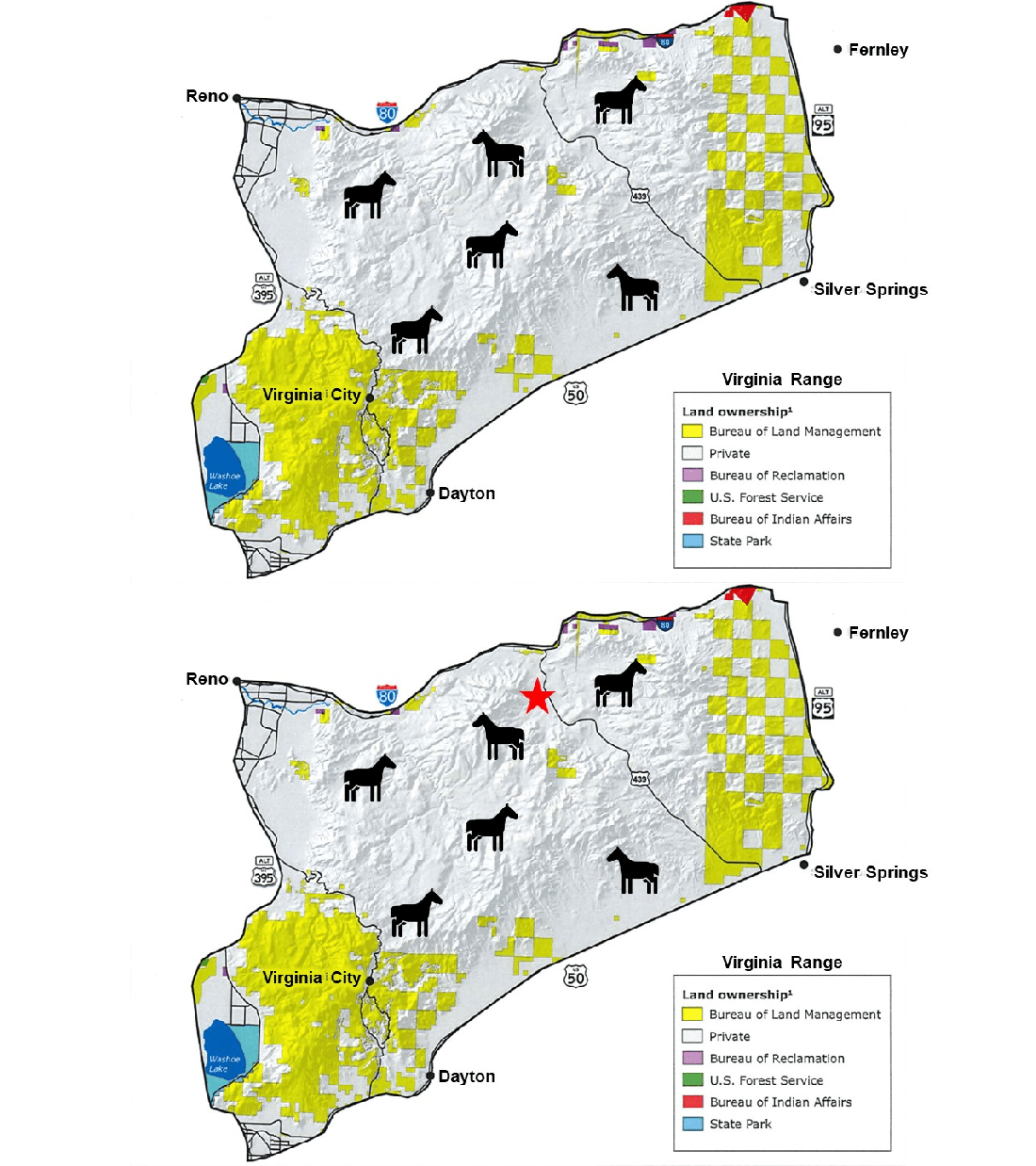
The highest stocking rate encountered on these pages is on the Virginia Range, ten wild horses per thousand acres.
Fractional stocking rates—less than one wild horse per thousand acres—are not uncommon in HMAs where large amounts of forage have been diverted to privately owned livestock.
The target stocking rate across all HMAs is one wild horse per thousand acres.
In an allotment, which is often divided into pastures, higher stocking rates may be allowed for shorter periods of time. Pasture rotation prevents overgrazing, at least in theory.
But it doesn’t explain why so many allotments are in the Improve category.
RELATED: Assessing Stocking Rates, Allotment Categories Explained.
Mustang Matters Redux
In 2013, the show was produced in two 30-minute segments, each opening with Wilson Pickett’s ‘Mustang Sally.’
Sue Wallis, mentioned in the first segment, was found dead three months after the program aired.
Filmed by Joann Spotted Bear, one of the co-hosts with Eddie Floyd, Cindy Hartzell, Shannon Windle and Lacy J. Dalton.
Production ended in 2018.
Eagle Wild Horse Growth Rate?
Gather activities through February 9 yielded 1,004 wild horses, including three foals.
Yes, it’s early in the season and the number of foals born in the off-range corrals is not known, but do those numbers look like they came from a herd that’s growing at a rate of 20% per year?
RELATED: Wild Horse Growth Rates.
Eagle Roundup Day 35
The incident began on January 6. Gather stats through February 9:
- Horses captured: 1,004, up from 977 on Day 33
- Goal: 1,131
- Returned: 0
- Deaths: 27, up from 23 on Day 33
- Shipped: 895, up from 848 on Day 33
One death occurred on Day 34 due to pre-existing conditions. Three deaths occurred on Day 35, one related to the roundup and two as a result of pre-existing conditions.
The overall death rate is now 2.7%, up from 2.4% on Day 33. Few if any deaths would occur if the roundup didn’t happen.
Two more foals were caught since the last report, bringing the total to three. Roughly 45% of captured adults are male and 55% are female. Some of the mares are probably within a few weeks of foaling. Some may have foaled in the off-range corrals.
The gather page says 896 horses shipped.
Body condition scores are not known.
The location of current operations is not known. Three HMAs are involved in the roundup.
The number of unaccounted-for animals is 82, down from 106 on Day 33.
Some of the mares will be treated with contraceptives and returned to the range but no such activity has been reported. Some may receive GPS radio transmitters.
Gather activity will probably conclude this week.
RELATED: Eagle Roundup Day 33.
Silver King Roundup Day 3
The incident began on February 7. Gather stats through February 9:
- Horses captured: 162, up from 41 on Day 1
- Goal: 283
- Returned: 0
- Deaths: 0, no change from Day 1
- Shipped: 39, up from 0 on Day 1
No foals have been caught to date. Roughly 48% of captured adults are male and 52% are female. Some of the mares are probably within a few weeks of foaling.
Body condition scores are not known.
The number of unaccounted-for animals is 123.
Some of the mares will be returned to their home range after receiving GonaCon, a contraceptive that may actually work like a sterilant.
Gather activity will likely conclude this week.
RELATED: Silver King Roundup in Progress.
New Film About Nokota Horses in the Works
The film, titled ‘Vanishing Knowledge,’ tells the story of the Kuntz brothers and the horses they rescued, according to a newsletter from The Nokota Horse Conservancy.
These were the original free-roaming horses of Theodore Roosevelt National Park.
RELATED: Story of the Nokota Horses.
Holy Grail of Wild Horse World?
It would be skeletal remains between 500 and 10,000 years old, the timeframe when, supposedly, there were no horses in North America.
The wild horse narrative would fall to the ground.
One such discovery was the subject of an episode several years ago of the now-defunct Mustang Matters radio program hosted by America Matters Media. The remains were found during road construction in Nevada and were quickly disappeared.
Classifying horses as an indigenous species would change many things, especially on western rangelands.
RELATED: Wild vs. Feral: Are America’s Horses a Re-Introduced Species?
Comment Period for Surprise Complex EA Almost Over
Public input on the Draft EA will be accepted until February 14.
Concerns about resource allocations and management priorities, although valid, should not be submitted, as they are outside the scope of the project.
If you want to help America’s wild horses, don’t focus on the horses.
The PZP zealots focus on the horses.
A gather plan is too late, too far downstream, to be of any benefit to these animals.
You have to look upstream in the management process.
It’s Not Devil’s Garden WHT, It’s Dollar General WHT
The Forest Service is now selling wild horses for $1 each, according to a report posted today by KRCR News of Redding, CA. Approximately 150 animals are available.
RELATED: Devil’s Garden Outplacement Program Ramping Up.
 Western Horse Watchers Association