President of Pine Nut Wild Horse Advocates Compromised?

Let’s take a look at some of the higher-dollar listings in her inventory.

Fish Springs Larger Lots 12-27-24

At a 3% commission, she will collect around $129,000 from the seller, who holds most of the active AUMs in the Buckeye Allotment.

Would that explain her involvement in the “strong birth control program?”

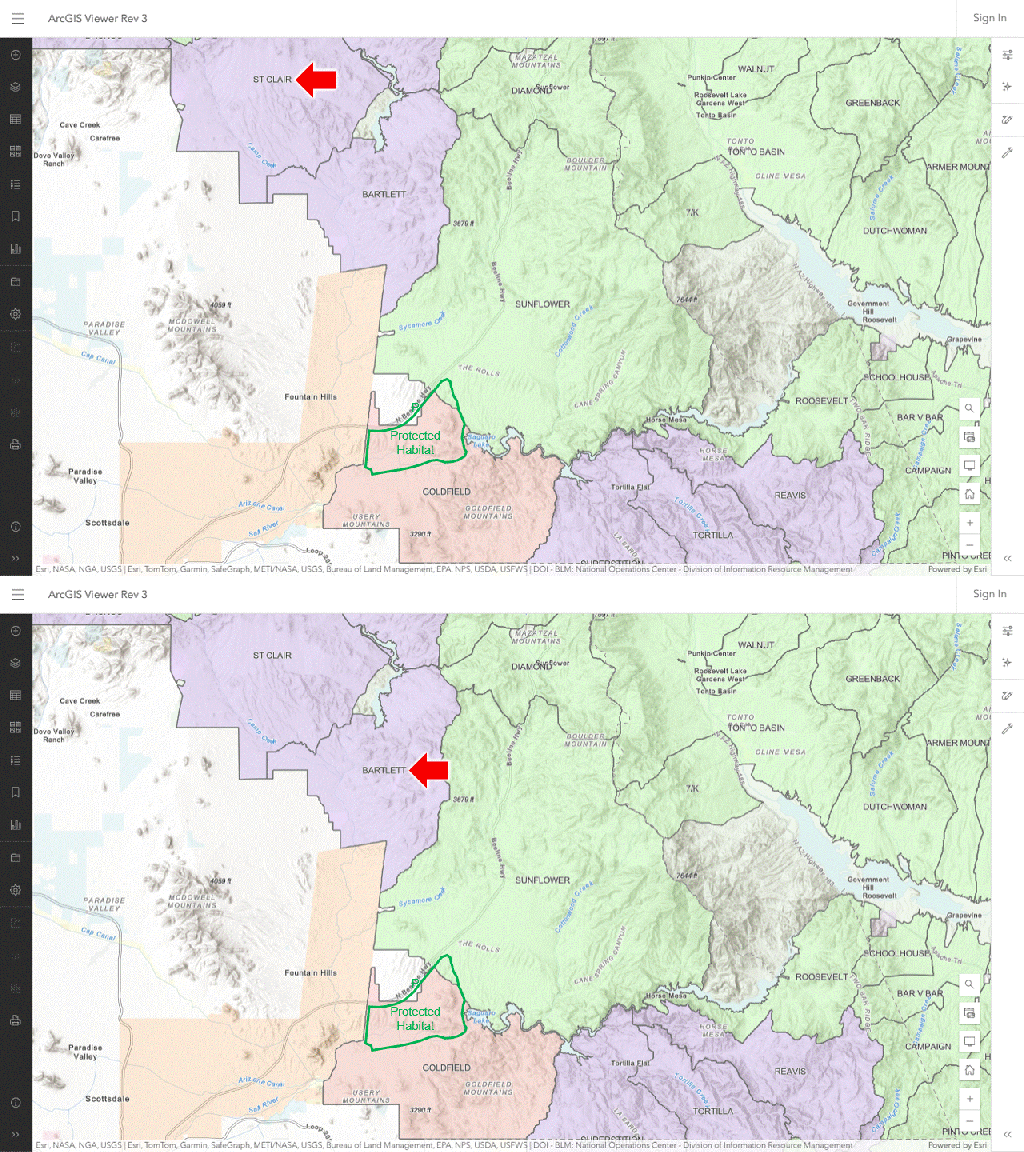
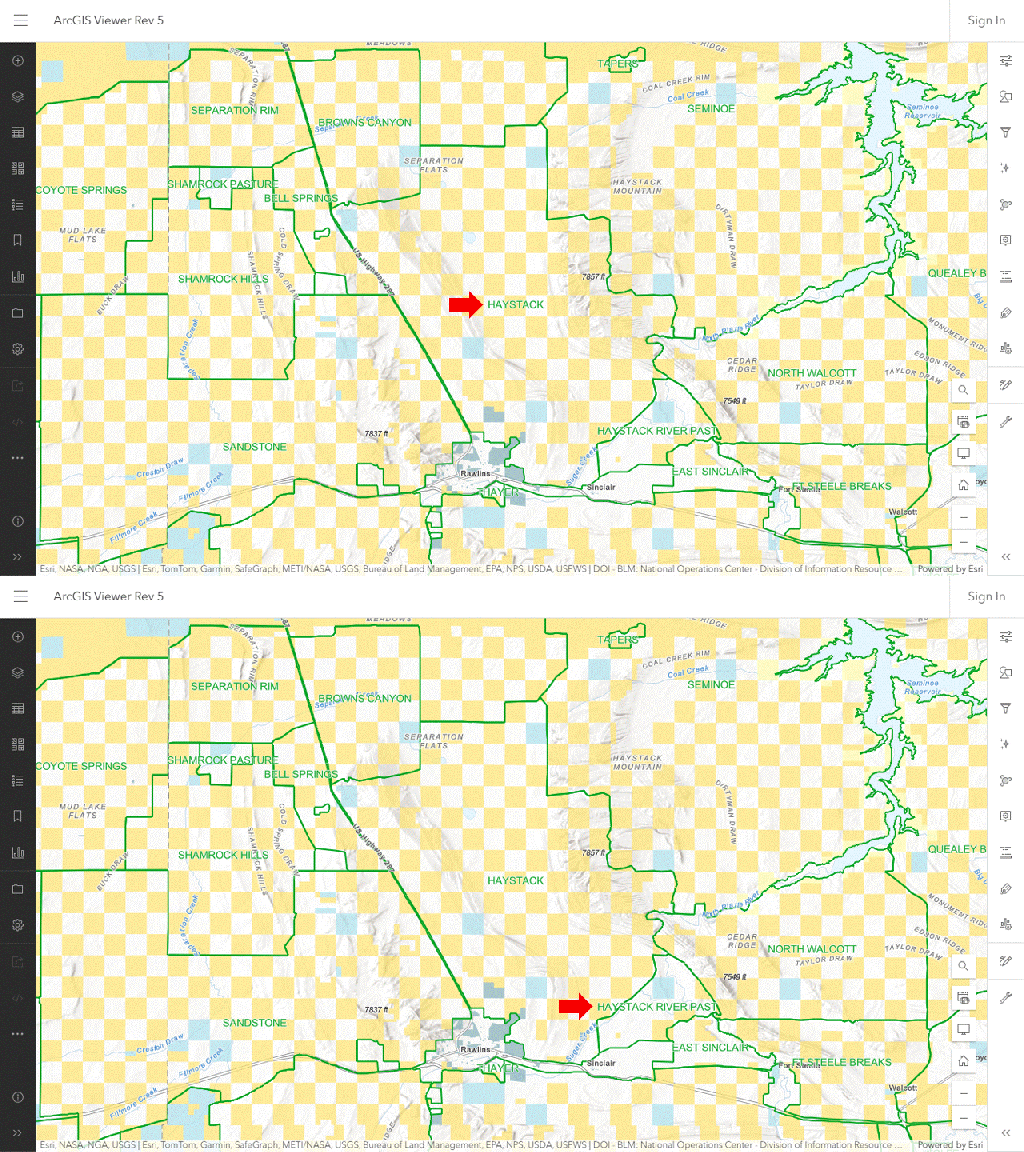
The Fish Springs herd roams in the Pine Nut Mountains HA, an area zeroed out for wild horses but not for livestock.

The bogus land trust operated by the Campaign Against America’s Wild Horses, with whom she affiliates, overlaps the Buckeye and Pine Nut Allotments, another area zeroed out for wild horses but not for livestock.

RELATED: Conflict of Interest at Pine Nut Wild Horse Advocates?

Pine Nut HMA with Allotments 12-27-24

CAAWH Seeks Virginia Range Volunteer Coordinator?

The announcement does not indicate if it’s a new role or an existing one vacated by someone who finally came to her senses.

The successful candidate will

  • Recruit volunteers for the mass sterilization program
  • Foster relationships with businesses and landowners
  • Become a certified PZP darter
  • Manage inventory and order supplies for volunteers
  • Educate the public about nonmotorized removal

You need strong organizational and people skills, an ability to work outdoors in varying weather conditions and a bachelor’s degree.

Salary not specified.

You need not be aborting/contracepting/sterilizing in your own life but that would definitely be a plus.

Mass Sterilization and Motorized Removal 08-10-24

RELATED: CAAWH Going Dark on Virginia Range Sterilization Program?

Foal-Free Friday, Women Fleecing Women Edition

Most wild horse advocacy groups are run by women.

Most of their supporters are women.

The women on the inside are evil.

The women on the outside are stupid.

The women on the inside try to convince the women on the outside that they care about wild horses and that the outsiders should give the insiders more money.

See for example the running record of news flashes from the Campaign Against America’s Wild Horses published by Lucky Three Ranch.

The insiders use the funds to buy pesticides while telling the outsiders they should feel good about themselves for supporting a worthy cause.

The outsiders don’t realize they’ve been swindled and that the insiders are colluding with the bureaucrats and ranchers to get rid of the horses.

RELATED: Foal-Free Friday, Mergers and Acquisitions Edition.

Pesticide Pushers 07-17-23

Colorado Wild Horse Working Group Releases Year One Report

An story by The Colorado Sun provided the link.

Recommendations start on page 8.

The membership list is on page 16.

Check out the management model on page 24.

Management Model 12-26-24

The only thing missing is a feedback loop that tests for rancher satisfaction.

The article said the group has asked for better data from the federal government.

Of critical use would be the forage allocations for horses and livestock.

The group has discussed creating a state-run sanctuary, where the public could see horses that had been removed from the wild, but the topic has stalled in recent months due to the high cost of purchasing land.

If the search is limited to base properties—private acreage tied to grazing allotments on public lands—the group could get more value for its investment, a technique known as leverage.

Look for properties where the deeded acreage gives access to at least three times as much public acreage.

Then flip the preference to horses.

Like the forage allocations, ranchers and ranching sympathizers on the committee would probably oppose this line of pursuit.

That’s how you know it’s the right thing to do.

Murderer’s Creek Roundup, Day 25

The incident started on November 29.  Results through December 23:

  • Scope: Murderer’s Creek HMA, WHT
  • Target: Wild horses
  • AML: 140
  • Pre-gather population: 650
  • True AML: TBD
  • Type: Emergency
  • Method: Bait
  • Capture goal: 350 – 400
  • Removal goal: 350 – 400
  • Captured: 183, up from 166 on Day 21
  • Shipped: 168, up from 129 on Day 21
  • Released: None
  • Deaths: 4, no change from Day 21
  • Average daily take: 7.3
  • Unaccounted-for animals: 11
  • Snippet from statute: It is the policy of Congress that wild free-roaming horses and burros shall be protected from capture, branding, harassment, or death
  • Snippet from manual: To protect wild horses and burros from unauthorized capture, branding, harassment or death

The figures above are based on the daily reports.

The death rate is 2.2%.

The capture total includes 63 stallions, 79 mares and 41 foals.

Youngsters represented 22.4% of the animals gathered, consistent with a herd growth rate of 17% per year.  The Rule of 72 says the herd size will double in 4.2 years.

Of the adults, 44.4% were male and 55.6% were female, no indication of an abnormal sex ratio.

Body condition scores were not given.

The location of the trap site was not disclosed.

The name of the contractor was not provided.

There are no plans to treat any of the mares with fertility control pesticides and return them to the range.

No decisions have made regarding the long-term disposition of horses, which means they could be treated or altered in off range holding, including the stallions.

The status of livestock grazing in the burned area is not known.

RELATED: Murderer’s Creek Roundup, Day 21.

Murderers Creek HMA with Allotments 10-24-24

Controlling Costs Not a Priority When Taxpayers Have Your Back

If you want to understand why there are so many wild horses in off-range holding, and why the government needs more corrals, more pastures and more adoptions, look no farther than the Little Colorado HMA.

It’s not in Colorado, but it explains why taxpayers are being asked to shoulder the growing costs of off-range management.

In general, the bureaucrats assign most of the forage in areas identified for wild horses to privately owned livestock.

At Little Colorado, the horses receive just 2.6% of the resource.  Table 8 in the 2021 EA for management actions in the Wyoming checkerboard has the data.

To keep the pests in check and ensure the ranchers have principal use of the HMA, the BLM takes them off the range and crams them into public and private feedlots.

None of this is intended to reduce costs.

More animals can be removed if there are more places to places to hold them.

The goal is ranching superiority in the lawful homes of wild horses, sometimes referred to as achieving and maintaining AMLs.

At Little Colorado, the AML ranges from 69 to 100.

Horse #70 is excess, the beginning of overpopulation.

The HMA can’t support more than 100, but it can sustain livestock equivalent to 3,750.

This accounts for six percent of the horses in off-range holding!

Off-Range Stats as of Sep-2024 12-26-24

If they really wanted to cut costs, they’d put the horses back on the range and confine the ranchers to their base properties in a year-round off season.

RELATED: What Are Musk and Ramaswamy Being Told About Wild Horses?

Thriving Ecological Balance-3

If Wild Horses Had Principal Use of Christmas

The allotment, located about 40 miles east of Florence, AZ, offers 496 active AUMs on 5,690 public acres according to the Allotment Master Report.

The forage assigned to horses is zero.

How many wild horses could live there?

Using the principle of forage interchangeability, the True AML would be 496 ÷ 12 = 41, the number of horses the land could support if it was managed principally for them as specified in the original statute.

The stocking rate would be 41 ÷ (5,690 ÷ 1,000) = 7.2 wild horses per thousand public acres.

Why is this important?

The bureaucrats and ranchers tell us that public lands in the western U.S. can only support one wild horse per thousand acres (27,000 animals on 27 million acres).

The advocates reinforce the narrative with their darting programs.

If the allotment was an HMA, the AML would be 6 and 35 horses would be consigned to off-range holding because of permitted grazing.

BLM allotments in Arizona carry livestock equivalent to 53,662 wild horses on 10,090,546 public acres, or 5.3 wild horses per thousand public acres.

Wild horses can be placed on public lands not identified for their use by acquiring base properties associated with grazing allotments and flipping the preference to horses, as American Prairie did for bison in Montana.

RELATED: The Allotments Tell the Story: They’re Lying, All of Them.

Christmas Allotment 12-25-24

La Junta Base Property Available for $10.6 Million

Purgatory Basin Ranch covers 12,502 deeded acres in southeastern Colorado, with grazing preference on the 8,127-acre Higbee Allotment in the Comanche National Grasslands, according to the listing.

There is also a 640-acre state lease and 320-acre private lease.

The 2024 AOIs suggest the allotment offers 1,301 AUMs per year, equivalent to 13.3 wild horses per thousand acres.

The bureaucrats tell us that public lands in the western U.S. can only support one wild horse per thousand acres.

The state charges $16.25 per AUM, according to the 2024 invoice, twelve times more than the Forest Service.

The land ratio is low.  You must purchase 12,502 deeded acres to access 8,127 public acres.

There are no HMAs or WHTs in the area.

Wild horses can be placed on public lands not identified for their use by acquiring base properties associated therewith and flipping the preference to horses.

Equivalent Horses and Stocking Rates for Allotments

Consider the Eighteen Mile Allotment, located within the Little Colorado HMA, which offers 18,994 active AUMs on 228,494 public acres according to the Allotment Master Report.

A simple way to compare the management of the HMA with the management of the allotment is with these relationships:

Equivalent horses = Active AUMs ÷ 12

Equivalent stocking rateActive AUMs ÷ 12 ÷ (Public acres ÷ 1,000)

The allotment, a subset of the HMA, supports livestock equivalent to 1,583 wild horses.

Equivalent horses = 18,994 ÷ 12 = 1,583

The HMA, consisting of 525,421 public acres according to the 2024 population dataset, can only sustain 100 wild horses.

The allotment carries livestock equivalent to 6.9 wild horses per thousand public acres.

Equivalent stocking rate = 18,994 ÷ 12 ÷ (228,494 ÷ 1,000) = 6.9

The HMA can only sustain 0.2 wild horses per thousand public acres.

Stocking rate = 100 ÷ (525,421 ÷ 1,000) = 0.2

Land that can only support 0.2 wild horses per thousand public acres supports livestock equivalent to 6.9 wild horses per thousand public acres.

You cannot have more than 100 wild horses in the entire HMA but you can have livestock equivalent to 1,583 wild horses in an area corresponding to 43% of it.

How is this possible?

They’re lying.

They tell us that public lands in the western U.S. can only support one wild horse per thousand acres (27,000 animals on 27 million acres).

The advocates bolster the narrative with their HMAPs and darting programs.

They want the ranchers to win.

The allotment accounts for 1,583 wild horses in off-range holding.

The roundups and stockpiling of wild animals in government feedlots are symptoms of resource mismanagement, not inadequate carrying capacity.

The problem is man made.

RELATED: Thriving Ecological Imbalance at Little Colorado HMA.

Eighteen Mile Allotment 12-21-24

Fish Creek Roundup Announced

The incident will begin on or about January 6 according to the news release.

A helicopter will push the horses into a trap and operations will be open to public observation, conditions permitting.

The capture and removal goals are 196 and 144.

The pre-gather population is thought to be 245.

Up to 26 mares will be treated with PZP and be returned to the HMA with up to 26 stallions.

Animals identified for removal will be taken to the off-range corrals in Winnemucca.

A link to the gather stats and daily reports was not provided.

The roundup supports three tenets of rangeland management.

RELATED: Fish Creek Decision Issued.

Fish Creek HMA with Allotments 11-07-24

Murderer’s Creek Roundup, Day 21

The incident started on November 29.  Results through December 19:

  • Scope: Murderer’s Creek HMA, WHT
  • Target: Wild horses
  • AML: 140
  • Pre-gather population: 650
  • True AML: TBD
  • Type: Emergency
  • Method: Bait
  • Capture goal: 350 – 400
  • Removal goal: 350 – 400
  • Captured: 166, up from 144 on Day 17
  • Shipped: 129, no change from Day 17
  • Released: None
  • Deaths: 4, no change from Day 17
  • Average daily take: 7.9
  • Unaccounted-for animals: 33
  • Snippet from statute: It is the policy of Congress that wild free-roaming horses and burros shall be protected from capture, branding, harassment, or death
  • Snippet from manual: To protect wild horses and burros from unauthorized capture, branding, harassment or death

No report was given for Day 19.

The death rate is 2.4%.

The capture total includes 61 stallions, 69 mares and 36 foals.

Youngsters represented 21.7% of the animals gathered, consistent with a herd growth rate of 16% per year.  The Rule of 72 says the herd size will double in 4.5 years.

Of the adults, 46.9% were male and 53.1% were female, no indication of an abnormal sex ratio.

Body condition scores were not given.

The location of the trap site was not disclosed.

The name of the contractor was not provided.

There are no plans to treat any of the mares with fertility control pesticides and return them to the range.

No decisions have made regarding the long-term disposition of horses, which means they could be treated or altered in off range holding, including the stallions.

The status of livestock grazing in the burned area is not known.

RELATED: Murderer’s Creek Roundup, Day 17.

Murderers Creek HMA with Allotments 10-24-24

Fish Creek Decision Issued

The DNA asserts that the 2015 analysis fully covers the Proposed Action, which is to capture and remove wild horses in and around the HMA.

Mares returned to the area would be treated with fertility control.

The document is not searchable in Edge.  You can’t select lines of text or copy everything into a text editor (CTRL+A > CTRL+C > CTRL+V).

But you can open it in Word and search from there.

There were no matches for “gona” but several for “zona.”

A roundup appears on the latest schedule with a start date of January 6, not mentioned in today’s news release.

The pesticide of choice has been changed from GonaCon to PZP.

The DNA was copied to the project folder with the DR and cover letter.

RELATED: Fish Creek DNA Out for Review.

Conflict of Interest at Pine Nut Wild Horse Advocates?

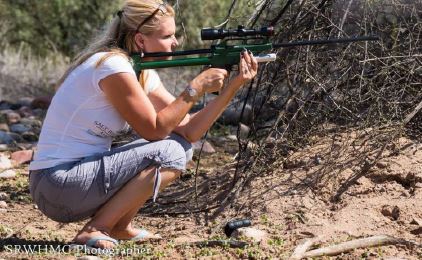
The president of the nonprofit, a real estate agent, PZP darter and close supporter of the Campaign Against America’s Wild Horses, frequently writes about the Fish Springs herd in Horse Tales.

This month, her column begins on page four, wherein she mentions the “strong birth control program” that has reduced the reproduction rate by over 90% at no cost to the taxpayers.  (This means the herd is vanishing, perhaps irreversibly, because most of the mares have been sterilized.)

Her listings appear on the back page.

Cioffi Real Estate Listings 12-20-24

Let’s take a look at her clientele.

The owner of these parcels holds most of the active AUMs in the Buckeye Allotment, an area where the horses roam, which means she’s protecting ranching interests, and her own financial interests, not wild horses.

We Want the Ranchers to Win 04-04-24

Almost certainly everybody on the Board knows about this, which means they all should resign in disgrace.

RELATED: Who Has Grazing Preference on the Buckeye Allotment?

Foal-Free Friday, Mergers and Acquisitions Edition

How much longer before the advocates join forces with the farm bureaus, stockgrower’s associations and cattlemen’s groups?

The Campaign Against America’s Wild Horses could become the Field Services Division of the Coalition for Healthy Nevada Lands, providing mass sterilization where it’s needed most.

Their flagship darting program on the Virginia Range proves they can be as ruthless as the helicopter pilots and wranglers.

Return to Freedom could align in a similar manner with the Public Lands Council.

Other groups have already demonstrated their mettle by demanding new management plans that ratify and reinforce policies and practices already on the books.

And who wouldn’t want an endorsement from Elko County?

A first step in coming out of the closet and signaling your interest in a partnership might be to support the Washoe Lake fencing project, which will hurt the older horses most by driving them into the higher elevations in search of water.

The impact on young horses will be negligible because their numbers are small, thanks to the advocates.

We Want the Ranchers to Win 04-04-24

RELATED; Foal-Free Friday, Hypocrisy and Lies Edition

USDA to Receive $100K for Wild Horse Fertility Control

The State of Colorado will pay $100,000 to USDA Wildlife Services to train four two-person teams to administer fertility-control pesticides alongside volunteers with BLM’s partner organizations in the state’s four HMAs according to today’s news release.

Given that they chose USDA over the Science and Conservation Center, the pesticide of choice is likely GonaCon Equine, not Zonastat-H.

RELATED: Colorado Wild Horse Working Group Meets Next Week.

Sand Wash Advocates 01-17-22

Picard Road Allotment: Good Things Come in Small Packages

The tiny allotment offers 21 active AUMs on 274 public acres, according to the Allotment Master Report, equivalent to 6.4 wild horses per thousand public acres.

Equivalent stocking rate = 21 ÷ 12 ÷ (274 ÷ 1,000) ≅ 6.4

This is far more helpful than anything peddled by the advocates because it

  • Defies the carrying capacity narrative
  • Destroys the rationale for their darting programs
  • Discloses their role as accessories to the ranching agenda

The target stocking rate across all HMAs is one wild horse per thousand acres (27,000 animals on 27 million acres), far less than what the land can support.

A draft CX for grazing permit reauthorization has been copied to the project folder in ePlanning.

Comments are due by December 27.

The nearest HMA is Pokegama, about five miles to the northwest.

RELATED: The Allotments Tell the Story: They’re Lying, All of Them.

Picard Road Allotment 12-18-24