On Theodore Roosevelt National Park, south unit.
Update 05/01/18: Video has been removed or marked private.

Exposing the Hypocrisy, Lies and Incompetence of the Wild Horse Advocates
On Theodore Roosevelt National Park, south unit.
Update 05/01/18: Video has been removed or marked private.
Answers to the second round of questions for transfer of ownership of the Virginia Range horses have been posted. More discussion this time.
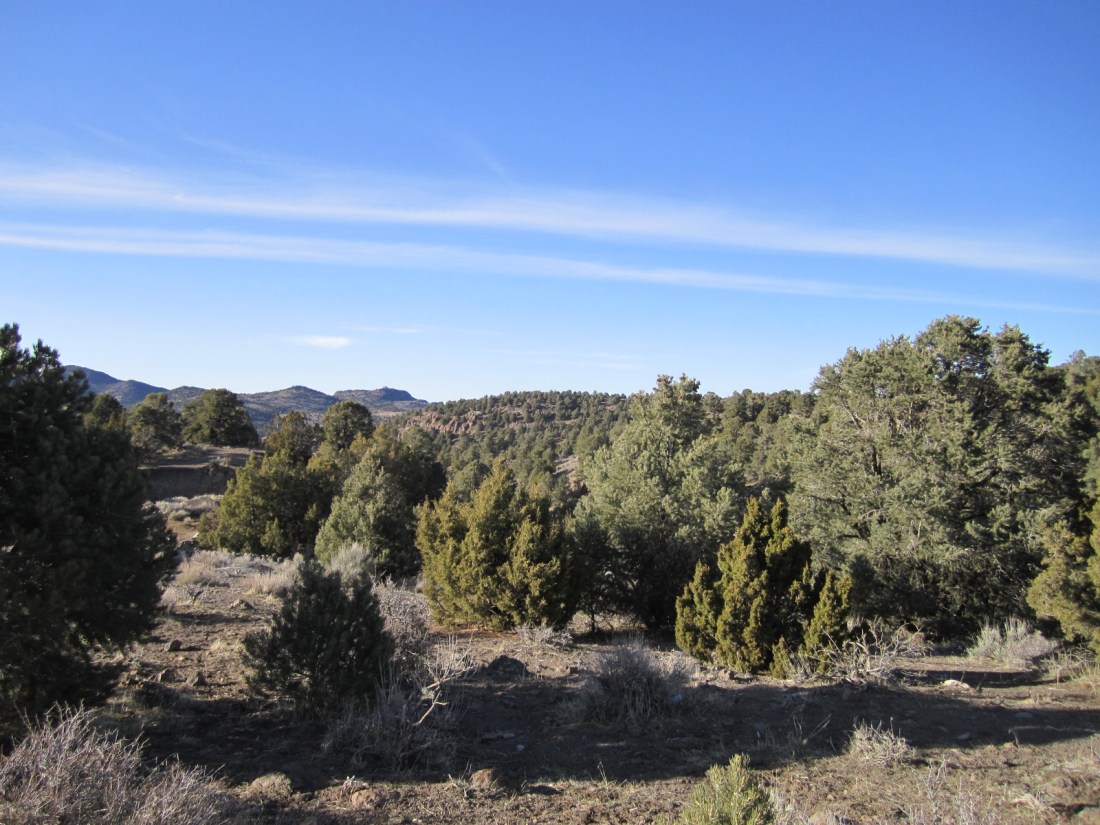
A few miles north of Virginia City, 03/31/18.
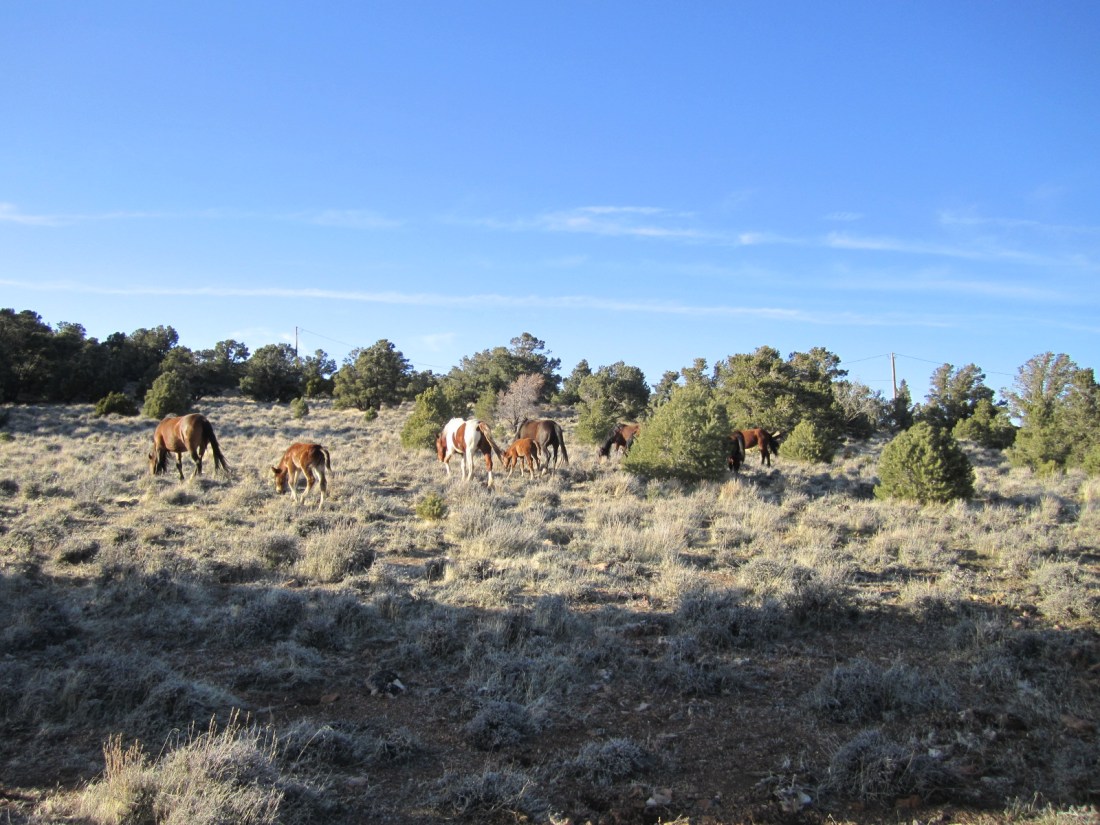
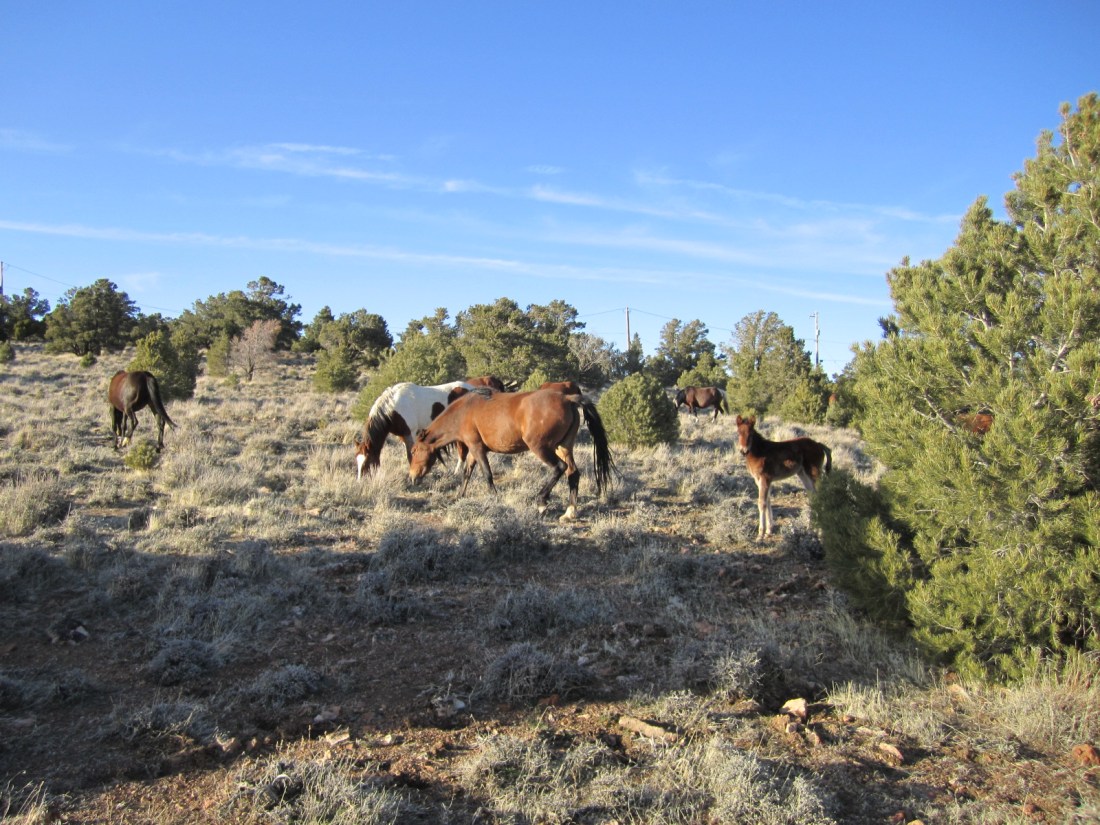
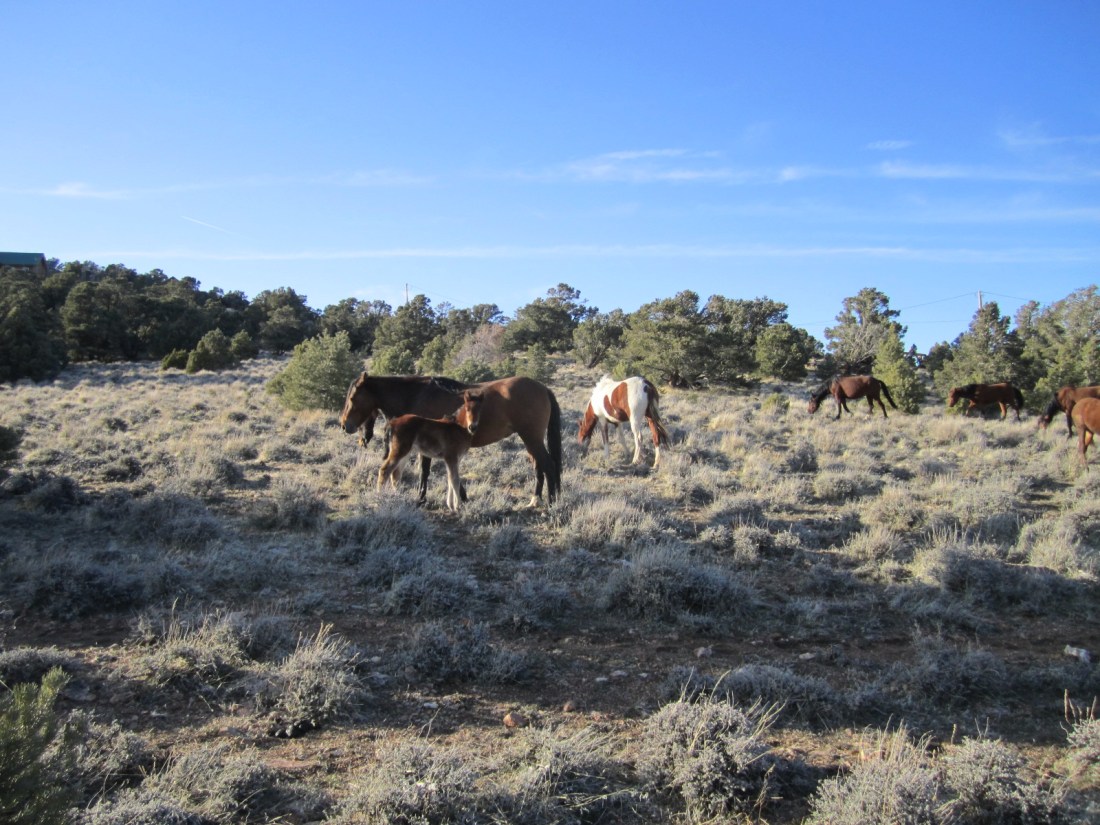
No, it’s not the number of lives denied last year on the Virginia Range due to PZP, that figure is higher.
It’s the stocking rate in acres per horse for the Virginia Range. The scaled reciprocal, horses per thousand acres, is 9.4.
As noted on 03/26/18, these figures differ appreciably from those used by the BLM.
For example, read this post dated 03/02/18 at Straight from the Horse’s Heart. Stocking rates for some of the HMAs in Nevada are discussed, along with those for livestock.
The stocking rate for the Triple B Complex is 0.4 horses per thousand acres (just 4.4% of that for the VR), yet there was a large gather at the HMA earlier this year.
Protect the Harvest says the stocking rate for the Virginia Range should be 640 acres per horse, or about 1.5 horses per thousand acres.
Why would they even care? The Virginia Range is mostly private land and the potential for grazing is limited.
If word gets out that the carrying capacity of the range might be greater than stated in the official story line, AMLs could quadruple overnight, and the plan for replacing horses with cattle on public lands would be dealt a major setback.

H/T PNWHA for the link on wild horse overpopulation.
Best way to stop a bad guy on a bike? Good guy on a horse. Refer to this story by the NBC affiliate in Medford OR.
The incident happened in June 2016. The story leaves a few unanswered questions, such as the immigration status of the perp (take a guess) and if the technique could be leveraged for greater security of the border.
According to the Mission Statement of Protect The Harvest, you have a right to hunt, fish, farm, eat meat, and own pets.
Sorry guys, you do not. Please read The Bill of No Rights.
What do you call a system where the products of one man’s industry are taken away and given to someone else?
Slavery. Communism. Liberalism.
You do not have a right to anything that must be produced, such as food, clothing, shelter, land, water, transportation, goods and services. You do not have a claim on the fruits of another man’s labor.
You say you’re thankful for the American way of life but you do not understand it.
Moreover, you do little if anything to defend it and preserve it.
What is your plan to get liberals out of office, repeal Obamacare and secure the damn border?
Do you think it’s the WH advocates who want to confiscate your guns? How’s that hunting trip going to work when you can’t buy ammo?
You—and the crybabies you represent—mislead the American people and attack their cherished symbols of freedom, ruggedness and self-reliance.
Shame on you PTH. Shame on you.

Alternative math.
Spaying of mares. Why would anyone consider these invasive and risky procedures? Let’s take a look at some of the literature.
The photo at the top of the first article, published 06/02/15 in Practical Horseman, says it all: Incompetence, or lack of knowledge of horses. I hate it when my horse acts like a horse, going from sweet and agreeable to grumpy and unpredictable. I can’t control her so I have to put her in cross-ties. What I can’t fix by breeding and supplements I’ll alter by surgery.
Another article, posted 03/12/14 in Equinews, indicates that spaying of mares is not common and points out the hazards of removing the ovaries, such as hemorrhage, infection, colic and damage to internal organs.
The author of the third article, dated 08/06/14 in PetMD, states that spaying is justified mostly for medical reasons and that she was not taught the procedures in vet school.
But what if you’re an organization with deep pockets and an agenda?
What if you believe that Americans have a right to eat meat? You might even think you’ve got a right to produce it. You found some land that would be nice for grazing, but it was set aside by Congress primarily for wild horses and burros.
You need to get those animals off the range. They’re consuming forage that could put weight on your cattle for low cost. The fees you pay help grow the government. It’s a win-win.
Helicopter roundups have bad optics and they don’t provide a lasting solution, so let’s build public support for sterilization. A contest involving spayed fillies might work. Given that many people already agree with contraception for horses (and themselves), this should be a piece of cake.

Latest from Protect the Harvest: A new division at the Reno Snaffle Bit Futurity to promote the spaying of wild fillies.
Note the cooperation of the BLM.
How many horses were injured or lost to come up with the twelve they’re parading around for this event?
Mengele would be proud.
Two years ago BLM was forced to stop its experimentation on horses in Oregon. In 2017, BLM was stopped in a similar case involving wild horses in Idaho.
This is why you can’t even accept contraception for horses. It’s a stepping stone to sterilization, which is a stepping stone to euthanasia…or slaughter.
See also the remarks posted last year by the clapping seals at HorseForum.

That’s how Protect the Harvest describes the Virginia Range.
This site contains numerous photos of the Virginia Range and VR horses, most taken within the last year. Do you see any signs of starvation? Land wiped out by overgrazing?
These guys are on record as having no interest in taking ownership of the VR horses.
A representative of PTH appeared before the Board of Agriculture on 12/12/17 stating exactly that (go to 47:20 in the audio at this post).
A similar statement was made in an interview published 01/31/18 by The Storey Teller.
So why are they following the case so closely?
Here’s one possibility: The Virginia Range is an outlier, the numbers don’t fit the pattern established by their allies at the BLM.
If you want to get a quick estimate of the number of horses allowed in a given HMA, take the available acreage and divide by 800 (800 acres per horse). A parcel with 88,000 acres will support a maximum of 110 horses.
The VR has 3000 horses on 500 square miles. That’s 500 × 640 ÷ 3000 = 106 acres per horse.
The Virginia Range horses are surviving on a smaller ‘per capita’ land allocation than your typical HMA. The carrying capacity of the land is greater than BLM allows, at least on the Virginia Range. This casts a long shadow over the figures used by BLM and PTH.
The number of horses on the Virginia Range needs to be reduced to 500 or less, not because of a problem with the land, but to bring it in line with the BLM/PTH narrative.
If you’re still not convinced, consider this trailcam image from 07/24/17. It provides graphic evidence of the damage to wildlife and rangeland caused by the VR horses.

The American Wild Horse Campaign has filed a lawsuit in the Nevada First Judicial District Court to stop the Nevada Department of Agriculture from transferring ownership of the Virginia Range horses to a non-profit advocacy group, according to a press release dated 03/19/18.
Trailcam image below shows some VR horses just before sunset on 06/05/17.

Yep, in Mt. Rogers National Recreation Area. Refer to this article in Smithsonian.com.
Like most wild horses, they are beneficiaries of humane management practices.
Where to see them? This post in Southeastern Traveler has some suggestions.
On the north side of I-94, near the town of Medora, ND, you’ll find Theodore Roosevelt National Park. It consists of three areas: North Unit, South Unit, Elkhorn Ranch Unit.
A video overview appears on this page.
Wild horses roam the South Unit, along with bison and other wildlife. The horses, of course, are subject to ‘humane’ management practices. Excess horses are offered for adoption through the General Services Administration. The North Dakota Badlands Horse Registry maintains a database of adopted horses and advocates for WH preservation in TRNP.
The park is managed by the NPS, not the BLM.
Follow-up to the post of 03/13/18 regarding the potential for public comment on the RFP for the Virginia Range horses at the next Board of Agriculture meeting. Remarks begin at 0:03:55 in the following video and continue for about 22 minutes.
Check out the newly minted symbols of freedom, ruggedness and self-reliance at this FB page.
Modern education.
This episode of Bonanza tells the story of Henry T. P. Comstock and one of the greatest mining discoveries in the American West. Originally aired 1959. Watch out for the gooey blue stuff.
H/T Rope and Wire.
Introducing the Peterson Farm Brothers Youtube Channel. Here you have a real-life boots-on-the-ground farming and ranching operation in flyover country. Family owned.
You can be successful without the help of government.

