Woman Battles BLM to Defend Pryor Mountains Horses

Her track record is mostly defeat but she never gives up.  Refer to this story in the Gillette News Record dated 09/22/18.  A fine example of wild horse advocacy.

“Tillett opposes both the gathering of mustangs and the administering of PZP fertility control.”

Unfortunately, the writer did not explain the relationship of the woman to those who helped save these horses in the early days of the wild horse preservation movement.

The name Tillett is not to be taken lightly in the Pryor Mountains, as noted in the 14-minute video at this post.

Horse Barn Kits

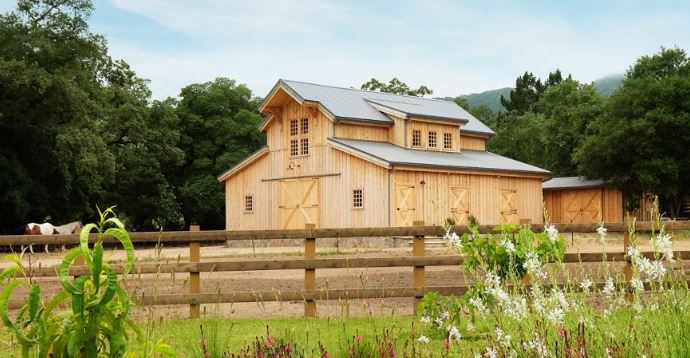
Here is an example of what you can get nowadays.  Everything is cut at the factory, with some items pre-assembled.  This photo shows a 40 ft x 36 ft Great Plains Western model by Sand Creek Post & Beam.  Also available with living quarters on the second level.

Sand_Creek_Barn-1

Would be nice to add open shedrows on both sides so the horses could find shelter from rain or snow without going in the barn.  No stalls, no paddocks to keep them separated.

The fence would have to be more substantial if you were adopting mustangs.  The rails should be on the side of the posts where the horses are.  Pipe panels would be more durable but probably cost more.  BLM requires a six foot fence but if you adopt from a rescue or sanctuary that requirement might be waived.

Stock Tank Update

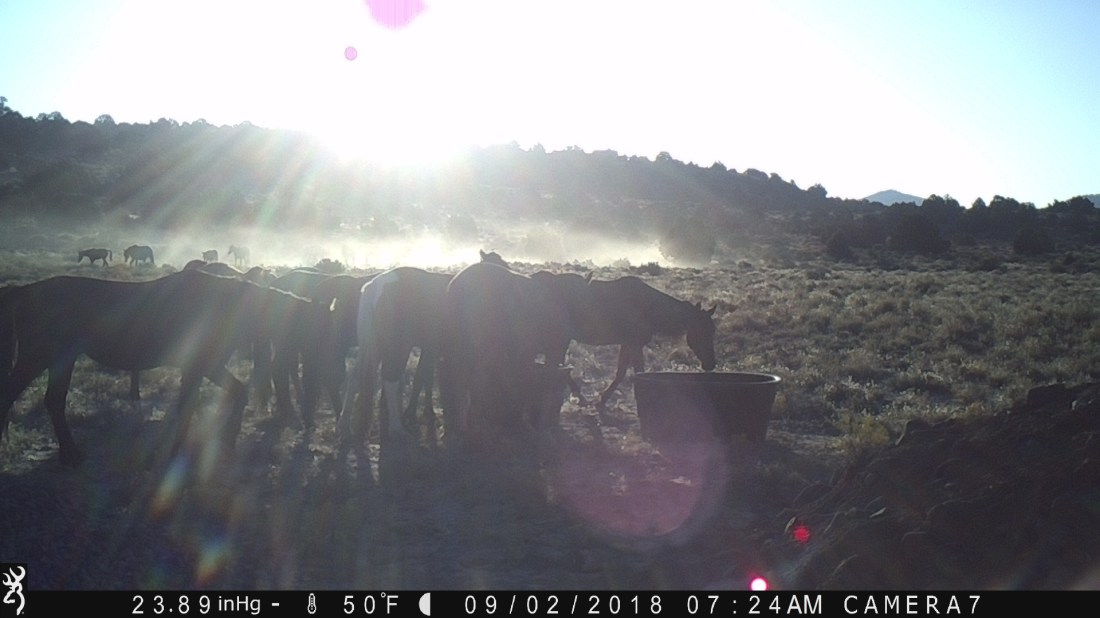
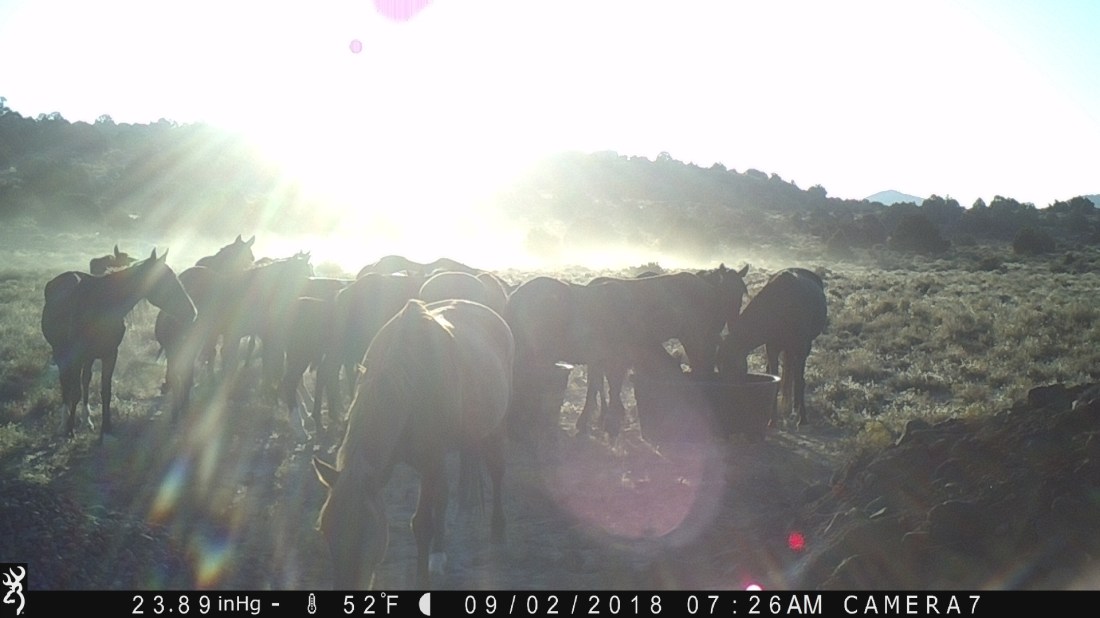
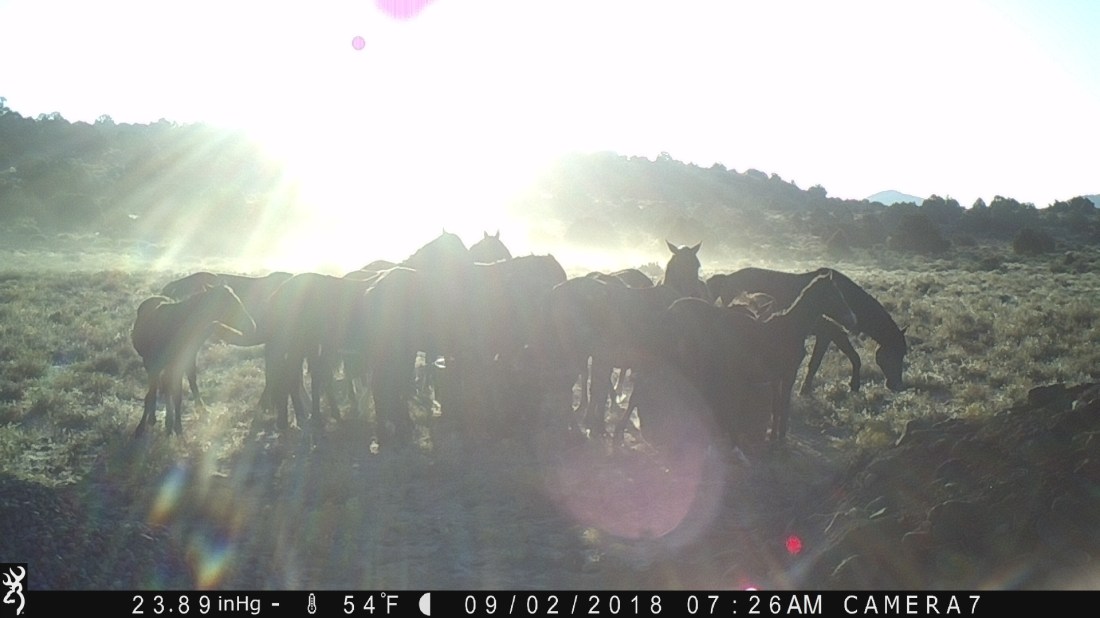
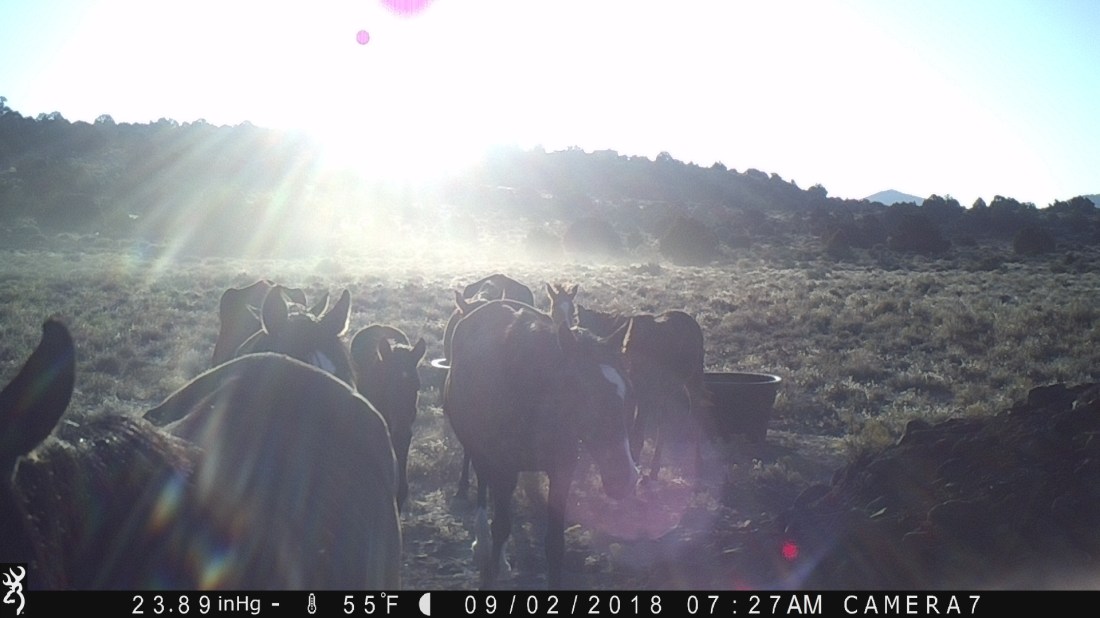
One of the stock tanks on the Virginia Range is now on float control, with a temporary water supply.  The horses empty them in a few days when filled manually.  They are on private property, elevation 6500 ft.  Hopefully the horses won’t pull the hoses apart.

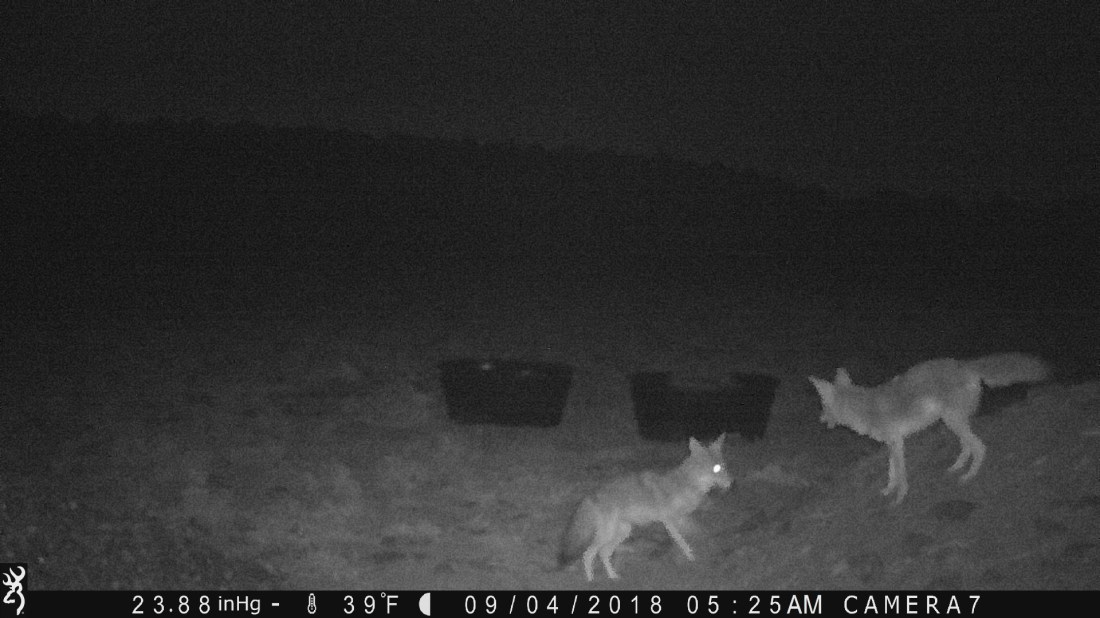
These are the tanks that appear in the trailcam photos posted from time to time on these pages.  Yes, it is illegal to feed wild horses in Nevada but not to water them.

The idea is to keep the horses up in the hills and away from problems in suburbia, a practice known as ‘diversionary watering.’

Stack and Pack on the Range

Looking north across the Virginia Range, where the population density is ten horses per thousand acres, maybe a bit more, compared to the average density of one horse per thousand acres on lands managed by the BLM.  Sardine city!

Critics say the current population of 3000 horses is unsustainable and needs to be reduced to around 500, not because they care about horses, but because they’ve been lying about the carrying capacity of the land.

Can’t have the wild horse advocates pointing to a case that doesn’t fit the wild horse narrative.  Filmed 09/21/18.

CANA Foundation Sponsors Panel on Wild Horse Protection

This was in the news a few weeks ago but was avoided due to skepticism about the organization and disdain for the venue—the show circuit—which is bad for horses.

Besides, liberals aren’t known for conserving anything that’s right and good.  But the idea of returning wild horses to wilderness areas to help prevent wildfires, by grazing down excess forage, is worth considering.

RELATED: Benefits of Wild Horses.

Status of Shackleford Horses Still Not Known

NPS said today that all visitor services and facilities at Cape Lookout National Seashore are closed, including the cabins, due to Hurricane Florence.  Park staff are starting to assess conditions throughout the park and a check of the wild horses at Shackleford Banks is still on their to-do list.  Refer to this post at their FB page.

RELATED: Rachel Carson Wild Horses Survive Florence.

Status of Fish Springs Horses to be Discussed Tonight

Advocates for the Fish Springs wild horses will meet at 6:00 PM this evening at the Volunteer Fire Station, east of Gardnerville, NV, as noted in a story posted today by The Record-Courier.

The horses roam on lands outside the Pine Nut Mountains HMA and were the subject of a roundup until protesters convinced the BLM to delay the operation.

RELATED: Water Troughs at Fish Springs Destroyed by Vandals.

BLM ‘Repos’ Adopted Horse

A wild horse adopted last month at the Cheshire Fairgrounds in Swanzey, NH, escaped from its new home three weeks ago but was recaptured by personnel from the BLM, according to a story in the Keene Sentinel posted today.  She was in good condition but was taken to a BLM holding facility in Illinois, where she will be gentled.

In general, adopters who recapture their mustangs can keep them, but if the BLM has to do it, the horse goes back to them.  Adopters must provide foster homes for a year, after which they can receive titles from the BLM.

RELATED: WHB Coming to Swanzey, NH.

BLM Ends Muddy Creek Gather

The helicopter roundup at Muddy Creek HMA ended 09/13/18, with 153 wild horses removed from the range due to dry conditions and overpopulation.  No horses were returned to the range and one died in the process.  Details of the loss were not provided.

Wild horse populations have been declining in Utah this year, with the Range Creek, Cedar Mountain, Four Mile, Bible Spring, Tilly Creek and Sulphur HMAs—along with Muddy Creek—targeted for removals.  Onaqui Mountain, popular with visitors and residents, has been spared so far.

The drought that has affected several western states in 2018 only seems to affect wild horses and burros.  Impacts to livestock have not been reported.

If winter brings sufficient precipitation will the horses be returned to the range?

Animals not placed into private care will be moved to segregated long-term holding in off-range pastures.  No foals, no family, no legacy.

RELATED: Muddy Creek Gather Starts Next Week.

BLM Wants Another Bite of the Apple at Goshute and Antelope Valley HMAs

BLM said yesterday that it will remove more wild horses from the Antelope Valley and Goshute HMAs, starting on or about September 18.  The stated reason for the gather is lack of water and forage on the range.  Refer to this news release.

Bait traps will be used for the removals.  The announcement did not indicate if the operations would be open to public inspection (probably not).

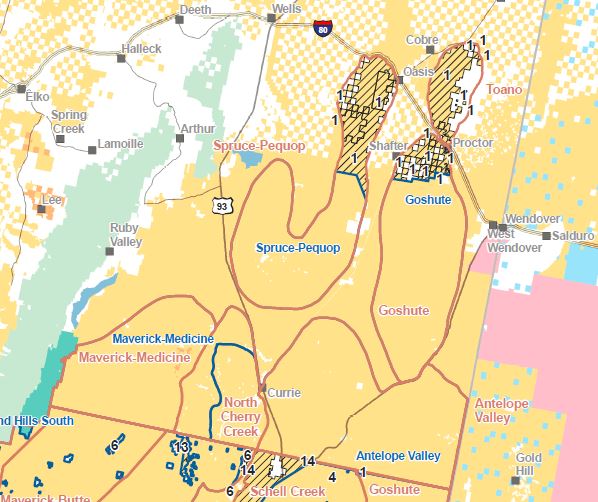
The HMAs are south of Wells, NV, near the Utah border.
Goshute_Antelope_Valley_HMA_Map-1

The wild horse population at Antelope Valley is estimated to be 1,755 and that for Goshute is 1,429.  These figures correspond to lands covered by the HMAs and those surrounding them where the horses have been observed.

The AML for Antelope Valley is 259 wild horses, while that for Goshute is 123.  These figures pertain to lands within the HMAs only and therefore cannot be compared to the population estimates because they don’t have the same land-basis.  They do not provide a rational basis for statements regarding overpopulation.

Captured animals will be taken to the Indian Lakes Off-Range Wild Horse and Burro Corrals in Fallon, NV, where they will be checked by a veterinarian and prepared for adoption.  Almost certainly the system is flooded with all the horses removed from western rangelands in 2018.  Who benefits from this?

Gather stats and daily reports can be found at this page.

The announcement stated that the horses were consuming water from a spring on private land.  If this is a problem, why hasn’t the owner installed a fence?  Or would a fence preclude access to the spring by other species (such as, ahem, cough-cough, livestock)?

Note that the BLM can bring water to the traps but not to the range.  If an advocacy group stepped forward with a desire to haul water, would the horses be allowed to stay on the range?

Approximately 900 wild horses will lose their freedom forever as a result of these gathers, on top of those removed just a few weeks ago.  Some may be adopted, most will either be sold (into questionable hands) or moved to off-range pastures.

RELATED: Antelope Valley Gather Complete, BLM Ends Goshute Roundup.

Shots Fired at Salt River Wild Horse Rescue Facility

Two men have been taken into custody after firing shots into the corral facility operated by the Salt River Wild Horse Management Group in Arizona.  No volunteers and none of the horses were injured in the incident.

Not a word on the immigration status of the perps!

UPDATE: The shooting happened on 09/16/18 around 5:00 PM.  See this report by FOX-10 in Phoenix.