
Short one by HighStakesRanch showing wildlife on Sand Wash Basin HMA. These guys hauled water to the horses during the drought of 2018.
Observing the Devil’s Garden Wild Horse Roundup
Video by Crystal Leslie provides a first-hand account of gather in October, 2018.
RELATED: Devil’s Garden Horses Get Short End of Stick, Livestock Grazing in California.
PZP Zealotry on a Global Scale
Video by the Botstiber Institute for Wildlife Fertility Control, the Bill and Melinda Gates Foundation of the animal kingdom, the Population Bombers of the wild horse world, spreading the serpent’s venom across the land.
They don’t allow comments on their YouTube channel. Are they worried that someone might disagree with them?
The video provides a ‘who’s who’ of contraceptive advocacy on western rangelands.
Virginia Range Mustangs Still Visiting Watering Station
Old man winter has taken the high ground but the horses seem to just shrug it off.


Stallion Moves ‘Em Out
Free-roaming horses on the Virginia Range, 12/31/18. Temperature around 25 ºF with a gusty north wind. Elevation 6,500 feet.
Malheur Wild Horse Transfer Still in the News
Oil companies aren’t complaining, mining companies aren’t protesting, the timber companies have been silent.

The PZP zealots never target livestock.
A darted mare still eats.
Wake up people!
RELATED: Ranchers Protest Malheur Horse Transfer.
Fort Polk Horses Gunned Down
Five wild horses were killed in late December at the Peason Ridge Wildlife Management Area in western Louisiana, according to a report published today by Pegasus Equine Guardian Associates. The incident was described as intentional, not a hunting accident.
RELATED: Wild Horse Removal Continues at Fort Polk.
Illinois Sanctuary Finds Homes for ‘Excess’ Wild Horses
Refer to this story, published today by St. Louis Public Radio, an NPR affiliate (and probable conduit of Marxist propaganda). Includes audio.
While the efforts of the owners are commendable, they are too late, too far downstream in the process. They guarantee more horses will be removed from western rangelands, because they focus on symptoms, not on causes.
This is also true for the PZP zealots, who think shooting wild mares in the ass with contraceptives is the answer. It is not. It is capitulation to the anti-horse agenda, assent to the wild horse narrative.
Advocacy must be aimed at keeping these animals on the range.
That means pushing back against the public-lands ranchers and those at the BLM and Forest Service who coddle them. Same for land managers at the state level.
Picnic at Pahrump
Short one by Deborah McCorkle of wild horses near Pahrump, NV. She says they’re always together. “They eat the grass in the neighborhood and are gone. People clean up after them and there are signs posted to beware of the burros and wild horses.”
Youngsters at Palomino Valley Corrals, Government Shutdown
Day ten, 12/31/18. BLM staff not seen at facility. Some of these guys looked too young to be separated from their moms. They have no protection from the elements.
RELATED: Palomino Valley Corrals, Day Ten of Government Shutdown.
Founder of South Dakota Wild Horse Sanctuary Remembered
Dayton O. Hyde, founder of the 11,000 acre Black Hills Wild Horse Sanctuary, died 12/22/18 at the family ranch in Oregon. He was 93. Refer to this story posted 12/30/18 by the Herald and News of Klamath Falls.
The sanctuary was in the news recently because of a conservation easement that affects over 70% its land. It will continue operations under the leadership of Susan Watt.
UPDATE: Added video by Black Hills Wild Horse Sanctuary.
Palomino Valley Corrals, Day Ten of Government Shutdown
Monday, December 31, 2018, a cold and windy day in northern Nevada. It’s day ten of the federal government shutdown. Nobody to be seen at BLM’s Wild Horse and Burro Center, about twenty miles north of Sparks on Highway 445.

The visitor gate was shut.
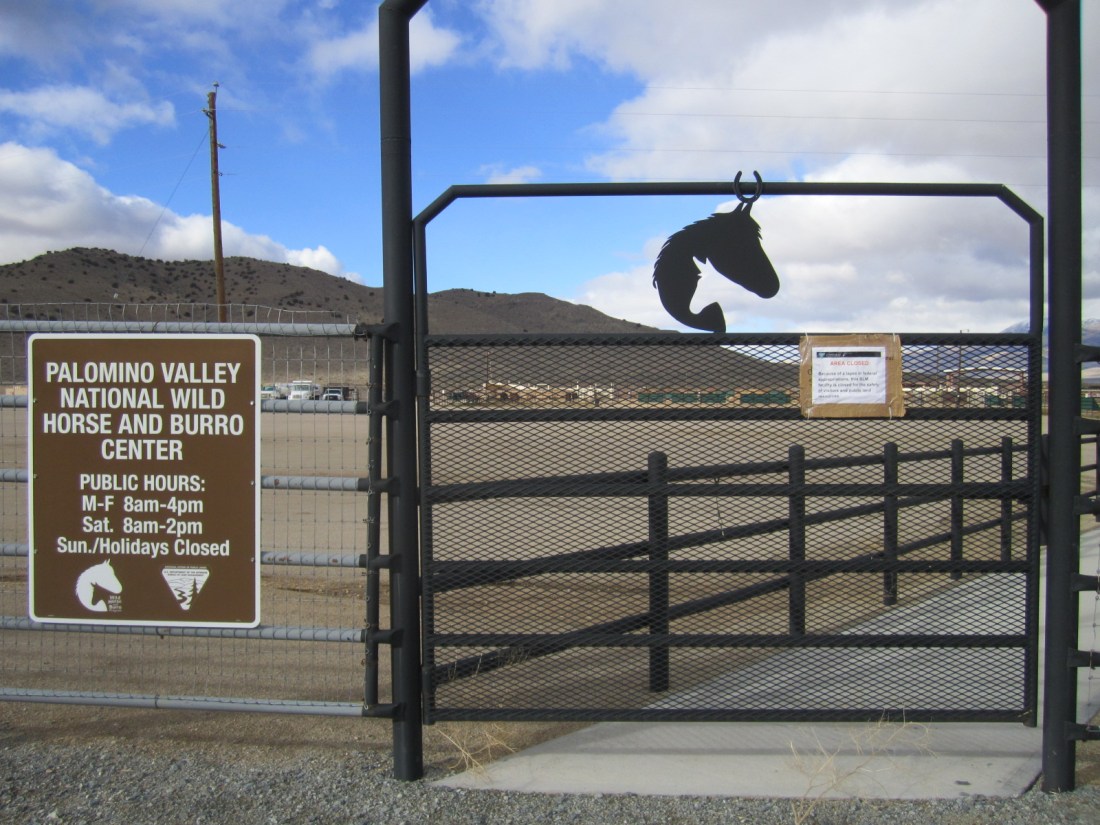
A temporary sign told the story.
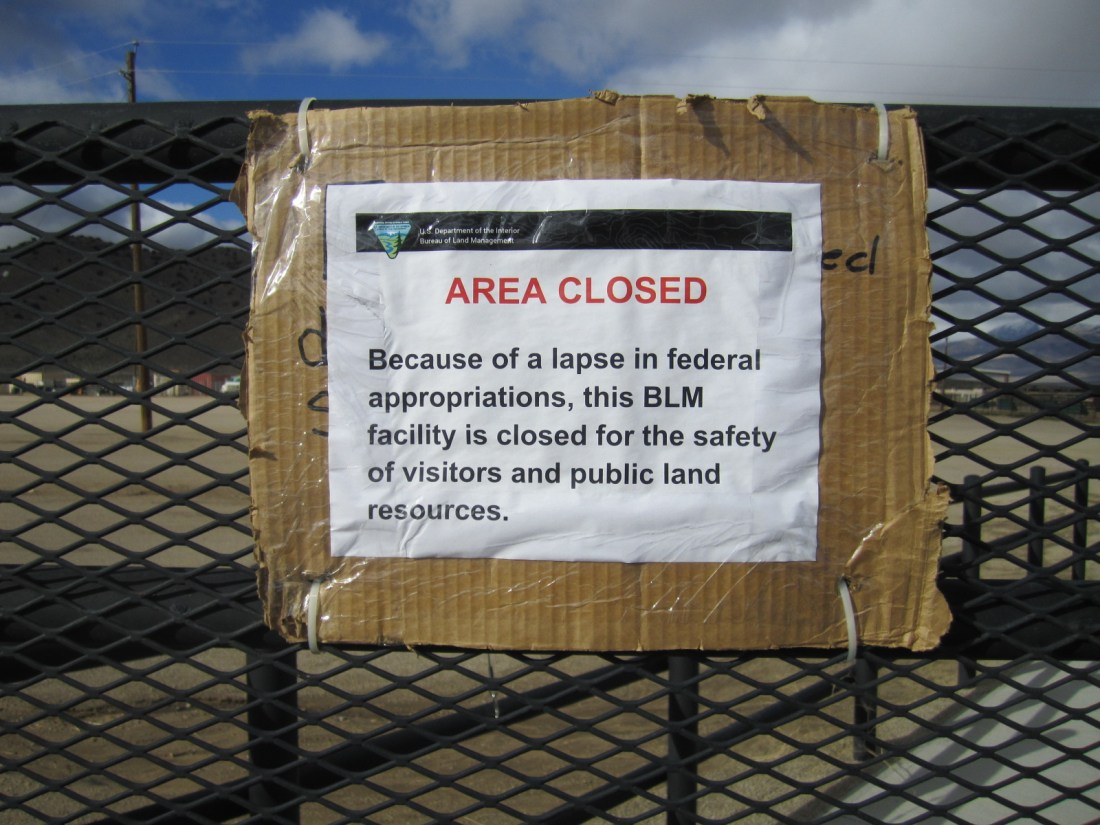
The office was idle.

You’ll have to read the signs to find out what goes on there. The display is on the south side of the facility, along Ironwood Road. See this video.

This one tells the story of wild horses and burros on public lands in the western U.S.
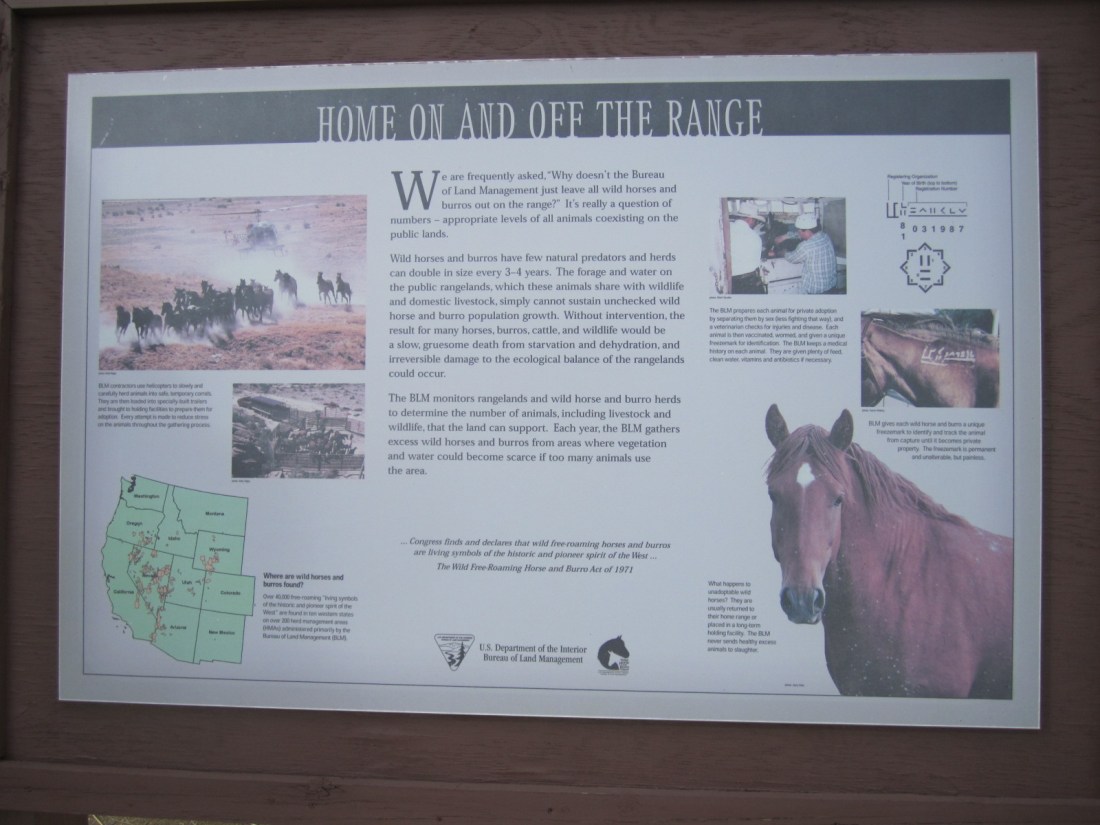
There’s also some information on how to gitcha one.
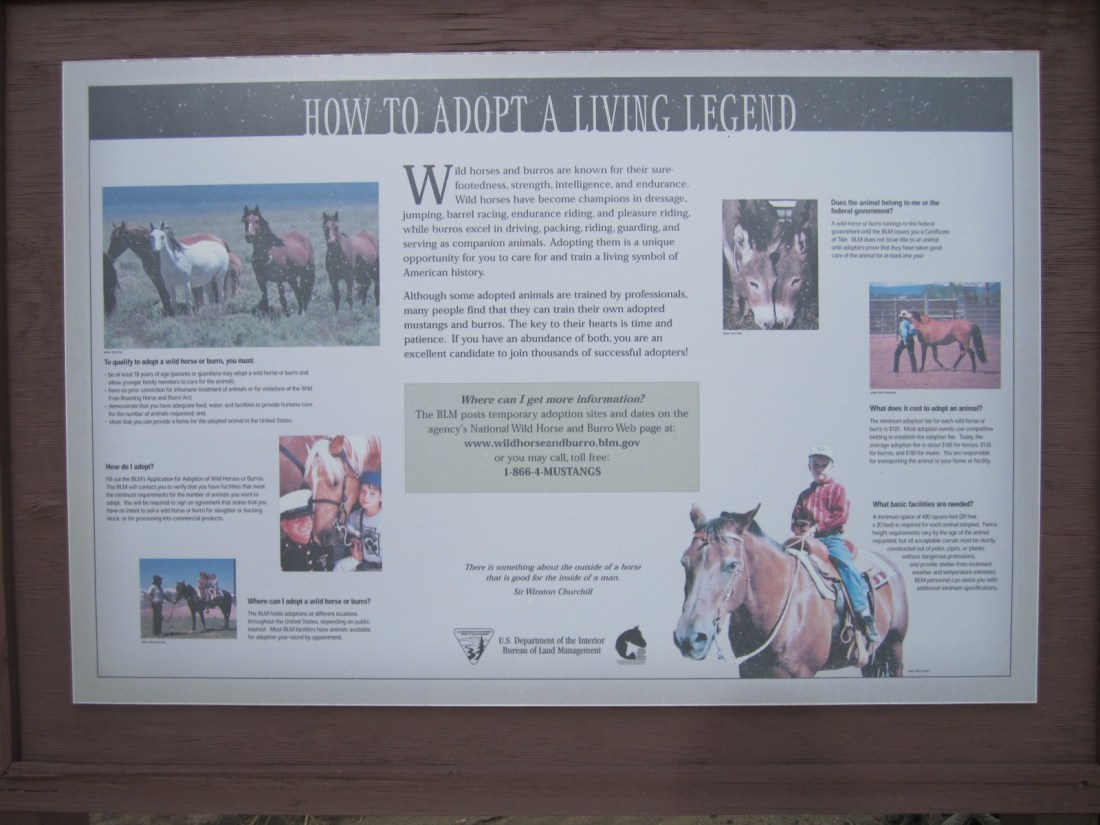
Although nobody was there to identify the horses and show you around, someone has been stopping by to feed them.
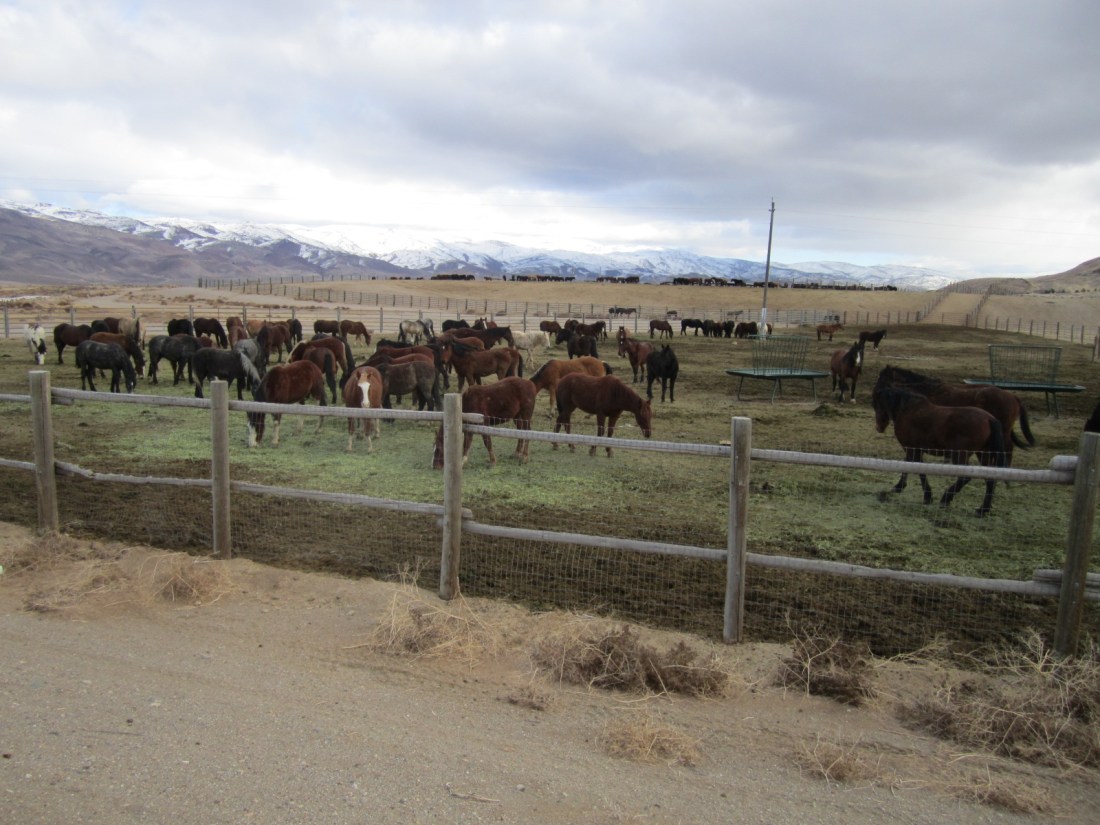
These guys looked okay, despite the harsh conditions and lack of shelter.
Arizona Rescue Takes In Devil’s Garden Horses
Nine former wild horses, removed in October from the Devil’s Garden Plateau WHT, have been placed with the Equine Voices Rescue & Sanctuary in Amado. Refer to this report posted yesterday by KVOA-TV, the NBC affiliate in Tucson.
RELATED: Forest Service Delays Sale of Devil’s Garden Horses.
‘Lunatic Farmer’ Longs for Horsemeat Dinner
Refer to his blog post dated 12/26/18 about the wild horse ‘problem’ on western rangelands. Opposing comments are not allowed so they are presented here:
Sir, the symptoms you describe are the result of a strong connection to agriculture and the rural lifestyle.
Many of the wild horses and burros now wasting away in long-term holding got there because of livestock and public-lands ranching.
The agency charged with the care of those animals has steadily given more and more of their land (set aside for them by the WHB Act of 1971) to the ranchers and other commercial interests, while gradually reducing the number of horses and burros allowed to live in the remaining areas.
The figures you cited are correct. BLM says the land, 27 million acres in ten western states, can only support 27,000 wild horses and burros. That works out to one animal per thousand acres, almost nothing.
The same agency allows ten to twenty times as many cow/calf pairs on western rangelands, depending on the area. In some cases it’s the same territory set aside for the horses!
You may wish to view this aerial footage from SE Oregon: https://youtu.be/zFofShEuZJk. What do you see at 3:06? At 3:36? Which species is in the majority?
Twenty seven thousand has nothing to do with the carrying capacity of the land. It only represents the forage loss the ranchers, and their allies at the BLM, are willing to tolerate.
By the way, the fossil record shows that horses are a native species in North America. They died off around 12,000 years ago and were reintroduced by Spanish explorers, as you noted.
Keep in mind that many of the horses and burros roam on the harsh landscape of the Great Basin. They have not destroyed their habitat, that’s what the high desert looks like. Here’s an example: https://www.youtube.com/watch?v=HOzB6ltmZ20.
O Come, O Come Emmanuel
Octave of Christmas, day eight. Solemnity of Mary Mother of God. H/T Megan Smith.
‘Swamp Cancer’ Claims More Chincoteague Ponies
Four horses infected with the disease, formally known as pythiosis, did not respond to treatment and were put down last week, according to a syndicated report that appeared yesterday in the Winston-Salem Journal.
A veterinarian interviewed for the piece suggested that the ailment was spreading northward (from southern states) because of a ‘changing climate.’ Good grief.
Mustang Monday
On Big Summit WHT. Not a fight, just horses being horses. H/T Joe Hudspeth.
Fence Post Replaced, Finally
Four by six treated post failed in May, 2018, probably because one of the horses put his butt to the fence to scratch it. Installed October 2103, replaced 12/28/18.
Step 1: Gather tools and materials. Best way to carry eighty pound sacks of cement to the job site? Your tractor.

Step 2: Dig the hole. The fence tells you where.
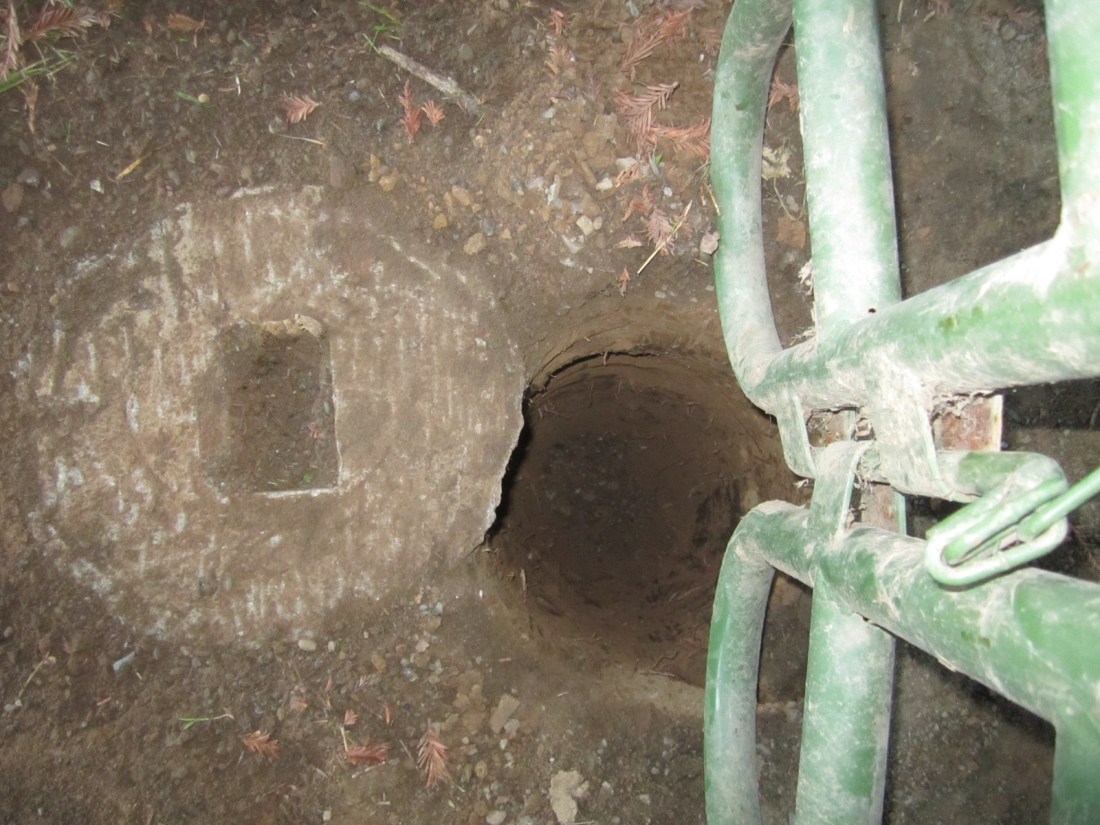
Step 3: Check depth of hole. Top of post should be at top of fence, in this case about 64″ above grade. Hole should be deep enough to place a few inches of gravel at the bottom so the post does not rest on soil. Don’t cut the post, dig the hole deeper.

Step 4: Use a level to plumb the post. Mix the cement and place in hole. In this photo, a wood block braces the new post against the old concrete.

Step 5: If your pipe panels have loop legs, be sure to press them into the concrete before it hardens. Make sure the depression can drain into the surrounding soil. Top of concrete should be slightly higher than grade, so rainwater runs away from the post.

Step 6: Secure the fence to the new post. A U-shaped metal strap with two 1/4″ lag bolts should work. You can see one near the top of the first post in this photo. The new post is next in line.

In this corral, the pipe panels are supported at every other junction. Steel rods were pounded into the ground where not supported to keep the horses from pushing those sections out (the pinned joints act like hinges). You can make the rods from #4 rebar or larger. Drive them in on the outside of the leg until flush with the top of the loop.
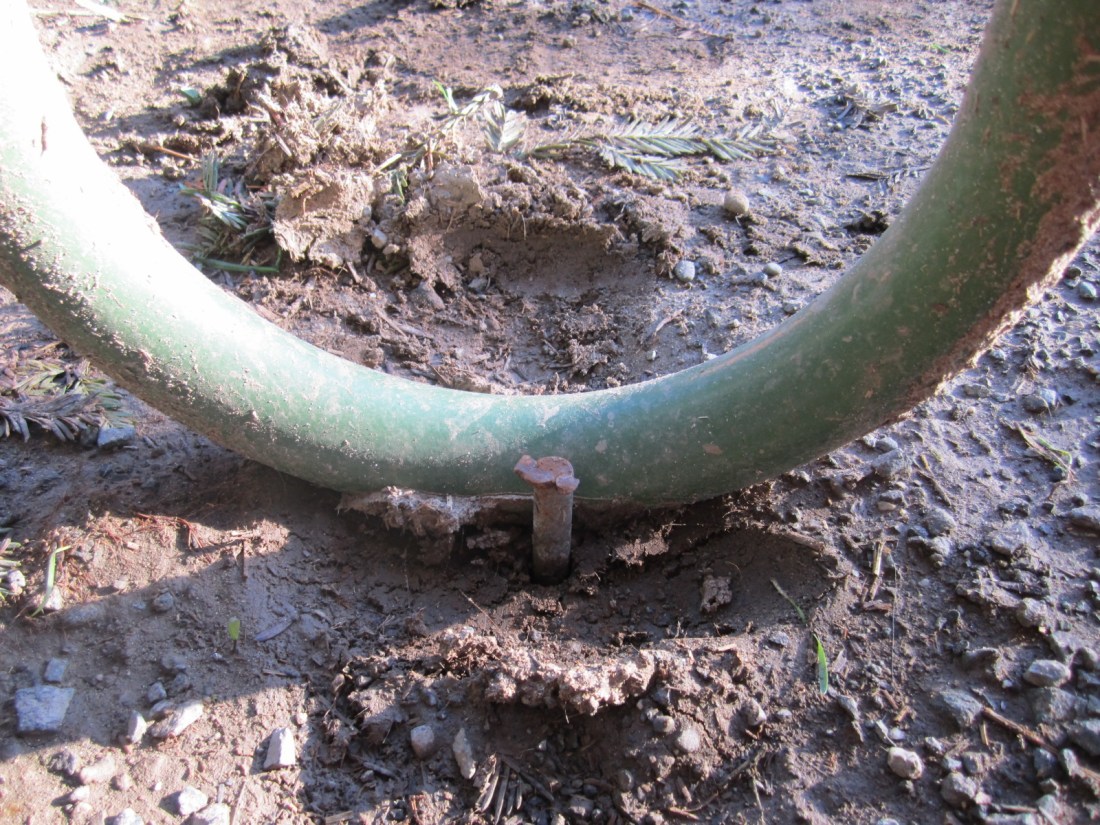
Technical note: The 4×6 posts in this corral were oriented with the broad side facing the pipe panels, to accommodate the U-shaped straps. The posts would do a better job of resisting the horses if their narrow side was put toward the fence. But you’d have to find another way to secure the panels to them, such as drilling holes through the vertical members and lagging them directly to the posts. Straps have more ‘give,’ which is nice when horses lean against the fence or ground conditions change from wet to dry. The face-to-face spacing between 6×6 posts on a 12′ gate can change 1/4″ or more between summer and winter in this area.
Joy to the World
Octave of Christmas, day six. Feast of The Holy Family. H/T Megan Smith.
In Search of the Salt River Horses
They’re overpopulated, don’t ya’ know? H/T Carol & Gary’s See America Tour.

