
Near the Virginia Range with Base Camp Chris. Recommended supplies: (1) Camera, (2) Patience, (3) Suitable beverages. Foals may be hard to find, thanks to the advocates.
Katie Heigl Duped by Advocates?
Refer to this news release, appearing today on EIN Presswire.
Although it addresses the misguided practice of PZP darting, it does not reflect the writer’s desire to see America’s wild horses moved to remote wilderness areas not particularly suited to livestock grazing, so the ranchers can have all of their food.
Eighty to ninety five percent is not enough.
RELATED: Onaqui Wild Horse Rally Today at Utah State Capital.
Onaqui Wild Horse Rally Today at Utah State Capital
Refer to this story by Deseret News. A keyword search yielded these results:
- Cattle – 0 occurrences
- Sheep – 0
- Ranching – 0
- Allotment – 0
- Grazing – 0
- Management priorities – 0
- Resource allocations – 0
- Land-use plans – 0
- Humane – 2
- Birth control – 2
- Fertility control – 1
None of the horses could be reached for comment.
RELATED: Onaqui Rally at State Capital.
Failure to Connect the Dots #2
Consider the reasoning in this letter to The Salt Lake Tribune about the Onaqui roundup. The axiomatic basis (Assertion 0) was provided by Western Horse Watchers.
0. The land was set aside for wild horses.
1. Band stallions defend their families and do other horsey stuff.
2. Cattle and sheep vastly outnumber the horses.
3. Therefore, we should drive birth rates to zero, destroy their families and let the bands die off, sometimes referred to as ‘humane management.’
Western Horse Watchers was unable to determine if the letter was written by an advocate or a rancher.
RELATED: Onaqui Roundup Announced, Failure to Connect the Dots.
WHBAB Offers New Slate of Anti-Horse Recommendations
The Board met online June 30 and July 1. Western Horse Watchers did not view any of the proceedings, including public comments.
The first recommendation, in view of the “unprecedented drought situation,” is to create “an emergency action plan including the capacity to gather and house an unprecedented number of equids, coincidentally contacting FEMA and Interior regarding possible funding, and issuing an emergency declaration.”
Getting rid of wild horses and burros has been the goal all along but the idea is easier to sell when you can point to a temporary change in their environment.
Never let a crisis go to waste.
RELATED: WHBAB Meets Next Month.

AJR-5 Advances to Third Reading
The resolution as amended was adopted yesterday in a committee hearing by a vote of 11 to 3, according to the July 1 status.
RELATED: Who’s Tampering with AJR-5?
In It for the Long Haul
Paraphrasing Max Planck: A new idea does not triumph by convincing its opponents and making them see the light, but rather because its opponents die off and a new generation grows up that is familiar with it.
Onaqui Roundup Announced
The incident, which begins on July 11, is necessary because the land can’t support the current number of horses in conjunction with other animals and resource uses.
Dry conditions have aggravated the situation, according to the news release.
The method of capture was not specified but the operation will be open to public observation after the first day.
The HMA covers about 205,000 acres and has an AML of 210, for an aimed-at stocking rate of one wild horse per thousand acres.
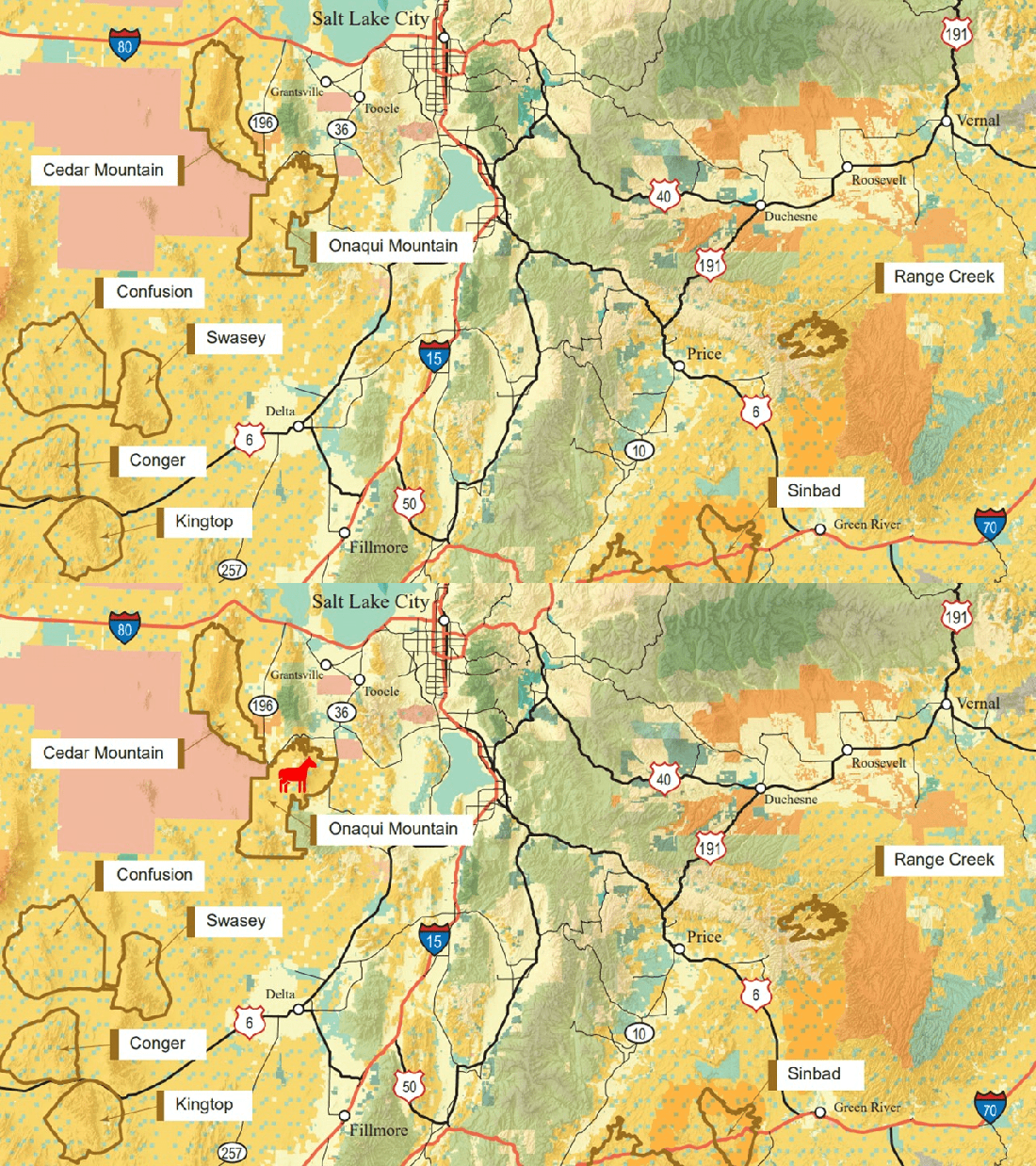
The gather target is 400, with 296 horses to be removed, according to the roundup schedule dated June 15.
Captured animals will be sent to the Sutherland and Delta off-range corrals.
Mares returned to the range will be treated with contraceptives.
The number of livestock affected by the mandatory AUM curtailments is not known.
A link for the gather stats and daily reports was not provided.
Over 200 wild horses were removed from the area two years ago.
RELATED: Rallying for Onaqui Wild Horses or Privately Owned Livestock?
PZP Amendment Resurrected?
Refer to this news release by the Animal Welfare Institute. Same amount as last year, $11 million “to pursue safe and reversible fertility control options.”
Permitted grazing, and the number of wild horses and burros displaced thereby, are not mentioned in the announcement.
It’s getting harder and harder to distinguish the advocates from the ranchers.
RELATED: So Long, PZP Amendment?
Anti-Slaughter Amendment Clears U.S. House
The measure, part of the HR 3684 infrastructure bill, bans the transport of equines across state lines or to Canada or Mexico for slaughter for human consumption, according to a news release issued this morning by Animal Wellness Action.
The amendment carried with others by a voice vote, which may mean there’s no record of who voted for and against. The announcement did not indicate if the animals could be transported for pet food and other products.
RELATED: Amendment Tries to End Horse Transport for Slaughter.
Who’s Tampering with AJR-5?
The resolution would urge the federal government—ooops, administration—to, among other things, establish management of these animals informed by independent science and the American public, and to restore a thriving ecological balance to California wild horse and burro areas and territories.
Although ‘independent science’ is suspect, the addition of ‘thriving ecological balance’ could be a big red flag.
If it means wild horses and burros living in balance with wildlife, as specified in the original statute, then fine.
If it reflects contemporary usage, where most of the resources on public lands have been diverted to privately owned livestock, then the measure is toast.
RELATED: AJR-5 Amended Again.

AJR-5 Amended Again
The text was revised on June 28. The status says re-referred to committee.
No hearings have been scheduled.
RELATED: AJR-5 Hearing Postponed.
New Lake Mead Gather Plan in the News
Water is a limiting factor in the analysis, according to a story in today’s edition of the Las Vegas Sun. Although the lake is the main source for the burros, along with a few springs, the BLM can’t consider it when setting management levels.
The AML for horses is zero but a small herd inhabits the area. They will be removed if the plan is approved.
The comment period for the draft EA closed on April 30. A decision record for the project has not been published.
RELATED: Comments Invited on Draft EA for Lake Mead Gather Plan.
You Don’t Have a Horse Problem You Have a Ranching Problem
The 50,000 wild horses in off-range holding could be returned to the range by ending permitted grazing on just a few dozen HMAs.
That’s about one fifth of the HMAs and WHTs combined.
If the pattern holds in other wild horse areas, the total number of horses cheated out of a spot on their home range by privately owned livestock is well north of 200,000.
As bad as that is, the advocates want to get rid of even more with their ruinous darting programs. Why are you still giving them money?
RELATED: Example of Downstream Focus, Confusing Cause and Effect.

Currituck Wild Horses Combat Aquatic Weeds
They wade into the water to eat the stuff, much like the horses on the Salt River, according to a report by The Herald-Sun of Raleigh, NC.
The story said the horses have learned to swim from island to island when food is scarce but what would happen if the next one is a grazing allotment that’s currently in season?
Black Mountain Roundup, Part 2, Day 111
The incident began on March 9, a resource enforcement action that follows a wild burro removal in 2020. Gather stats through June 27:
- Burros captured: 209
- Goal: 500
- Returned: 0
- Deaths: 0
- Shipped: 154
Foals accounted for 15.3% of the burros gathered. Of the adults, 61% were male and 39% were female, barely inside the expected range of variation produced by a simple random process centered at 50% males / 50% females (p-bar = .5 and n = 209).
Fertility controls will not be applied this year and the incident is not open to public observation.
The number of burros in the unaccounted-for category is 55.
Data quality is good.
Some supplemental statistics:
- Forage liberated to date: 1,254 AUMs per year
- Water liberated to date: 1,045 gallons per day
- Burros displaced from HMA by privately owned livestock: 1,222
RELATED: Have You Seen Any Videos of the Oatman Burros Lately?
Pokegama Roundup Rebooted?
A story in today’s online edition of the Herald and News of Klamath Falls, OR says the operation will resume on private lands but does not say when.
It will not be open to public observation.
Last year, five horses were captured in September but no further activity was reported.
Western Horse Watchers was unable to find an announcement for the event at the BLM news site.
RELATED: Pokegama Progress Report.
UPDATE: BLM issued news release on July 1.
Mustang Monday
At McCullough Peaks HMA with Stephanie Perry.
The Advocates Should Join Forces with the Cattlemen
Both groups want the same thing: Wild horses off the range.
The advocates want to get rid of them with contraceptives, while the ranchers want them dispatched with helicopters, but those differences can be worked out later.
Collaboration could lead to a groundbreaking plan for eradicating most of America’s wild horses.
Oh wait.
RELATED: Wild Horse Management Needs to Change?
Virginia Range Mustangs at TRIC
WARNING: Although this video begins with an F-bomb, some viewers might be offended by the foal at 0:40.
RELATED: AIP Fallout, Managing Humanely and Virginia Range Update.

