What Are Enteroliths?

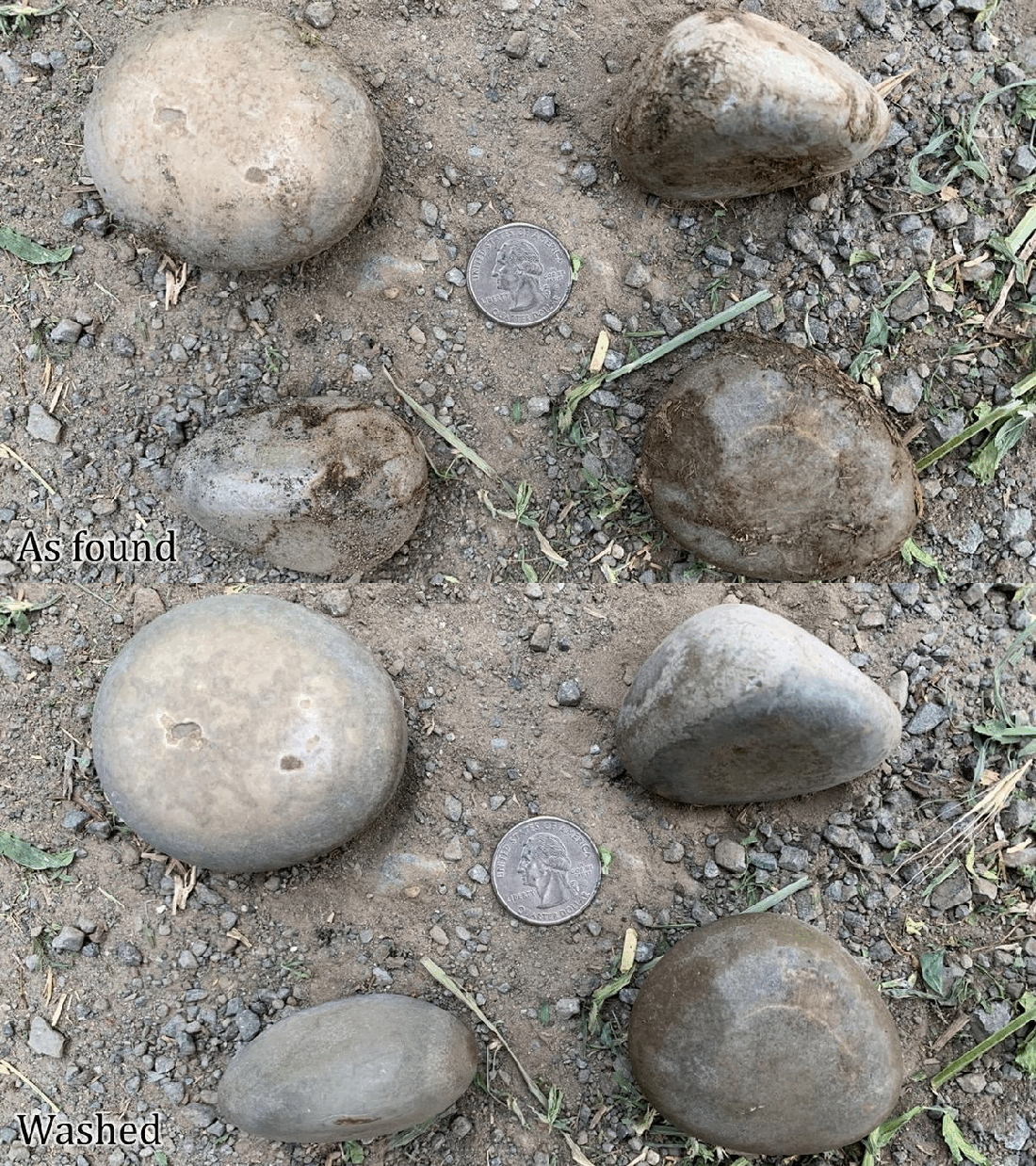
They are mineral accumulations around a foreign object that form round, triangular, or flat stones inside the bowel of a horse, usually over the course of several years.

They originate in the large colon and can lead to colic.

Refer to this Q&A by the UC Davis School of Veterinary Medicine.

The stones in the following photos were passed by a mare earlier this week, two on June 20 and two on June 21.

Symptoms began on June 19, including loss of appetite, restlessness, laying down.

The incident was preceded by diarrhea and appears to be resolving but is not over.

Enteroliths are associated with diets that are high in magnesium and protein, present in alfalfa, a staple for wild horses in off-range corrals.

The mare is a registered Paint and is 12 years old.

Enteroliths 06-22-22

What Is a Curated Horse Exhibit?

It’s an area where wild horses lived, but because of massive human involvement, the natural order has been all but extinguished.

The advocates work hard to keep up appearances but the critical observer will notice

  • Unexpected injuries
  • Few if any foals
  • Abnormal sex ratios
  • Decreasing herd sizes

Examples include Theodore Roosevelt National Park, Assateague Island, Currituck Outer Banks, Salt River, Virginia Range, Little Book Cliffs WHR, McCullough Peaks HMA and Pine Nut Mountains HA.

What Is On-Range Management?

The advocates support it so you know it’s bad for the horses.

A report by KLAS News refers to it but does not explain it.

It’s synonymous with “humane management.”

What is it?

VR Darting Injury 09-15-21

The Montana Solution, marketed by the Campaign Against America’s Wild Horses, a voice for the public-lands ranchers and leader in the wild horse removal industry.

RELATED: Montana Solution Alleviates Many Wild Horse Problems.

Montana Solution Alleviates Many Wild Horse Problems

Concerns about herd size, genetic diversity and inbreeding go away because there is no breeding at all.

With no new foals hitting the ground, death rates increase as the average age of the herds increases.

In the Conger sterilization experiment, mares left their band stallions to breed with bachelors, upsetting the natural order.

Youngsters grow up to rob the public-lands ranchers of their birthright.

With the Montana Solution, the permittees are safe.

The advocates talk about habitat fragmentation but not about herd fragmentation.

Ever notice that?

They give us so much to be thankful for, we really should be more grateful.

RELATED: Can Darting Programs Compete with Helicopter Roundups?

Saving Wild Horses 06-18-22

How Do We Make Changes for the Horses?

Start by asking “Why?”

Why are AMLs small relative to the available resources?  Why are HMAs and WHTs managed primarily for livestock?  Why do the RMPs assign most of the food to cattle and sheep in areas set aside for horses and burros?

These questions will take you upstream in the management process, to policies, regulations and statutes, as well as the attitudes and beliefs of those who write them.

AMLs are not in the original WHB Act.

Almost half of the land designated in 1971 is now managed exclusively for livestock.

The original statute ordered the secretaries of Interior and Agriculture to work with state wildlife agencies to protect wildlife in those areas, especially endangered species.

There was no provision for livestock.

Roundups, darting programs, sterilization, sex ratio skewing, adoptions, training and slaughter are symptoms of the problem, not causes.

Who benefits from these things?

Wild horse advocacy takes a giant leap forward when it learns how to distinguish between cause and effect.

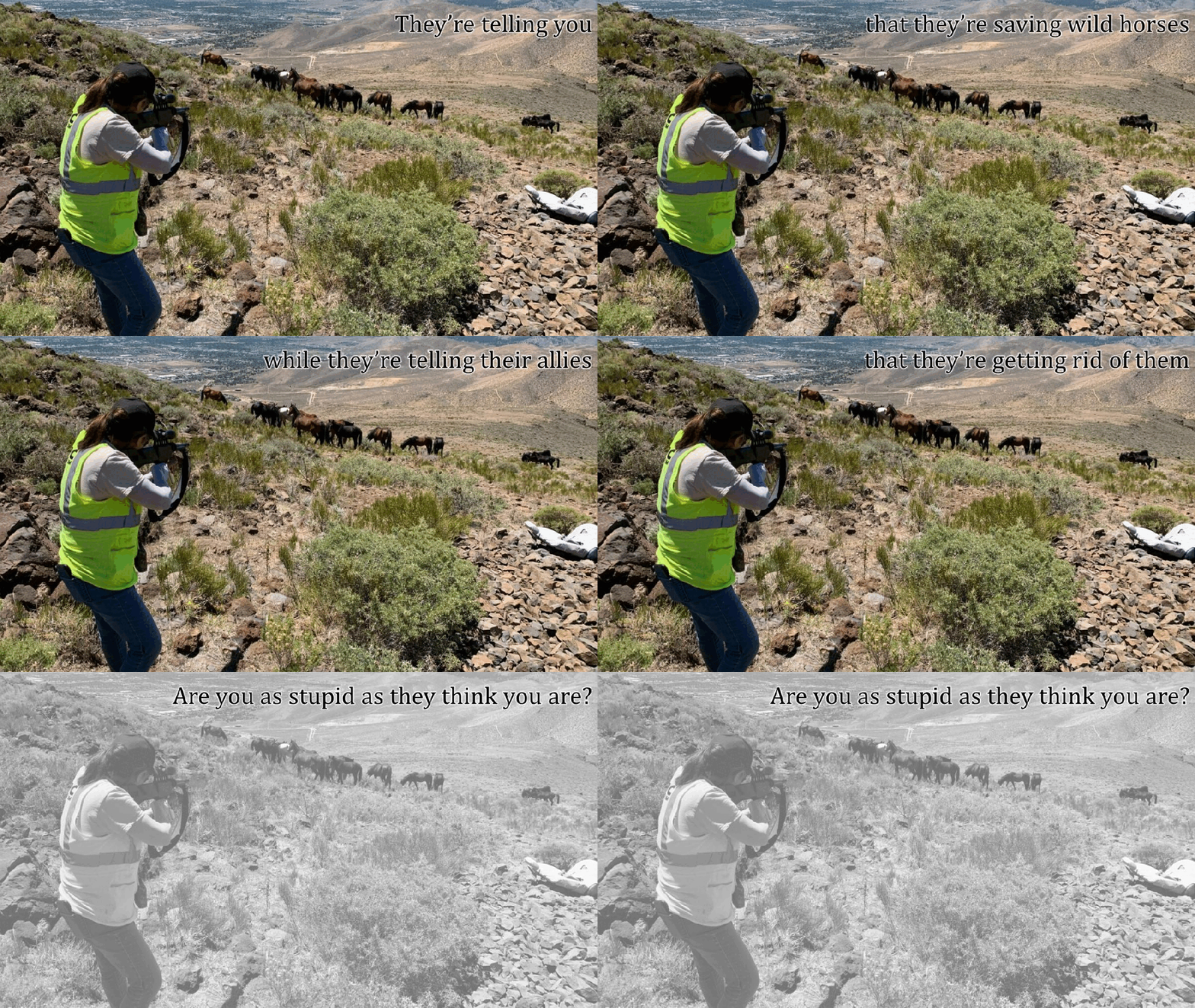
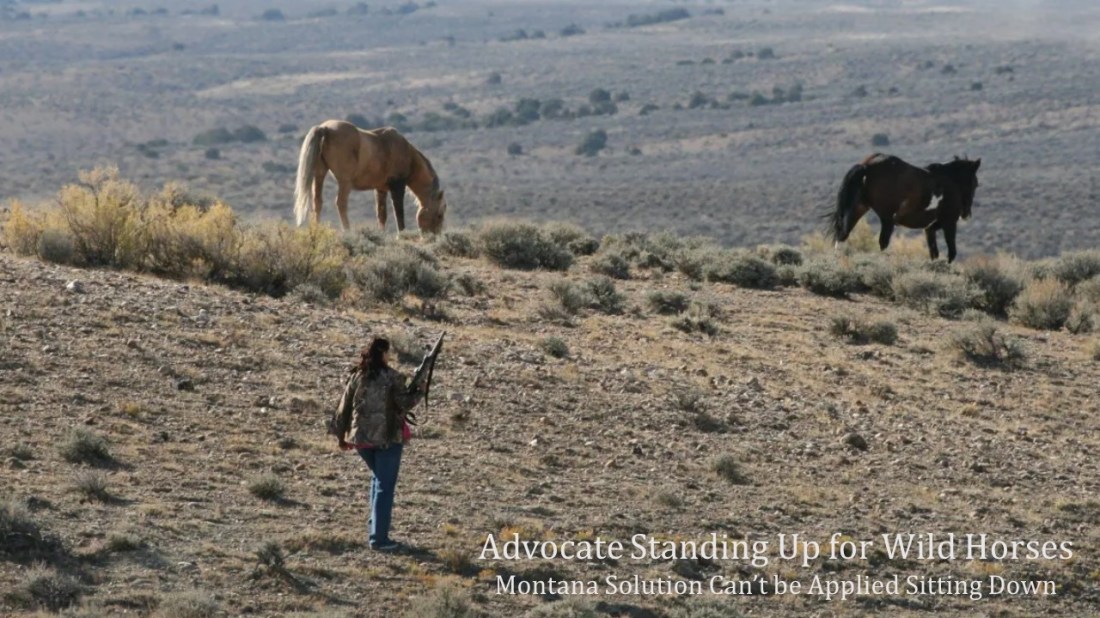
Today, it has a downstream focus and is dominated by frauds, reflected in the following image, so it can never bring improvements for the horses, only prolong their misery.


Standing Up for Wild Horses on Virginia Range 06-18-22

BLM Colorado Goes Dark?

The bureaucrats tried to reassure the public that they were addressing the problems at the June 16 online meeting but they have provided little information about the Piceance roundup and did not post an update this week for the situation at Cañon City.

Ongoing Gathers 06-18-22

They may be providing updates on other platforms.  Western Horse Watchers does not read and will not link to anything on socialist media, with the exception of YouTube.

RELATED: Status of Piceance Roundup?

Long-Term Effects of Conger Sterilization Experiment?

According to the abstract published in April, band stallions that were gelded lost their mares while bachelors that were intact acquired mares, inverting the natural order.

Stronger horses that should be breeding are not while weaker horses that should not be breeding are.

This can’t be good for the herd over the long run, which means it will be of interest to the bureaucrats, ranchers and advocates.

RELATED: Castration Easier to Sell to Public Than Ovariectomies?

Status of Piceance Roundup?

A link for the operation has not been added to the Colorado gather page.

The capture and removal goals were not specified but the roundup schedule dated June 14 says 99 and 99 for Part 1 (carried out with bait traps).

The incident is probably not open to public observation and updates will only be posted when horses are caught.

Captured animals will be taken to an undisclosed location in Utah.

A story posted today by the Herald Times of Meeker said it’s underway but that may mean the traps have been put up and hay has been put out.

RELATED: Rancher Happy to See Piceance Horses Go.

Rancher Happy to See Piceance Horses Go

As noted last year, 4M Ranch covers nearly 12,000 deeded acres in western Colorado and has grazing preference on more than 125,000 acres of BLM and Forest Service land.

The remark at 2:10 by the executive director of the Campaign Against America’s Wild Horses about tax dollars funding a broken and inhumane system is a reference to the Montana Solution, a better way of taking wild horses off the range according to her and her supporters.

Why would you want to take horses off the range?  Who benefits?

RELATED: Piceance Roundup Prompted by Public Comments?

Save Blawn Wash HMA?

This urgent message from The Cloud Foundation asks its supporters to oppose a plan that will zero-out the Blawn Wash herd.

NEWS FLASH: Blawn Wash was zeroed out in 2005.  A 2001 land exchange shifted 43% of the acreage and 70% of the forage from the BLM to the State of Utah School and Institutional Trust Lands Administration.  Forage in that portion of the HA is managed by SITLA.

The AML has been zero for 17 years.  Refer to Section 1.1 in the Draft EA for resource enforcement actions in the Bible Springs Complex.

The comment period for the new EA closes tomorrow.

The project can never lead to meaningful changes for the horses and can only improve conditions for the public-lands ranchers.

RELATED: Draft EA for Bible Springs Complex Out for Review.

Castration Easier to Sell to Public Than Ovariectomies?

The procedure occurs much more frequently in adopted and pedigreed horses, but that wasn’t a finding of a study cited in a March 18 blog post by the BLM.

About 40% of the stallions in the Conger HMA were gelded in 2017 to test for differences in behavior and habitat use as well as effects on survival and foaling rates.

Researchers found that geldings tended to lose their harems three years after surgery and there was no long-term reduction in foaling rate.

A 1992 study showed that 80% or more of a herd’s stallions would need to be sterilized to substantially reduce growth rates.

RELATED: Wild Horse and Burro Research Initiative Announced.

Piceance Roundup Prompted by Public Comments?

A spokesman for the BLM indicated in yesterday’s news release that they were getting quite a bit of feedback from the public about the poor condition of the horses.

They’re in a remote area, did those concerns come from campers, hikers and tourists?

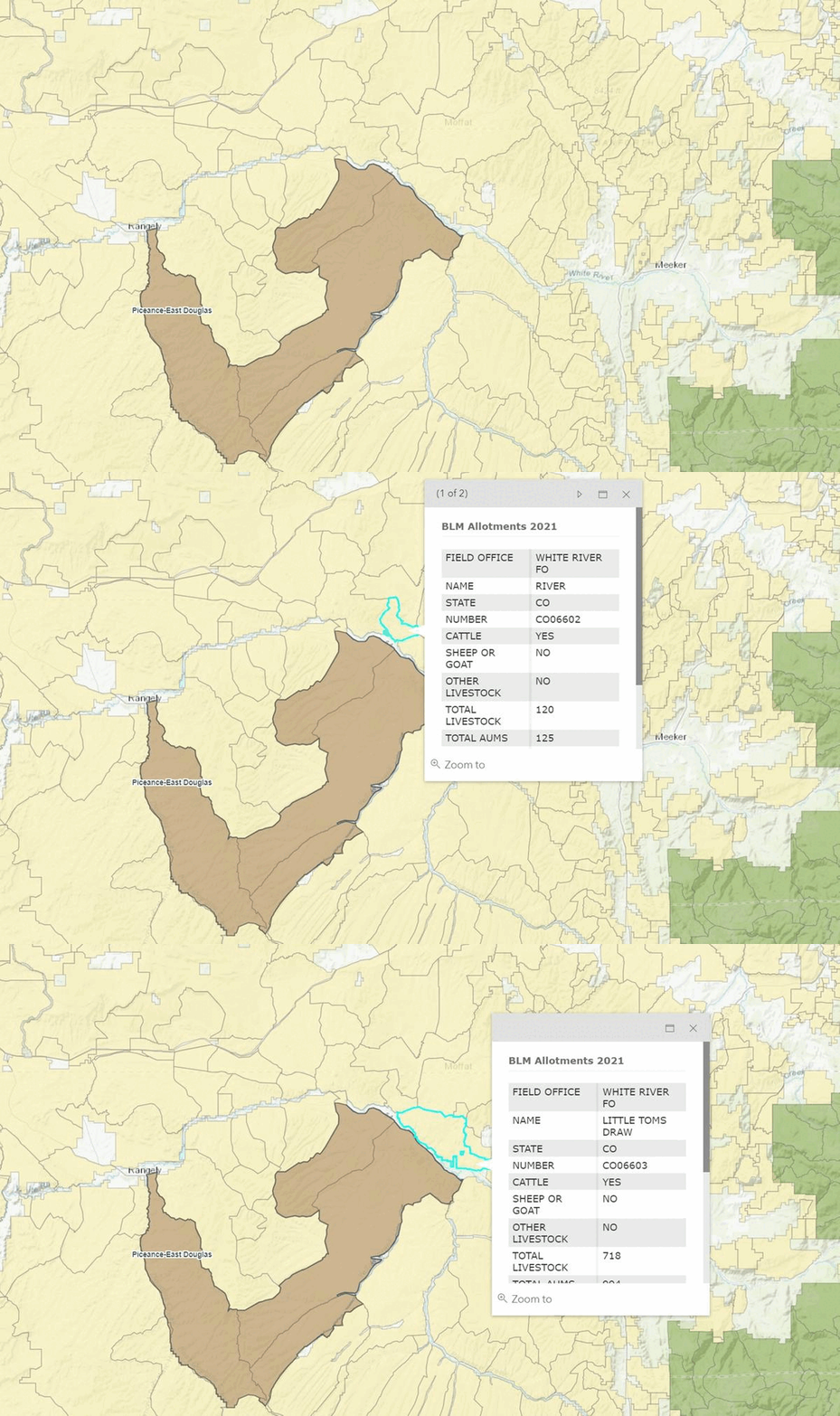
The HMA was established in an area occupied by grazing allotments, as shown on the Western Watersheds map.  The gather area will likely extend beyond the HMA and will include some of the outlying allotments.

Piceance Allotments 06-14-22

Given that most people want to see horses running wild and free on their home range, it seems unlikely that comments from the public would lead to their removal.

A more plausible explanation would involve complaints from the ranchers and concerns from the advocates.

RELATED: Piceance Roundup Starts This Week, Not an Emergency.

Piceance Roundup Starts This Week, Not an Emergency

The incident was scheduled for late August but will begin on June 16 due to the poor condition of some animals, according to today’s news release.

Initially, horses will be captured by traps baited with food and water, with the remaining animals forced into the traps by helicopter starting on July 15.

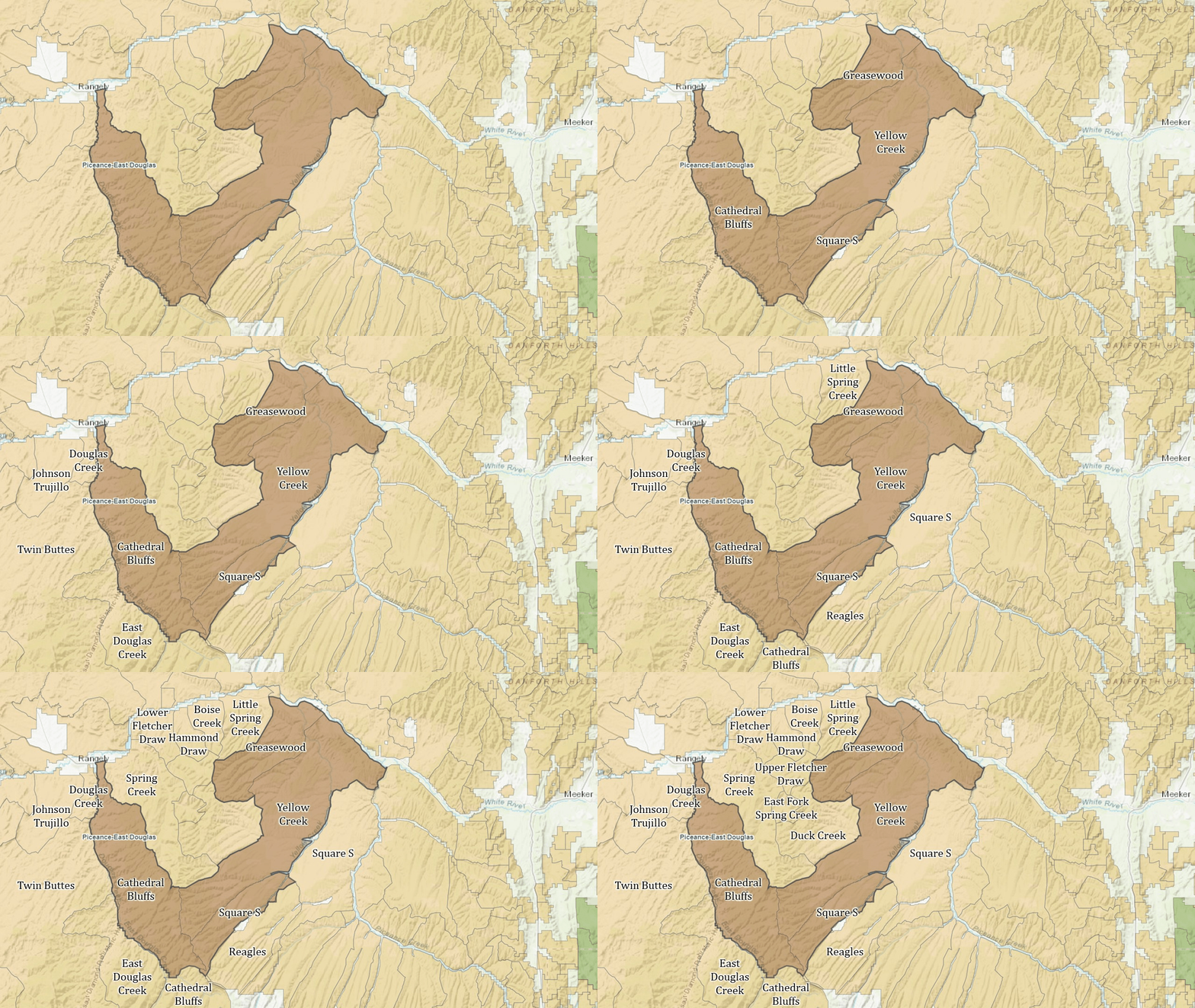
The HMA covers 190,130 total acres in western Colorado, including 158,310 public acres managed by the BLM.  The AML is 235 and the stocking rate allowed by plan is 1.2 wild horses per thousand acres.

The current population is thought to be 1,385, six times higher than the bureaucrats and ranchers are willing to tolerate.

Piceance East Douglas HMA Map 06-13-22

The HMA intersects four grazing allotments.  Livestock receive 2.4 times more forage than the horses, one of the milder cases of wild horse mismanagement.

Captured animals will be taken to an unspecified holding facility in Utah.

A link to the gather stats and daily reports was not provided.

The HMA is subject to the Montana Solution according to the roundup schedule.

RELATED: Ten Weeks to Go: Piceance-East Douglas Pre-Game Report.