
At the White Mountain HMA with kingcidtravels.
Category: Range
On the range
East Pershing Roundup, Day 31
The incident began on December 28. Results through January 27:
- Scope: Sonoma Range HA, East Range HA, Humboldt HA, Tobin Range HMA, North Stillwater HMA, Augusta Mountains HMA
- Purpose: Pest control, resource enforcement, rancher protection
- Target: Horses
- Type: Planned
- Method: Helicopter
- Category: Cruel and costly*
- Better way: Snuff out new life with PZP, let the herds die off*
- Captured: 1,967, up from 1,823 on Day 29
- Average daily take: 63.5
- Capture goal: 2,875
- Removal goal: 2,875
- Released: 3, no change from Day 29
- Deaths: 21, up from 20 on Day 29
- Shipped: 1,937, up from 1,794 on Day 29
The figures above are based on the daily reports, not the totals posted by the BLM.
A stallion was put down on Day 31 for arthritic knees. He’d be alive today if there was no roundup.
The death rate is 1.1%.
The capture total includes 814 stallions, 906 mares and 247 foals.
Youngsters represented 12.6% of the animals gathered, consistent with a herd growth rate of seven to eight percent per year.
Of the adults, 47.3% were male and 52.7% were female, no evidence of an abnormal sex ratio.
Body condition scores ranged from 3 to 5 on Days 30 and 31.
The name of the contractor was not given.
The Complex is managed primarily for animal agriculture. The National Data Viewer shows habitat loss and grazing allotments. Click on image to open in new tab.
*According to advocates.

Day 31 ended with 6 unaccounted-for animals. This result should be zero based on the totals in the sidebar, suggesting there are errors in the daily reports.
There are no plans to treat any of the captured mares with fertility control pesticides and return them to the range.
Other statistics:
- Forage liberated to date: 23,568 AUMs per year
- Water liberated to date: 19,640 gallons per day
- Horses allowed by plan: 555
- Pre-gather population: 3,375
- Forage assigned to horses: 6,660 AUMs per year
- Forage assigned to livestock: Not determined
- Horses displaced from Complex by permitted grazing: Not determined
- True AML: Not determined
- Stocking rate at new AML: Not determined
- Horses displaced by drilling and mining: Ask the advocates
Overpopulation means more horses than allowed by plan, not necessarily more horses than the land can support.
The ability of the Complex to sustain wild horses has been limited by the bureaucrats, who have assigned most of their food to the public-lands ranchers.
Refer to these reports for an indication of the problem:
RELATED: East Pershing Roundup, Day 29.
McCullough Roundup, Day 3
The incident started on January 22. Results through January 24:
- Target: Horses
- Method: Bait
- Type: Planned
- Goals: Gather 80, remove 35
- Captured: 10, no change from Day 1
- Shipped: 3, up from zero on Day 1
- Released: 6, no change from Day 1
- Deaths: 1, up from zero on Day 1
- Average daily take: 3.3
- Unaccounted-for animals: 0
The figures above are based on the daily reports.
The reports don’t indicate the number of stallions, mares and foals captured.
A filly died of a head injury on Day 3, putting the death rate at 10%, but no details were given.
The location of the trap site was not disclosed.
The HMA is subject to permitted grazing.
- Forage liberated to date: 48 AUMs per year
- Water liberated to date: 40 gallons per day
The National Data Viewer shows habitat loss and overlapping allotments. Click on map to open in new tab.
An estimated 535 wild horses have been displaced from their lawful home by permitted grazing, making the True AML almost five times higher than the current AML.
The roundup supports three tenets of rangeland management.
RELATED: McCullough Roundup Begins!

McCullough Roundup Data Lack Customary Details
The report for Day 1 provides a capture total only, no breakdown for stallions, mares and foals.
Questions about sex ratios and birth rates cannot be answered.
RELATED: McCullough Roundup Begins!.

East Pershing Roundup, Day 29
The incident began on December 28. Results through January 25:
- Scope: Sonoma Range HA, East Range HA, Humboldt HA, Tobin Range HMA, North Stillwater HMA, Augusta Mountains HMA
- Purpose: Pest control, resource enforcement, rancher protection
- Target: Horses
- Type: Planned
- Method: Helicopter
- Category: Cruel and costly*
- Better way: Sterilize the mares with PZP, let the ranchers win*
- Captured: 1,823, up from 1,755 on Day 27
- Average daily take: 62.9
- Capture goal: 2,875
- Removal goal: 2,875
- Released: 3, no change from Day 27
- Deaths: 20, no change from Day 27
- Shipped: 1,794, up from 1,726 on Day 27
The figures above are based on the daily reports, not the totals posted by the BLM.
Helicopters did not fly on Day 28. The trap site was moved to an unspecified location.
The death rate is 1.1%. All deaths are chargeable to the roundup.
The capture total includes 758 stallions, 840 mares and 225 foals. The sidebar at the gather page says 756/834/227.
Youngsters represented 12.3% of the animals gathered, consistent with a herd growth rate of seven percent per year.
Of the adults, 47.4% were male and 52.6% were female, no evidence of an abnormal sex ratio.
Body condition scores ranged from 3 to 5 on Day 29.
The name of the contractor was not given.
The Complex is managed primarily for animal agriculture. The National Data Viewer shows habitat loss and grazing allotments. Click on image to open in new tab.
*According to advocates.
Day 29 ended with 6 unaccounted-for animals. The totals at the gather page balance, suggesting the numbers in the daily report are not accurate.
There are no plans to treat any of the captured mares with fertility control pesticides and return them to the range.
Other statistics:
- Forage liberated to date: 21,840 AUMs per year
- Water liberated to date: 18,200 gallons per day
- Horses allowed by plan: 555
- Pre-gather population: 3,375
- Forage assigned to horses: 6,660 AUMs per year
- Forage assigned to livestock: Not determined
- Horses displaced from Complex by permitted grazing: Not determined
- True AML: Not determined
- Stocking rate at new AML: Not determined
- Horses displaced by drilling and mining: Ask the advocates
Overpopulation means more horses than allowed by plan, not necessarily more horses than the land can support.
The ability of the Complex to sustain wild horses has been limited by the bureaucrats, who have assigned most of their food to the public-lands ranchers.
Refer to these reports for an indication of the problem:
RELATED: East Pershing Roundup, Day 27.
Foal-Free Friday, All Zeal but No Truth Edition
Nobody talks about wild horse removal more than the advocates.
Their preferred method is to snuff out new life with ovary-killing pesticides and let the herds die off.
The point of no return can be reached in about five years, when most of the mares become “self boosting.” (Refer to the decoder for the meaning of this term.)
Curiously, they market the product as a safe, reversible vaccine, none of which is true.
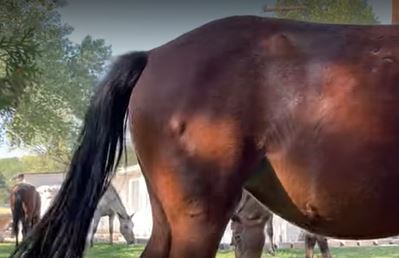
If you think about what happens to the mares, you’ll realize that the sperm-blocking theory can’t be true.
Then you’ll understand why the Assateague herd has not grown seven years after the darting program was shut off, and what’s in store for other herds subject to the Montana Solution.
For a review of the literature and the adverse effects of PZP, go to page 30 in this report by ISPMB.
If you can’t access the file, click here.
RELATED: Foal-Free Friday, Broken Record Edition.
Wild Horse Shot, Killed in Big Summit WHT
The incident occurred seven to ten days ago according to a news release by the Ochoco National Forest.
The WHT covers 25,434 acres 25 miles east of Prineville, OR and lies mostly within the Reservoir Allotment.

Black Mountain Gather Ops End with 15% Overreach
The report for January 24, Day 16 of the roundup, said “Gather goal met,” which would be true if the target was 1,150, but the goal was 1,000.
As of today, there are 184 unaccounted-for animals.
Some will be shipped to Florence and some will be returned to the HMA following treatment with Zonastat-H, a fertility control pesticide endorsed by most advocates.
BLM Overreach at Black Mountain Roundup?
As of yesterday, the capture total exceeded the goal by eleven percent and there was no indication that gather operations had concluded.
RELATED: Black Mountain Roundup, Day 15.
East Pershing Roundup, Day 27
The incident began on December 28. Results through January 23:
- Scope: Sonoma Range HA, East Range HA, Humboldt HA, Tobin Range HMA, North Stillwater HMA, Augusta Mountains HMA
- Purpose: Pest control, resource enforcement, rancher protection
- Target: Horses
- Type: Planned
- Method: Helicopter
- Category: Cruel and costly*
- Better way: Beat the population down with PZP, let the ranchers have their way*
- Captured: 1,755, up from 1,677 on Day 25
- Average daily take: 65.0
- Capture goal: 2,875
- Removal goal: 2,875
- Released: 3, no change from Day 25
- Deaths: 20, no change from Day 25
- Shipped: 1,726, up from 1,478 on Day 25
The figures in this post are based on the daily reports, not the totals posted by the BLM.
Helicopters did not fly on Day 27.
The death rate is 1.1%. All deaths are chargeable to the roundup.
The capture total includes 726 stallions, 811 mares and 218 foals. The sidebar at the gather page says 805 mares captured.
Youngsters represented 12.4% of the animals gathered, consistent with a herd growth rate of seven percent per year.
Of the adults, 47.2% were male and 52.8% were female, no evidence of an abnormal sex ratio.
The name of the contractor was not given and the location of the trap site was not disclosed.
Body condition scores averaged 3 on Day 26.
The sidebar puts the total shipped at 1,728.
The Complex is managed primarily for animal agriculture. The National Data Viewer shows habitat loss and grazing allotments. Click on image to open in new tab.
*According to advocates.
Day 27 ended with 6 unaccounted-for animals. The totals at the gather page show two more horses processed than captured.
There are no plans to treat any of the captured mares with fertility control pesticides and return them to the range.
Other statistics:
- Forage liberated to date: 21,024 AUMs per year
- Water liberated to date: 17,520 gallons per day
- Horses allowed by plan: 555
- Pre-gather population: 3,375
- Forage assigned to horses: 6,660 AUMs per year
- Forage assigned to livestock: Not determined
- Horses displaced from Complex by permitted grazing: Not determined
- True AML: Not determined
- Stocking rate at new AML: Not determined
- Horses displaced by drilling and mining: Ask the advocates
Overpopulation means more horses than allowed by plan, not necessarily more horses than the land can support.
The ability of the Complex to sustain wild horses has been limited by the bureaucrats, who have assigned most of their food to the public-lands ranchers.
Refer to these reports for an indication of the problem:
RELATED: East Pershing Roundup, Day 25.
Black Mountain Roundup, Day 15
The incident started on January 9. Results through January 23:
- Target: Burros
- Method: Helicopter
- Type: Planned
- Category: Cruel and costly*
- Goals: Gather 1,000, remove 960
- Better way: Get rid of them with PZP, let the ranchers have most of the resources*
- Captured: 1,112, up from 986 on Day 13
- Shipped: 900, up from 772 on Day 13
- Released: None
- Deaths: 2, no change from Day 13
- Average daily take: 74.1
- Unaccounted-for animals: 210
The figures in this post are based on the daily reports, not the totals in the sidebar.
The capture goal has been exceeded by 11.2%.
The death rate is 0.2%.
The capture total includes 445 jacks, 505 jennies and 162 foals.
Youngsters represented 14.6% of the animals gathered.
Of the adults, 46.8% were male and 53.2% were female.
The name of the contractor was not given and the location of the trap site was not disclosed.
The HMA is subject to permitted grazing.
- Forage liberated to date: 6,672 AUMs per year
- Water liberated to date: 5,560 gallons per day
The National Data Viewer shows habitat loss and overlapping allotments. Click on map to open in new tab.
The management plan assigns 2.5 times more forage to livestock than the burros.
The roundup supports three tenets of rangeland management.
*According to advocates
RELATED: Black Mountain Roundup, Day 13.

BLM, Permittee to Test Virtual Livestock Fencing
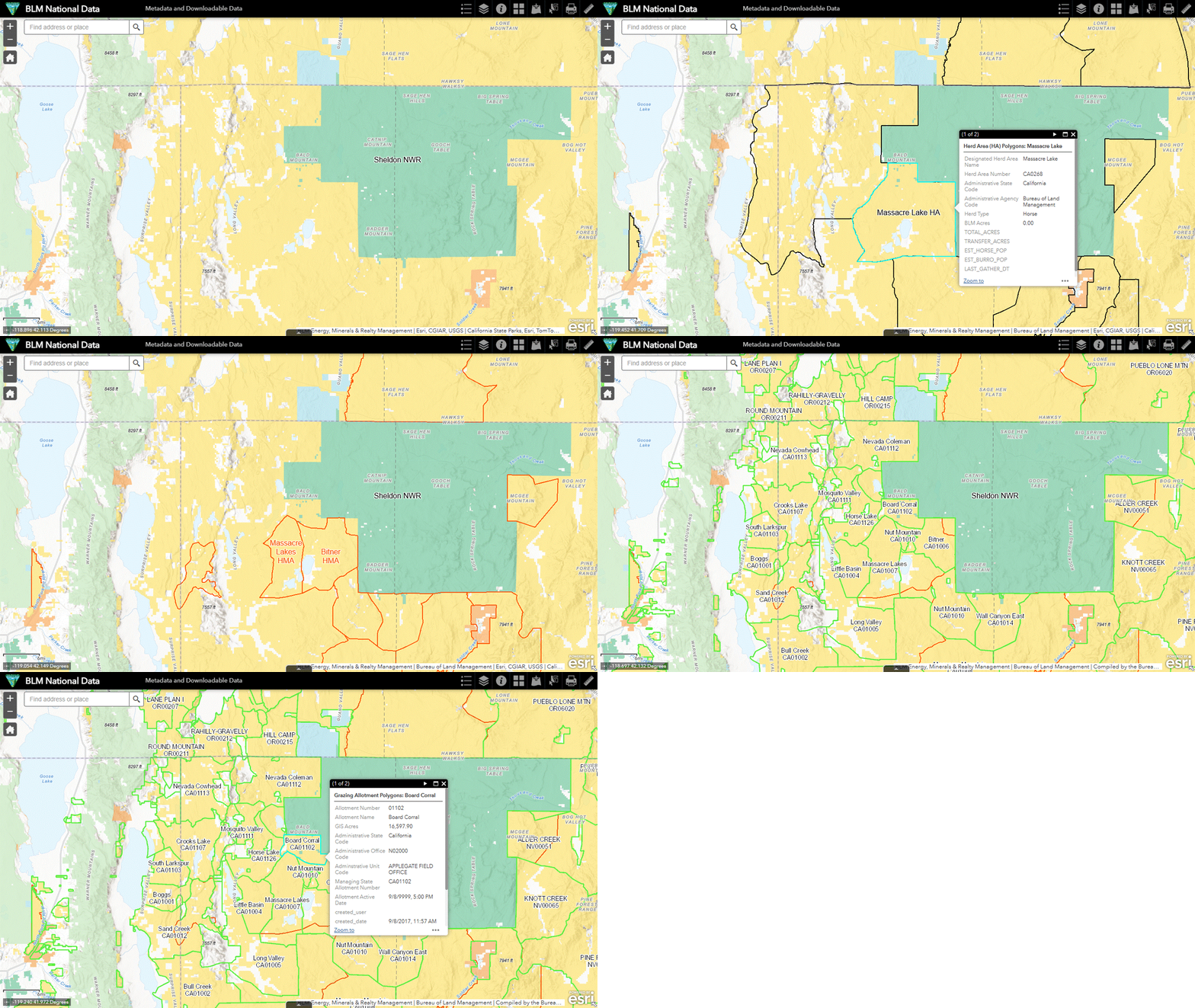
The project would implement virtual fencing in the Board Corral Allotment on the west side of Sheldon NWR to obtain a more uniform distribution of cattle and reduce grazing pressure on seeps, springs and wet meadow resources.
According to Section 3.1.1 in the Draft EA, livestock continually congregate, trample and utilize riparian areas and springs on the allotment. Many forgeable upland areas in the South Use Area receive little to no use due to water constraints, lack of boundaries and cattle attraction to the riparian corridor.
Under the Proposed Action, the BLM would purchase the base stations and the permittee would rent or purchase the livestock collars.
The allotment, in the Improve category, offers 690 active AUMs on 15,330 public acres, or 45.0 AUMs per year per thousand public acres, equivalent to 3.8 wild horses per thousand public acres.
Despite this, land managers insist that public lands in the western U.S. can only support one wild horse per thousand public acres (27,000 animals on 27 million acres).
The allotment overlaps the north end of the Massacre Lake HA, an area identified for wild horses but managed principally for livestock.
The EA was copied to the project folder with related documents.
Comments will be accepted through January 31.
RELATED: Virtual Fences Coming to a Pasture Near You?
McCullough Roundup Begins!
The incident started yesterday with ten horses captured, none shipped, six released and no deaths.
The original gather page has been 404’d.
Would an HMAP Help the Tobin Range Horses?
The HMA is managed principally for livestock. The horses receive an estimated 4.3% of the authorized forage, neglecting wildlife.
What would they get if they had an HMAP?
4.3%.
Pay no attention to the advocates, they are clueless.
RELATED: HMAPs Must Comply with RMPs.
East Pershing Roundup, Day 25
The incident began on December 28. Results through January 21:
- Scope: Sonoma Range HA, East Range HA, Humboldt HA, Tobin Range HMA, North Stillwater HMA, Augusta Mountains HMA
- Purpose: Pest control, resource enforcement, rancher protection
- Target: Horses
- Type: Planned
- Method: Helicopter
- Category: Cruel and costly*
- Better way: Thin the herd with PZP, let the ranchers have most of the resources*
- Captured: 1,677, up from 1,535 on Day 23
- Average daily take: 67.1
- Capture goal: 2,875
- Removal goal: 2,875
- Released: 3, no change from Day 23
- Deaths: 20, up from 17 on Day 23
- Shipped: 1,478, up from 1,392 on Day 23
The figures in this post are based on the daily reports, not the totals posted by the BLM.
A stallion was put down on Day 24 due to a poorly healed nose injury, followed by another stallion and filly for blindness, lifting the death rate to 1.2%. They’d be alive today if there was no roundup.
The capture total includes 699 stallions, 774 mares and 204 foals. The sidebar at the gather page says 768 mares captured.
Youngsters represented 12.2% of the animals gathered, consistent with a herd growth rate of seven percent per year.
Of the adults, 47.5% were male and 52.5% were female, no evidence of an abnormal sex ratio.
The name of the contractor was not given and the location of the trap site was not disclosed.
Body condition scores ranged from 3 to 5 on Days 24 and 25.
The sidebar puts the total shipped at 1,480.
The Complex is managed primarily for animal agriculture. The National Data Viewer shows habitat loss and grazing allotments. Click on image to open in new tab.
*According to advocates.
Day 25 ended with 176 unaccounted-for animals.
There are no plans to treat any of the captured mares with fertility control pesticides and return them to the range.
Other statistics:
- Forage liberated to date: 20,088 AUMs per year
- Water liberated to date: 16,740 gallons per day
- Horses allowed by plan: 555
- Pre-gather population: 3,375
- Forage assigned to horses: 6,660 AUMs per year
- Forage assigned to livestock: Not determined
- Horses displaced from Complex by permitted grazing: Not determined
- True AML: Not determined
- Stocking rate at new AML: Not determined
- Horses displaced by drilling and mining: Ask the advocates
Overpopulation means more horses than allowed by plan, not necessarily more horses than the land can support.
The ability of the Complex to sustain wild horses has been limited by the bureaucrats, who have assigned most of their food to the public-lands ranchers.
Refer to these reports for an indication of the problem:
RELATED: East Pershing Roundup, Day 23.
Mustang Monday
Horses have the day off. At the Black Mountain HMA with ZacksRides.
Black Mountain Roundup, Day 13
The incident started on January 9. Results through January 21:
- Target: Burros
- Method: Helicopter
- Type: Planned
- Category: Cruel and costly*
- Goals: Gather 1,000, remove 960
- Better way: Thin the herd with PZP, let the ranchers have most of the resources*
- Captured: 986, up from 833 on Day 11
- Shipped: 772, no change from Day 11
- Released: None
- Deaths: 2, up from 1 on Day 11
- Average daily take: 75.8
- Unaccounted-for animals: 212
The figures in this post are based on the daily reports, not the totals in the sidebar.
A jack was put down on Day 12 due to a leg injury.
The death rate is 0.2%.
The capture total includes 404 jacks, 442 jennies and 140 foals.
Youngsters represented 14.2% of the animals gathered.
Of the adults, 47.8% were male and 52.2% were female.
The name of the contractor was not given and the location of the trap site was not disclosed.
The HMA is subject to permitted grazing.
- Forage liberated to date: 5,916 AUMs per year
- Water liberated to date: 4,930 gallons per day
The National Data Viewer shows habitat loss and overlapping allotments. Click on map to open in new tab.
The management plan assigns 2.5 times more forage to livestock than the burros.
The roundup supports three tenets of rangeland management.
The incident will likely conclude tomorrow.
*According to advocates
RELATED: Black Mountain Roundup, Day 11.
Black Mountain Roundup, Day 11
The incident started on January 9. Results through January 19:
- Target: Burros
- Method: Helicopter
- Type: Planned
- Category: Cruel and costly*
- Goals: Gather 1,000, remove 960
- Better way: Beat the population down with PZP, let the ranchers have their way*
- Captured: 833, up from 662 on Day 9
- Shipped: 772, up from 449 on Day 9
- Released: None
- Deaths: 1, no change from Day 9
- Average daily take: 75.7
- Unaccounted-for animals: 60
The figures in this post are based on the daily reports, not the totals in the sidebar.
Helicopters did not fly on Day 11 due to maintenance.
The death rate is 0.1%.
The capture total includes 345 jacks, 375 jennies and 113 foals.
Youngsters represented 13.6% of the animals gathered.
Of the adults, 47.9% were male and 52.1% were female.
The location of the trap site was not disclosed.
The HMA is subject to permitted grazing.
- Forage liberated to date: 4,998 AUMs per year
- Water liberated to date: 4,165 gallons per day
The National Data Viewer shows habitat loss and overlapping allotments. Click on map to open in new tab.
The management plan assigns 2.5 times more forage to livestock than the burros.
The roundup supports three tenets of rangeland management.
The incident will likely conclude in three days.
*According to advocates
RELATED: Black Mountain Roundup, Day 9.
East Pershing Roundup, Day 23
The incident began on December 28. Results through January 19:
- Scope: Sonoma Range HA, East Range HA, Humboldt HA, Tobin Range HMA, North Stillwater HMA, Augusta Mountains HMA
- Purpose: Pest control, resource enforcement, rancher protection
- Target: Horses
- Type: Planned
- Method: Helicopter
- Category: Cruel and costly*
- Better way: Get rid of them with PZP, let the ranchers have their way*
- Captured: 1,535, up from 1,388 on Day 21
- Average daily take: 66.7
- Capture goal: 2,875
- Removal goal: 2,875
- Returned: 3, no change from Day 21
- Deaths: 17, up from 14 on Day 21
- Shipped: 1,392, up from 1,273 on Day 21
The figures in this post are based on the daily reports, not the totals posted by the BLM.
A mare and stallion were dispatched on Day 22 for pre-existing conditions, followed by another stallion on Day 23, lifting the death rate to 1.1%.
The capture total includes 644 stallions, 706 mares and 185 foals. The sidebar at the gather page says 700 mares captured.
Youngsters represented 12.1% of the animals gathered, consistent with a herd growth rate of seven percent per year.
Of the adults, 47.7% were male and 52.3% were female, no evidence of an abnormal sex ratio.
The location of the trap site was not given.
Body condition scores ranged from 3 to 5 on Days 22 and 23.
The sidebar puts the total shipped at 1,394.
The Complex is managed primarily for animal agriculture. The National Data Viewer shows habitat loss and grazing allotments. Click on image to open in new tab.
*According to advocates.
Day 23 ended with 123 unaccounted-for animals.
There are no plans to treat any of the captured mares with fertility control pesticides and return them to the range.
Other statistics:
- Forage liberated to date: 18,384 AUMs per year
- Water liberated to date: 15,320 gallons per day
- Horses allowed by plan: 555
- Pre-gather population: 3,375
- Forage assigned to horses: 6,660 AUMs per year
- Forage assigned to livestock: Not determined
- Horses displaced from Complex by permitted grazing: Not determined
- True AML: Not determined
- Stocking rate at new AML: Not determined
- Horses displaced by drilling and mining: Ask the advocates
Overpopulation means more horses than allowed by plan, not necessarily more horses than the land can support.
The ability of the Complex to sustain wild horses has been limited by the bureaucrats, who have assigned most of their food to the public-lands ranchers.
Refer to these reports for an indication of the problem:
RELATED: East Pershing Roundup, Day 21.
Black Mountain Roundup, Day 9
The incident started on January 9. Results through January 17:
- Target: Burros
- Method: Helicopter
- Type: Planned
- Category: Cruel and costly*
- Goals: Gather 1,000, remove 960
- Better way: Beat the population down with PZP, let the ranchers have their way*
- Captured: 662, up from 443 on Day 7
- Shipped: 449, up from 314 on Day 7
- Released: None
- Deaths: 1, up from zero on Day 7
- Average daily take: 73.6
- Unaccounted-for animals: 212
The figures above are based on the daily reports.
A burro was dispatched on Day 9. No details were given.
The death rate is 0.2%.
Youngsters represented 13.3% of the animals gathered.
Of the adults, 51.2% were male and 48.8% were female.
The location of the trap site was not disclosed.
The HMA is subject to permitted grazing.
- Forage liberated to date: 3,972 AUMs per year
- Water liberated to date: 3,310 gallons per day
The National Data Viewer shows habitat loss and overlapping allotments. Click on map to open in new tab.
The management plan assigns 2.5 times more forage to livestock than the burros.
The roundup supports three tenets of rangeland management.
*According to advocates
RELATED: Black Mountain Roundup, Day 7.

