The incident was set to begin yesterday but the gather page, just created, says it may start tomorrow.
RELATED: Hog Creek Roundup Announced.

Western Horse Watchers Association
Exposing the Hypocrisy, Lies and Incompetence of the Wild Horse Advocates
On the range
The incident was set to begin yesterday but the gather page, just created, says it may start tomorrow.
RELATED: Hog Creek Roundup Announced.
A new project was opened in ePlanning yesterday and an approved CX was copied to the document folder.
There were no opportunities for public comment.
Under the Proposed Action, the only alternative considered, the agency will remove 100 wild burros from the Picacho State Recreation Area and 75 burros from private lands south of Palo Verde, CA.
The incident, to be carried out with baited traps, was prompted by complaints involving property damage and concerns about public health and safety.
It does not appear on the latest schedule.
The National Data Viewer shows the arrangement.
Attachments 1 and 2 in the CX provide details.
Given that both locations are on the California side of the Colorado River, maybe they should be associated with the Chocolate-Mule Mountains HMA?
The HAs are unfit for wild horses and burros, supposedly.
RELATED: BLM to Yank More Horses and Burros from Cibola-Trigo HMA?

Six organizations will receive grants ranging from $77,331 to $468,033 to support the agency’s mission of managing and protecting wild horses and burros on public lands, according to a news release dated August 21.
Four of the programs involve nonmotorized removal.
Two involve educational outreach.
All are anti-horse/pro-ranching.
In Oregon, High Desert Strategies received the lion’s share of the funds for application of fertility control pesticides. They are already doing this. Western Horse Watchers has been unable to find their web site. They may have a presence on socialist media.
In Colorado, Piceance Mustangs received a six-figure shot-in-the-arm to bolster their pest control efforts. The group was featured last month in a story about GonaCon darting. They make no effort to conceal their disdain for wild horses.
In Utah, the Campaign Against America’s Wild Horses will poison the Cedar Mountain mares with an ovary-killing pesticide while collaborating with one of the permittees.
Are you surprised by any of this? They’re all frauds!
As for the lack of predators, they were eradicated years ago by state wildlife agencies and local inhabitants because of their attraction to calves and lambs.
RELATED: New Grants Available for Wild Horse and Burro Management.
The incident concluded on August 20, with 63 horses captured, 63 shipped, none released and no deaths.
The number of unaccounted-for animals was zero.
The pre-gather population was thought to be 103.
The goal was 83.
The capture total included 24 stallions, 32 mares and 7 foals.
Youngsters represented 11.1% of the horses gathered.
Of the adults, 42.9% were male and 57.1% were female.
Approximately 20 mares will be returned to the area after treatment with a fertility control pesticide.
The HMA is subject to permitted grazing, with livestock receiving 90% of the authorized forage, neglecting wildlife.
A 90-day comment period began on August 18 for a Draft EIS covering changes to the land use plan administered by the Rock Springs Field Office, according to a BLM news release dated August 17.
The project anticipates changes to the HMAs affected by the RSGA consent decree approved in 2022, cleared for implementation in 2023 and now subject to legal challenges by several advocacy groups.
Go to the placeholder section under Biological Resources (BR) – Wild Horses (4900) on page 2-85 in the EIS (page 155 in the pdf).
The scope of the changes is not accurate, a potential comment on the EIS.
Section 3.9 says the Wild Horse Management EIS will amend the management plan for the Adobe Town, Divide Basin, Salt Wells Creek, and White Mountain HMAs, but there were no changes to White Mountain in the latest iteration.
Section 3.16 indicates there are 304,261 active AUMs within the planning area on 79 grazing allotments covering approximately 5.27 million acres, which works out to 57.7 AUMs per year per thousand acres, equivalent to 4.8 wild horses per thousand acres.
However, public lands in the western U.S. can only support one wild horse per thousand acres according to the bureaucrats (27,000 animals on 27 million acres).
The total number of animals allowed by plan (upper end of AML) is actually 23,866 wild horses and 2,919 wild burros according to the last table in the 2023 HA/HMA Report, so the total forage requirement would be
23,866 × 12 + 2,919 × (12 ÷ 2) = 286,392 + 17,514 = 303,906 AUMs per year
Therefore, livestock in one BLM field office receive roughly the same amount of forage as wild horses and burros in ten western states!
Moreover, the disparity will increase as the Rock Springs HMAs are zeroed out.
At the McCullough Peaks HMA with T.D.307 Photography.
The incident concluded today with 1,971 horses captured, 1,936 shipped, five released and 29 dead.
The figures above were taken from the sidebar at the gather page. They don’t balance.
1,971 ≠ 1,936 + 5 + 29
The capture total included 769 stallions, 893 mares and 309 foals.
Youngsters represented 15.7% of the animals gathered.
Of the adults, 46.3% were male and 53.7% were female.
The death rate was 1.5%.
Video of a stallion that shattered a hind leg while trying to jump the trap was picked up by major news outlets in support of the helicopter ban, even though it had nothing to do with helicopters.
A U.S. district judge allowed the roundup to continue after hearing arguments from attorneys representing the advocates and the BLM.
Other groups insisted that wild horse populations should be controlled with ovary-killing pesticides, not motorized equipment.
The South roundup ended on July 26.
RELATED: Antelope Roundups Announced.
Gather operations have concluded with 1,965 horses captured, 1,862 shipped, 27 deaths and five released.
With 71 unaccounted-for animals, some additional sorting and shipping may occur.
The figures above are based on the daily reports, not the totals posted by the BLM.
The capture goal was 98% achieved.
Was the arrival of Hilary a factor in the decision?
This is not mentioned at the gather page.
No mares were to be treated with fertility control pesticides and returned to the area.
RELATED: Antelope Roundup North, Day 41.
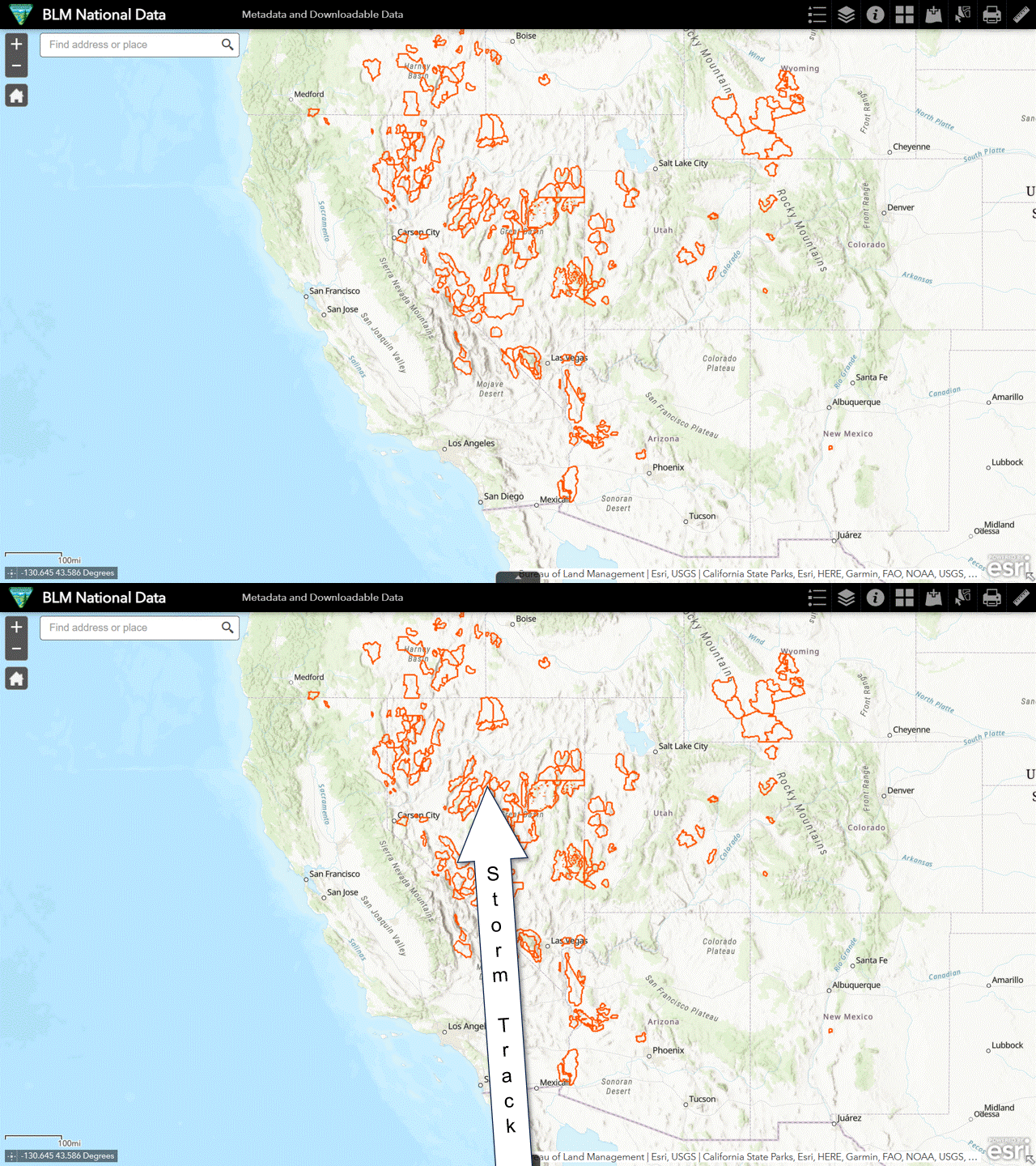
The NHC storm track takes it into Nevada Sunday evening.
Wind and rain to extend well beyond projected path.
HMAs shown in orange on following map.
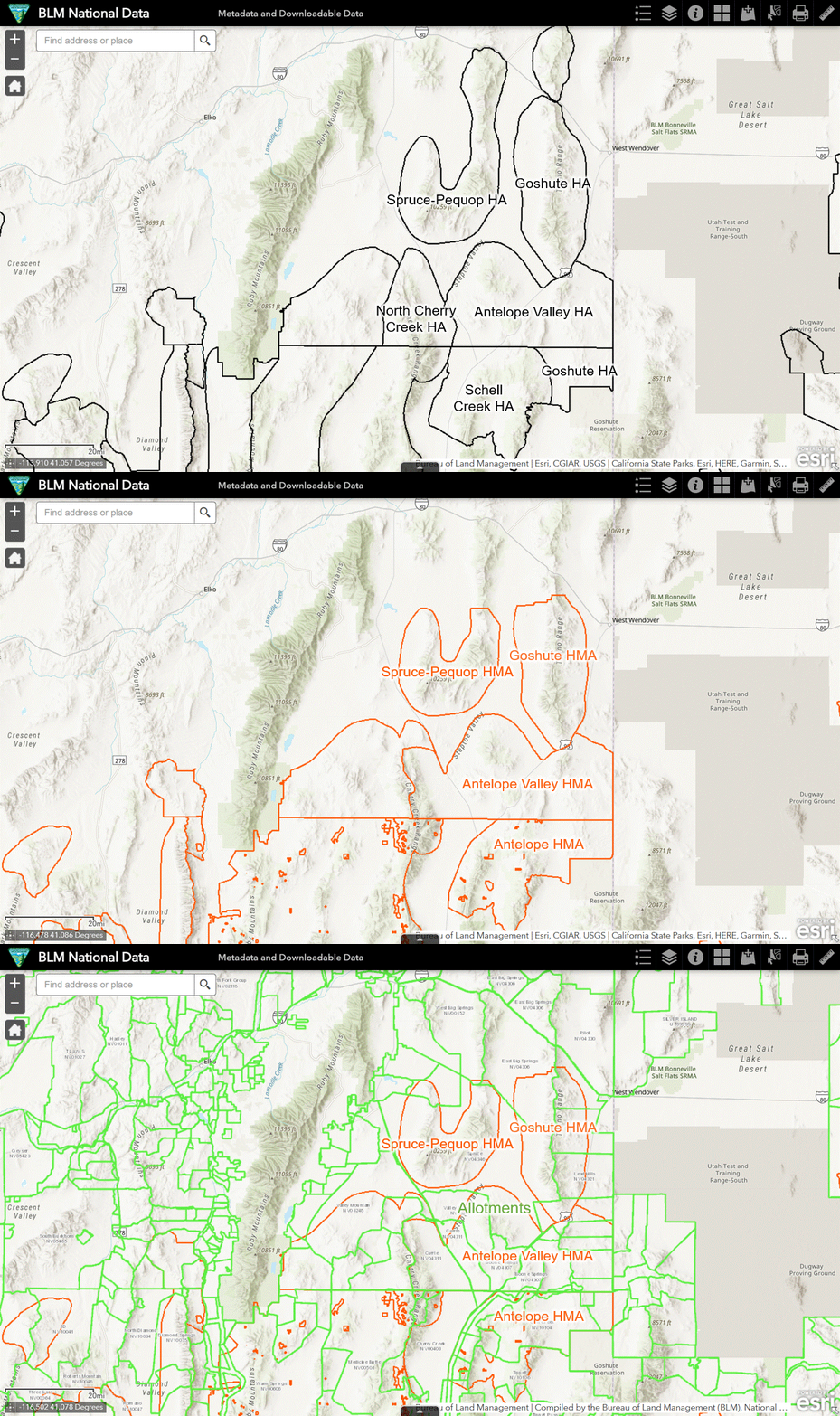
The incident began on July 9. Results through August 18:
The figures above are based on the daily reports, not the totals posted by the BLM.
The sidebar on the gather page says the number of horses captured is 1,920 and the number shipped is 1,826.
A case of missing teeth was reported as a death on Day 41.
The death rate is 1.4%.
The capture total includes 751 stallions, 867 mares and 296 foals.
Youngsters represented 15.5% of the animals gathered.
Of the adults, 46.4% were male and 53.6% were female.
A 16% birth rate corresponds to a growth rate of 11% per year, a bit less than the 20% growth rate used by land managers to predict herd sizes and management actions.
Body condition scores on Days 40 and 41 ranged from 2 to 4.
They’re not starving but a few may be struggling. Not unusual for older horses or mares with foals.
The location of the trap site was not disclosed.
The HMAs and surrounding lands are subject to permitted grazing.
*According to advocates.
Day 41 ended with 58 unaccounted-for animals.
Other statistics:
Overpopulation means more horses than allowed by plan, not necessarily more horses than the land can support.
RELATED: Antelope Roundup North, Day 39.
Located south of Wells, NV, the ranch covers 2,518 deeded acres, according to the listing, with grazing preference on a 6,000-acre Forest Service allotment.
There are 900 acres under irrigation producing nearly 1,000 tons of hay annually.
The Annual Operating Instructions for the allotment indicate 90 cow/calf pairs on approximately a 3.3 month grazing season for a total of 305 AUMs per year.
Livestock retreat to the base property during the off season.
The allotment is west of the deeded acreage in the Ruby Mountains.
The Western Watersheds Map shows the arrangement. Click to open in new tab.
The allotment does not overlap any wild horse areas, but it might be a rewilding opportunity, to be achieved by asking the Forest Service for a change in livestock type and season of use, as American Prairie did for bison in Montana.
At 50 AUMs per year per thousand acres, forage in the allotment is equivalent to four wild horses per thousand acres, despite claims by the bureaucrats that public lands in the western U.S. can only support one wild horse per thousand acres (27,000 animals on 27 million acres).

They’re trying to get the horses and burros back, according to an article dated August 17 by the Pahrump Valley Times.
A fundraiser has been started on GoFundMe to help with adoption fees, land, shelter, feed and transportation before BLM auctions occur in mid to late September.
RELATED: Johnnie Roundup Over.
The incident concluded on August 16, with 192 horses captured, 192 shipped, none released and no deaths.
The number of unaccounted-for animals was zero.
The pre-gather population was thought to be 254.
The goal was 225.
The capture total included 81 stallions, 83 mares and 28 foals.
Youngsters represented 14.6% of the horses gathered.
Of the adults, 49.4% were male and 50.6% were female.
Approximately 25 mares will be returned to the area after treatment with a fertility control pesticide.
The HMA is subject to permitted grazing.
Livestock receive 5.5 times more forage than the horses.
The HMA has an HMAP.
The incidents began on July 9. The South roundup ended on July 26. The North roundup continues.
Combined results through August 16:
The figures above are based on the daily reports, not the totals posted by the BLM.
The death rate is 1.2%.
The capture total includes 1,096 stallions, 1,358 mares and 523 foals.
Youngsters represented 17.6% of the animals gathered.
Of the adults, 44.7% were male and 55.3% were female.
A birth rate of 18% per year corresponds to a herd growth rate of 13% per year.
Day 39 ended with 58 unaccounted-for animals.
The HMAs and surrounding lands are subject to permitted grazing, with livestock receiving over seven times more forage than the horses inside the Complex.
That resource would support an additional 6,079 wild horses, putting the True AML at 6,868.
You don’t have a wild horse problem, as the advocates would have you believe, you have a resource management problem.
*According to advocates.
RELATED: Antelope Roundup North, Day 39, Antelope Roundup South Over.
The incident began on July 9. Results through August 16:
The figures above are based on the daily reports, not the totals posted by the BLM.
The sidebar on the gather page says the number of horses captured is 1,876 and the number shipped is 1,783.
Blindness in one eye was reported as a death on Day 38.
On Day 39, low body condition and club feet were reported as deaths.
These horses survived the chase and would be alive today if there was no roundup.
The death rate is 1.4%.
The capture total includes 728 stallions, 851 mares and 291 foals.
Youngsters represented 15.6% of the animals gathered.
Of the adults, 46.1% were male and 53.9% were female.
A 16% birth rate corresponds to a growth rate of 11% per year, a bit less than the 20% growth rate used by land managers to predict herd sizes and management actions.
Body condition scores on Days 38 and 39 ranged from 2 to 4.
They’re not starving but a few may be struggling. Not unusual for mares with foals.
The location of the trap site was not disclosed.
The HMAs and surrounding lands are subject to permitted grazing.
*According to advocates.
Day 39 ended with 58 unaccounted-for animals.
Other statistics:
Overpopulation means more horses than allowed by plan, not necessarily more horses than the land can support.
RELATED: Antelope Roundup North, Day 37.
Butte Vally Ranch covers nearly 900,000 acres, including 7,300 deeded acres, in four counties between Wells and Ely, NV, according to the agent’s description.
The owner runs 700 head of cattle and 5,000 head of sheep on public lands offering 20,641 AUMs per year.
There are 570 acres under pivot with approximately 2,000 acres of riparian meadow.
The map on page 7 of the brochure shows private lands in red and public lands in purple.
The purple outline suggests the new owner will have grazing preference on 14 BLM allotments, identified with the National Data Viewer.
These parcels are managed by three BLM field offices, necessitating three Allotment Master Reports (Wells | Bristlecone | Basin & Range).
The ranch does not hold all of the active AUMs, indicated by “N” in the All AUMs column of the following table.
It may operate as Butte Valley Land & Livestock on some allotments and Mountain Air Cattle Company on others, but this is not explained in the listing. Mountain Air could be an affiliate or lessee.
West Cherry Creek is in the Wells Field Office. The next seven are in Bristlecone and the last six are in Basin & Range (National Monument).
The total acreage falls short of the amount indicated in the listing.

The allotments are mediocre in terms of forage availability, offering a weighted average 35.5 AUMs per year per thousand public acres, enough to support three wild horses per thousand public acres.
Still, the BLM insists that public lands in the western U.S. can only sustain one wild horse per thousand acres (27,000 animals on 27 million acres).
A little more than half of the public acreage is in the Improve category.
The condition of the Custodial acreage is not known.
As the new owner, you could accept the status quo and compete with wild horses, indicated by the last column in the table, or you could develop a rewilding plan and petition the BLM for a change in livestock types and seasons of use, as American Prairie did for bison in Montana.
This is the concept of leverage. A few thousand private acres control hundreds of thousands of public acres. The ranchers have been doing this for years.
Would the rewilders, such as the CANA Foundation, actually try this?
Don’t hold your breath.
The base property, located inside the northern allotments, is connected to the southern allotments by the trails.
The National Data Viewer shows the allotments relative to the HAs and HMAs.
The northern allotments lie within the Maverick-Medicine and Triple B HMAs, frequent targets of motorized removals. Now you know why.

Jakes Unit Trail, not shown in the map, begins at the southern edge of Medicine Butte and runs south, transitioning to the Preston Lund Trail.
Preston Lund continues southward, joining up with the White River Trail, which connects to Dry Farm and Needles.
Dry Farm and Needles overlap the Golden Gate and Seaman Range HAs, areas unfit for wild horses but not for privately owned livestock.

Access to the other four allotments is unknown. Click on images to open in new tabs.
The asking price does not include the current inventory of cattle and sheep.
From a resource viewpoint, those animals are equivalent to 1,700 wild horses, about three percent of those in off-range holding.
It was updated in 2009 to incorporate population and habitat objectives from the 1992 Three Rivers RMP, according to Section 1.2 of the 2023 Final EA for management actions in the HMA, yet livestock receive 5.5 times more forage than the horses.
That’s exactly what you’d expect!
Pay no attention to the advocates, they are clueless.
RELATED: How Many Wild Horses Can the Palomino Buttes HMA Support?
The incident started yesterday as scheduled, with 136 horses captured, 136 shipped, none released and no deaths.
The incident began on July 9. Results through August 14:
The figures above are based on the daily reports, not the totals posted by the BLM.
The number of horses captured is 1,819 and the number shipped is 1,741 according to the figures in the sidebar.
No horses were gathered on Day 36 and a case of swayback was reported as a death.
The death rate is 1.3%.
The capture total includes 710 stallions, 823 mares and 280 foals.
Youngsters represented 15.4% of the animals gathered.
Of the adults, 46.3% were male and 53.7% were female.
A 15% birth rate corresponds to a growth rate of 10% per year, a bit less than the 20% growth rate used by land managers to predict herd sizes and management actions.
Body condition scores on Day 37 ranged from 3 to 4. They’re not starving.
The location of the trap site was not disclosed.
The HMAs and surrounding lands are subject to permitted grazing.
*According to advocates.
Day 37 ended with 46 unaccounted-for animals.
Other statistics:
Overpopulation means more horses than allowed by plan, not necessarily more horses than the land can support.
RELATED: Antelope Roundup North, Day 35.
 Western Horse Watchers Association