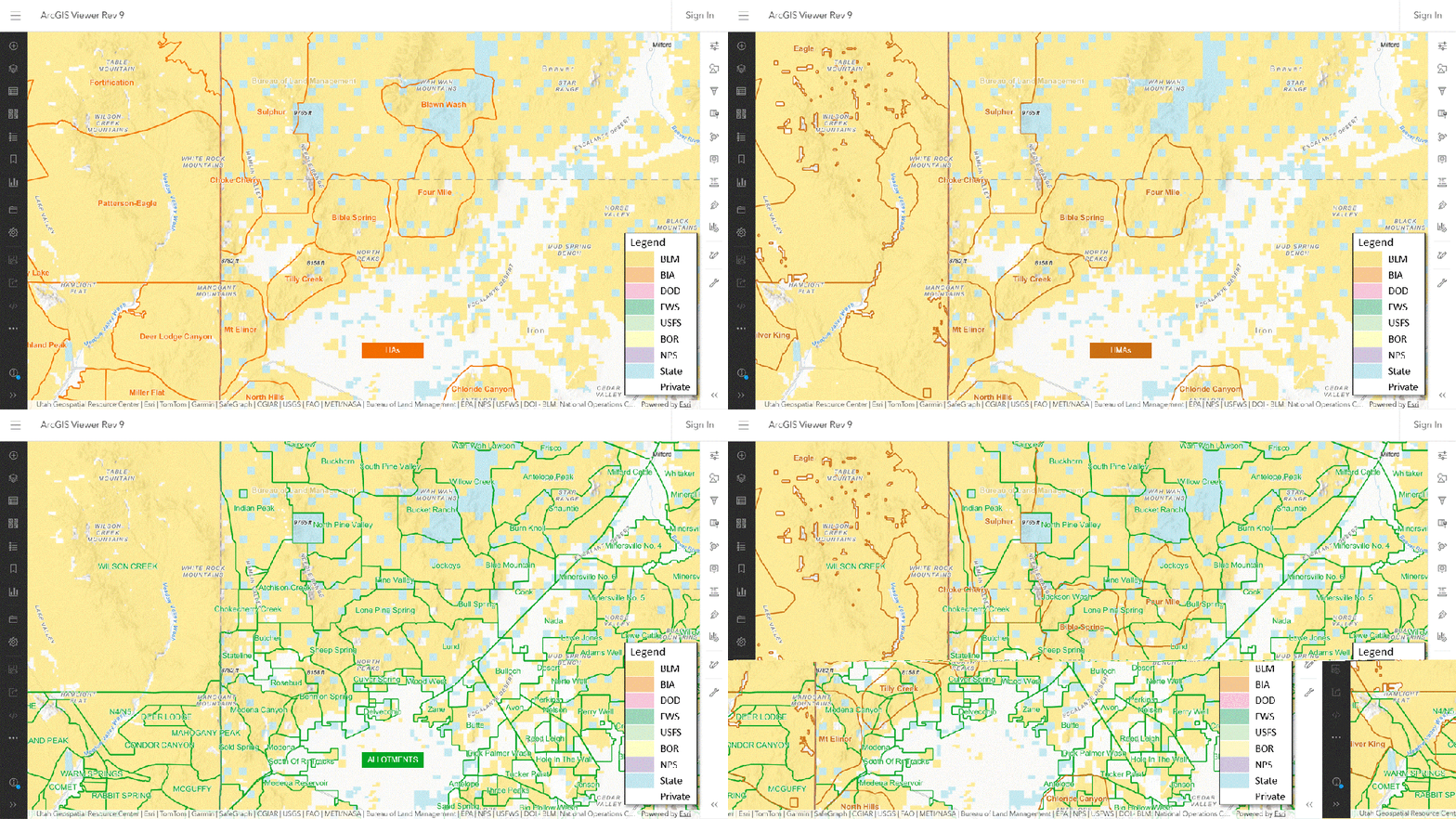
Callaghan Roundup, Day 7

The incident started on July 10.  Results through July 16:

  • Scope: Callaghan, South Shoshone, Bald Mountain, Hickison HMAs
  • Target: Horses
  • AML: 552
  • Pre-gather population: Over 4,500
  • Type: Planned
  • Method: Helicopter
  • Category: Costly and inhumane (according to advocates)
  • Better way: Inhibit the mares with PZP (according to advocates)
  • Capture goal: 2,000
  • Removal goal: 2,000
  • Captured: 1,240, up from 1,046 on Day 5
  • Shipped: 1,050, up from 723 on Day 5
  • Released: None
  • Deaths: 5, up from 3 on Day 5
  • Average daily take: 177.1
  • Unaccounted-for animals: 185
  • Snippet from statute: It is the policy of Congress that wild free-roaming horses and burros shall be protected from capture, branding, harassment, or death
  • Snippet from manual: To protect wild horses and burros from unauthorized capture, branding, harassment or death

The figures above are based on the daily reports.

Helicopters did not fly on Day 6.

Results for Days 1 and 4 were revised.

Two mares were put down on Day 7 due to missing eyes.

The death rate is 0.4%.

The capture total includes 516 stallions, 501 mares and 223 foals.

Youngsters represented 18.0% of the animals gathered, consistent with a herd growth rate of twelve to thirteen percent per year.

Of the adults, 50.7% were male and 49.3% were female.

Body condition scores on Day 7 ranged from 2 to 4.

The location of the trap site is not known.

The name of the contractor was not specified.

There are no plans to treat any of the mares with fertility control pesticides and return them to the range.

The Complex is subject to permitted grazing.  Resources liberated to date:

  • Forage: 14,880 AUMs per year
  • Water: 12,400 gallons per day

The project area covers 1,145,515 acres.

PREVIOUS: Callaghan Roundup, Day 5.

► Get the truth about wild horses and the wild horse advocates at westernhorsewatchers.com.
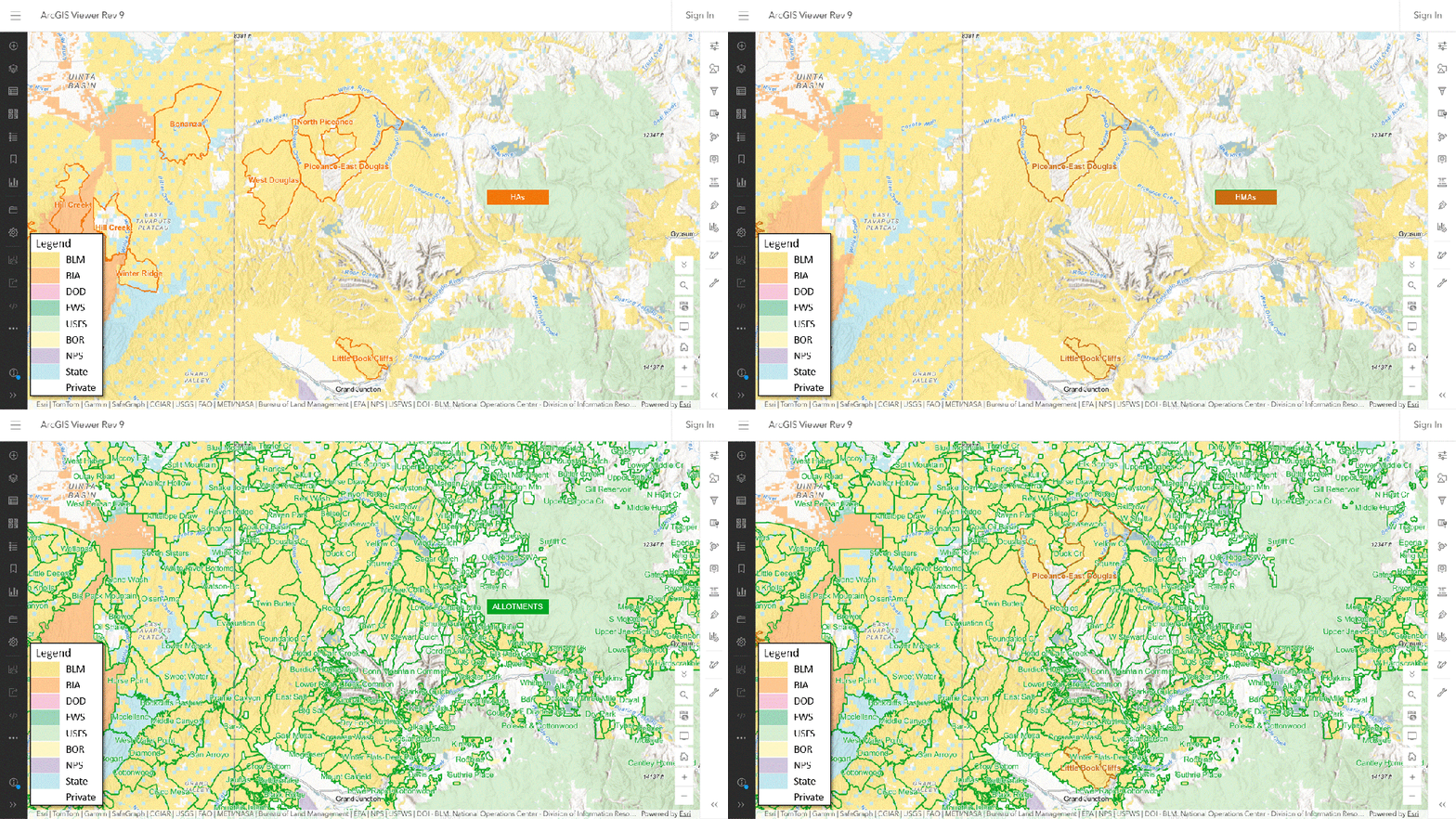
Callaghan Roundup, Day 5

The incident started on July 10.  Results through July 14:

  • Scope: Callaghan, South Shoshone, Bald Mountain, Hickison HMAs
  • Target: Horses
  • AML: 552
  • Pre-gather population: Over 4,500
  • Type: Planned
  • Method: Helicopter
  • Category: Costly and inhumane (according to advocates)
  • Better way: Beat the population down with PZP (according to advocates)
  • Capture goal: 2,000
  • Removal goal: 2,000
  • Captured: 1,046, up from 542 on Day 3
  • Shipped: 723, up from 325 on Day 3
  • Released: None
  • Deaths: 3, no change from Day 3
  • Average daily take: 209.2
  • Unaccounted-for animals: 320
  • Snippet from statute: It is the policy of Congress that wild free-roaming horses and burros shall be protected from capture, branding, harassment, or death
  • Snippet from manual: To protect wild horses and burros from unauthorized capture, branding, harassment or death

The figures above are based on the daily reports.

The death rate is 0.3%.

The capture total includes 446 stallions, 422 mares and 178 foals.

Youngsters represented 17.0% of the animals gathered.

Of the adults, 51.4% were male and 48.6% were female.

Body condition scores were not given.

The location of the trap site is not known.

The name of the contractor was not specified.

There are no plans to treat any of the mares with fertility control pesticides and return them to the range.

The Complex is subject to permitted grazing.  Resources liberated to date:

  • Forage: 12,552 AUMs per year
  • Water: 10,460 gallons per day

The project area covers 1,145,515 acres.

PREVIOUS: Callaghan Roundup, Day 3.

► Get the truth about wild horses and the wild horse advocates at westernhorsewatchers.com.

Chincoteague Foal Population Still Growing

The total climbed to 83 on July 10, up from 73 on June 21.

Last year’s record was 103.

Thunderbolt was the top producer, credited with eight foals.

There was a three-way tie for second place and a four-way tie for third.

Colts led fillies 43 to 39 with one undetermined.

Refer to this spreadsheet for a ranking of sires.

The herd has been engineered for maximum production and revenues, despite a limit of 150 horses in the refuge.

The pony swim will occur on July 29 according to the guide, followed by the auction on July 30.

PREVIOUS: Chincoteague’s Top Producer on Father’s Day.

► Get the truth about wild horses and the wild horse advocates at westernhorsewatchers.com.
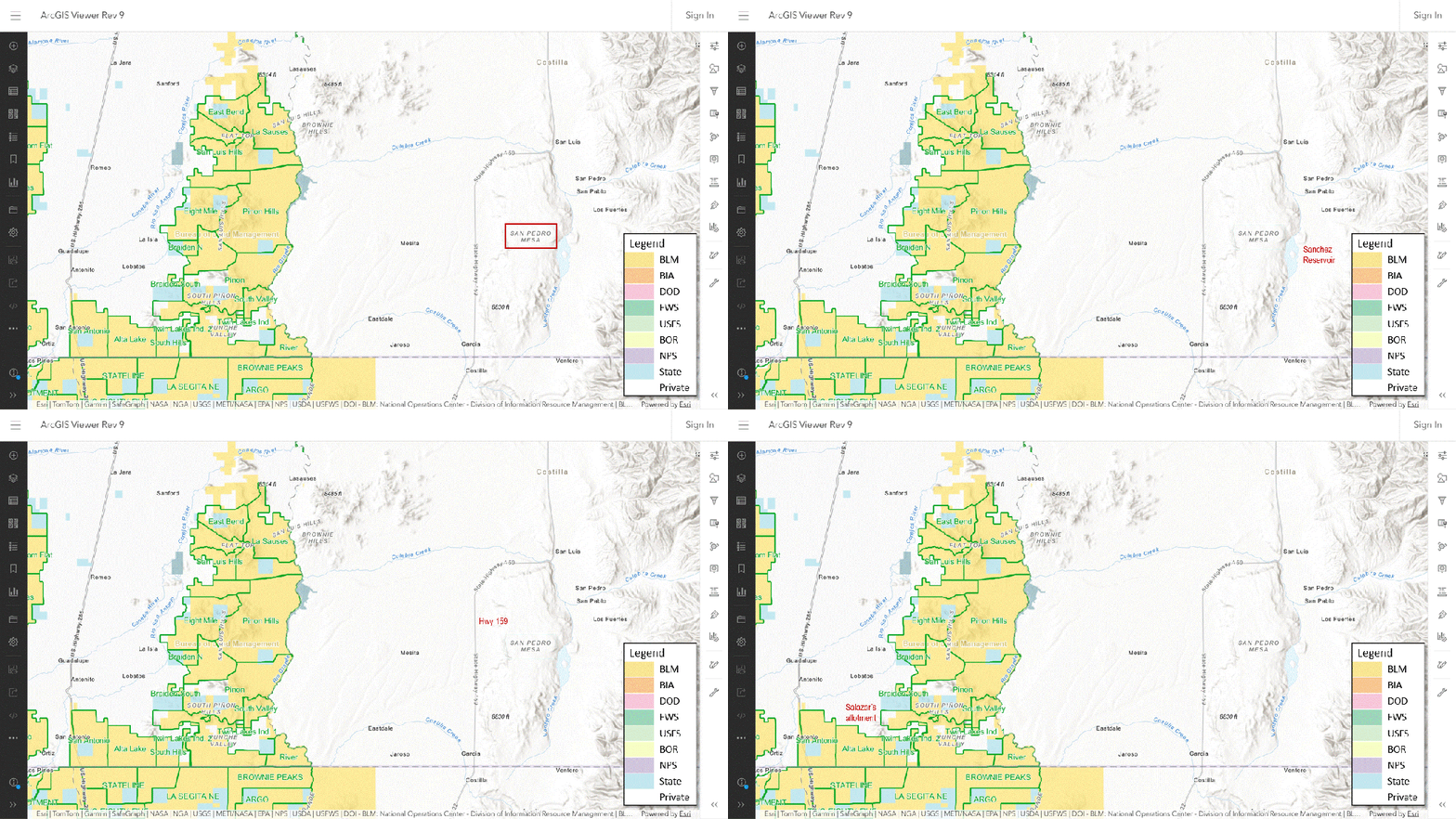
Callaghan Roundup, Day 3

The incident started on July 10.  Results through July 12:

  • Scope: Callaghan, South Shoshone, Bald Mountain, Hickison HMAs
  • Target: Horses
  • AML: 552
  • Pre-gather population: Over 4,500
  • Type: Planned
  • Method: Helicopter
  • Category: Costly and inhumane (according to advocates)
  • Better way: Snuff out new life with PZP (according to advocates)
  • Capture goal: 2,000
  • Removal goal: 2,000
  • Captured: 542, up from 329 on Day 1
  • Shipped: 325, up from zero on Day 1
  • Released: None
  • Deaths: 3, up from 1 on Day 1
  • Average daily take: 180.7
  • Unaccounted-for animals: 214
  • Snippet from statute: It is the policy of Congress that wild free-roaming horses and burros shall be protected from capture, branding, harassment, or death
  • Snippet from manual: To protect wild horses and burros from unauthorized capture, branding, harassment or death

The figures above are based on the daily reports.

Helicopters did not fly on Day 2.

Two horses died unintentionally the same day.

The death rate is 0.6%.

The capture total includes 228 stallions, 229 mares and 85 foals.

Youngsters represented 15.7% of the animals gathered.

Of the adults, 49.9% were male and 50.1% were female.

Body condition scores were not given on Day 3.

The location of the trap site is not known.

The name of the contractor was not specified.

There are no plans to treat any of the mares with fertility control pesticides and return them to the range.

The Complex is subject to permitted grazing.  Resources liberated to date:

  • Forage: 6,504 AUMs per year
  • Water: 5,420 gallons per day

The project area covers 1,145,515 acres.

PREVIOUS: Callaghan Roundup in Progress.

► Get the truth about wild horses and the wild horse advocates at westernhorsewatchers.com.

Montgomery Pass Roundup Almost Over

The final day (for aerial operations) was July 10 according to the Inyo horse page, with 461 horses captured and three dead.

All deaths were intentional.

Some horses may still be on site awaiting shipment.

Foals represented 18% of the animals captured, too small to support a herd growth rate of 20% per year.

Of the adults, 50% were male and 50% were female.

The incident liberated 5,532 AUMs per year for other mandated uses of public lands.

PREVIOUS: Montgomery Pass Roundup in Progress.

UPDATE: A July 16 news release says it’s complete but does not give any information on horses shipped or released and does not acknowledge that the gather area included numerous grazing allotments.

► Get the truth about wild horses and the wild horse advocates at westernhorsewatchers.com.

Slater Base Property Available for $27.5 Million

The ranch covers 44,311 total acres, including 9,006 deeded acres, according to the listing.

The nearest towns are Slater, Craig and Steamboat Springs, Colorado.

Most of the public acreage is in the Roaring Fork and Stewardship allotments of the Routt National Forest.

One is in Colorado and the other is in Wyoming.

The ranch also has preference on three BLM allotments.

Overall, the land ratio is good, 3.8 public acres per deeded acre.

The ranch does not overlap areas identified for wild horses.

Management as a wild horse preserve might be difficult because the allotments are not contiguous and multiple government agencies are involved.

Allotment conversion is not illegal, but your faithful public servants are trying to make it so—at least on BLM lands— by changing the Part 4100 grazing regulations.

You can comment against the proposal through July 13.

RELATED: Key Indicators for New Wild Horse Preserves.

► Get the truth about wild horses and the wild horse advocates at westernhorsewatchers.com.

Search for other posts about base properties.

Colorado Wild Horse Advisory Committee Meets July 28

The successor to the Wild Horse Working Group, disbanded in 2025, will meet online according to the news release.

No agenda was provided.

Creation of a wild horse preserve, suggested by the original group, will be impossible on public lands if the grazing rule update goes through.

Why aren’t the advocates talking about that?

► Get the truth about wild horses and the wild horse advocates at westernhorsewatchers.com.

Court Agrees with ISPMB in ASNF Wild Horse Removal

Today a U.S. District Judge granted a preliminary injunction barring federal agencies from classifying the horses as unauthorized livestock and preventing them from capturing and removing them according to a report by Courthouse News Service.

The order applies to all horses in the Apache-Sitgreaves National Forests not just the Heber WHT.

Last month ASNF solicited input on low-stress removal of up to 2,000 wild horses.

RELATED: Would Mass Sterilization Qualify as Low-Stress Removal?

► Get the truth about wild horses and the wild horse advocates at westernhorsewatchers.com.
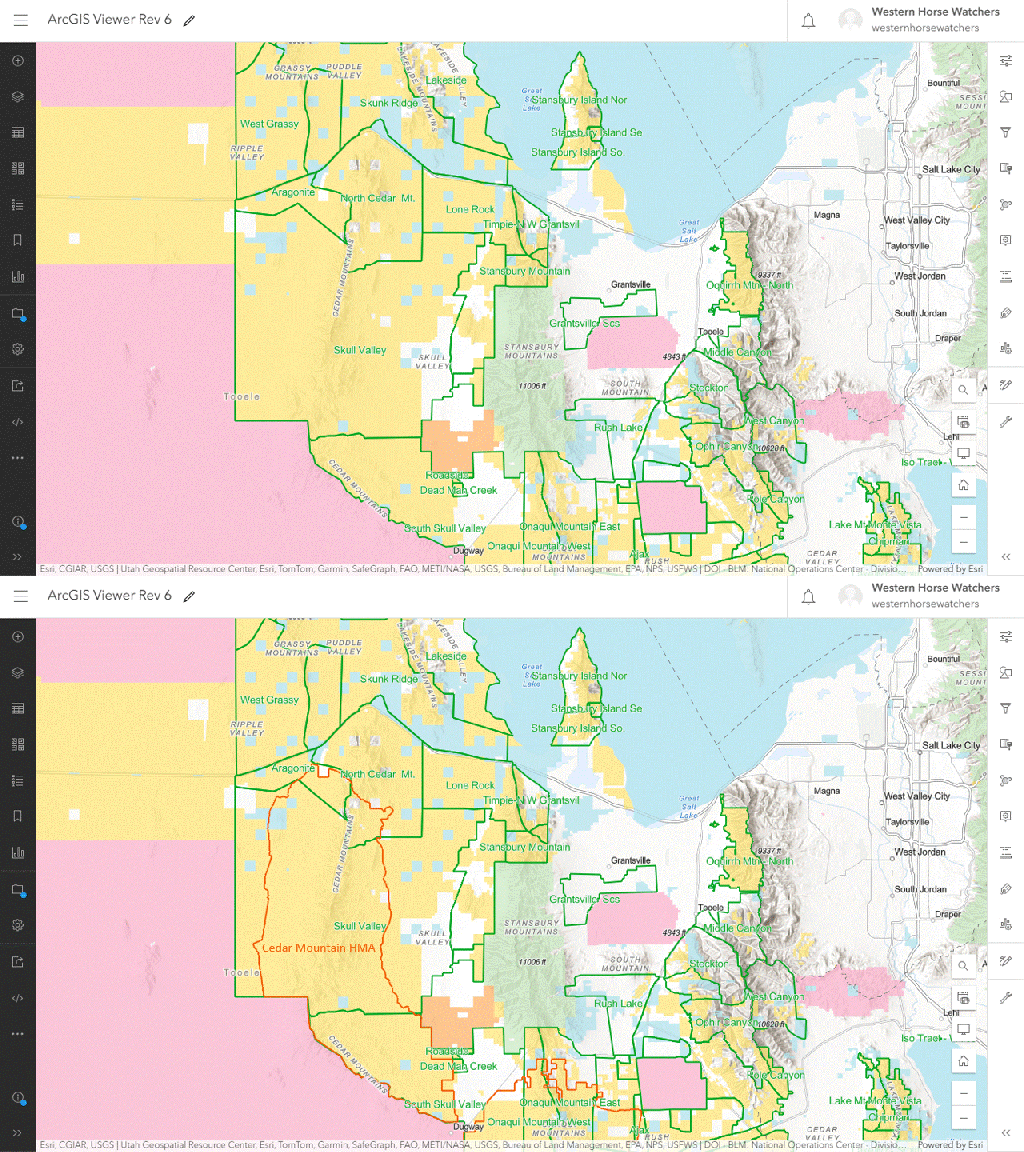
Courts Say Montgomery Pass Roundup Can Proceed

Yesterday judges in Sacramento denied two requests to halt the incident according to a report by Courthouse News Service.

Another judge granted a request to halt the removal of wild horses at Carter Reservoir, Buckhorn and Coppersmith, scheduled to begin on September 1.

PREVIOUS: Tribe Attempts to Block Montgomery Pass Roundup.

► Get the truth about wild horses and the wild horse advocates at westernhorsewatchers.com.
Lahontan Roundup Announced

The incident will begin on or about July 20 according to the news release.

The capture and removal goals are 700 each.

The current population is thought to be 809.

A helicopter will push the horses into the traps.

Operations will not be open to public observation with the exception of those escorted by BLM staff.

Animals not put down in the field will be taken to the off-range corrals in Palomino Valley.

There are no plans to treat any of the mares with fertility control pesticides and return them to the range.

The roundup supports three tenets of rangeland management.

RELATED: BLM Curtailing Access to Lahontan Roundup.

► Get the truth about wild horses and the wild horse advocates at westernhorsewatchers.com.
BLM Curtailing Access to Lahontan Roundup

Another project has been created in ePlanning and two documents have been uploaded.

The Decision Record says the agency is closing public lands within five miles of active trapping locations and temporary holding facilities to all public entry for the duration of the incident.

Only operations personnel and any public observers who are escorted by BLM staff will be allowed in the closure area.

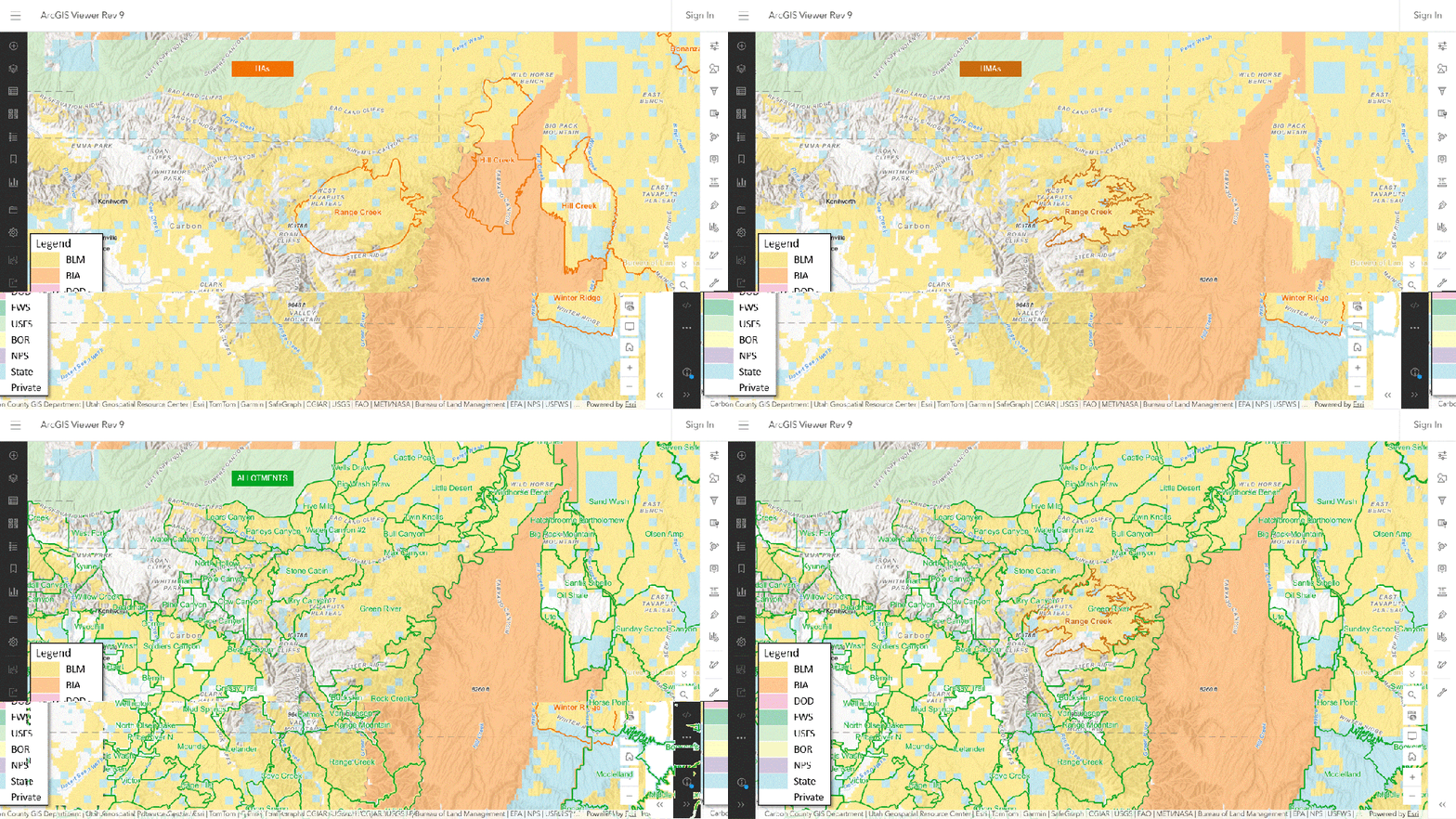
A map on the last page shows the project area but does not indicate trap locations.

PREVIOUS: BLM to Ban Public from Lahontan Roundup?

► Get the truth about wild horses and the wild horse advocates at westernhorsewatchers.com.

Muddy Creek EA Out for Review

A preliminary environmental assessment was copied to the project folder yesterday, with comments due by August 5 according to the news release.

A scoping report was included for reference.

Alternative B, the Proposed Action, calls for

  • Adoption of a new HMAP
  • Forcible removal to low AML
  • Application of fertility control pesticides
  • Maintenance of a normal sex ratio
  • Introduction of horses from other areas to boost genetic diversity

The HMAP is discussed in Appendix C.

The HMA overlaps ten allotments, with percentages given in Table 3-2 of the EA.

Map 3 shows the arrangement.

The allotment master report at RAS provides acreage, management status and active AUMs (Price FO | Richfield FO).

Approximately 64% of the public acres are in the Improve category.

Livestock receive an estimated 9,031 AUMs per year inside the HMA, compared to 1,500 AUMs per year for the horses.

The HMA supports livestock equivalent to 753 wild horses, accounting for 1.3% of the animals in off-range holding.

The current population is thought to be 255, well within the estimated carrying capacity of 125 + 753 = 878.

If all horses were removed the HMA would still be at 6X AML.

Your faithful public servants claim that rangeland health will suffer if the population exceeds 1X AML.

Reducing livestock was one of the options eliminated from detailed analysis in the EA.

PREVIOUS: Scoping Begins for Muddy Creek HMAP?

► Get the truth about wild horses and the wild horse advocates at westernhorsewatchers.com.

Callaghan Roundup Announced

The incident will begin on or about July 10 according to the news release.

The capture and removal goals are 2,000 each.

Burros that have migrated into the Complex will also be taken into custody.

A helicopter will push the animals into the traps.

Operations will be open to public observation on a limited basis, which contradicts a closure notice issued today.

Animals not put down at the temporary holding pens will be taken to the off-range corrals at Palomino Valley and the privately owned facility known as Indian Lakes.

There are no plans to treat any of the mares with fertility control pesticides and return them to the range.

The Complex is subject to permitted grazing.

RELATED: Callaghan Roundup Closed to Public Observation?

► Get the truth about wild horses and the wild horse advocates at westernhorsewatchers.com.

Callaghan Roundup Closed to Public Observation?

A new project has been created in ePlanning and three documents have been uploaded.

Only essential personnel will be allowed within five miles of active trapping locations according to the Decision Record.

There are no exceptions for observers escorted by BLM staff.

A map at the end of the Categorical Exclusion shows the gather area but does not indicate trap sites.

► Get the truth about wild horses and the wild horse advocates at westernhorsewatchers.com.