Mono Lake Update

Final results per Forest Service news release:

  • Twenty-four horses captured alive
    • One died
    • Three euthanized
  • Six found dead in field
  • Twenty survivors taken to unnamed facility at Modoc National Forest

RELATED: Mono Lake Roundup Ends.

NOTE: An article by the Los Angeles Times alleges that some of the deaths were caused by people who went into the forest to feed the horses, giving them too much, too fast, without water.

► Get the truth about wild horses and the wild horse advocates at westernhorsewatchers.com.

Mono Lake Roundup Ends

The Forest Service captured 23 horses and transported them to a temporary holding facility in Bishop according to the news release.

Three were euthanized due to poor body condition.

Seven were found dead in the field due to starvation and exposure.

The next step might be a trip to the Double Devil Corrals near Alturas.

Recovery is expected to take up to ten months.

The closure order will be lifted on January 22.

RELATED: Forest Service Issues Alert for Mono Lake Emergency Roundup.

UPDATE: Forest Service revised the results.

► Get the truth about wild horses and the wild horse advocates at westernhorsewatchers.com.
Would East Rito Creek Make a Good Wild Horse Refuge?

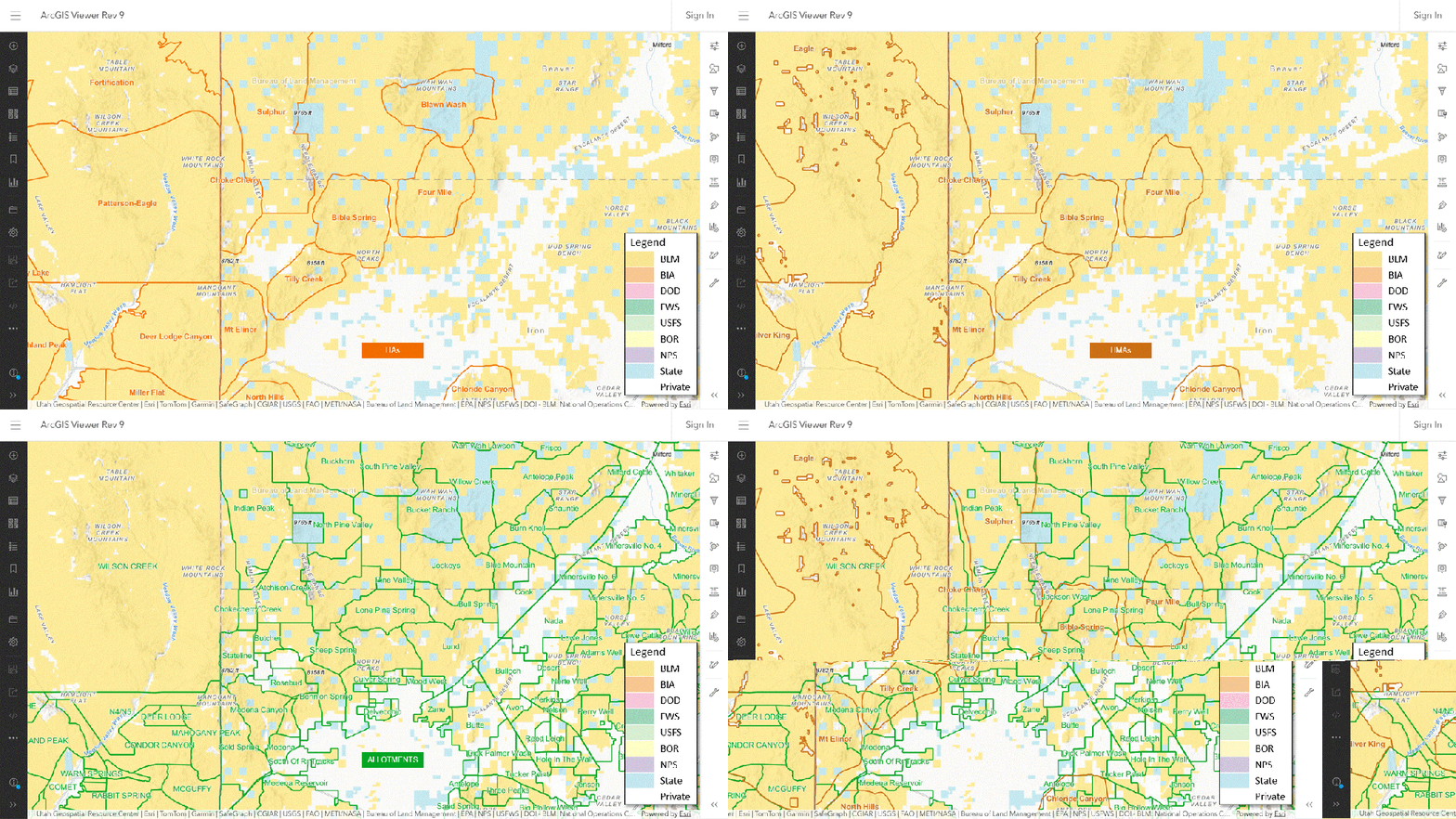
The allotment is too small but the permit is up for renewal.

The parcel offers 540 active AUMs on 2,371 acres according to the allotment master report, equivalent to 19 wild horses per thousand public acres.

Given that the target stocking rate across all HMAs is one wild horse per thousand acres, the allotment is at 19X AML but it’s in the Maintain category!

Your faithful public servants warn that rangeland health will suffer if wild horse populations exceed AML (25,600 animals on 25.6 million acres).

► Get the truth about wild horses and the wild horse advocates at westernhorsewatchers.com.
Forest Service Issues Alert for Mono Lake Emergency Roundup

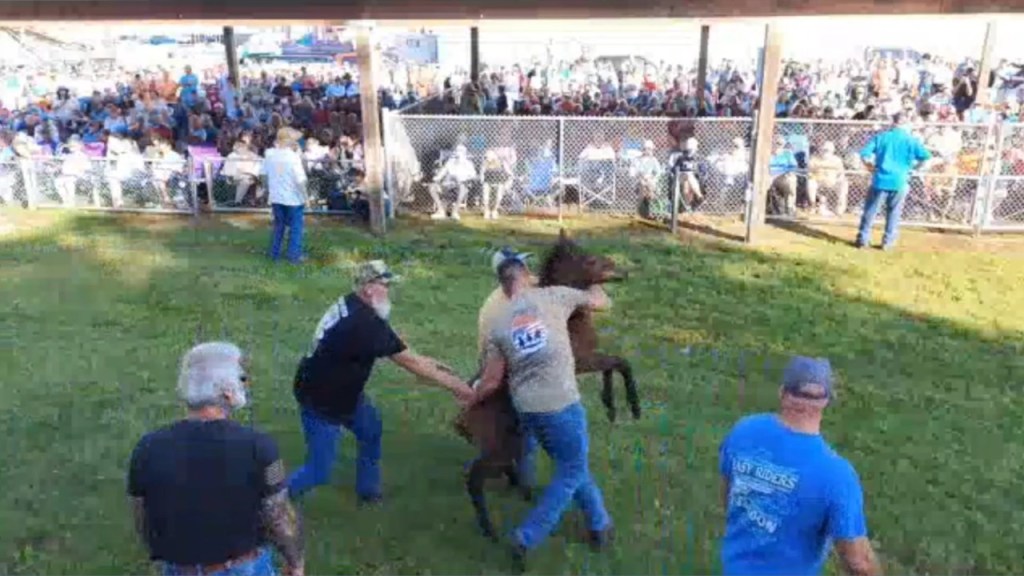
The closure notice runs from January 17 to January 27.

The operation will capture and remove up to 25 snow-bound horses located in the Inyo National Forest south of Mono Lake.

The original news release said nine.

Most of the closure area is in the Mono Mills allotment, which is permitted for sheep.

Links to the NEPA review and daily reports were not provided.

The grazing season and active AUMs are not known.

RELATED: Forest Service to Remove Nine Snow-Bound Horses.

UPDATE: Forest Service changed URL of closure notice from “baldy” to “bald.”

► Get the truth about wild horses and the wild horse advocates at westernhorsewatchers.com.
Foal-Free Friday, Spending Your Money Wisely Edition

The explanatory statement for HR6938, a bill that will give the BLM a budget for FY26, indicates that the amount available for wild horse and burro activities, $144 million, includes up to $11 million for immunocontraceptive vaccine strategies.

The bill does not acknowledge that roughly one third of FY26 has already passed and that the department was funded during that time by a continuing resolution.

Helicopter roundups are the fastest and most efficient way of shifting resources from wild horses and burros to privately owned livestock.

In the preceding paragraph, the statement directs the agency to prioritize the analysis, review, processing and approval of grazing permits, as well as the administration of grazing permit renewals.

Given these priorities, which part of the new roundup schedule—not yet published—will receive the most attention, darting operations or motorized removal?

PREVIOUS: Foal-Free Friday, Systematic Removal Edition.

► Get the truth about wild horses and the wild horse advocates at westernhorsewatchers.com.

Forest Service to Remove Nine Snow-Bound Horses

They’re outside the Montgomery Pass WHT with limited food and water according to today’s news release.

They’ll be drawn into the trap with bait.

Operations will not be open to public observation.

They’ll be held at an undisclosed location until the next steps can be determined.

► Get the truth about wild horses and the wild horse advocates at westernhorsewatchers.com.
Chincoteague Mare Found Dead

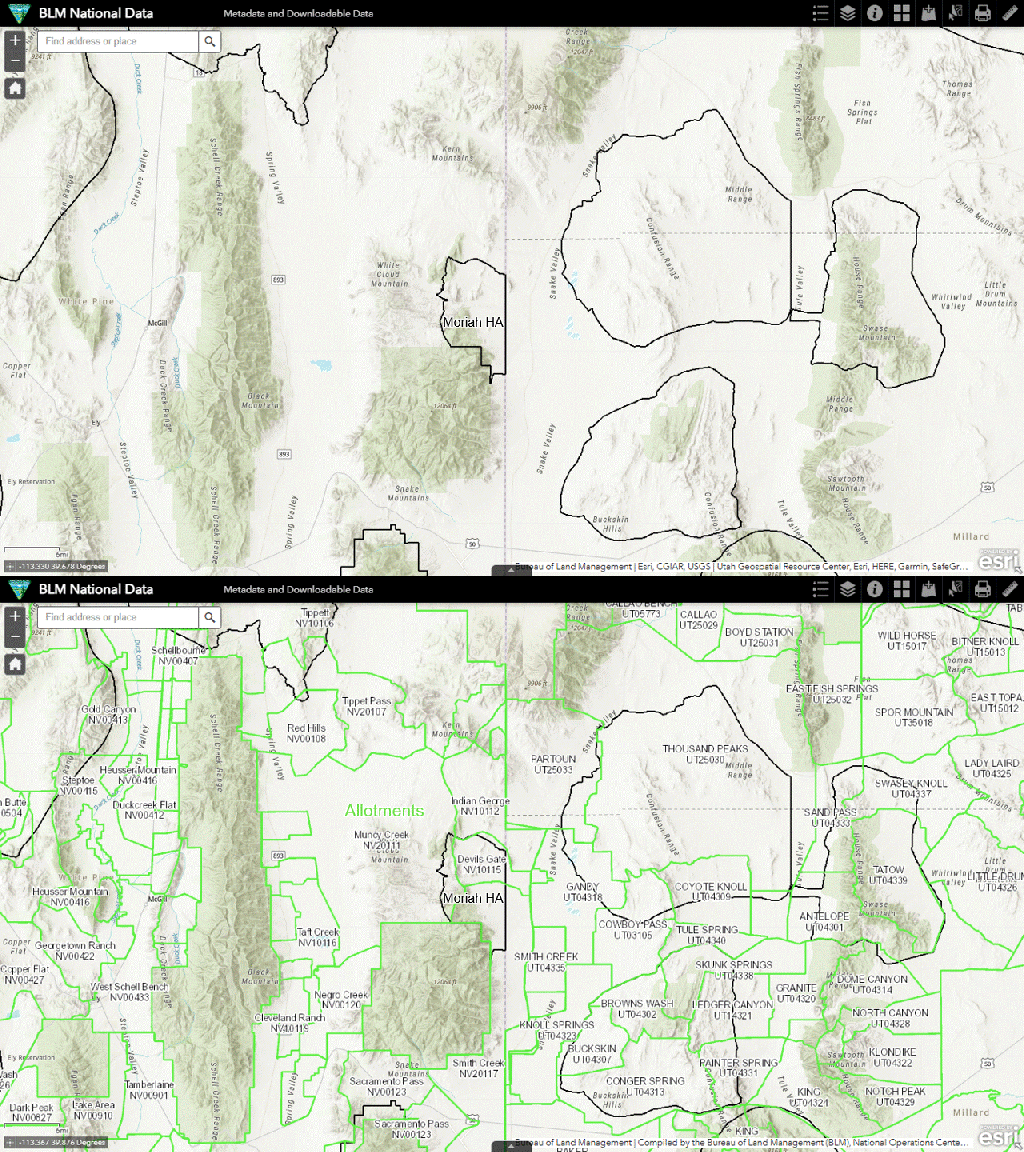
She became trapped in mud according to a story by Shore Daily News.

The report did not indicate if she was pregnant.

The herd is known for its highly abnormal sex ratio and unprecedented birth rate, where a handful of stallions produced 103 foals in 2025—the result of social engineering by the saltwater cowboys.

FWS limits the population to 150.

RELATED: Trends in Chincoteague Pony Auction Results.

► Get the truth about wild horses and the wild horse advocates at westernhorsewatchers.com.
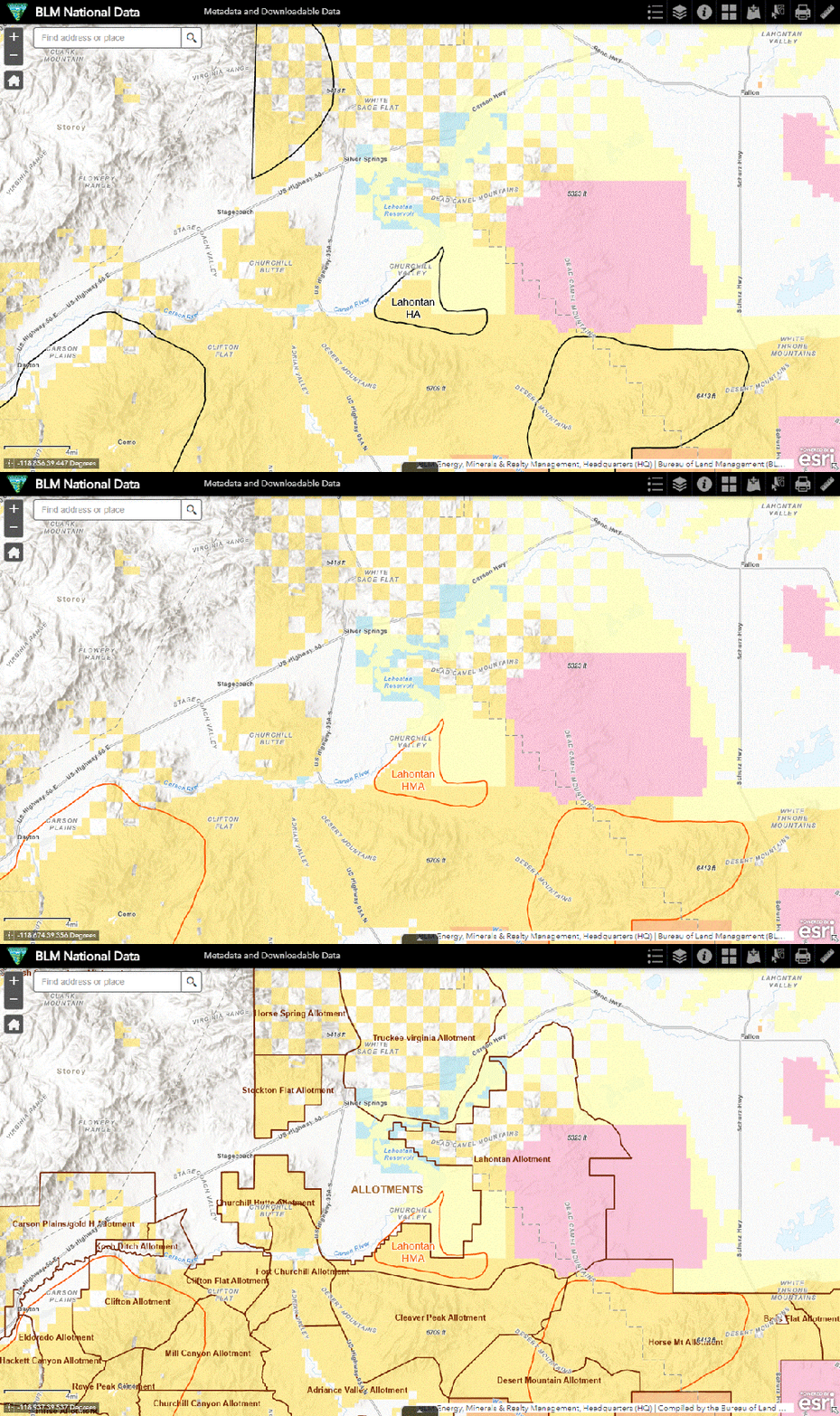
Casper Base Properties Available for $16.7 Million

Big Red Creek Ranch covers 2,130 deeded acres and 7,997 leased acres, including 4,363 BLM acres, with support for 500 cow-calf pairs.

The asking price is $7.5 million.

The listing does not provide a map of the deeded acreage and does not give the name of the attached allotment but Western Horse Watchers believes it’s Muddy Mountain.

Thieves Den Ranch covers 3,040 deeded acres and 5,441 leased acres, including 5,286 BLM acres, with support for 125 cow-calf pairs.

The asking price is $9.2 million.

The listing does not include a map of the deeded acreage but identifies the allotment as Posvar.

The allotment master report gives management status and active AUMs.

Big Red Creek meets three out of four requirements for a wild horse refuge.

Same for Thieves Den.

Muddy Mountain currently supports livestock equivalent to 15.3 wild horses per thousand public acres.

Posvar supports livestock equivalent to 7.5 wild horses per thousand public acres.

Your faithful public servants claim that public lands in the western U.S. can only support one wild horse per thousand acres.

The advocates, unable to distinguish between an AUM and AML, underscore the narrative with their darting programs.

Wild horses can be placed on public lands not identified for their use by acquiring base properties associated with grazing allotments and flipping the preference to horses.

RELATED: Key Indicators for New Wild Horse Preserves.

► Get the truth about wild horses and the wild horse advocates at westernhorsewatchers.com.

Would Owens Dugout Make a Good Wild Horse Refuge?

It’s too small but the permit is up for renewal according to a BLM news release.

The project description says the new permit would have the same livestock numbers, grazing periods, AUMs and terms as the existing permit.

The allotment master report puts it in the Improve category with 275 active AUMs on 2,155 public acres, equivalent to 10.6 wild horses per thousand public acres.

Your faithful public servants claim that public lands in the western U.S. can only support one wild horse per thousand acres.

► Get the truth about wild horses and the wild horse advocates at westernhorsewatchers.com.

Stewardship or Exploitation of the Public Lands?

One of the most amazing statistics in this report by High Country News is the number of individuals who declined to comment.

The article did not mention services provided by the wild horse advocates that benefit the ranchers.

Beating the horse populations down with ovary-killing pesticides.

The aim of the grazing program is to ensure that high-net-worth individuals receive generous government benefits, often at the expense of America’s wild horses, with no means testing and no expiration dates.

► Get the truth about wild horses and the wild horse advocates at westernhorsewatchers.com.

Helicopters Heading for Muddy Creek and Sinbad HMAs

They’ll be flying for the Utah Division of Wildlife Resources to capture bighorn sheep according to the BLM news release.

The Decision Record authorizes the Proposed Action, discussed in section 2.1 of the Final EA.

Table 1-2 indicates that “captures could take place in the Muddy Creek Wild Horse HMA as well as the Sinbad Burro HMA.  Helicopter overflights may temporarily disturb wild horses and burros in the vicinity of the capture.  Impacts beyond short-lived stress are not expected because these animals would not be the target of pursuits, which would already be short in duration, and could readily escape the area.”

Although the EA mentions livestock grazing, it does not show the allotments in the project area.

One of the greatest threats to wild sheep is illness picked up from domestic sheep.

The Authorization Use Report at RAS would tell which if any of the allotments are permitted for sheep.

► Get the truth about wild horses and the wild horse advocates at westernhorsewatchers.com.

Kisatchie Wild Horses Migrating to Woodworth?

Some residents were upset by limited opportunities for public comment at yesterday’s town council meeting according to a report by KALB News.

The mayor has received complaints ranging from horse manure and property damage to vehicle accidents and child safety.

The town is on the east side of the Evangeline Unit in the Calcasieu Ranger District, Kisatchie National Forest.

To the west is Fort Johnson (previously Fort Polk), an Army base the horses once called home.

The article did not associate the horses with the forest and did not indicate if the advocates had submitted a plan to beat the numbers down with ovary-killing pesticides.

RELATED: End of Line for Kisatchie Horses?

► Get the truth about wild horses and the wild horse advocates at westernhorsewatchers.com.

House and Senate Release FY26 Appropriations Bills

The Senate news release includes links to summaries and explanatory statements for (1) Commerce, Justice, Science and Related Agencies, (2) Energy and Water Development and (3) Interior, Environment and Related Agencies.

The bill for Interior provides $144 million for wild horse and burro management according to the Division C explanatory statement, including $11 million for fertility control.

Temporary funding for the department expires at the end of the month.

The House news release includes similar links.

The bill text indicates $144 million for the wild horse and burro program but is silent on fertility control.

RELATED: Government Reopens, Back to Business as Usual.

UPDATE: The House bill is now HR6938.

► Get the truth about wild horses and the wild horse advocates at westernhorsewatchers.com.