Foal-Free Friday, Surveying the Adjectives Edition

Which of these terms, when used by the advocates, helps you believe that they really care about wild horses and that they’d never do anything harmful to the herds?

a. Cherished

b. Beloved

c. Innocent

d. Treasured

e. Iconic

f. Majestic

If you chose any of these words, and offered your financial support thereby, the joke’s on you because they’re beating the populations down with ovary-killing pesticides so ranchers can access most of their food and water.

RELATED: Foal-Free Friday, Defunding the Advocates Edition.

Adjectives for Pests 12-01-23

BLM Going Dark on McGregor Grazing Results?

The 2023 auction was announced on September 7 but results have not been posted.

The 2022 auction was announced on September 6 and results were published on October 27.

An email inquiry sent on December 4 has not been answered.

Why would they want to hide the results?

Because they give insight on market conditions and going rates for livestock grazing, which dwarf the current fee of $1.35 per AUM, suggesting that it’s ridiculously low and that the American people are not receiving a fair return for the use of public lands.

This brings great embarrassment to the bureaucrats and ranchers.

RTELATED: Price of Hay Unchanged, Still Too High.

Researchers to Study Mountain Lion Prey in Caliente Complex

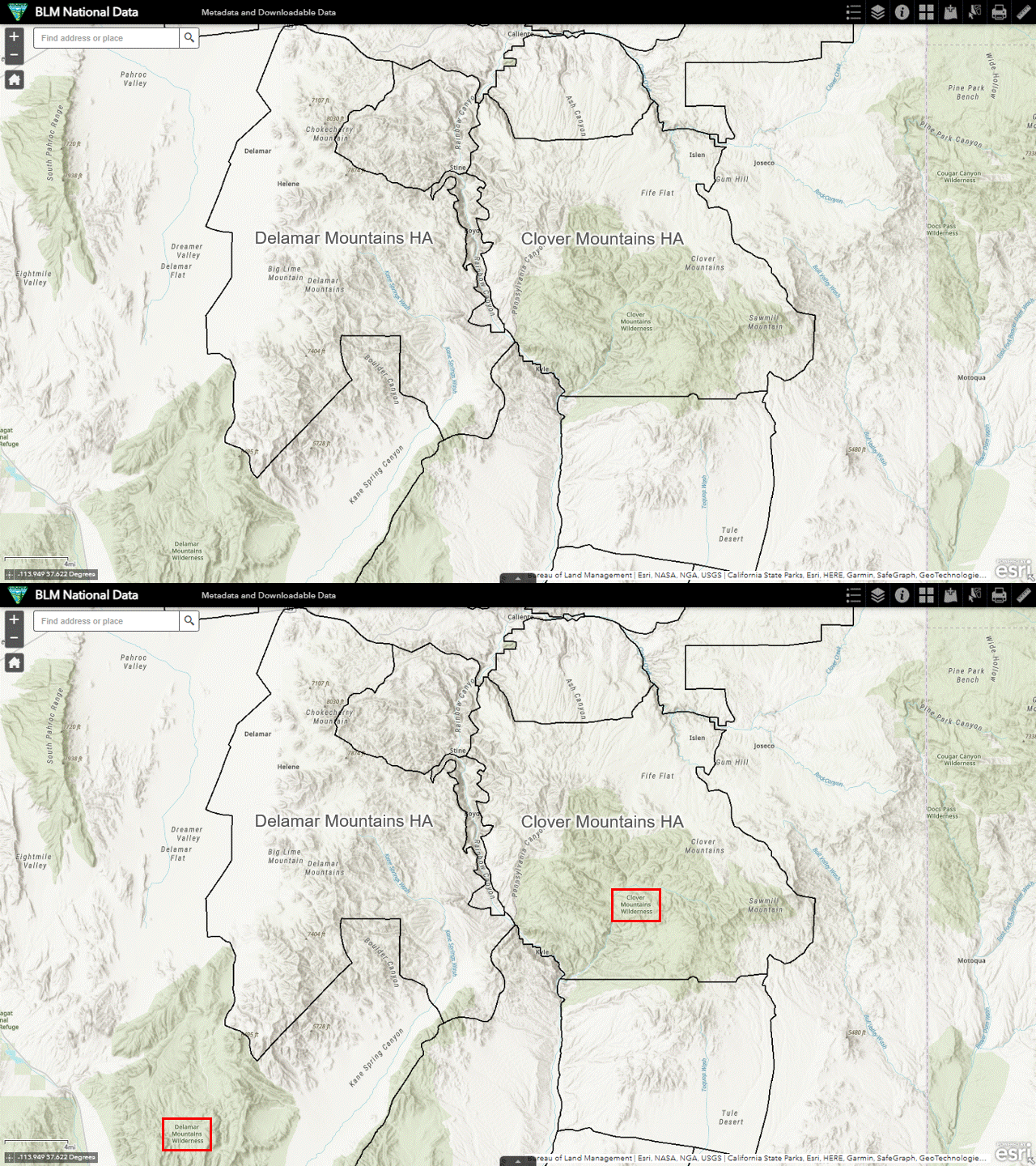
The Nevada Department of Wildlife, in partnership with Utah State University and the U.S. Geological Survey, has approached the BLM about monitoring prey selection in two HAs that overlap or are near designated wilderness areas in southeastern Nevada.

The researchers suspect that predation behavior will change after a sudden decrease in the equine population, as would result from a roundup, shifting toward native species such as mule deer, elk and bighorns.

That would be unwelcome news for big game hunters.

Could it also shift to nonnative species, such as privately owned cattle and sheep?

The area is subject to permitted grazing.

The answers seem obvious: If you’re a mountain lion and you lose a major food source, you change your diet, move to another area or die.

The study is not consistent with the claim that wild horses have no natural predators.

Data will be collected with trailcams.

The Draft EA was the only document copied to the project folder.

Comments will be accepted through December 14.

RELATED: Caliente Complex in Pictures.

Caliente Mountain Lion Study 12-06-23

Court Dismisses Salt River Legal Action

The case brought earlier this year by the Center for Biological Diversity, Arizona Sportsmen for Wildlife Conservation and the Arizona Wildlife Federation, alleging that wild horses were destroying the habitats of endangered species in the Tonto National Forest, has been tossed according to a report by KPNX News.

The decision does not protect the horses.  It may have alleviated the risk of forcible removal, but nonmotorized removal by the Salt River Wild Horse Darting Group, an affiliate of the Campaign Against America’s Wild Horses, will continue.

Simone Neterlands with Darting Rifle 09-02-23

The goal is to take the population of approximately 400 animals down to 200 in ten years, after which the mares will be sterile and the herd will be lost—forever.

RELATED: Coalition Sues Forest Service Over Salt River Horses.

Nevada WHR Roundup Starts This Week

The FY24 schedule shows a December 7 start date but today’s news release indicates December 8.

The plan calls for the capture of 350 wild horses, removal of 138, treatment of up to 106 mares with GonaCon Equine (a fertility control pesticide) and the return of 212.

The current population is thought to be 438, within the AML of 300 – 500.

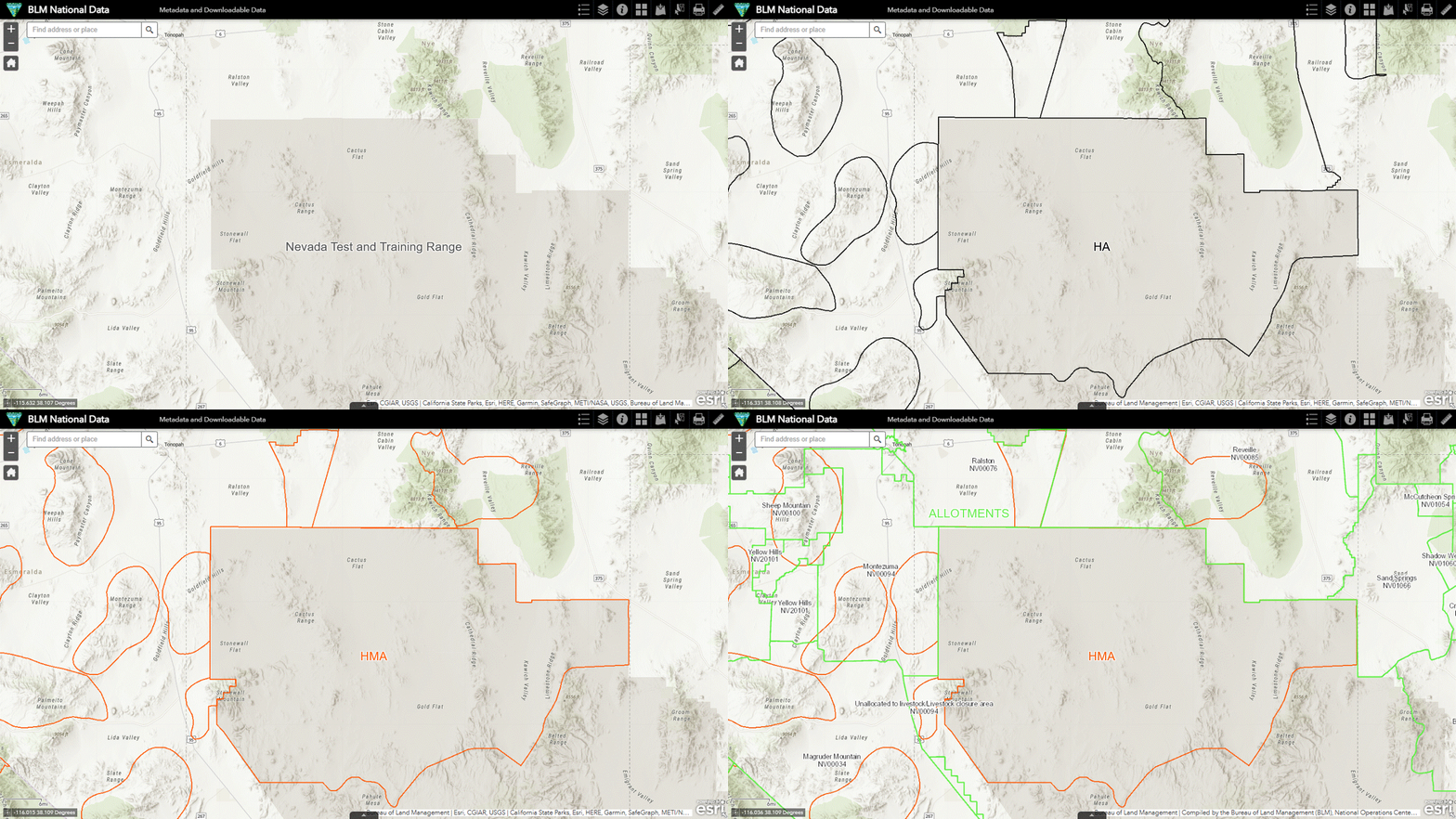
The WHR lies within the Nevada Test and Training Range so the incident will not be open to public observation.

Animals designated for removal will be taken to the Ridgecrest off-range corrals.

The WHR covers 1,301,637 acres of military land southeast of Tonopah and is not subject to permitted grazing but surrounding lands are.

A roundup two years ago removed horses and burros from the area.

Nevada WHR and Allotments 12-05-23

Introduction to the East Pershing Complex

The largest roundup of FY24 is scheduled to begin on December 28, with 2,875 wild horses to be captured and removed.

As of today, the incident has not been announced by the BLM and a gather page has not been created.

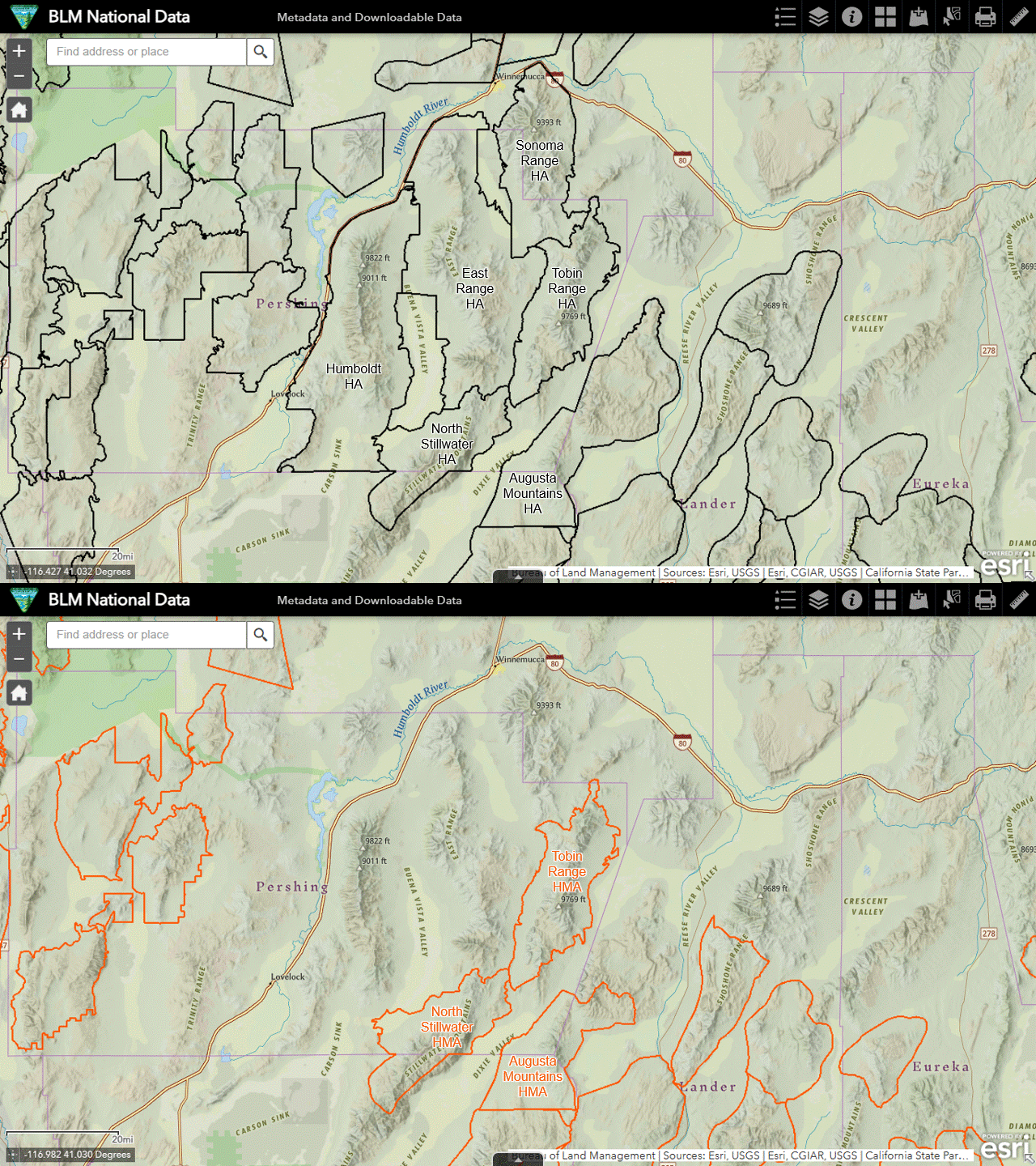
The Complex, consisting of three HMAs and four HAs, may get its name from the county in Nevada where the action will occur.

The roundup aligns with three tenets of rangeland management:

  • Pest control
  • Resource enforcement
  • Rancher protection

The advocates, defeated a long time ago and now desperate for a seat at the table, eagerly participate in the process.

Alternative B in the Final EA was authorized by the Humboldt Field Office in a 2018 Decision, minus the sterilization option.

You can find these documents in the project folder on ePlanning.

Figure 1 shows the HAs and HMAs.

Figure 2 shows the grazing allotments.

Section 3.12 in the EA discusses livestock grazing and resource apportionment.

How much forage has been assigned to the ranchers in the lawful home of wild horses?

Don’t look to the advocates for answers.

Adjectives for Equine Pests

The BLM recently paid the Campaign Against America’s Wild Horses $91,865.50 to poison the Cedar Mountain mares with Zonastat-H, an ovary-killing pesticide.

CAAWH now refers to the herd as majestic, expanding the list of adjectives they use to describe the animals they’re trying to exterminate.

Majestic Wild Horses of Cedar Mountain 12-01-23

Apparently, they’ve found that this and other such terms are very effective in separating well-intentioned donors from their money.

RELATED: What Is a Cherished Horse or Burro?

Adjectives for Pests 12-01-23

Clan Alpine Roundup, Day 21

The incident began on November 8.  Results through November 28:

  • Scope: Clan Alpine HMA
  • Purpose: Pest control, resource enforcement, rancher protection
  • Target: Horses
  • Type: Planned
  • Method: Helicopter
  • Category: Cruel and costly*
  • Better way: Thin the herd with ovary-killing pesticides*
  • Captured: 1,605, up from 1,468 on Day 19
  • Average daily take: 76.4
  • Capture goal: 1,594
  • Removal goal: 1,381
  • Returned: 1, no change from Day 19
  • Deaths: 22, up from 20 on Day 19
  • Shipped: 1,325, up from 1,237 on Day 19

The sidebar shows two stallions released but only one was documented in the daily reports.

The capture goal has been reached.

A mare was dispatched on Day 20 due to blindness along with a stallion for a broken leg.

The death rate is 1.4%.

The capture total includes 658 stallions, 737 mares and 210 foals.

Youngsters represented 13.1% of the animals gathered, suggesting the herd is growing at a rate of eight percent per year.

Of the adults, 47.2% were male and 52.8% were female.

Body condition scores on Days 20 and 21 ranged from 3 to 4.

The HMA and surrounding lands are subject to permitted grazing.

*According to advocates.

Clan Alpine HMA with Allotments 06-17-23

Day 21 ended with 257 unaccounted-for animals.

To date, 81 mares have been treated with GonaCon Equine, a fertility control pesticide.

They will be returned the range with up to 121 stallions.

Operations will likely conclude this week.

Other statistics:

  • Forage liberated to date: 19,248 AUMs per year
  • Water liberated to date: 16,040 gallons per day
  • Horses allowed by plan: 979
  • Pre-gather population: 1,661 plus this year’s foals
  • Forage assigned to horses: 11,748 AUMs per year
  • Forage assigned to livestock: 6,796 AUMs per year
  • Horses displaced from HMA by permitted grazing: 566
  • True AML: 1,545
  • Stocking rate at new AML: 5.2 wild horses per thousand public acres
  • Horses displaced by drilling and mining: Ask the advocates

RELATED: Clan Alpine Roundup, Day 19.

Help Wanted: CAAWH Seeks Communications Director

The successful candidate will be responsible for developing and implementing effective communication strategies to promote the organization’s mission, raise awareness and engage the public, according to the description on Idealist.

In this role, you’ll convince reporters, donors and the public that you’re protecting wild horses while pushing back against the bureaucrats and ranchers when in reality you’re doing exactly the opposite.

The following org chart shows where you fit in:

Working Together for a Horse-Free Future 12-21-22

The job is not for normal people.

You will refer to Zonastat-H as a vaccine not a pesticide.

You will insist that it’s reversible.

You will claim that it is harmless.

You will describe it as a better way.

You will downplay concerns by other writers about baren mares, confused stallions, scattered bands, shrinking herds, injuries and infections, abnormal sex ratios, tiny breeding populations, loss of genetic diversity and subordination to livestock.

Salary $70,000 to $125,000 per year.

RELATED: Help Wanted: CAAWH Seeks Development Director.

Virginia Range Darting Program by the Numbers

Advocates with the Campaign Against America’s Wild Horses will need a zero percent birth rate and six percent death rate for 30 consecutive years to bring the herd of 3,500 wild horses close to the target of 500.

Future population = 3,500 * .94 ^ 30 = 547

Most of the mares will be sterile after five consecutive years, the current age of the program, so the field work can taper off and the herd will still implode.

The assumption of a constant death rate is probably not valid.

The average age of the herd is increasing, along with the death rate, because few if any new foals are hitting the ground, so the end may come sooner than expected.

The Virginia Range was easily carrying ten wild horses per thousand acres, which causes great embarrassment to the bureaucrats and ranchers, who claim the high desert can only support one wild horse per thousand acres (27,000 animals on 27 million acres).

Instead of pushing back against the lies, the advocates ratify and reinforce them through their participation in the removals.

RELATED: NDA Designates Virginia Range Hatchet Man.