BLM to Remove Wild Horses and Burros from Centennial HMA

The incident will begin on October 4.

The removal goal is 270 but the actual number of horses and burros is flexible.

A helicopter will push the animals into the traps.

Operations will not be open to public observation.

There are no plans to treat any of the females with fertility control pesticides and return them to the range.

Captured animals will be taken to the off-range corrals at Ridgecrest.

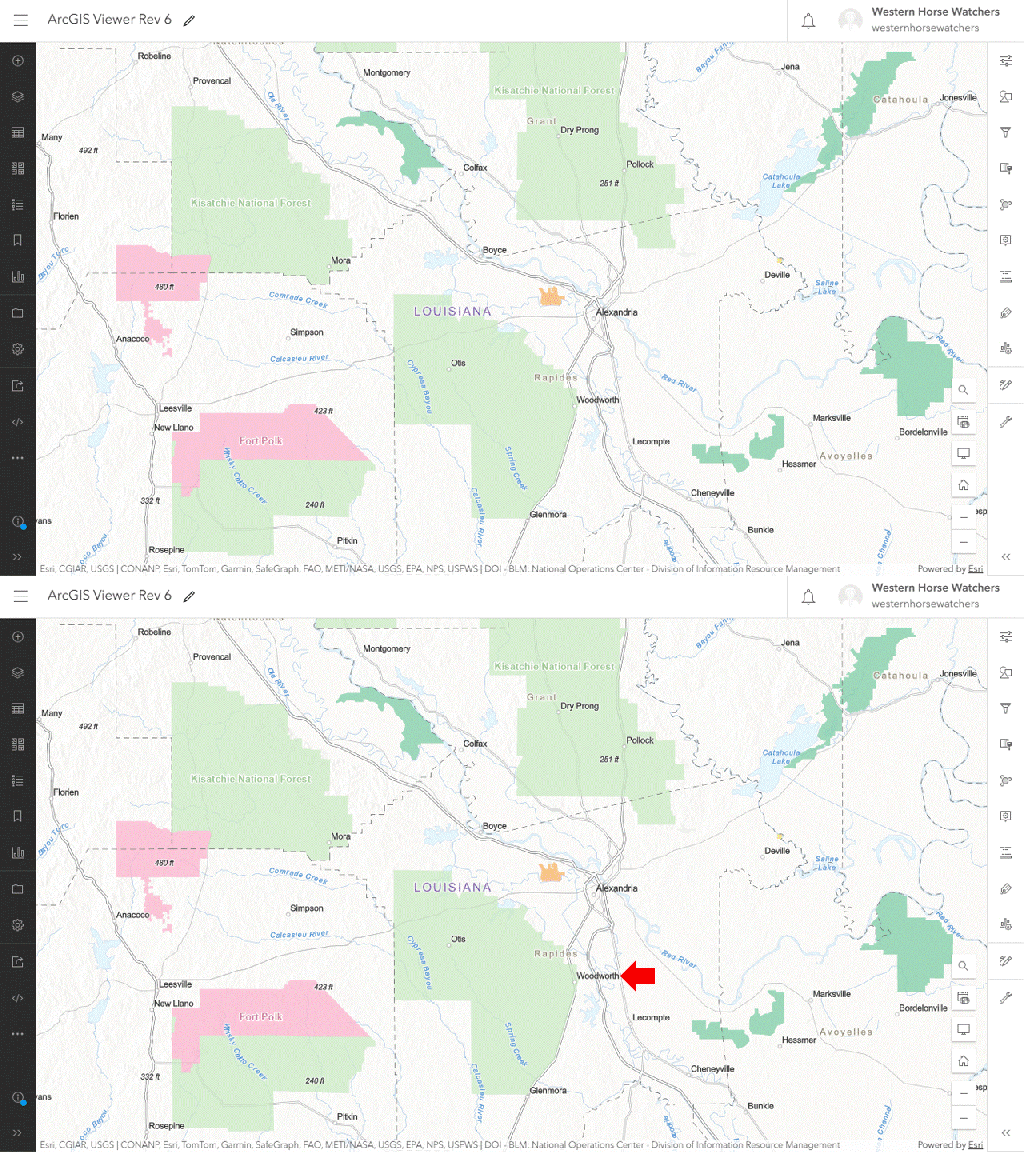
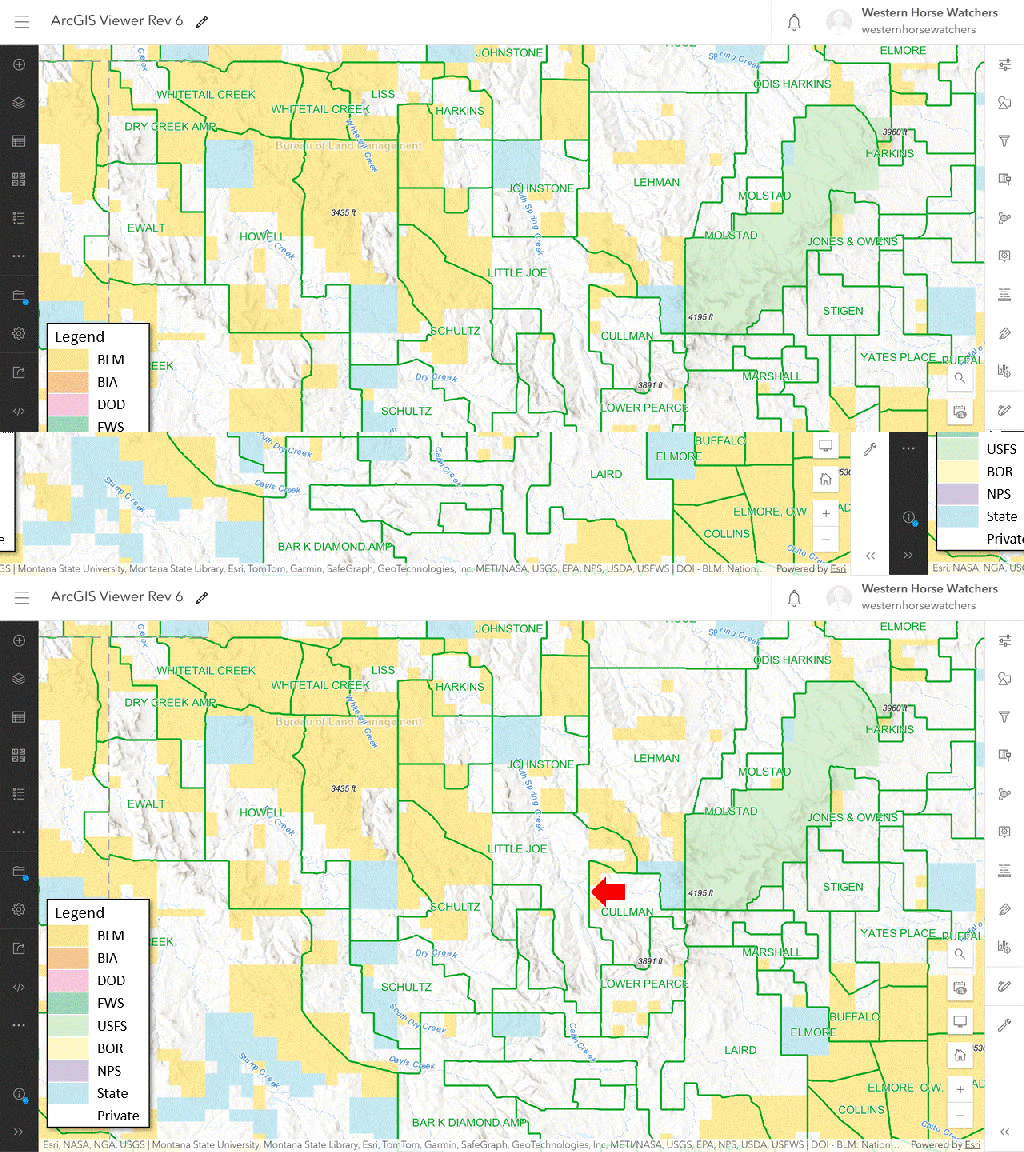
The HMA overlaps the northern half of the naval air weapons station at China Lake.

The news release did not indicate if the animals were confined to the area by fencing or if the advocates had offered to sterilize the mares and jennies with PZP.

BLM land adjacent to the facility is subject to permitted grazing.

Funding for the roundup will come from __________________________.

RELATED: No FY26 Budget, No FY26 Roundup Schedule.

High-Frequency Radar System to Affect Coyote Lake Wild Horses?

The proposal would withdraw approximately 5,000 public acres from settlement, sale, location and entry under the general land laws, subject to existing rights, and reserve the area for military purposes.

The BLM news release does not include a map or link to a NEPA project but a notice in the Federal Register gives the townships, ranges and sections which can be found in the PLSS layer of the ArcGIS Viewer.

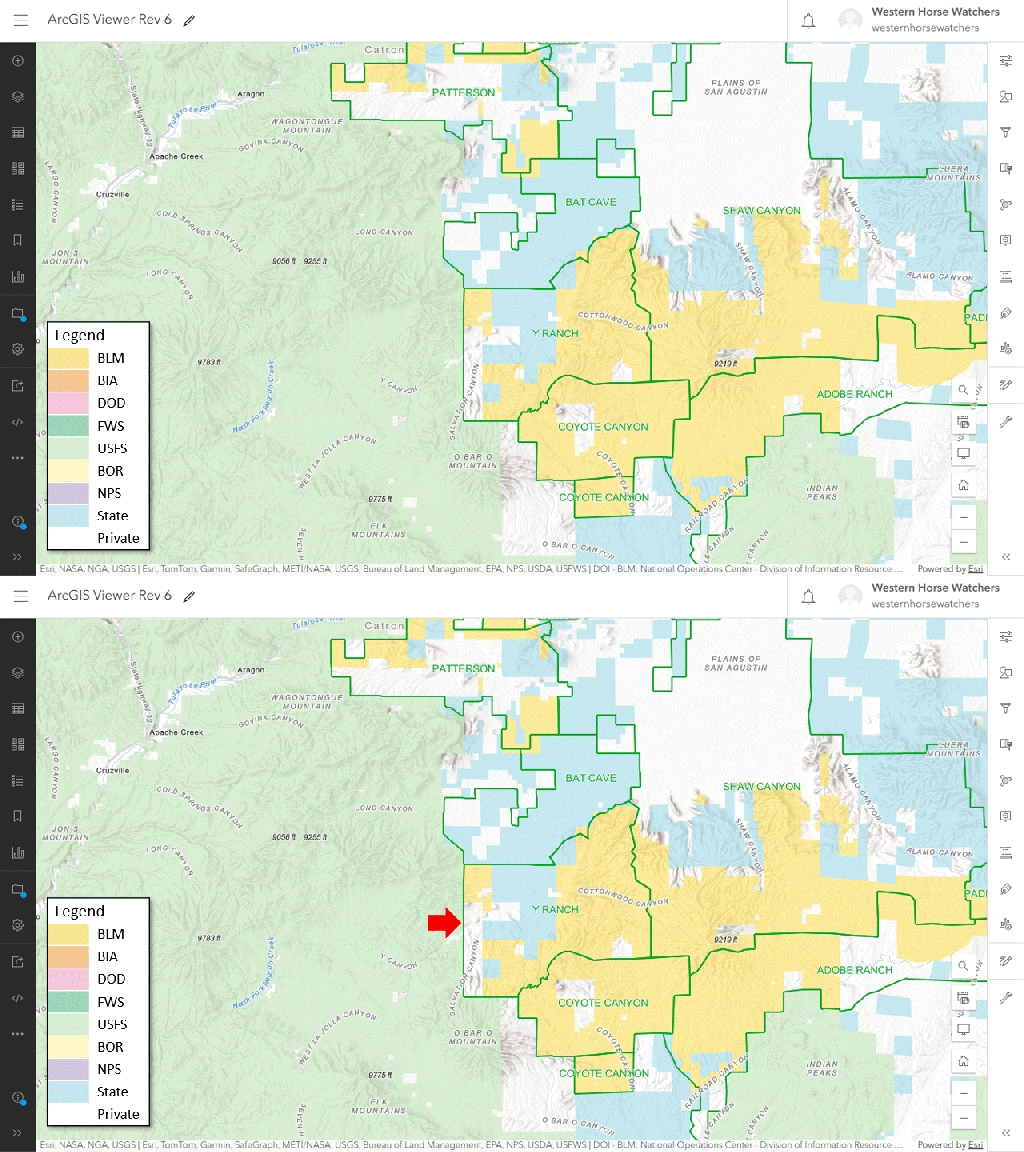
Most of the project area is in the Coyote Lake HMA, or, if you prefer, the Coyote Lake Allotment, with a small portion in 15-Mile Community.

The Air Force would place two transmitters in Christmas Valley according to an article by Oregon Public Broadcasting.  The facility on BLM land, about 150 miles to the southeast, would contain two receivers.

The project area covers 16 sections, for a total of 10,240 acres, so the withdrawn lands would be somewhere inside the blue box in the following map.

Comments will be accepted through December 29.

No FY26 Budget, No FY26 Roundup Schedule

The House passed a continuing resolution that would fund the government through November 21 but it failed in the Senate.

Republicans need at least eight Democrat votes in that chamber to get it across the finish line according to a report by The Hill.

Any amendments would send it back to the House, which is not in session.

Another option is a partial government shutdown.

As of today, a FY26 schedule has not been posted to the BLM gather page.

The advocates will not receive any new funding for their PZP sterilization programs until FY26 appropriations bills have been signed into law and maybe then, given the desire to cut federal spending, not at all.

The new fiscal year begins on October 1.

Eighth Annual Devil’s Garden Roundup, Day 30

The incident started on August 27.

The documented capture total through September 25 is 209, including 92 stallions, 98 mares and 19 foals.

Youngsters accounted for 9.1% of the sample.

Of the adults, 48.4% were male and 51.6% were female.

The average daily take is 7.0.

A horse died on Day 30 for unspecified reasons, bringing the total deceased to 7.

The death rate is 3.3%.

The Forest Service does not include deceased animals in the daily breakdowns.

Body condition scores were not given.

The number of animals shipped is not known.

The operation has liberated 2,508 AUMs per year.

The WHT is subject to permitted grazing.

RELATED: Eighth Annual Devil’s Garden Roundup, Day 25.

BLM Mulls Stone Cabin Emergency Roundup?

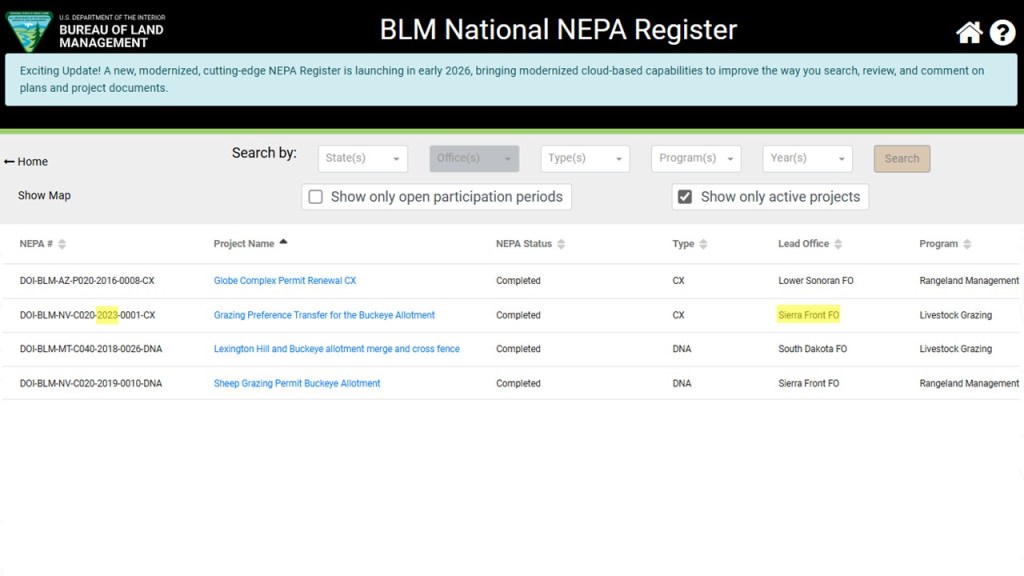
The agency published a signed decision on August 7 for temporary water hauls in the Stone Cabin and Willow Creek allotments, which contain the HMA.

A DNA worksheet was also copied to the project folder.

The decision document says on page three that water is the most effective tool for distributing cattle on arid lands and that the animals are unlikely to venture more than two miles from a water source, linking permitted grazing to riparian deterioration.

In response to a comment from the Nevada Department of Animal Agriculture, the BLM indicated that it may consider removal of wild horses if conditions persist.  Refer to item 1 in Exhibit 3.

The Drought Monitor puts the project area in category D2, severe drought.

Persons who participated in the planning process have until September 30 to dispute the plan.

RELATED: Clifford Spring Exclosure Won’t Isolate Stone Cabin Horses.

Eighth Annual Devil’s Garden Roundup, Day 25

The incident started on August 27.

The documented capture total through September 20 is 177, including 74 stallions, 86 mares and 17 foals.

Youngsters represented 9.6% of the sample.

Of the adults, 46.3% were male and 53.8% were female.

The average daily take is 7.1.

A horse was dispatched on Day 18 for unspecified reasons, followed by another on Day 21, bringing the total deceased to 6.

The death rate is 3.4%.

Body condition scores were not given.

The number of animals shipped is not known.

The operation has liberated 2,124 AUMs per year.

The WHT is subject to permitted grazing.

RELATED: Eighth Annual Devil’s Garden Roundup, Day 15.

BLM Preparing to Rescind Public Lands Rule

Stakeholders said it created regulatory uncertainty, reduced access to public lands and undermined the multiple-use mandate established by Congress according to the news release.

A 60-day comment period began with publication of a notice in the Federal Register.

Wild horses fall under “historical values” in the definition of multiple use in FLPMA.

RELATED: Public Lands Rule Published.

If Wild Horses Had Principal Use of Cottonwood

The allotment was recognized for a virtual fencing project in this year’s rangeland stewardship award.

The Allotment Master Report puts it in the Maintain category.

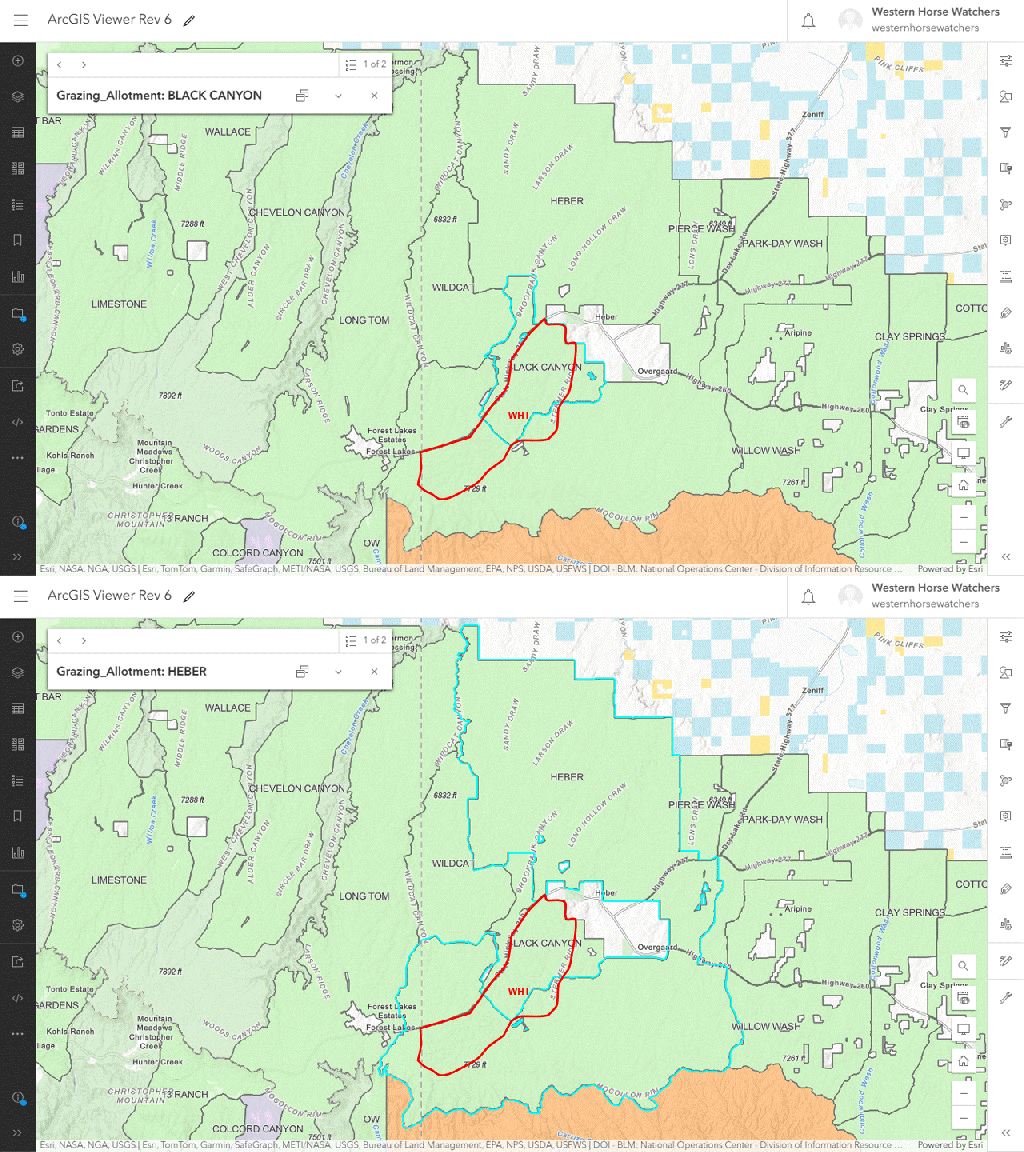
The permittee receives 2,144 active AUMs on 16,689 public acres, equivalent to 179 wild horses, or 10.7 wild horses per thousand public acres, roughly the same stocking rate as the Virginia Range.

Your faithful public servants claim that public lands in the western U.S. can only support one wild horse per thousand acres (25,500 animals on 25.6 million acres).

The advocates, defeated a long time ago, give their assent through their darting programs.

If the allotment was an HMA, the AML would be 17 and 162 wild horses would be consigned to off-range holding because of permitted grazing.

BLM allotments in the Nevada support livestock equivalent to 173,144 wild horses on 40,194,360 public acres, or 4.3 wild horses per thousand public acres.

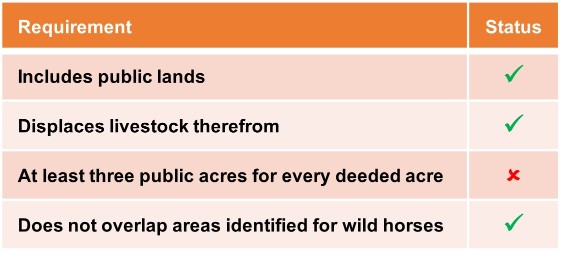
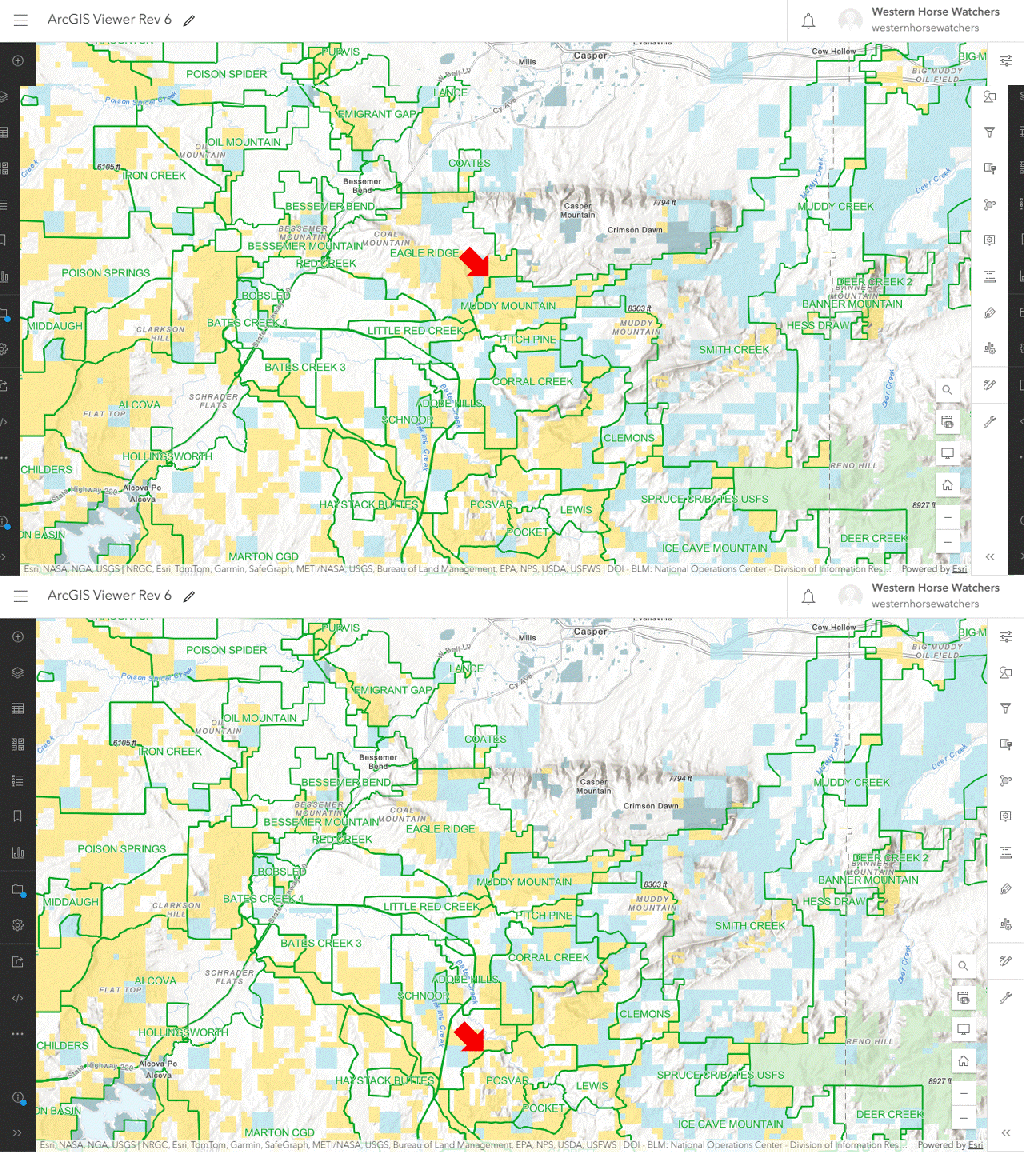
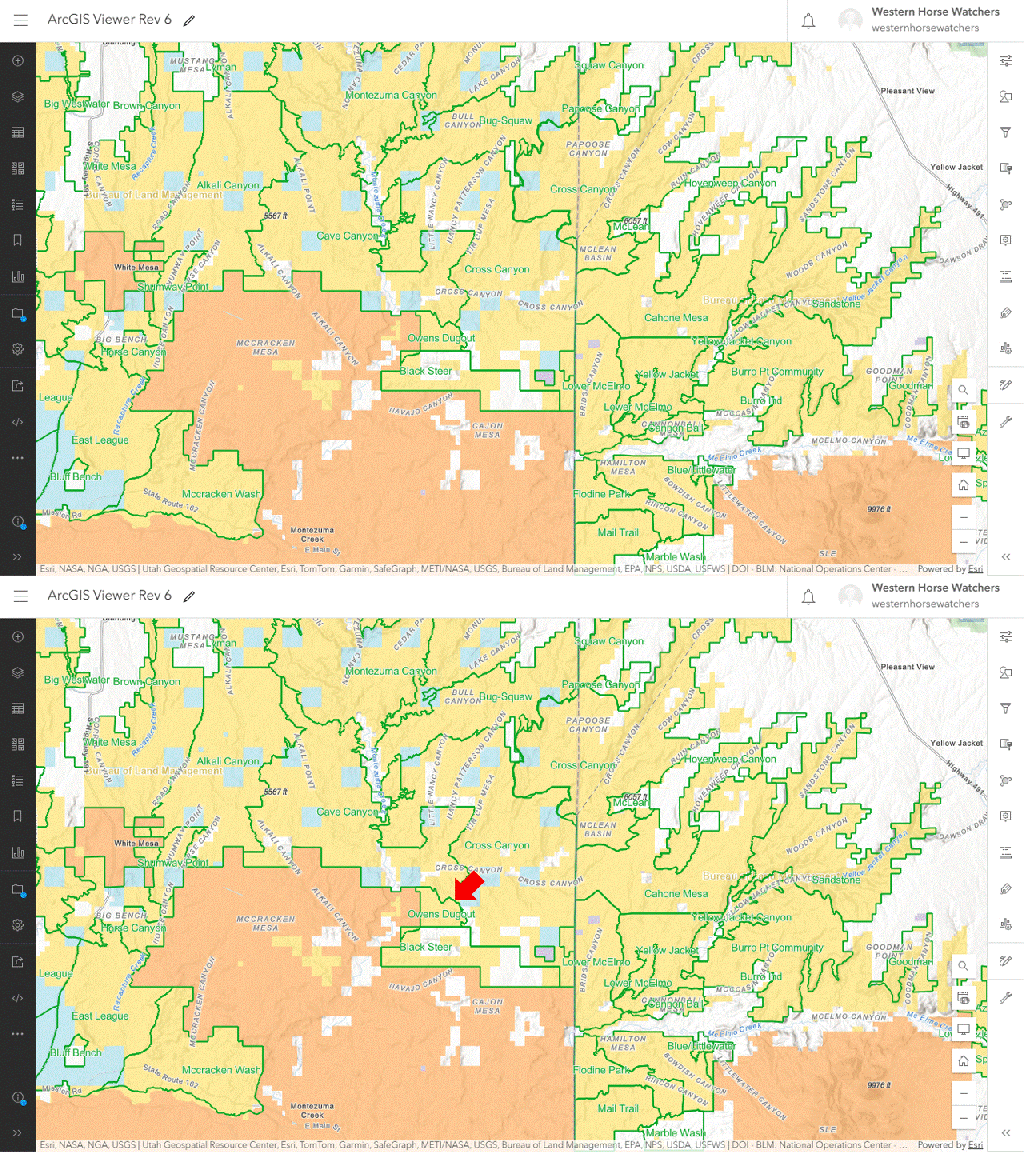
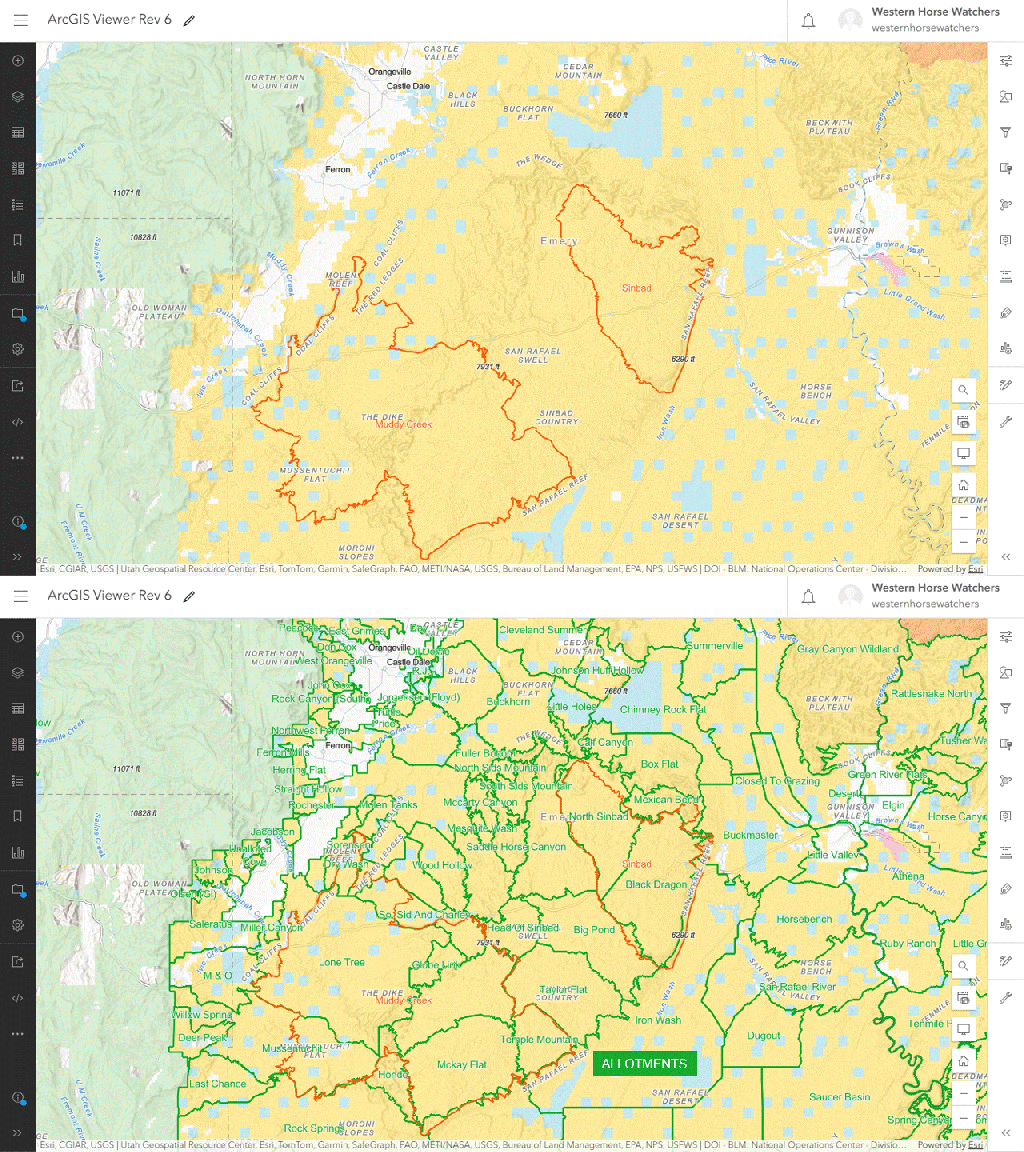
Wild horses can be placed on public lands not identified for their use by acquiring base properties associated with grazing allotments and flipping the preference to horses.

RELATED: The Allotments Tell the Story: They’re Lying, All of Them.

2025 Stewardship Award Goes to Nevada Guest Ranch?

A representative of the BLM will present the award today to Cottonwood Ranch at the 57th annual meeting of the Public Lands Council, according to the announcement.

The owners have preference on the Cottonwood Allotment, managed by the Wells Field Office, and the Cottonwood Creek and Goat Creek Allotments, managed by the Jarbidge Ranger District.

The award pertains to virtual fencing on the BLM allotment.  Use of the technology on Forest Service lands was not disclosed.

The aim of the grazing program is to ensure that high net worth individuals receive generous government benefits, often at the expense of America’s wild horses, with no means testing and no expiration date.

RELATED: Winners of 2024 Stewardship Awards Announced.

Clifford Spring Exclosure Won’t Isolate Stone Cabin Horses

The aim of the project is to improve riparian habitat while continuing to provide water to free-roaming horses, wildlife and livestock.

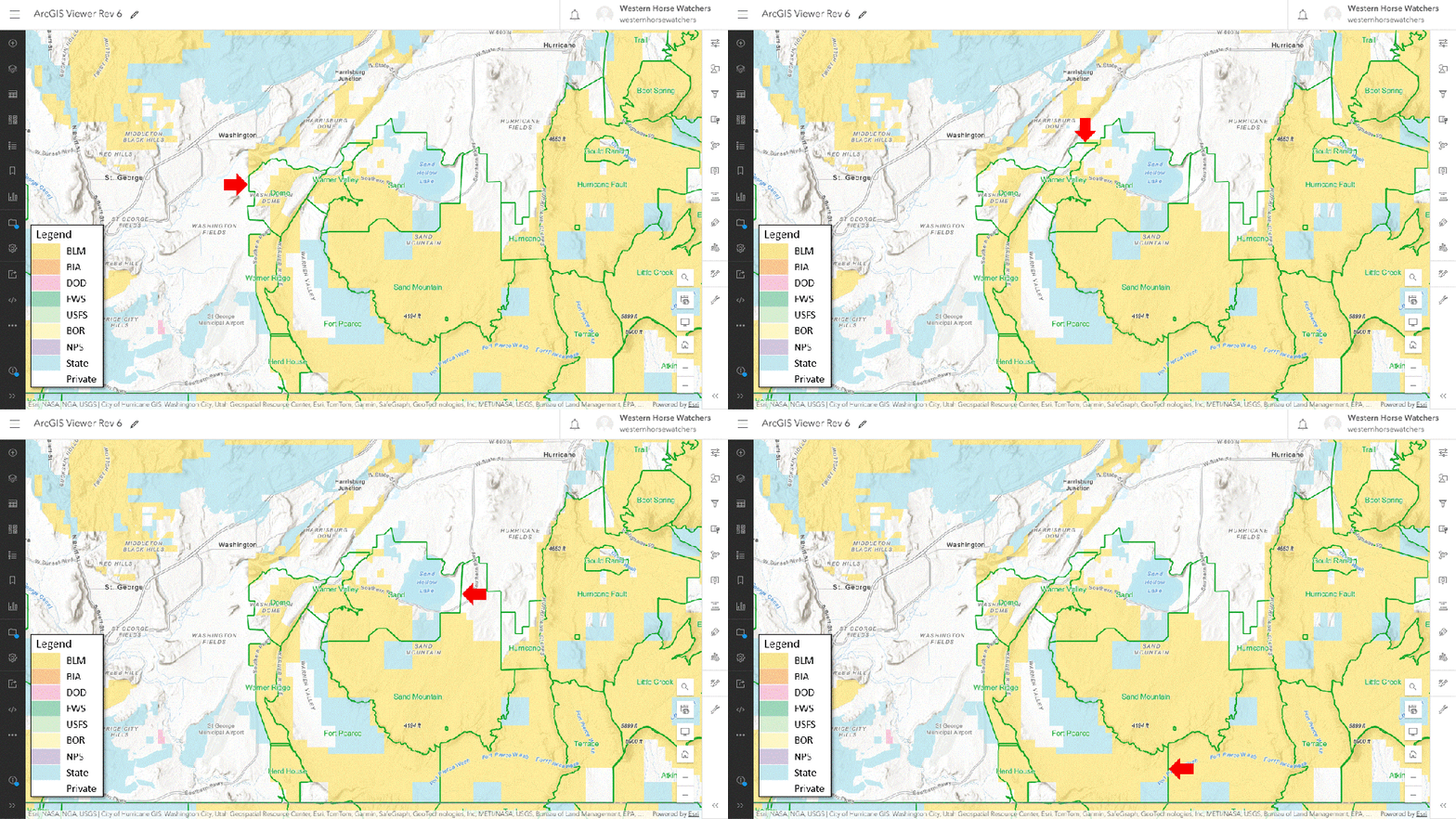
Map 1 in the preliminary decision gives you the location but doesn’t tell you the HMA.

The last page gives the legal description as T. 3 N., R. 49 E., sec. 11, SW1/4SE1/4.

That means the southwest quarter of the southeast quadrant of Section 11 in Township 3 North, Range 49 East (Mount Diablo base and meridian).  Probably a 40-acre parcel.

The PLSS layer in the ArcGIS viewer puts the spring in the Stone Cabin HMA, which lies mostly within the Stone Cabin Allotment.

The Proposed Action, discussed in the CX, would install 730 feet of metal fence around the spring, two gates, up to 360 feet of buried water lines, one in-ground tank equipped with a thermoriser and one tire trough located outside the exclosure.

Comments will be accepted through September 19.

Another Moreno Valley Burro Hit by Arrow

She was captured and taken to an equine hospital where most of the projectile was removed but another surgery is needed to retrieve the head according to a report by KTLA News.

A local sanctuary has offered a reward of $14,000 for information leading to an arrest and conviction of the person(s) responsible.

Curiously, there would be no charges if the advocates were hitting the jennies with pesticide-laced darts.

RELATED: Archer Hits Two Wild Burros, Location Not Disclosed.