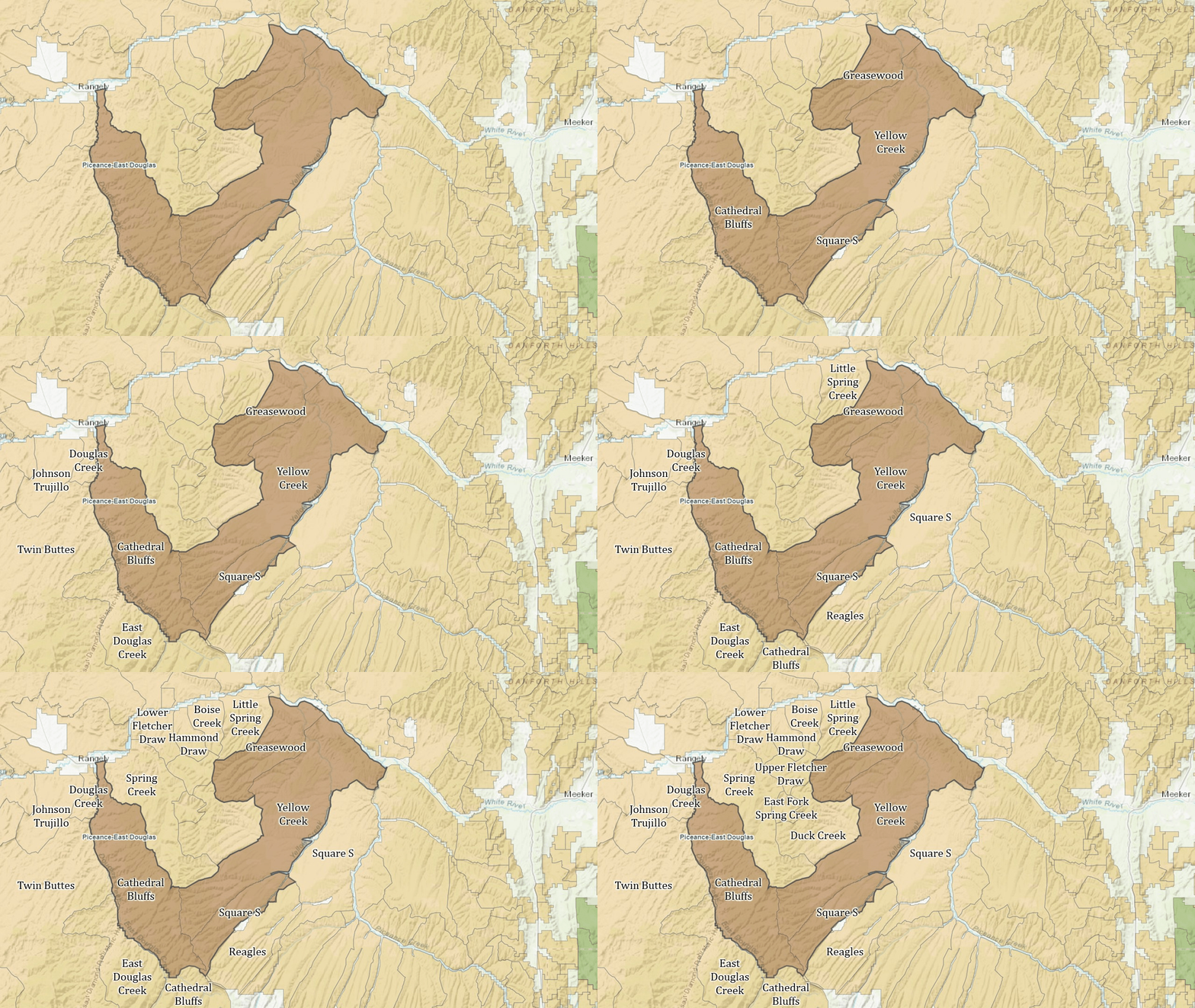
McCullough Roundup, Day 46

The incident started on January 22.  Results through March 7:

  • Scope: McCullough Peaks HMA
  • Target: Horses
  • Method: Bait
  • Type: Planned
  • Goals: Gather 80, remove 35
  • Captured: 90, up from 68 on Day 44
  • Shipped: 24, up from 14 on Day 44
  • Released: 41, up from 40 on Day 44
  • Deaths: 1, no change from Day 44
  • Average daily take: 2.0
  • Unaccounted-for animals: 24

The figures above are based on the daily reports.

No horses were shipped on Day 45 due to poor road conditions.

The capture goal has been exceeded by 12.5%.

Roughly half of the horses in temporary holding would need to be shipped to achieve the removal goal.

Retained mares might be treated with fertility control pesticides before release.

The churn rate has decreased sharply in the last three days, suggesting that the Cody Field Office has switched from a fishing expedition to Git-R-Done.

The death rate is 1.1%.

The location of the trap site was not disclosed.

Body condition scores were not provided.

The HMA is subject to permitted grazing.

  • Forage liberated to date: 588 AUMs per year (will go down if horses returned)
  • Water liberated to date: 490 gallons per day (ditto)

The National Data Viewer shows habitat loss and overlapping allotments.  Click on map to open in new tab.

An estimated 535 wild horses have been displaced from their lawful home by permitted grazing, making the True AML almost five times higher than the current AML.

The roundup supports three tenets of rangeland management.

RELATED: McCullough Roundup, Day 44.

McCullough Peaks HMA with Allotments 07-14-23

McCullough Roundup, Day 44

The incident started on January 22.  Results through March 5:

  • Scope: McCullough Peaks HMA
  • Target: Horses
  • Method: Bait
  • Type: Planned
  • Goals: Gather 80, remove 35
  • Captured: 68, up from 52 on Day 41
  • Shipped: 14, no change from Day 41
  • Released: 40, up from 37 on Day 41
  • Deaths: 1, no change from Day 41
  • Average daily take: 1.5
  • Unaccounted-for animals: 13

The figures above are based on the daily reports.

The Day 44 report said 16 horses were caught and three were released.  The status of the other 13 is not known.

The roundup continues to have a high churn rate.  If the 13 horses are shipped, the capture-to-remove ratio would drop to 2.4:1, in line with the target of 2.3:1.

Some horses may have been caught more than once.

The death rate is 1.5%.

The location of the trap site was not disclosed.

Body condition scores were not given.

The HMA is subject to permitted grazing.

  • Forage liberated to date: 336 AUMs per year (assuming 28 horses removed)
  • Water liberated to date: 280 gallons per day

The National Data Viewer shows habitat loss and overlapping allotments.  Click on map to open in new tab.

An estimated 535 wild horses have been displaced from their lawful home by permitted grazing, making the True AML almost five times higher than the current AML.

The roundup supports three tenets of rangeland management.

RELATED: McCullough Roundup, Day 41.

McCullough Peaks HMA with Allotments 07-14-23

Shackleford Herd Shrinks by Seven in 2023

At the end of 2023 there were 117 horses on Shackleford Banks, according to an undated report by NPS, down from 124 at the end of 2022.

Five foals were born in 2023, for a birth rate of four percent.

Twelve horses died.

The herd consisted of 62% females and 38% males at the end of December.

The low birth rate and unusual sex ratio are likely due to the safe, proven and reversible fertility control program.

Nine mares who had recent foals were treated in 2023.

The report did not indicate the pesticide of choice, but it is probably PZP.

Shackleford Banks is at the southern end of the Cape Lookout National Seashore.

RELATED: Shackleford Herd Grew Slightly in 2022.

McCullough Roundup, Day 41

The incident started on January 22.  Results through March 2:

  • Scope: McCullough Peaks HMA
  • Target: Horses
  • Method: Bait
  • Type: Planned
  • Goals: Gather 80, remove 35
  • Captured: 52, up from 48 on Day 37
  • Shipped: 14, up from 9 on Day 37
  • Released: 37, up from 35 on Day 37
  • Deaths: 1, no change from Day 37
  • Average daily take: 1.3
  • Unaccounted-for animals: None

The figures above are based on the daily reports.

The Day 41 report said two more horses were removed, bringing the total to 15.

To check this value, subtract the horses released from the horses captured:

Removed = CapturedReleased = 52 – 37 = 15

The roundup continues to have a high churn rate.  The capture-to-remove ratio is 3.5:1, compared to a target of 2.3:1.

Some animals may have been caught more than once.

The death rate is 1.9%.

The location of the trap site was not disclosed.

The HMA is subject to permitted grazing.

  • Forage liberated to date: 180 AUMs per year
  • Water liberated to date: 150 gallons per day

The National Data Viewer shows habitat loss and overlapping allotments.  Click on map to open in new tab.

An estimated 535 wild horses have been displaced from their lawful home by permitted grazing, making the True AML almost five times higher than the current AML.

The roundup supports three tenets of rangeland management.

RELATED: McCullough Roundup, Day 37.

McCullough Peaks HMA with Allotments 07-14-23

McCullough Roundup, Day 37

The incident started on January 22.  Results through February 27:

  • Scope: McCullough Peaks HMA
  • Target: Horses
  • Method: Bait
  • Type: Planned
  • Goals: Gather 80, remove 35
  • Captured: 48, up from 37 on Day 34
  • Shipped: 9, no change from Day 34
  • Released: 35, up from 27 on Day 34
  • Deaths: 1, no change from Day 34
  • Average daily take: 1.3
  • Unaccounted-for animals: 3

The figures above are based on the daily reports.

The Day 37 report said three more horses were removed, bringing the total to 13.

To check this value, subtract the horses released from the horses captured:

Removed = CapturedReleased = 48 – 35 = 13

The roundup continues to have a high churn rate.  The capture-to-remove ratio is 3.7:1, compared to a target of 2.3:1.

Some animals may have been caught more than once.

The death rate is 2.1%.

The location of the trap site was not disclosed.

The HMA is subject to permitted grazing.

  • Forage liberated to date: 156 AUMs per year
  • Water liberated to date: 130 gallons per day

The National Data Viewer shows habitat loss and overlapping allotments.  Click on map to open in new tab.

An estimated 535 wild horses have been displaced from their lawful home by permitted grazing, making the True AML almost five times higher than the current AML.

The roundup supports three tenets of rangeland management.

RELATED: McCullough Roundup, Day 34.

McCullough Peaks HMA with Allotments 07-14-23

Harry Ranch Selling Oregon Base Properties

Originally part of the Lucky 7 Ranch, two other ranches in the same area have been split off and are now on the market.

  • Ten Mile – 2,512 deeded acres, $7 million
  • Vance – 2,662 deeded acres, $9 million

That puts the grazing preference on the Sherburn and Fifteen Mile Community allotments in play.

The Operator Information and Allotment Information reports at RAS associate two grazing authorizations and four allotments with Harry Ranch LLC in Oregon.

3600203 – FIFTEEN MILE COMMUNITY, SHERBURN
3603721 – TRAILING PERMIT, CAMPBELL

Campbell is tied to Lucky 7, discussed yesterday.

Vance grazes Fifteen Mile and Ten Mile uses Sherburn.

The Allotment Master Report puts Fifteen Mile in the Improve category, with 20,960 active AUMs on 309,316 public acres.

That works out to 67.8 AUMs per year per thousand public acres, equivalent to 5.6 wild horses per thousand public acres.

BLM staff claim that public lands in the western U.S. can only support one wild horse per thousand acres (27,000 animals on 27 million acres).

Vance shares the allotment with four other permittees and receives 26.7% of the total forage.

Sherburn is in the Maintain category with 3,771 active AUMs on 46,983 public acres, equivalent to 6.7 wild horses per thousand public acres.

Ten Mile receives all of the authorized forage.

The trailing permit covers movement of livestock from one area to another.

As an alternative to cattle grazing, the new owners could ask the BLM for a change in livestock type and season of use so horses could roam the land, as American Prairie did for bison in Montana.

RELATED: McDermitt Base Property Available for $20 Million.

Harry Ranch Oregon Allotments 02-28-24

Yellow Creek Grazing Permit Up for Renewal

The allotment covers about a third of the Piceance HMA in western Colorado, where the advocates are poisoning the mares with Gonacon Equine.

The Allotment Master Report puts it in the Improve category, with 2,157 active AUMs on 63,191 public acres.

The Draft EA identifies three alternatives for consideration.

The management plan authorizes 85 wild horses in this part of the HMA according to Section 5.1.2, equivalent to 1,020 AUMs per year, while livestock receive twice as much.

The project folder contains no other documents.

Comments will be accepted through February 29.

RELATED: Piceance Wild Horses Get Short End of Stick.

Piceance Allotments 06-14-22

Lake Pleasant Roundup, Day 22

The incident started on February 5.  Results through February 26:

  • Scope: Lake Pleasant HMA
  • Target: Burros
  • Type: Planned
  • Method: Bait trap
  • Goals: Gather 400, remove 400
  • Captured: 144, up from 101 on Day 16
  • Shipped: 93, no change from Day 16
  • Released: None
  • Deaths: 3, down from 4 on Day 16
  • Average daily take: 6.5
  • Unaccounted-for animals: 48

The figures above are based on the daily reports.

The two deaths reported on Day 16 have been zeroed out.

A jack was dispatched on Day 22 for a broken leg.

The death rate is 2.1%.

The capture total includes 66 jacks, 61 jennies and 17 foals.

Youngsters represented 11.8% of the animals gathered.

Of the adults, 52.0% were male and 48.0% were female.

The HA and HMA are the same size.  The area is subject to permitted grazing.

  • Forage liberated to date: 864 AUMs per year
  • Water liberated to date: 720 gallons per day

There are no plans to treat any of the jennies with fertility control pesticides and return them to the HMA.

The roundup will remove animals that are damaging private property and creating a public safety hazard, purposes for which PZP was not authorized.

The incident supports three tenets of rangeland management.

RELATED: Lake Pleasant Roundup, Day 16.

Lake Pleasant HMA with Allotments 02-06-23

McDermitt Base Property Available for $20 Million

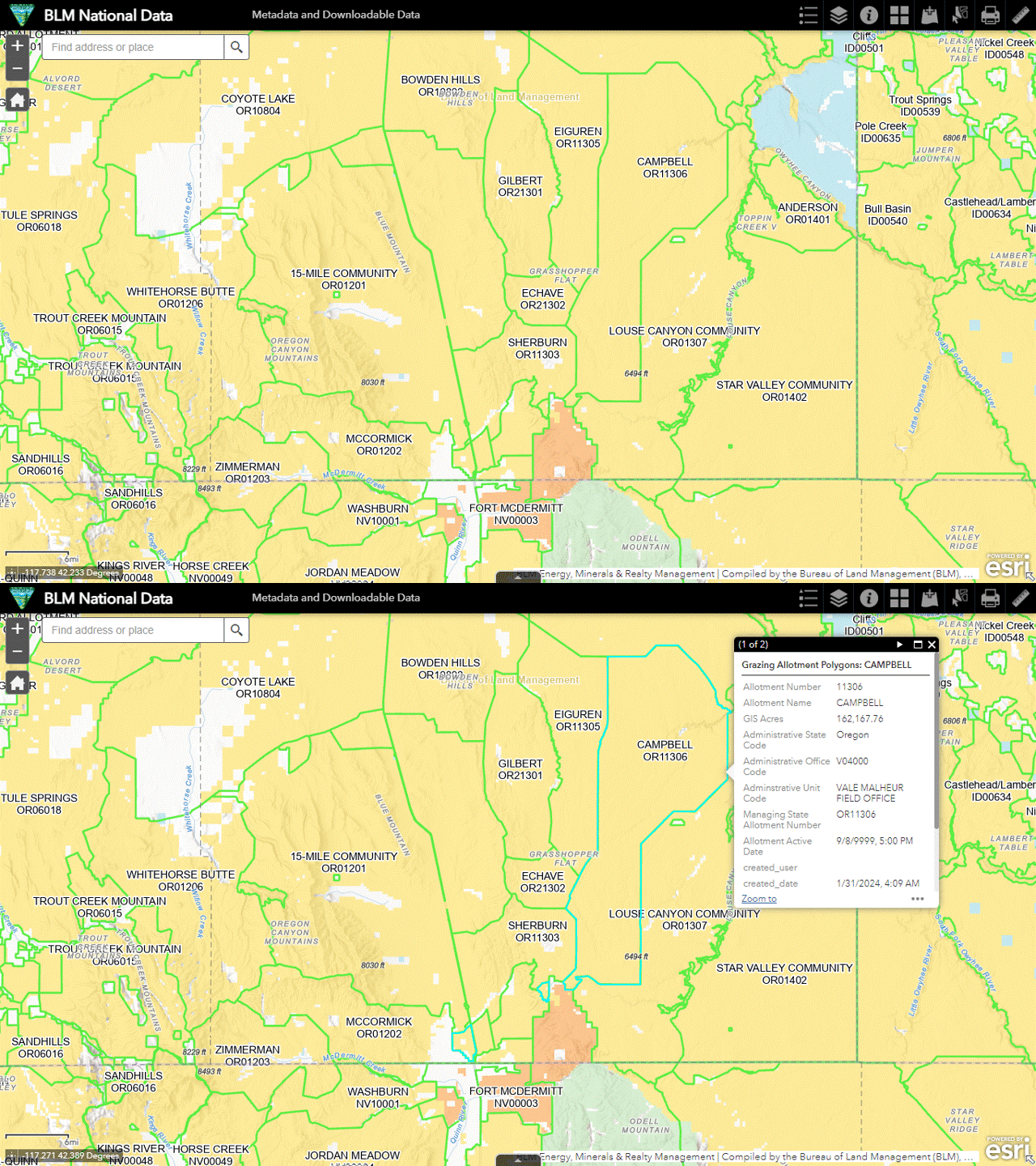
Lucky 7 Ranch covers approximately 6,700 deeded acres in Oregon and Nevada, with grazing preference the Campbell Allotment. according to the listing.

Most of the private land is on the west side of Highway 95 near McDermitt, NV.

A smaller parcel is at the south end of the allotment and another is at the north end.

The map shows the private acreage with black borders.

The allotment is shaded yellow.

The Allotment Master Report puts it in the Maintain category, with 14,160 active AUMs on 158,957 public acres.

That works out to 89.1 AUMs per year per thousand public acres, equivalent to 7.4 wild horses per thousand public acres.

This brings more distress to the bureaucrats and ranchers, who claim that public lands in the western U.S. can only support one wild horse per thousand acres (27,000 animals on 27 million acres).

The new owner could ask the BLM for a change in livestock type and season of use so wild horses could roam the area, as American Prairie did for bison in Montana.

McDermitt Base Property with Allotments 02-27-24

How Many Wild Horses Can the Riddle Mountain HMA Support?

The HMA covers 32,666 total acres in eastern Oregon, including 28,331 public acres, according to the 2023 HA/HMA Report.

The 56 horses allowed by plan receive 672 AUMs per year.

The stocking rate allowed by plan is two wild horses per thousand public acres.

The land must be able to produce at least 23.7 AUMs per year per year per thousand public acres to sustain the horses.

Can it produce more?

The HMA intersects one allotment.

Chapter IIIB in a 2011 EA for pest control and resource enforcement identifies it as Burnt Flat.

Table 2 says 99% of the allotment is inside the HMA, which seems reasonable based on the arrangement in the National Data Viewer.

The allotment boundary includes some private lands the HMA does not.

The Allotment Master Report provides management status, acreage and active AUMs.

Riddle Mountain Allotment Calcs 02-26-24

Although it’s in the Improve category, the allotment offers an estimated 3,824 AUMs per year to livestock inside the HMA, compared to 672 AUMs per year for wild horses.

How is that possible?  It’s the same land!

A guiding principle in developing the land-use plan, apparently, was that the ranchers would prosper, not the horses, even though it’s the lawful home of wild horses.

The forage assigned to livestock would support 318 wild horses, on top of the 56 allowed by plan, for a True AML of 374.

This would be achieved by confining the permittee to his base property in a year-round off season.

The stocking rate at the new AML would be 13.2 wild horses per thousand public acres.

This brings more distress to the bureaucrats and ranchers, who insist that public lands in the western U.S. can only support one wild horse per thousand acres (27,000 animals on 27 million acres).

As for costs, the BLM collects 3,824 × 1.35 = $5,162 per year from ranching activity inside the HMA while it spends 318 × 5 × 365 = $580,350 per year to care for the horses displaced thereby.

Would you say that’s a wise use of the public lands?

RELATED: How Many Wild Horses Can the Kiger HMA Support?

Riddle Mountain HMA with Allotments 02-25-24

McCullough Roundup, Day 34

The incident started on January 22.  Results through February 24:

  • Scope: McCullough Peaks HMA
  • Target: Horses
  • Method: Bait
  • Type: Planned
  • Goals: Gather 80, remove 35
  • Captured: 37, up from 34 on Day 32
  • Shipped: 9, up from 3 on Day 32
  • Released: 27, up from 26 on Day 32
  • Deaths: 1, no change from Day 32
  • Average daily take: 1.1
  • Unaccounted-for animals: Zero

The figures above are based on the daily reports.

The Day 33 report said two more horses were removed, bringing the total to ten.

The capture-to-remove ratio is 3.7:1, compared to a target of 2.29:1.

Some animals may have been caught more than once.

The death rate is 2.7%.

The location of the trap site was not disclosed.

The HMA is subject to permitted grazing.

  • Forage liberated to date: 120 AUMs per year
  • Water liberated to date: 100 gallons per day

The National Data Viewer shows habitat loss and overlapping allotments.  Click on map to open in new tab.

An estimated 535 wild horses have been displaced from their lawful home by permitted grazing, making the True AML almost five times higher than the current AML.

The roundup supports three tenets of rangeland management.

RELATED: McCullough Roundup, Day 32.

McCullough Peaks HMA with Allotments 07-14-23

Ringleader Discusses Veterans for Pesticides Act

The bill would prioritize the recruitment of military veterans to become certified applicators of fertility controls for free-roaming horses and burros.

Contrary to what’s stated in this article by WDBJ News of Roanoke, VA, it’s been stalled in committee since introduction.

Poisoning mares with ovary-killing pesticides is not protection.

It’s good for the ranchers, not the horses.

Teaching veterans to eradicate the animals that supposedly heal them is a terrible disservice to our fighting men and women.

Hopefully the bill will term out with the 118th Congress later this year.

RELATED: Veterans Against Mustangs Act Reintroduced in House.

McCullough Roundup, Day 32

The incident started on January 22.  Results through February 22:

  • Scope: McCullough Peaks HMA
  • Target: Horses
  • Method: Bait
  • Type: Planned
  • Goals: Gather 80, remove 35
  • Captured: 34, up from 14 on Day 20
  • Shipped: 3, no change from Day 20
  • Released: 26, up from 10 on Day 20
  • Deaths: 1, no change from Day 20
  • Average daily take: 1.1
  • Unaccounted-for animals: 4

The figures above are based on the daily reports.

The Day 32 report said four more horses were removed, bringing the total to eight.

The capture-to-remove ratio is 4.25:1.  The target rate is 2.29:1.

Some horses may have been captured more than once.

The death rate is 2.9%.

The location of the trap site was not disclosed.

The HMA is subject to permitted grazing.

  • Forage liberated to date: 96 AUMs per year
  • Water liberated to date: 80 gallons per day

The National Data Viewer shows habitat loss and overlapping allotments.  Click on map to open in new tab.

An estimated 535 wild horses have been displaced from their lawful home by permitted grazing, making the True AML almost five times higher than the current AML.

The roundup supports three tenets of rangeland management.

RELATED: McCullough Roundup, Day 20.

McCullough Peaks HMA with Allotments 07-14-23

Canyonlands Roundup Begins, Ends on Same Day

The incident started today as scheduled, with 46 burros captured, 46 shipped, none released and no deaths.

There was no news release.

The capture and removal goals were 40 each.

The Day 1 report did not provide the number of jacks, jennies and foals.

Those figures will be posted on February 26.

RELATED: BLM Publishes Canyonlands Final Planning Documents.

UPDATE: The capture total included 29 jacks, 17 jennies and no foals.