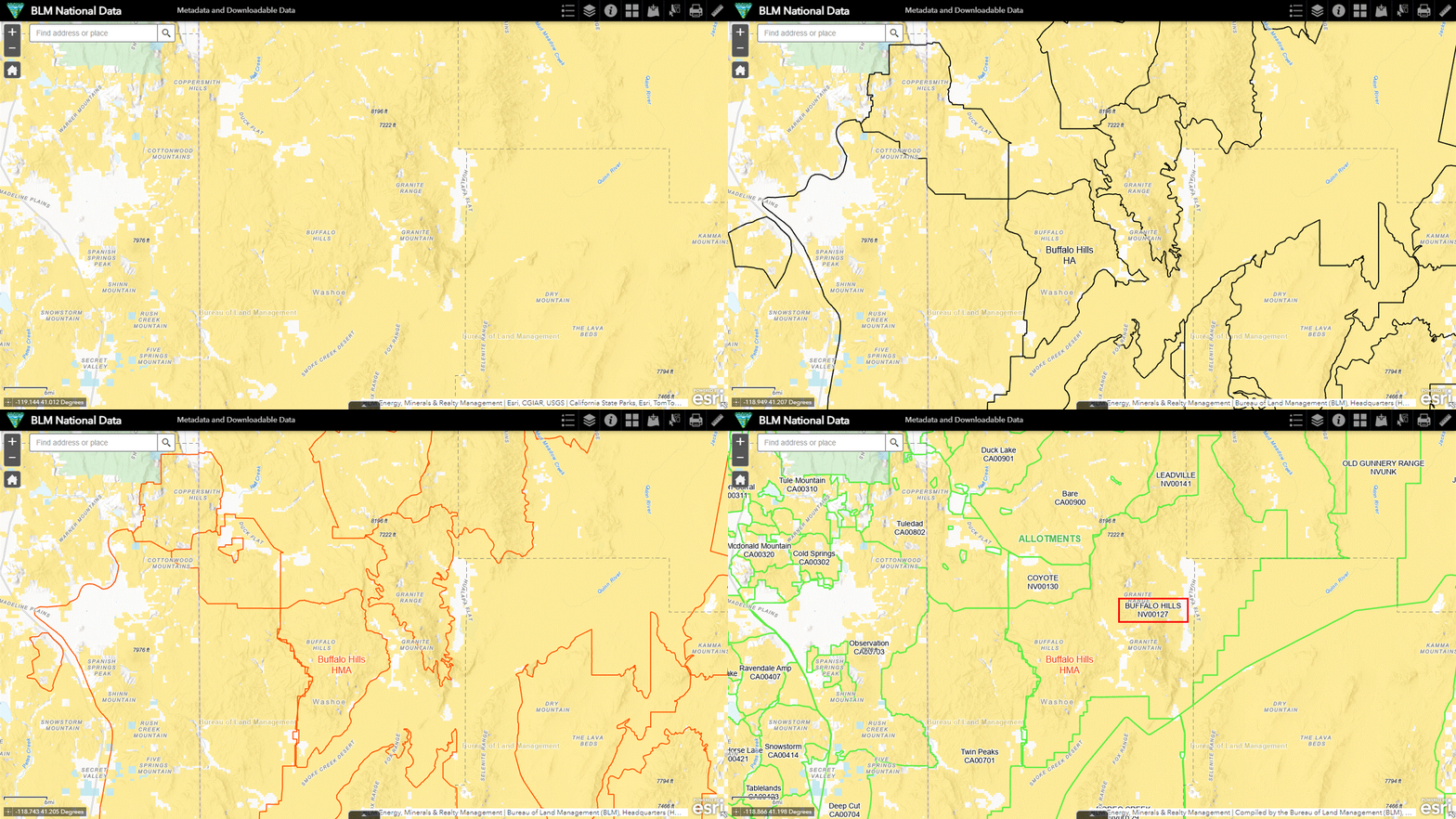
Blue Wing Roundup, Day 9

The incident started on July 8.  Results through July 16:

  • Scope: Blue Wing Complex
  • Target: Horses and burros
  • AML: 555 horses and 90 burros
  • Pre-gather population: 1,912 horses and 476 burros
  • Type: Planned
  • Method: Helicopter
  • Category: Cruel and costly (according to advocates)
  • Better way: Snuff out new life with PZP (according to advocates)
  • Goals
    • Horses: Gather 1,373 and remove 1,333
    • Burros: Gather 356 and remove 356
  • Captured
    • Horses: 357, up from 255 on Day 7
    • Burros: 360, no change from Day 7
  • Shipped
    • Horses: 293, up from 97 on Day 7
    • Burros: 353, no change from Day 7
  • Released
    • Horses: 1, no change from Day 7
    • Burros: None
  • Deaths
    • Horses: 8, up from 5 on Day 7
    • Burros: 8, no change from Day 7
  • Average daily take
    • Horses: 39.7
    • Burros: 40.9
  • Unaccounted-for animals
    • Horses: 55
    • Burros: -1
  • Snippet from statute: It is the policy of Congress that wild free-roaming horses and burros shall be protected from capture, branding, harassment, or death

The figures above are based on the daily reports.

Horses

A stallion was dispatched on Day 8 because of a club foot, a mare was put down for a leg deformity and another stallion was killed because of a fractured shoulder, boosting the death rate to 2.2%.

The capture total includes 138 stallions, 144 mares and 75 foals.

Youngsters represented 21% of the animals gathered.

Of the adults, 48.9% were male and 51.1% were female.

Body condition scores were not given.

Burros

The capture goal has been reached.

More burros were processed than caught, throwing the numbers out of balance.

CapturedShippedReleasedDead = 360 – 353 – 0 – 8 = -1

The death rate is 2.2%.

The capture total includes 186 jacks, 152 jennies and 22 foals.

Youngsters represented 6.1% of the animals gathered.

Of the adults, 55% were male and 45% were female.

General

The location of the trap site is not known.  Five HMAs are involved.

The Complex is subject to permitted grazing.  Resources liberated to date:

  • Forage: 6,432 AUMs per year
  • Water: 5,360 gallons per day

The June 3 schedule indicates that 40 mares will be treated with a fertility control pesticide but this is not acknowledged at the gather page.

There are no such plans for the burros.

The roundup supports three tenets of rangeland management.

RELATED: Blue Wing Roundup, Day 7.

Blue Wing Complex with Allotments 05-02-24

It’s Official: South Steens Roundup Set for August 15

A helicopter will push the horses into the trap and the incident will be open to public observation according to today’s news release.

The HMA covers 134,459 total acres, including 127,608 public acres, in southeastern Oregon.

The current population is thought to be 781 adults and 165 foals.

The 304 horses allowed by plan receive 3,648 AUMs per year, compared to 10,299 AUMs per year for livestock.

The True AML is 1,162.

The stocking rate allowed by plan is 2.4 wild horses per thousand public acres.

The stocking rate at the True AML would be 9.1 wild horses per thousand acres, which brings more embarrassment to the bureaucrats and ranchers, who claim that public lands in the western U.S. can only support one wild horse per thousand acres (27,000 animals on 27 million acres).

Horses identified for removal will be taken to the off-range corrals in Hines.

The roundup supports three tenets of rangeland management.

RELATED: South Steens Gather Page Doubles as News Release?

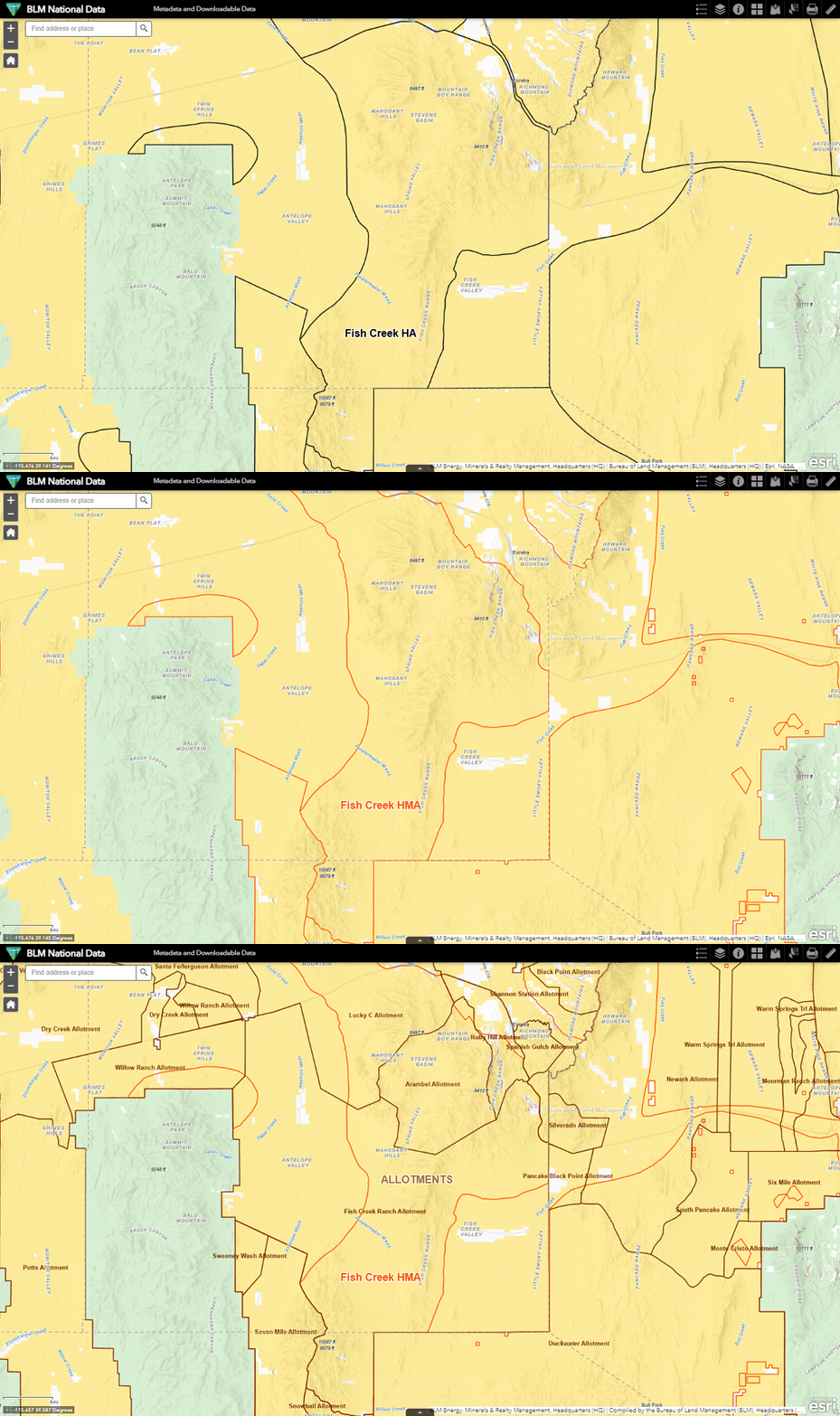
South Steens HMA with Allotments 07-11-24

South Steens Gather Page Doubles as News Release?

The subtitle says “Today the Bureau of Land Management announced tentative plans to gather wild horses within and immediately adjacent to the Souths Steens Herd Management Area in southeast Oregon.  A Determination of NEPA Adequacy is currently in progress and will determine gather implementation.”

The incident will be open to public observation unless the DNA, which was not announced, is successfully challenged.

The AML is 159 – 304.

The current population is 781 adults and 165 foals.

The June 3 schedule indicates that mares returned to the HMA will be treated with GonaCon but the DNA calls for PZP.

RELATED: South Steens DNA Out for Public Review.

UPDATE: News release published day after gather page.

North Lander Roundup, Day 15

The incident started on July 1.  Results through July 15:

  • Scope: North Lander Complex
  • Target: Horses
  • AML: 536
  • Pre-gather population: 3,035
  • True AML: 4,616
  • Type: Planned
  • Method: Helicopter
  • Category: Cruel and costly (according to advocates)
  • Better way: Sterilize mares with PZP (according to advocates)
  • Goals: Gather 2,766, remove 2,716
  • Captured: 2,247, up from 1,924 on Day 13
  • Shipped: 2,046, up from 1,661 on Day 13
  • Released: None
  • Deaths: 13, up from 10 on Day 13
  • Average daily take: 149.8
  • Unaccounted-for animals: 188

The figures above are based on the daily reports.

A mare died of a broken neck on Day 14 while being transported in a trailer.  Another mare died of a brain aneurysm but no details were given.  A foal was put down for a spinal deformity.

The death rate is 0.6%.

The capture total includes 876 stallions, 953 mares and 418 foals.

Youngsters represented 18.6% of the animals gathered, consistent with a herd growth rate of 13% per year.  Land managers often use a growth rate of 20% per year to predict herd sizes and management actions.

Of the adults, 47.9% were male and 52.1% were female.

Body condition scores were not given.

The location of the trap site is not known.

The Complex is subject to permitted grazing.  Resources liberated to date:

  • Forage: 26,964 AUMs per year
  • Water: 22,470 gallons per day

The June 3 schedule indicates that 20 mares will be treated with fertility control pesticides and returned to the range but this is not discussed at the gather page.

The roundup supports three tenets of rangeland management.

RELATED: North Lander Roundup, Day 13.

North Lander Allotments 06-27-24

Blue Wing Roundup, Day 7

The incident started on July 8.  Results through July 14:

  • Scope: Blue Wing Complex
  • Target: Horses and burros
  • AML: 555 horses and 90 burros
  • Pre-gather population: 1,912 horses and 476 burros
  • Type: Planned
  • Method: Helicopter
  • Category: Cruel and costly (according to advocates)
  • Better way: Snuff out new life with PZP (according to advocates)
  • Goals
    • Horses: Gather 1,373 and remove 1,333
    • Burros: Gather 356 and remove 356
  • Captured
    • Horses: 255, up from 94 on Day 5
    • Burros: 360, no change from Day 5
  • Shipped
    • Horses: 97, up from zero on Day 5
    • Burros: 353, up from 303 on Day 5
  • Released
    • Horses: 1, up from zero on Day 5
    • Burros: None
  • Deaths
    • Horses: 5, up from zero on Day 5
    • Burros: 8, no change from Day 5
  • Average daily take
    • Horses: 36.4
    • Burros: 51.4
  • Unaccounted-for animals
    • Horses: 152
    • Burros: -1
  • Snippet from statute: It is the policy of Congress that wild free-roaming horses and burros shall be protected from capture, branding, harassment, or death

The figures above are based on the daily reports.

Horses

A stallion was released (or escaped) on Day 7.

Two stallions were dispatched on Day 6, one due to injuries sustained in capture and the other due to a pre-existing condition.  Two stallions and a mare were put down on Day 7 for pre-existing conditions, lifting the death rate to 2%.  All would be alive today if there was no roundup.

The capture total includes 103 stallions, 99 mares and 53 foals.

Youngsters represented 20.8% of the animals gathered.

Of the adults, 51% were male and 49% were female.

Body condition scores were not given.

Burros

More burros were processed than caught, throwing the numbers out of balance.

CapturedShippedReleasedDead = 360 – 353 – 0 – 8 = -1

The death rate is 2.2%.

The capture total includes 186 jacks, 152 jennies and 22 foals.

Youngsters represented 6.1% of the animals gathered.

Of the adults, 55% were male and 45% were female.

General

The location of the trap site is not known.  Five HMAs are involved.

The Complex is subject to permitted grazing.  Resources liberated to date:

  • Forage: 5,208 AUMs per year
  • Water: 4,340 gallons per day

The June 3 schedule indicates that 40 mares will be treated with a fertility control pesticide but this is not mentioned at the gather page.

There are no such plans for the burros.

The roundup supports three tenets of rangeland management.

RELATED: Blue Wing Roundup, Day 5.

Blue Wing Complex with Allotments 05-02-24

North Lander Roundup, Day 13

The incident started on July 1.  Results through July 13:

  • Scope: North Lander Complex
  • Target: Horses
  • AML: 536
  • Pre-gather population: 3,035
  • True AML: 4,616
  • Type: Planned
  • Method: Helicopter
  • Category: Cruel and costly (according to advocates)
  • Better way: Sterilize mares with PZP (according to advocates)
  • Goals: Gather 2,766, remove 2,716
  • Captured: 1,924, up from 1,640 on Day 11
  • Shipped: 1,661, up from 1,461 on Day 11
  • Released: None
  • Deaths: 10, no change from Day 11
  • Average daily take: 148.0
  • Unaccounted-for animals: 253

The figures above are based on the daily reports.

The death rate is 0.5%.

The capture total includes 760 stallions, 812 mares and 352 foals.

Youngsters represented 18.3% of the animals gathered, consistent with a herd growth rate of 13% per year.

Land managers often use a growth rate of 20% per year to predict herd sizes and management actions.

Of the adults, 48.3% were male and 51.7% were female.

Body condition scores were not given.

The location of the trap site is not known.

The Complex is subject to permitted grazing.  Resources liberated to date:

  • Forage: 23,088 AUMs per year
  • Water: 19,240 gallons per day

The June 3 schedule indicates that 20 mares will be treated with fertility control pesticides and returned to the range but this is not discussed at the gather page.

The roundup supports three tenets of rangeland management.

RELATED: North Lander Roundup, Day 11.

North Lander Allotments 06-27-24

Blue Wing Roundup, Day 5

The incident started on July 8.  Results through July 12:

  • Scope: Blue Wing Complex
  • Target: Horses and burros
  • AML: 555 horses and 90 burros
  • Pre-gather population: 1,912 horses and 476 burros
  • Type: Planned
  • Method: Helicopter
  • Category: Cruel and costly (according to advocates)
  • Better way: Snuff out new life with PZP (according to advocates)
  • Goals
    • Horses: Gather 1,373 and remove 1,333
    • Burros: Gather 356 and remove 356
  • Captured
    • Horses: 94, up from zero on Day 3
    • Burros: 360, up from 308 on Day 3
  • Shipped
    • Horses: None
    • Burros: 303, up from 108 on Day 3
  • Released
    • Horses: None
    • Burros: None
  • Deaths
    • Horses: None
    • Burros: 8, up from 6 on Day 3
  • Average daily take
    • Horses: 18.8
    • Burros: 72.0
  • Unaccounted-for animals
    • Horses: 94
    • Burros: 49
  • Snippet from statute: It is the policy of Congress that wild free-roaming horses and burros shall be protected from capture, branding, harassment, or death

The figures above are based on the daily reports.

Horses

Capture began on Day 5.

The capture total includes 39 stallions, 36 mares and 19 foals.

Youngsters represented 20.2% of the animals gathered.

Of the adults, 52% were male and 48% were female.

Burros

A jenny died of colic on Day 5.  Location unknown.

Another jenny was found dead in a truck when it arrived at Indian Lakes.

The death rate is 2.2%.

The capture total includes 186 jacks, 152 jennies and 22 foals.

Youngsters represented 6.1% of the animals gathered.

Of the adults, 55% were male and 45% were female.

General

The location of the trap site was not given.  Five HMAs are involved.

The Complex is subject to permitted grazing.  Resources liberated to date:

  • Forage: 3,288 AUMs per year
  • Water: 2,740 gallons per day

The June 3 schedule indicates that 40 mares will be treated with a fertility control pesticide but this is not mentioned at the gather page.

There are no such plans for the burros.

The roundup supports three tenets of rangeland management.

RELATED: Blue Wing Roundup, Day 3.

Blue Wing Complex with Allotments 05-02-24

CBD Targets Arizona Allotments

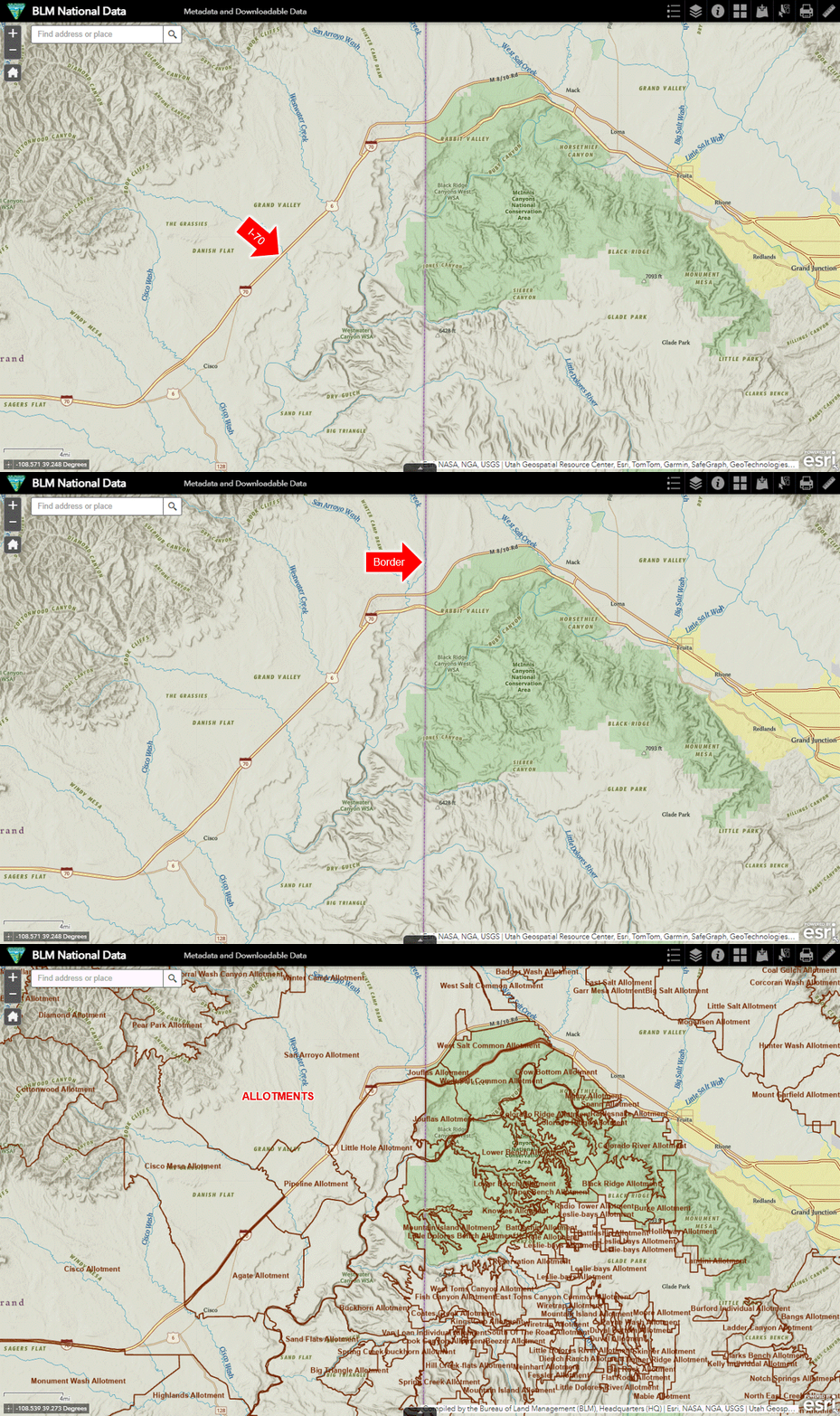
The complaint alleges that permitted grazing in three BLM allotments has threatened endangered species in riparian areas along the Big Sandy River.

The news release said the agency’s failure to control illegal grazing turns streams and streamside habitats into trampled cesspools.

The allotments overlap the Big Sandy HMA, an area set aside for wild burros.

Those animals were not named in the suit and the announcement suggested they had only a minor role in the damage.

The National Data Viewer shows the arrangement.

The Allotment Master Report puts all three in the Improve category.

Big Sandy Allotments 07-12-24

Chincoteague Pony Swim Set for July 24

The auction occurs on July 25 and the return swim happens the next day according to a story by Chesapeake Bay Magazine.

The herd consists of roughly 150 adult wild ponies and 60 to 70 foals living on the Virginia side of Assateague Island, not to be confused with the Maryland side, where death has overtaken life thanks to the Montana Solution.

Download the poster at fire company home page.

Foal-Free Friday, Inmates Running the Asylum Edition

Look at the bios for the Colorado Wild Horse Working Group.

  • TJ Holmes, head darter in charge at Spring Creek Basin
  • Judy Cady of Friends of the Mustangs, purveyor of pesticides at Little Book Cliffs
  • Kathy DeGonia, one of the GonaCon gals at Piceance East Douglas
  • Stella Trueblood, PZP fanatic at Sand Wash Basin
  • Tessa Archibald, trained PZP darter
  • Sandra Hagen Solin, representative of CAAWH, a leader in mass sterilization

The group also includes bureaucrats, ranchers and ranching sympathizers.

The horses don’t have a chance.

Do you think anybody on the team would put forward a motion to buy a base property and repurpose its allotment for wild horses?

RELATED: Foal-Free Friday, Go Big or Go Home Edition.

Working Together for a Horse-Free Future 12-21-22

North Lander Roundup, Day 11

The incident started on July 1.  Results through July 11:

  • Scope: North Lander Complex
  • Target: Horses
  • AML: 536
  • Pre-gather population: 3,035
  • True AML: 4,616
  • Type: Planned
  • Method: Helicopter
  • Category: Cruel and costly (according to advocates)
  • Better way: Sterilize mares with PZP (according to advocates)
  • Goals: Gather 2,766, remove 2,716
  • Captured: 1,640, up from 1,317 on Day 9
  • Shipped: 1,461, up from 1,138 on Day 9
  • Released: None
  • Deaths: 10, no change from Day 9
  • Average daily take: 149.1
  • Unaccounted-for animals: 169

The figures above are based on the daily reports.

The death rate is 0.6%.

The capture total includes 636 stallions, 703 mares and 301 foals.

Youngsters represented 18.4% of the animals gathered, consistent with a herd growth rate of 13% per year.

Land managers often use a growth rate of 20% per year to predict herd sizes and management actions.

Of the adults, 47.5% were male and 52.5% were female.

Body condition scores were not given.

The location of the trap site is not known.

The Complex is subject to permitted grazing.  Resources liberated to date:

  • Forage: 19,680 AUMs per year
  • Water: 16,400 gallons per day

The June 3 schedule indicates that 20 mares will be treated with fertility control pesticides and returned to the range but this is not discussed at the gather page.

The roundup supports three tenets of rangeland management.

RELATED: North Lander Roundup, Day 9.

North Lander Allotments 06-27-24

Blue Wing Roundup, Day 3

The incident started on July 8.  Results through July 10:

  • Scope: Blue Wing Complex
  • Target: Horses and burros
  • AML: 555 horses and 90 burros
  • Pre-gather population: 1,912 horses and 476 burros
  • Type: Planned
  • Method: Helicopter
  • Category: Cruel and costly (according to advocates)
  • Better way: Snuff out new life with PZP (according to advocates)
  • Goals
    • Horses: Gather 1,373 and remove 1,333
    • Burros: Gather 356 and remove 356
  • Captured
    • Horses: None
    • Burros: 308, up from 144 on Day 1
  • Shipped
    • Horses: None
    • Burros: 108, up from zero on Day 1
  • Released
    • Horses: None
    • Burros: None
  • Deaths
    • Horses: None
    • Burros: 6, up from zero on Day 1
  • Average daily take
    • Horses: Zero
    • Burros: 102.7
  • Unaccounted-for animals
    • Horses: Zero
    • Burros: 194
  • Snippet from statute: It is the policy of Congress that wild free-roaming horses and burros shall be protected from capture, branding, harassment, or death

The figures above are based on the daily reports.

Horses

No horses have been caught.

Burros

A jenny was found dead in a trailer on Day 2 and four animals were dispatched for pre-existing conditions.

A jack was put down on Day 3 for severe arthritis, boosting the death rate to 1.9%.

The capture total includes 159 jacks, 132 jennies and 17 foals.

Youngsters represented 5.5% of the animals gathered.

Of the adults, 54.6% were male and 45.4% were female.

General

The location of the trap site was not given.  Five HMAs are involved.

The Complex is subject to permitted grazing.  Resources liberated to date:

  • Forage: 1,848 AUMs per year
  • Water: 1,540 gallons per day

The June 3 schedule indicates that 40 mares will be treated with a fertility control pesticide but this is not mentioned at the gather page.

There are no such plans for the burros.

The roundup supports three tenets of rangeland management.

RELATED: Blue Wing Roundup in Progress.

Blue Wing Complex with Allotments 05-02-24

South Steens DNA Out for Public Review

The document asserts that the 2015 EA for pest control and resource enforcement fully covers the Proposed Action, which will take 90% of the horses off the HMA and return a small subset, including mares treated with PZP, leaving the remnant at low end of AML.

The current population is thought to be 889.

The roundup is on the June 3 schedule with a start date of August 15.

Comments will be accepted through July 19.

The draft DNA was copied to the project folder in ePlanning.

South Steens HMA with Allotments 07-11-24

ISPMB Learned About PZP the Hard Way

The organization applied the pesticide to two of its four herds, believing that permanent sterility would not occur until seven years of repeated use.

Mares in the Catnip herd (from Sheldon NWR) became infertile after five years.

Application to the Virginia Range herd was stopped at four years.

Four years later, nine out of approximately 36 Virginia Range mares began to cycle again and have foals.

Of those, seven did not survive.

Six died within the first day of birth while a colt died at six months.

He appeared to be a “failure to thrive” foal; thin, retaining a heavy thick coat in the heat of the summer, and suffered from malaise.

On one occasion, a filly was accidentally darted and was observed for several years.

She never became pregnant, while her untreated cohorts were able to get pregnant.

All conditions were the same regarding hay, water and space.  The only difference was her inoculation with PZP.

These and other such cases, such as the disaster on the Maryland side of Assateague Island, where the herd is still shrinking eight years after the darting program was shut off, give you a method for judging the sincerity and veracity of the wild horse advocates.

Most will fail the test.

Studies of the four herds ended in 2016 with the ISPMB collapse.

Adapted from the discussion at the bottom of page 41 in this report.

RELATED: Assessing the Risk of Sterility in PZP Darting Programs.

Pesticide Pushers 07-17-23

Advocates Discuss Better Way (to Get Rid of Wild Horses)

In this video, Walker and Netherlands argue that snuffing out 600 new lives, ruining the mares and driving the breeding population into the single digits has saved the Salt River herd.

Both women are PZP adherents and close supporters of the Campaign Against America’s Wild Horses, a leader in nonmotorized removal.

The disaster on the Maryland side of Assateague Island, where the same technique was applied, was not discussed.

That herd is still shrinking eight years after the darting program was shut off.

Despite this, they claim the pesticide is safe and reversible.

They can apply it as long as they want, stop the treatments whenever they want, and the mares will regain fertility.

It’s possible they could bear fruit after six or seven darts if they have weak immune systems and didn’t respond to the treatments in the first place.

Otherwise they’re toast.

RELATED: Putting the CBD Lawsuit in Perspective.

North Lander Roundup, Day 9

The incident started on July 1.  Results through July 9:

  • Scope: North Lander Complex
  • Target: Horses
  • AML: 536
  • Current population: 3,035
  • True AML: 4,616
  • Type: Planned
  • Method: Helicopter
  • Category: Cruel and costly (according to advocates)
  • Better way: Sterilize mares with PZP (according to advocates)
  • Goals: Gather 2,766, remove 2,716
  • Captured: 1,317, up from 1003 on Day 7
  • Shipped: 1,138, up from 800 on Day 7
  • Released: None
  • Deaths: 10, up from 6 on Day 7
  • Average daily take: 146.3
  • Unaccounted-for animals: 169

The figures above are based on the daily reports.

Two foals died in temporary holding on Day 9 due capture myopathy, a condition that needs explanation.  Two stallions were dispatched for pre-existing, but not necessarily life-threatening, conditions.

The death rate, rising slowly but steadily since Day 1, is 0.8%.

The capture total includes 524 stallions, 550 mares and 243 foals.

Youngsters represented 18.5% of the animals gathered, consistent with a herd growth rate of 13% per year.

Land managers often use a growth rate of 20% per year to predict herd sizes and management actions.

Of the adults, 48.8% were male and 51.2% were female.

Body condition scores were not given.

The location of the trap site is not known.

The Complex is subject to permitted grazing.  Resources liberated to date:

  • Forage: 15,804 AUMs per year
  • Water: 13,170 gallons per day

The June 3 schedule indicates that 20 mares will be treated with fertility control pesticides and returned to the range but this is not discussed at the gather page.

The roundup supports three tenets of rangeland management.

RELATED: North Lander Roundup, Day 7.

North Lander Allotments 06-27-24

Tipping the Wild Horse Scales on America’s Public Lands

A reporter at 9News of Denver looks at current efforts, which will likely result in more wild horses off the range than on.

As for the advocates, they’ve concluded that the ranchers should have the lion’s share of the resources and that the horses would be better off if they weren’t even born.

Walker is a PZP adherent and close supporter of the Campaign Against America’s Wild Horses, a leader in mass sterilization.

RELATED: FY24 to See More Horses and Burros Off the Range Than On?