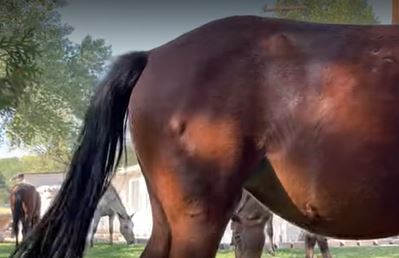
Pryor Management Plan Moves to Protest Stage

The Final EA and unsigned FONSI were copied to the project folder on November 15, along with 19 appendices, initiating a 30-day protest period.

Protests are usually limited to those who participated in the planning process but this is not stated in the BLM news release.

No decisions have been issued.

Under Alternative 2, the Proposed Action, the AML would be set at 107 to 120 horses, excluding foals less than one year of age.  The current range is 90 to 120.

Herd size would be limited by removals, fertility control, natural means or a combination thereof.

ZonaStat-H would remain the preferred method.

Mares that don’t respond would be treated with GonaCon-Equine or other approved product or be removed from the HMA.

These and other objectives would be documented in a new HMAP, discussed in Section 2.3.1 of the EA.

The Billings RMP would be amended to improve genetic diversity but not at the expense of rangeland health.  This may include the introduction of horses from other areas, as explained in Section 1.5.1.

The upper end of the AML corresponds to the maximum number of horses that the range can support without deterioration, according to Appendix C.  The lower end represents the population that will grow to the upper limit in four to five years.

The new AML of 107 to 120 implies a 2.4% annual growth rate over five years, suggesting the mares will be heavily “sedated” with pesticides if they aren’t already.

RELATED: Draft EA Released for Pryor Mountain RMP Update.

Triple B Roundup, Day 17

The incident started on November 2.  Results through November 18:

  • Scope: Triple B Complex
  • Target: Wild horses
  • AML: 889
  • Pre-gather population: 3,335
  • True AML: 4,551
  • Type: Planned
  • Method: Helicopter
  • Category: Cruel and costly (according to advocates)
  • Better way: Sterilize mares with PZP (according to advocates)
  • Capture goal: 2,255
  • Removal goal: 2,155
  • Captured: 1,351, up from 1,086 on Day 15
  • Shipped: 1,150, up from 904 on Day 15
  • Released: 20, no change from Day 15
  • Deaths: 13, up from 11 on Day 15
  • Average daily take: 79.5
  • Unaccounted-for animals: 168
  • Snippet from statute: It is the policy of Congress that wild free-roaming horses and burros shall be protected from capture, branding, harassment, or death
  • Snippet from manual: To protect wild horses and burros from unauthorized capture, branding, harassment or death

The figures above are based on the daily reports.

The sidebar says 1,153 shipped.

Two stallions were dispatched on Day 16.  The death rate is 1.0%.

The capture total includes 530 stallions, 519 mares and 302 foals.

Youngsters represented 22.4% of the animals gathered, consistent with a herd growth rate of 17% per year.

Of the adults, 50.5% were male and 49.5% were female, no indication of an abnormal sex ratio.

Body condition scores were not given.

The location of the trap site was not disclosed.

The name of the contractor was not provided.

Three HMAs are affected.

Twelve mares have been treated with GonaCon EquineThe plan calls for up to 50 to receive the pesticide and be returned to the range with up to 50 stallions.

The roundup supports three tenets of rangeland management.

Resources liberated to date:

  • Forage: 15,972 AUMs per year
  • Water: 13,310 gallons per day

RELATED: Triple B Roundup, Day 15.

Triple B Complex with Allotments 11-04-24

Buffalo Hills Roundup, Day 3

The incident started on November 15.  Results through November 17:

  • Scope: Buffalo Hills HMA
  • Target: Wild horses and burros
  • AML: 314 horses, no burros
  • Pre-gather population: 314 horses, 33 burros
  • True AML: 408 horses
  • Type: Planned
  • Method: Helicopter
  • Category: Cruel and costly (according to advocates)
  • Better way: Sterilize mares with PZP (according to advocates)
  • Capture goal: 235 horses, 33 burros
  • Removal goal: 32 horses, 33 burros
  • Horses captured: 66, up from zero on Day 1
  • Burros captured: 33, no change from Day 1
  • Horses shipped: None
  • Burros shipped: 33, no change from Day 1
  • Horses released: None
  • Burros released: None
  • Horse deaths: 1, up from zero on Day 1
  • Burro deaths: None
  • Average daily take: 22.0 horses
  • Unaccounted-for animals: 65 horses, zero burros
  • Snippet from statute: It is the policy of Congress that wild free-roaming horses and burros shall be protected from capture, branding, harassment, or death
  • Snippet from manual: To protect wild horses and burros from unauthorized capture, branding, harassment or death

The figures above are based on the daily reports.

Burros

The capture goal has been reached.

All animals have been shipped.

There were no deaths.

The capture total includes 5 jacks, 21 jennies and 7 foals.

Horses

A death was reported on Day 3, presumably a horse.  No details were given.

The death rate is 1.5%.

The capture total includes 29 stallions, 28 mares and 9 foals.

Youngsters represented 13.6% of the animals gathered.

Of the adults, 50.9% were male and 49.1% were female.

Body condition scores were not given.

The location of the trap site was not disclosed.

The name of the contractor was not provided.

Up to 100 mares will be treated with GonaCon Equine and released back to the range with up to 103 stallions.

The roundup supports three tenets of rangeland management.

Resources liberated to date (based on horses and burros):

  • Forage: 990 AUMs per year
  • Water: 825 gallons per day

RELATED: Buffalo Hills Roundup Begins.

Buffalo Hills HMA with Allotments 10-02-24

How Many Wild Horses Can the Buffalo Hills HMA Support?

The HMA lies within the Buffalo Hills Allotment, overlapping 27.6% of the parcel according to Table 5 of the Final EA for pest control and resource enforcement in the Smoke Creek Complex.

The 314 horses allowed by plan require 3,768 AUMs per year.

The allotment offers 4,114 active AUMs on 440,982 public acres.

If the resource is evenly distributed across the allotment, livestock inside the HMA, the lawful home of wild horses, receive an estimated .276 × 4,114 = 1,135 AUMs per year, enough to support 94 wild horses.

Therefore, the True AML would be 314 + 94 = 408, to be achieved by confining the ranchers to their base properties in a year-round off season.

The HMA covers 125,207 public acres so the stocking rate at the new AML would be 408 ÷ 125,207 × 1,000 = 3.3 wild horses per thousand public acres.

This brings more embarrassment to the bureaucrats and ranchers, who claim that public lands in the western U.S. can only sustain one wild horse per thousand public acres (27,000 animals on 27 million acres).

RELATED: Buffalo Hills Wild Horses Better Off Than Permittees.

Buffalo Hills HMA with Allotments 10-02-24

Triple B Roundup, Day 15

The incident started on November 2.  Results through November 16:

  • Scope: Triple B Complex
  • Target: Wild horses
  • AML: 889
  • Pre-gather population: 3,335
  • True AML: 4,551
  • Type: Planned
  • Method: Helicopter
  • Category: Cruel and costly (according to advocates)
  • Better way: Sterilize mares with PZP (according to advocates)
  • Capture goal: 2,255
  • Removal goal: 2,155
  • Captured: 1,086, up from 937 on Day 13
  • Shipped: 904, no change from Day 13
  • Released: 20, no change from Day 13
  • Deaths: 11, up from 10 on Day 13
  • Average daily take: 72.4
  • Unaccounted-for animals: 151
  • Snippet from statute: It is the policy of Congress that wild free-roaming horses and burros shall be protected from capture, branding, harassment, or death
  • Snippet from manual: To protect wild horses and burros from unauthorized capture, branding, harassment or death

The figures above are based on the daily reports.

The sidebar says 907 shipped.

No activity was reported on Day 14.

A stallion died of a fractured neck on Day 15.  The death rate is 1.0%.

The capture total includes 424 stallions, 418 mares and 244 foals.

Youngsters represented 22.5% of the animals gathered, consistent with a herd growth rate of 17% per year.

Of the adults, 50.4% were male and 49.6% were female, no indication of an abnormal sex ratio.

Body condition scores were not given.

The location of the trap site was not disclosed.

The name of the contractor was not provided.

Three HMAs are affected.

Twelve mares were treated with GonaCon Equine and released on Day 9.  The number of doses is not known.

In 2017 the EPA set the interval between treatments at 90 days but the BLM wants it changed to 7 days.  A search for an updated registration yielded no new results.

The plan calls for up to 50 mares to receive the pesticide and be returned to the range with up to 50 stallions.

The roundup supports three tenets of rangeland management.

Resources liberated to date:

  • Forage: 12,792 AUMs per year
  • Water: 10,660 gallons per day

RELATED: Triple B Roundup, Day 13.

Triple B Complex with Allotments 11-04-24

Who Benefits from Cheatgrass Mitigation Projects?

On November 8, the Moab Field Office announced it would spray approximately 13,000 acres of cheatgrass near the Utah-Colorado border in the desert adjacent to I-70.

BLM staff will wait two growing seasons before applying native seed to the treated area.

The project was billed as fuels reduction.

No map was given.

A link to the NEPA analysis was not provided.

Why would you remove one type of vegetation and replace it with another if you’re trying to prevent wildfires?

The National Data Viewer shows the area is covered with grazing allotments.

Moab Cheatgrass Mitigation 11-16-24

Forest Service Starts Work on Prineville Adoption Center

A nonprofit specializing in the restoration of historic structures on public lands is converting the former headquarters of the Crooked River National Grasslands into a facility that places Big Summit wild horses into private care.

Renovations should be complete next year, according to a report by The Bulletin of Bend, OR, clearing the way for a roundup.

RELATED: Big Summit Roundup Delayed as Forest Service Builds New Corrals.

Triple B Roundup, Day 13

The incident started on November 2.  Results through November 14:

  • Scope: Triple B Complex
  • Target: Wild horses
  • AML: 889
  • Pre-gather population: 3,335
  • True AML: 4,551
  • Type: Planned
  • Method: Helicopter
  • Category: Cruel and costly (according to advocates)
  • Better way: Sterilize mares with PZP (according to advocates)
  • Capture goal: 2,255
  • Removal goal: 2,155
  • Captured: 937, up from 883 on Day 11
  • Shipped: 904, up from 659 on Day 11
  • Released: 20, up from 18 on Day 11
  • Deaths: 10, no change from Day 11
  • Average daily take: 72.1
  • Unaccounted-for animals: 3
  • Snippet from statute: It is the policy of Congress that wild free-roaming horses and burros shall be protected from capture, branding, harassment, or death
  • Snippet from manual: To protect wild horses and burros from unauthorized capture, branding, harassment or death

The figures above are based on the daily reports.

The sidebar says 907 shipped.  If that figure is used, there would be no unaccounted-for animals, suggesting that operations have moved to another area.

No horses were taken on Day 13.  Two stallions were released.

The death rate is 1.1%.

The capture total includes 358 stallions, 366 mares and 213 foals.

Youngsters represented 22.7% of the animals gathered, consistent with a herd growth rate of 17% per year.

Of the adults, 49.4% were male and 50.6% were female, no indication of an abnormal sex ratio.

Body condition scores were not given.

The location of the trap site was not disclosed.

The name of the contractor was not provided.

Three HMAs are affected.

Up to 50 mares will be treated with GonaCon Equine and returned to the range with up to 50 stallions.

The number of doses and the interval between treatments were not specified, leaving open the possibility that the Complex becomes the next GonaCon crime scene.

The roundup supports three tenets of rangeland management.

Resources liberated to date:

  • Forage: 11,004 AUMs per year
  • Water: 9,170 gallons per day

RELATED: Triple B Roundup, Day 11.

Triple B Complex with Allotments 11-04-24

Triple B Roundup, Day 11

The incident started on November 2.  Results through November 12:

  • Scope: Triple B Complex
  • Target: Wild horses
  • AML: 889
  • Pre-gather population: 3,335
  • True AML: 4,551
  • Type: Planned
  • Method: Helicopter
  • Category: Cruel and costly (according to advocates)
  • Better way: Sterilize mares with PZP (according to advocates)
  • Capture goal: 2,255
  • Removal goal: 2,155
  • Captured: 883, up from 723 on Day 9
  • Shipped: 659, up from 615 on Day 9
  • Released: 18, no change from Day 9
  • Deaths: 10, up from 8 Day 9
  • Average daily take: 80.3
  • Unaccounted-for animals: 196
  • Snippet from statute: It is the policy of Congress that wild free-roaming horses and burros shall be protected from capture, branding, harassment, or death
  • Snippet from manual: To protect wild horses and burros from unauthorized capture, branding, harassment or death

The figures above are based on the daily reports.

The Day 3 report still shows 122 horses shipped but the breakdown yields 120.

No horses were taken on Day 10.  Capture activity may have moved to another area or weather conditions were unfavorable.

A stallion was dispatched on Day 10 because of club feet and another for tooth loss.

The death rate is 1.1%.

The capture total includes 342 stallions, 344 mares and 197 foals.

Youngsters represented 22.3% of the animals gathered, consistent with a herd growth rate of 17% per year.

Of the adults, 49.9% were male and 50.1% were female, no indication of an abnormal sex ratio.

Body condition scores were not given.

The location of the trap site was not disclosed.

The name of the contractor was not provided.

Three HMAs are affected.

Up to 50 mares will be treated with GonaCon Equine and returned to the range with up to 50 stallions.

The number of doses and the interval between treatments were not specified, leaving open the possibility that the Complex becomes the next GonaCon crime scene.

The roundup supports three tenets of rangeland management.

RELATED: Triple B Roundup, Day 9.

Triple B Complex with Allotments 11-04-24

Triple B Roundup, Day 9

The incident started on November 2.  Results through November 10:

  • Scope: Triple B Complex
  • Target: Wild horses
  • AML: 889
  • Pre-gather population: 3,335
  • True AML: 4,551
  • Type: Planned
  • Method: Helicopter
  • Category: Cruel and costly (according to advocates)
  • Better way: Sterilize mares with PZP (according to advocates)
  • Capture goal: 2,255
  • Removal goal: 2,155
  • Captured: 723, up from 614 on Day 7
  • Shipped: 615, up from 371 on Day 7
  • Released: 18, up from zero on Day 7
  • Deaths: 8, up from 4 on Day 7
  • Average daily take: 80.3
  • Unaccounted-for animals: 82
  • Snippet from statute: It is the policy of Congress that wild free-roaming horses and burros shall be protected from capture, branding, harassment, or death
  • Snippet from manual: To protect wild horses and burros from unauthorized capture, branding, harassment or death

The figures above are based on the daily reports.

The Day 3 report still shows 122 horses shipped but the breakdown yields 120.

Eighteen horses were released on Day 9.  No details were given.

A stallion died suddenly on Day 9 after breaking his leg and a mare died suddenly after breaking her neck.  Two mares were dispatched because of leg injuries, boosting the death rate to 1.1%.

The capture total includes 270 stallions, 295 mares and 158 foals.

Youngsters represented 21.9% of the animals gathered, consistent with a herd growth rate of 17% per year.

Of the adults, 47.8% were male and 52.2% were female, no indication of an abnormal sex ratio.

Body condition scores were not given.

The location of the trap site was not disclosed.

The name of the contractor was not provided.

Three HMAs are affected.

Up to 50 mares will be treated with GonaCon Equine and returned to the range with up to 50 stallions.

The number of doses and the interval between treatments were not specified, leaving open the possibility that the Complex becomes the next GonaCon crime scene.

The roundup supports three tenets of rangeland management.

RELATED: Triple B Roundup, Day 7.

Triple B Complex with Allotments 11-04-24

Triple B Roundup, Day 7

The incident started on November 2.  Results through November 8:

  • Scope: Triple B Complex
  • Target: Wild horses
  • AML: 889
  • Pre-gather population: 3,335
  • True AML: 4,551
  • Type: Planned
  • Method: Helicopter
  • Category: Cruel and costly (according to advocates)
  • Better way: Sterilize mares with PZP (according to advocates)
  • Capture goal: 2,255
  • Removal goal: 2,155
  • Captured: 614, up from 319 on Day 5
  • Shipped: 371, up from 246 on Day 5
  • Released: None
  • Deaths: 4, up from 3 on Day 5
  • Average daily take: 87.7
  • Unaccounted-for animals: 239
  • Snippet from statute: It is the policy of Congress that wild free-roaming horses and burros shall be protected from capture, branding, harassment, or death
  • Snippet from manual: To protect wild horses and burros from unauthorized capture, branding, harassment or death

The figures above are based on the daily reports.

The Day 3 report still shows 122 horses shipped but the breakdown yields 120.

A stallion was dispatched on Day 6 due to severe swayback.

The death rate is 0.7%.

The capture total includes 240 stallions, 250 mares and 124 foals.

Youngsters represented 20.2% of the animals gathered, consistent with a herd growth rate of 15% per year.

Of the adults, 49.0% were male and 51.0% were female, within the expected range of variation from a random process centered at 50% males / 50% females.

Body condition scores were not given.

The location of the trap site was not disclosed.

The name of the contractor was not provided.

Three HMAs are affected.

Up to 50 mares will be treated with GonaCon Equine and returned to the range with up to 50 stallions.

The number of doses and the interval between treatments were not specified, leaving open the possibility that the Complex becomes the next GonaCon crime scene.

The roundup supports three tenets of rangeland management.

RELATED: Triple B Roundup, Day 5.

Triple B Complex with Allotments 11-04-24

Lakeview EIS, RMP Amendment Almost Complete

The project is now in the protest stage.

Only those who participated in the planning process are eligible to comment according to the news release.

The planning area includes the Paisley Desert and Beatys Butte HMAs, according to the HMA-1 map.

Of interest in Section 3.10.1.1 of Appendix 12 (page 201 in the pdf) are these figures:

  • 127 allotments in the planning area
  • 164,471 active AUMs
  • 2,960,285 public acres

The Lakeview allotments support livestock equivalent to 13,706 wild horses, or 4.6 wild horses per thousand public acres.

Our faithful public servants tell us that public lands in the western U.S. can only support one wild horse per thousand acres (27,000 animals on 27 million acres).

The advocates bolster the narrative with their darting programs.

Thay want the ranchers to win.

Buffalo Hills Roundup Set for Next Week

The incident, billed as catch-treat-release in the October 31 schedule, will begin on or about November 15 according to today’s news release.

The capture goals are 235 wild horses and 33 wild burros.

The removal goals are 32 wild horses and 33 wild burros.

Up to 100 mares with be treated with GonaCon Equine before being returned to the HMA with up to 103 stallions.

The announcement did not indicate if they would receive two doses and if they’d be given 90 days apart as specified on the label.

The BLM typically gives two doses 30 days apart, which constitutes unlawful use of the pesticide.

A helicopter will push the animals into the trap and operations will be open to public observation.

The pre-gather population is thought to be 314 wild horses and 33 wild burros.

The management plan allows 314 horses and no burros.

Animals identified for removal will be taken to the off-range corrals at Palomino Valley.

The HMA, on the east side of Twin Peaks, lies within the Buffalo Hills Allotment.

RELATED: Buffalo Hills Decision Issued.

Buffalo Hills HMA with Allotments 10-02-24

Foal-Free Friday, Army of Nitwits Edition

The Campaign Against America’s Wild Horses tries to market itself as a leader in wild horse conservation, evident in Google search results.

CAAWH Search Result 1 11-07-24

In reality, its leaders are obsessed with PZP, a restricted-use pesticide that tricks the immune system into attacking the ovaries.

CAAWH Search Result 2 11-07-24

They protect ranchers, not wild horses.

They oppose principal use and management at the minimum feasible level.

They want to replace motorized removal with mass sterilization.

None of this would be possible without a cadre of nefarious leaders and an army of ill-informed donors and volunteers.

RELATED: Foal-Free Friday, Strange But True Edition.

Pesticide Pushers 07-17-23

Fish Creek DNA Out for Review

A new project has been opened in ePlanning and the Draft DNA was copied to the documents folder for public review.

Comments will be accepted through December 7 according to today’s news release.

A 2015 Decision Record authorized the Proposed Action discussed in Section 2.2.1 of a 2015 Final EA.

A roundup at the Fish Creek HMA appears on the October 31 schedule with a start date of January 6.  The incident was billed as catch-treat-release and the pesticide of choice is GonaCon Equine.

The DNA asserts that the 2015 analysis fully covers the 2025 roundup and satisfies the requirements of NEPA.

A search of the 2015 EA for “gona” yielded no results, while searches for “zona” and “pzp” yielded numerous results.

Thus, the plan to apply GonaCon in January was not addressed in the original analysis and the assertion in the DNA is not correct.

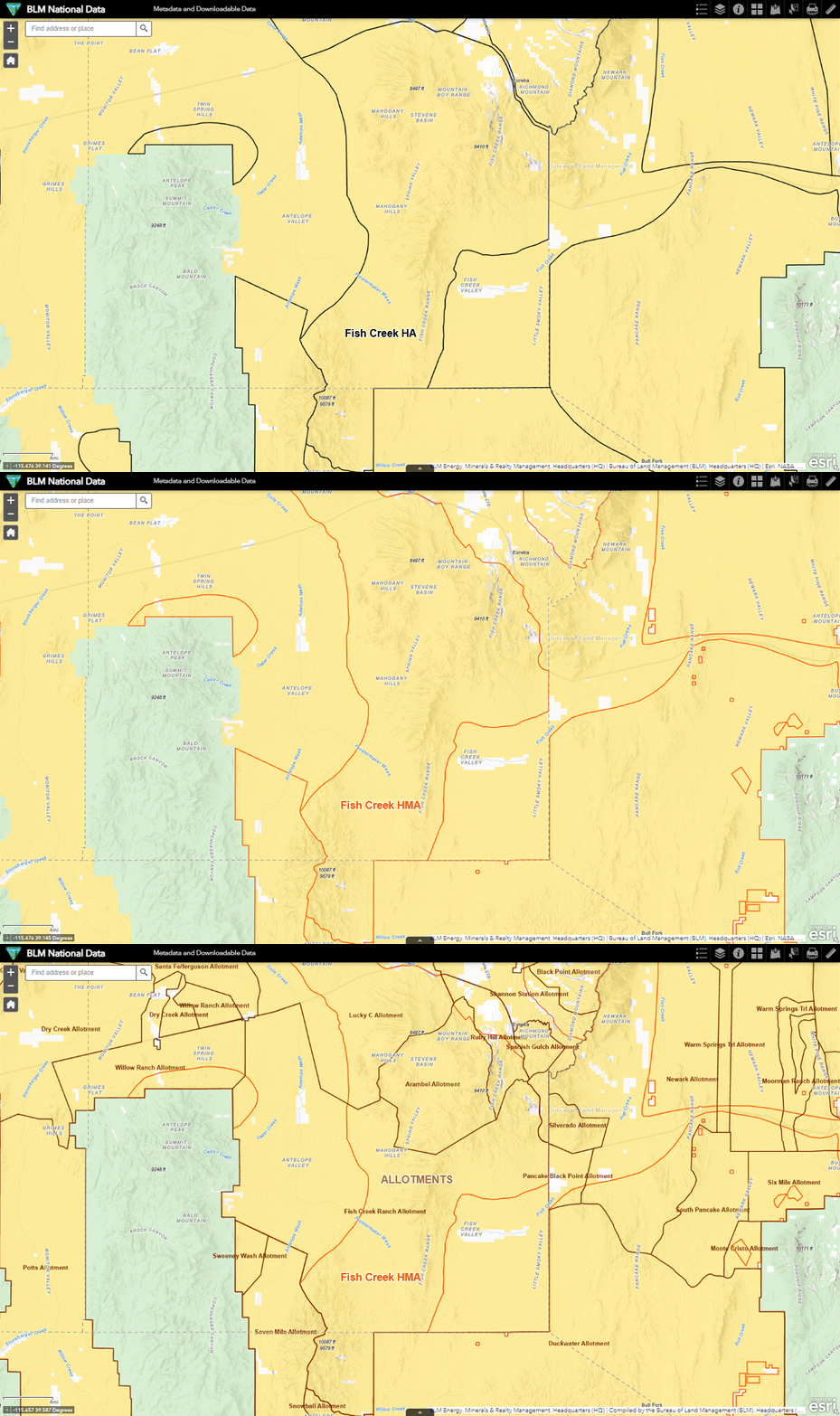
The HMA, a few miles west of Eureka, NV, is subject to permitted grazing.

Fish Creek HMA with Allotments 11-07-24