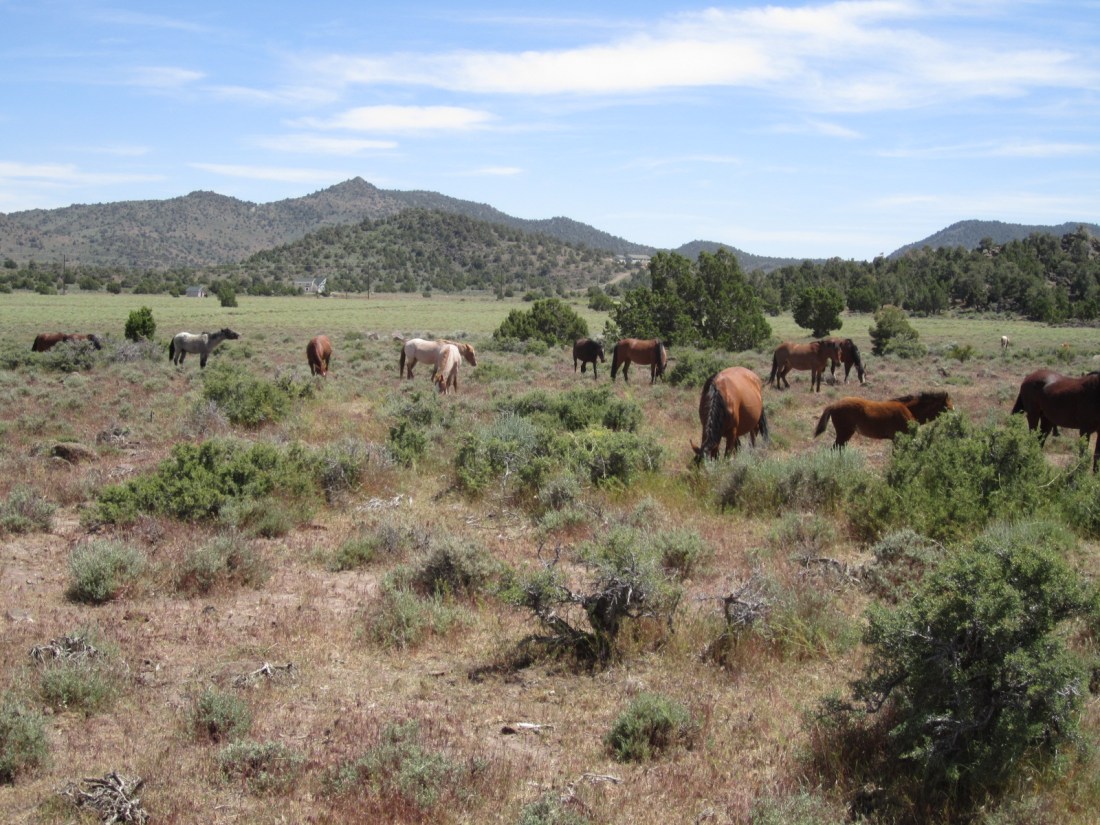
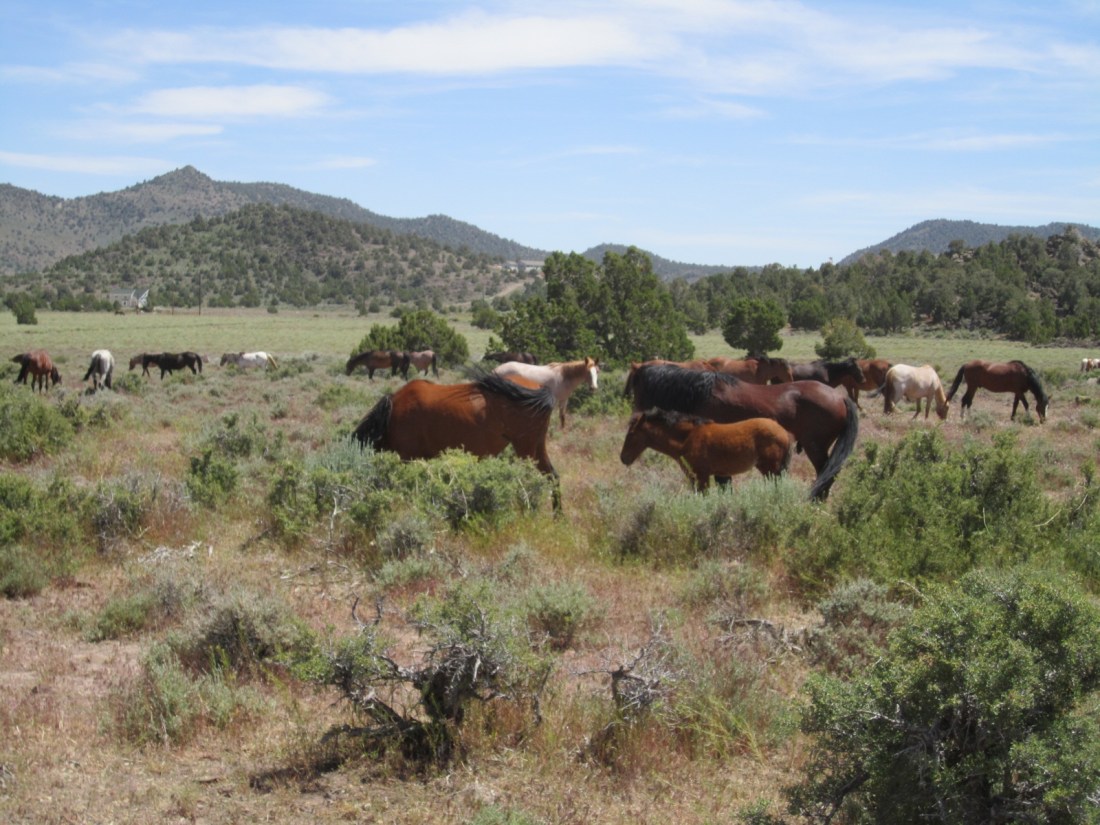
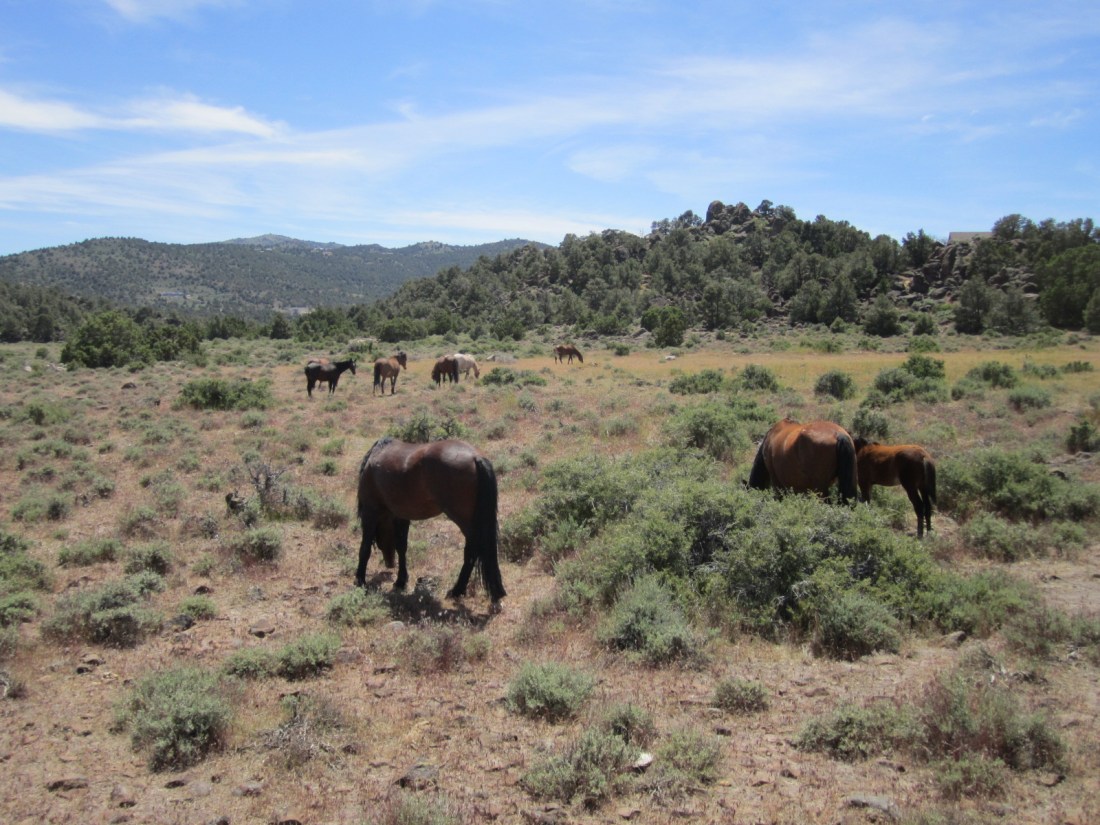
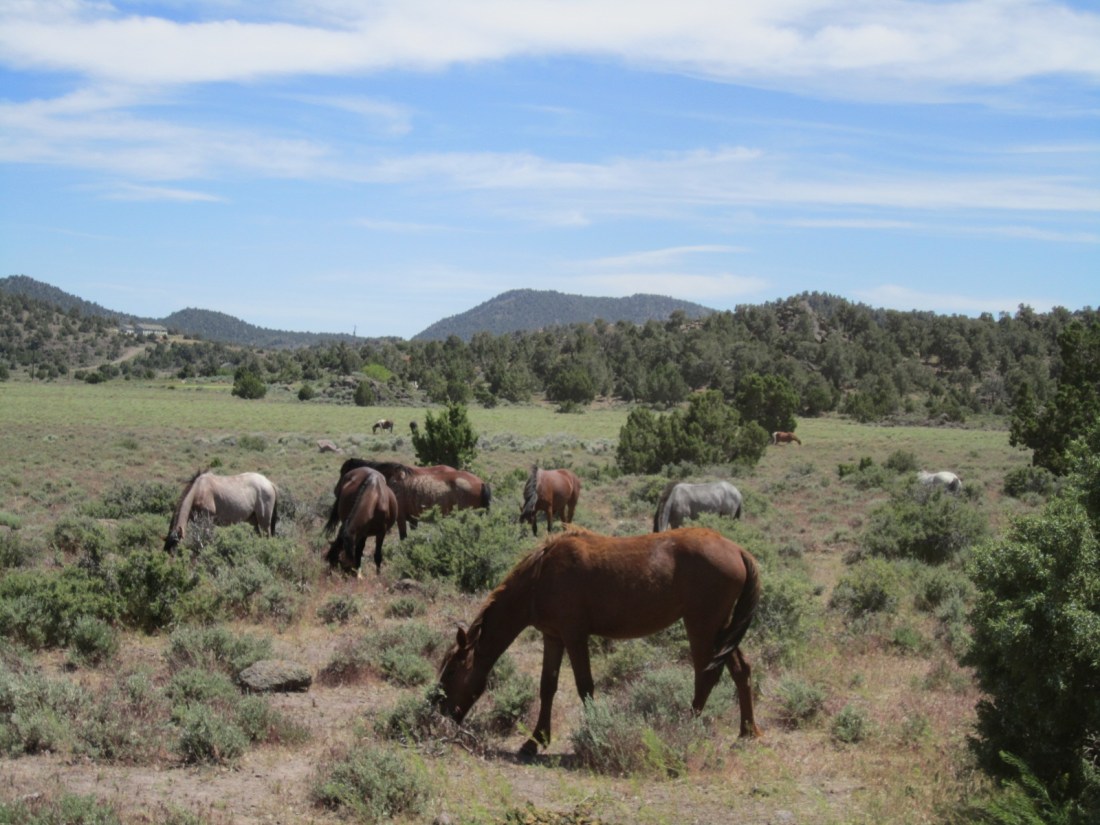
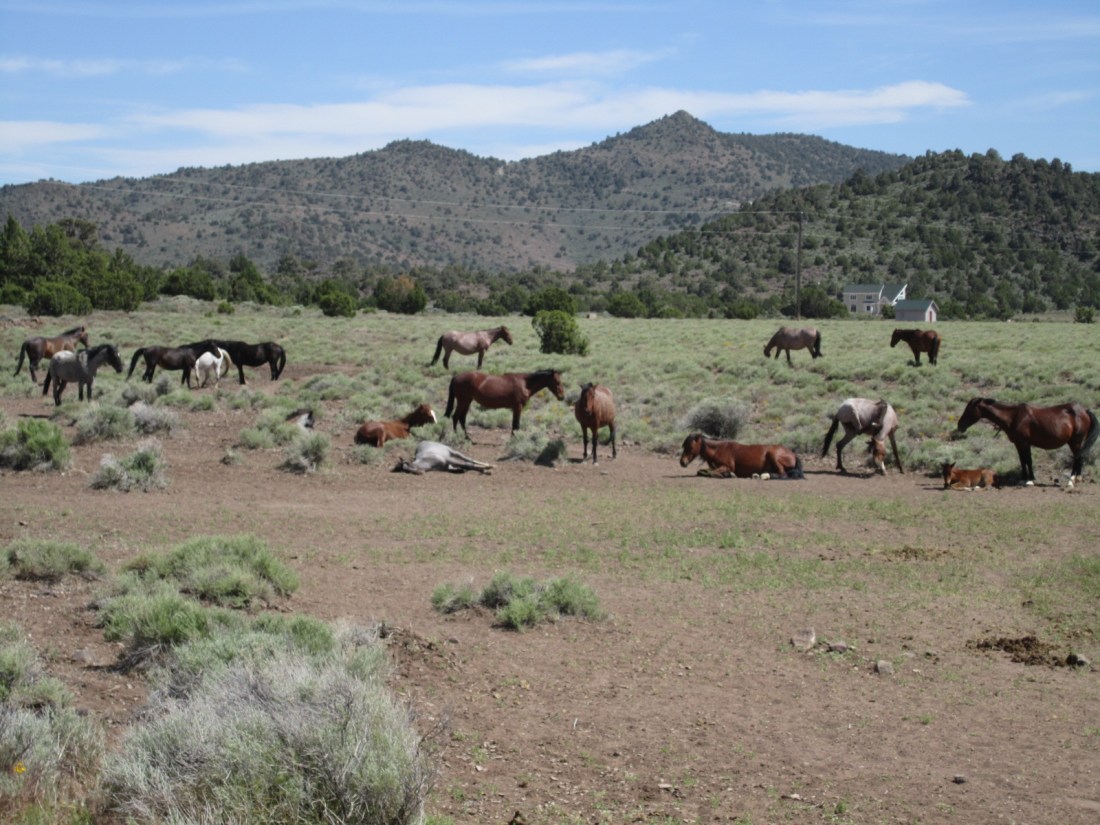
Last Friday was a great day for watching horses on the Virginia Range. You normally don’t see this many together in an area of just 25 to 30 acres. Almost all heads were down, they did not seem to be put off by my presence.



Western Horse Watchers Association
Exposing the Hypocrisy, Lies and Incompetence of the Wild Horse Advocates
On the range
Last Friday was a great day for watching horses on the Virginia Range. You normally don’t see this many together in an area of just 25 to 30 acres. Almost all heads were down, they did not seem to be put off by my presence.
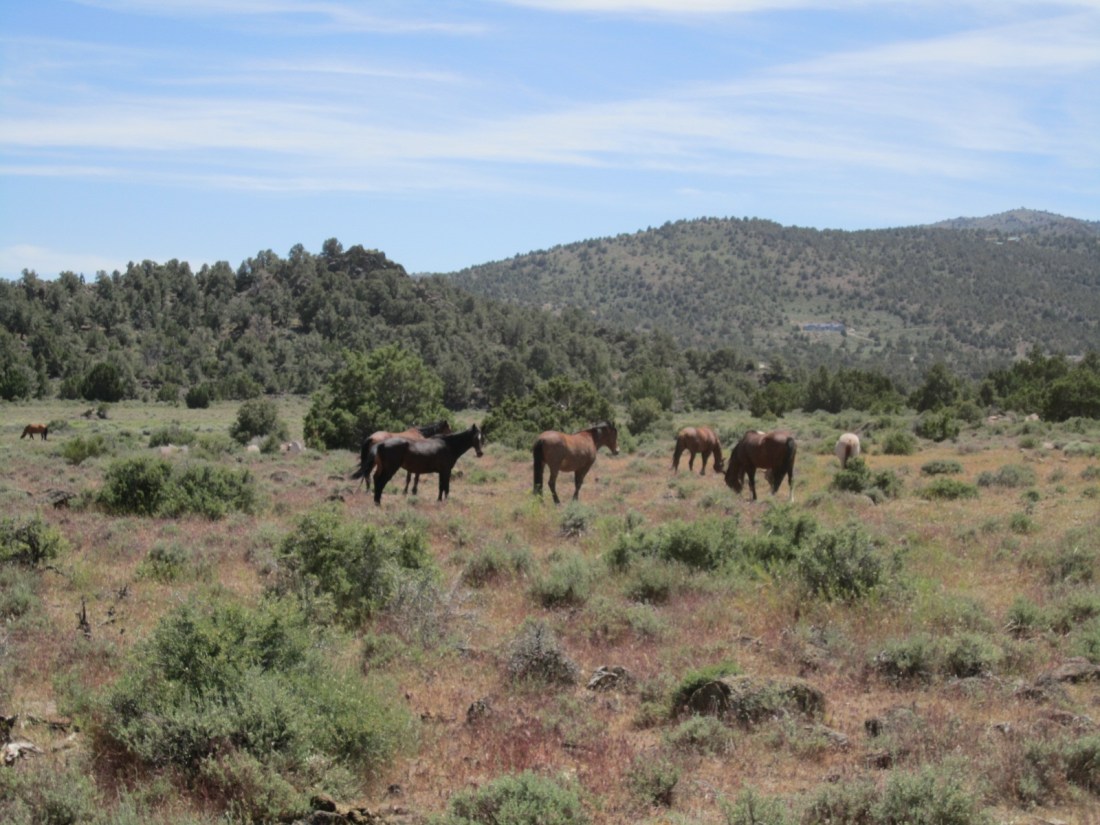
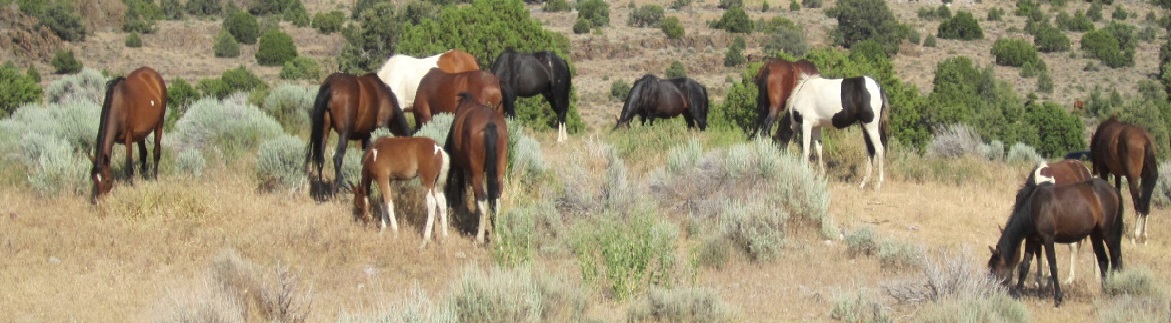
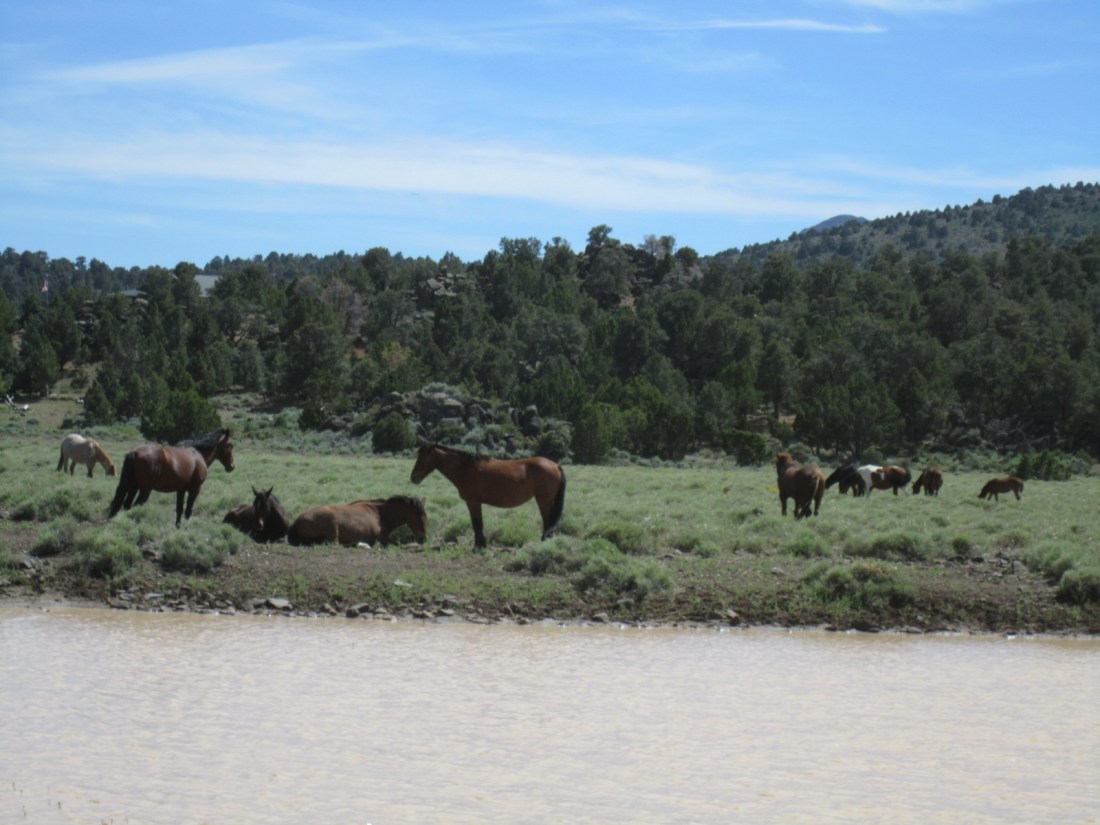
This band, consisting of one stallion and four mares, was photographed on the Virginia Range 06/15/18. Stallion on the right, no youngsters present.

Closer inspection revealed two mares with welts on their right flanks.


Bruises from getting kicked? Doubt it.
Insect bites? Possibly.
Handiwork of the PZP zealots? Who knows.
There were other bands with foals, why not these guys?
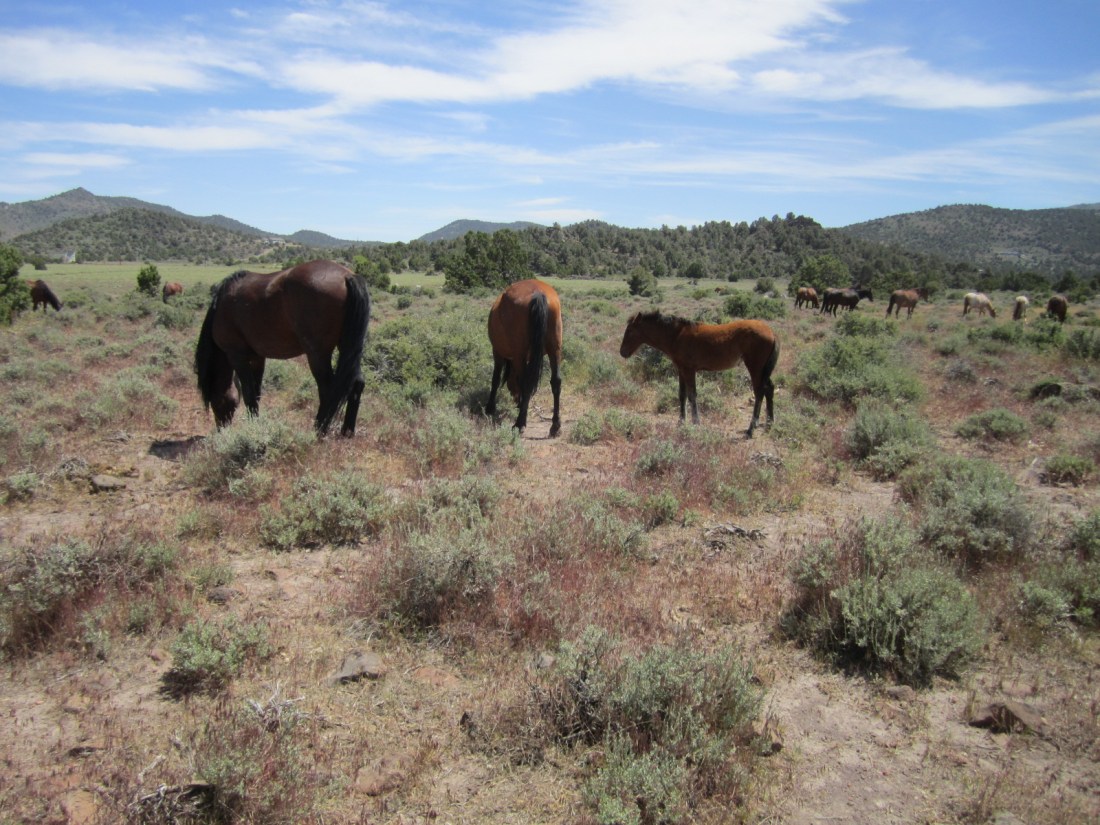
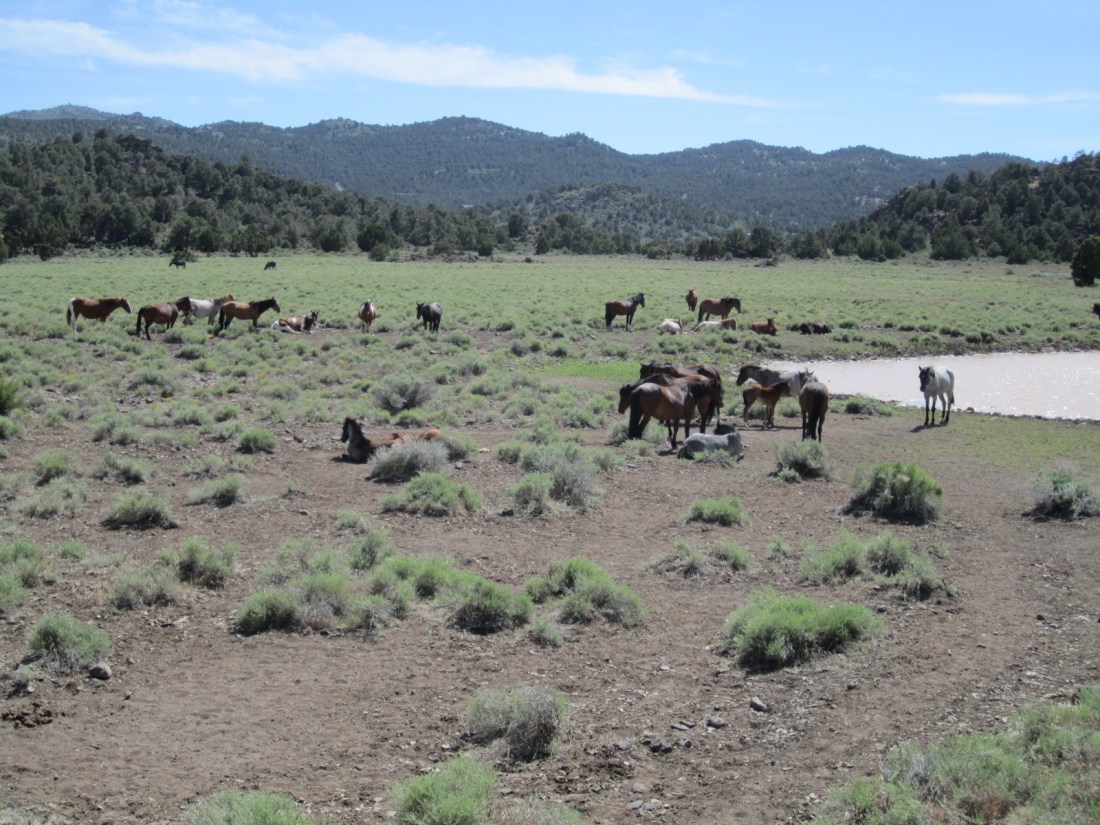
Virginia Range mustangs catch some Zs on 06/15/18, while others stand watch.
See this report in the Mohave Valley Daily News dated 06/16/18. No reason was given for the gather or the number of animals to be removed.
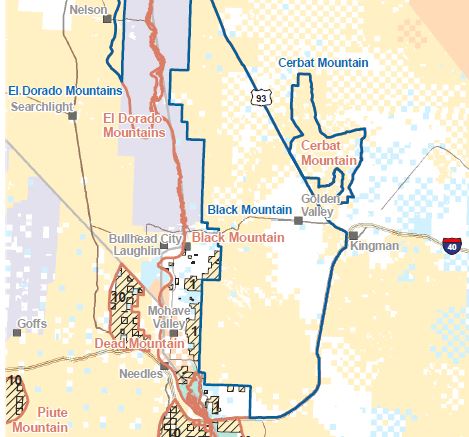
Bullhead City lies to the west of the Black Mountain HMA, but does fall within the Black Mountain HA, a space where WHB are not managed by the BLM because the land doesn’t have the resources to sustain them. Go figure.
The Black Mountain HMA is noted for the panhandlers in Oatman, who work the tourists on a 9-to-5 basis.
So says a report in the Arizona Daily Sun dated 06/15/18. Normally, a story like that would get the goodbye click upon reaching such a claim, but there is a problem here.
Horses don’t stand around on dry lots and die of thirst. Maybe somebody put up a fence or other obstruction that impedes their ability to find food and water?
Anyway, when this story broke a few weeks ago, little if any effort was being made to help them. But now the advocates have mobilized. It’s the locals helping the horses, not the government.
What an individual can do, society should not take over, and what small societies can do, larger societies should not take over.
That is the principle of subsidiarity.
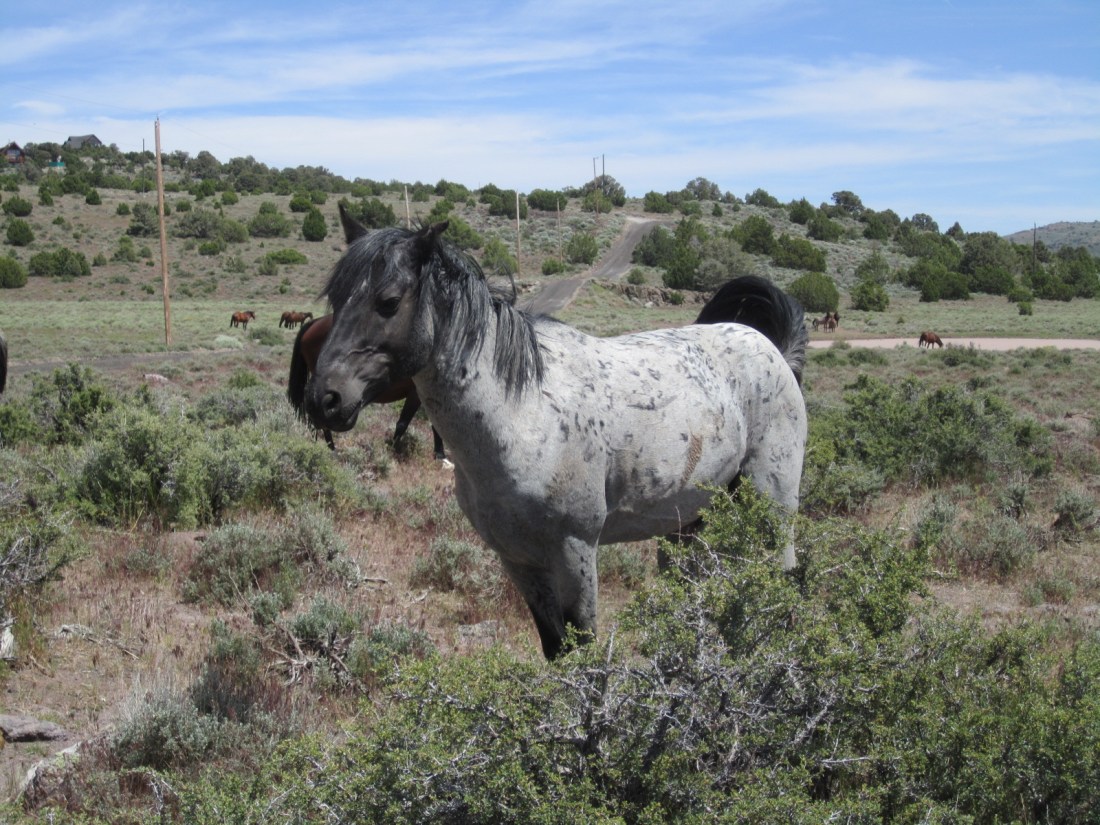
One of the Virginia Range band stallions, photographed on 06/15/18, battle scars and and all. That’s 1000 pounds of virility and potency standing right in front of you. If he spins his butt and fires those cannons, you don’t have a chance. But there he was, as sweet as can be.
This may be an example of what Ann Barnhardt refers to as meekness.
Volunteers at the BLM booth at the Western States Horse Expo were handing out posters featuring these icons of the American west. They’re approximately 18″ x 24″ in size, with thick stock and glossy finish. Really nice.
Unfortunately, they’re only available at BLM-related events or shows where the BLM sponsors a booth. Leave a comment if you’re interested in getting these.


See this story at KIVI-TV Channel 6, the ABC affiliate in Boise, ID. Includes video.
Today, twenty nine horses were returned to this relatively small HMA, almost three years after it was burned in the Soda Fire. Also present were 100+ observers.
The population density for this area is 5.5 horses per thousand acres, considerably higher than the national average of about one horse per thousand acres (based on upper end of AML).
RELATED: BLM Returning Horses to Sands Basin HMA.
BLM says no. See this report in Steamboat Today posted 06/13/18. Although ponds are drying up, springs are flowing and wells are pumping. So it’s wait and see. No immediate threat to horses, for now they appear to be OK. Situation monitored daily.
Personnel with Wild Horse Warriors for Sand Wash Basin are finalizing plans to bring water to the Sand Wash mustangs, according to a report posted 06/12/18 in Steamboat Today. The action stems from ongoing drought conditions.
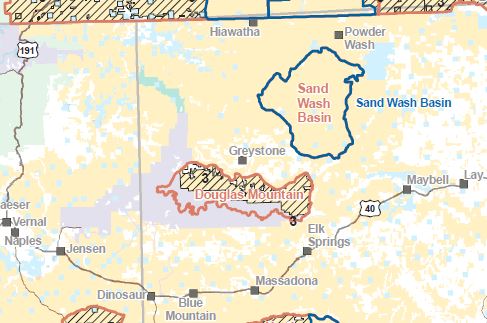
The report says the HMA is enclosed by a fence. If that’s true, the horses are no longer self-reliant. If they can’t move to other areas to find food and water, they’ll become dependent on people or will die. You fence ’em, you own ’em.

The Sand Wash Basin HMA covers 157,730 acres in northwest Colorado. The upper end of the AML is 363, for a population density of 2.3 horses per thousand acres.
Although not on the agenda, the Virginia Range mustangs received considerable attention during public comments at the 06/06/18 Nevada Board of Agriculture meeting.
The Board’s plan to transfer ownership of the horses to a non-profit advocacy group was met with no response and was withdrawn on 05/02/18.
Comments begin at 0:06:02 and end at 0:38:20. Most of the commenters urged the Board to reinstate a birth control program similar to the one cancelled in 2017. Sad.
Most of the herd management areas in Oregon are in the northwest corner of the Great Basin.
Here are some statistics for the state, developed from individual pages at the BLM web site.
The last figure is offered as an estimate of the current situation, as many of the HMAs have more animals than allowed by the upper end of their AMLs.
Livestock grazing was not reported on any of the HMAs, although it presumably occurs on some of them.
The largest HMA is the Coyote Lake / Alvord Tule Springs complex at 553,603 acres, while the smallest is Hog Creek, at 21,844 acres.
Stocking rates vary from 5.0 animals per thousand acres at Cold Springs HMA to 0.4 animals per thousand acres at Warm Springs HMA.
No charges will be filed against the driver according to this report in The Outer Banks Voice, published 06/11/18.
See also this report in The Coastland Times, dated 06/10/18. The Banker Horses, as they are called, are thought to be descendants of those brought to the New World in the 16th century by Spanish explorers.
Mustang Meg explains. See also the photo in this Wikipedia entry on Pinto horses.
Story out of Aktau, Kazakhstan, regarding the rescue of a wild horse. Refer to this report in BL Daily dated 06/09/18. Includes video.
A federal judge ruled yesterday that the Army can continue rounding up feral horses at Fort Polk while a lawsuit aimed at stopping the gathers works its way through the courts, according to this report at Army Times.
Pegasus Equine Guardian Association, an advocacy group, argued that some of the horses may be traceable to those brought to the New World by Spanish explorers.
The horses roam mostly on the Kisatchie National Forest in Louisiana, which is managed by the USFS but is not a WHT.