Helicopters will not be flying in that area, according to the gather page, so the incident will be open to public observation every day until complete.
RELATED: Onaqui Gather Page Created.

Western Horse Watchers Association
Exposing the Hypocrisy, Lies and Incompetence of the Wild Horse Advocates
On the range
Helicopters will not be flying in that area, according to the gather page, so the incident will be open to public observation every day until complete.
RELATED: Onaqui Gather Page Created.
She was transferred to the Chincoteague National Wildlife Refuge to increase her chances of survival, according to a report by the Maryland Coast Dispatch.
The story did not indicate if she’d still be eligible for the name-that-foal contest.
Gather stats and daily reports will be posted here. A link was not provided when the roundup was announced.
The incident begins tomorrow and is open to public observation except for Day 2.
RELATED: Onaqui Roundup Delayed.
Horses have the day off. At Custer State Park with Ben C. Enlots.
Would you be upset if it was 2,250 cow/calf pairs for six months per year? What would you say if it was 1,800 cow/calf pairs for four months and 5,250 ewe/lamb pairs for six months? Would you feel better if it was 7,500 ewe/lamb pairs for nine months?
All three cases have the same resource loading, 13,500 AUMs per year.
The management plan allows 210 wild horses for twelve months, requiring 2,520 AUMs per year.
How do you make the comparisons simple? Look at the resource allocations.
Livestock numbers depend on livestock types and grazing seasons.
But the forage allocations tell you immediately that the HMA is managed primarily for livestock.
You can also compute the number of horses displaced from the HMA by livestock, the True AML, and, if you know the current population, the number of excess horses.
RELATED: Resource Allocation Quiz, Filling in the Gaps at Healthy Horse HMA.
In Washington, DC with Marty Irby and colleagues.
Keep in mind that the rancher-friendly ‘Path Forward‘ will enforce resource allocations already on the books. It changes nothing.
You have to look upstream in the management process at the land-use plans, federal regulations and the bureaucracy that writes them.
The American people and their representatives have been sidestepped.
RELATED: Onaqui DC Rally Tomorrow.
At the Utah state capital on July 2 with The Wild Beauty Foundation.
RELATED: Rallying for Onaqui Wild Horses or Privately Owned Livestock?
The operation began on March 9, a resource enforcement action that follows a wild burro removal in 2020. Gather stats through July 8:
The cumulative total on the gather page is 246.
Foals accounted for 16.5% of the burros gathered. Of the adults, 56.7% were male and 43.3% were female.
Fertility controls will not be applied and the incident is not open to public observation.
There are 34 burros in the unaccounted-for category.
Supplemental statistics:
RELATED: Black Mountain Roundup, Part 2, Day 111.
The operation began on July 4, a sequel to the nuisance roundup of 2020.
Gather stats through July 9:
Foals accounted for 12.2% of the burros gathered. Of the adults, 50.4% were male and 49.6% were female.
Fertility controls will not be applied and the incident is not open to public observation.
Data quality is good. The number of unaccounted-for burros is zero.
The incident, not announced at the BLM news site, occurred on private lands with a removal goal of 12 to 15 animals.
The daily reports show four burros captured on June 4 and 22 on July 6.
No foals were taken and no deaths occurred.
The burros were probably baited but no details were given.
Captured animals were taken to the off-range corrals in Florence, AZ.
One was pregnant, according to a story in yesterday’s edition of The Arizona Republic.
The incident occurred on July 7 a few miles west of the Black Mountain HMA, currently the subject of a roundup.
The incident will begin on July 13, not July 11 as originally scheduled, according to a BLM news release.
RELATED: Onaqui Roundup Announced.
So says the writer of a letter to HeraldNet of Everett, WA. “As a result of overgrazing and poor care of waterways in the past, public pressure has ensured the BLM carefully limit and regulate the range leases to cattle ranches.”
RELATED: Allotment Status Recap, You Don’t Have a Horse Problem You Have a Ranching Problem.
Refer to this news release by Animal Wellness Action.
It’s time to end public-lands ranching and restore the WHB Act to its original form.
Six foals were born this year, according to a report by the Maryland Coast Dispatch, providing more opportunities for public involvement.
The article said the current population is 83, which may include the mare lost last week.
The population was 78 in March.
That means a herd of 77 could only produce 6 foals, a 7.8% birth rate, five years into the adaptive phase of the management program, also known as the PZP-free phase.
The advocates are half right: The darting program is effective but definitely but not safe.
Check out the video in this story by KOAT News of Albuquerque, NM.
WARNING: Includes youngsters.
RELATED: Rush Hour in Ruidoso.
UPDATE: Added video.
The video is fine, for the most part, but the description in YouTube says the roundup should be supplanted with “scientific, proven methods of humane, on the range management,” a plug for the fertility control program.
How do (1) stalking the mares and shooting them with darts every year, (2) driving birth rates to zero, and (3) letting the herds die off qualify as humane or protection?
How can you defend that when most of their food has been shifted to privately owned livestock? How many horses have been cheated out of a spot on their home range by non-native, non-protected species?
The advocates are wrong and the Campaign Against America’s Wild Horses doesn’t deserve any of your hard-earned donations.
RELATED: Rallying for Onaqui Wild Horses or Privately Owned Livestock?
The planned start date was June 25, according to the latest schedule, but the actual start date was July 4, according to the daily reports, with 64 animals taken through July 6.
The operation, not announced at the BLM news site, involves public and private lands in and around the Cibola National Wildlife Refuge, west of the HMA.
The AML is 165 burros and 150 horses but only burros are targeted.
The removal goal is 200, to be achieved with bait and water traps. The incident is not open to public observation.
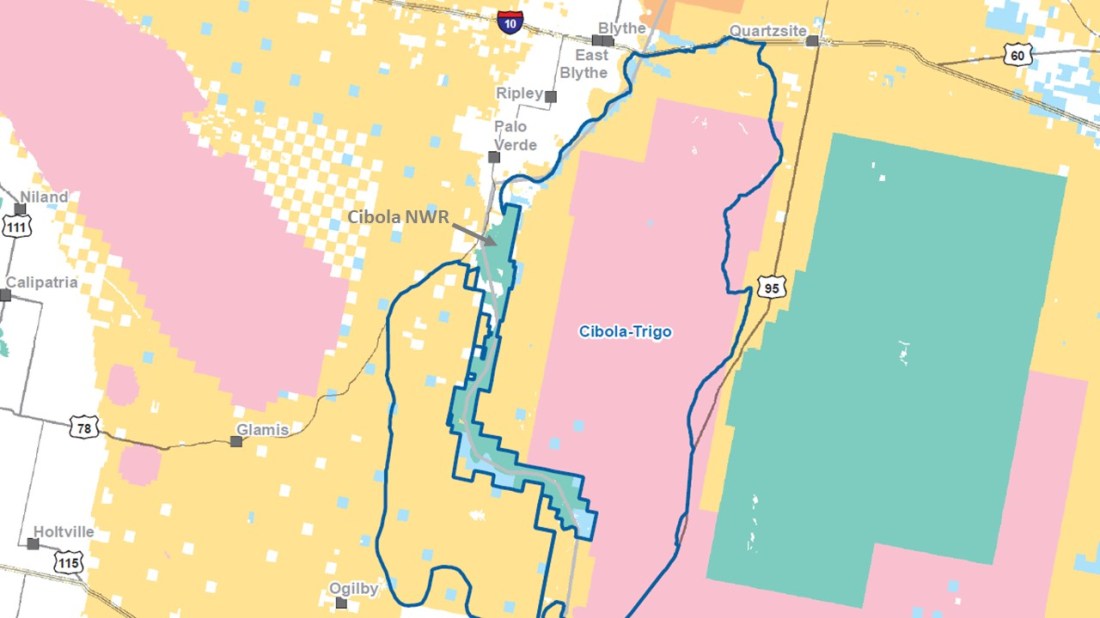
Captured animals will be taken to the off-range corrals in Florence, AZ.
Last year, around 300 burros were removed from the area. The actual number is not clear due to data quality issues.
Five horses were put down in Uintah County after being exposed to equine infectious anemia, according to a story by ABC4 News of Salt Lake City, and others have been tested who were in contact.
Although they were running at large in the area, they were not considered wild.

