Status of Desatoya Allotments

Three are in the Stillwater Field Office and one is in the Mount Lewis Field Office.

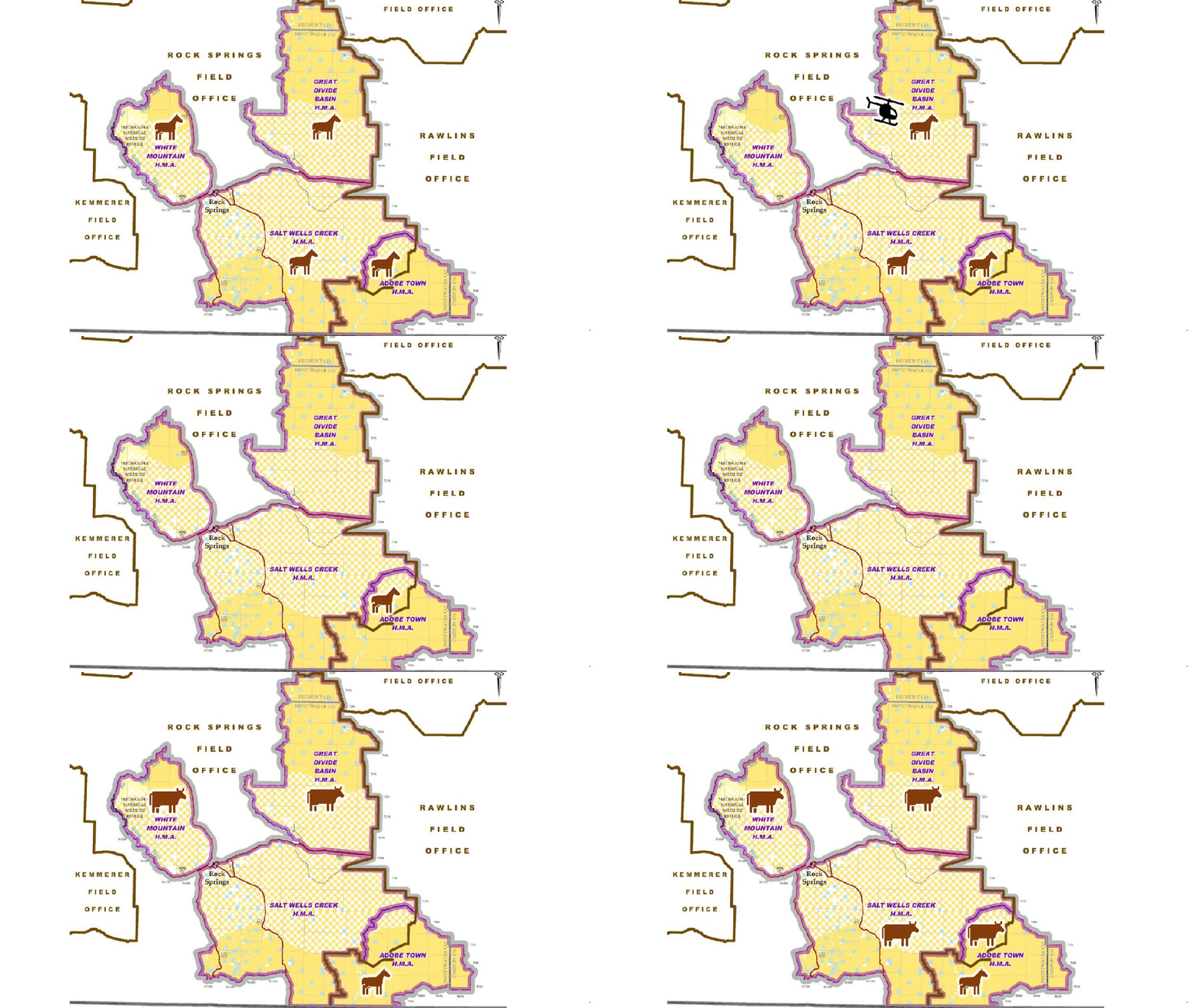
Desatoya HMA Map 01-11-22

Three of the allotments offer year-round cattle grazing, according to Table 3-2 of the Final EA, and all four are in the Improve category, according to the Allotment Master Reports [Stillwater | Mount Lewis].

The HMA, at 161,678 total acres (public and private), represents 23% of the 704,688 total acres in the allotments.

RELATED: Desatoya Roundup Announced.

Virginia Range Darting Program Equivalent to Five Desatoya Roundups—Every Year!

The Desatoya removal goal is 150 wild horses, as discussed this morning.

To achieve zero population growth in the Virginia Range, the advocates would have to eliminate 450 to 600 foals every year, as discussed on November 26.

To achieve a zero percent birth rate, which is probably their goal, the advocates would have to eliminate 600 to 750 foals every year.

At the high end, that’s equivalent to five Desatoya roundups, every year.

The Virginia Range is just a demonstration project.  The advocates are trying to win the approval of the bureaucrats and ranchers, to spread their enmity elsewhere, by getting rid of as many VR mustangs as possible.

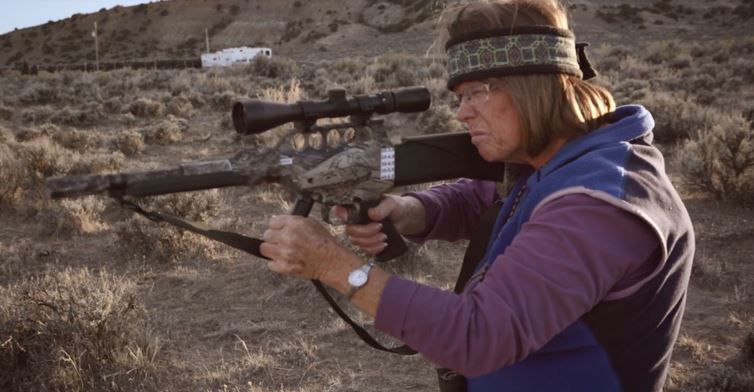
Portrait of an Advocate 01-04-22

Desatoya Roundup Announced

The event appears at the bottom of the first page in the latest schedule and represents less than 1% of the FY 2022 resource enforcement goals announced last week.

Operations will begin on or about January 16, according to yesterday’s news release.

The capture goal is 233 and the removal goal is 150.  Mares returned to the HMA will be treated with GonaCon Equine, a contraceptive that may function as a sterilant.

Helicopters will push the horses into the traps and the incident will be open to public observation.

The HMA covers 161,678 acres and the 180 horses allowed by plan require 2,160 AUMs per year.

The stocking rate allowed by plan is 1.1 wild horses per thousand acres, in line with the target rate of one wild horse per thousand acres across all HMAs.

The current population is thought to be 277.

Desatoya HMA Map 01-11-22

The Western Watersheds map shows four grazing allotments that intersect the HMA.

Livestock receive 9,133 AUMs per year inside the HMA, per Table 3-2 of the Final EA for resource enforcement actions therein.

The forage assigned to livestock would support an additional 761 wild horses, about 1.5% of those in off-range holding, for a True AML of 941.

The current population is well within this range.

There is no need for a roundup or fertility control program, despite the drivel from the bureaucrats and advocates.  The problem is public-lands ranching.

Captured animals will be taken to the off-range corrals at Palomino Valley.

Gather stats and daily reports will be posted to this page.

Over 400 wild horses were removed from the area two years ago.

RELATED: Thriving Ecological Balance at Desatoya HMA?

Rock Springs Roundup Day 96

Operations resumed on January 6.  Gather stats through January 10:

  • Type: Planned
  • Method: Helicopter
  • Horses captured: 3,552, up from 3,355 on Day 93
  • Average daily take: 37.0
  • Capture goal: 4,400
  • Removal goal: 3,500
  • Returned: 488, no change from Day 93
  • Deaths: 24, up from 20 on Day 93
  • Shipped: 3,152, up from 2,877 on Day 93

Four horses were put down on Day 96, lifting the death rate to 0.7%.

The total includes 1,386 stallions, 1,440 mares and 726 foals.  The gather page shows 1,383 stallions and 1,428 mares.

Foals represented 20.4% of the horses captured.  Of the adults, 49.0% were male and 51.0% were female.

A birth rate of 20% implies a growth rate of 15% per year, assuming a 5% death rate.

Body condition scores were not reported.

Gather activity has shifted to White Mountain and Little Colorado.

Rock Springs HMAs 10-13-21

If 3,549 have been captured, as stated at the gather page, 3,152 have been shipped and 24 have died, the maximum number of horses that could be returned to the five HMAs is 3,549 – 3,152 – 24 = 373, not 488 as stated in the cumulative totals.

The numbers don’t balance.

Other statistics:

  • AML: 2,165 (across five HMAs)
  • Forage assigned to horses: 25,980 AUMs per year
  • Pre-gather population: 5,105
  • Forage liberated to date: 42,624 AUMs per year
  • Water liberated to date: 35,520 gallons per day
  • Forage assigned to livestock: 191,791 AUMs per year (estimated)
  • Horses displaced from HMAs by livestock: 15,982 (32% of off-range holding)
  • True AML: 18,147

RELATED: Rock Springs Roundup Day 93.

Fence Installation Next Week on South Edge of Virginia Range

Four-foot high livestock fencing will be erected along Highway 50 in Dayton starting on Monday, to reduce horse-vehicle collisions.  Details in this announcement.

Between 2017 and 2019, 27 such incidents were reported in areas where the fencing will be installed.

Losses attributable to the Montana Solution, not mentioned in the news release, are in the neighborhood of 600 to 800 animals per year.

RELATED: More Fencing Needed for Virginia Range Mustangs?

Pneu-Dart Impact 01-03-22

Rock Springs Roundup Day 93

Operations resumed on January 6.  Gather stats through January 7:

  • Type: Planned
  • Method: Helicopter
  • Horses captured: 3,355, up from 3,121 on Day 61
  • Average daily take: 36.1
  • Capture goal: 4,400
  • Removal goal: 3,500
  • Returned: 488, up from 181 on Day 61
  • Deaths: 20, up from 16 on Day 61
  • Shipped: 2,877, up from 2,838 on Day 61

The second part of the roundup is getting off to a bad start from a data viewpoint, not that the first part was any better.  The numbers for Day 93 sum to 115, not 112:

Rock Springs Roundup Data Day 92 01-08-22

Day 61 went out with 181 horses returned to the area but the gather page now shows 488.  The increase was not documented in the daily reports.

Three horses were put down on Day 92 and one died from a broken back, bringing the death rate to 0.6%.

The total includes 1,311 stallions, 1,357 mares and 687 foals.  The gather page shows 1,308 stallions.

Foals represented 20.5% of the horses captured.  Of the adults, 49.1% were male and 50.9% were female.

A birth rate of 20% implies a growth rate of 15% per year, assuming a 5% death rate.

Body condition scores were not reported.

Gather activity has shifted to White Mountain and Little Colorado.

Rock Springs HMAs 10-13-21

The number of animals shipped has not been reported at the gather page but the total, based on the daily reports, is 2,877.

If 3,352 have been captured, as stated at the gather page, and 20 have died, the largest number of horses that could be returned to the area is 3,352 – 2,877 – 20 = 455, not 488 as stated in the cumulative totals.

Other statistics:

  • AML: 2,165 (across five HMAs)
  • Forage assigned to horses: 25,980 AUMs per year
  • Pre-gather population: 5,105
  • Forage liberated to date: 40,260 AUMs per year
  • Water liberated to date: 33,550 gallons per day
  • Forage assigned to livestock: 191,791 AUMs per year (estimated)
  • Horses displaced from HMAs by livestock: 15,982 (32% of off-range holding)
  • True AML: 18,147

RELATED: Rock Springs Roundup Day 61.

Pancake Roundup Announced

An estimated 2,060 wild horses will be captured starting on or about January 10, with 2,030 to be removed, from the Pancake Complex west of Ely, NV.

The incident, representing about 10% of the resource enforcement goal announced earlier this week, appears near the bottom of page 1 in the latest schedule.

Helicopters will push the horses into the traps, according to the news release, and the operation will be open to public observation.

The Complex covers 1,228,739 acres per Table 1 in the Final EA and the 638 horses allowed by plan require 7,656 AUMs per year.

The stocking rate allowed by plan is 0.5 wild horses per thousand acres, considerably lower than the target rate of one wild horse per thousand acres across all HMAs, and a potential indicator of large amounts of forage assigned to privately owned livestock.

The pre-gather population is thought to be 3,244.

Pancake Complex Map 01-07-22

The Western Watersheds map shows numerous grazing allotments intersecting the Complex and the data in Tables 3 – 6 show that it’s managed primarily for livestock.

The excess horses (those above AML) have been consuming resources assigned to the public-lands ranchers but the helicopters will shift them back.  A darting program could accomplish the same thing but in a much longer timeframe.

Captured animals will be taken to the off-range corrals at Palomino Valley, Indian Lakes and Sutherland.

Gather stats and daily reports will be posted to this page.

RELATED: Decision Reached in Pancake Gather Plan.

Missing Teat, Trainer’s Remorse and the Montana Solution

The writer of this letter to the Bozeman Daily Chronicle blames the animal for his/her own frustrations and inadequacies, a common practice in the horse world.

  • The barn
  • The barn manager
  • Bad feed
  • Horse in adjacent stall
  • Wrong bit
  • Oxygen deprivation
  • Previous owner
  • Bad breeding
  • Sore feet
  • Arthritis
  • Wrong supplements
  • Needs shoes
  • Previous trainer
  • The farrier
  • He’s flighty
  • And now, a missing teat

As Rick Gore has stated a million times, “It’s you, you big dummy!

RELATED: ‘Montana Solution’ Protects Livestock Not Horses.

Nevada WHR Mares Waiting for Second Jab

They will receive another dose of GonaCon in 30 days and then be returned to the WHR, according to a news release issued today.

The announcement included a remark about research and the impact of climate change, a hoax, on the management of wild horses and burros.

The answer is already known: The wild horse and burro program has been a drag on the grazing program for 50 years and maybe the public will accept drastic reductions in herd sizes if they can be tied to global warming—a highly selective phenomenon that affects wild horses and burros but not privately owned cattle and sheep.

RELATED: Nevada WHR Roundup Over.

Wild Horse Gather Plan Preceded by Beef/Poultry Action Plan

The one-horse pony convened a roundtable on January 3 to unveil his Action Plan for a Fairer, More Competitive, and More Resilient Meat and Poultry Supply Chain.

The goal, among other things, is to bring down prices for consumers, which, in the private sector, usually means boosting supplies.

On January 5, a plan to remove at least 19,000 wild horses and burros from America’s public lands was announced.

RELATED: USDA Seeks Greater Diversity in Beef Supply.

TOLDYA: Advocates Consigned to Mopping-Up Role

Per today’s news release:

The BLM continues to implement a multi-year plan to achieve and maintain the appropriate management level of wild horses and burros on public lands using a variety of management tools, including gathers to reduce overpopulation, fertility control to slow future growth, and adoptions to place excess animals into good homes.

Helicopters will make the big reductions in herd sizes while the advocates protect the ranchers after the fact by making sure the herds don’t bounce back.

RELATED: Can Darting Programs Compete with Helicopter Roundups?

Pneu-Dart Impact 01-03-22

FY 2022 Resource Enforcement Targets Don’t Balance

The BLM said today that at least 22,000 wild horses and burros would be captured on public lands this year, with at least 19,000 removed.

That leaves 3,000 unaccounted-for animals.

The announcement also stated that at least 2,300 animals would be treated with various forms of fertility control and returned to their home range.

That leaves 700 unaccounted-for animals.

Does that mean 700 untreated animals will be returned to the range or are they budgeting for 700 deaths?

Helicopter roundups and fertility control programs do not allocate resources and cannot change resource allocations.  They enforce resource allocations already on the books.

With the exception of a few areas, wild horses and burros receive five to twenty percent of the authorized forage, with the balance going to privately owned livestock.

As the bureaucrats and advocates get rid of excess animals (those above AML), the ranchers can enjoy more of what their allotments have to offer.

RELATED: FY 2022 Resource Enforcement Actions Announced.

Love Triangle on Americas Public Lands 08-19-21

FY 2022 Resource Enforcement Actions Announced

The BLM plans to capture at least 22,000 wild horses and burros from overpopulated herds this year, according to today’s news release, remove at least 19,000 excess animals, and treat at least 2,300 animals with fertility control.

When appropriate management levels are exceeded, roundups and darting programs shift resources in areas set aside for these animals back to the public-lands ranchers.

The latest schedule still shows 14 HMAs subject to the Montana Solution.

RELATED: Darting Programs and Helicopter Roundups on Same Side of Coin.