At the Salt River with Stray Compass Life.
What you may not realize is that the advocates are doing the removing.
► Get the truth about wild horses and the wild horse advocates at westernhorsewatchers.com.

Western Horse Watchers Association
Exposing the Hypocrisy, Lies and Incompetence of the Wild Horse Advocates
On the range
At the Salt River with Stray Compass Life.
What you may not realize is that the advocates are doing the removing.
► Get the truth about wild horses and the wild horse advocates at westernhorsewatchers.com.
The capture total as of March 26 was 34 according to the gather page, consisting of 22 jacks, 7 jennies, and 5 foals.
The incident began on March 16 but no animals were caught until Day 11.
RELATED: BLM Announces Spring Mountains Bait Trap Roundup.
► Get the truth about wild horses and the wild horse advocates at westernhorsewatchers.com.
The incident will begin on or about April 2 according to the news release.
The capture and removal goals are 500 each.
The target is burros.
The current population is thought to be around 3,900.
The HMA covers 773,136 total acres, including 543,307 public acres, according to the 2026 population dataset.
Operations will not be open to public observation.
Animals identified for removal will be taken to the Axtell off-range corrals in Utah.
There are no plans to treat any of the jennies with fertility control pesticides and return them to the range.
The roundup appears in the new schedule.
► Get the truth about wild horses and the wild horse advocates at westernhorsewatchers.com.
A new project was opened today in ePlanning but no documents were posted for public review.
The Red Desert Complex includes the Antelope Hills, Crooks Mountain, Green Mountain, Lost Creek and Stewart Creek HMAs in Wyoming.
► Get the truth about wild horses and the wild horse advocates at westernhorsewatchers.com.
The capture total as of March 24 was 63 according to the gather page.
The incident began on March 16 but no animals were caught until Day 8.
RELATED: BLM Announces Pancake Bait Trap Roundup.
► Get the truth about wild horses and the wild horse advocates at westernhorsewatchers.com.
Some observers say the injuries are intentional, inflicted by trained dogs.
RELATED: Who’s Mutilating Wild Burros in Reche Canyon?
► Get the truth about wild horses and the wild horse advocates at westernhorsewatchers.com.
The announcement did not give the names of the organizers but the event was set for March 23 at the BLM office in Las Vegas.
The description included a link to material written by the Campaign Against America’s Wild Horses.
Demands included cessation of motorized removal, implementation of fertility control and transfer of captured animals to sanctuaries.
Pesticides are referred to as vaccines.

As of today, the gather page shows no wild horses captured, with seven consecutive days of “No animals were in the bait and water corrals by EOB yesterday.”
RELATED: BLM Announces Spring Mountains Bait Trap Roundup.
► Get the truth about wild horses and the wild horse advocates at westernhorsewatchers.com.
The Park Service hasn’t updated its page in almost a year but a story by The Journal says 60 horses have been removed since low-stress trapping began.
Wild horses have been found in the Canyons of the Ancients National Monument and Weber Canyon according to the report.
RELATED: Mesa Verde Roundup Grinds On.
► Get the truth about wild horses and the wild horse advocates at westernhorsewatchers.com.
The incident will begin on or about April 1 according to the news release.
The capture and removal goals are 500 each.
The target is burros.
The current population is thought to be around 1,100.
The HMA covers 157,180 total acres, including 146,701 public acres.
Operations will not be open to public observation.
Animals identified for removal will be taken to the off-range corrals at Ridgecrest.
There are no plans to treat any of the jennies with fertility control pesticides and return them to the range.
The roundup appears in the new schedule.
RELATED: Bullfrog Emergency Roundup?
► Get the truth about wild horses and the wild horse advocates at westernhorsewatchers.com.
The new roundup schedule ignores solutions developed by the task force according to a story by The Colorado Sun.
Despite the recommendations, Scott Wilson, former Director of Strategy and Awareness with the Campaign Against America’s Wild Horses, said “…we are back where we were in 2022, with more than 1,000 horses being targeted for removals by helicopter.”
The group argued that strategic darting, not motorized removal, should be at the center of the state’s management efforts.
RELATED: Colorado Wild Horse Working Group Updates Eradication Plan.

► Get the truth about wild horses and the wild horse advocates at westernhorsewatchers.com.
On the southern edge of the Virginia Range with Art, documenting the mass sterilization program inflicted on the herd by the Campaign Against America’s Wild Horses and its army of nitwits.

Refer to the AdvocateSpeak decoder for the meaning of self-boosting mares.
► Get the truth about wild horses and the wild horse advocates at westernhorsewatchers.com.
A stallion was captured on March 19 according to the gather page.
The incident began on March 15 but no animals were caught until Day 5.
RELATED: BLM Announces Caliente Bait Trap Roundup.
► Get the truth about wild horses and the wild horse advocates at westernhorsewatchers.com.
They’re not on the schedule for FY26 and probably won’t be attempted before October according to a story by WyoFile, to make sure funding is in place and they’re on sound legal footing.
The changes authorized in the 2023 final planning documents have already been implemented in the ArcGIS Viewer.
Funding for FY26, which began on October 1, was not approved until late January.
RELATED: BLM Moves Rock Springs Roundups into Next Year.
► Get the truth about wild horses and the wild horse advocates at westernhorsewatchers.com.
The temporary position is based in Havre.
The successful candidate will monitor rangeland conditions and participate in wild horse utilization checks and cattle compliance checks according to the job posting.
The application period closes on March 30.
► Get the truth about wild horses and the wild horse advocates at westernhorsewatchers.com.
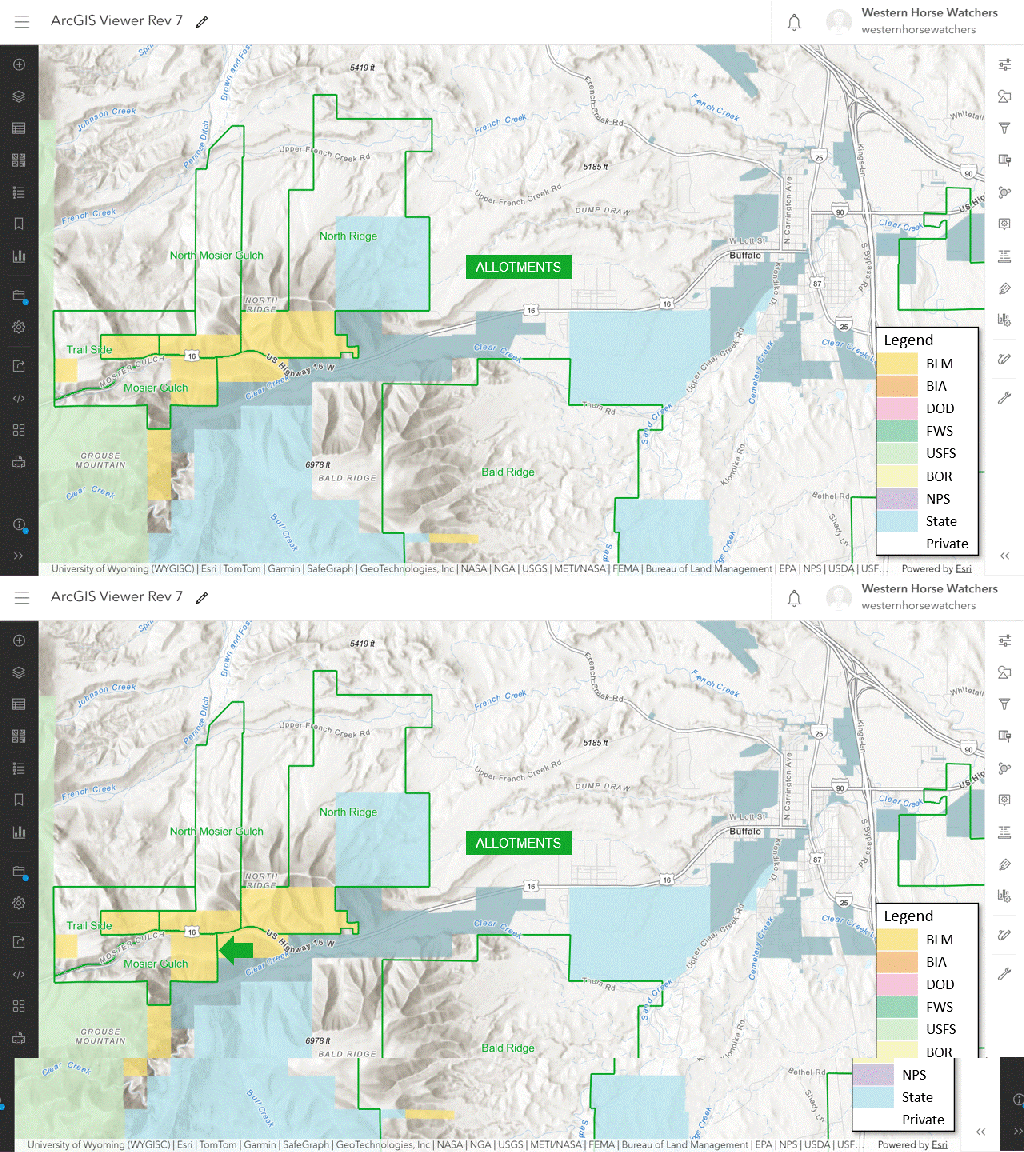
The authorization use report for Mosier Gulch indicates nine head on a twelve-month grazing season, species unknown.
The allotment master report gives the permittee as DEMATTEIS, JOHN AND LAURA.
A search for John Dematteis associated him with Yak Daddy Ranch in Buffalo, a small town east of the allotment.
Products and services include meat and live sales for starting your own herd.
Yaks were introduced to North America in the early 1900’s according to the site, putting them in the same category as cattle and sheep (not indigenous).
Does the permit comply with the BLM’s new understanding of the meaning of livestock?
Probably, in that the animals are used for production-oriented purposes.
They generate an income for their owners.
That’s what American Prairie needs to show in response to the agency’s flip-flop on their grazing permits.
An admission fee of 25¢ should do it.
RELATED: BLM Reneges on American Prairie Grazing Permits.
► Get the truth about wild horses and the wild horse advocates at westernhorsewatchers.com.
They’re usually not open to observation, interfering with the public’s right to know what their government is doing.
The risks of injury and death, after the gate closes, are similar to those of forcible removal, as the writer of a commentary in Nevada Current points out.
Especially during foaling season.
As of this morning, the BLM has not posted any results for the roundups mentioned in the column (Antelope & Triple B, Caliente, Pancake, Spring Mountains).
► Get the truth about wild horses and the wild horse advocates at westernhorsewatchers.com.
The dataset puts the on-range totals at 61,523 wild horses and 23,943 wild burros, compared to an overall AML of 25,592.
Approximately 61% of the horses are in Nevada and 57% of the burros are in Arizona.
New Mexico is at the other end of the spectrum, with 97 wild horses and no burros.
The aimed-at stocking rate across all HMAs is 25,592 animals on 25,572,687 acres, or one animal per thousand acres.
Overpopulation means more animals than allowed by plan, not necessarily more animals than the land can sustain.
The report was posted to the program data page.

► Get the truth about wild horses and the wild horse advocates at westernhorsewatchers.com.
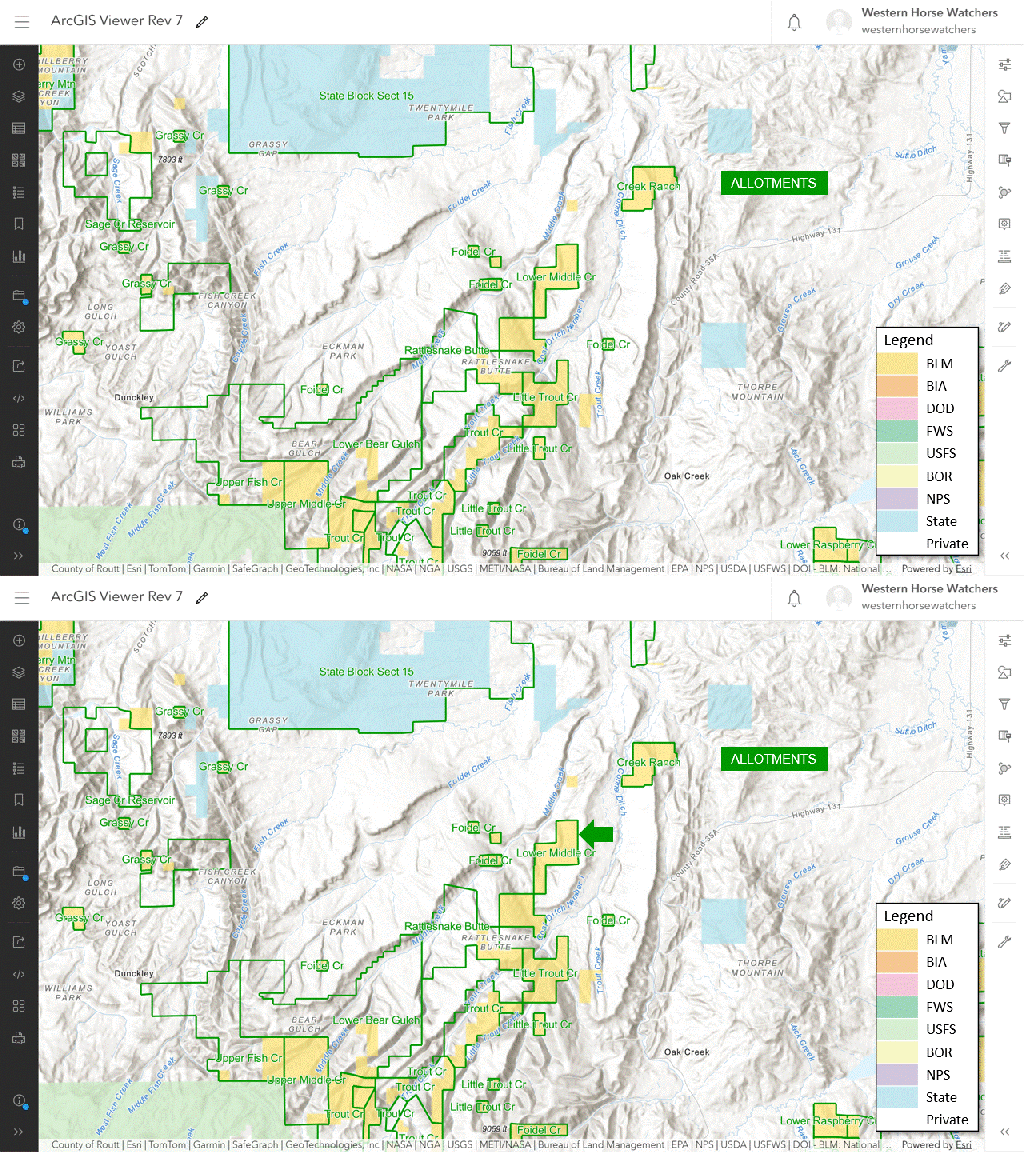
The authorization use report for Lower Middle Creek indicates 75 head on a three-month grazing season, species unknown.
The allotment master report gives the permittee as DWAYNE M. OSADCHUK TRUST.
A search for Dwayne Osadchuk associated him with Lucky 8 Ranch in Oak Creek, a small town southeast of the allotment.
Products and services include bison processing and meat sales according to a profile at the Rocky Mountain Bison Association.
Does the permit comply with the BLM’s new understanding of the meaning of livestock?
Probably so, in that the animals are used for production-oriented purposes.
They generate an income for their owners.
That’s what American Prairie needs to show in response to the agency’s flip-flop on their grazing permits.
RELATED: BLM Reneges on American Prairie Grazing Permits.
► Get the truth about wild horses and the wild horse advocates at westernhorsewatchers.com.
The new plan, dated March 13, begins with 16 darting programs.
Nearly 1,500 animals are in the emergency/nuisance section, with 376 unassigned.
The next section, for incidents during foaling season, adds five more bait-trap removals to those announced last week.
The last section covers incidents after foaling season, with nearly 8,000 wild horses in that category.
The overall capture and removal goals are 14,830 and 14,378, respectively.
The fiscal year began on October 1.
The agency’s budget was not approved until late January.
► Get the truth about wild horses and the wild horse advocates at westernhorsewatchers.com.
On the Virginia Range, documenting the mass sterilization program, with Art.
No foals, no families, no future.
That’s what the advocates bring to the table.
► Get the truth about wild horses and the wild horse advocates at westernhorsewatchers.com.
 Western Horse Watchers Association