The incident concluded on September 26 with 301 horses captured, 245 shipped, 55 released and no deaths.
There was one unaccounted-for animal:
301 – 245 – 55 – 0 = 1
The capture total included 132 stallions, 130 mares and 39 foals.
The daily reports yielded 133, 129 and 39.
Youngsters represented 13% of the animals gathered, enough to support a herd growth rate of seven to eight percent per year.
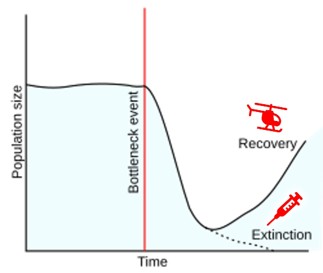
Of the horses released, 60% were stallions and 40% were mares, an attempt to skew the sex ratio in favor of males and prolong the genetic bottleneck created by the roundup.
Recovery will be further delayed by the advocates and their darting program.
The roundup liberated 2,952 AUMs per year for other mandated uses of public lands.
Snippet from statute: It is the policy of Congress that wild free-roaming horses and burros shall be protected from capture, branding, harassment, or death
Snippet from manual: To protect wild horses and burros from unauthorized capture, branding, harassment or death
The figures above are based on the daily reports.
The death rate is 1.8%.
The capture total includes 154 stallions, 158 mares and 76 foals.
Youngsters represented 19.6% of the animals gathered.
Of the adults, 49.4% were male and 50.6% were female.
Body condition scores on Days 6 and 7 ranged from 2 to 4.
The location of the trap site was not disclosed.
There are no plans to treat any of the mares with fertility control and return them to the range, a method that would prolong the genetic bottleneck created by the roundup.
The HMA is subject to permitted grazing. Resources liberated to date:
Forage: 4,644 AUMs per year
Water: 3,870 gallons per day
Public lands within five miles of active trapping locations and temporary holding facilities are closed to the public for the duration of the roundup, with the exception of observers escorted by BLM staff.
Snippet from statute: It is the policy of Congress that wild free-roaming horses and burros shall be protected from capture, branding, harassment, or death
Snippet from manual: To protect wild horses and burros from unauthorized capture, branding, harassment or death
The figures above are based on the daily reports.
The incident can’t be marked complete with 86 unaccounted-for animals, contrary to a statement at the gather page.
The capture total includes 134 stallions, 129 mares and 38 foals. The gather page says 133, 130 and 38.
Youngsters represented 12.6% of the animals gathered.
Of the adults, 51.0% were male and 49.0% were female.
Body condition scores on Days 6 and 7 ranged from 4 to 5.
The location of the trap site was not disclosed.
Up to 55 horses will be returned to the area, including 22 mares treated with fertility control.
The HMA is subject to permitted grazing. Resources liberated to date:
Forage: 3,612 AUMs per year
Water: 3,010 gallons per day
Public lands within two miles of active trapping locations and temporary holding facilities are closed to the public for the duration of the roundup.
Two documents have been copied to the project folder.
The DNA asserts that a 2023 EA covers the Proposed Action, which is to capture and remove an unspecified number of wild horses to reach the low AML of 612.
The project area includes 604,380 acres of public lands outside the HMA.
Comments are due by October 25 according to the news release.
Snippet from statute: It is the policy of Congress that wild free-roaming horses and burros shall be protected from capture, branding, harassment, or death
Snippet from manual: To protect wild horses and burros from unauthorized capture, branding, harassment or death
The figures above are based on the daily reports.
The death rate is 2.3%.
The capture total includes 119 stallions, 127 mares and 58 foals.
Youngsters represented 19.1% of the animals gathered.
Of the adults, 48.4% were male and 51.6% were female.
Body condition scores on Days 4 and 5 ranged from 2 to 3.
The location of the trap site was not disclosed.
There are no plans to treat any of the mares with fertility control and return them to the range, a technique that prolongs genetic bottlenecks created by roundups.
The HMA is subject to permitted grazing. Resources liberated to date:
Forage: 3,636 AUMs per year
Water: 3,030 gallons per day
Public lands within five miles of active trapping locations and temporary holding facilities are closed to the public for the duration of the roundup, with the exception of observers escorted by BLM staff.
The agency is taking urgent actions to protect wild horses and burros from extreme overpopulation and widespread drought according to the news release.
The current population exceeds 3X AML.
That means more horses and burros than allowed by plan, not necessarily more animals than the land can support.
If the photo in the news release showing degraded rangeland was taken in Riddle Mountain, it was also taken in the Burnt Flat Allotment, which contains the HMA.
Your faithful public servants decide how the available resources will be apportioned: Some for wild horses, more for livestock and little for wildlife.
As for the list of roundups in the announcement, there is a small problem.
The BLM doesn’t have a budget for FY27, which starts on October 1.
Snippet from statute: It is the policy of Congress that wild free-roaming horses and burros shall be protected from capture, branding, harassment, or death
Snippet from manual: To protect wild horses and burros from unauthorized capture, branding, harassment or death
The figures above are based on the daily reports.
The capture total includes 70 stallions, 60 mares and 22 foals. The gather page says 69, 61 and 22.
Youngsters represented 14.5% of the animals gathered.
Of the adults, 53.8% were male and 46.2% were female.
Body condition scores on Days 4 and 5 ranged from 4 to 5.
The location of the trap site was not disclosed.
Up to 55 horses will be returned to the area, including 22 mares treated with fertility control.
The HMA is subject to permitted grazing. Resources liberated to date:
Forage: 1,824 AUMs per year
Water: 1,520 gallons per day
Public lands within two miles of active trapping locations and temporary holding facilities are closed to the public for the duration of the roundup.
Snippet from statute: It is the policy of Congress that wild free-roaming horses and burros shall be protected from capture, branding, harassment, or death
Snippet from manual: To protect wild horses and burros from unauthorized capture, branding, harassment or death
The figures above are based on the daily reports.
A stallion was euthanized on Day 2 for poor body condition.
Two mares were dispatched on Day 3 for the same reason and a third for blindness.
To date, all deaths are intentional.
The death rate is already high, 3.2%.
The capture total includes 80 stallions, 93 mares and 45 foals.
Youngsters represented 20.6% of the animals gathered.
Of the adults, 46.2% were male and 53.8% were female.
Body condition scores on Days 2 and 3 ranged from 1 to 4.
The location of the trap site was not disclosed.
There are no plans to treat any of the mares with fertility control and return them to the range, a move that would prolong the genetic bottleneck created by the roundup.
Recovery is expected.
The HMA is subject to permitted grazing. Resources liberated to date:
Forage: 2,616 AUMs per year
Water: 2,180 gallons per day
Public lands within five miles of active trapping locations and temporary holding facilities are closed to the public for the duration of the roundup, with the exception of observers escorted by BLM staff.
Snippet from statute: It is the policy of Congress that wild free-roaming horses and burros shall be protected from capture, branding, harassment, or death
Snippet from manual: To protect wild horses and burros from unauthorized capture, branding, harassment or death
The figures above are based on the daily reports.
No animals were taken on Day 2.
The capture total includes 44 stallions, 37 mares and 12 foals.
Youngsters represented 12.9% of the animals gathered.
Of the adults, 54.3% were male and 45.7% were female.
Body condition scores on Day 3 ranged from 4 to 5.
The location of the trap site was not disclosed.
Up to 55 hand-picked horses will be returned to the area, including 22 mares treated with fertility control.
The HMA is subject to permitted grazing. Resources liberated to date:
Forage: 1,116 AUMs per year
Water: 930 gallons per day
Public lands within two miles of active trapping locations and temporary holding facilities are closed to the public for the duration of the roundup.
Today’s meeting included pesticide pushers and ranching sympathizers from Humane World for Animals, American Wild Horse Conservation, Return to Freedom, Beaver County, the Nevada Department of Wildlife and the Wild Horse and Burro Working Group according to a BLM news release.
Your faithful public servants announced a $30 million earmark from the Department of Agriculture to expand and accelerate fertility control efforts nationwide.
The expenditure will allow the BLM to increase field capacity, train and deploy more fertility control applicators and expand pesticide delivery across remote herd areas.
The announcement said that fertility control is most effective once gathers reduce herds to sustainable sizes.
In other words, use helicopters to create genetic bottlenecks then transition to chemical sterilization to make sure there is no possibility of recovery.
The pre-gather population is thought to be around 700.
The management plan allows 217.
A helicopter will push the horses into the traps.
The contractor is Warner and the contract amount is $303,630.
Public lands within five miles of active trapping locations and temporary holding facilities will be closed to public access except for observers escorted by BLM staff.
Captured animals will be taken to the privately owned corrals near Winnemucca.
There are no plans to beat the numbers down permanently and declare victory for the ranchers, sometimes referred to as sustained fertility control, a huge disappointment to the advocates.
The incident concluded on September 18 with 356 horses captured, 235 shipped, 109 released and 12 dead.
There were no unaccounted-for animals.
The death rate was 3.4%. All deaths were intentional.
The capture total included 131 stallions, 157 mares and 68 foals.
Of the animals released, 56% were stallions, 41% were mares and 3% were foals, an attempt to skew the sex ratio in favor of males and prolong the genetic bottleneck created by the roundup.
The average daily take was 89.
The roundup liberated 2,964 AUMs per year for other mandated uses of public lands.
The capture goal is 300 and the removal goal is 245.
The target is horses.
A helicopter will push them into the traps.
The contractor is Cattoor and the contract amount is $222,590.
Public lands within two miles of active trapping locations and temporary holding facilities are closed to public entry except for observers escorted by BLM staff.
A new project has been opened in ePlanning and three documents have been uploaded.
The Decision Record says that public lands within five miles of active trapping locations and temporary holding facilities will be closed to all public entry for the duration of the incident.
Only contractor personnel and observers escorted by BLM staff will be admitted.
The event is on the schedule with a start date of September 20.