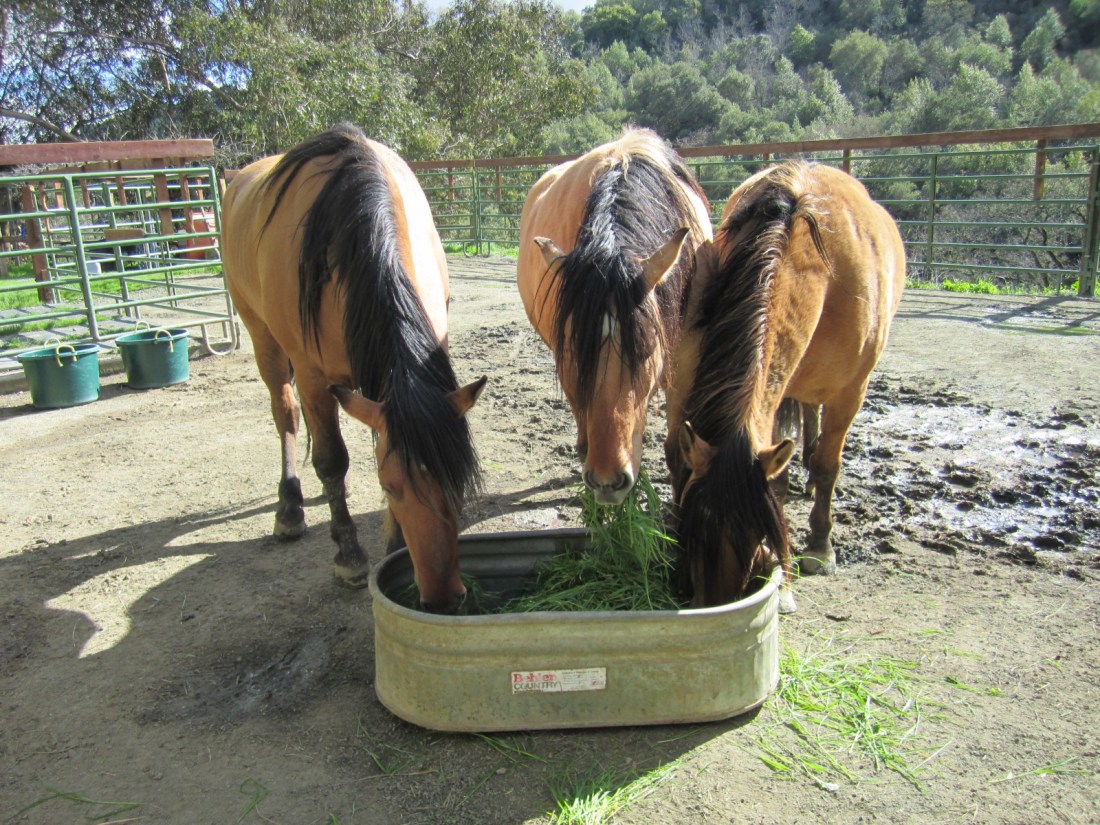
If you can’t have green beer, ask for green grass!

Western Horse Watchers Association
Exposing the Hypocrisy, Lies and Incompetence of the Wild Horse Advocates
Around the ranch
If you can’t have green beer, ask for green grass!
The mustangs remind you that today is the second Friday of Lent, no meat.
A rule change announced last May that allowed an individual to purchase up to 25 wild horses and burros per day, no questions asked and no waiting period, has been dropped, according to a report that appeared today in YubaNet of Nevada City, CA.
Sales will now be limited to a maximum of four wild horses or burros every six months, a rule that went into effect in 2014.
The report did not indicate if the limits apply to WHB adoptions.
The pintos in this video are amazing! H/T Black Hills Wild Horse Sanctuary.
BLM announced today that persons who adopt wild horses and burros can receive a $500 payment from the government within 60 days of the adoption date, and an additional $500 within 60 days of titling for each animal adopted.
The incentive is available for animals at BLM facilities, off-site adoption events or the Online Corral.
The current wild horse and burro population on western rangelands is now more than triple the number the land can support along with other legally mandated uses, according to the news release.
That means the driver for the incentives, which appeared in the infamous BLM Report to Congress, is public-lands ranching.
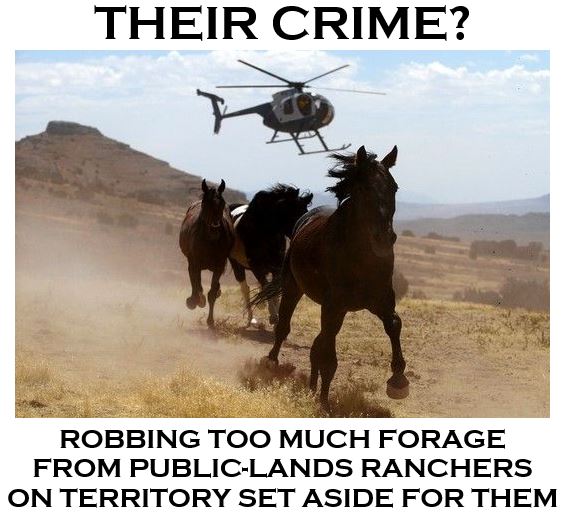
If it was really about saving money or protecting the land, they’d leave the horses on the range and tell the ranchers to take a hike.
RELATED: Wild Horse Overpopulation?, Economics of Wild Horse Gathers.
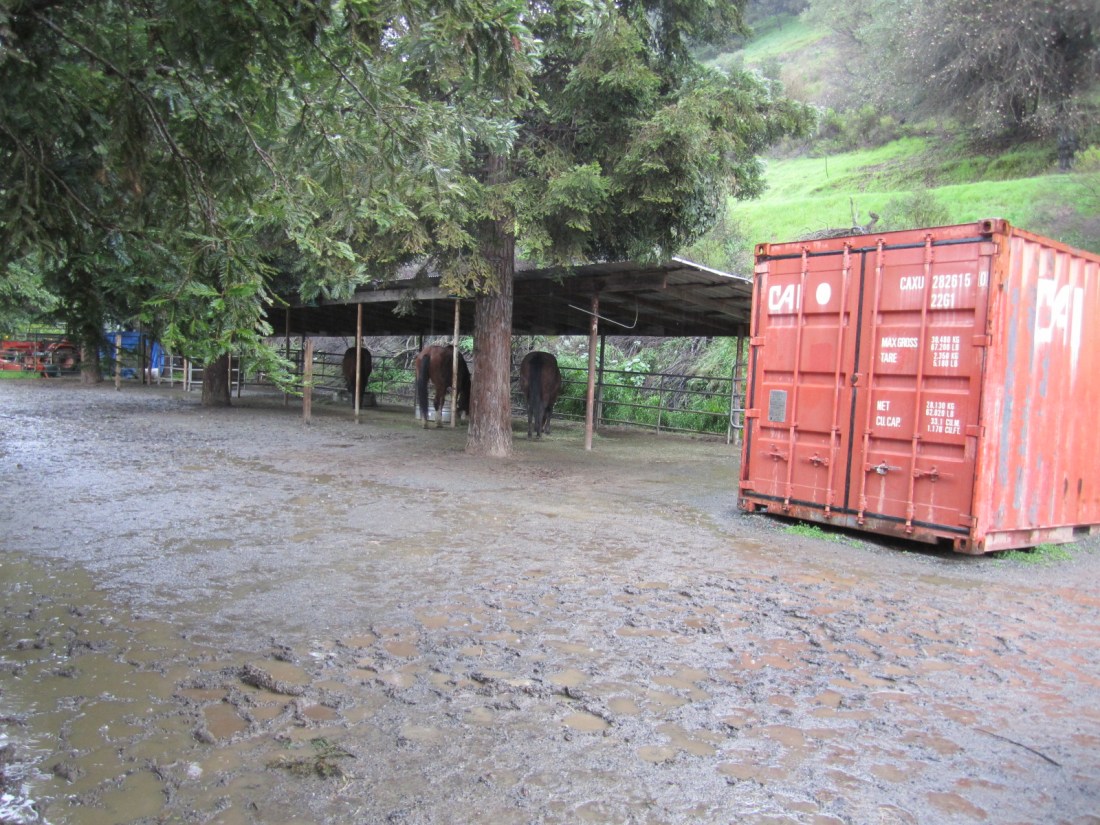
Might as well stay inside and eat.
A syndicated report about wild horse overpopulation, originating in Cheyenne, WY, appeared today in national news outlets, many of them left-wing rags only too happy to repeat the lies of their precious government.
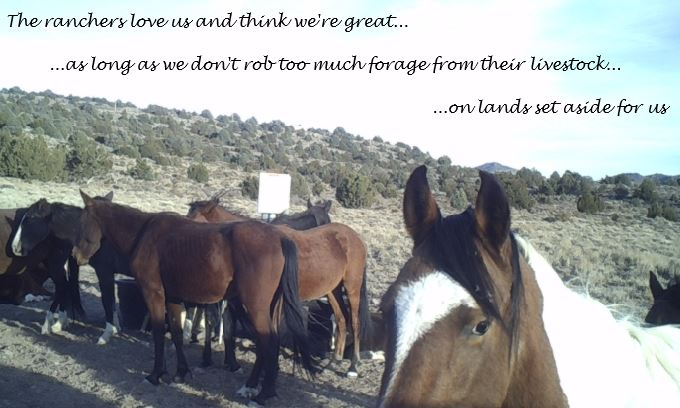
A representative of The PZP Channel suggested that shooting wild mares in the ass with contraceptives was better than forcing them off their home range and shipping them to private pastures. Never mind that the land was set aside for them in the 1971 statute (as it exists today, amended by ranching interests).

The original news release, posted by the BLM on 03/04/19, said the current wild horse and burro population in the western U.S. is “more than triple the number of animals the land can support in conjunction with other legally mandated land uses.”
Refer to the Lexicon if you don’t know the meaning of ‘other mandated uses.’
There is no wild horse overpopulation. It’s nothing more than a bullshit storyline to justify current land-use policies and give cover to the government serfs.
RELATED: Wanted: More Off-Range Pastures for WHB.
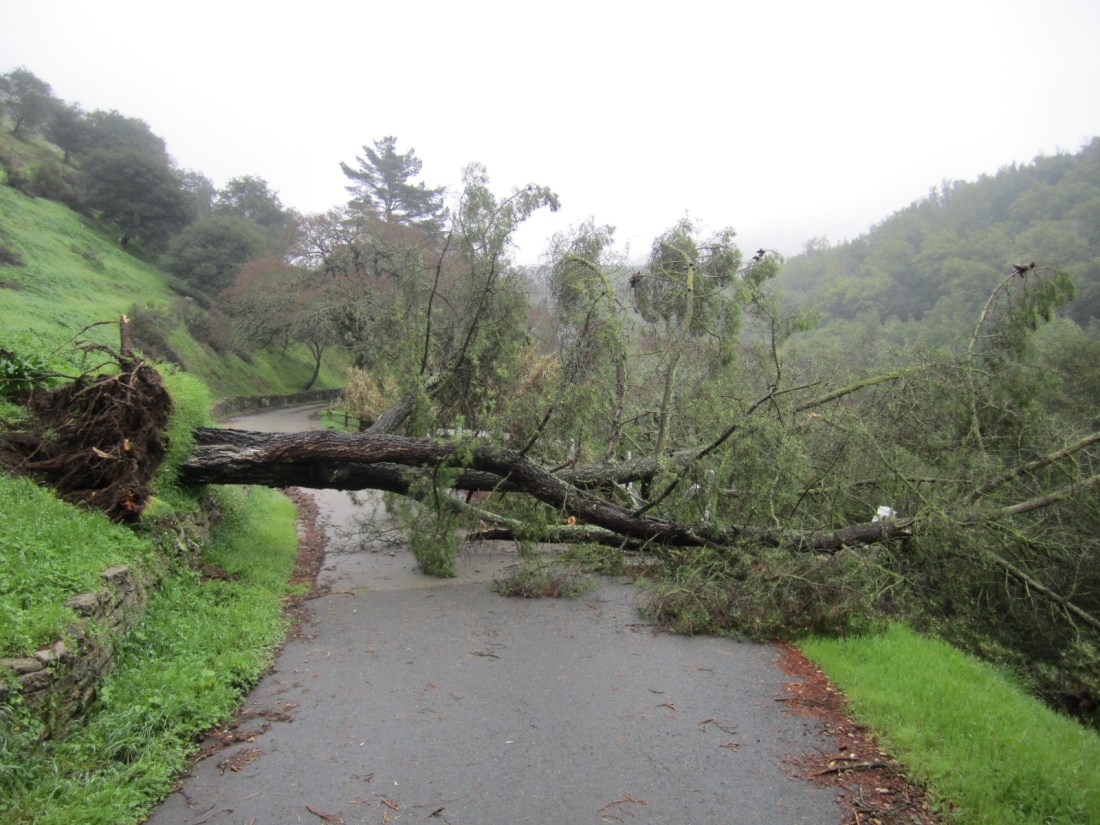
The first part of the job was to get the driveway reopened, which was accomplished by cutting the trunk and main branches, and dragging the logs out of the way.
It’s getting so bad out west that when the rain stops for a few hours in the afternoon, we call it a dry day.
RELATED: Bad Tree Day.
First Friday of Lent, no meat. Scrambled eggs are good, especially if they’re produced by your own flock (see this video). Other items of interest include meds for the horses, food for the cat and water samples from the well.
Don’t wash free-range eggs until you’re ready to use them.
RELATED: Backyard Chickens – Intro.

New video about the wild horse and burro training program at the state prison in Florence, AZ, which is sponsored by Arizona Correctional Industries, Bureau of Land Management and the Arizona Department of Corrections.
Inmates are taught how to care for the animals and prepare them for adoption, a process known as ‘gentling.’
Programs like this one have been proven to reduce recidivism, a positive result for the inmates and taxpayers.
The Florence Off-Range Corrals, destination for wild horses and burros removed from public lands in the state, are also on prison grounds.
The mustangs remind you that tomorrow is Ash Wednesday, no meat.
BLM requested bids today for long-term care of wild horses and burros removed from public lands in the western U.S. A similar request was posted last June.
Facilities must be located in Colorado, Idaho, Kansas, Montana, Nebraska, Nevada, North Dakota, Oklahoma, Oregon, South Dakota, Texas (panhandle only), Utah, Washington or Wyoming. Contracts will be awarded for 200 to 5,000 animals, with four-year and nine-year renewal options.
Western rangelands can’t support the current number of wild horses and burros in conjunction with ‘other legally mandated uses,’ according to the news release, a euphemism for ‘privately owned livestock.’
What does this say about the 2019 roundup season? Ten thousand plus?
The forage currently allocated to livestock on public lands managed by the BLM would support 750,000 wild horses and burros, enough to empty all of the off-range corrals and long-term pastures fifteen times over.
RELATED: Wild Horse Overpopulation?, Economics of Wild Horse Gathers.
UPDATE: See also this report posted today by Oregon Public Broadcasting.
Too much rain out west. Pine tree appeared to be leaning on 03/02/19, a few hours later it was on the ground. Short video posted to WHW YouTube channel.
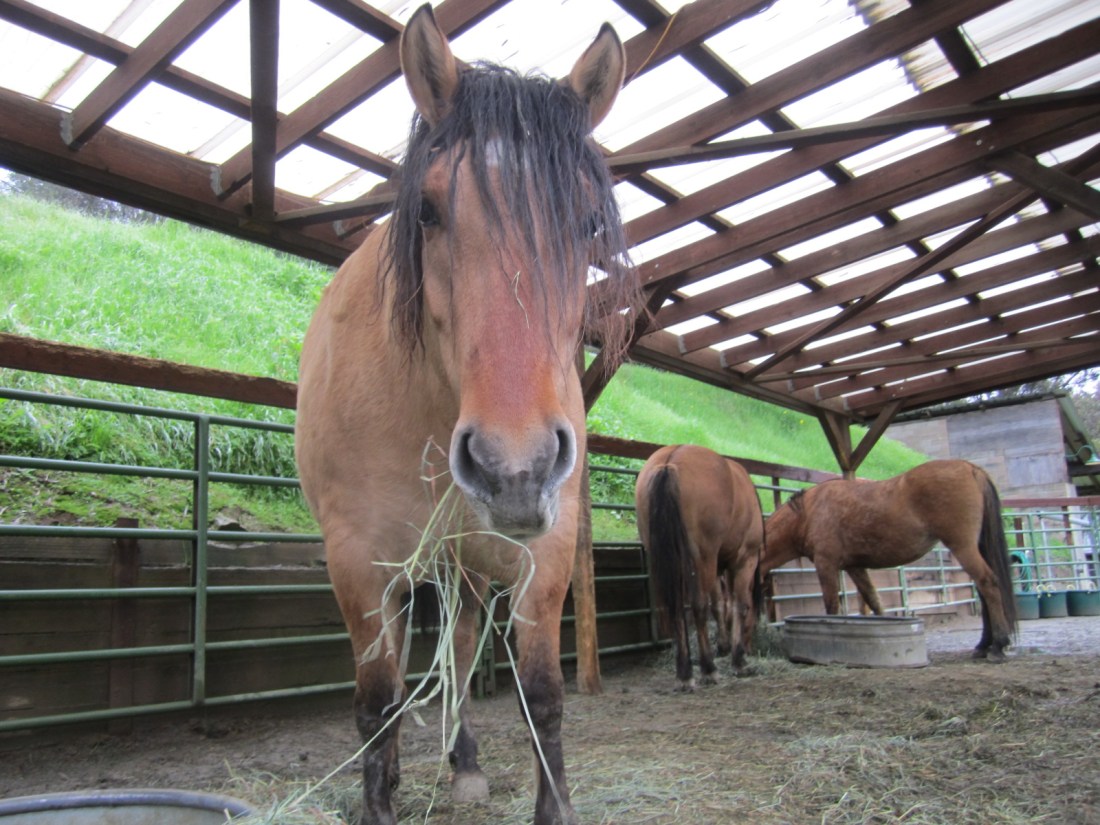
Too much rain, too much humidity. Photo taken 03/03/19. BLM mustang adopted in 2015, mom and brother in background.
A fire at Paint’d Horse Stables in Monroe, WA destroyed the main barn and arena on 02/28/19, claiming four horses, two tons of hay and some ranch equipment, according to a report posted today by KIRO-7 News in Seattle.
The facility rescues wild horses from the Yakama Indian Reservation that would otherwise go to slaughter.
The report did not indicate if the deceased animals were locked in stalls.
Sixty wild horses will be available for adoption March 15 – 16 at the BLM Rock Springs Wild Horse Holding Facility on Lionkol Road. They were removed from the Green Mountain and Stewart Creek HMAs last summer as a part of the Red Desert gather.
Refer to this announcement for details.
Memory card reached its limit while filming this on 02/22/19, but you get the idea.
Video of Waipio Valley horses posted to Mustang Monday, 02-25-19.
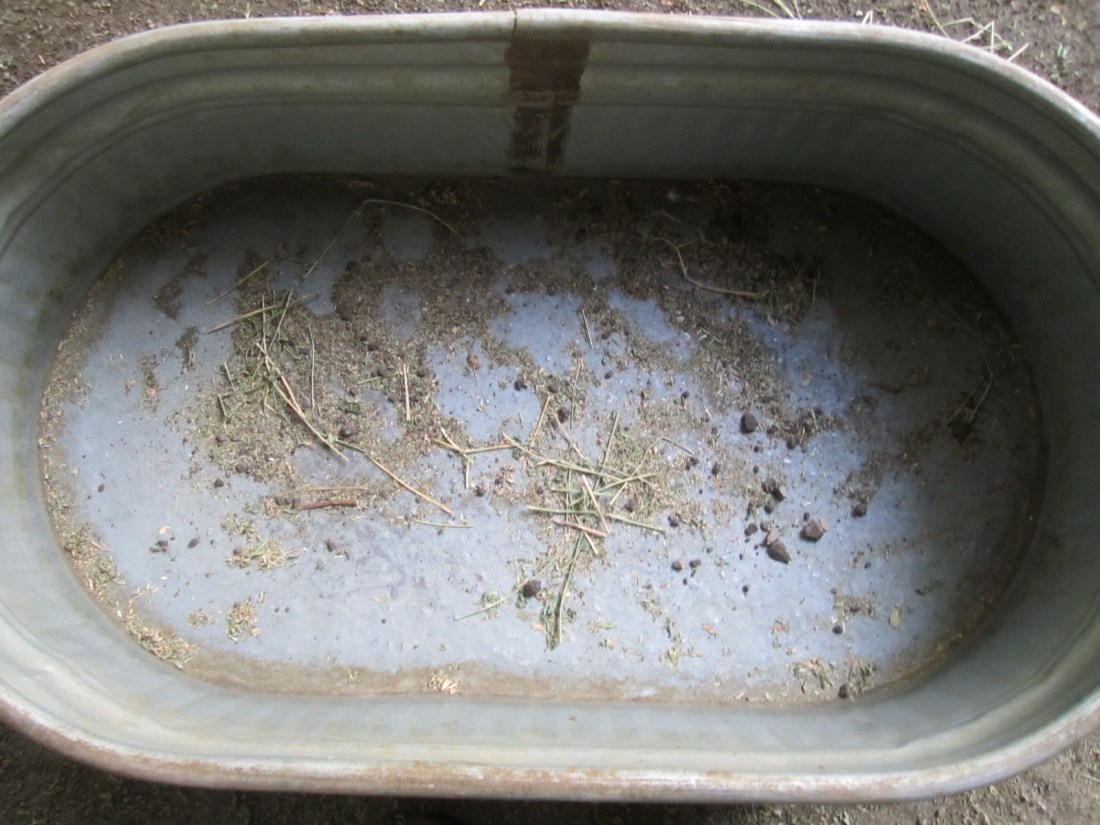
1. You find rocks and sand in the bottom of your feeders.
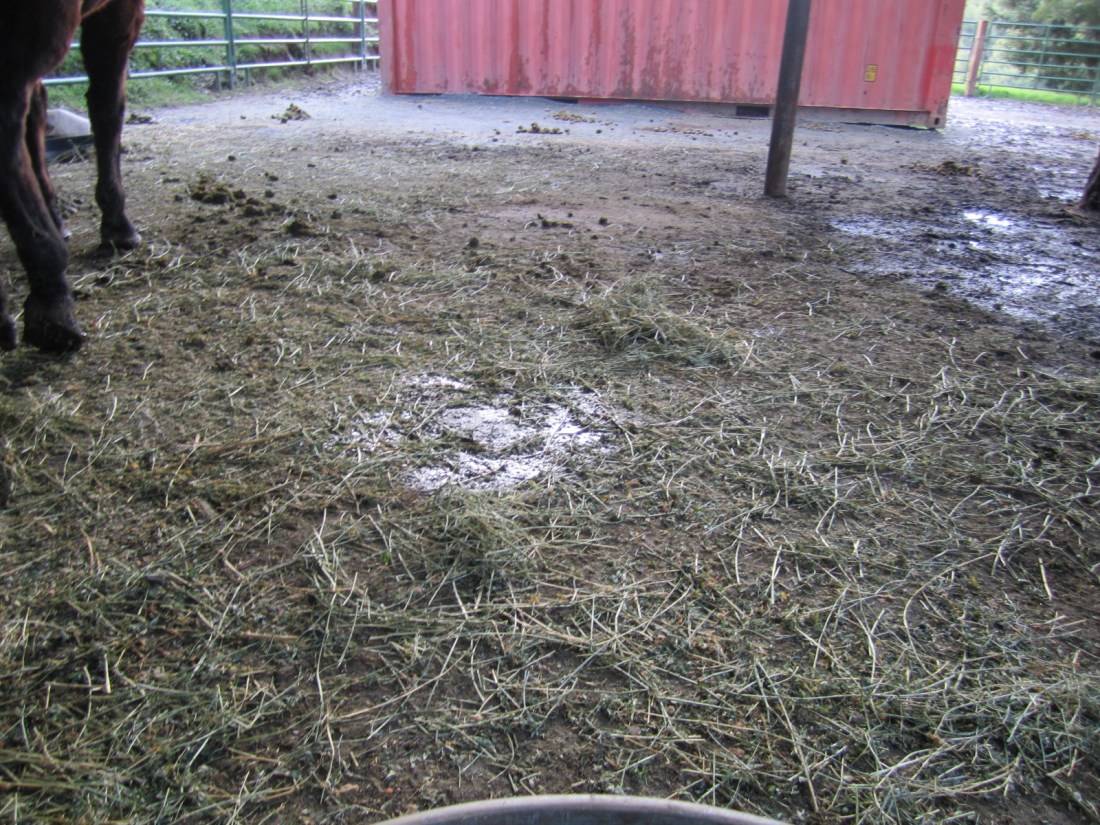
2. There’s uneaten hay all over the place. The horses use it like bedding.
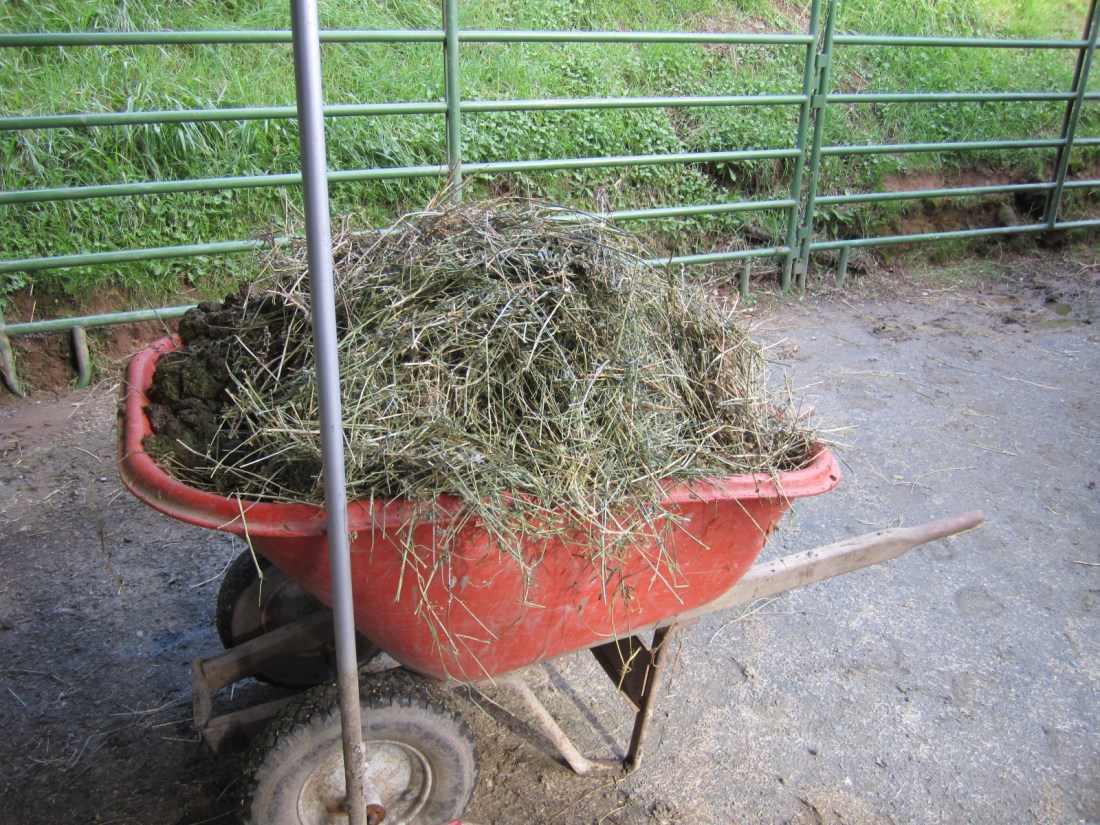
3. When you finish cleaning the corral, there’s more hay in the wheelbarrow than poop.
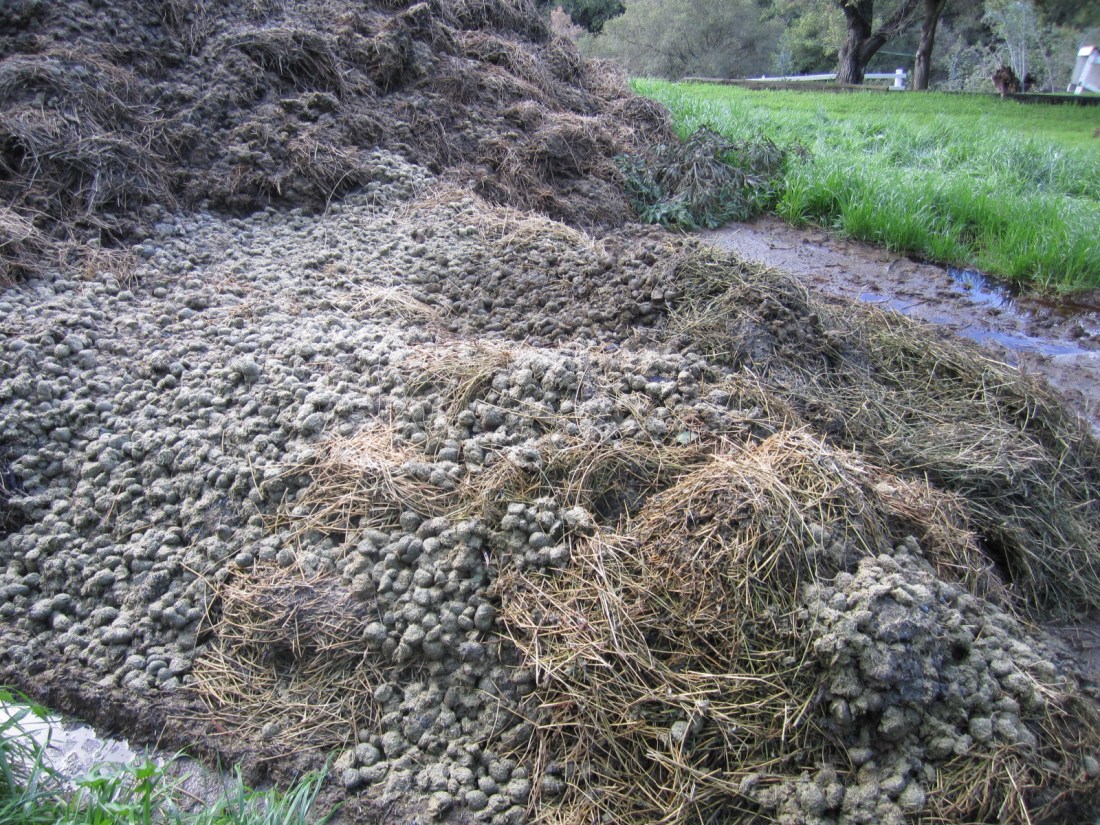
4. Your poop pile is starting to look like a hay pile.
5. The feed store charges you $17 a bale for this stuff.
Last two months have been very wet and the hills are now velvety green. The dry season will begin in May with a bumper crop of fuel.
These photos were taken 02/17/19 in the same places as the previous report. Note the lowest rail in the pipe panels is now pretty much submerged.


The electric company installed these instruments last fall, presumably to monitor wind and humidity, and help them decide if power should be shut off because the risk of fire is too high.

Strong to the finish ’cause they eats their spinach! Colt on the left, mom in the middle, filly on the right. Family unit, not locked in stalls. Adopted 2015.

