Thank you for your attention.


Western Horse Watchers Association
Exposing the Hypocrisy, Lies and Incompetence of the Wild Horse Advocates
Opinion
Thank you for your attention.
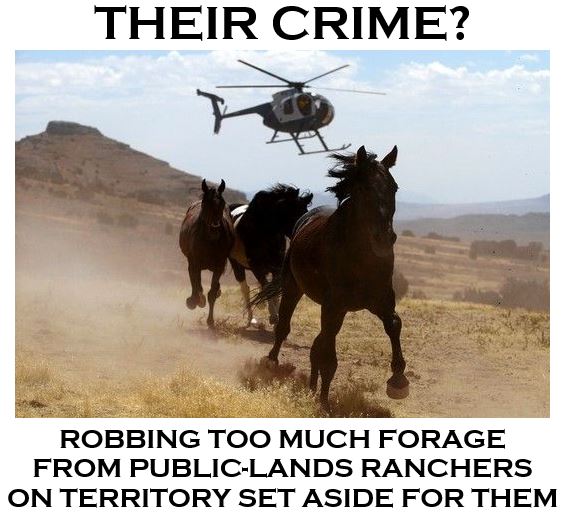
Refer to this report, posted yesterday by the Times of San Diego. Like most efforts in the wild horse world, it treats the symptoms but does not address the causes of declining wild horse populations on western rangelands, the greatest of which is public-lands ranching.
The director of a national ‘advocacy’ group praised the action, stating that horses should be regarded as “…partners, companions and icons of the American West who must be treated humanely [i.e., darted with PZP], not brutally butchered to supply foreign horsemeat markets.”
She’s fully on board with the overpopulation narrative, a bullshit storyline that draws attention away from the truth.
RELATED: Public-Lands Ranching: How Bad Is It?, Stop the Roundups, Fertility Control is Better!
Refer to this story, posted yesterday by the
“The reduction is needed to maintain wildlife and livestock habitat and reduce wildlife degradation of public lands, according to a BLM advisory.”
The overpopulation narrative prevails: The horses have to go, on lands that belong to them! Many of the so-called advocates, including the PZP zealots, take this position.
Nobody bothers to look at the data. If they did, they’d realize that the lion’s share of the forage goes to privately owned cattle and sheep.

This has to stop. The WHB Act has been inverted. Nullification is next. The BLM and USFS need to come clean with the numbers. Put them out there for all to see. Let the people decide which species should be removed from western rangelands.
RELATED: Silver King Roundup In the News, Public-Lands Ranching: How Bad Is It?, Stop the Roundups, Fertility Control is Better!
Basically, because it has a wet season and a dry season, not because of climate change.
The wet season, which begins in October, is marked by storms coming in from the west and northwest. The hills slowly become a velvety green.
Most of the vegetation dies off in the dry season, which begins in May. The hills become golden brown, dotted in some areas by Oaks, Redwoods and Pines.
Next, consider the fire triangle. A fire needs fuel, oxygen and an ignition source.
Oxygen is always available, unless you’re living on Mars. As for the fuel, see the remarks above about the dry season. Here is Mt. Poop on 05/26/18, barely visible, surrounded by wild oat in its final days, five to six feet tall (for a recent view of the same area, see this video).

The wet season ending in 2017 brought twice the normal amount of rain. There was a population explosion of everything. Small animals running all over the ranch that had never been seen before (or since). The ground was pockmarked with their holes.
Vegetation died off, leaving many seeds.
The wet season ending in 2018 accrued much less precipitation than the previous year until March, which saw rain almost every day.
Here is another photo from 05/26/18. This is the fuel.

Dead and dying chaparral add to the mix (photo dated 11/24/18).

Ignition sources include, but are not limited to, lightning, camp fires, power lines, cigarettes, off-road vehicles and trailers with safety chains dragging on the road.
Prompted by fires in 2017, Pacific Gas and Electric Company came up will a brilliant idea: shut off power to those at risk. Rural customers, on private water systems, would lose their ability to fight fires unless they had backup generators. (This was not done ahead of the Camp Fire.)
Having spent the summer and fall knocking down dead grass, I can tell you it was very thick and heavy this year. The effort stalled on 11/22/18, after receiving the first appreciable rainfall of the new wet season. Photo taken 11/24/18.

If you move the piles aside, you’ll see new sprouts (photo dated 11/24/18).

The 2019 wildfire season is now getting started, whether you’re ready for it or not.
First it was global cooling. Then it was global warming. Then they switched to climate change so they could play it both ways.
If you have a wildfire, it’s climate change. If you don’t have a wildfire, it’s climate change.
If you have a hurricane, it’s climate change. If you don’t have a hurricane, it’s climate change.
If you have an earthquake, it’s climate change. If you’re Danny Glover.
See this report posted today by AP News.
There must be a mistake. One got through. Not a link to a specific post but to the blog.

“We have spoken to the developers and it won’t happen again.”
Eastbound on I-80, descending from Truckee, CA on 11/16/18. A chance to get away from the smoke-filled valleys of the west. On the return trip, haze from the Camp Fire was encountered at Auburn, CA, with a strong odor filling the vehicle at Penryn.
This speech may have been produced for a homework assignment, but it’s a fairly good assessment of the current situation in the wild horse world. H/T Amanda WH.
Today we honor our veterans. H/T Heart Of The Homefront for the video.
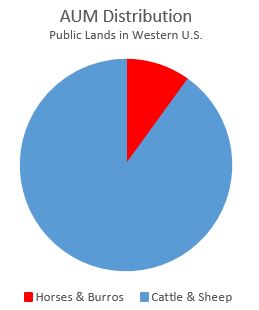
Wild horses and burros consume one million AUMs per year, cattle and sheep consume nine million AUMs per year. Ten percent vs. ninety percent. A ‘thriving ecological balance’ is only a few more roundups away.
Looking west around 4:00 PM on 11/09/18, Contra Costa County, CA. Wildfires about 150 miles to the north.

One of the speakers at the WHB Advisory Board meeting last month presented these statistics on wild horses and burros in 2018:
Also presented at the meeting were some stats on livestock in 2017. The BLM livestock page provides the available land.
The WHB data yield a stocking rate of 2.6 animals per thousand acres (71,000 divided by 27,000,000 times 1000).
The aimed-at stocking rate for WHB is one animal per thousand acres (27,000 divided by 27,000,000 times 1000). This will be an indicator of a successful program, in the eyes of the public-lands ranchers and their allies at the BLM, along with many of the wild horse advocates.

The livestock data yield 1.5 million cow/calf pairs on western rangelands (per previous post), for a stocking rate of 19.4 animals per thousand acres (3,000,000 divided by 155,000,000 times 1000).
The livestock population target is 2 million cow/calf pairs (per previous post), which yields an aimed-at stocking rate of 25.8 animals per thousand acres (4,000,000 divided by 155,000,000 times 1000). This is another indicator of a ‘successful’ program.
So, if you’re talking about wild horses, public lands can only support one of them per thousand acres. If you’re talking about domestic cattle, the range can support 26 of them per thousand acres. In some cases it’s the same land!
This casts a long shadow over the concept of Appropriate Management Levels (AMLs), which supposedly represent the carrying capacity of the land. In view of these results, they only denote forage consumption the ranchers are willing to tolerate. They should be renamed Acceptable Forage Losses (AFLs)—the number of horses for a given area that won’t rob too much of the ranchers’ birthright.
Also keep in mind that many wild horse advocacy groups, large and small, agree with the overpopulation narrative, and that is the basis of their fertility control efforts.
They’re not friends of the horses.
RELATED: They’re All Starving, Public-Lands Ranching: How Bad Is It?
Election’s over, swamp prevailed. This photo from the Drudge Report tells the story.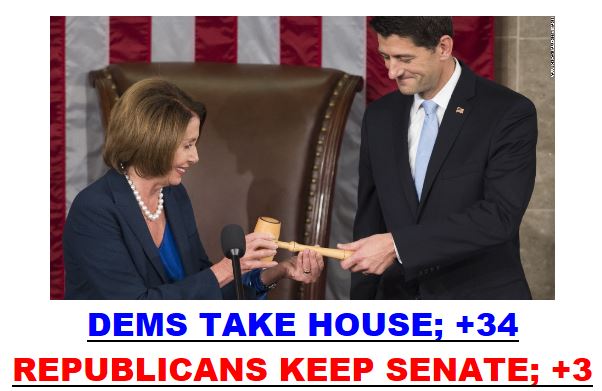
Could be subtitled ‘Emasculated Speaker Yields Control to Satan’s Sister.’ Butt sex and baby slaughter are back!
Drain the swamp. Make western rangelands great again!
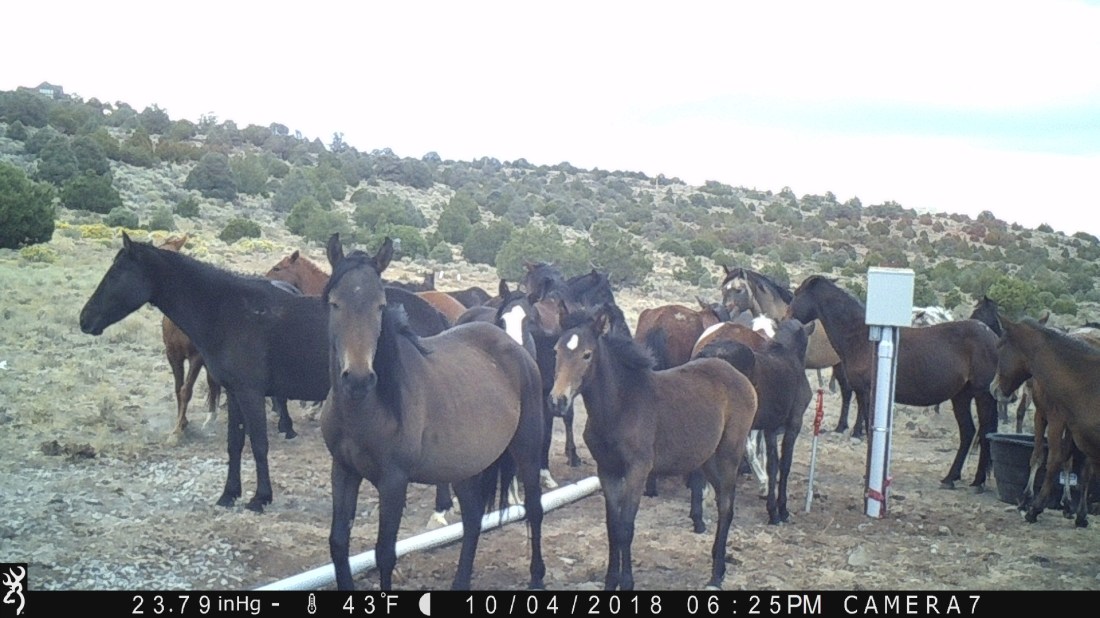
A report published yesterday by Santa Cruz Sentinel said 130,000 more residents left California for other states last year than arrived from them, with many fleeing the high cost of living. The overall population grew, however, due to births and immigration.
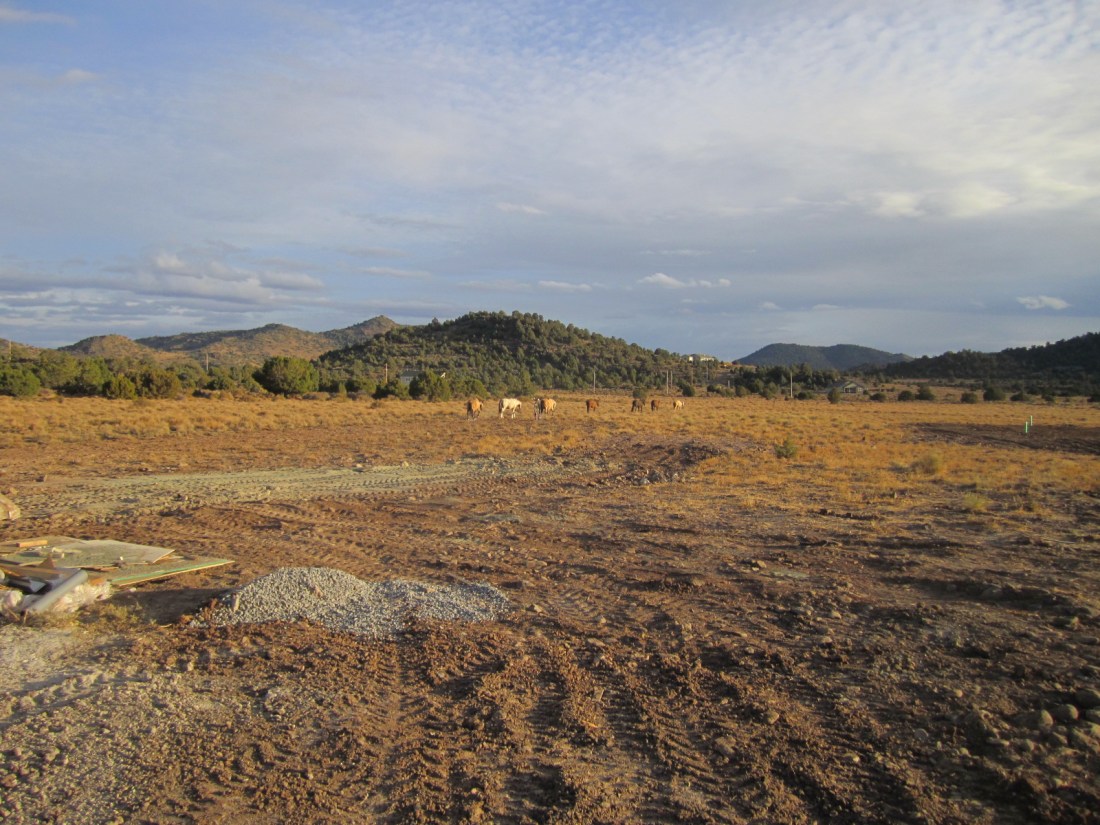
Unlike the Spruce-Pequop Incident, a judge’s decision to halt the sterilization of mares at the BLM wild horse corrals in Hines, OR has been picked up by national news outlets.
Wild horse enthusiasts may be pleased with the ruling, but it’s still a win for the public-lands ranchers, who have access to most of the Warm Springs HMA, and it’s now devoid of horses (grazing allotments denoted by green in the following map from 2014, HMA boundary highlighted in yellow).

If the project is stopped for a few years, will the HMA be restored to pre-gather conditions? If not, will the 200 horses that were to be returned after sterilization be allowed to go back?
The HMA contains 475,460 acres and has an AML of 202, for an aimed-at population density of 0.42 animals per thousand acres, the lowest of all HMAs in Oregon.
RELATED: Federal Judge Says No to BLM Sterilization Experiments.
All of the 27 former wild horses, removed from the Little Bookcliffs Wild Horse Range last month, were adopted yesterday according to a story posted yesterday by KJCT8, the ABC affiliate in Grand Junction, CO. It was not a cash-and-carry event, which bypasses customary rules for wild horse ownership.
The WHR contains just 36,000 acres and is one of only three areas in the western U.S. managed ‘principally but not exclusively’ for wild horses. The AML is barely large enough for genetic viability of the herd. Would be nice if the so-called advocates pushed for more territory, at least 150,000 acres, instead of helping the BLM set the traps.
Congress intended that all lands where wild horses and burros were found, when the WHB Act became law, be managed principally but not exclusively for those animals (in keeping with the concept of multiple use).
Today, 40% of that land, perhaps a bit more, is no longer managed for wild horses and burros, and livestock vastly outnumber them on western rangelands, marking a return to the ‘fast disappearing’ days of the Act.
RELATED: Little Bookcliffs Adoption This Weekend.
At the Wild Horse & Burro Advisory Board meeting last month, one of the speakers provided these statistics for livestock grazing in 2017:
As noted in this post, there were approximately 82,000 wild horses and burros on western rangelands earlier this year, compared to 1.5 million cow/calf pairs or cow/calf equivalents (e.g., if they were all sheep there would be 7.5 million of them because one cow/calf pair = one horse = five sheep).
Wild horses and burros accounted for 1 million AUMs compared to 8.8 million AUMs for livestock. Are the livestock confined to HMAs and HAs? No. Do wild horses and burros stay inside the HMAs and HAs? No. But they all graze on western rangelands.
If livestock AUMs were sold out, there would be over 2 million cow/calf pairs on western rangelands (12.3 million divided by 6).
How much worse could it get?
The BLM and USFS, along with the public-lands ranchers, want WHB populations reduced to AML, which is 27,000. They are pursuing that goal aggressively, with over 10,000 WHB removed from western rangelands this year. If they hit both targets, WHB would account for 0.3 million AUMs annually (27,000 times 12), while livestock consume 12.3 million AUMs.
Two million cow/calf pairs (four million head), privately owned, on public lands, compared to 27,000 horses and burros.
If they had their way, there’d be few if any horses and burros on public lands, taking the scheme to the limit. Keep in mind the ranchers pay $1.41 to graze a cow/calf pair for one month. You couldn’t feed a parakeet for that!
The greatest threat to wild horses and burros is public-lands ranching, which has the appearance of rugged individualism but is actually a form of government dependency.
Which political party wants more and more people dependent on an all-powerful centralized government?
Which party believes in contraception, sterilization and euthanasia?
Which party hates private property, free markets and self-reliance?
If the mainstream media want a story on collusion, let them investigate the ties between the BLM, USFS and ranching industry. Classic ‘swamp.’
Liberalism, which is devoid of truth and The One Who Is Truth, can never be an answer to our problems.
It’s time to do something for our horses not to our horses.
Vote.
The project is now on hold according to a report published this evening by Oregon Live.
 Western Horse Watchers Association