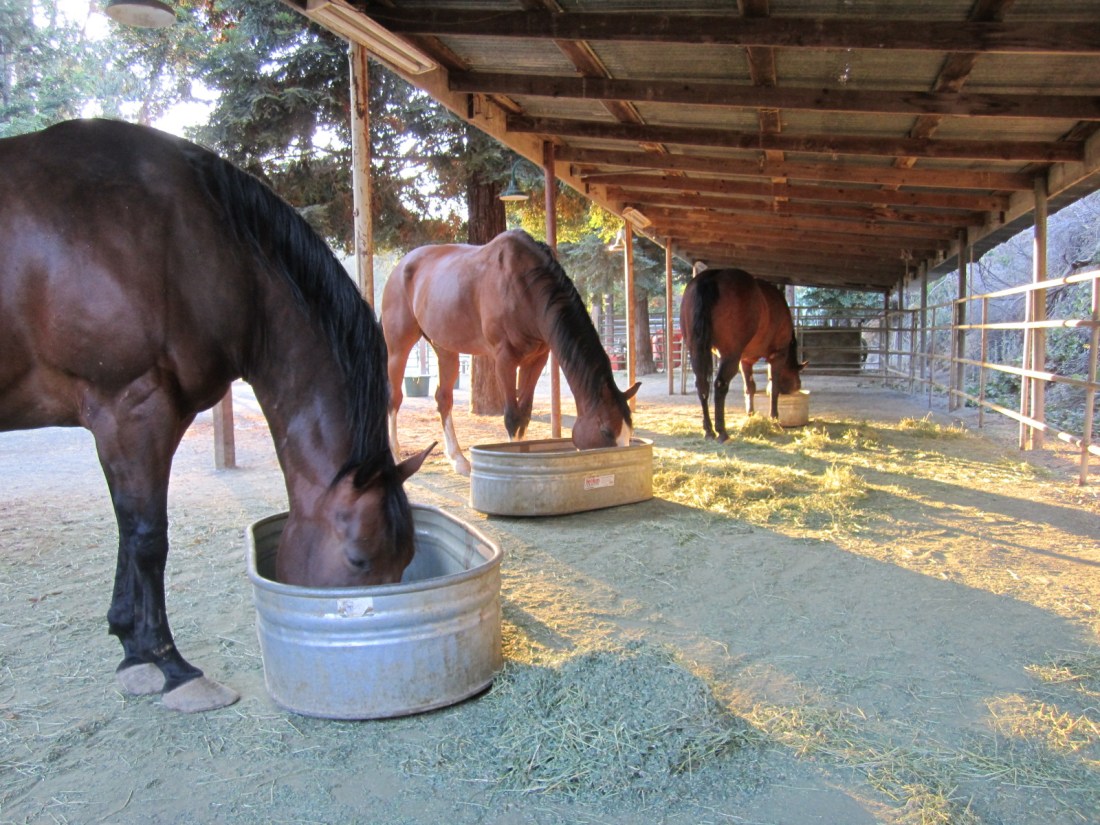
The hay troughs below are only about twelve inches deep. You can buy them with taller sidewalls. Why would a shallow trough be better for the horses?

Western Horse Watchers Association
Exposing the Hypocrisy, Lies and Incompetence of the Wild Horse Advocates
The hay troughs below are only about twelve inches deep. You can buy them with taller sidewalls. Why would a shallow trough be better for the horses?
On Sand Wash Basin HMA. H/T Lebliztx.
Given:
Therefore, every HMA should have at least 150,000 acres.
There are a total of 117 HMAs in Nevada, Oregon and Utah (66% of the HMAs in the U.S.) and 67 are smaller than 150,000 acres (57%).
The Pryor Mountains and Little Bookcliffs Wild Horse Ranges, which have been in the news of late, have 38,000 and 36,113 acres respectively.
The problem is not too many horses, the problem is not enough land.
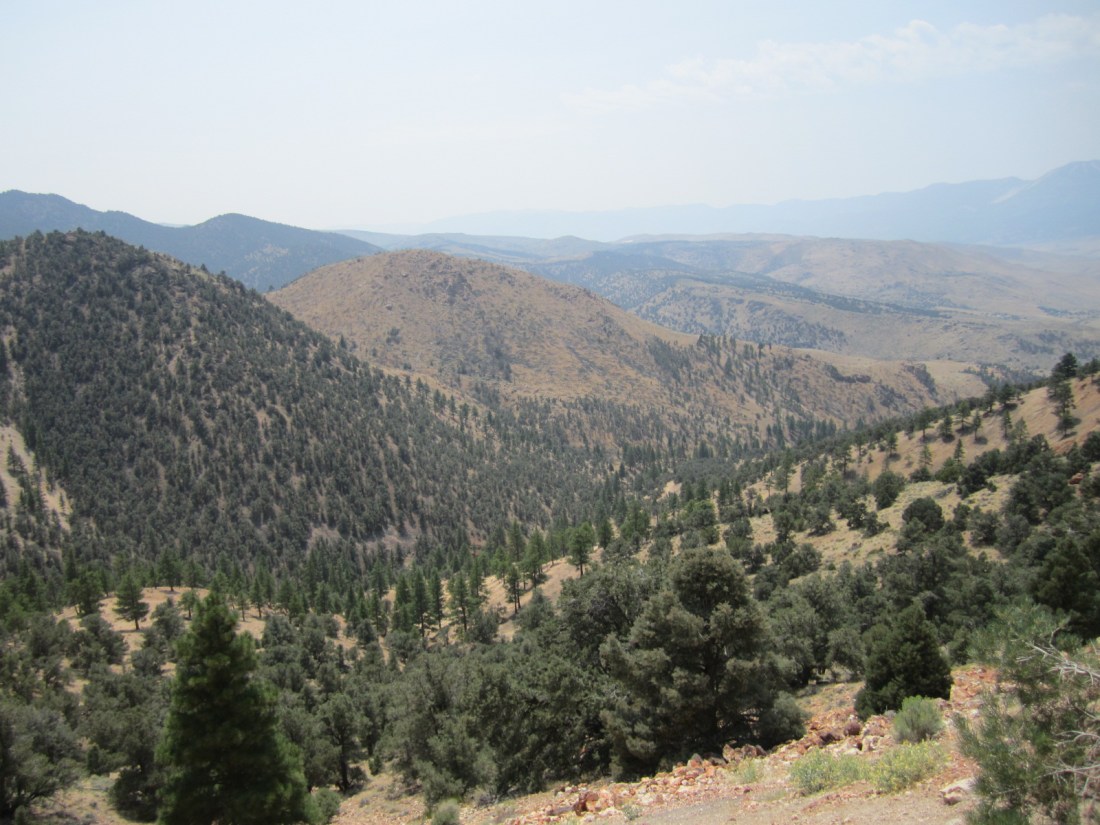
The USFS will remove approximately 1000 wild horses from the Devil’s Garden Plateau WHT, beginning in early October, according to an undated statement at the Modoc National Forest web site.
The roundup will be conducted by Cattoor Livestock Roundup Inc. The announcement did not indicate if gather operations would be open to public observation.
Presumably, horses removed from the range will be taken to BLM holding facilities where they will be checked by veterinarians and offered for adoption.
The WHT covers 308,000 acres and has an AML of 402, for an aimed-at population density of 1.3 animals per thousand acres. It’s located in northeast California.

The announcement did not indicate if livestock were present in the area. A video was included to document current conditions on the WHT (embedded below).
Livestock do not appear in the video and the term is not mentioned in the narrative.
Therefore, it must be those darn oil companies—or mining companies—demanding that the wild horse population be reduced. After all, T-post fencing is a sure sign that drilling and digging are going on just out of frame. Almost certainly there are derricks behind those trees the Forest Service doesn’t want you to see.

The muddy area at 4:07 was caused by the fence not by the horses. Who put that fence there? Not exactly what you’d expect to find in a wilderness area.
Apparently, media coverage of livestock on HMAs and WHTs is taboo, especially during roundup season.
A stallion named Tecate was killed earlier today on Hwy 318 in northwest Colorado, according to a report just posted in the Craig Press. Low visibility was cited as a factor in the incident. The Sand Wash Basin HMA is about 45 miles west of Craig, CO.
He’s right. Those darn horses have been breeding in back alleys, running through neighborhoods, driving down property values. They should be spayed and neutered, just like cats and dogs. Government takes thousands of them off the streets every year, why shouldn’t they do that for horses?
See the report posted yesterday by CBS-4 News in Denver.
As always, the debate revolves around the horses, never around the livestock that have been allowed to invade their territory. The BLM has been an ally of public-lands ranchers and their overlords since Moby Dick was a minnow. It’s a Good Ol’ Boy network if ever there was one. And it needs to be broken up.
That would be your responsibility, Mr. Zinke.
RELATED: Mustang Meg Goes Drone.
More trailcam images of Virginia Range mustangs visiting the new stock tanks.
They don’t stay put very long. They come in and move on in a minute or two.


Another hearing will be held on 09/28/18 to rule on an injunction that would stop the roundup completely. See the report posted today by KTVQ in Billings, MT.
RELATED: WH Advocates Ask Judge to Stop Gather on PMWHR.
UPDATE: Added video.
Video posted 08/28/18 by Salt River Wild Horse Management Group. No description was provided. Questions left in the comment area have not been answered as of today.
Probably intended to show livestock moving into an area where the horses were being fed (due to the drought), not how horses react to spotlights at night.
RELATED: Advocates Bringing Hay to Salt River Horses.
Helicopters would be used to gather all wild horses on Beatys Butte HMA, followed by the return of 100 studs and mares to the range, according to a news release issued yesterday by the Lakeview office. Mares would be treated with a contraceptive (such as PZP). Public comments must be received by 09/28/18.
The HMA is in southern Oregon on the Nevada border. It contains 437,120 acres and will have a population density of 0.23 animals per thousand acres at the end of the process, almost nothing.
The announcement did not indicate if the goal was to have the area horse-free within ten years, but it sure sounds like it. Also omitted from the remarks was the innovative Beatys Butte Wild Horse Training Facility.

A 100% gather was completed in 2015, the result of a new cooperative program between ranchers and the BLM.
The proposed gather marks the next phase of a long-term strategy developed by ranchers, wild horse advocates, environmental groups, elected officials, and state and federal fish and wildlife agencies, according to the announcement.
How many advocates want to see horses removed from western rangelands, families broken up, breeding patterns determined by government? Who benefits from this arrangement?
The wild horse population on Beatys Butte was over 1000 in 2015. Today it’s around 250. The number of livestock in and around the HMA was not provided.
The trailcam photo below shows an underweight horse on the Virginia Range. A WHB specialist might give it a BCS of 3. A wild horse critic (ahem, cough-cough, hater) might argue the horses are overpopulated and need to be removed from the range.
Would that be a fair statement?
A ‘common cause’ belongs to the system and affects all horses in an area. The illness affecting the Waipio Valley horses would be an example. It will probably be attributed to common causes, something in their environment. Ditto for the Sand Wash horses, who are threatened by fencing and drought.
A ‘special cause’ is outside the system and affects only individual herd members. An example would be the horse recently removed from Big Summit WHT.
If you saw many horses with low body condition scores, you’d be thinking common causes, such as excess animals / not enough land / insufficient forage.
In this example you only see one such horse, so you’re looking for a special cause, like illness, injury or loss of teeth.
Two mistakes are possible: (1) attributing a problem to a special cause when it was produced by common causes and (2) attributing a problem to common causes when it was produced by a special cause.
Calling a horse ‘stupid’ because he wandered onto a road and was hit by a car is an example of Mistake #1. Any of the horses in his band could have done that, because a new subdivision is chewing up their land and now they must find food elsewhere.
The critic above is wrong. He has made Mistake #2.

Currently, he’s working with horses recently gathered from Wheeler Pass HMA, near Cold Creek, NV. See the report posted today by KLAS News or visit his FB page for more information. He provides the service free of charge after the horse is adopted.
Story begins at 0:25 in the following video by KLAS News.
RELATED: Cold Creek Horses Find New Homes.
Bait trapping ended 08/29/18, according to a news release issued today, with 801 horses removed from the Nevada Wild Horse Range, the largest HMA in Nevada.
Thirty one deaths were reported (3.9%) and the number of horses returned to the range was not stated. Captured animals were taken to the Palomino Valley Center near Reno, NV and the Ridgecrest Regional Corrals in Ridgecrest, CA.
Gather stats and daily reports can be found on this page.
RELATED: BLM Starts Emergency Gather at Nevada Wild Horse Range.
A report posted today at The Daily Sentinel, titled ‘Volunteers understand why horses have to go,’ explains how the so-called advocates at Friends of the Mustangs are working with the BLM to remove 60 of the 190 horses in the Little Bookcliffs Wild Horse Range.
“Gathers involving the Little Book Cliffs herd have tended to be less controversial…
[BLM’s Jim] Dollerschell said he thinks one of the reasons there is less contention in the case of Little Book Cliffs gathers is because of the longtime partnership the BLM has had with the Friends of the Mustangs in managing the herd.”
Maybe those ‘Friends’ are drunk on PZP fumes.
At the Pryor Mountains, advocates took legal action to stop a planned roundup.
At Sand Wash Basin, advocates brought in water to help the horses cope with drought.
But at Little Bookcliffs, advocates help set the traps.
What the hell is wrong with these people? Couldn’t they figure out a way to keep the horses on the range by bringing in food and water? Drought is a temporary condition, why are they making permanent changes?
The author of the report, possibly aligned with ranching interests, couldn’t resist taking a shot at the horses:
“The pressure the horses are currently putting on their habitat is made evident as travelers leave it and cross into a livestock grazing area that’s still replete with grass.”
Yeah, we should get rid of the horses and replace them with cattle. Go pound sand, dude.
RELATED: BLM Plans Roundup at Little Bookcliffs Wild Horse Range.
Horses generally don’t like things above them, especially predators. Was this a good lesson or a bad lesson for the horse? Is horse-to-rider feedback a part of your training regimen? H/T Mandy Bradford.
As-left condition of corral, good for another day. Their sandbox is on this side of the shipping container (when you come in the back gate). Filmed 08/19/18.
A lawsuit was filed in federal court today by Ginger Kathrens and The Cloud Foundation to stop a planned roundup in the Pryor Mountain Wild Horse Range, arguing that it would destroy the genetic viability of a herd descended from horses brought to the New World by Spanish explorers. Refer to this report in AP News.
RELATED: Best Way to See the Pryor Mountains Horses.
Video posted today from USFS on horses gathered from Wheeler Pass HMA in May 2018 (near Cold Creek, NV).
RELATED: BLM to Offer Cold Creek Horses for Adoption.
Rick Gore lets the cat out of the bag…again. WTWT.

