More Horses Found Dead at Heber WHT

The remains of four wild horses and several coyotes were found between January 15 and 22, near State Highway 260, according to a story posted today by the White Mountain Independent of Show Low, AZ.

All were dispatched by gunshots.

The discoveries were reported to the Navajo County Sheriff’s Office.  Personnel from the Forest Service were not available due to the federal government shutdown.

A motive was not discussed in the article.

The Heber WHT lies within—and is surrounded by—grazing allotments.  See the map on page seven of this document.

That wild horses rob forage from the public-lands ranchers is well established, including mares that have been darted with contraceptives.

Can coyotes take down young calves?

Last October, two stallions were found dead in the WHT, also killed by firearms.

RELATED: USFS Still Silent on Heber Wild Horse Shooting, Advocates Disappointed with Heber Recommendations, Wild Horse Narrative.

Comment on the Brumbies

The loss of dozens of wild horses in Australia has been in the news for several days, but was passed over by this writer because the circumstances were not understood and the location was beyond the scope of this blog.

But when liberals use the incident to push their Marxist agenda, well, that’s fair game.

The kook who wrote the piece said the horses “died a horrific, cruel death,” blaming them on “people who drive gas-guzzling trucks, luxury cars, SUVs, and so on.”

Omitted from his worldly concerns are the cruel and horrific deaths experienced by pre-born kids as they are hacked to pieces in their mother’s wombs and sucked out by vacuum cleaners in women’s ‘health clinics.’  (Also missing are the acts committed by the sodomites—so vile they cannot be put into words.)

Nope, he’s worried about carbon emissions and global warming.

Worst of all, he’s not getting the help he needs.

An example of those ‘immoral’ vehicles, which should be outlawed, can be found on the masthead of the WHW YouTube channel.

RELATED: The Most Pressing Medical Issue of Our Time.

CANA Foundation: Don’t Give Them a Penny

Manda Kalimian, founder of the non-profit organization that aims to ‘re-wild’ horses removed from western rangelands, made the following statement in an article posted 01/22/19 by the Navajo-Hopi Observer:

“I think we need to be looking at horse slaughter in the U.S. because we’re still exporting these horses (to Canada and Mexico), but we’re not saving them from being slaughtered.  Humane horse slaughter is an option that needs to be revisited and seriously revisited.”

Enough said.  The mask has come off.

RELATED: CANA Foundation Sponsors Panel on Wild Horse Protection.

DVM Pushes Back Against Colville Gather

Although the wild horse roundup has been delayed, a veterinarian and member of the Colville Tribes has spoken out to make sure it doesn’t happen.

She observed that wild horses are an ‘easy scapegoat,’ but noted that

“Many legitimate studies by government agencies, universities, and animal groups show that livestock with cloven hooves can do a broader range of damage, can consume more types of plant species, and will drink more water than horses.”

A long term program that benefits the tribe and the horses should be developed, she explained, to avoid “…the loss of this basic element of our heritage.”  Refer to this story, posted yesterday by The Star of Grand Coulee, WA.

RELATED: Colville Gather Announced.

Wyoming Advocates Push for ‘Wild Horse Highway’

Volunteers with Friends of a Legacy, a group that works with the BLM to manage the wild horses of McCullough Peaks HMA, has asked the state legislature to formally name a section of U.S. 14/16/20 running from Cody to Emblem, according to a report posted yesterday by the Powell Tribune.

The HMA is on the north side of the road, while the neighboring Fifteenmile HMA is a few miles to the south.

mccullough_peaks_hma_map-1

Both HMAs are subject to permitted livestock grazing.

mccullough_peaks_grazing_map-1

The group received $5,000 last year from ASPCA to dart mares with contraceptives, signifying their assent to the overpopulation narrative.  (The ASPCA, an organization that guards against cruelty to animals, actually inflicts it.)

You have to wonder if these people have ranching backgrounds or ties to the ranching industry.  What a great way to get rid of the last few wild horses remaining on western rangelands.

These maps indicate that roughly half the land in this part of Wyoming set aside for wild horses is no longer managed for them, supposedly due to inadequate food and water, yet it can support privately owned cattle and sheep.

RELATED: Wyoming Advocacy Group Receives $5000, Aids Ranchers, Livestock Grazing in Wyoming.

Backyard Chickens – Intro

If you have horses on your property, you can probably have chickens too.  Even in urban areas, you may be able to keep a few hens for personal use.  Check the ordinances.

To get started, you’ll need these items:

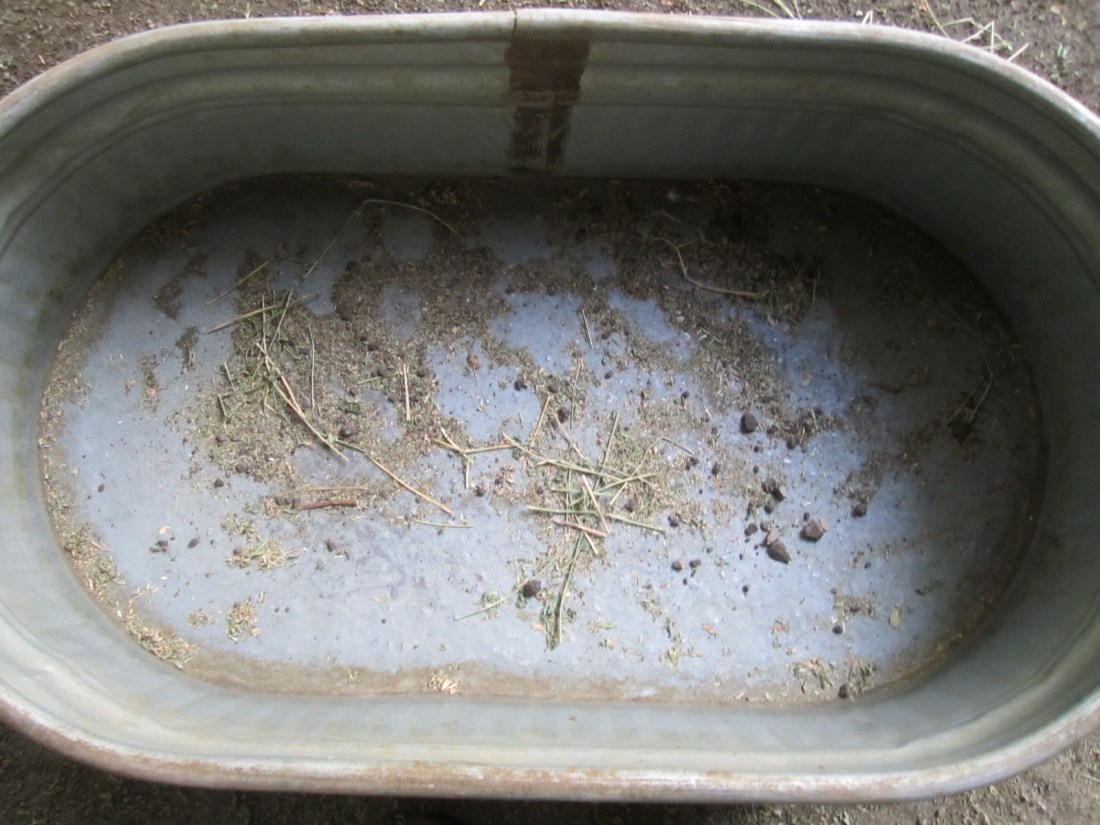
  • Galvanized tub with screen and lamp
  • Coop with covered run
  • Wood shavings
  • Feeder
  • Waterer
  • Chicks
  • Egg cartons

Feed stores usually have chicks in the spring, some have them year around.  Start with four to six.  They must be kept warm until they have feathers.

Place them in the tub with some bedding, cover it with a metal screen, and set a reflector lamp on top.  Sixty to seventy five watts should be adequate (incandescent bulb).  Add feed (medicated) and water daily.  The chicks will outgrow the tub in three to four weeks but will be ready to go into the coop.

Choose a location that’s level and protected from wind.  Coops are usually built with wood frames and wire cloth.  Chicken wire is not acceptable.  The mesh for the wire cloth should be 1/2 inch or less.  Install it on the floor of the coop to stop rodents from tunneling their way in.

img_0613

You can build a coop or buy one.  The feed store probably sells them, ready to use.  You can also find them online.  Ideally, the run would be of walk-in height.

img_0612

You’ll need to access the run daily.  The feeder and waterer can be hung from the wood frame if strong enough to carry the weight.  As with horses, you should provide clean, fresh water every day.  The hen house should also be accessible but if the nesting boxes have separate access (such as the hinged cover on the left in the top photo), you won’t need to open this door very often.

img_0605

Put some wood shavings in the nesting boxes and on the floor of the hen house.  A ramp extends from the house down into the run.  Two bales of straw can be positioned below the house for additional protection from wind and rain.

img_0630

A corrugated roof can be added to the run to keep it dry.

img_0636

The last step is to place the chicks in the cage.  They can go outside when three months old.  If the cage is in a remote area, there is a risk of predation by hawks and coyotes.

img_0666

Allowing them to go scratch for bugs and seeds (known as free ranging) may improve the quality of the eggs.  Don’t worry about getting them back in the cage at sunset, they will do that by themselves.  Just remember to close the gate!

Be prepared to find little ‘fox holes’ where they have temporarily nested.  They can make a mess of your yard and garden.

At this point you can go back to the feed store and get a few more chicks, repeating the process to build up your flock.  The coop in these photos will handle ten to twelve hens, although it held sixteen at one point.

Eggs will appear in the nesting boxes when the hens are about five months old.  Their feed should be switched to the non-medicated type before this time.  Read and follow the directions on the bag.

IMG_4960

Photos above were taken in 2011, when everything was new, except for the last one.

This YouTube video from 2018 shows the ‘halfway house’ that was added a few years after the coop was delivered.  Chicks are moved there after their stay in the tub and are turned in with the older hens when three months old.

It’s Not Their Land, It’s Their Birthright

If you think AMLs represent the carrying capacity of the land, or are somehow related to it, read this press release about livestock grazing that appeared in Wyoming Livestock Roundup in 2011.  Here’s the money quote:

aml_afl-1

Appropriate Management Levels should be renamed Acceptable Forage Losses, the number of wild horses (or burros) the ranchers are willing to tolerate.

After all, the land was set aside for cattle and sheep, right?

AML_Roundup_Criteria_Rev-1

RELATED: Livestock Grazing in Wyoming.

Advocates Disappointed with Heber Recommendations

The proposed management plan for the Heber WHT is now in the public domain and some wild horse advocates are not happy with it, according to a story that appeared today in the White Mountain Independent.

One person said the collaborative working group that drafted the plan had a pre-set agenda to remove all free roaming horses from the Apache-Sitgreaves National Forest.

Another said the group was trying to solve a problem that didn’t exist.

A third person said she was removed from the group because she disagreed with some of the recommendations.

Comments on the plan can be submitted to the Forest Service this summer, according to the report.

RELATED: Heber Management Plan Drafted.