What is a Yard Hydrant?

It’s an underground valve for cold climates.  The photo below shows a Woodford model Y34.  You can find them online and at home improvement stores.

When you lift the handle, the valve opens and water flows out of the standard 3/4″ hose nozzle.  When you lower the handle, the valve closes and water drains out of the riser pipe through an underground weep hole.  That’s what makes it freeze-proof.

The first three minutes of this video will give you an overview of the product.

Of course, if you leave the valve open in freezing temperatures, with no flow, you’re going to have problems.

The crack mentioned in the previous post occurred at the threaded inlet to the handle assembly.  It will have to be replaced.

Yard Hydrant Crack-1

The manufacturer provides a complete breakdown of the unit and parts can be obtained through various distributors.  This job requires the RK-Y34HA head assembly kit.

IMG_8831

Fish Springs Horses Avoid Long-Term Holding

The mustangs captured last November have found new homes, according to a story in the February 10 edition of Horse Tales, a trade publication based in Gardnerville, NV.

One was adopted by an individual, some went to Skydog Sanctuary in Oregon and others went to the Freedom Reigns sanctuary in California.

A few will stay at the Bently Ranch in Gardnerville, not far from their home range.

Subscriptions to HT (print edition) are available for $25 per year.  Contact Sharon DeCarlo, editor and publisher, at 775-265-7137.

RELATED: Fish Springs Auction Ends Today.

Forest Service Reviewing Heber Comments

The next step in the process is to prepare an environmental assessment for the new management plan and release it for public comments, according to a report posted this morning by the White Mountain Independent of Show Low, AZ.

The EA should provide enough information to compute key management indicators for the tiny WHT, namely, stocking rates and resource allocations.

The Forest Service has not posted any news releases about the Heber wild horse shootings since January 17.

RELATED: Heber Comment Period Drawing to a Close.

PZP Zealot Helps McCullough Peaks Ranchers

She thinks she’s helping wild horses, according to a story posted yesterday by Oil City News of Casper, WY.

McCullough Peaks Darting-1

The management plan for the HMA assigns 5,772 AUMs per year to privately owned livestock (77%), compared to 1,680 AUMs per year for wild horses (23%), according to an environmental assessment from 2012.  Refer to Figure 2.  The AML is 140.

This is how you show your love for wild horses: Reduce their numbers with pesticides so they’ll fit into the tiny boxes the government has created for them, allowing most of their food to be sold to public-lands ranchers.

It’s not management at the minimum feasible level, per the statute, and it’s certainly not management principally for wild horses.

But it’s all the rage in many ‘advocacy’ groups nowadays.

RELATED: Partnership Benefits McCullough Peaks Ranchers.

Thriving Ecological Balance Rev 2

Run!

It should be obvious to even the casual reader of these pages that the problem on western rangelands is not too many wild horses and burros but too many cattle and sheep, privately owned, of course.

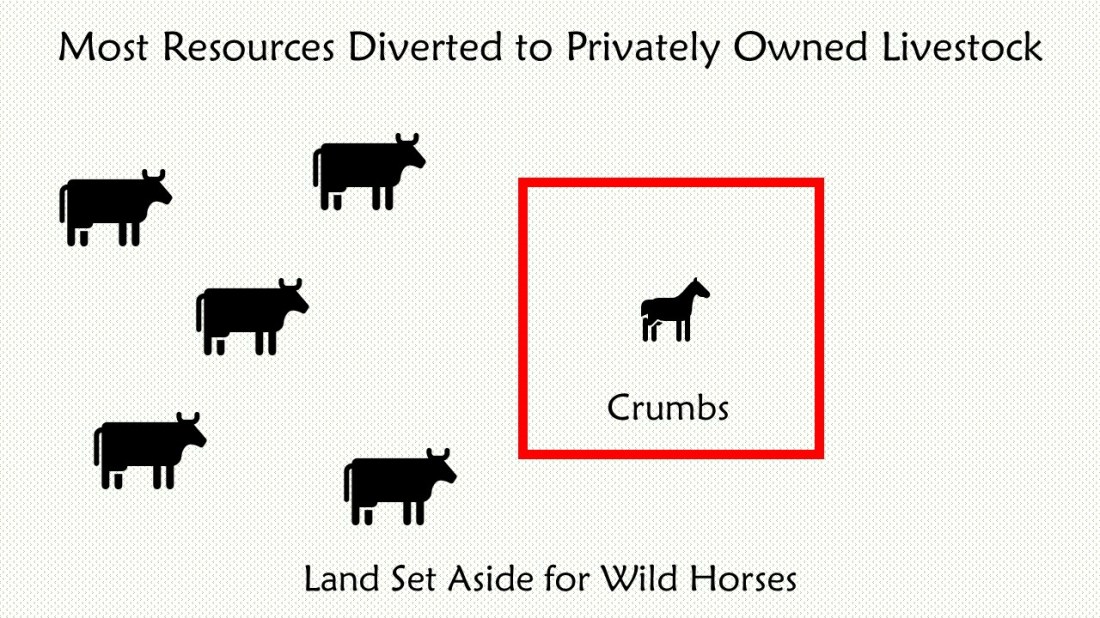
Advocacy groups that push for contraceptives are allies of the ranchers.  Get away from them as fast as you can.  The ranchers already receive eighty percent of the forage on lands set aside for the horses and these people want to drive the ratio higher!

You don’t need an eleven-point plan, such as this PZP Manifesto from 2018, to save America’s wild horses and burros.

Only two actions are required:

  • End public-lands ranching
  • Restore the WHB Act to its original form

It’s a problem of public awareness and support.  That’s how Velma did it.

What Do Stocking Rates Tell You About HMAs?

As noted earlier this month, the stocking rate allowed by plan for the Spruce-Pequop HMA is a miniscule 0.3 wild horses per thousand acres, which is what you’d expect for an area where livestock receive almost nine times as much forage as the horses.

Does that pattern hold for other areas?  Would it be a reliable indicator of management priorities on lands set aside for wild horses?

Let’s add another column to the dataset used last month to test an assertion about the number of wild horses in long-term holding.  The new column is on the far right, wild horses per thousand acres.

Stocking Rate and Forage Allocation Data-1

Now, let’s plot the forage allocated to livestock as a function of the stocking rate.

All of the data points are in the upper third of the chart, meaning that none of the areas are managed primarily for horses.  Most of the data fall below the target stocking rate of one wild horse per thousand acres (across all HMAs).

The highest forage allocations to livestock occur at the lowest stocking rates for horses, the same pattern observed at Spruce-Pequop.  This is called an inverse relationship, denoted by a line with negative slope.

Stocking Rate and Forage Allocation Chart B-1

The line, known as the ‘least-squares fit,’ is of the form y = mx + b.

There are no outliers in the data (remote values in the y-space) and no influential observations (remote values in the x-space), but there could be an issue involving the scatter of the data around the line.

That problem might go away with more data.  But how many areas would you have to review to find larger numbers of horses (higher stocking rates) and permitted livestock grazing?

A few of the lower forage allocations to livestock appear at lower stocking rates, so the relationship is not ironclad.  But coming across stocking rates below 1.0 should prompt you to dig a little deeper to find out how bad things are for the horses.

PSA 12-15-19

Running on Empty

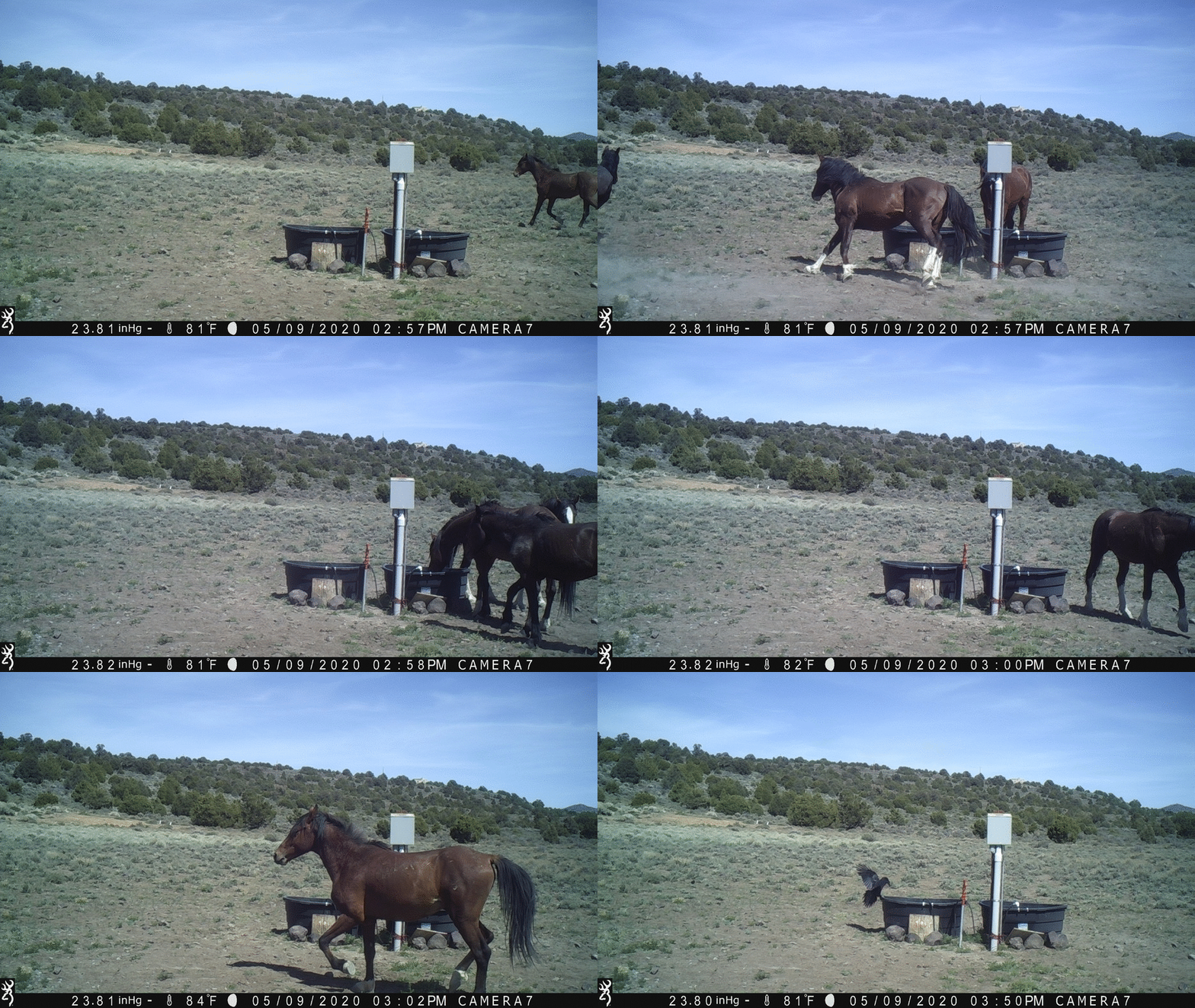
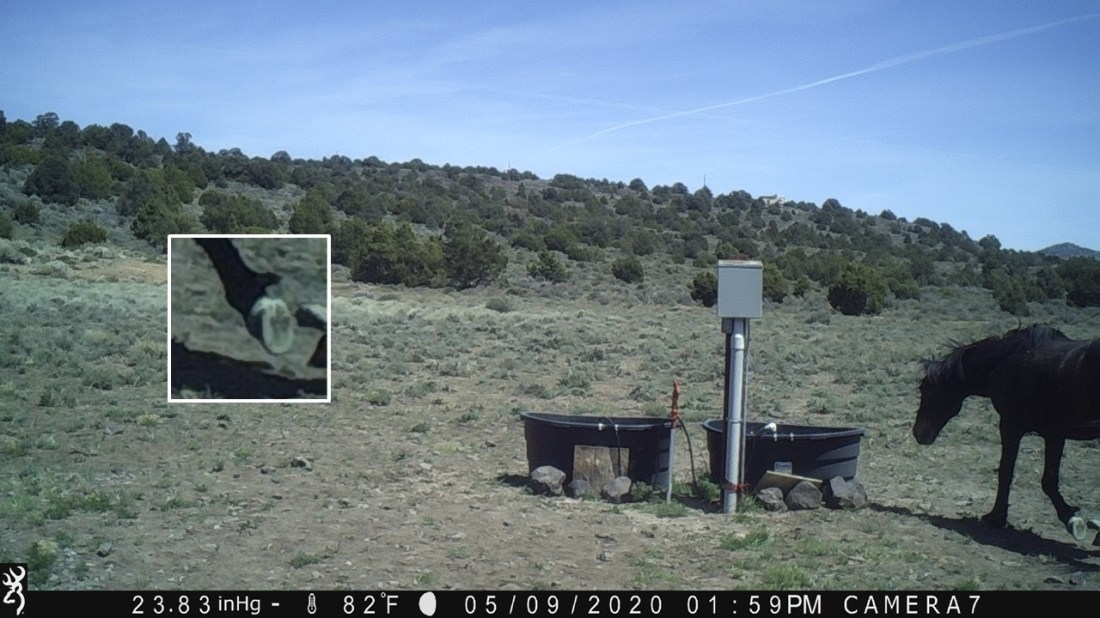
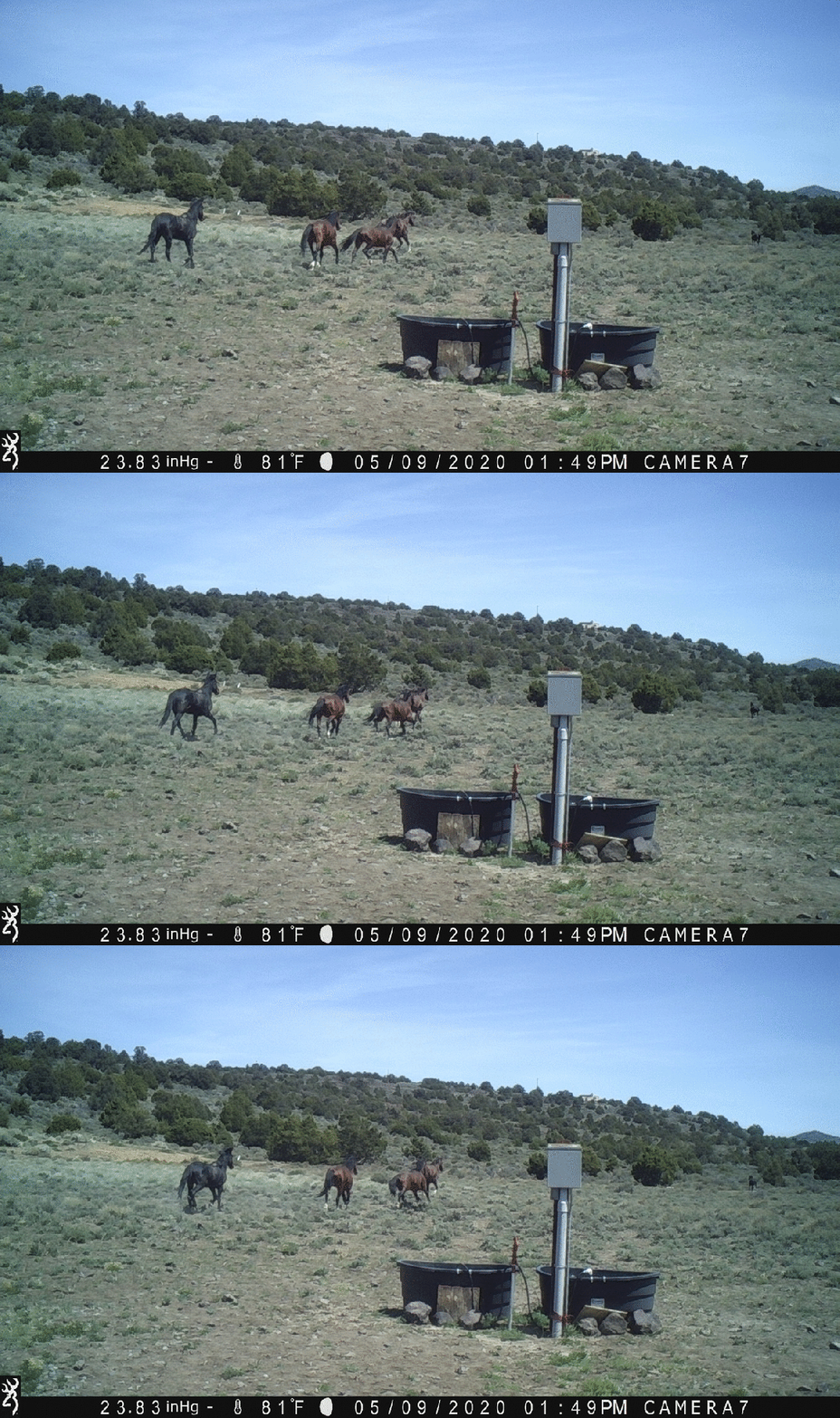
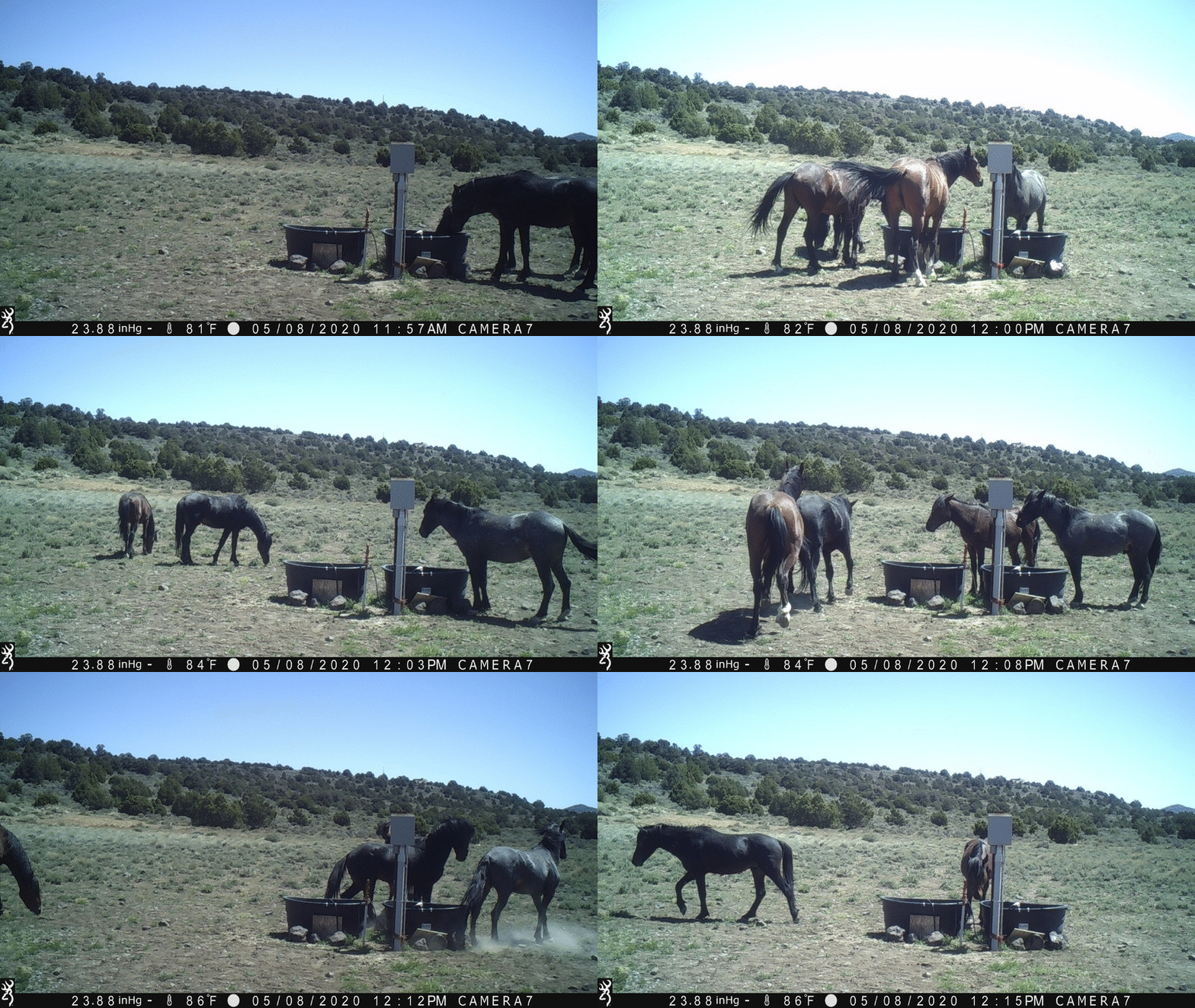
Trailcam photos of some Virginia Range mustangs, at a time of year when they tend to be thin.  Is this what you’d expect to see for a herd that’s overpopulated?

At a stocking rate of approximately ten wild horses per thousand acres, you’d have to search one square mile to see six or seven of them.  Maybe.

And that’s ten times higher than your typical HMA.

Some ‘advocacy’ groups push contraceptives not because they care about the horses, but because they’re frauds.

RELATED: Virginia Range Darting Program in the News.

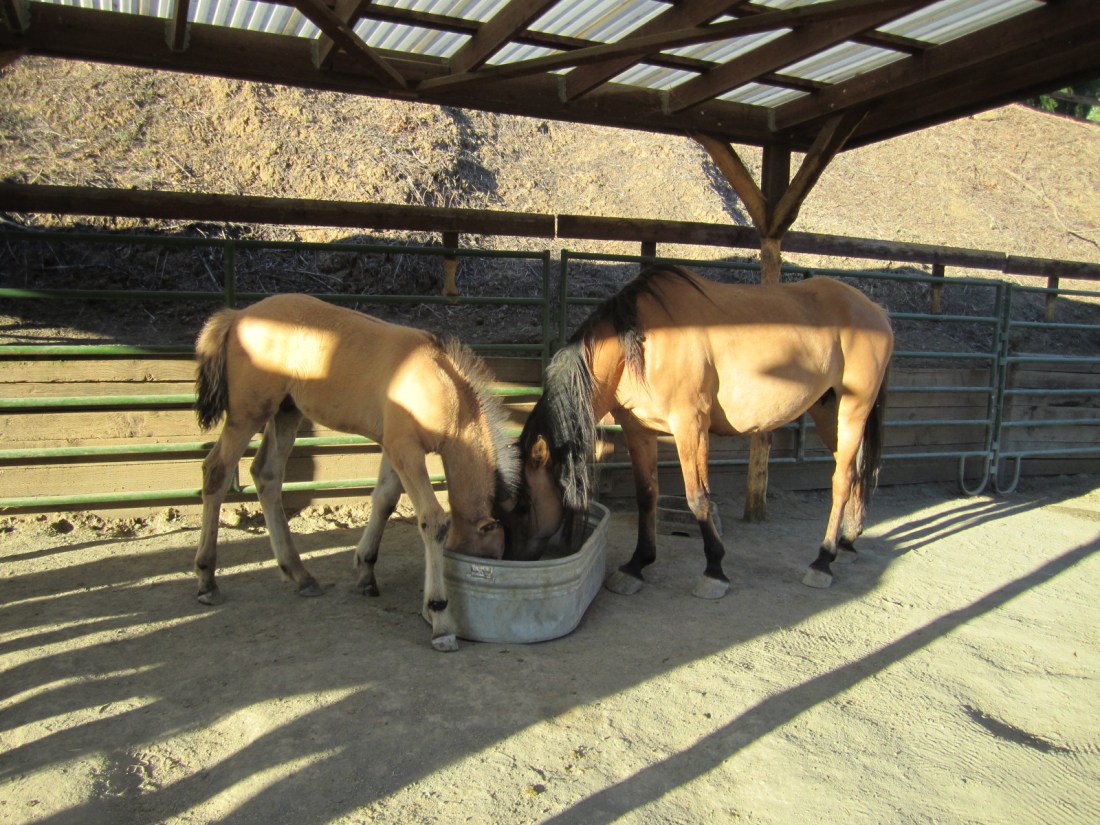
Water Tanks 02-22-20

Comments Invited on Changes to Big Summit Management Plan

Earlier this week the Forest Service announced a proposed update of the management plan for wild horses at the Big Summit WHT, according to a report by KTVZ News of Bend, OR.  The preferred option will reduce the AML from 55 – 65 to 12 – 57.

The WHT covers 25,434 acres in central Oregon.  The current AML yields a stocking rate of 2.6 wild horses per thousand acres.  The target rate across all areas managed for wild horses is one per thousand acres.

Big Summit WHT Map-1

Management actions for controlling the herd size include gathers and contraceptives.

The management plan allocates 2,322 AUMs per year to livestock, compared to 780 AUMs per year for horses under the current AML.  Refer to Table 21 in the draft EA.

The disparity will be greater under the preferred option, with 77% of the forage going to livestock and 23% to the horses.  On land to be managed principally for the horses.

Project documents are posted here.  A link to the online comments form can be found on this page.  Comments can be submitted through May 18.

Park Service Reports Shackleford Census Results

The Carolina Coast Online said today that 111 wild horses were living on Shackleford Banks at the end of 2019, with 38% males and 62% females.  Ten foals were born and fourteen deaths occurred.

The best way to protect the herd is public education, according to the story.

The report by NPS said contraceptives had been in use on the island since 2000.

The disparity between males and females, noted as longevity of mares and not mortality of stallions, was linked to the fertility control program.

Unlike the Assateague horses, these results could be produced by a simple random process centered at 50% males / 50% females.

Virginia Range Darting Program in the News

There are approximately 3,000 wild horses roaming an area that can only support 700, according to a story posted today by Nevada Current.

Sound familiar?

How did they come up with 700?  With a stocking rate of roughly ten wild horses per thousand acres, the Virginia Range sticks out like a sore thumb compared to public lands managed for wild horses by the federal government.

It doesn’t fit the narrative.  The people might even think the government is lying.

Therefore, we have to bring the number down.  The involvement of a so-called advocacy group makes the project seem legitimate.

RELATED: The Experiment Is a Success!