Calico Roundup, Day 11

The incident began on October 1.  Results through October 11:

The figures above are based on the daily reports, not the totals posted by the BLM.

There was no gather activity on Day 10.

The location of the trap site on Day 11 was not given.

The average body condition score on Day 11 was 3.

The contractor euthanized a mare on Day 10 due to an infection.

The death rate is 3.4%.

The capture total includes 149 stallions, 193 mares and 35 foals.

Youngsters represented 9.3% of the animals gathered, consistent with a growth rate of four percent per year.

Of the adults, 43.6% were male and 56.4% were female.

The HMAs and surrounding lands are subject to permitted grazing.

*According to advocates.

Surprise-Calico HAs and HMAs with Allotments 09-17-23

Day 11 ended with 55 unaccounted-for animals.

Mares returned to the Complex will be treated with GonaCon Equine, a fertility control pesticide.  As of today, all returned animals have been stallions.

Other statistics:

  • Forage liberated to date: 3,204 AUMs per year
  • Water liberated to date: 2,670 gallons per day
  • Forage assigned to livestock: Undetermined
  • Horses displaced from area by permitted grazing: Undetermined
  • True AML: Undetermined
  • Stocking rate at new AML: Undetermined
  • Horses removed because of drilling and mining: Ask the advocates

Overpopulation means more horses than allowed by plan, not necessarily more horses than the land can support.

RELATED: Calico Roundup, Day 9.

Colorado’s HMAs Transitioning to Curated Horse Exhibits

Progress in wild horse management is never determined from the horses’ viewpoint, only the special interests who benefit therefrom.

To understand the column about Colorado’s HMAs published today by The Colorado Sun, key terms should be explained.  Meanings can be validated not by what the writer says but by what his organization does.

Herd Management Areas – A continually shrinking subset of the original Herd Areas, managed primarily for livestock with few exceptions, two cited in the article.

Herd Areas – The lawful homes of wild horses and burros, identified in 1971 when the WHB Act was signed into law.

Sustain Wild Horses – Control the pests.

Fertility Control Darting – Beating wild horse populations down with ovary-killing pesticides, usually Zonastat-H or GonaCon Equine, so livestock can access most of their food and water.

Appropriate Management Level – The number of horses allowed by plan, not the number of horses the land can support, usually small relative to the available resources.

Carrying Capacity – The number of wild horses the land can support if it was managed principally for them, referred to on these pages as the True AML.

Healthy Horses on Healthy Rangelands – Appropriate management levels achieved, ranchers enjoying more of what their allotments have to offer.

Partner Organizations – Groups that claim to be voices for the horses while aiding and abetting their removal, referred to on these pages as charlatans.

The author noted that the Sand Wash roundup was called off because of winterkill.

He stated that livestock grazing in Sand Wash Basin and Piceance East Douglas accounts for 14% and 20% of forage use, respectively, while your host has determined that livestock in Sand Wash Basin receive 3.9 times more forage than the horses and those in Piceance East Douglas receive 2.4 times more forage than the horses.

RELATED: What Is a Curated Horse Exhibit?

Working Together for a Horse-Free Future 12-21-22

Moriah Roundup Announced

The incident will begin on or about October 16 according to today’s news release.

The capture and removal goals are identical, 400 each.

The current population is thought to be 550.

A helicopter will push the horses into the trap and operations will be open to public observation.

The HA covers 53,312 total acres east of Ely, NV, just inside the Utah state line.

The AML is zero.

Moriah intersects three grazing allotments according to the National Data Viewer, Muncy Creek, Devil’s Gate and Smith Creek.

The Allotment Master Report puts Muncy Creek in the Maintain category, the other two were unclassified.

The allotments offer a combined 20,054 AUMs per year on 293,664 public acres, for a weighted average 68.3 AUMs per year per thousand public acres, equivalent to 5.7 wild horses per thousand public acres.

Not bad for an area that’s unfit for wild horses.

The target rate across all HMAs is one wild horse per thousand acres.

Captured animals will be taken to the off-range corrals in Sutherland, UT.

Gather stats and daily reports will be posted to this page.

RELATED: What Happened to the Moriah HMA?

Calico Roundup, Day 9

The incident began on October 1.  Results through October 9:

The figures above are based on the daily reports, not the totals posted by the BLM.

The location of the trap site on Days 8 and 9 was not given.

Body condition scores ranged from 4 to 5 on both days.

The contractor euthanized a mare on Day 8 because of a snake bite, followed by two stallions and a mare on Day 9 due to blindness.

The death rate is 3.6%.

The capture total includes 135 stallions, 172 mares and 30 foals.

Youngsters represented 8.9% of the animals gathered, consistent with a growth rate of four percent per year.

Of the adults, 44.0% were male and 56.0% were female.

The HMAs and surrounding lands are subject to permitted grazing.

*According to advocates.

Surprise-Calico HAs and HMAs with Allotments 09-17-23

Day 9 ended with 119 unaccounted-for animals.  Given that 86% of captured mares have been shipped, but only 2% of the stallions, this group is probably dominated by males and will be used to tilt the post-gather sex ratio in favor thereof.

Mares returned to the Complex will be treated with GonaCon Equine, a fertility control pesticide.

Other statistics:

  • Forage liberated to date: 3,672 AUMs per year
  • Water liberated to date: 3,060 gallons per day
  • Forage assigned to livestock: Undetermined
  • Horses displaced from area by permitted grazing: Undetermined
  • True AML: Undetermined
  • Stocking rate at new AML: Undetermined
  • Horses removed because of drilling and mining: Ask the advocates

Overpopulation means more horses than allowed by plan, not necessarily more horses than the land can support.

RELATED: Calico Roundup, Day 7.

Pesticide Pushers Complain about Loss of Twin Peaks Foals!

The BLM reported 31 deaths during the 2022 roundup, but a Freedom of Information request revealed that 69 additional animals died at government holding facilities during and after the roundup.

Fourteen of the deaths were very young foals.

Government records suggested they were foundering due to being run too far during the gather.

One report attributed a death to the stress of being run long distances in rough terrain and in high temperatures.

“It was heartbreaking.”

Who published the findings?

The Campaign Against America’s Wild Horses.

They hate foals!  They’re trying to get rid of as many as possible on the Virginia Range.

They tell you these things because they’re trying to separate you from your money.

Don’t fall for it.  They are a voice for the bureaucrats and ranchers, not wild horses.

Calico Roundup, Day 7

The incident began on October 1.  Results through October 7:

The figures above are based on the daily reports, not the totals posted by the BLM.

The location of the trap site on Days 6 and 7 was not given.

Body condition scores ranged from 3 to 4 on Day 6 and 4 to 5 on Day 7.

The contractor executed a mare on Day 6 because of an ulcerated cancer of the withers, followed by a stallion on Day 7 due to a previous leg fracture.

The death rate is 2.8%.

The capture total includes 112 stallions, 152 mares and 24 foals.

Youngsters represented 8.3% of the animals gathered, consistent with a growth rate of three percent per year.

Of the adults, 42.4% were male and 57.6% were female.

The HMAs and surrounding lands are subject to permitted grazing.

*According to advocates.

Surprise-Calico HAs and HMAs with Allotments 09-17-23

Day 7 ended with 104 unaccounted-for animals.

Mares returned to the Complex will be treated with GonaCon Equine, a fertility control pesticide.

Other statistics:

  • Forage liberated to date: 3,084 AUMs per year
  • Water liberated to date: 2,570 gallons per day
  • Forage assigned to livestock: Undetermined
  • Horses displaced from area by permitted grazing: Undetermined
  • True AML: Undetermined
  • Stocking rate at new AML: Undetermined
  • Horses removed because of drilling and mining: Ask the advocates

Overpopulation means more horses than allowed by plan, not necessarily more horses than the land can support.

RELATED: Calico Roundup, Day 5.

Picacho Roundup, Day 38

The incident started on August 24.  Results have been sporadic, typical for bait trap removal.

The sidebar at the gather page shows 101 burros captured and 101 shipped through September 30.

The daily reports yield 100 captured and 119 shipped.

No deaths were reported.

The capture total includes 71 jacks, 22 jennies and 7 foals.

Youngsters represented 7% of the animals gathered.

Of the adults, 76% were male and 24% were female.

The location of the trap site was not given.

Two areas on the California side of the Colorado River are targeted.

RELATED: Picacho Roundup in Progress.

Pichaco Burro Removal 08-22-23

Advocates Driving Wild Horse Removals Underground?

Helicopter roundups are the fastest and most effective way to shift resources from wild horses to the public-lands ranchers.

The optics aren’t great, especially when injuries are caught on film, but at least they are seen and understood by the public.

Have you ever seen video of horses being shot in the head by wranglers because of blindness, swayback or club feet?

It happens at most roundups but is concealed from the public, even the observers who are stationed a mile or more from the trap site.

The advocates have a better way.

Don’t even let them be born.

Crime in the Wild Horse World 05-26-22

Snuff out new life and let the herds die off.

Let the ranchers have all of their food and water.

Put the legacy contractors out of business.

Replace motorized removals with removal by pesticides.

The public won’t notice, won’t even care, and that’s a problem.

They’re taking wild horse removals out of the spotlight.

We need to keep the pressure up, keep the bureaucrats and politicians on the hot seat.

That’s what Velma did.

Pay no attention to the advocates.  They’re protecting the ranchers, not the horses.

RELATED: What You Won’t Hear at Wild Horse Lobby Day.

Pesticides R Us 09-26-23

Alamo Roundup, Day 71

The incident started on July 19.  Results have been sporadic, typical for bait trap removal.

The sidebar at the gather page shows 85 burros captured and 85 shipped through September 27.

The daily reports yield 87 captured and 83 shipped, with four missing in action.

No deaths were reported.

The capture total includes 75 jacks, 10 jennies and two foals.

Youngsters represented 2.3% of the animals gathered.

Of the adults, 88.2% were male and 11.8% were female.

The HMA is subject to permitted grazing.

The comment period for the new pest control plan closes on October 11.

RELATED: Alamo Roundup in Progress.

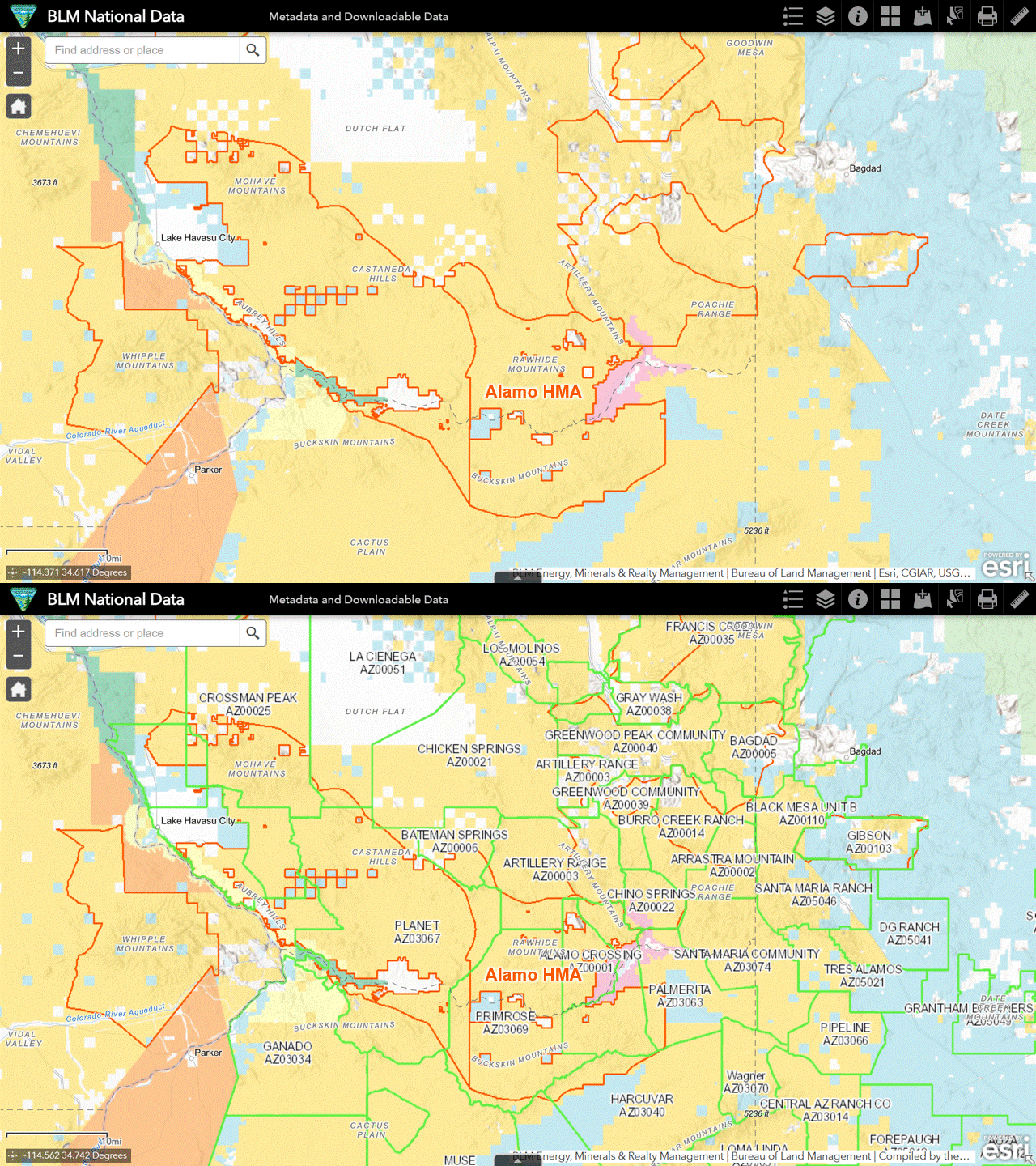
Alamo HMA Map with Allotments 06-06-23

New State Law Threatens Reche Canyon Burros?

SB 371, signed on September 1 by California Governor Gavin Newsom, allows an officer or employee of a local animal control agency, or a nonprofit organization that contracts with a county to provide services to undomesticated burros, to

  • Remove an undomesticated burro that strays onto private land
  • Remove an undomesticated burro that strays onto a public roadway
  • Provide medical care to undomesticated burros, including euthanasia
  • Relocate an undomesticated burro to an appropriate facility or private adopter

The bill gives the local animal control agency the sole discretion to declare the burros unfit for return to the range and to deem them fit for re-release to an appropriate facility or private adopter.

An undomesticated burro is a burro that has not been tamed or domesticated for a period of three years after its capture and is not protected by the federal government under the Wild Free-Roaming Horses and Burros Act.

What You Won’t Hear at Wild Horse Lobby Day

If the delegation is led by pesticide pushers and ranching sympathizers, the predominant constituency in wild horse advocacy, there will be no requests to

  • Publish forage allocations and other pertinent data showing how wild horse and burro areas are managed by federal agencies
  • Return all lands identified in 1971 to wild horses and burros
  • Confine the ranchers to their base properties in a year-round off season, a practice they are already doing on a part-time basis
  • Revise the RMPs to shift the forage in said lands back to the horses and burros
  • Manage said areas principally for wild horses and burros as specified in the original statute
  • Prohibit inconspicuous methods of removal, such as bait trapping and on-range darting with fertility control pesticides

Instead, you’ll hear complaints about

  • Drilling and mining, which affect anywhere from a few acres to a few thousand acres, while permitted grazing devours entire HMAs and beyond
  • Helicopter roundups, if used for forcible removal but not for catch-treat-release
  • Violations of CAWP
  • Lack of HMAPs

The advocates will call for an end to the roundups but not the removals, pushing instead for innocuous methods that achieve the same results as helicopters.

RELATED: Wild Horse Lobby Day Set for Next Week.

Advocates are the Predators 11-30-21

New Cattle Guard to Contain Little Book Cliffs Horses?

The new guard will tie into an existing fence to deter wild horses from moving from the WHR onto other grazing allotments, according to the project description.

The CX, signed on September 22, says the 16-foot guard will be installed on the V2/10 dirt road open to all modes of transportation.

The road has no movement restriction, allowing wild horses to leave the WHR.

The National Data Viewer puts it in the Red Rock Allotment, between the WHR and Redrock Point.  Click on map to open in new tab.

By the time the horses reach the device, they will be far off the reservation.

The CX was copied to the project folder on October 6.  There were no opportunities for public comment.

RELATED: The Sad Story of Sweetheart and Boone.

Little Book Cliffs Cattle Guard 10-07-23

Virginia Range Darting Update for September 2023

The Campaign Against America’s Wild Horses indicated in the September update that 89 mares received 89 doses of Zonastat-H during the month, 26 given as a primer and 63 as a booster.  If you can’t access the document, click here.

Over the life of the program, 1,949 mares have received 8,116 doses of the pesticide.

The report will be submitted to the Nevada Department of Agriculture.

Of the 163 foals born this year in the primary target zone, 80 have died.

The causes of death were not discussed but predation is likely a factor.

As for the long-term population goal and how many horses they intend to eradicate, the advocates are silent.

No comments about herd demographics.

No discussion of sterility and the growing risk thereof.

The current population is thought to be 3,513 with 356 listed as missing, compared to 3,559 in August, including 395 listed as missing.

A goal for October is to maximize booster treatments, allowing for continued population reduction, equivalent to bait trap removal or helicopter roundups.

RELATED: Virginia Range Darting Update for August 2023.

Pesticide Pushers 07-17-23

Wild Horse Lobby Day Set for Next Week

Sponsored by the Save Our Wild Horses Coalition, participants will have an opportunity meet with lawmakers and urge them to support legislation that protects wild horses and burros.

Sounds great.

But terms in the news release such as humane treatment, living treasures and magnificent animals should raise suspicions.

Pesticides R Us 09-26-23

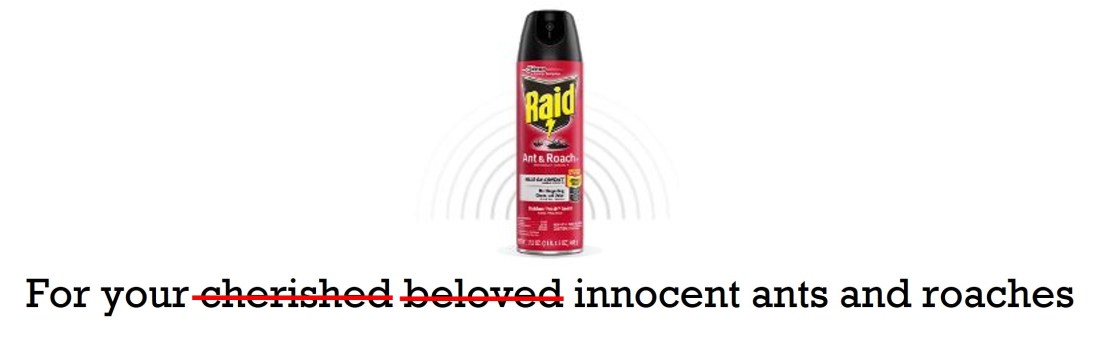
If the announcement referred to cherished/beloved/innocent wild horses, you could be sure their goal has little to do with protection and much to do with permitted grazing, to be achieved with fertility control programs, not helicopter roundups.

For Your Innocent Ants and Roaches 10-23-22

Calico Roundup, Day 5

The incident began on October 1.  Results through October 5:

The figures above are based on the daily reports, not the totals posted by the BLM.

The location of the trap site on Days 4 and 5 was not given.

Body condition scores ranged from 3 to 4 on both days.

Three horses were put down on Day 4 because of injuries and infections, followed by two more on Day 5.

The death rate is 2.8%.

The capture total includes 81 stallions, 115 mares and 16 foals.

Youngsters represented 7.5% of the animals gathered, suggesting that the herd is growing at a rate of two to three percent per year.

Of the adults, 41.3% were male and 58.7% were female.

Approximately 85% of the captured mares have been shipped, with only 4% of the captured stallions, consistent with a plan to skew the sex ratio in favor of males.

The HMAs and surrounding lands are subject to permitted grazing.

*According to advocates.

Surprise-Calico HAs and HMAs with Allotments 09-17-23

Day 5 ended with 60 unaccounted-for animals.

Mares returned to the Complex will be treated with GonaCon Equine, a fertility control pesticide.

Other statistics:

  • Forage liberated to date: 2,172 AUMs per year
  • Water liberated to date: 1,810 gallons per day
  • Forage assigned to livestock: Undetermined
  • Horses displaced from area by permitted grazing: Undetermined
  • True AML: Undetermined
  • Stocking rate at new AML: Undetermined
  • Horses removed because of drilling and mining: Ask the advocates

You can have your wild horse and burro program as long as it doesn’t interfere with the grazing program.

RELATED: Calico Roundup, Day 3.

Advocates Bawling about Loss of Frost?

How many of them spend their free time poisoning the Virginia Range mares with Zonastat-H or provide material support to those who do?

Where’s the justice for the hundreds of foals that should be there but aren’t?

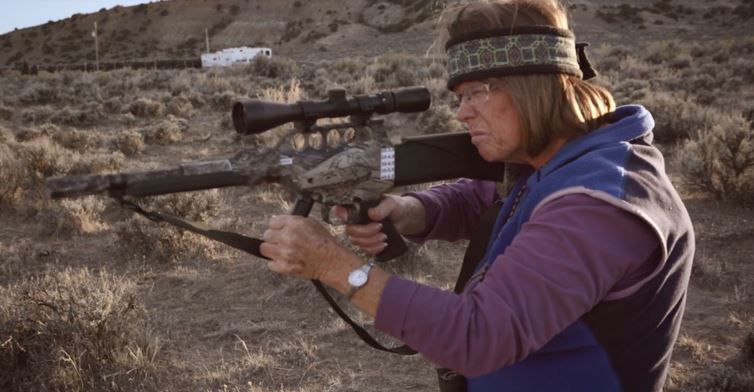
Tracy “You need to manage the numbers to fit what’s available for the horses” Wilson, defeatist, pesticide pusher and ranching sympathizer with the Campaign Against America’s Wild Horses, appears at 1:34.

CAAWH, a leader in nonmotorized removal, operates the VR darting program.

RELATED: Advocates Protest as VR Stallion Killer Appears in Court.

Foal-Free Friday, Safer in Town than on the Range Edition

As the advocates push their darting effort into Fernly, NV, northeast corner of the Virginia Range, the horses may spend more time in town where they can’t be hunted without homeowner approval.

The bureaucrats and ranchers now realize that the advocates are as eager to get rid of wild horses as they are, and nobody complains when it’s done with pesticides.

RELATED: Foal-Free Friday, Learning about Horses Edition.