Rock Springs RMP Complaints Grow Slightly

Two more protests were submitted online this week, bringing the total to nine.

Only those who participated in the planning process are eligible and new issues cannot be introduced.

The protest period, which is not a public comment period, ends on June 6.

Two HMAs would be closed and third would be downsized under the Proposed Action.

RELATED: Minor Problem with Rock Springs RMP Amendments?

Salt River Stallion Put Down After Eating Plastic Bag

He was euthanized by order of the Salt River Wild Horse Darting Group, a surrogate of the Campaign Against America’s Wild Horses.

“He was literally starving and dehydrating,” their ringleader told KPNX News of Mesa, AZ in a story published yesterday.  “He was trying to drink and eat and it was the saddest thing we’ve ever seen.”

Watching her destroy the herd with the Montana Solution—and get away with it—is one of the saddest things we’ve ever seen.

Do you see any foals in the video posted with the report?

The advocates have ten years to take the herd from its current size of 400 down to 250, according to an unidentified voice in the April 1 episode of Foal-Free Friday.

The incident puts them one step closer to their goal.

Do not be misled by the coverage, the advocates are the greatest threat to these horses, not the kayakers, paddleboarders and plastic bags.

UPDATE: Added video.

Helicopter Roundups Were Bad Before They Were Good

Earlier this year, film of a colt running on a broken leg during the Pancake roundup sparked outrage and condemnation of helicopter roundups.

Now, the advocates are willing to overlook the collateral damage because they see greater opportunities for the Montana Solution.

In the old days, when faced with hopeless situations leading to the removal of wild horses, the advocates would walk away.

Participate Now 05-13-22

Today, they are willing participants.

RELATED: CAAWH Applauds Fertility Control Solicitation!

CAAWH Applauds Fertility Control Solicitation!

A representative told KNPR Radio yesterday that the project would mark a significant shift towards humane on-range management of wild horses and away from cruel, costly helicopter roundups.

Three paragraphs above the writer notes that contractors would “gather the animals,” a reference to helicopter roundups.

A few months ago the advocates were “all in” for the “Save a Horse, Hire a Cowboy” helicopter ban.

Watching them flip-flop so quickly is truly astonishing.

RELATED: It’s Happening: RTF Endorses Fertility Control Solicitation!

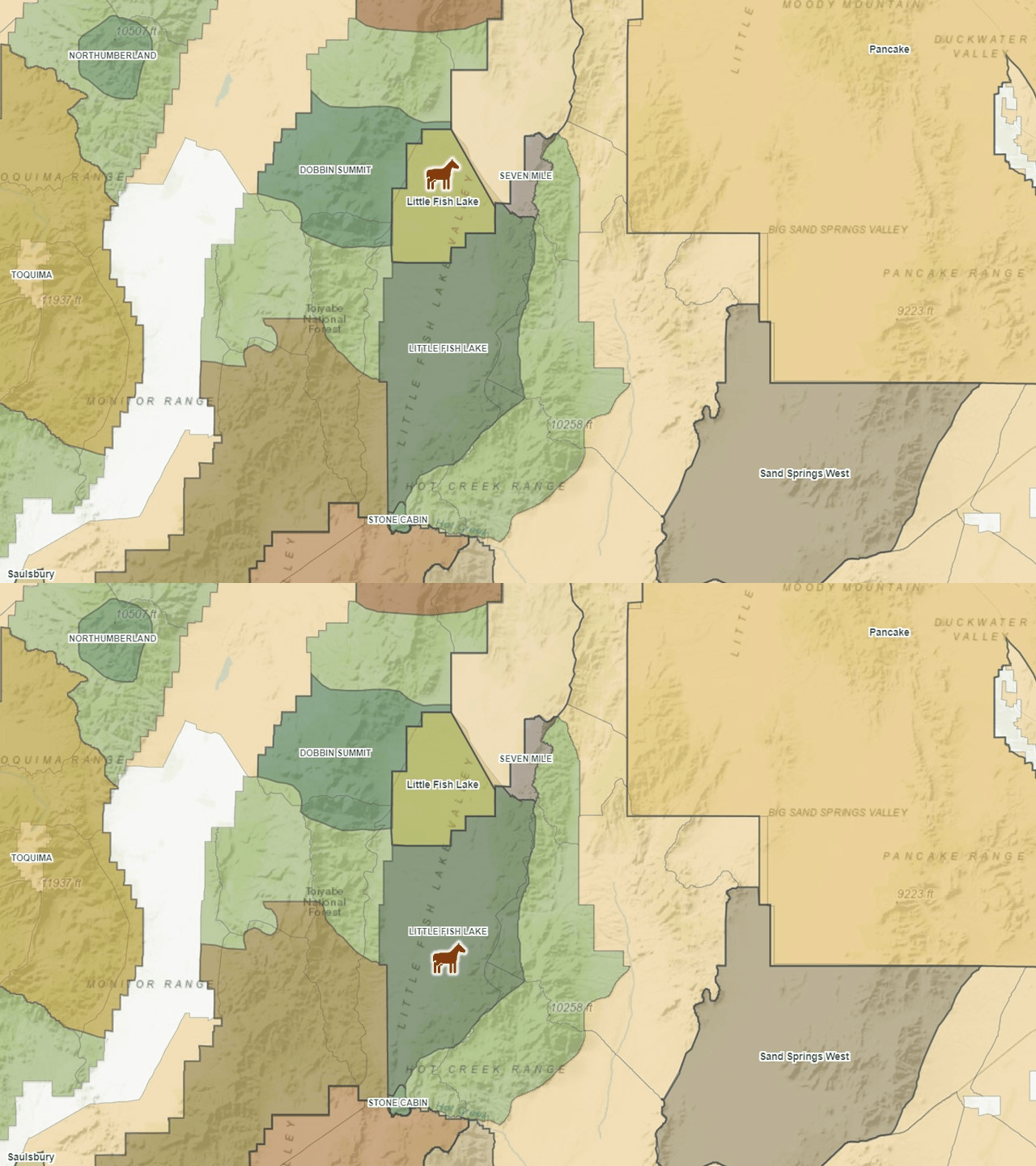
Draft EA for Little Fish Lake JMA Out for Review

The comment period runs from May 11 to June 10, according to Wednesday’s news release.

The Proposed Action, discussed in Section 2.2 of the EA, features roundups, fertility control and sex ratio skewing over a ten-year project life.

The JMA covers 28,744 total acres in the Little Fish Lake HMA and 88,297 total acres in the Little Fish Lake WHT, according to Table 1.  The combined AML is 132.

The current population is thought to be around 350.

Little Fishlake JMA Map 05-06-22

The JMA is subject to permitted grazing as described in Section 3.7.  Table 3 indicates that livestock receive 5,702 AUMs per year inside the JMA, enough to support an additional 475 wild horses.

The True AML is 607, so the number of excess animals is zero.  No opportunities for the Montana Solution at this time.

The HMA does not have a Herd Management Area Plan (HMAP), which could only ratify and reinforce the status quo without changes to the RMPs.

Pest control programs, such as the one proposed here, are designed to protect ranching interests, not wild horses.

Comments can be submitted online at the project page.  As of this morning, none have been posted.

RELATED: New Resource Enforcement Plan for Little Fish Lake JMA?

Bold Prediction for Fertility Control Solicitation

The advocates will throw in with the government contractors, and drop their opposition to helicopter roundups, including the injuries, deaths and mistreatment associated therewith, if it means greater use of the Montana Solution in America’s wild herds.

This will show that their criticism of the gathers, removals and stockpiling of horses in off-range corrals was simply a ploy to sell more PZP.

Not only will the herds have to suffer the long-term effects of the Montana Solution, evident at Assateague Island but concealed by the Park Service, they’ll also have to endure the trauma of roundups to receive it.

Doesn’t get any better than that for America’s wild horses.

RELATED: Montana Solution Necessitates Helicopter Roundups?

Advocates Consider Legal Action at Cañon City?

They are experts at wasting your hard-earned donations.

How would the case help the horses, those that haven’t died?

Situation before lawsuit:

  • Horses allowed in West Douglas HA – Zero
  • Horses displaced from HA by permitted grazing – 832

Situation after lawsuit:

  • Horses allowed in West Douglas HA – Zero
  • Horses displaced from HA by permitted grazing – 832

Don’t be misled by the bureaucrats, veterinarians, researchers and advocates interviewed for the story, published this morning by The Denver Post.

They have a common goal: Ranching superiority in areas identified for wild horses.

RELATED: Cañon City Deaths Preventable?

Thriving Ecological Balance-3

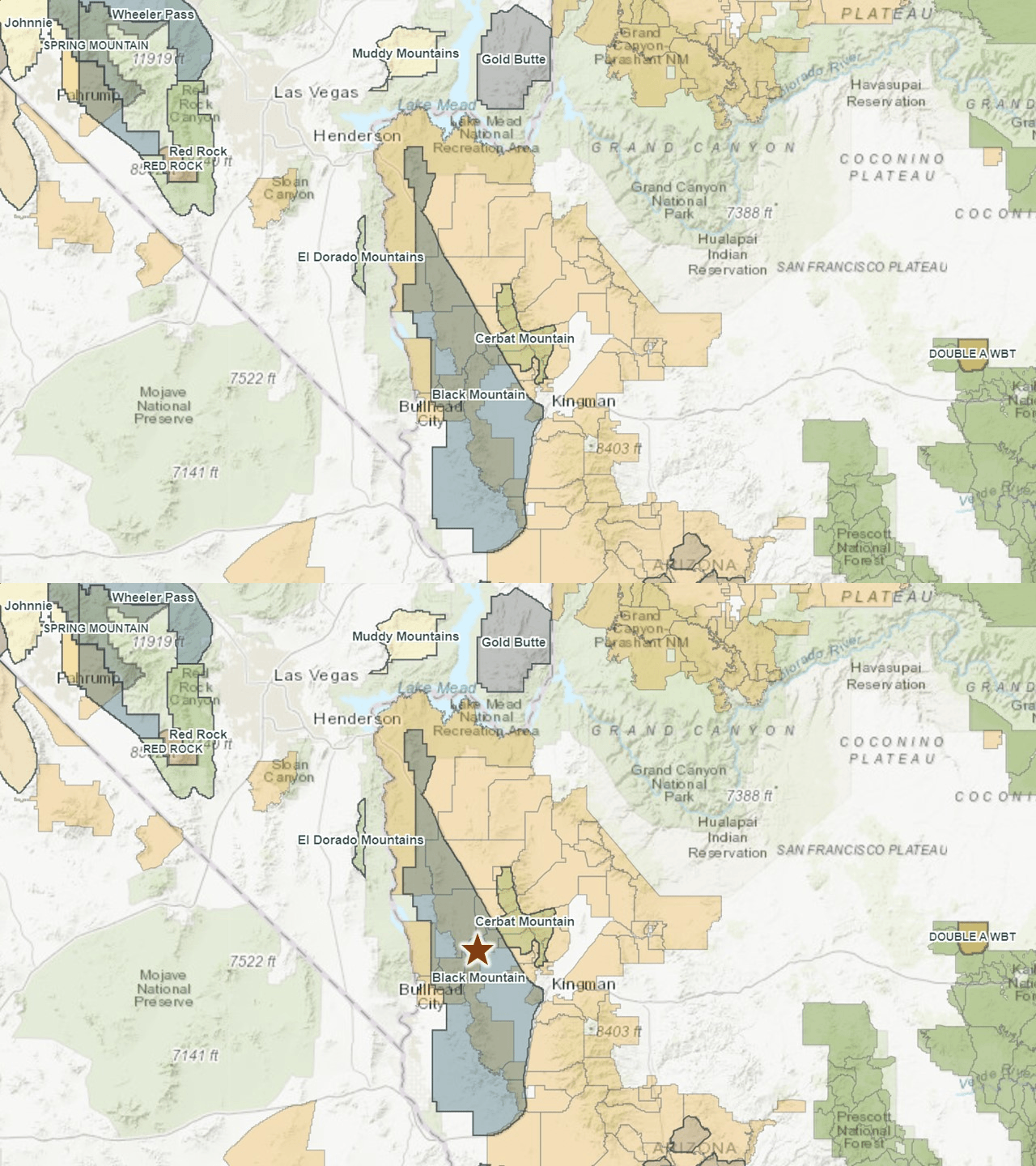
Black Mountain Roundup Day 9

The incident began on May 2.  Gather stats through May 10:

  • Target: Burros
  • Type: Planned
  • Method: Helicopter
  • Captured: 421, up from 267 on Day 7
  • Average daily take: 46.8
  • Capture goal: 1,080
  • Removal goal: 1,080
  • Returned: None
  • Deaths: None
  • Shipped: 351, up from 173 on Day 7

The cumulative total includes 158 jacks, 199 jennies and 64 foals.  The figures at the gather page are 159 jacks, 198 jennies and 65 foals, which sum to 422.

Youngsters represented 15.2% of the animals captured.  Of the adults, 44.3% were male and 55.7% were female.

The herd can’t be growing at a rate of 20% per year with a birth rate of 15% per year.

Four PZP jennies have been caught to date, part of the Humane Society darting project.

The location of the trap site within the HMA was not disclosed.

Black Mountain HMA Map 02-25-22

Day 9 ended with 70 unaccounted-for animals.

Other statistics:

  • AML: 478
  • Forage assigned to burros: 2,868 AUMs per year
  • Pre-gather population: 3,000
  • Forage liberated to date: 2,526 AUMs per year
  • Water liberated to date: 2,105 gallons per day
  • Forage assigned to livestock: 7,333 AUMs per year (estimated)
  • Burros displaced from HMA by permitted grazing: 1,222
  • True AML: 1,700
  • Stocking rate at new AML: 1.7 burros per thousand acres
  • Burros displaced from HMA by drilling and mining: Ask the advocates

RELATED: Black Mountain Roundup Day 7.

Fun with Resource Allocations

What can you conclude about the Warm Springs HMA in Oregon based on these data?

Warm Springs AUM Summary-1

1. The AML is 202.  It is small relative to the available resources.

2. Livestock receive eight times more forage than the horses.

3. The HMA is managed principally for livestock.

4. The horses receive 11% of the authorized forage, neglecting wildlife.

5. The number of horses displaced from the HMA by privately owned livestock is 1,616.

6. The True AML is 1,818.

7. If the current population was at 5X AML, the number of excess horses would be zero.

8. The HMA is not overpopulated.

9. There is no justification for a roundup or fertility control program.

10. The number of horses displaced from the HMA by permitted grazing is about 3% of those in off-range holding.

11. All of the animals in off-range holding could be returned to the range by ending public-lands ranching in 35 other such HMAs.

12. The advocates understand all of this and would be happy to explain it to you.

OK, eleven out of twelve is not bad.

Montana Solution Necessitates Helicopter Roundups?

It’s supposed to prevent them according to the advocates.

But Section 3, Part 1, Paragraph c in yesterday’s solicitation for fertility control services says the method of capture will be with the use of [helicopter] drive and/or bait trapping in accordance with the standards of the Comprehensive Animal Welfare Program.

The advocates oppose the use of helicopters, but perhaps they can be accommodated in the early stages of the project until the herds are small enough to stalk the remaining animals on the range and shoot them with darts as taught in Billings.

The advocates refer to sterilized mares as “self-boosting.”

The CAWP and other supporting documents can be found at the solicitation page.

RELATED: Proposals Sought to Catch, Treat, Release Wild Horses and Burros.

Decision, Final EA Released for Spring Mountains Complex

The BLM announced yesterday that the documents had been posted to the project page hosted by the Forest Service.

The Proposed Action features gathers and removals, fertility control, sterilization and sex ratio skewing over a ten-year period.

The Complex includes the Wheeler Pass, Johnnie, and Red Rock Joint Management Areas, and the Spring Mountains Wild Horse and Burro Territory.

Spring Mountains Complex 09-30-21

The plan is subject to a 45-day objection period.

Instructions for submitting a complaint were included in a Forest Service news release dated May 9, posted with other project documents.

Western Horse Watchers is unable to access the files at this time.

A story by KLAS News says a roundup will occur in the area next month.

RELATED: Draft EA for Spring Mountains Complex Out for Review.

Proposals Sought to Catch, Treat, Release Wild Horses and Burros

The BLM said today in a news release that it seeks new contract services to gather wild horses and burros, treat them with fertility control and return them to the range.

Overpopulated herds are at risk of starvation and thirst, and they can overuse food and water that are important for other wildlife species that share public lands.

Not mentioned in the announcement are the herds of privately owned cattle and sheep that also occupy those lands and receive the lion’s share of the resources, as indicated in this example from the Warm Springs HMA in Oregon.

Warm Springs AUM Summary-1

That’s what the contractors will be protecting.

RELATED: Congress Authorizes $11 Million for Montana Solution in FY 2022?

Pancake Gather Plan

Rock Springs RMP Amendments to Affect Horse Removal Market?

The closure of two HMAs and the downsizing of a third will reduce opportunities for the helicopter contractors and wild horse advocates, the two leading players in the livestock protection industry.

The advocates oppose the roundups but not the removals, preferring to take horses off the range with the Montana Solution.

Both groups offer the same results, assuring that most of the food and water in areas identified for the horses go to the public-lands ranchers.

The Montana Solution takes longer to implement but, unlike helicopter roundups, the herds don’t bounce back.

Sand Wash Advocates 01-17-22