Wild Horses and Burros to Be Removed from Nevada WHR

The incident will begin on or about December 18, according to the news release, and will not be open to public observation.

Helicopters will push the animals into the traps.

The capture goal is 648 horses and 100 burros, and the removal goal is 438 horses and 100 burros.

Mares returned to the range will be treated with GonaCon, a fertility control drug that may act as a sterilant.

The WHR was established in 1962 on 1.3 million acres of withdrawn lands southeast of Tonopah, NV.  Photographs and visitor access are prohibited for security reasons.

The 500 horses allowed by plan require 6,000 AUMs per year.  The AML for burros is zero.

The aimed-at stocking rate is 0.4 wild horses per thousand acres.  The target rate across all HMAs is one wild horse per thousand acres.

Nevada WHR Map 12-16-21

The WHR is not subject to permitted grazing but is bordered by allotments on the east, north and west sides.  Refer to the Western Watersheds map for details.

Captured horses will be taken to the off-range corrals at Palomino Valley, north of Reno, NV.  Captured burros will be taken to the off-range corrals in Axtell, UT.

Gather stats and daily reports will be posted to this page.

An emergency roundup occurred in the area last year.

Signatories of Rock Springs Petition Duped by Advocates?

An article by Cowboy State Daily said it was delivered to U.S. Department of the Interior Secretary Deb Haaland on Monday.

Not mentioned in the narrative:

If the sponsoring organizations were honest about the circumstances affecting these horses, nobody would have signed their petition.

RELATED: Advocates to Interior: Let Us Get Rid of Rock Springs Horses.

Advocates are the Predators 11-30-21

Comments Invited on Stewart Creek Pest Control Plan

A preliminary environmental assessment for remote darting in the HMA has been posted for public review.

The plan would be effective for ten years, according to the news release.

The Proposed Action, discussed in Section 2.1 of the EA, calls for the use of PZP, GonaCon and PZP-22.

The goal is to reduce growth rates to five percent per year or less.

Treatment would be withdrawn after five years, until the mares produce foals—which they won’t, because they’re sterile.  The ten-year timeframe is not necessary.

Stewart Creek HMA Map 12-15-21

The HMA is subject to permitted grazing and the management plan assigns four times more forage to livestock than the horses.

The darting program will keep the resource scales tipped in favor of the public-lands ranchers for longer periods or time, perhaps indefinitely, which is what the advocates are trying to accomplish in other areas.

Comments will be accepted until January 17.

The news release said that they can be submitted electronically at the NEPA page for the project, but Western Horse Watchers was unable to find the link.  E-mail addresses for BLM staff were provided.

Fox-Lake Range Roundup Day 3

The incident started on December 11.  Helicopters did not fly on Days 2 and 3 due to inclement weather, according to the gather page.

To date, 36 horses have been captured, with none shipped and one dead.

The pre-gather population was approximately 0.8X AML.

Given that most of the returned horses will be treated with GonaCon, the operation could be classified as pest control.

RELATED: Fox-Lake Range Roundup Begins.

Countdown to 50 | 2 Days to Go

Reports about free-roaming horses and burros usually do not mention permitted grazing and how the original WHB Act was altered at the behest of ranching interests.

The new priorities, which protect the public-lands ranchers, not the horses and burros, are reflected in the current statute and the federal regulations affecting those animals.

Today we we acknowledge the role of big tech and the media in controlling what the American people see and hear about wild horses and burros.

Search results point to groups that accept the overpopulation narrative, promote PZP darting and other means of population suppression, and are helping the government achieve and maintain AMLs—which are biased in favor of the ranchers.

Film crews don’t go back to the HMAs after roundups to see what type of animals filled the void and follow-up reports suggest the horses are better off in the gulags.

Is it because they’re not curious or are they just following orders?

These people don’t bring you the truth, they insulate you from it.

RELATED: Countdown to 50 | 3 Days to Go.

In Loving Memory of Mom

She would have been 93 today but left this world on December 4.

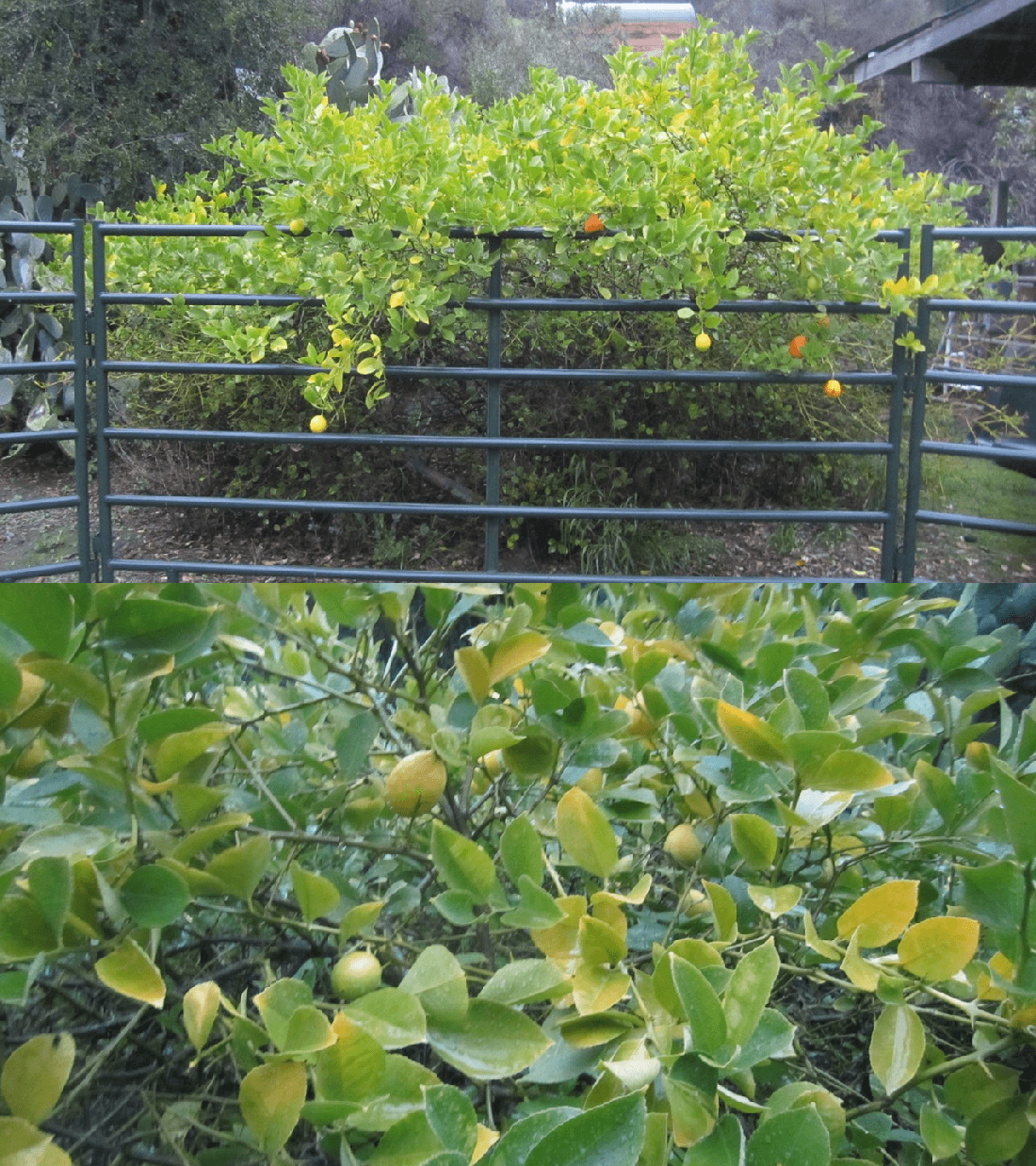
Her favorite, a lemon tree by the round pen, carries on without her, as we all are.

She stopped coming out to the ranch in 2018.  She would usually drop off something for me to eat, say hi to the horses, then go work on the tree.

The visit would last about an hour.  I was usually cleaning one of the corrals.

After pruning a few branches and removing the fruit that had ripened, she’d carry them back to her car and drive home.

How I miss those days.

Lemon Tree by Roundpen 12-12-21

Countdown to 50 | 3 Days to Go

The current statute, and the program arising therefrom, have a downstream focus that can be summarized as ‘Off the Range.’  This is the realm in which the advocates operate.

The proactive approach, codified in the original Act, is gone.

Today we recognize the importance of an upstream focus in protecting these animals, which requires an understanding of cause and effect.

A process is a series of steps that must be carried in a specified order to achieve the desired results.  The steps are often described in a procedure.

Causes are upstream in the process, effects are downstream.

If a plane crashes, do the investigators look at events that occurred 24 hours after it hit the ground?

Of course not!  They look upstream in the flight process to identify actions or conditions that may have contributed to the crash.  The investigation may take them through events that occurred minutes, days or months before.

Improvements to safety and reliability, designed to prevent future crashes, focus on those actions and conditions, which, in the final report, are identified as causes.

If you want to help America’s wild horses, don’t focus on the horses.  The advocates focus on the horses.

Instead, look upstream in the management process, understand why they’re being forced off their home range, and address those causes for a lasting solution.

RELATED: Countdown to 50 | 4 Days to Go.

Fixing Wet Spots

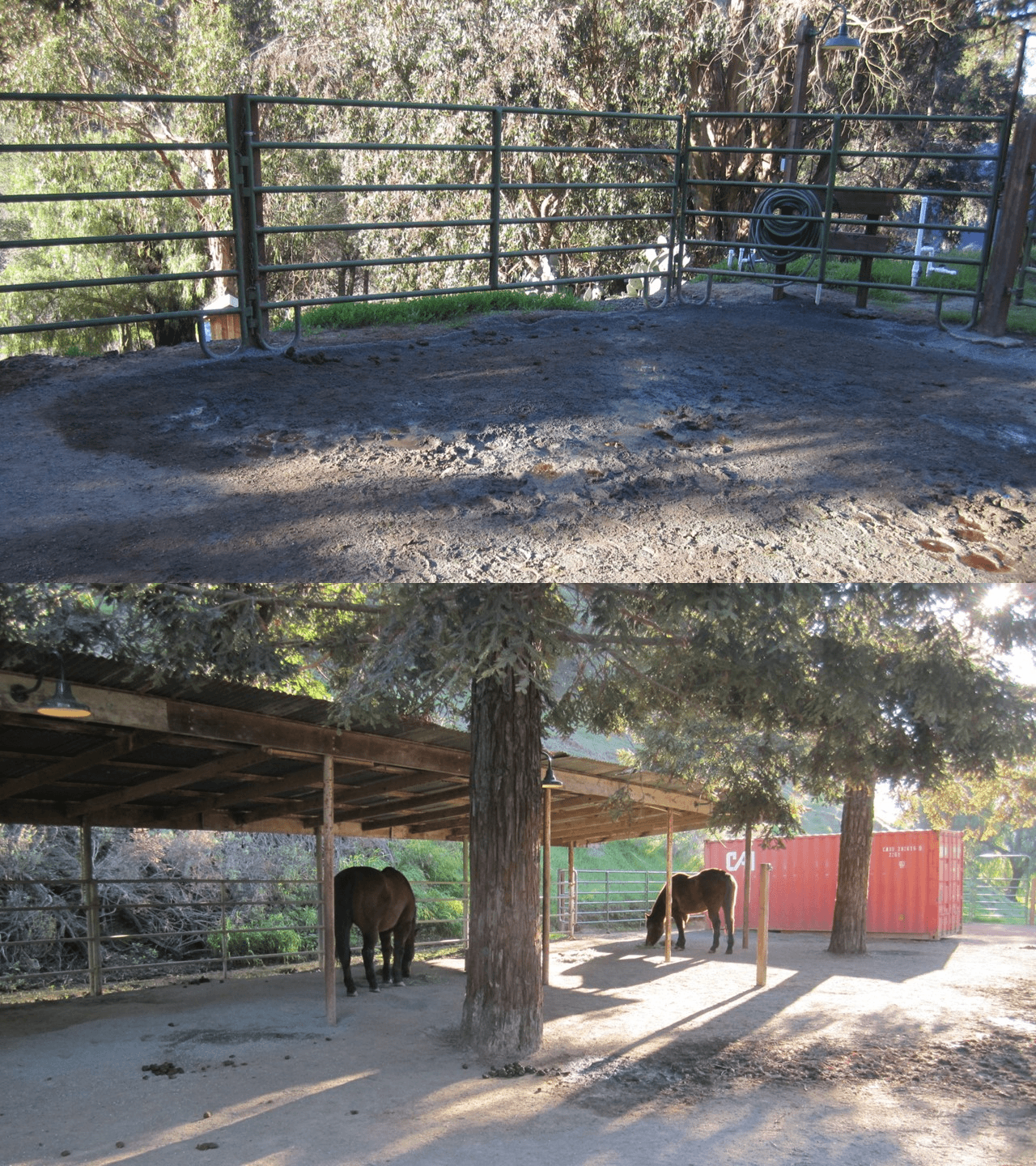
A few weeks ago this corner of the corral was a pond.  The addition of some fill material made things better but it was still wet, suggesting there was another source of water.

You might point to the horses in the shelter, and you’d be right, but the hose used to fill their water buckets, seen in the photo, was leaking.  That was fixed on December 9.

How do you know if you addressed the cause of a problem?  It goes away.

Getting rid of the horses is not an option.  Throwing out some kitty litter to absorb the moisture doesn’t fix the leak and only prolongs the problem.

Fixing Wet Spots 12-11-21

Mind Not Required

Which is easier?

A. Digging through ePlanning and RAS for the necessary data, computing the resource allocations, and demonstrating that an HMA can support six times more wild horses than the government allows.

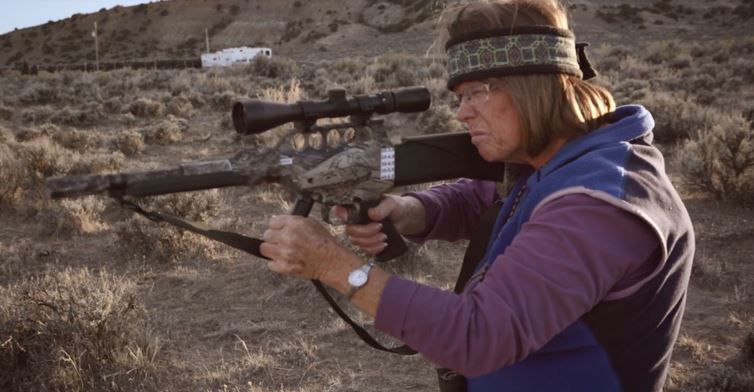
B. Pulling the trigger on your darting rifle and denying the transmission of life, with benefits accruing to the public-lands ranchers.

Which one is better for the horses in the long run?

Which one will be featured in Google search results?