Any BLM Land in Virginia Range?

Most of it is private but there is some BLM land on the east side, which coincides with the Horse Spring HA, and on the west side, between Virginia City and Washoe Lake.

Map taken from an information packet provided in 2018 by the Nevada Department of Agriculture during the proposed transfer of ownership of the Virginia Range mustangs.

Vriginia Range Land Ownership Map Large 01-25-21

The Horse Spring HA can be found on page 21 of this BLM map.

RELATED: Where is the Virginia Range?

UPDATE: Refer to this video on YouTube.
Eagle Roundup Day 19

The incident began on January 6.  Gather stats through January 24:

  • Horses captured: 612, up from 558 on Day 17
  • Goal: 1,131
  • Returned: 0
  • Deaths: 11, up from 9 on Day 17
  • Shipped: 502, up from 458 on Day 17

Two deaths were reported on Day 18, one acute and one chronic.

One foal has been caught to date.  Roughly 45% of captured adults are male and 55% are female.  Some of the mares are probably within a few weeks of foaling.  Some may have foaled in the off-range corrals.

Body condition scores are not known.

The HMA of origin was not reported.  Three HMAs are involved in the roundup.

The number of unaccounted-for animals is 99.

Some of the mares are to be treated with contraceptives and returned to the range but no such activity has been reported.

RELATED: Eagle Roundup Day 17.

Assessing Stocking Rates

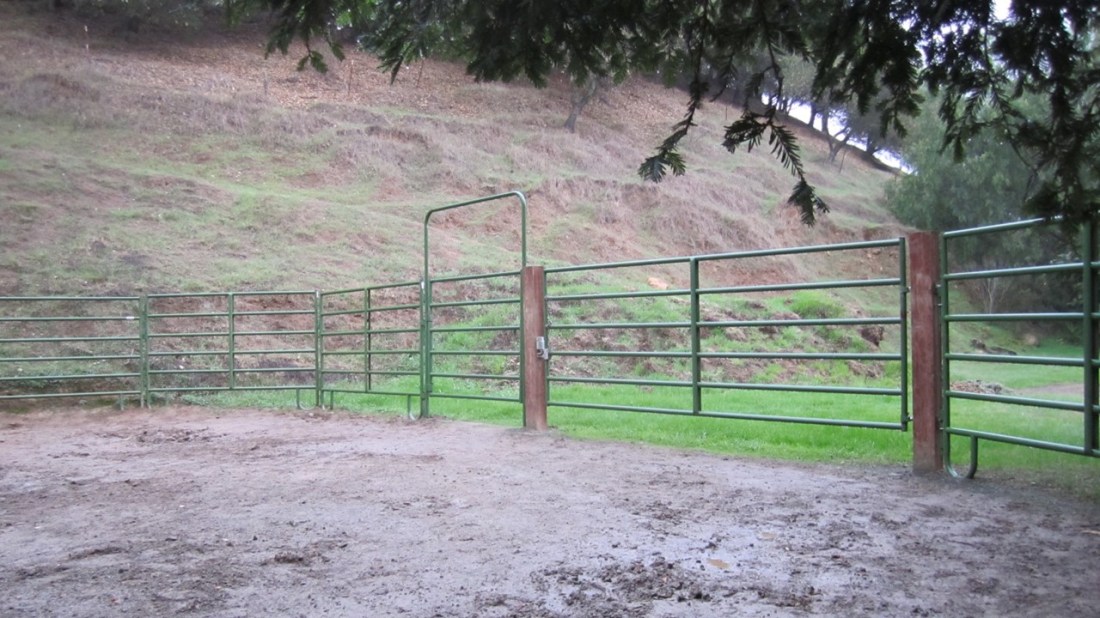
The absence of grass in the corral below tells you the stocking rate is too high, from a sustainability viewpoint.  It holds two horses on approximately 5,000 square feet.

That’s two horses on 0.115 acre, equivalent to 17.4 horses per acre, which is the same as 17,400 horses per thousand acres.

Rick Gore has two horses on ten acres (equivalent to 200 horses per thousand acres) and his pastures look good.  Of course, that’s Texas, not Nevada.

The target stocking rate on western rangelands is 27,000 ÷ 27,000,000 × 1,000 = 1.0 one wild horse per thousand acres, neglecting burros for simplicity.

The current stocking rate is 95,000 ÷ 27,000,000 × 1,000 = 3.5 wild horses per thousand acres.

The stocking rate allowed by plan for privately owned cattle is usually several times than the rate for horses, even on land set aside for the horses.

Assessing Stocking Rates 01-24-21

Eagle Roundup Day 17

The incident began on January 6.  Gather stats through January 22:

  • Horses captured: 558, up from 509 on Day 15
  • Goal: 1,131
  • Returned: 0
  • Deaths: 9, up from 8 on Day 15
  • Shipped: 458, no change from Day 15

One death was reported on Day 16, the result of a pre-existing condition.

Only one foal has been caught to date.  Roughly 44% of captured adults are male and 56% are female.  Some of the mares are probably within a few weeks of foaling.

Body condition scores are not known.

The HMA of origin was not reported.  Three HMAs are involved in the roundup.

The number of unaccounted-for animals is 91.

Some of the mares are to be treated with contraceptives and returned to the range but no such activity has been reported.

RELATED: Eagle Roundup Day 15.

Quick Note on ‘Path Forward’

The plan is designed to achieve and maintain AMLs.  That is, it will enforce resource allocations and management priorities already on the books—27,000 wild horses and burros on 27 million acres.

Those numbers will go down, and continue to go down, if projects such as the Rock Springs RMP amendments are approved.

In 1971, when America’s wild horse and burro population had dwindled to 20,000, President Nixon referred to them as 99% extinct.

Today, the population is around 95,000.

Do you think that any of the executive orders signed recently by the one-horse pony initiated a review of those allocations and hit ‘pause’ on the roundups?  Do you think that he or his likely successor will do that in the future?

They’re already starting to paint him as unfit for office.

Success on the Salt River

The PZP zealots got rid of 80 or more wild horses last year, according to a story by The Fountain Hills Times.  Only 16 foals were born in 2020, down from over 100 in 2019.

Beat that ExxonMobil!

This is great news because the horses are not allowed to outgrow their boundaries.

What’s on the other side of the fence?

In typical fashion, they tell you the ‘vaccine’ is safe and does not change herd behavior, but they never supply any data to allow you to make an assessment for yourself.

  • Herd size
  • Stocking rate
  • Percentage of males and females
  • Percentage of foals
  • Average lifespan
  • Number of deaths
  • Changes year over year

Same thing for the Virginia Range.  The darting program is a success but we’re not going to give you any demographics.

Like Assateague Island, the full effect of the programs may not be revealed for another twenty years.

RELATED: Oil and Mining Companies Can’t Match Impact of PZP Zealots.

WHB50 Gaining Momentum

The fiftieth anniversary page for the WHB Act now has a masthead, promoting the hardiness and versatility of America’s wild horses.

Why would anybody care about the versatility of wild horses?  Because the theme is going to be ‘off the range’ and the concept may correlate with greater interest in adoptions, training and private care.

RELATED: The Horses Are Still a Problem But the Statute Is Not.

Eagle Roundup Day 15

The incident began on January 6.  Gather stats through January 20:

  • Horses captured: 509
  • Goal: 1,131
  • Returned: 0
  • Deaths: 8
  • Shipped: 458

No horses were captured on Day 14.  No deaths were reported on Days 14 and 15.

Only one foal has been caught to date.  Roughly 43% of captured adults are male and 57% are female.  Some of the mares are probably within a few weeks of foaling.

Body condition scores are not known.

The HMA of origin was not reported.  Three HMAs are involved in the roundup.

The number of unaccounted-for animals is 43.

The number of mares that have been treated with contraceptives and returned to the range is not known.

RELATED: Eagle Roundup Day 13.