Not Capable of Sin

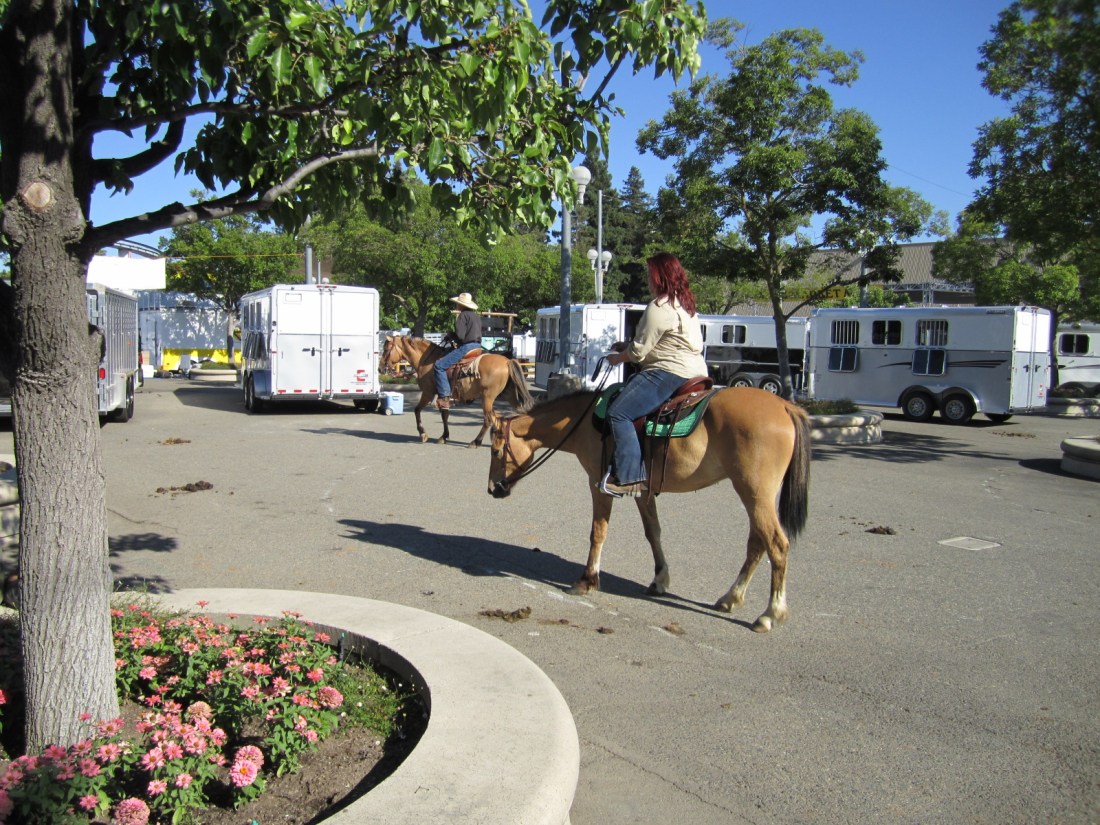
Read these comments from Mustang Maddy, posted 07/13/17 on her FB page.

We see in wild horses what we wish we could see in ourselves—to be blameless before God, to die in a state of grace and be received into the Beatific Vision for all eternity.

On the other hand, you have unrepentant mortal sinners, who will not survive their particular judgment, to join the ranks of the damned forever.

(There’s much more to it than that and nobody explains it better than Ann Barnhardt.)

IMG_9166-06-23-16-1

BLM Returning Horses to Sands Basin HMA

Twenty six wild horses will be returned to the Sands Basin HMA in western Idaho on 06/13/18, according to this news release from the BLM.  The action follows an emergency gather in 2015 of all horses due to the Soda Fire.

Sands_Basin_HMA_Map-1

Horses in the nearby Hardtrigger and Black Mountain HMAs were also affected.  Refer to page nine in the BLM rehab report for more information.  The fire was started by lightning.

The Sands Basin HMA covers 11,724 acres and has an AML of 64, for a target population density of 5.5 horses per thousand acres.

Working Their Own Land

One of the most respectable professions out there.  WTWT.  About 44 minutes.  Video owner does not allow embedding.  From the 2010 TV series Last American Cowboy.

No government serfs here.  Nobody trying to graze cattle on public rangelands at fire-sale prices*, especially the areas set aside for wild horses in burros in 1971.

Do not let the U.S. become a nation of renters, tenants and sharecroppers.

*$1.41 per cow/calf pair per month in 2018

Are There Any Wild Burros in Oregon?

A few, they can be found in the Warm Springs HMA, south of Burns, along with an occasional mule.  State route 205 marks the eastern boundary of the HMA, second largest in the state.

Warm_Springs_HMA_Map-1

The target population density of the HMA is 0.42 animals per thousand acres (based on upper range of AML), compared to a state average of 0.97.  The likelihood of actually seeing a burro or mule in the area is small, unless they tend to hang out in one place and you know where it is.

A WHB specialist based in Burns or Hines may be able to help you find them.

Blindness: Death Sentence for BLM Horses?

Refer to BLM Instruction Memorandum 2015-070 for care of animals managed by the WHB Program, including deworming, vaccination, evaluation of condition and determination of an appropriate end-of-life action.

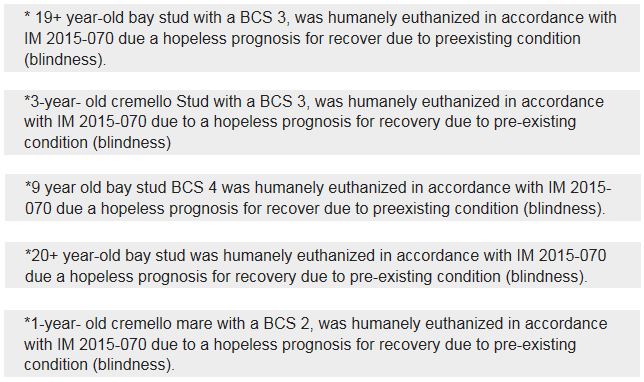
Refer also to the daily reports from the Triple B gather earlier this year.  Note that some of the horses, although they survived the chase, were put down due to blindness.  Keep in mind they were strong enough to travel across the range, perhaps for several days, to the trap site.

In the first three cases, none of the horses were emaciated, according to their body condition scores (BCS).  The body condition of the fourth horse was not given.  The fifth horse had a score of 2, which put her in the emaciated category, subject to euthanization according to section A of Attachment 2, Animal Evaluation and Response.  But the reason for ending her life was blindness.
Triple_B_Blindness-1

When did the nineteen year old stud go blind?  Yesterday?  Or was he like that since birth?  The case of the cremello mare suggests that blindness can occur early in life.  If it is a hopeless prognosis, how did the twenty year old stud stay alive for so long in such harsh conditions?

The term ‘blindness’ does not appear anywhere in Attachment 2.  That it provides justification for euthanasia must be the interpretation of the specialist on the case.

Maybe the prognosis is hopeless because nobody wants to adopt blind horses and most rescues are not interested in them?  If so, then why not let them stay on the range with their seeing-eye helpers?  How can you refer to these life-ending actions as ‘humane?’

The Triple B Complex includes the Triple B HMA, Maverick Medicine HMA, Antelope Valley HMA west of Hwy 93, and Cherry Spring WHT.

Rural Water Systems – Testing

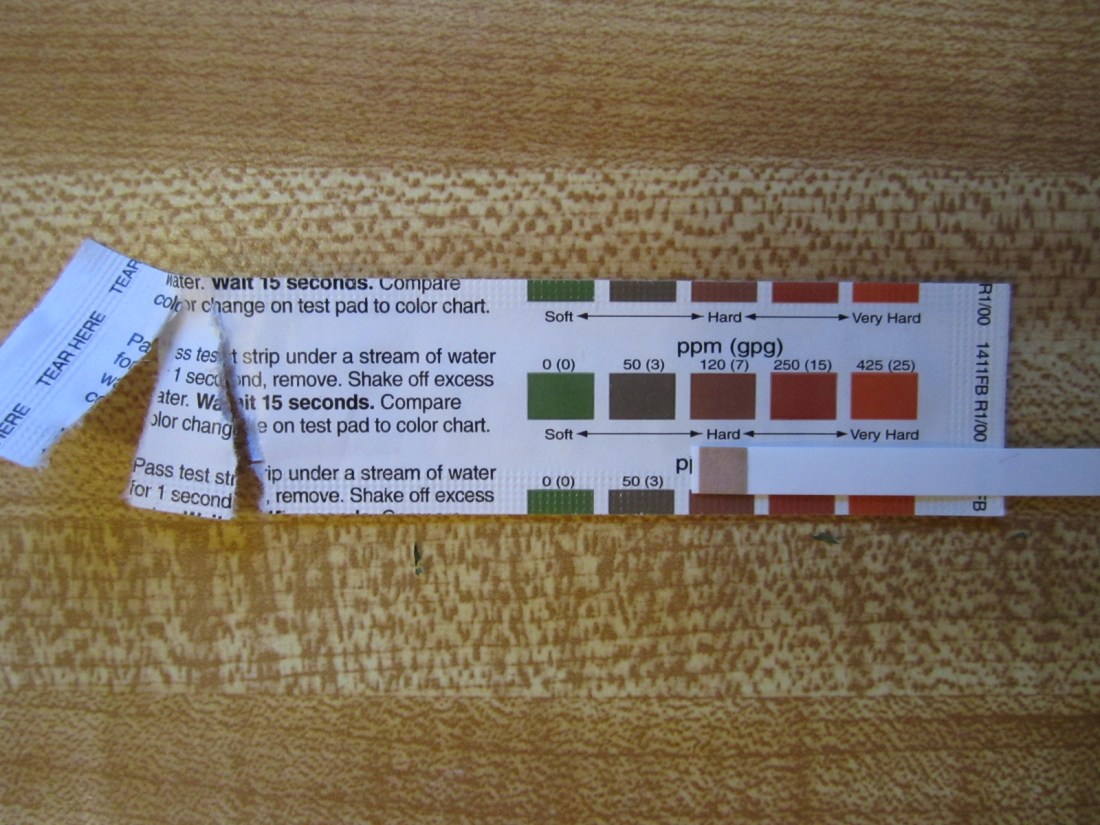
Your water treating supplier can give you test strips to monitor the hardness of water from your well and downstream of the treatment system.  In the example below, there is no green tint, no orange tint, so the hardness is around seven grains per gallon.  Photo was taken about an hour after the test so the indicator may have faded.

Your supplier may also have kits that measure other properties of your water, such as pH, hardness and alkalinity.  If not, try a pool equipment vendor.  The kit may also test for chlorine, which typically is not present in rural water systems.

The addition of chlorine or bleach to water creates hypochlorous acid, among other things, which kills bacteria.  If you have a pool at your ranch or other body of water you’re trying to disinfect, it’s important to keep the pH between seven and eight so the HA can do it’s job.

Look at a bottle of Vetericyn, a common treatment for wounds in the horse world.  The active ingredient is hypochlorous acid.

IMG_5479