The Virginia Range mustangs find you guilty of gross incompetence for sending 24 members of their herd to the Carson City prison in early August.

RELATED: Advocates Bungle Sunny Hills Rescue, 24 Horses Lose Freedom.
Exposing the Hypocrisy, Lies and Incompetence of the Wild Horse Advocates
The Virginia Range mustangs find you guilty of gross incompetence for sending 24 members of their herd to the Carson City prison in early August.

RELATED: Advocates Bungle Sunny Hills Rescue, 24 Horses Lose Freedom.
If homes were burning because of faulty circuit breakers, they’d build more fire stations.

Brand Rock Ranch covers 18,108 total acres west of Roundup MT, including 8,207 deeded acres, 9,261 public acres and 640 state acres.
It’s about 50 miles north of the Billings School of PZP Darting and Public Deception.
The property consists of three parcels, two with grazing preference on BLM lands, according to the agent’s listing.
The Operator Information Report at RAS tied the ranch to authorization 2500711.
The Allotment Information Report tied the authorization to these parcels:
The allotments offer a combined 1,973 active AUMs on 9,482 public acres according to the Allotment Master Report.
That’s equivalent to 164 wild horses, or 17.3 wild horses per thousand public acres.
The bureaucrats and ranchers tell us that public lands in the western U.S. can only support one wild horse per thousand acres (27,000 animals on 27 million acres).
The land ratio is on the low side. You must acquire approximately 8,200 deeded acres to access 9,500 public acres, or 1.16 public acres per deeded acre.
Properties with ratios of three to five might be more attractive from the viewpoint of profitability and return on investment.
That’s according to an October 6 letter to INFORUM.
They and their offspring are the 15 horses to be removed from the park later this month.
Although the proposed livestock plan was terminated in April, the Park Service appears to be pursuing Alternative C, a nonreproducing herd that dies off.
On the Virginia Range with Western Horse Watchers.
The incident started on October 1. Results through October 5:
The figures above are based on the daily reports.
A mare was dispatched on Day 5 for a bleeding injury.
The death rate is 0.8%.
The sidebar still says one horse released despite the incident on Day 3 when nine fell out of a trailer and ran to the top of a hill.
The capture total includes 136 stallions, 189 mares and 65 foals.
Youngsters represented 16.7% of the animals gathered.
Of the adults, 41.8% were male and 58.2% were female.
Body condition scores were not given.
The trap is in the North Observation home range, which may correspond to one of the grazing allotments.
The number of animals removed depends on the number released. Up to 30 mares will be treated with GonaCon Equine and be returned to the range with up to 42 stallions according to the FY25 schedule.
RELATED: Twin Peaks Roundup, Day 3.
The incident has been swept under the rug with 59 unaccounted-for horses.
No updates since September 18.

RELATED: Hold Your Horses: Little Book Cliffs Roundup Not Complete.
The cover letter offers two options: By mail or by email, due by October 31.
Comments are not being taken online at the project site in ePlanning.
The roundup, billed as Catch-Treat-Release on the FY25 schedule, would require temporary holding of at least 90 days if the mares receive two doses on GonaCon.
Anything less constitutes unlawful use of the pesticide.
RELATED: Buffalo Hills EA Refers to Old GonaCon Registrations.
UPDATE: BLM acknowledged ongoing comment period in October 7 news release.
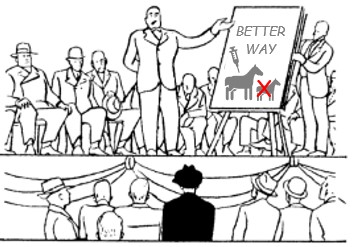
Tell the advocates you’ve decided to get rid of the herd with PZP.
They’ll be eating out of your hand.
Not only will they drop their opposition but they may offer to do it for free.

RELATED: City Council to TRNP: Drop the Pesticides and Roundup.
The incident started on August 19. Results through October 4:
The figures above are based on the daily reports.
No activity was reported between September 4 and October 3.
The Day 46 report gave the total only, no breakdown. Results were calculated from Day 16 and the figures in the sidebar.
The capture total includes 3 stallions, 6 mares and 1 foal.
Youngsters represented 10% of the animals gathered.
Of the adults, 33.3% were male and 66.7% were female.
Body condition scores were not given.
The location of the trap site is not known.
Up to 15 mares will be treated with PZP and be returned to the range according to the FY25 schedule.
The roundup supports three tenets of rangeland management.
RELATED: Sand Wash Roundup in Progress.
The incident started on May 31. Results through September 29:
The figures above are based on the daily reports.
No activity was reported between June 28 and September 29.
The animal put down on Day 27 was included in the shipping total, throwing the numbers out of balance.
The capture total includes 29 jacks, 15 jennies and 3 foals.
Youngsters represented 6.4% of the animals gathered.
Of the adults, 65.9% were male and 34.1% were female.
There are no plans to treat any of the jennies with fertility control pesticides and return them to the range.
The HA has no AML and is subject to permitted grazing. Resources liberated to date:
The roundup supports three tenets of rangeland management.
RELATED: Piute Mountain Roundup, Day 27.
A bale of alfalfa/grass mix sold for $29 earlier this week, 20 bales minimum, down from $30 in August and $36 a year ago.
“That’s great news, I’m voting for Harris.”
It’s still up 53% from 2021, when the price was $19.
“I’m voting for Trump.”
RELATED: Price of Hay Eases Slightly?

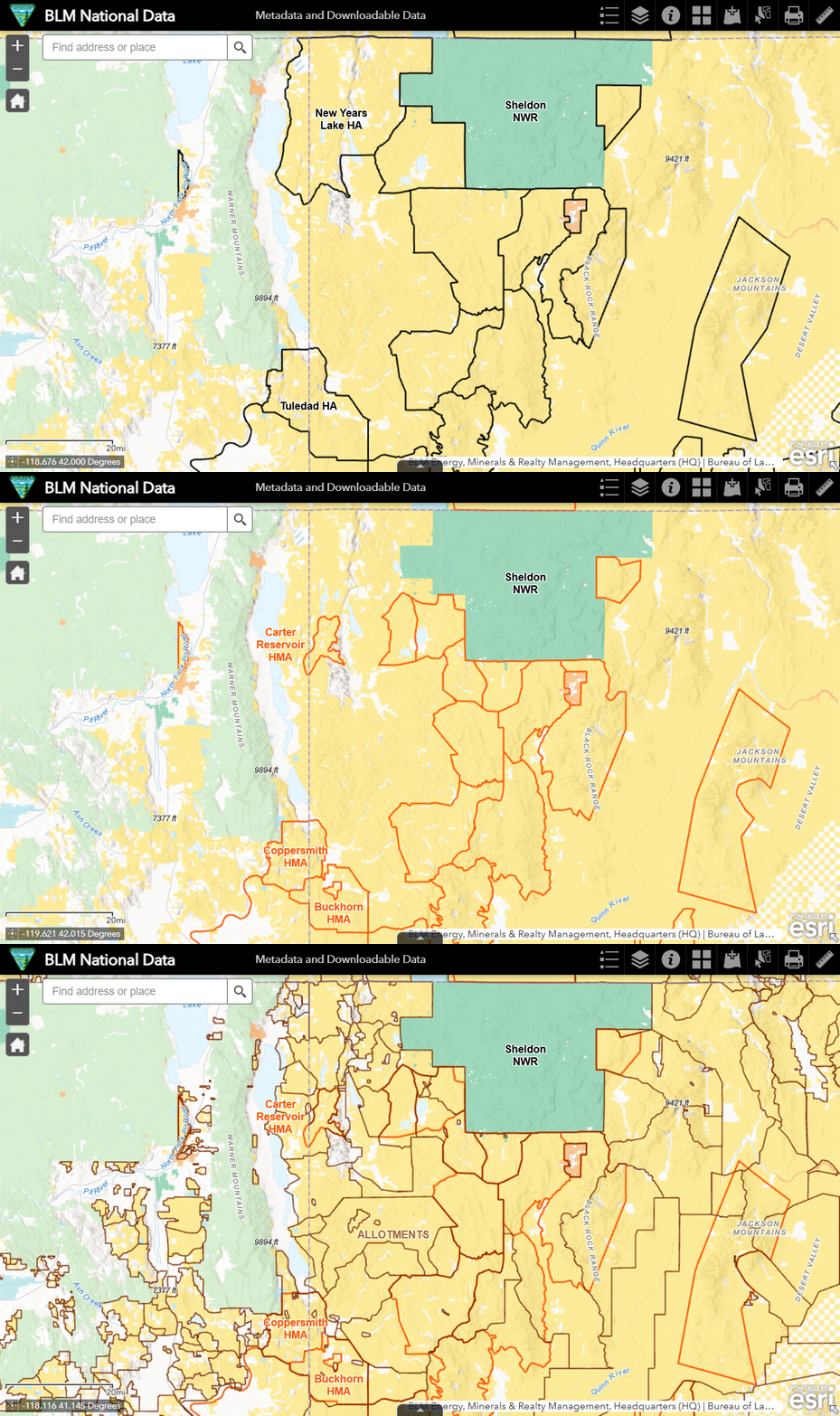
The grazing seasons of one or more pastures in the following allotments include October 1, the start date of the roundup, according to the Authorization Use Report:
In short, seven out of nine allotments are active.
RELATED: Best Use of Twin Peaks AUMs?
She’s their Digital Director according to her profile.
She should write a tell-all about her former boss.
The title could be “Pesticides and Monsters: One Woman’s Mission to Eradicate America’s Wild Horses.”
RELATED: Grace Kuhn Leaves CAAWH?
The incident started on October 1. Results through October 3:
The figures above are based on the daily reports.
The sidebar at the gather page says 266 captured.
Two mares were dispatched on Day 3 for blindness in one eye, bringing the death rate to 0.8%.
The Day 3 report also indicated that the door on a trailer came open as horses were being moved from the capture site to temporary holding, resulting in nine falling out.
They ran to the top of a hill and were not recaptured, yet the sidebar says one released.
The capture total includes 91 stallions, 126 mares and 43 foals.
Youngsters represented 16.5% of the animals gathered.
Of the adults, 41.9% were male and 58.1% were female.
Body condition scores were not given.
The trap is in the North Observation home range, which may correspond to one of the grazing allotments.
The number of animals removed depends on the number released. Up to 30 mares will be treated with GonaCon Equine and be returned to the range with up to 42 stallions according to the FY25 schedule.
RELATED: Twin Peaks Roundup Begins.
The bad news: Horses die. If there are no new foals, the herds will vanish.
The good news: You are in control. Don’t give the advocates a penny, they have nothing to offer America’s wild horses.
RELATED: Foal-Free Friday, Breaking the Addiction Edition.

The Medora City Council passed a resolution on October 1 urging the park to halt wild horse removals and fertility controls until experts fully assess and provide a report on the genetic viability of the herd, according to a story by INFORUM.
The park’s interim superintendent said the roundup will provide genetic information that is crucial for managing the herd.
Discussion of the pesticide begins at the bottom of page 21 in the Final EA (page 29 in the pdf).
To wit, “GonaCon-Equine is approved for use by authorized federal, state, tribal, public and private personnel, for application to wild and feral equids in the United States (EPA 2013, 2015).”
The 2013 and 2015 versions were superseded by a 2017 amendment that changed the interval between primer and booster from 30 days to 90 days.
The BLM has adhered to 30 days, representing unlawful use of the product.
If the DNA is put out for public review, you could argue that the EA does not adequately cover the Proposed Action, as claimed therein.
The tours, one in the morning and one in the afternoon, can accommodate 20 people each and will last about two hours, according to a BLM news release.
Wild horses are held at the facility not because the land can’t support them, but because the bureaucrats have assigned most of their food to the public-lands ranchers.
The advocates ratify and reinforce the practice with their darting programs.
The HMA, a subset of the allotment, offers 314 × 12 = 3,768 AUMs per year on 125,207 public acres, or 30.1 AUMs per year per thousand public acres.
The allotment offers 4,114 AUMs per year on 440,982 public acres, or 9.3 AUMs per year per thousand public acres.
If wild horses had principal use of the HMA, a feature of the original statute but opposed today by most advocates, the AML would increase by 9.3 × 125,207 ÷ 1,000 ÷ 12 = 97, assuming the resource is evenly distributed across the allotment.