If we don’t get these buffoons off the range we won’t have any wild horses.

RELATED: Pesticide Caucus Serves Ranchers Not Wild Horses.


Exposing the Hypocrisy, Lies and Incompetence of the Wild Horse Advocates
If we don’t get these buffoons off the range we won’t have any wild horses.
RELATED: Pesticide Caucus Serves Ranchers Not Wild Horses.
Today’s edition of Foal-Free Friday is obsolete. The list has grown.
These are the terms the advocates use to sell mass sterilization as a humane alternative to motorized removal:
These are in common use by the advocates.
Mares unable to bear fruit are said to be self-boosting.
RELATED: Foal-Free Friday, Dumb and Dumber Edition.

The pocket veto left wild horse advocates, ranchers and lawmakers perplexed and divided over what to do next according to a story by Taos News.
Western Horse Watchers was skeptical of the bill due to the support of the New Mexico Cattle Growers Association.
RELATED: New Mexico Governor Fails to Sign HB 284.
A new project was created today in ePlanning but no documents have been posted.
The Proposed Action, according to the description, would apply a seed mix over a ten-year period as funding allows.
Wild horse overpopulation and persistent drought have been detrimental to rangeland ecology, especially native bunchgrasses, which are a primary component of their diets.
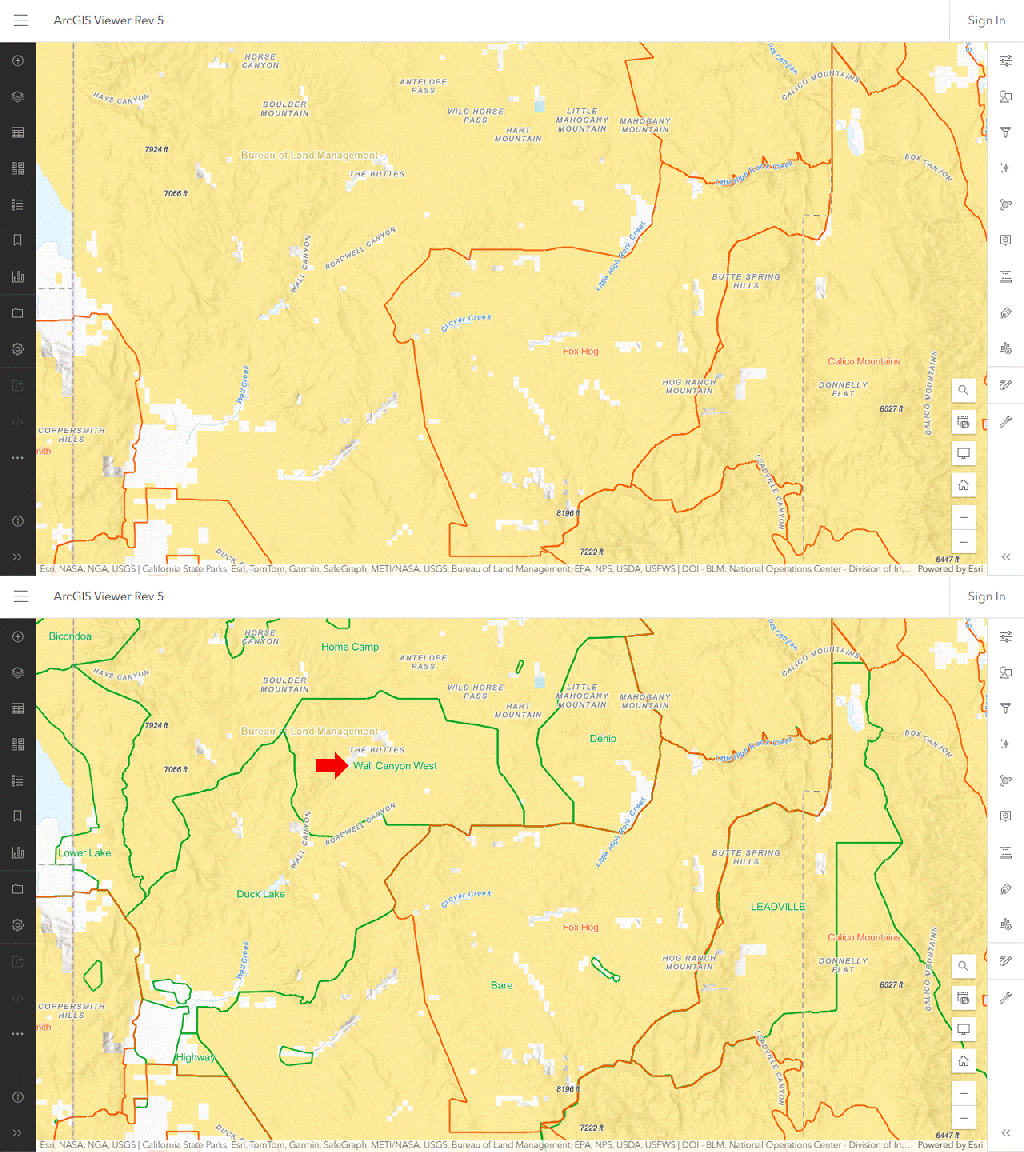
The allotment, site of a spring improvement project and new livestock pen, borders the Fox Hog HMA on the north side.
The Allotment Master Report puts it in the Improve category, suggesting that your stewards of the public lands have not been taking their responsibilities seriously.
The permittees receive 2,609 active AUMs on 36,475 public acres.
If the area was designated for wild horses, how many could live there?
The forage assigned to livestock is equivalent to 217 wild horses, or 5.9 per thousand public acres.
Your faithful public servants claim that public lands in the western U.S. can only support one wild horse per thousand acres (25,500 animals on 25.6 million acres).
The advocates reinforce the narrative with their darting programs.
If the allotment was an HMA, the AML would be 36 and 181 wild horses would be consigned to off-range holding because of permitted grazing.
BLM allotments in Nevada support livestock equivalent to 173,144 wild horses on 40,194,360 public acres, or 4.3 wild horses per thousand public acres.
Wild horses can be placed on public lands not identified for their use by acquiring base properties associated with grazing allotments and flipping the preference to horses.
RELATED: The Allotments Tell the Story: They’re Lying, All of Them.
Added Defending to the list.

RELATED: Synonyms for Wiping Out Herds with Ovary-Killing Pesticides.

A new project has been opened in ePlanning with comments due by June 13.
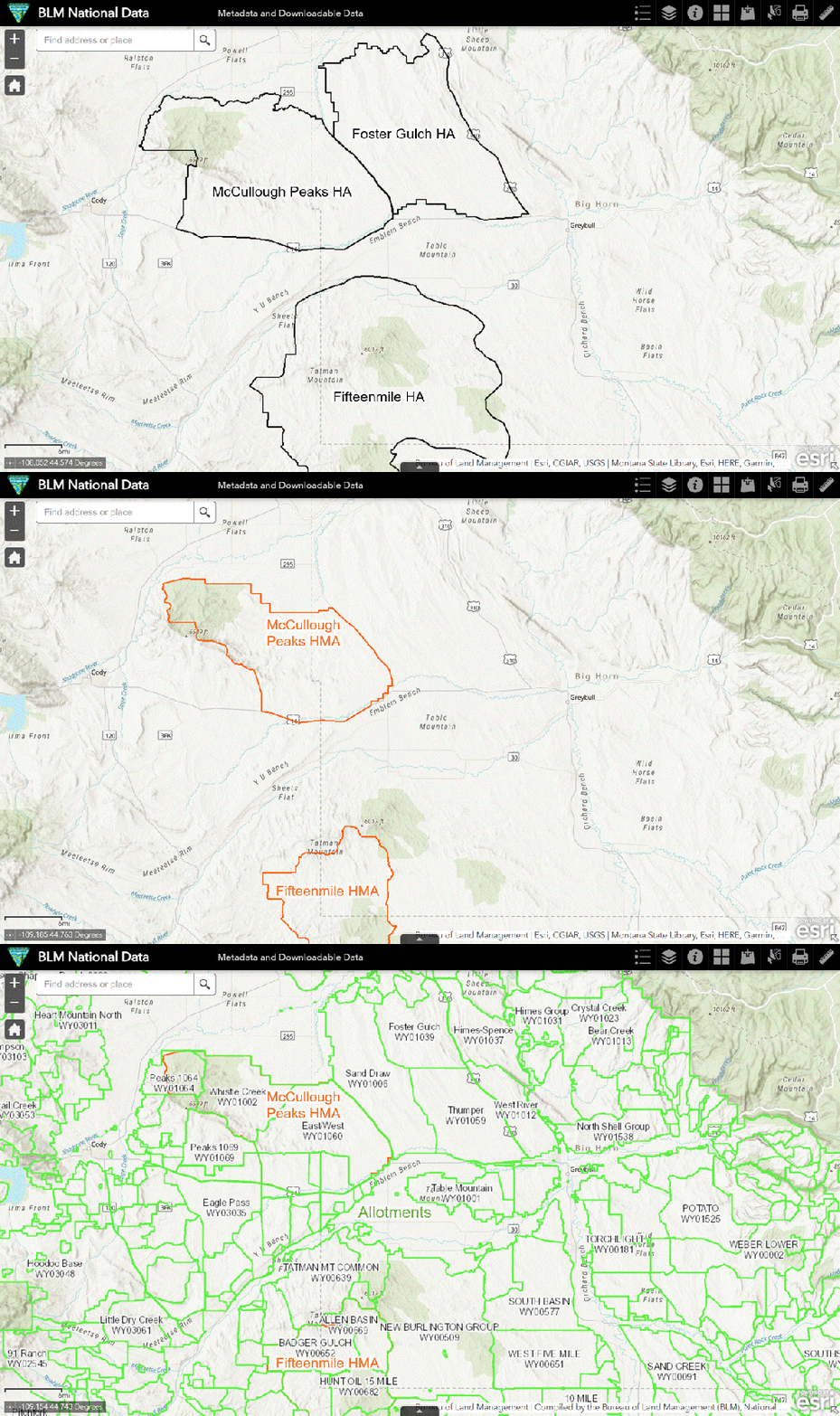
The DNA asserts that a 2018 EA covers the Proposed Action, which would capture most of the horses in the HMA and return up to 100 in a ratio of 60% males to 40% females.
There are no plans to treat any of the mares with fertility control pesticides.
Ideally, the incident would occur in the fall but it is not on the latest schedule.
UPDATE: The news release appeared after this post went live. The HMA, considerably smaller than the HA, is subject to permitted grazing.
The order was given because he had a body condition score of 2 and a poor prognosis for recovery according to a report by KULR News.
Advocates with The Cloud Foundation argued that his condition was normal for a horse coming out of winter and that the agency should “…let nature call the shots.”
They don’t believe that!

Although the culling of unfit horses occurs most frequently during roundups, it is an ongoing process and is not limited thereto.
The bill was signed by the Speaker of the House and President of the Senate yesterday.
The topic of fertility control has been carefully avoided in this plea for donations.
If a herd of 100 can only produce three foals, it’s on its way to oblivion.
RELATED: Third Foal of Year Spotted in Currituck Herd.
The original post, titled “How Shock Collars Corral Cows,” has been replaced by a new post titled “How Invisible Fences Corral Cows.”
The BLM purchased the ranch in 2022 with support from the Land and Water Conservation Fund, taking much of the deeded acreage public.
A 2023 article by Cowboy State Daily said the Marton family retained some grazing privileges and will continue to graze cattle there.
A meeting to receive public input on the future of the property, scheduled for May 14, has been postponed according to a BLM news release.
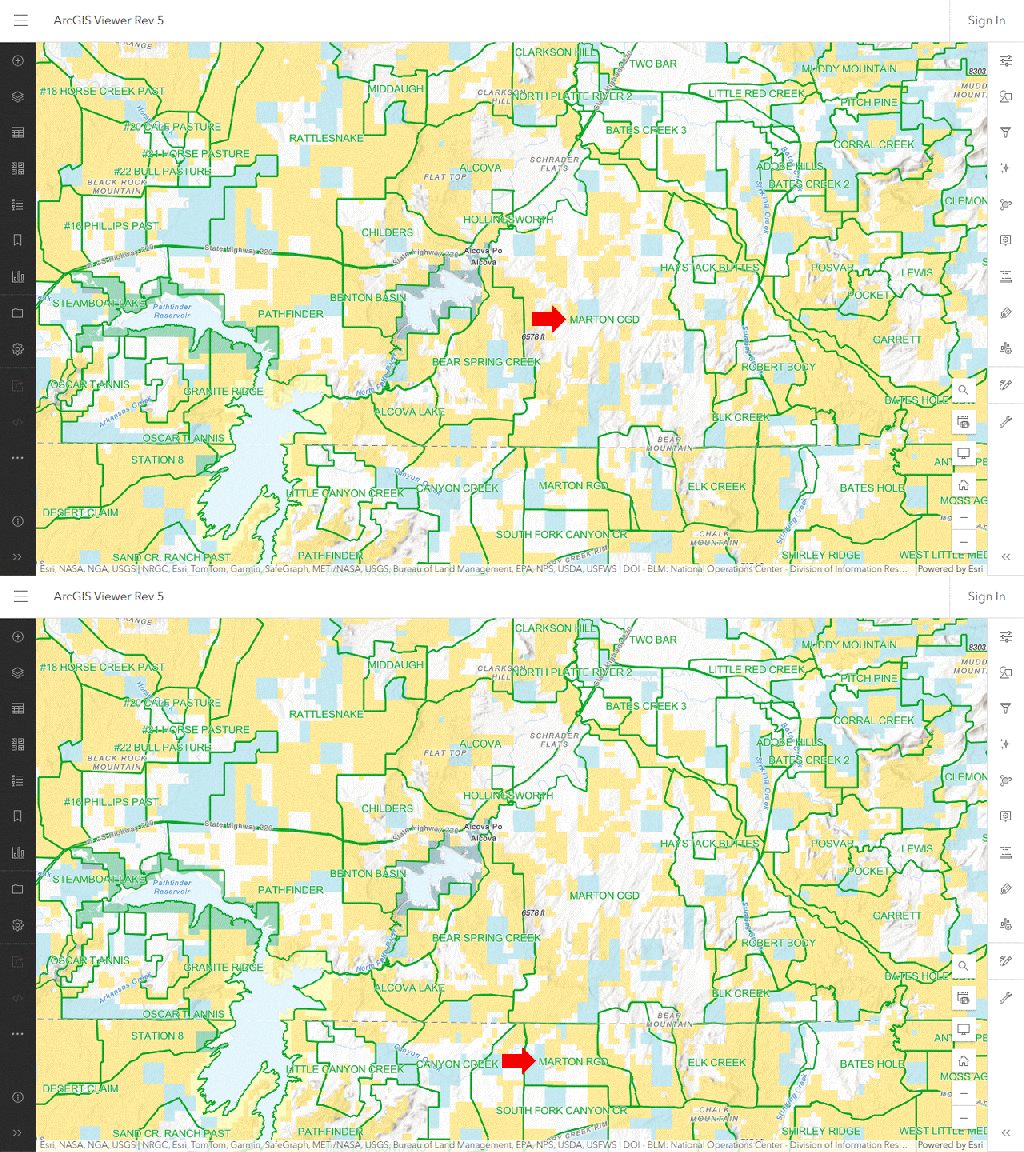
The project boundary in Figure 1 of the Final EA coincides roughly with that of the Marton CGD and RGD allotments, east of the Alcova Reservoir.
Together they offer 10,636 active AUMs on 61,519 public acres.
The Allotment Master Report puts both in the Improve category, suggesting that your stewards of the public lands have not been taking their responsibilities seriously.
If the area was designated for wild horses, how many could live there?
The forage assigned to livestock is equivalent to 886 wild horses, or 14.4 per thousand public acres.
Your faithful public servants claim that rangelands in the western U.S. can only support one wild horse per thousand acres (25,500 animals on 25.6 million acres).
The advocates, defeated a long time ago, reinforce the narrative with their darting programs.
If the allotments were an HMA, the AML would be 62 and 824 wild horses would be consigned to off-range holding because of permitted grazing.
BLM allotments in Wyoming support livestock equivalent to 158,425 wild horses on 17.312,214 public acres, or 9.2 wild horses per thousand public acres.
Wild horses can be placed on public lands not identified for their use by acquiring base properties associated with grazing allotments and flipping the preference to horses.
RELATED: The Allotments Tell the Story: They’re Lying, All of Them.
At the southwest corner of the Virginia Range with easterfilmsdotcom.
The Preliminary Environmental Assessment for the Blue Wing HMAP says on page 163 of the pdf that if some number of mares become sterile as a result of PZP treatment, that result would be consistent with the contraceptive purpose that motivates BLM’s use of the vaccine, and with Congressional guidance that condones such treatment in the management of wild horses and burros.

That statement makes the advocacy groups partners, not adversaries, of the bureaucrats and ranchers.
RELATED: Blue Wing HMAP Shows Advocates Ill-Informed About Wild Horses.

The gather page says 110 horses were returned to the Complex in November, bringing the number of animals removed to 2,467.
All mares received two doses of GonaCon Equine.
The interval between treatments was not given.
At the time, the label called for 90 days, a requirement the BLM routinely ignored.
In January the interval was reduced to seven days.
RELATED: North Lander Roundup Ends.
Mothers are almost as hard to find at the Salt River and Virginia Range as foals.
Referring to the Campaign Against America’s Wild Horses as the nation’s leading wild horse protection organization is like claiming that Planned Parenthood is the nation’s premier right-to-life organization.

Neither serves a charitable purpose.
The incident concluded on May 2 with 460 burros captured, 457 shipped, none returned and three dead.
There were no unaccounted-for animals.
The start date was April 15, one week later than scheduled.
The capture and removal goals were 400 each but a 15% increase was authorized.
The capture total included 187 jacks, 240 jennies and 33 foals.
Foals represented 7.2% of the animals gathered.
Of the adults, 43.8% were male and 56.2% were female.
The death rate was 0.7%.
There were no plans to treat any of the jennies with fertility control pesticides and return them to the HMA.
Animals identified for removal were taken to the Florence off-range corrals.
The news release says the AML will range from 100 to 140, compared to 50 to 140 at the WHT page, implying heavy use of fertility control pesticides.
The closer the range the lower the expected growth rate.
The project folder contains numerous documents, including the Final Environmental Assessment and Draft Decision.
The Decision Record would authorize a modified version of Alternative 4, presented in Chapter 2 of the EA.
The proposed HMAP and its variants are discussed in Appendix A.
The Alternative 4 HMAP (page 234 in the pdf) calls for an AML of 50 to 140.
The DR corroborates that range.
Western Horse Watchers cannot account for the range given in the news release.
Other features of the modified plan include
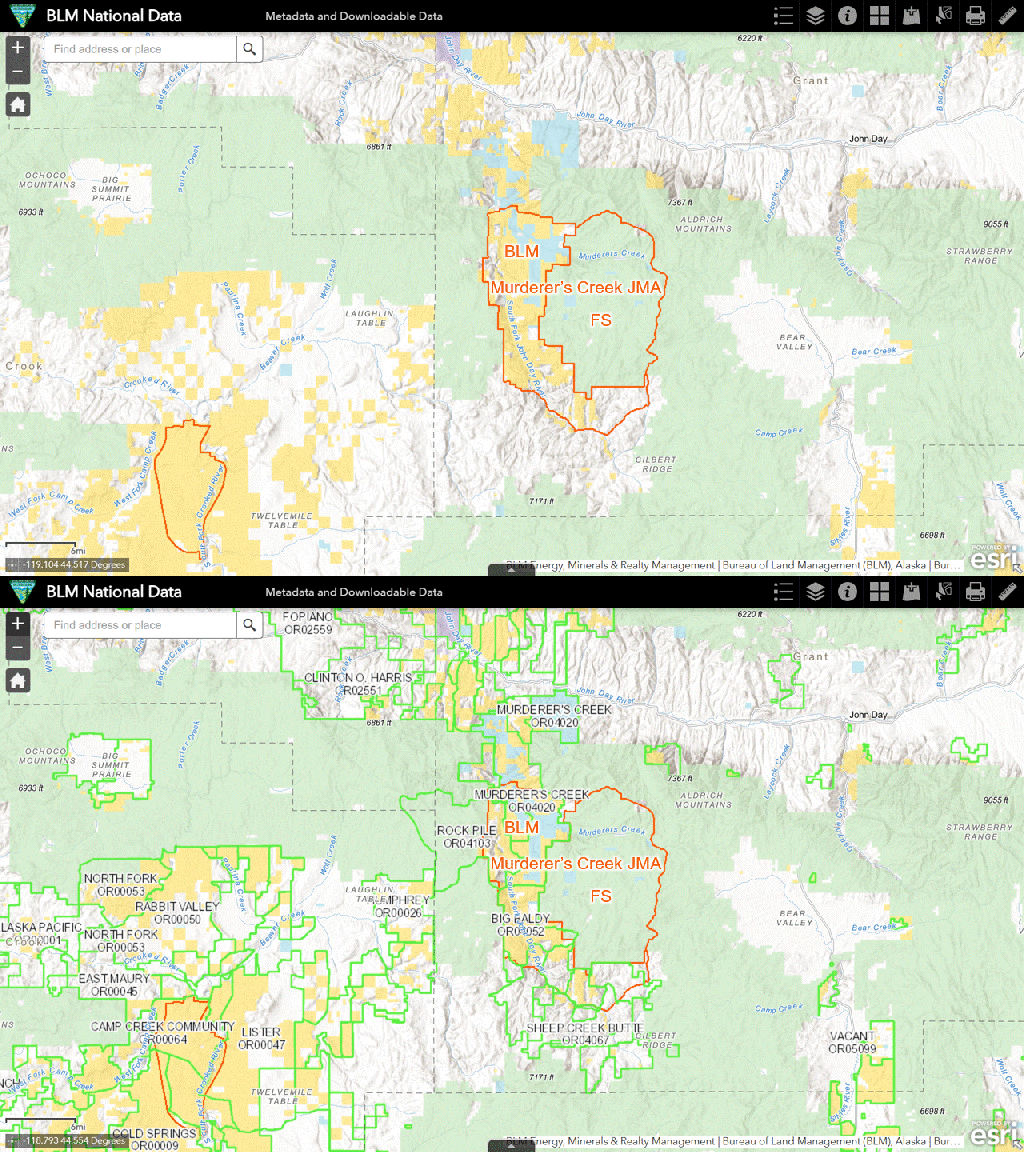
Table 5 in the EA indicates that livestock in the JMA (HMA + WHT) receive 7,770 AUMs per year, while horses receive 1,680 AUMs per year at the high end of AML.
This yields a True AML of 140 + 7,770 ÷ 12 = 787, the number of horses the land could support if it was managed principally for them as specified in the original statute.
The problem is not inadequate fertility control, as the advocates would have you believe, but too many cow/calf pairs.
RELATED: Forest Service Seeks Input on EA for Murderer’s Creek HMAP.