Report by KTNV News of Las Vegas.
The story does not indicate if Chris Giunchigliani is in any way associated with hunting or ranching interests.
RELATED: Forest Service to Remove Wild Horses from Mount Charleston.

Exposing the Hypocrisy, Lies and Incompetence of the Wild Horse Advocates
Report by KTNV News of Las Vegas.
The story does not indicate if Chris Giunchigliani is in any way associated with hunting or ranching interests.
RELATED: Forest Service to Remove Wild Horses from Mount Charleston.
The contract with the Salt River Wild Horse Darting Group expires in May and the new agreement states that for every horse born, three other horses must be removed or adopted out according to a report by KPHO News.
SRWHDG ringleader Simone Netherlands said “We want every horse born on the Salt River to be able to live out their lives on the river” but that doesn’t happen very often thanks to her and her band of merrymen.
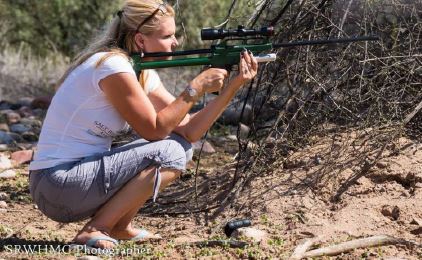
Mares that do bear fruit probably have faulty immune systems and the advocates rely on predators to fix those uh-ohs.
Other benefits of PZP darting programs, besides shrinking herds, include abnormal sex ratios, injuries and infections, tiny breeding populations and loss of genetic diversity.
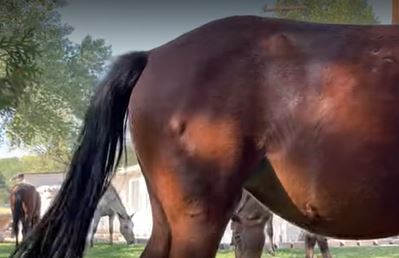
But the crème de la crème, which the advocates deny, is mass sterilization and the Arizona Department of Agriculture apparently doesn’t understand that.
The herd has likely reached the tipping point and will continue to decline, contract or no contract.
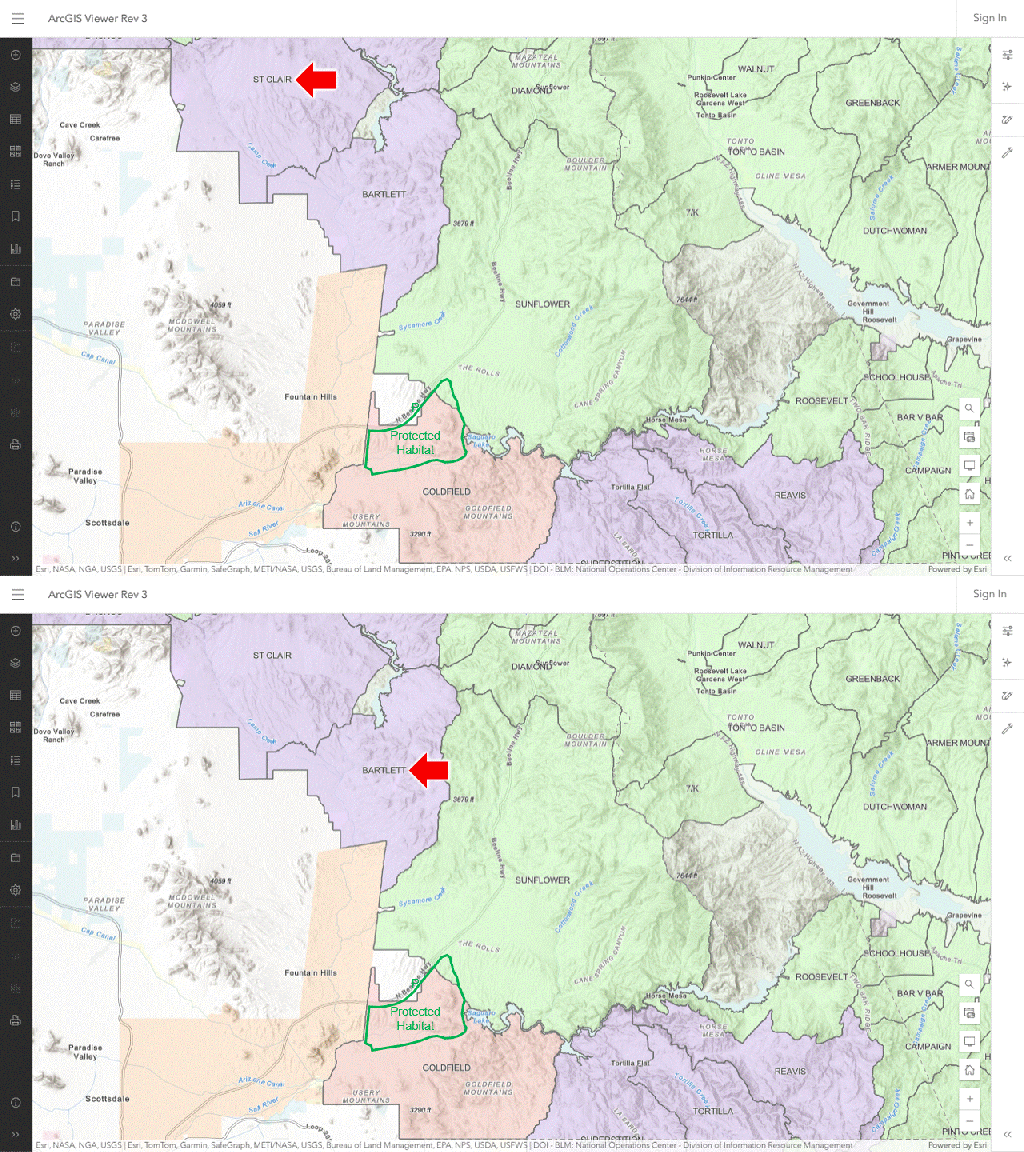
A better option would be to acquire land that meets the requirements of a base property, attach it to one or more vacant allotments in the Tonto National Forest, such as Bartlett or St. Clair, and move the horses from the contested area into a much larger home.
RELATED: Leadership Needed at Salt River.
The odds are slim to none based on the interview in this report by KOLO News.
Beat the numbers down with ovary-killing pesticides, sell mass sterilization as wild horse conservation.
The story says you should not be feeding wild horses yet the beneficiary of the fundraiser is a group that feeds the horses!

The group is also responsible for the botched rescue last August that landed 24 Virginia Range horses in the Carson City prison.
Horses have the day off. On the Black Mountain HMA with TheRealRenegades.
She was stuck in a water hole that was drying out according to a story by KPNX News.
Her foal did not wade into the quagmire.
UPDATE: Added video.
Here’s your chance to place wild horses in the Wyoming checkerboard!
Haystack River Ranch covers over 92,000 acres, including 25,000 deeded acres, 41,000 BLM acres, a private lease of 23,500 acres and a state lease according to the listing.
The land produces over 9,000 AUMs (per year), equivalent to 750 wild horses.
The overall stocking rate would be 8.1 wild horses per thousand acres.
Your faithful public servants claim that public lands in the western U.S. can only support one wild horse per thousand acres (25,500 animals on 25.6 million acres).
The agent’s map puts the deeded acreage, shown in white, on the east side of the ranch and the private lease on the west.
BLM parcels of approximately 640 acres each, shown in yellow, appear on both sides.
The property description says the leased acreage, also shown in white, belongs to Anadarko, which may correspond to Orion Mine Finance today.
The ranch meets three out of four requirements for a wild horse refuge.

Following successful negotiations with the parties involved, wild horses would be able to roam freely on public and private lands as cattle do today.
The ArcGIS Viewer identifies the overlapping allotments as Haystack and Haystack River Pasture.
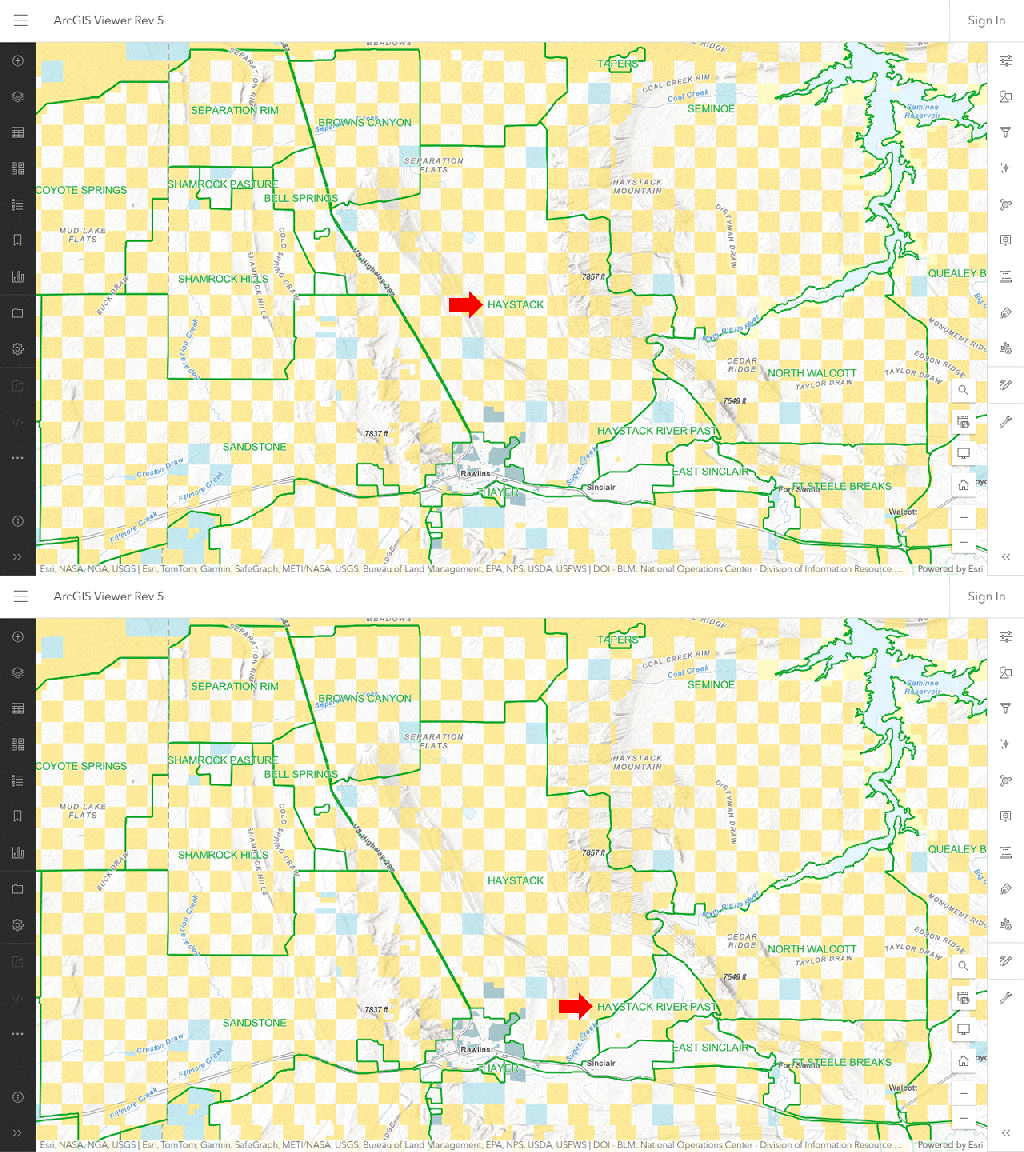
The Allotment Master Report puts Haystack in the Maintain category and Haystack River in Custodial, condition unknown.
Wild horses can be placed on public lands not identified for their use by acquiring base properties tied to grazing allotments and flipping the preference to horses.
RELATED: Key Indicators for New Wild Horse Preserves.
A story about the Axtell burro deaths should focus on principal use and the importance of keeping the animals in their lawful homes.
Unless you’re in cahoots with the bureaucrats and ranchers or wanted to give a voice to those who are.
Such is the case in this article by Deseret News.
The incident provides an opportunity to sell mass sterilization as a humane alternative to motorized removal.
Burros can’t die in off-range holding if there are none to capture.
RELATED: Canyonlands Burros Dying at Axtell Corrals.

The online meeting runs from 1 to 3 PM Mountain time according to the news release.
You must register to comment.
The announcement did not indicate if a hearing had been scheduled to address the issue of nonmotorized removal, peddled by the advocates as in-the-wild management.

The Campaign Against America’s Wild Horses is a world-class manufacturer of slogans intended to deceive its supporters and the American people.

Although the packaging might change, the message doesn’t: Replace motorized removal with mass sterilization, beat the numbers down with ovary-killing pesticides.
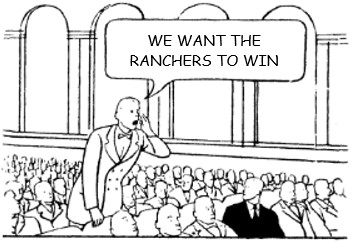
Added to AdvocateSpeak Dictionary.
The BLM plans to remove juniper trees from a variety of landscapes near the Alcova Reservoir according to yesterday’s news release.
The project is a collaborative effort between the BLM, Bureau of Reclamation, Wyoming Game and Fish Department, and private landowners.
BLM representatives will be on hand to provide information, answer questions and gather public input at an open house on May 7.
A map of the project area was provided.
A link to the NEPA review was not given.
You must travel to Alcova to participate.
The ArcGIS Viewer shows the reservoir is surrounded by grazing allotments.
The private landowners are likely permittees.
The trees, a native species, are not being targeted because they might burn if lightning strikes one of the pastures but because they crowd out forage preferred by livestock, a nonnative species.
This is another example of wasteful spending intended to prop up a failed industry.

This year National Infertility Awareness Week runs from April 20 to April 26.
It’s not a naturally occurring condition in the wild horse world but is inflicted by the advocates so ranchers can enjoy more of what their allotments have to offer.
They say it’s a humane alternative to motorized removal and sell it as wild horse conservation, even though the inevitable result is sterility.
Moreover, they want you to pay for it.
They are phonies, leaders of the blind, irrelevant.
RELATED: Foal-Free Friday, Pounding the Pill for Pesticides Edition.
Juniper Mountain Ranch covers approximately 5,900 deeded acres southeast of Maybell, CO, with grazing preference on 5,800 BLM acres and 640 state acres according to the agent’s listing.
The deeded acreage lies within the allotment boundary.
The BLM allotment offers 800 active AUMs, equivalent to 66 wild horses or 11.4 wild horses per thousand public acres.
Your faithful public servants claim that public lands in the western U.S. can only support one wild horse per thousand acres (25,500 animals on 25.6 million acres).
If the deeded acreage offers the same level of forage as the public acreage, the ranch should be able to support around 130 wild horses.
The property meets three out of four requirements for refuges.

Wild horses can be placed on public lands not identified for their use by acquiring base properties tied to grazing allotments and flipping the preference to horses.
NEPA reviews would likely be required.
RELATED: Key Indicators for New Wild Horse Preserves.
The measure passed today 60-4-1.
Western Horse Watchers believes the governor will sign it.
RELATED: HB25-1283 Back to House.
The bill was returned for consideration of Senate amendments.
RELATED: State Senate Passes HB25-1283.
The BLM, a servant of the public-lands ranchers, gave over $125,000 to the Campaign Against Americas Wild Horses in FY24.
How do you explain that?
They are allies, not enemies.
RELATED: BLM Among Top Ten Donors to CAAWH?

They’re upset at the prospects of losing around 3,700 wild horses in Wyoming but are silent about the loss of approximately the same number at the Salt River and Virginia Range.
Moreover, if the BLM decided to get rid of the Rock Springs herds in the same manner, they’d drop their opposition and offer to do it at no cost to the government.
What a bunch of phonies!
RELATED: Draft EA for Rock Springs Wild Horse Removal Out for Review.

The bill carried today in a 29-6 vote.
RELATED: HB25-1283 Third Reading Today.
The project description says the Decker Unit Allotment will contain 626 acres of public domain and 137 public AUMs, while the South Crosby Unit Place Allotment will contain 80 acres of public domain and 24 public AUMs.
That works out to 219 AUMs per thousand public acres in Decker, equivalent to 18 wild horses per thousand public acres, and 300 AUMs per thousand public acres in Crosby, equivalent to 25 wild horses per thousand public acres.
The state offers some of the finest grazing land in the American West, apparently.
Your faithful public servants claim that western rangelands can only support one wild horse per thousand acres (25,500 animals on 25.6 million acres).
RELATED: How Many Wild Horses Can Public Lands Really Support?
The bill passed with amendments in its second reading on April 17.
A passing vote in the Senate may be followed by a return to the House for acceptance of the changes.
On the Virginia Range with Art.
 Western Horse Watchers Association