Onaqui Mountain Roundup Ends with No News Release?

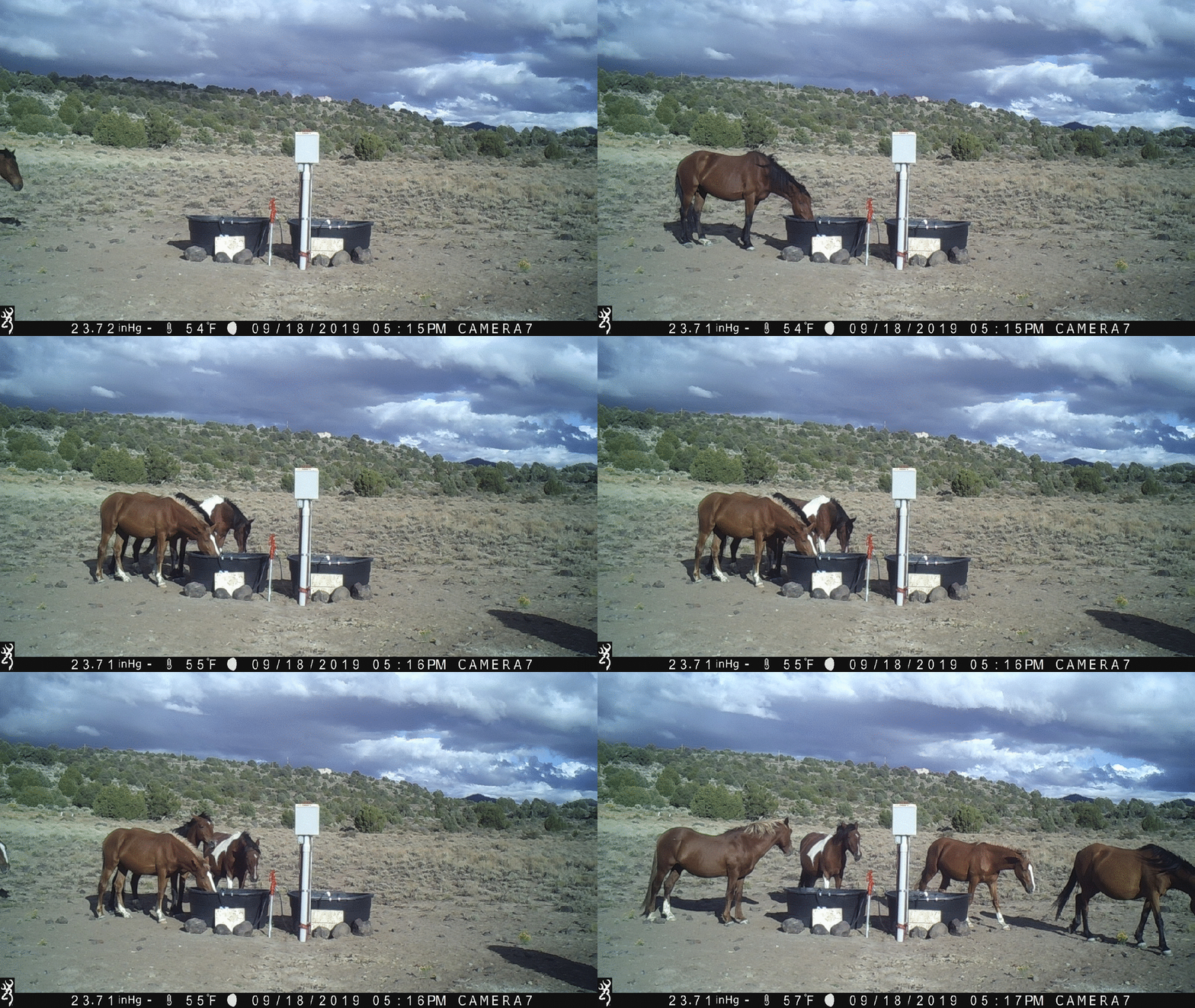
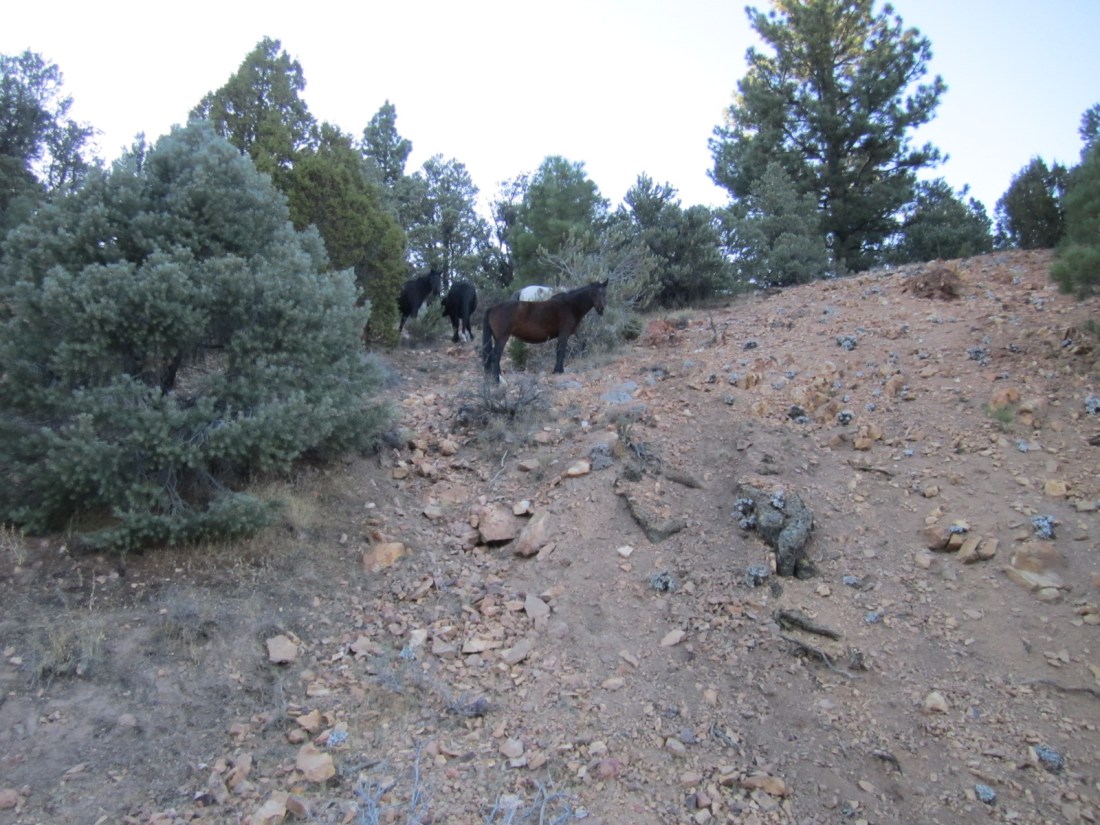
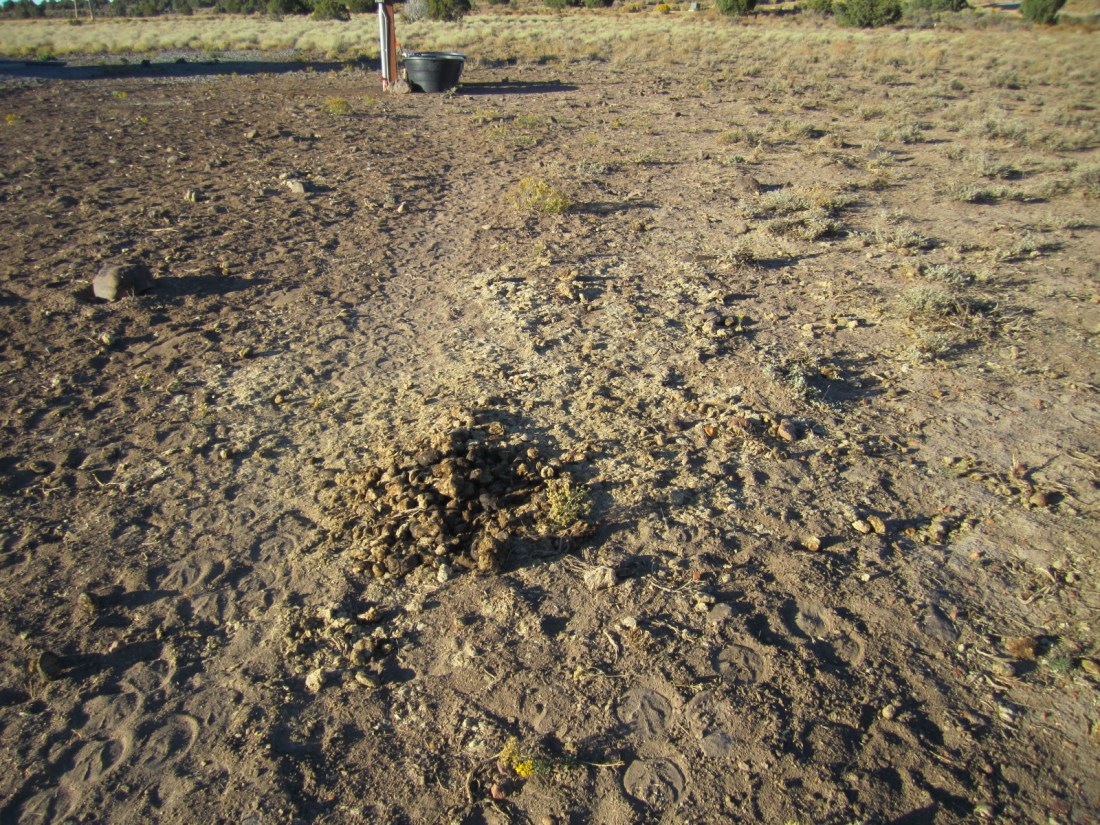
The gather ended on 09-19-19, according to the daily reports, with 241 excess horses removed from their home range.  Two deaths were reported (0.8%) and no animals were returned to the HMA.

Most of the body condition scores were fours and fives, not exactly what you’d expect for a herd that’s overpopulated.  A more plausible explanation is that they were robbing too much forage from the public-lands ranchers—on territory set aside for them.

RELATED: Onaqui Mountain Gather Starts on 9/11.

Where Did All the Horses Go-1

Invalid Conclusion from Recent Sterilization Survey?

The Animal Welfare Institute said today in a news release that 77% of Americans oppose sterilization experiments on wild horses by the BLM.

However, the disclaimer at the end of the announcement said the poll was not based on a probability sample, taken to mean that the persons responding were not selected at random from the population to which the inference was drawn.

What the study did establish is that 77% of 2,027 U.S. adults who responded to the survey oppose the BLM’s sterilization research.

The Greatest Threat to Public Lands is Public-Lands Ranching

Five areas were considered this week in a series of posts about the number of wild horses that have been displaced from public lands by privately owned livestock.

Yep, 8,127 wild horses have been denied a place on their home range by pro-ranching statutes and regulations of the federal government.

How many more HMAs would you have to look at to reach 50,000—the number of wild horses and burros languishing in off-range corrals and long-term pastures?

The government spends roughly $50 million every year to care for those animals, with the expectation of receiving just $12 million per year from the ranchers.

The ridiculous ‘Path Forward‘ will only make the situation worse.

There is no wild horse problem on western rangelands.

Public-lands ranching is rarely mentioned in news reports, such as this one, and most of allegations against the horses are aimed at getting them off the land—land that was set aside for them—so their food can be sold to the ranchers at fire-sale prices.

It’s a gravy train if ever there was one.

RELATED: Greatest Threat to Public Lands: Wild Horses and Burros.

Where Did All the Horses Go-1

Twin Peaks Quiz

A judge has ruled that the BLM cannot give itself power to decide which HMAs will be managed primarily for wild horses and burros, and that the ‘thriving ecological balance’ of the WHB Act refers to wildlife, not privately owned cattle and sheep.  With livestock coming off the Twin Peaks HMA at the end of the grazing season, by how much can the AML be increased?

A. 2,265

B. 1,550

C. 925

D. 385

E. 95

Answer: A (27,178 ÷ 12).

That’s on top of the 758 wild horses currently allowed by plan.

RELATED: BLM Invites Comments on Twin Peaks Gather Plan.

Silver King Quiz

Four years have passed since new rules went into effect regarding the labeling of range-fed beef.  Consumers, angered by the way wild horses were being treated, refused to buy the product, putting the public-lands ranchers out of business, including those at Silver King HMA.  With the livestock gone, by how much can the AML be increased?

A. 84

B. 313

C. 850

D. 1,645

E. 2,004

Answer: E (24,028 ÷ 12).

That would be in addition to the miniscule 128 wild horses already allowed by plan.

RELATED: Silver King Horses Get Short End of Stick.

Latest Assateague Census Shows No Improvement

The Park Service found 22 stallions and 54 mares on the Maryland side of the island in September, according to a story published today by WBOC-TV of Salisbury, MD.

One death was reported since the last census but no births.

Not noted in the report was the abnormal sex ratio of the herd, roughly 29% males and 71% females.  The range of variation attributable to natural causes for a herd this size is 33% to 67%.  Both of the observed values fall outside these limits.

Assateague Census Sep 2019-1

The upper and lower limits were computed with basic statistical formulas, where n = 76 and p-bar = .5.  The chart says ‘Look for an assignable cause.’

Could it be the contraceptives that have been applied to the herd for the last 25 years?

RELATED: Latest Census Says ‘Search for Trouble’ in Assateague Herd.

Devil’s Garden Quiz

Suppose the Devil’s Garden ranchers gave up their permits because the grazing fee had been brought in line with the cost of warehousing wild horses in off-range pastures ($60 per AUM vs. the current $1.35).  By how much could the AML be increased?

A. 1,309

B. 1,064

C. 897

D. 436

E. 149

Answer: A (15,711 ÷ 12).

On top of the 402 wild horses already allowed by plan.

RELATED: Devil’s Garden Horses Get Short End of Stick.

Caliente Roundup Ends

BLM announced today that 102 wild horses had been removed from the Caliente Herd Area Complex in an operation that began in late July.  No animals were returned to the range and one death was reported.

The news release said the horses had to go because they were harming private property, which doesn’t make sense in a fence-out state.

RELATED: Mustangs to Be Removed from Eastern Nevada Starting Today.