Six hours of debate began shortly after noon EST. You can watch it here.

Exposing the Hypocrisy, Lies and Incompetence of the Wild Horse Advocates
Six hours of debate began shortly after noon EST. You can watch it here.
Almost certainly the brave and loyal Democrats who control the House were able to resist the lobbying pressures of the ranching cabal, but were overwhelmed by the underhanded tactics of oil, mining and timber companies.
That’s why HR 1865 contains $21 million for an aggressive population reduction strategy for America’s wild horses and burros. Control comes later.
Now the bill moves to the Senate, also dominated by liberals, and on to the President, who can only accept it or reject it. No line-item veto.
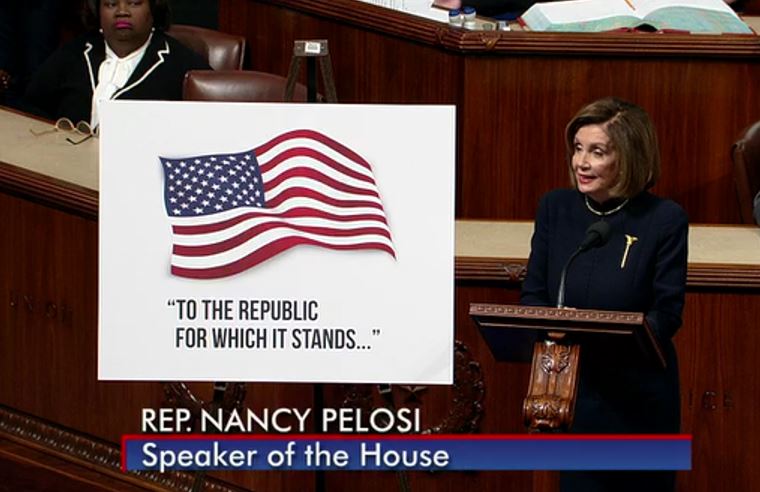
The non-defense appropriations bill, HR 1865, carried by a vote of 297 to 120, according to a report in Yahoo Finance, presumably with $21 million allocated to “an aggressive, non-lethal population control strategy” for America’s wild horses and burros.
The legislation will be put to a vote in the Senate tomorrow.
RELATED: House to Consider FY 2020 Appropriations Bill Today.
At the Bisti Badlands with CherylandSteve. No HMAs or WHTs in that part of the state, might be Navajo horses.
If you magnified the wrongdoing ten thousand times and stuck it in a fly’s ear, it would bounce around like a BB in a boxcar.
The articles are fiction and the process is theater.
They can’t beat him in 2020 and a Supreme Court vacancy nears, so he has to go.
RELATED: It’s Not About the President, It’s About the Supreme Court.
Refer to page 8 in Division D for a discussion of the WHB program.
Regarding the ‘Path Forward,’ the bill obligates the BLM to develop a “an aggressive, non-lethal population control strategy” for wild horses and burros.
The plan must include:
The bill also includes the customary $10 million for range improvements, to be funded by grazing receipts. Yep, approximately 80% of those fees are plowed back into the program every year, to make life better for the public-lands ranchers.
RELATED: Congress Proposes $21 Million for ‘Path Forward’ in FY 2020.

The omnibus spending bill, to be voted on later this week, includes $21 million for the wild horse management plan, according to a news release by Animal Wellness Action.
RELATED: ‘Path Forward’ Is Not a Trump Administration Proposal!
KIFI News of Idaho Falls reported today that nine mares and fifty two studs captured in last month’s gather have been returned to their home range. The story did not indicate when they were released. Mares were treated with PZP.
The large number of males returned to the HMA, relative to females, skews the sex ratio of the herd, slowing population growth.
RELATED: Challis Roundup Ends.
On the Virginia Range, origin of the WHB Act.
The roundup, which starts today, will reduce the herd by about 79%, according to figures supplied in the announcement. The remaining horses will require 804 AUMs per year, to be provided by the HMA and WHT.
Assuming that 60% of the forage comes from the HMA, based on the relative sizes of the two parcels, then the horses will consume 482 AUMs per year while on the HMA (where livestock grazing is allowed), compared to 1,967 AUMs per year for cattle and sheep.
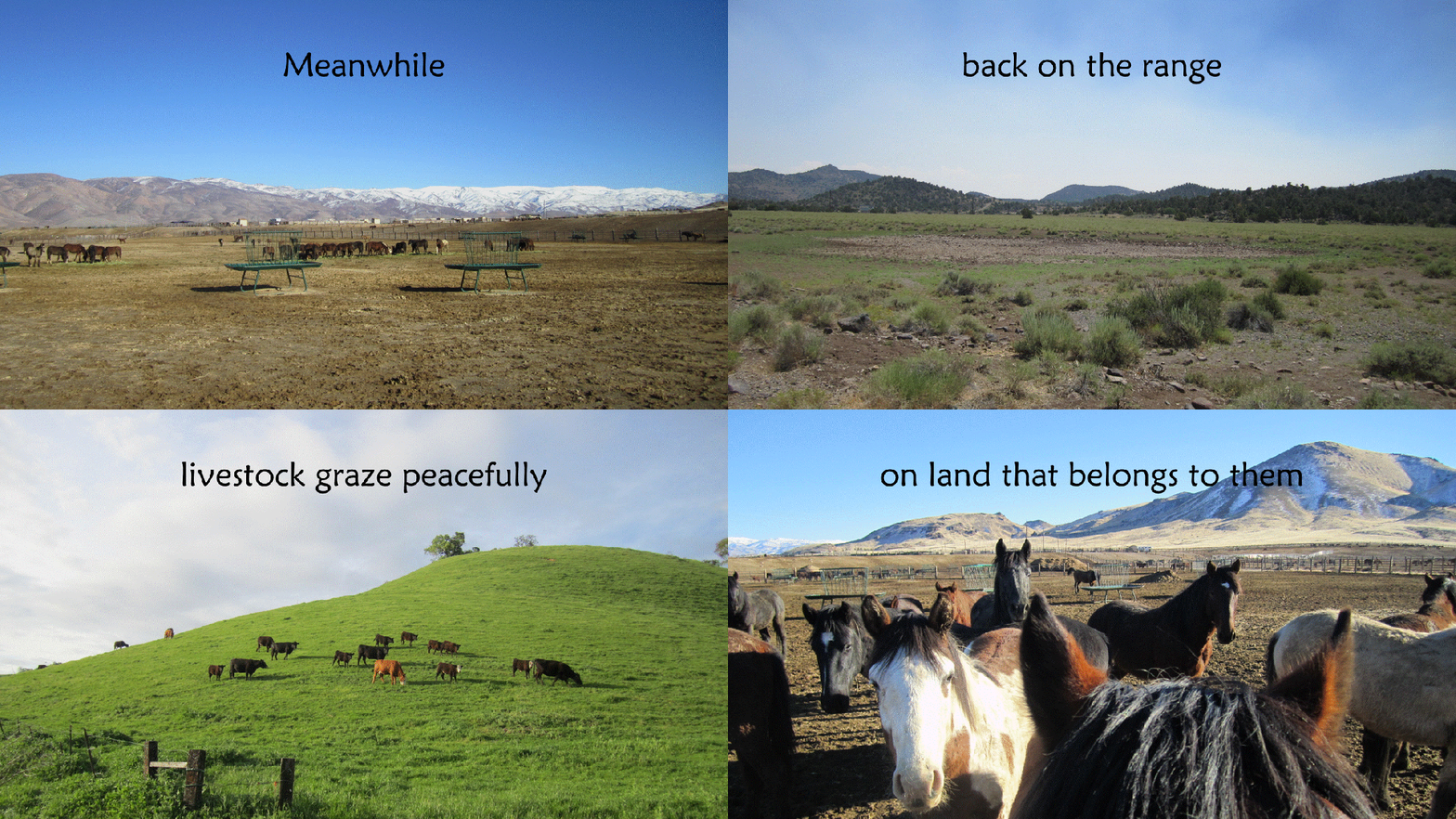
That this is occurring on land on land set aside for the horses is a sure sign that the WHB Act, signed into law 48 years ago today, no longer functions as Velma intended.
RELATED: North Hills Roundup Starts Next Week.

Construction of a new office and adoption center began on December 11, according to a report posted earlier today by the Herald and News of Klamath Falls, OR.
BLM announced the project on December 6. The facility will remain open for horse and burro viewing but adoptions will be suspended until January 6.
Expenditures like this will become the norm if the ill-conceived ‘Path Forward‘ is funded and put into practice.
Operations concluded on Thursday, according to the daily reports, with 456 wild horses gathered and 24 returned to the HMA. One death was reported—a six year old stud was put down on the last day due to a club foot.
Of the horses returned to their home range, ten were treated with contraceptives.
Six horses ran through two fences near the trap site on December 6 but were captured and treated for minor injuries.
Refer to this story about wild horse ‘relocation,’ posted Thursday by the Craig Daily Press of Craig, CO.
The 25 wayward horses are not going back to their HMA. They’re destined for an off-range corral, where they will be adopted, sold or shipped to long-term holding.
Look at the photo at the beginning of the article. Is that what you’d expect to see in an area that has too many wild horses?
RELATED: Roundup Near Sand Wash Basin This Month.
A syndicated report by the Associated Press, making its way through major news outlets, refers to the disastrous management plan as “a new Trump administration proposal.”
As stated back in October by the chair of the WHBAB, the proposal was presented to Congress and it’s up to Congress to act on it (full quote at this post).
Of course, the executive branch will own it if the President signs a bill that funds it.
Although legislators are working out the details of the new spending bill, which will eventually end up on the President’s desk, we really don’t know what he’s been told about America’s wild horses.
BLM said today that approximately 250 excess horses will be removed from the North Hills JMA starting December 15. The operation will be carried out with helicopters and will be open to public observation, according to the news release.
The JMA covers about 84,600 acres in southwestern Utah and includes the North Hills HMA and North Hills WHT. BLM manages the area jointly with the Forest Service.
The combined AML is 60, accounting for 720 AUMs per year. The AML for the HMA is 36, requiring 432 AUMs per year.
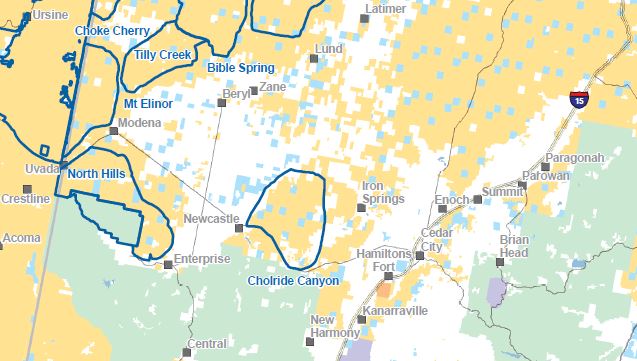
The HMA intersects five grazing allotments that provide 1,967 AUMs per year for cattle and sheep inside the HMA, per Section 3.2 of the final EA.
Livestock grazing does not occur in the WHT.
Captured animals will be taken to the off-range corrals in Axtell.
Gather stats and daily reports will be posted to this page.
RELATED: North Hills Gather Plan Inches Closer to Implementation.
Horses younger than ten years of age at the Double Devil Corrals are available for $25 each through January 9, according to a report by the Herald and News of Klamath Falls, OR, after which the price falls to $1 each.
These animals were offered unsuccessfully for adoption three times and have now been placed on the clearance rack, as stipulated in the Burns Amendment.
They were removed from the WHT in September and October.
RELATED: Devil’s Garden Horses Get Short End of Stick.
UPI said today that tomorrow is the last day for Washington-based employees to decide if they are moving west in the planned reorganization.
The Government Accounting Office will review the plan to see if it delivers the intended benefits, according to the report.
RELATED: BLM Relocation Moves Ahead.
Animal Wellness Action, a lobbying group in Washington D.C., said yesterday that a letter had been sent to leadership of the House and Senate appropriations committees for the Department of the Interior, urging them to fund only the $6 million proposed in the House and to restrict those funds solely to the use of PZP.
The Cloud Foundation and American Wild Horse Campaign applauded the request.
The signatories also oppose surgical sterilization, according to the news release, but apparently they don’t mind if it happens via contraceptives.

When will these ‘advocacy’ groups come to their senses, learn the difference between symptoms and causes, and act in favor of the horses, not the public-lands ranchers?
RELATED: Contraceptives Are a Back-Door Channel to Sterilization, Ties Between PZP Zealots and Public-Lands Ranchers Revealed.
Earlier this week County Commissioners authorized the removal of 300 to 500 stray horses from rangelands in eastern Utah, according to a report by Deseret News.
The decision was based on public safety concerns and the condition of the horses.
Unclaimed animals will be transferred to a sale barn in Ballard, where they could be picked up by kill buyers.
Public lands in the county were zeroed out for wild horses in 2001.
The story did not indicate if livestock grazing occurs in the area.


