Three Rivers Roundup, Day 28

The incident started on June 9.  Results through July 6:

  • Scope: Alamo, Big Sandy, Havasu HMAs
  • Target: Burros
  • AML: 160 + 139 + 166 = 465
  • Pre-gather population: Not given, 2,644 according to 2025 population dataset
  • Type: Planned
  • Method: Bait
  • Goals: Capture 1,100, remove 1,000
  • Captured: 643, up from 444 on Day 18
  • Shipped: 547, up from 337 on Day 18
  • Released: None
  • Deaths: 2, up from 1 on Day 18
  • Average daily take: 23.0
  • Unaccounted-for animals: 94
  • Snippet from statute: It is the policy of Congress that wild free-roaming horses and burros shall be protected from capture, branding, harassment, or death
  • Snippet from manual: To protect wild horses and burros from unauthorized capture, branding, harassment or death

The figures above are based on the daily reports.

Results for Days 20 to 28 were posted today.

An abandoned foal was euthanized on Day 25, lifting the death rate to 0.3%.

The capture total includes 311 jacks, 279 jennies and 53 foals.

Youngsters represented 8.2% of the animals gathered.

Of the adults, 52.7% were male and 47.3% were female.

The location of the trap site is not known.

The name of the contractor was not provided.

Eighteen jennies were treated with PZP on Day 19, bringing the total to 78.

The July 1 schedule indicates the pesticide of choice was GonaCon Equine.

The Complex is subject to permitted grazing.  Resources liberated to date:

  • Forage – 3,858 AUMs per year
  • Water – 3,215 gallons per day

RELATED: Three Rivers Roundup, Day 18.

Mount Vernon Base Property Available for $17.45 Million

Sproul Ranch covers 15,911 deeded acres in eastern Oregon, with grazing preference on five Forest Service allotments, for a total of 68,284 acres.

The allotments offer 3,058 AUMs per year on 52,373 acres according to the agent’s brochure, equivalent to 255 wild horses.

The stocking rate would be 4.9 wild horses per thousand acres.

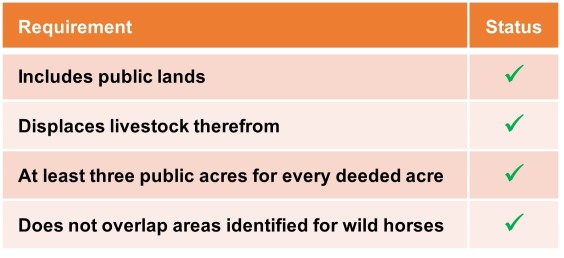
The ranch meets the basic requirements for a wild horse refuge.

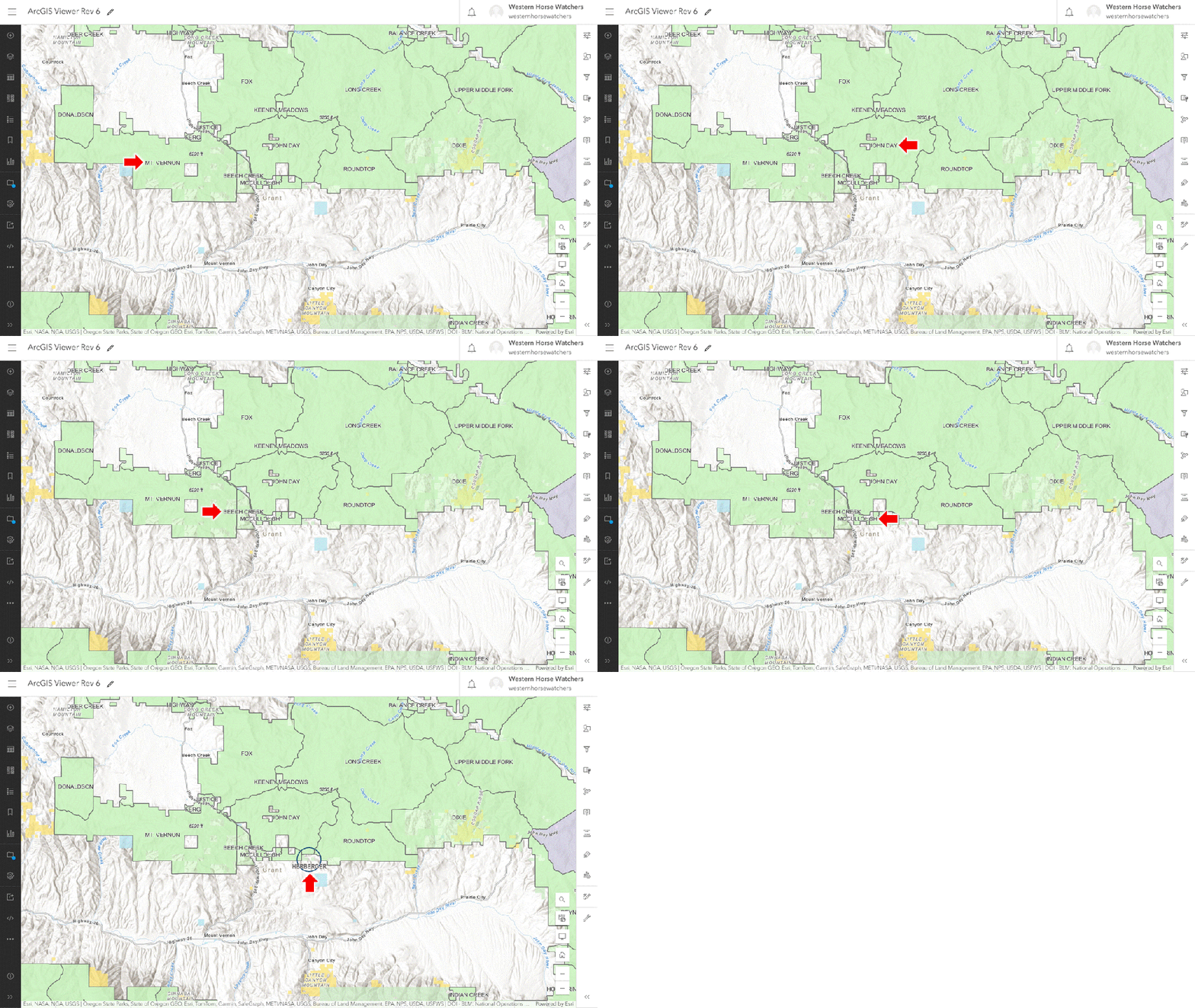
The brochure includes a map of each allotment, all within the Malheur National Forest.

Wild horses can be placed on public lands not identified for their use by acquiring base properties tied to one or more grazing allotments and flipping the preference to horses.

RELATED: Key Indicators for New Wild Horse Preserves.

If Wild Horses Had Principal Use of Independence

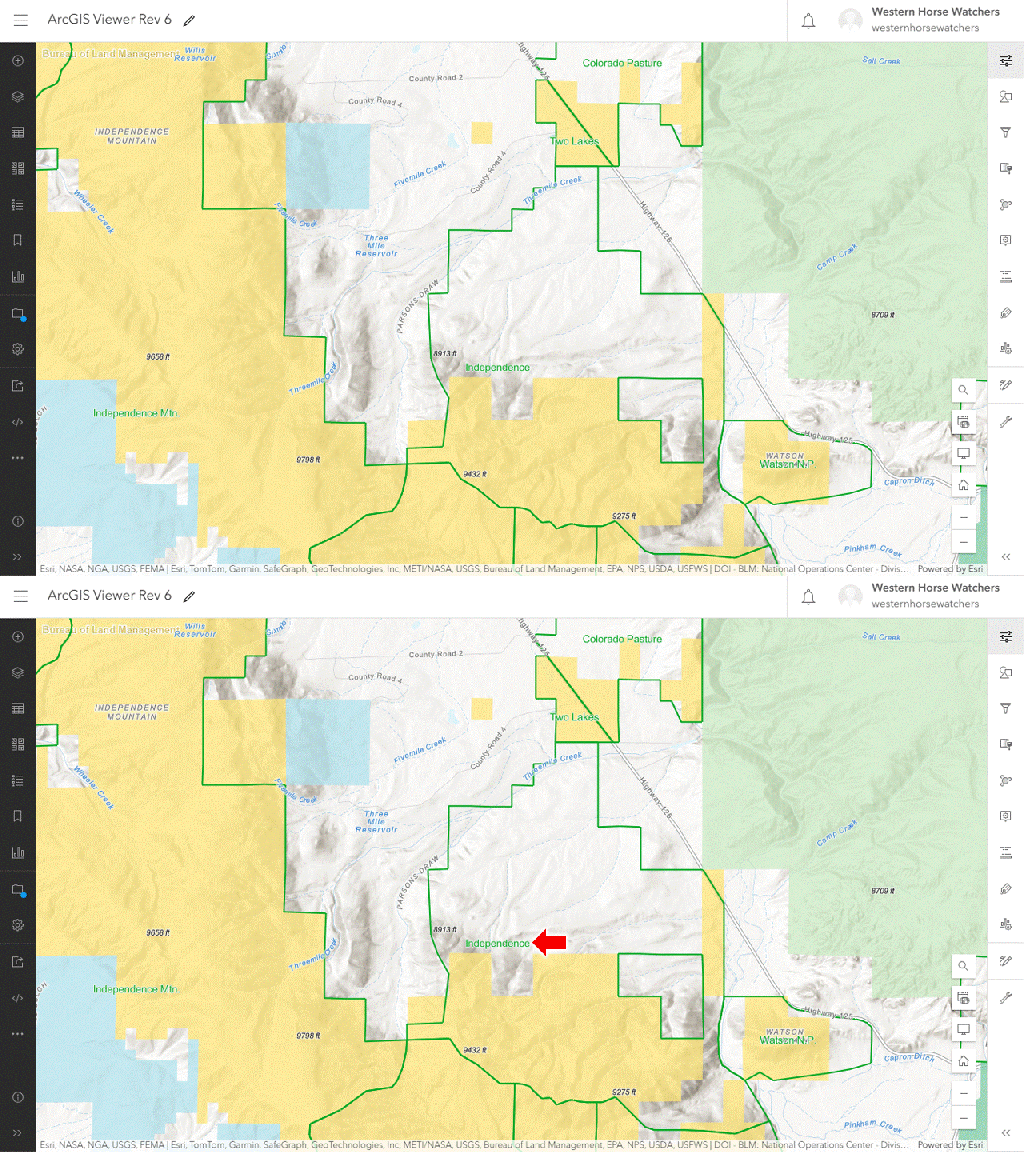
The allotment is on the east side of Independence Mountain in northern Colorado.

The Allotment Master Report puts it in the Custodial category, condition unknown.

The permittee receives 809 active AUMs on 2,610 public acres. equivalent to 67 wild horses, or 25.7 wild horses per thousand public acres.

Your faithful public servants claim that public lands in the western U.S. can only support one wild horse per thousand acres (25,500 animals on 25.6 million acres).

The advocates, allies of the bureaucrats and ranchers, bolster the narrative with their darting programs.

The allotment is too small to be an HMA but if it was, the AML would be 3 and 64 wild horses would be consigned to off-range holding because of permitted grazing.

BLM allotments in the state support livestock equivalent to 49,546 wild horses on 7,448,367 public acres, or 6.7 wild horses per thousand public acres.

Wild horses can be placed on public lands not identified for their use by acquiring base properties associated with grazing allotments and flipping the preference to horses.

RELATED: The Allotments Tell the Story: They’re Lying, All of Them.

Foal-Free Friday, Lowering the Bar Edition

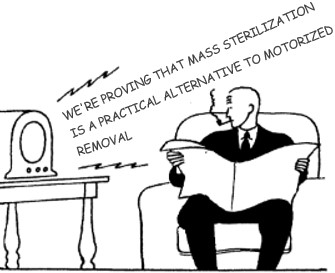
The advocates are trying to sell mass sterilization as a humane alternative to motorized removal.

On the Virginia Range, they’re using PZP to shrink the herd by 80% because 10% of their land has been identified for development.

The stated reason is habitat loss but the real reason is to bring the herd in line with the carrying capacity narrative on public lands: No more than one or two wild horses per thousand acres.

Instead of acting as guardians of wild horses, the advocates have thrown in with their enemies.

The inevitable result is extermination.

RELATED: Foal-Free Friday, Ratifying the RMPs Edition.

Should Hearings on Motorized Removal Include the Reasons for Motorized Removal?

Apparently not.

A keyword search of a BLM blog post about the May 6 hearing yielded these results:

  • Allotment – No occurrences
  • Permit – 0
  • Grazing – 0
  • Livestock – 0
  • Forage – 0
  • AUM – 0
  • RMP – 0

Some individuals argued for greater use of fertility control, which the agency recognizes as an important management tool for slowing population growth but not for reducing wild horse and burro overpopulation.

An area is said to be overpopulated when the herd exceeds the low end of AML but is far from the carrying capacity of the land.

RELATED: Motorized Removal Hearing Set for May 6.

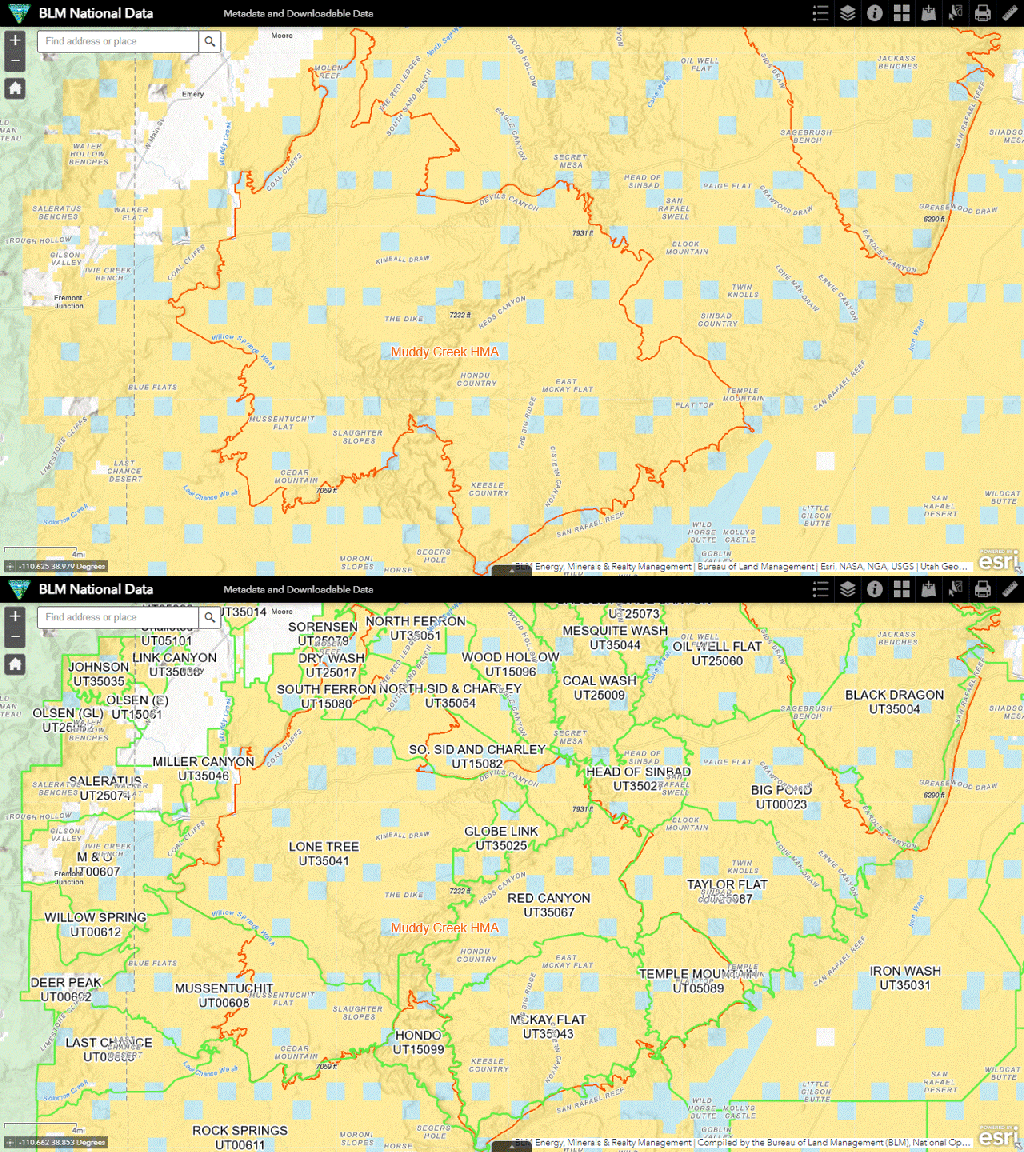
Another Muddy Creek Emergency Roundup?

The incident will begin on July 10 according to the news release.

The capture and removal goals are 150 each.

The current population is thought to exceed 400.

Horses will be pushed into the trap by a helicopter.

Operations will be open to public observation.

Captured animals will be taken to the Axtell off-range corrals.

There are no plans to treat any of the mares with fertility control pesticides and return them to the range.

A link to the gather page was not given.

The HMA is subject to permitted grazing.

The announcement did not indicate if the grazing season would be curtailed and if any AUMs would be moved from active to suspended as a result of the drought.

RELATED: Muddy Creek Emergency Roundup Complete.

Three Rivers Roundup, Day 18

The incident started on June 9.  Results through June 26:

  • Scope: Alamo, Big Sandy, Havasu HMAs
  • Target: Burros
  • AML: 160 + 139 + 166 = 465
  • Pre-gather population: Not given, 2,644 according to 2025 population dataset
  • Type: Planned
  • Method: Bait
  • Goals: Capture 1,100, remove 1,000
  • Captured: 444
  • Shipped: 337
  • Released: None
  • Deaths: 1
  • Average daily take: 24.7
  • Unaccounted-for animals: 106
  • Snippet from statute: It is the policy of Congress that wild free-roaming horses and burros shall be protected from capture, branding, harassment, or death
  • Snippet from manual: To protect wild horses and burros from unauthorized capture, branding, harassment or death

The figures above are based on the daily reports.

The Day 14 results have not been corrected but are probably 18/21/4, not 10/8/2 as shown at the gather page.

The death rate is 0.2%.

The capture total includes 241 jacks, 178 jennies and 25 foals.

Youngsters represented 5.6% of the animals gathered.

Of the adults, 57.5% were male and 42.5% were female.

The location of the trap site is not known.

The name of the contractor was not provided.

Sixty jennies have been treated with PZP although the June 3 schedule indicates the pesticide of choice was GonaCon Equine.

Given that no animals have been released, they will likely receive a second dose.

RELATED: More Three Rivers Confusion.