On the Virginia Range, documenting the mass sterilization program, with Art.
No foals, no families, no future.
That’s what the advocates bring to the table.
► Get the truth about wild horses and the wild horse advocates at westernhorsewatchers.com.

Exposing the Hypocrisy, Lies and Incompetence of the Wild Horse Advocates
On the Virginia Range, documenting the mass sterilization program, with Art.
No foals, no families, no future.
That’s what the advocates bring to the table.
► Get the truth about wild horses and the wild horse advocates at westernhorsewatchers.com.
Key responsibilities include managing the executive director’s calendar, inbox triage, meeting preparation, follow-ups and travel logistics according to an undated job posting on Indeed.
Does that mean the executive director is suffering from mental illness or is in a state of cognitive decline?
The Campaign Against America’s Wild Horses and its partner organizations lead the nation in mass sterilization and undying service to the public lands ranchers.
Stay barren!

► Get the truth about wild horses and the wild horse advocates at westernhorsewatchers.com.
An article by Courthouse News Service does not identify the appellants but they may be permittees on the Stone Cabin allotments.
The case centers around the definition of “immediate,” as in immediate removal of excess animals when overpopulation exists. Refer to §1333(b)(2) in 16 USC 30.
The term does not appear in the original statute.
Overpopulation means more horses that allowed by plan, not more horses than the land can support.
Not when your faithful public servants assign most of the resources to livestock.
RELATED: Stone Cabin Permittees Demand Immediate Removal of Horses.
UPDATE: A story by Western Livestock Journal indicates the appellants are the Stone Cabin permittees.
► Get the truth about wild horses and the wild horse advocates at westernhorsewatchers.com.
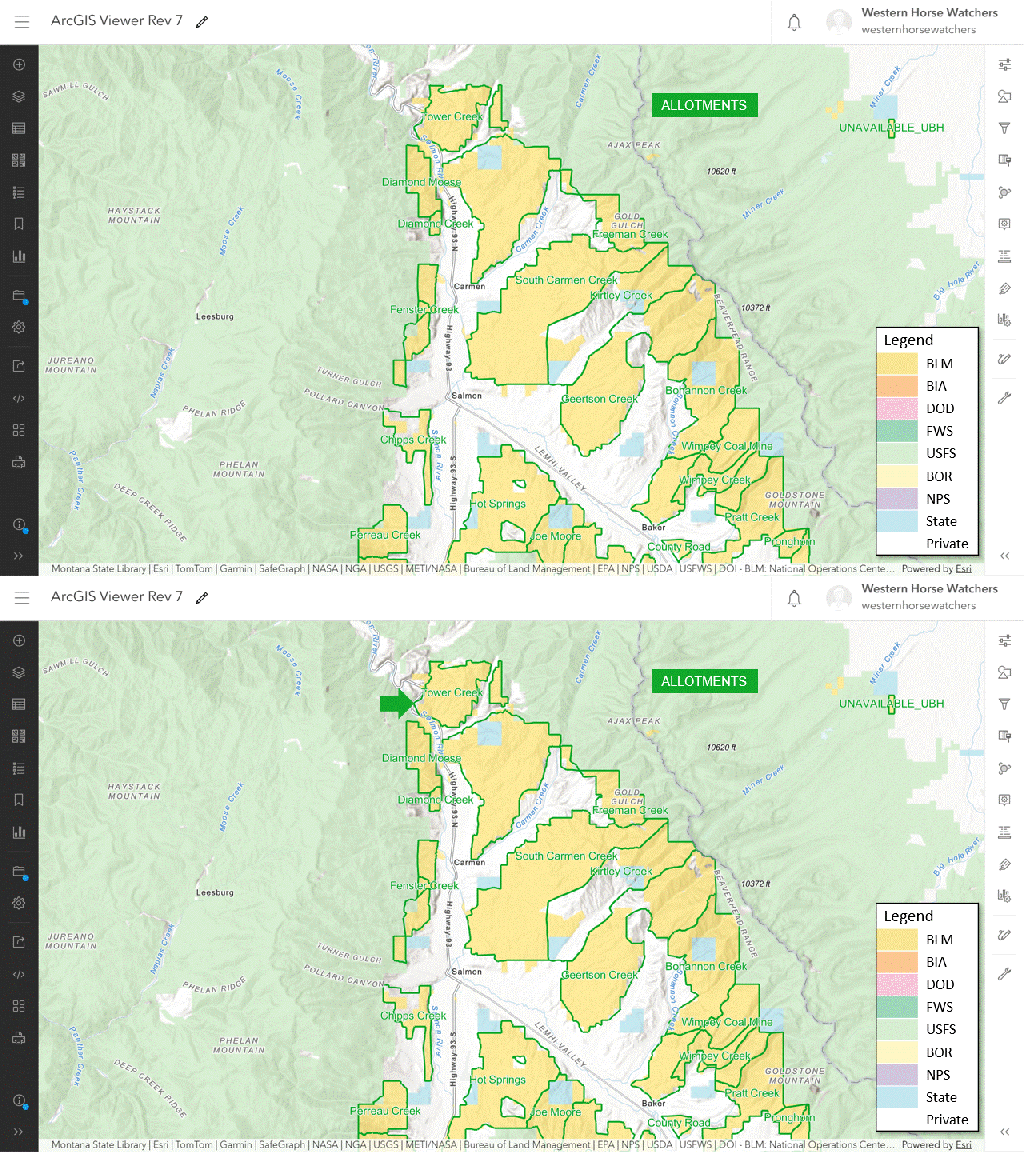
It’s too small but the BLM seeks public input on a water improvement project.
The scoping report says the allotment met Idaho standards for Rangeland Health in 2004 but today it’s in the Improve category.
The parcel offers 567 active AUMs on 4,409 public acres according to the allotment master report, equivalent to 10.7 wild horses per thousand public acres.
Your faithful public servants claim that public lands in the western U.S. can only support one wild horse per thousand acres.
Wild horses can be placed on public lands not identified for their use by acquiring or controlling a base property and flipping its preference to horses.
In this case, there are three permits on the allotment, so you might have to buy several base properties to access all of the AUMs. Not a good idea.
The authorization use report indicates that permit #1104620, held by BILL BERNT, is for horses while the other two are for cattle.
The operator information report at RAS did not show any other authorizations for BILL BERNT, no other permits to graze cattle, sheep or goats.
So what production-oriented purpose—a requirement to get a grazing permit according to the BLM’s new understanding of the meaning of livestock—do his horses serve?
This could be another permit to revoke if the agency decides to pull the grazing permits of American Prairie.
RELATED: The Allotments Tell the Story: They’re Lying, All of Them.
► Get the truth about wild horses and the wild horse advocates at westernhorsewatchers.com.
He was hit in the knee by a ricochet bullet from nearby target shooting according to a story by The Record-Courier.
The report did not give the name of the allotment where the incident occurred.
The loss takes a little pressure off the darting program and liberates 12 AUMs per year for other mandated uses of public lands.
The Pine Nut advocacy group is a forward base of the Campaign Against America’s Wild Horses.
► Get the truth about wild horses and the wild horse advocates at westernhorsewatchers.com.
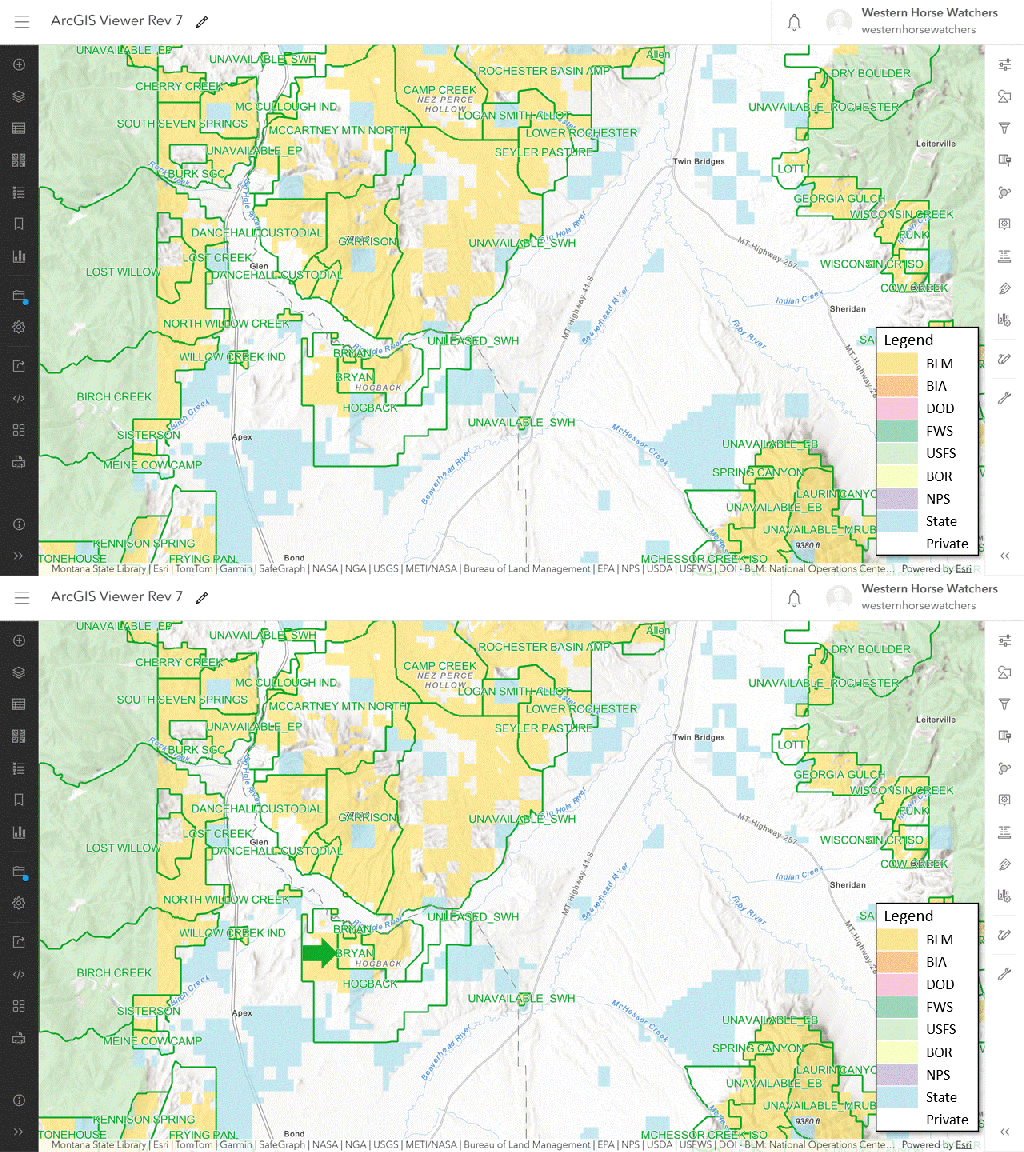
The authorization use report at RAS shows 37 horses on 6.5-month grazing season, divided into two parts.
The allotment master report gives the permittee as MILLER, CHARLES & DIANA.
In its effort to nullify the permits of American Prairie and discourage those who might purchase a base property and convert the associated allotments to a refuge, the BLM claimed in its proposed decision that it cannot issue grazing permits for animals treated as wild or intended to be released into the wild but it can issue permits for animals used in production-oriented operations, or in support thereof, such as horses used to herd cattle.
The operator information report shows no other authorizations for the Millers, no permits to graze cattle, sheep or goats.
So what production-oriented purpose do their horses serve?
Maybe they run cattle on another allotment under a different name.
Do they need 37 horses for that? Must be a big one.
Or maybe their permit doesn’t comply with the agency’s new understanding of the meaning of livestock.
If that’s true, they should be drafting more than one notice of permit cancellation.
RELATED: American Prairie Unfairly Targeted for Indigenous Livestock Grazing?
► Get the truth about wild horses and the wild horse advocates at westernhorsewatchers.com.
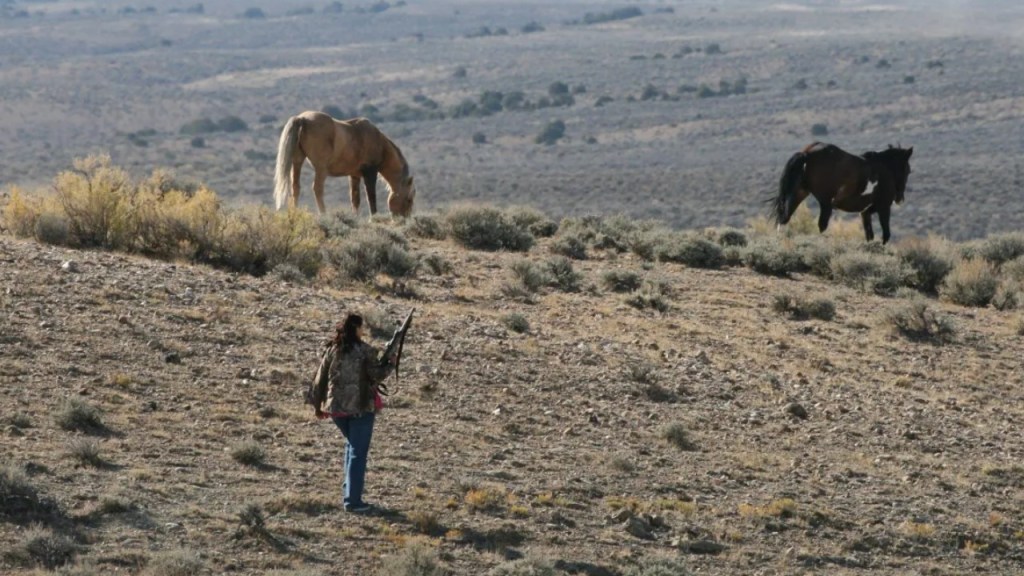
Margaret Sanger, the founder of Planned Parenthood, believed that contraceptives would be useful in reducing certain undesirable elements in society and avoiding the detrimental effects of overpopulation according to an article by Wikipedia.
So it is today on public lands in the western U.S., with the advocates and their political allies clamoring for wild horse birth control.

What they don’t tell you is that their fertility control vaccines are actually pesticides that sterilize the mares, leading to herd demise.
Like Sanger, who found favor with the eugenicists, the advocates are gaining the respect of those who want the range cleansed of wild horses.
Why are you still giving them money?
PREVIOUS: Foal-Free Friday, Pesticide Delivery Edition.
► Get the truth about wild horses and the wild horse advocates at westernhorsewatchers.com.
Most were taken from the Triple B Complex, the subject of another roundup starting next week, according to a story by KLAS News.
The report did not indicate if any arrests had been made in the case.
RELATED: Kill Pen Horses Traced to Livingston Adoption.
► Get the truth about wild horses and the wild horse advocates at westernhorsewatchers.com.
This is Bobby Khan’s opponent in Nevada’s first congressional district race.
Sounds like the advocates.

Are you surprised that they would focus on the wrong things?
RELATED: Khan Panders to Ranchers, Paints Them as Victims Not Villains.

► Get the truth about wild horses and the wild horse advocates at westernhorsewatchers.com.
The agenda includes minutes from a September 18 special meeting.
The population at that time was 112, with deaths slightly outpacing births.
It’s still not clear if the PZP darting program was stopped soon enough to avoid total herd collapse.

RELATED: Currituck Wild Horse Advisory Board to Hold Special Meeting.
► Get the truth about wild horses and the wild horse advocates at westernhorsewatchers.com.
The allotments affected by the decision to cancel the permits authorizing bison and replace them with permits authorizing cattle—an attempt by the BLM to placate the ranchers and discourage those who would weigh the advantages of purchasing a base property and converting the attached allotment(s) to a refuge—are:
The authorization use report at RAS shows the livestock type as INDIGENOUS.
The permit information report yielded 7,181 records for Montana, with 41 designated as INDIGENOUS.
Only ten can be associated with the nonprofit. Authorizations marked red in the filtered spreadsheet were granted to others.
That means there are ranchers in the state who may not be engaged in production-oriented operations because their animals do not meet the agency’s ad hoc definition of livestock and are not eligible for grazing permits.
Western Horse Watchers has not seen any news releases announcing a review of grazing authorizations, not just in Montana but across the western U.S., to determine if they comply with applicable laws.
Permits marked INDIGENOUS were found in Colorado, New Mexico and Wyoming.
RELATED: BLM Reneges on American Prairie Grazing Permits.
► Get the truth about wild horses and the wild horse advocates at westernhorsewatchers.com.
The announcement yesterday of four bait-trap roundups starting on March 15* provides an excellent opportunity for the advocates, now tasked with motorized removal of the Salt River horses, to witness operations in a neighboring state and get some pointers for their own program.
Unfortunately, the incidents are not open to public observation.
Maybe the BLM can make an exception for these challengers to the legacy contractors.
Don’t worry, they’re still obsessed with pesticides and nonmotorized removal.
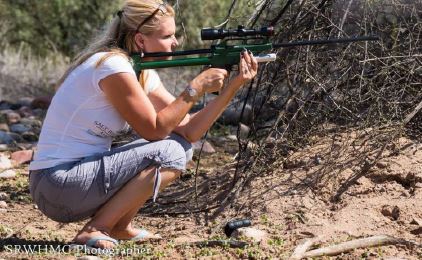
The Salt River Wild Horse Darting Group is a forward base of the Campaign Against America’s Wild Horses.
*Antelope & Triple B, Caliente, Pancake, Spring Mountains.
RELATED: Salt River Advocates to Become Full-Service Contractor?
► Get the truth about wild horses and the wild horse advocates at westernhorsewatchers.com.
The incident will begin on or about March 15 according to the news release.
The capture and removal goals are 425 wild horses and 425 wild burros.
The Spring Mountains Complex consists of the Johnnie, Red Rock and Wheeler HMAs.
The Nevada HMA page has vital statistics.
The current population is thought to be 749 horses and 1,048 burros, plus this year’s foal crop.
Operations will not be open to public observation.
Animals removed from the complex will be taken to the off-range corrals at Palomino Valley.
There are no plans to treat any of the mares with fertility control pesticides and return them to the range.
Foaling season, which runs from March 1 through June 30, usually corresponds to a lull in roundups.
A schedule for FY26 has not been posted to the customary location.
► Get the truth about wild horses and the wild horse advocates at westernhorsewatchers.com.
The incident will begin on or about March 15 according to the news release.
The capture and removal goals are 300 each.
The Pancake Complex consists of the Pancake and Sand Springs West HMAs, plus Jakes Wash HA—an area unfit for wild horses.
The Monte Cristo WHT was omitted.
The current population is thought to be 1,436, not including this year’s foal crop.
Operations will not be open to public observation.
Animals removed from the complex will be taken to the off-range corrals at Sutherland.
There are no plans to treat any of the mares with fertility control pesticides and return them to the range.
The complex is subject to permitted grazing.
Foaling season, which runs from March 1 through June 30, usually corresponds to a lull in wild horse roundups.
A schedule for FY26 has not been posted to the customary location.
► Get the truth about wild horses and the wild horse advocates at westernhorsewatchers.com.
The incident will begin on or about March 15 according to the news release.
The capture and removal goals are 350 each. The gather page says 550.
The Caliente Complex consists of nine former HMAs, all unfit for wild horses.
The current population is thought to be 1,503, not counting this year’s foal crop.
Operations will not be open to public observation.
Animals removed from the complex will be taken to the off-range corrals in Fallon.
There are no plans to treat any of the mares with fertility control pesticides and return them to the range.
The HAs are subject to permitted grazing.
Foaling season, which runs from March 1 through June 30, usually corresponds to a lull in wild horse roundups.
A schedule for FY26 has not been posted to the customary location.
► Get the truth about wild horses and the wild horse advocates at westernhorsewatchers.com.
The incidents will begin on or about March 15 according to the news release.
The capture and removal goals for Antelope are 700 each and for Triple B 300 each.
The Antelope Complex consists of the Antelope, Antelope Valley (portion east of U.S. Hwy 93), Goshute and Spruce-Pequop HMAs.
The Triple B Complex consists of the Triple B, Maverick-Medicine and Antelope Valley (portion west of U.S. Hwy 93) HMAs and the Cherry Springs WHT.
The Nevada HMA page has vital statistics.
Operations will not be open to public observation.
Animals removed from Antelope will be taken to the off-range corrals in Fallon.
Animals removed from Triple B will be taken to the off-range corrals in Sutherland.
There are no plans to treat any of the mares with fertility control pesticides and return them to the range.
The HMAs are subject to permitted grazing.
Foaling season runs from March 1 through June 30, which usually corresponds to a lull in wild horse roundups.
A roundup schedule for FY26 has not been posted to the customary location.
► Get the truth about wild horses and the wild horse advocates at westernhorsewatchers.com.
The authorization use report for Y Ranch shows 201 AUMs for burros with a 12-month grazing season.
What production-oriented purpose, as the BLM argued in its decision to cancel the American Prairie grazing permits, do they serve? Meat, milk or fiber?
Y Ranch is the only BLM allotment in the western U.S. where burros are authorized.
RELATED: Would Y Ranch Make a Good Wild Horse Preserve?
► Get the truth about wild horses and the wild horse advocates at westernhorsewatchers.com.
You can’t take them literally.
Mass sterilization and motorized removal do not constitute protection.
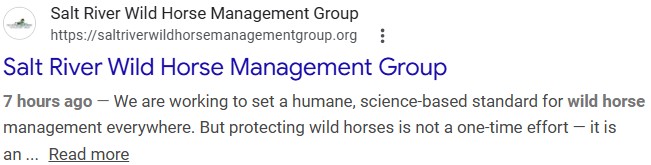
They’re developing a model for ranching superiority in the lawful homes of wild horses, applicable everywhere.
Why are you still giving them money?
RELATED: Salt River Advocates to Become Full-Service Contractor?
► Get the truth about wild horses and the wild horse advocates at westernhorsewatchers.com.
The temporary positions are based in Tonopah and Battle Mountain.
The successful candidates will monitor grazing activities and conduct wild horse surveys according to the job posting.
The application period closes on March 18 or when 30 applications have been received, whichever occurs first.
The description did not indicate if you must be certified in the application of restricted-use pesticides or can work comfortably around high-net-worth individuals who pay almost nothing for the resources they consume and the services rendered on their behalf by the government.
► Get the truth about wild horses and the wild horse advocates at westernhorsewatchers.com.
On the Virginia Range, documenting the fast-disappearing days of foaling season—and the herd—with Art.
► Get the truth about wild horses and the wild horse advocates at westernhorsewatchers.com.

