At the Salt River with Michael Pebbles.
Foals available for an additional charge (to drive to another area that hasn’t been ruined by the advocates).

Exposing the Hypocrisy, Lies and Incompetence of the Wild Horse Advocates
At the Salt River with Michael Pebbles.
Foals available for an additional charge (to drive to another area that hasn’t been ruined by the advocates).
No gather and removal activity for the past two days.
The holding pen was dismantled on Day 16 and moved to another location.
The number of unaccounted-for animals should have been zero when this occurred but the figures in the sidebar indicate two.
UAF Animals = 1,133 – 1,115 – 3 – 13 = 2
Refer to the Day 15 report for the latest results.
RELATED: East Pershing Roundup, Day 15.
The incident started on January 9. Results through January 13:
The figures above are based on the daily reports.
The reports now include the number of jacks, jennies and foals going back to Day 1.
The shipping total for Day 3 should be 55, not 49, according to the breakdown.

Youngsters accounted for 13.0% of the animals gathered.
Of the adults, 53.4% were male and 46.6% were female.
The location of the trap site was not disclosed.
The HMA is subject to permitted grazing.
The National Data Viewer shows habitat loss and overlapping allotments. Click on map to open in new tab.
The management plan assigns 2.5 times more forage to livestock than the burros.
The roundup supports three tenets of rangeland management.
RELATED: Black Mountain Roundup, Day 3.

The roundup was set to begin on or about November 27.
The advocates say it isn’t necessary. To bolster their claim, they’ve been praying for
Their prayers may have been answered. As of today, no activity has been reported at the gather page.
RELATED: McCullough Update.
The incident started on January 9. Results through January 11:
The figures above are based on the daily reports.
Only the totals have been posted. The percentages of males, females and foals cannot be determined.
The HMA is subject to permitted grazing.
The National Data Viewer shows habitat loss and overlapping allotments. Click on map to open in new tab.
RELATED: Black Mountain Roundup Begins.
The incident began on December 28. Results through January 11:
The figures above are based on the daily reports, not the totals posted by the BLM.
Helicopters did not fly on Days 14 and 15.
A stallion was released on Day 15. No details were given.
Two stallions were dispatched on Day 15 due to leg injuries.
The death rate is 1.1%.
The capture total includes 480 stallions, 538 mares and 121 foals. The sidebar at the gather page says 532 mares captured.
Youngsters represented 10.6% of the animals gathered, consistent with a herd growth rate of five to six percent per year.
Of the adults, 47.2% were male and 52.8% were female, no evidence of an abnormal sex ratio.
The Complex is managed primarily for animal agriculture. The National Data Viewer shows habitat loss and grazing allotments. Click on image to open in new tab.
*According to advocates.

Day 15 ended with eight unaccounted-for animals.
There are no plans to treat any of the captured mares with fertility control pesticides and return them to the range.
Other statistics:
Overpopulation means more horses than allowed by plan, not necessarily more horses than the land can support.
The ability of the Complex to sustain wild horses has been limited by the bureaucrats, who have assigned most of their food to the public-lands ranchers.
Refer to these reports for an indication of the problem:
RELATED: East Pershing Roundup, Day 13.
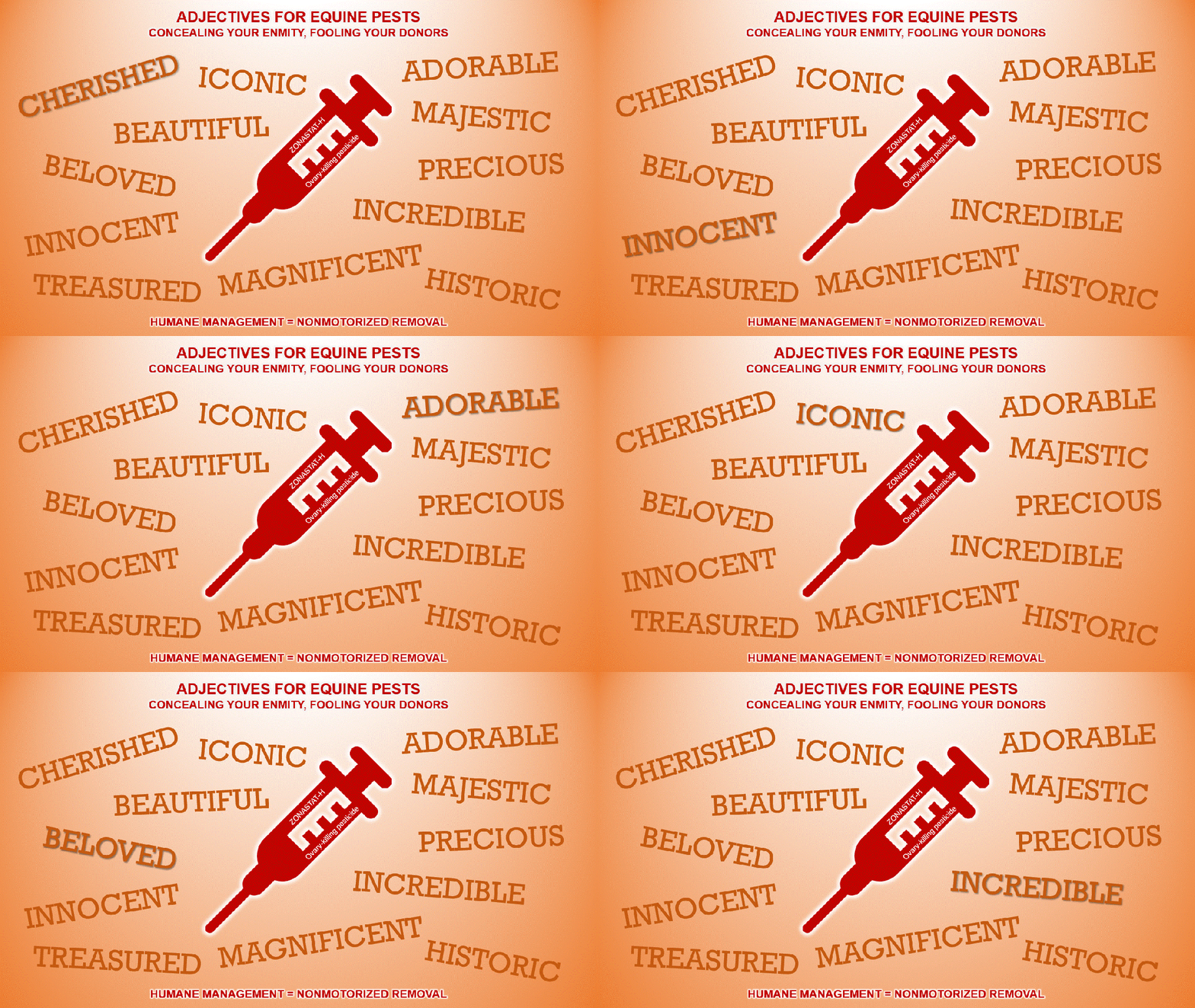
In a news flash dated January 7, the Campaign Against America’s Wild Horses described the Virginia Range darting program as conservation.
Adjectives used in the blurb: Innocent, Majestic, Iconic.
Are they pandering to nitwits?
What will happen to the herd when the mares are sterile?
Why not classify motorized removal as conservation?
The darting program violates federal law but it’s not listed among their legal battles.
RELATED: Foal-Free Friday, Go Forth but Don’t Multiply Edition.
The reports for Days 1 and 2 provide totals only, no breakdowns for jacks, jennies and foals.
Questions about sex ratios and birth rates cannot be answered.
RELATED: Black Mountain Roundup Begins.
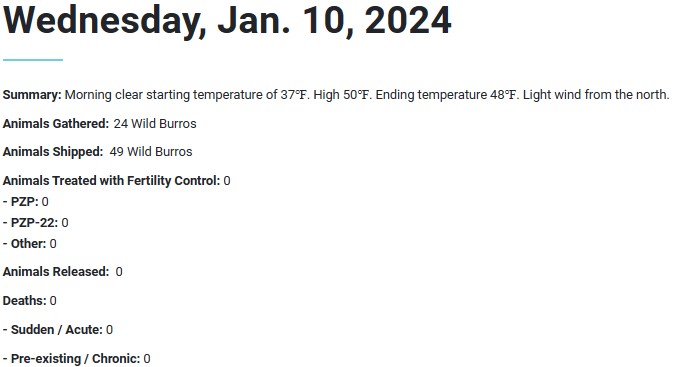
The incident started on January 9, with 80 burros captured, none shipped, none released and none dead.
The HMA covers 89,392 total acres, including 77,311 public acres, and the 100 burros allowed by plan receive 600 AUMs per year.
The stocking rate allowed by plan is 1.3 wild burros per thousand public acres.
Table 3.1 in the Final EA for pest control and resource enforcement indicates 34% of the Robbers Roost Allotment overlaps the HMA.
The National Data Viewer shows the arrangement. Click on image to open in new tab.
The allotment offers 3,840 active AUMs on 159,786 public acres.
Therefore, the bureaucrats have taken 3,840 × .34 = 1,305 AUMs per year from the burros and given them to the permittee, assuming the resource is evenly distributed across the parcel.
The number of burros displaced from the HMA by permitted grazing is 1,305 ÷ 6 = 217.
The True AML would be 100 + 217 = 317, the number of burros the HMA could sustain if it was managed principally for them as specified in the original statute.
Table 2.1 puts the current population at 168, about half of the carrying capacity.
The stocking rate at the new AML would be 317 ÷ 77,311 × 1,000 = 4.1 wild burros per thousand public acres, equivalent to two wild horses per thousand acres, to be achieved by confining the rancher to his base property in a year-round off season.
RELATED: BLM Publishes Canyonlands Final Planning Documents.

The advocate with CAAWH mentioned nonmotorized removal (humane fertility control) four times in three minutes at the December 14 WHBAB meeting.
Beat that, BLM!
RELATED: You Can Help CAAWH Sterilize the Virginia Range Mares!
The Decision Record authorizes Alternative 1, the Proposed Action, with modifications, effective immediately for a ten-year period.
The Proposed Action, discussed in Section 2.2.1 of the Final EA, features gathers and removals of excess burros in and around the HMA, controlling population growth with PZP, GonaCon Equine or IUDs and possibly equipping burros with GPS tracking units.
The BLM will also collect samples to assess genetic diversity.
Animals from other areas could be introduced to the HMA, a tactic that boosts genetic diversity while keeping herd sizes small.
The decision limits the use of fertility control pesticides to a maximum of 10 jennies, after results from genetic testing have been received. IUDs will not be used at this time but could be considered in the future if an appropriately sized device is developed.
A roundup appears in the December 8 schedule with a start date of February 23.
The news release did not include a link to the project in ePlanning.
Approximately 70% of the HMA is subject to permitted grazing.
RELATED: Canyonlands EA Out for Review.
Brainwashed might be a better word.
Consider this letter to the editor of the Las Vegas Sun dated January 10.
The writer builds a case in support of the hoses, defending them against the livestock industry, then refutes her argument in the last paragraph with a recommendation for humane methods of population control.

Beat their numbers down with ovary-killing pesticides. Let the ranchers have most of their food and water.
Hey Western Horse Watchers, she didn’t say anything about pesticides.
Correct. The advocates have their own vocabulary, consisting mostly of euphemisms and adjectives that conceal their true intentions and loyalties.
Why not ask for an increase in grazing fees, bringing them in line with market rates?
Why not ask for a year-round off-season, restricting the ranchers to their (multi-million-dollar) base properties?
Why not insist that areas identified for wild horses be managed principally for them?
RELATED: Understanding Advocatespeak.
The incident began on December 28. Results through January 9:
The figures above are based on the daily reports, not the totals posted by the BLM.
The trap site was moved back to the North Stillwater HMA on Day 13.
Previously, trapping occurred in the Humboldt HA where 122 horses were caught, an area unfit for them, supposedly.
Two stallions were released (escaped?) on Day 13.
The death rate is 1.0%.
The capture total includes 480 stallions, 538 mares and 121 foals. The sidebar at the gather page says 532 mares captured.
Youngsters represented 10.6% of the animals gathered, consistent with a herd growth rate of five to six percent per year.
Of the adults, 47.2% were male and 52.8% were female, no evidence of an abnormal sex ratio.
Body condition scores ranged from 2.5 to 3.5 on Days 12 and 13.
The Complex is managed primarily for animal agriculture. The National Data Viewer shows habitat loss and grazing allotments. Click on image to open in new tab.
*According to advocates.
Day 13 ended with 201 unaccounted-for animals.
There are no plans to treat any of the captured mares with fertility control pesticides and return them to the range.
Other statistics:
Overpopulation means more horses than allowed by plan, not necessarily more horses than the land can support.
The ability of the Complex to sustain wild horses has been limited by the bureaucrats, who have assigned most of their food to the public-lands ranchers.
Refer to these reports for an indication of the problem:
RELATED: East Pershing Roundup, Day 11.
The incident occurred on January 6, Day 10 of the roundup, and was covered by two news outlets:
Both stories include remarks from the advocates.
Don’t fall for this. They hate foals!
They cover these events and issue their press releases to keep their base fired up and the donations rolling in.

What about privately owned calves and lambs? No problem!
There is an inverse correlation here: The more foals they eliminate the more calves and lambs can take their place.
A sign that they’re getting closer to achieving and maintaining AMLs is that the need for voluntary non-use diminishes then disappears.
RELATED: East Pershing Roundup, Day 11.

FAILURE. In four words: Collaboration with the enemy.
Symptoms:
These are signs of victory if you’re a public-lands rancher.
This year may see more horses in off-range holding than on the range, another sign of failure—or success if you’re a rancher.
RELATED: How to Bring the Advocates to Their Knees.

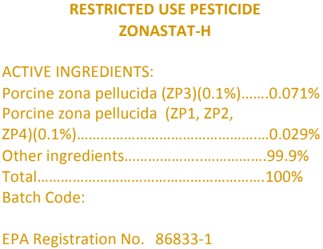
The Campaign Against America’s Wild Horses indicated in the December report that 123 mares received 125 doses of Zonastat-H during the month, 20 given as a primer and 105 as a booster.
Over the life of the program, which began in 2019, the advocates have pumped 8,527 doses of the ovary-killing pesticide into 1,989 mares.
Of the 176 foals born during the year in the primary target zone, 100 died, yielding a 43% chance of survival.
The current population is thought to be 3,471 with 336 horses listed as missing, compared to 3,479 with 350 listed as missing in November.
A goal for January is to “Continue to maximize booster treatments to mares across the Virginia Range before spring breeding season to prevent pregnancies, and continuing to allow for population decrease.”
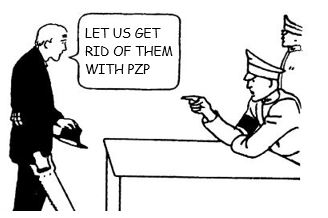
Not discussed in the report:
The program is now in its fifth year and many of the mares are at risk of sterility.

The report will be submitted to the Nevada Department of Agriculture.
The Campaign Against America’s Wild Horses is a leader in nonmotorized removal.
RELATED: Virginia Range Darting Update for November 2023.
In a January 7 article by the Las Vegas Sun, Suzanne Roy, ringleader of the Campaign Against America’s Wild Horses, said “These practices should be relegated to the past where they belong and should be replaced by modern, humane conservation practices that keep wild horses wild.”
Refer to the decoder for the meaning of this statement. Roy lumps several concepts together in one sentence.

Like most advocates, she wants the roundups to stop but not the removals.
She wants helicopters replaced with pesticides.
She doesn’t tell the reporter why roundups occur.
She doesn’t discuss habitat loss and the difference between HAs and HMAs.
She doesn’t comment on the prevalence of livestock and the mismanagement of resources in the lawful home of wild horses.
In short, Roy and her staff want the ranchers to prevail and they want to be active participants in their victory.
RELATED: CAAWH Now an Appendage of BLM, Wants Ranchers to Win.
At the Ozark National Scenic Riverways with Emily Gauthier.
The incident began on December 28. Results through January 7:
The figures above are based on the daily reports, not the totals posted by the BLM.
The trap site was moved to the Humboldt HA on Day 11.
A stallion was dispatched on Day 10 due to blindness in one eye. A colt was put down due to injuries sustained in capture.
The death rate is 1.2%.
The capture total includes 408 stallions, 447 mares and 85 foals. The sidebar at the gather page says 441 mares captured.
Youngsters represented 9.0% of the animals gathered, consistent with a herd growth rate of four percent per year.
Of the adults, 47.7% were male and 52.3% were female, no evidence of an abnormal sex ratio.
Body condition scores ranged from 2.5 to 3.5 on Days 10 and 11.
The Complex is managed primarily for animal agriculture. The National Data Viewer shows habitat loss and grazing allotments. Click on image to open in new tab.
*According to advocates.
Day 11 ended with 88 unaccounted-for animals.
There are no plans to treat any of the captured mares with fertility control pesticides and return them to the range.
Other statistics:
Overpopulation means more horses than allowed by plan, not necessarily more horses than the land can support.
The ability of the Complex to sustain wild horses has been limited by the bureaucrats, who have assigned most of their food to the public-lands ranchers.
Refer to these reports for an indication of the problem:
RELATED: East Pershing Roundup, Day 9.

