
At the Pryor Mountain WHR with Lori’s Travels.
Category: Range
On the range
East Pershing Roundup, Day 39
The incident began on December 28. Results through February 4:
- Scope: Sonoma Range HA, East Range HA, Humboldt HA, Tobin Range HMA, North Stillwater HMA, Augusta Mountains HMA
- Purpose: Pest control, resource enforcement, rancher protection
- Target: Horses
- Type: Planned
- Method: Helicopter
- Category: Cruel and costly*
- Better way: Sterilize the mares with PZP, let the herd die off*
- Captured: 2,553, up from 2,323 on Day 37
- Average daily take: 65.5
- Capture goal: 2,875
- Removal goal: 2,875
- Released: 3, no change from Day 37
- Deaths: 26, up from 24 on Day 37
- Shipped: 2,378, up from 2,290 on Day 37
The figures above are based on the daily reports, not the totals posted by the BLM.
A mare was put down on Day 38 for a facial fracture, possibly due to collision with a post or pipe panel. A stallion was dispatched on Day 39 due to a missing eye.
The death rate is 1.0%. Four horses died accidentally, 22 were killed intentionally.
The capture total includes 1,024 stallions, 1,184 mares and 345 foals. The sidebar at the gather page says 1,022/1,178/347.
Youngsters represented 13.5% of the animals gathered, consistent with a herd growth rate of eight percent per year.
Of the adults, 46.4% were male and 53.6% were female, no evidence of an abnormal sex ratio.
Body condition scores ranged from 3 to 4 on Days 38 and 39.
The location of the trap site was not disclosed.
The Complex is managed primarily for animal agriculture. The National Data Viewer shows habitat loss and grazing allotments. Click on image to open in new tab.
*According to advocates.

Day 39 ended with 146 unaccounted-for animals.
There are no plans to treat any of the captured mares with fertility control pesticides and return them to the range.
With 2,378 horses shipped, and a pre-gather population in Winnemucca of 958, give or take, the off-range corrals should be at 83% of capacity.
Other statistics:
- Forage liberated to date: 30,600 AUMs per year
- Water liberated to date: 25,500 gallons per day
- Horses allowed by plan: 555
- Pre-gather population: 3,375
- Forage assigned to horses: 6,660 AUMs per year
- Forage assigned to livestock: Not determined
- Horses displaced from Complex by permitted grazing: Not determined
- True AML: Not determined
- Stocking rate at new AML: Not determined
- Horses displaced by drilling and mining: Ask the advocates
Overpopulation means more horses than allowed by plan, not necessarily more horses than the land can support.
The ability of the Complex to sustain wild horses has been limited by the bureaucrats, who have assigned most of their food to the public-lands ranchers.
Refer to these reports for an indication of the problem:
RELATED: East Pershing Roundup, Day 37.
BLM Updates FY24 Roundup Plan
The December 8 schedule, which greatly increased the scope of the removals, has been supplanted by the February 1 schedule.
The grand totals increased from 20,942 gathered and 19,870 removed to 21,603 gathered and 20,260 removed.
Warm Springs Canyon was replaced by McGee Mountain.
Antelope Hills and Lost Creek were dropped.
Calico was added as an “as built.”
Twin Peaks moved from August to September.
The first part of the schedule corresponds to nonmotorized removal, the domain of the advocates.
These actions support three tenets of rangeland management.
East Pershing Roundup, Day 37
The incident began on December 28. Results through February 2:
- Scope: Sonoma Range HA, East Range HA, Humboldt HA, Tobin Range HMA, North Stillwater HMA, Augusta Mountains HMA
- Purpose: Pest control, resource enforcement, rancher protection
- Target: Horses
- Type: Planned
- Method: Helicopter
- Category: Cruel and costly*
- Better way: Poison the mares with PZP, let the herd die off*
- Captured: 2,323, up from 2,225 on Day 35
- Average daily take: 62.8
- Capture goal: 2,875
- Removal goal: 2,875
- Released: 3, no change from Day 35
- Deaths: 24, no change from Day 35
- Shipped: 2,290, up from 2,192 on Day 35
The figures above are based on the daily reports, not the totals posted by the BLM.
The death rate is 1.0%. Three horses died accidentally, 21 were killed intentionally.
The capture total includes 940 stallions, 1,080 mares and 303 foals. The sidebar at the gather page says 938/1,074/305.
Youngsters represented 13.0% of the animals gathered, consistent with a herd growth rate of eight percent per year.
Of the adults, 46.5% were male and 53.5% were female, no evidence of an abnormal sex ratio.
Body condition scores ranged from 3 to 4 on Days 36 and 37.
The location of the trap site was not disclosed.
The Complex is managed primarily for animal agriculture. The National Data Viewer shows habitat loss and grazing allotments. Click on image to open in new tab.
*According to advocates.
Day 37 ended with 6 unaccounted-for animals. This result should be zero based on the totals in the sidebar, suggesting there are errors in the daily reports.
The contractor is shipping them the same day they are captured, no animals held back for selective return.
There are no plans to treat any of the captured mares with fertility control pesticides and return them to the range.
Other statistics:
- Forage liberated to date: 27,840 AUMs per year
- Water liberated to date: 23,200 gallons per day
- Horses allowed by plan: 555
- Pre-gather population: 3,375
- Forage assigned to horses: 6,660 AUMs per year
- Forage assigned to livestock: Not determined
- Horses displaced from Complex by permitted grazing: Not determined
- True AML: Not determined
- Stocking rate at new AML: Not determined
- Horses displaced by drilling and mining: Ask the advocates
Overpopulation means more horses than allowed by plan, not necessarily more horses than the land can support.
The ability of the Complex to sustain wild horses has been limited by the bureaucrats, who have assigned most of their food to the public-lands ranchers.
Refer to these reports for an indication of the problem:
RELATED: East Pershing Roundup, Day 35.
Black Mountain Roundup, Day 17
The incident started on January 9. Results through January 25:
- Target: Burros
- Method: Helicopter
- Type: Planned
- Category: Cruel and costly*
- Goals: Gather 1,000, remove 960
- Better way: Poison the jennies with PZP, let the herd die off*
- Captured: 1,150, up from 1,112 on Day 15
- Shipped: 1,102, up from 900 on Day 15
- Released: None
- Deaths: 2, no change from Day 15
- Average daily take: 67.6
- Unaccounted-for animals: 46
The figures above are based on the daily reports, not the totals posted by the BLM.
Gather activity concluded on Day 16 with 15% overreach.
- Animals taken by helicopter: 1,112
- Animals taken by roping: 38
The death rate is 0.2%.
The capture total includes 461 jacks, 524 jennies and 165 foals.
Youngsters represented 14.3% of the animals gathered.
Of the adults, 46.8% were male and 53.2% were female.
The name of the contractor was not given and the location of the trap site was not disclosed.
The HMA is subject to permitted grazing.
- Forage liberated to date: 6,900 AUMs per year
- Water liberated to date: 5,750 gallons per day
The Day 17 report said 47 burros will be returned to the HMA, including those treated with the Montana Solution, but only 46 animals were held back according to the totals.
1,150 – 1,102 – 2 = 46
The National Data Viewer shows habitat loss and overlapping allotments. Click on map to open in new tab.
The HMA is managed primarily for livestock.
The roundup supports three tenets of rangeland management.
*According to advocates
RELATED: Black Mountain Roundup, Day 15.

Reward Offered in Big Summit Wild Horse Shooting
The Campaign Against America’s Wild Horses, a leader in nonmotorized removal, pledged $5,000 for information leading to the arrest of those responsible, according to a story dated February 1 by The Bulletin of Bend, OR.
The Forest Service did not indicate if the target was female and if it was in foal.
Would you feel better if the advocates were getting rid of them with PZP?
Why hasn’t law enforcement investigated CAAWH for unlawful use of pesticides?
East Pershing Roundup, Day 35
The incident began on December 28. Results through January 31:
- Scope: Sonoma Range HA, East Range HA, Humboldt HA, Tobin Range HMA, North Stillwater HMA, Augusta Mountains HMA
- Purpose: Pest control, resource enforcement, rancher protection
- Target: Horses
- Type: Planned
- Method: Helicopter
- Category: Cruel and costly*
- Better way: Poison the mares with PZP, let the herds die off*
- Captured: 2,225, up from 2,054 on Day 33
- Average daily take: 63.6
- Capture goal: 2,875
- Removal goal: 2,875
- Released: 3, no change from Day 33
- Deaths: 24, no change from Day 33
- Shipped: 2,192, up from 2,021 on Day 33
The figures above are based on the daily reports, not the totals posted by the BLM.
The death rate is 1.1%. Three horses died accidentally, 21 were killed deliberately.
The capture total includes 906 stallions, 1,024 mares and 295 foals. The sidebar at the gather page says 904/1,018/297.
Youngsters represented 13.3% of the animals gathered, consistent with a herd growth rate of eight percent per year.
Of the adults, 46.9% were male and 53.1% were female, no evidence of an abnormal sex ratio.
Body condition scores ranged from 3 to 4 on Days 34 and 35.
The location of the trap site was not disclosed.
The Complex is managed primarily for animal agriculture. The National Data Viewer shows habitat loss and grazing allotments. Click on image to open in new tab.
*According to advocates.
Day 35 ended with 6 unaccounted-for animals. This result should be zero based on the totals in the sidebar, suggesting there are errors in the daily reports.
The contractor is shipping them the same day they are captured.
There are no plans to treat any of the captured mares with fertility control pesticides and return them to the range.
Other statistics:
- Forage liberated to date: 26,664 AUMs per year
- Water liberated to date: 22,220 gallons per day
- Horses allowed by plan: 555
- Pre-gather population: 3,375
- Forage assigned to horses: 6,660 AUMs per year
- Forage assigned to livestock: Not determined
- Horses displaced from Complex by permitted grazing: Not determined
- True AML: Not determined
- Stocking rate at new AML: Not determined
- Horses displaced by drilling and mining: Ask the advocates
Overpopulation means more horses than allowed by plan, not necessarily more horses than the land can support.
The ability of the Complex to sustain wild horses has been limited by the bureaucrats, who have assigned most of their food to the public-lands ranchers.
Refer to these reports for an indication of the problem:
RELATED: East Pershing Roundup, Day 33.
BLM Got Rock-Bottom Price on East Pershing Roundup?
Yesterday’s report by KLAS News said the agency paid $690,000 to Sampson Live Stock to capture and remove 2,875 wild horses from the Complex, including, presumably, transport to the new off-range corrals operated by JS Livestock.
That works out to $240 per horse.
A fee of $500 to $1,000 per head was expected.
Sampson is an established contractor with the BLM, not an up-and-comer trying to get its foot in the door.
The feedlot held 958 wild horses in November, according to the latest Facility Report, so the roundup will put it at 96% of capacity.
Third-party monitoring is needed but it’s on private land.
Vehicles-of-Interest Identified in Clark Mountain Burro Shooting
The next step is to identify their owners. Both are 2008 Toyota extended cab pickups according to today’s news release.
They were last seen traveling together in Primm, NV on August 13, 2019.
The investigation focuses on 19 dead burros found along Interstate 15 the same day.
The remains of 46 animals were found along I-15 between Halloran Springs, CA, and Primm that year.
By October, the reward topped $100,000.
A BLM Public Affairs Officer told Western Horse Watchers that the agency hopes to generate new leads from the descriptions of the vehicles and ammunition.
The southern edge of the HA runs along I-15. It’s mostly BLM land with some NPS acreage in the middle. Click on image to open in new tab.
A roundup in 2020 removed 126 burros from the area.
RELATED: Clark Mountain Reward Still Available.

Contractor Demonstrates East Pershing Sleighride
The horse appears to be on a skid of some sort, as the wranglers move with him.
They’re with Sampson Live Stock according to a story by KLAS News of Las Vegas.
If the East Pershing horses received 15% of the authorized forage before the roundup, how much will they get when it’s over?
15%.
Roundups do not allocate resources.
They cannot change resource allocations.
They enforce resource allocations already on the books.
You need to change the books, specifically, the RMPs.
Confine the ranchers to their (multi-million dollar) base properties in a year-round off season and let them pay the going rate to feed their animals.
RELATED: East Pershing Roundup, Day 33.
UPDATE: Original video scrubbed, replaced by this one.
Wild Horses in Tohono O’odham Nation?
The National Data Viewer puts Sells and Pisinimo on BIA land in southern Arizona.
No HAs or HMAs there.
KGUN News doesn’t allow embedding so you’ll have to watch the video on YouTube.

East Pershing Roundup, Day 33
The incident began on December 28. Results through January 29:
- Scope: Sonoma Range HA, East Range HA, Humboldt HA, Tobin Range HMA, North Stillwater HMA, Augusta Mountains HMA
- Purpose: Pest control, resource enforcement, rancher protection
- Target: Horses
- Type: Planned
- Method: Helicopter
- Category: Cruel and costly*
- Better way: Snuff out new life with PZP, let the herds die off*
- Captured: 2,054, up from 1,967 on Day 31
- Average daily take: 62.2
- Capture goal: 2,875
- Removal goal: 2,875
- Released: 3, no change from Day 31
- Deaths: 24, up from 21 on Day 31
- Shipped: 2,021, up from 1,937 on Day 31
The figures above are based on the daily reports, not the totals posted by the BLM.
On Day 33, a stallion was put down for a club foot, a mare was dispatched for swayback and another mare was killed due to a missing eye. Although most won’t be adopted, if they’re deemed unadoptable, they’re toast.
The death rate is 1.2%.
The capture total includes 855 stallions, 941 mares and 258 foals. The sidebar at the gather page says 853/935/260.
Youngsters represented 12.6% of the animals gathered, consistent with a herd growth rate of seven to eight percent per year.
Of the adults, 47.6% were male and 52.4% were female, no evidence of an abnormal sex ratio.
Body condition scores ranged from 3 to 5 on Days 32 and 33.
The name of the contractor was not given and the location of the trap site was not disclosed.
The Complex is managed primarily for animal agriculture. The National Data Viewer shows habitat loss and grazing allotments. Click on image to open in new tab.
*According to advocates.
Day 33 ended with 6 unaccounted-for animals. This result should be zero based on the totals in the sidebar, suggesting there are errors in the daily reports.
There are no plans to treat any of the captured mares with fertility control pesticides and return them to the range.
Other statistics:
- Forage liberated to date: 24,612 AUMs per year
- Water liberated to date: 20,510 gallons per day
- Horses allowed by plan: 555
- Pre-gather population: 3,375
- Forage assigned to horses: 6,660 AUMs per year
- Forage assigned to livestock: Not determined
- Horses displaced from Complex by permitted grazing: Not determined
- True AML: Not determined
- Stocking rate at new AML: Not determined
- Horses displaced by drilling and mining: Ask the advocates
Overpopulation means more horses than allowed by plan, not necessarily more horses than the land can support.
The ability of the Complex to sustain wild horses has been limited by the bureaucrats, who have assigned most of their food to the public-lands ranchers.
Refer to these reports for an indication of the problem:
RELATED: East Pershing Roundup, Day 31.
Cause of McCullough Roundup Death Revealed
McCullough Roundup, Day 5
The incident started on January 22. Results through January 26:
- Target: Horses
- Method: Bait
- Type: Planned
- Goals: Gather 80, remove 35
- Captured: 11, up from 10 on Day 3
- Shipped: 3, no change from Day 3
- Released: 7, up from 6 on Day 3
- Deaths: 1, no change from Day 3
- Average daily take: 2.2
- Unaccounted-for animals: 0
The figures above are based on the daily reports.
Activity over the past two days consisted of one mare captured and released.
The death rate is 9.1%.
The location of the trap site was not disclosed.
The HMA is subject to permitted grazing.
- Forage liberated to date: 48 AUMs per year
- Water liberated to date: 40 gallons per day
The National Data Viewer shows habitat loss and overlapping allotments. Click on map to open in new tab.
An estimated 535 wild horses have been displaced from their lawful home by permitted grazing, making the True AML almost five times higher than the current AML.
The roundup supports three tenets of rangeland management.
RELATED: McCullough Roundup, Day 3.

Mustang Monday
At the White Mountain HMA with kingcidtravels.
East Pershing Roundup, Day 31
The incident began on December 28. Results through January 27:
- Scope: Sonoma Range HA, East Range HA, Humboldt HA, Tobin Range HMA, North Stillwater HMA, Augusta Mountains HMA
- Purpose: Pest control, resource enforcement, rancher protection
- Target: Horses
- Type: Planned
- Method: Helicopter
- Category: Cruel and costly*
- Better way: Snuff out new life with PZP, let the herds die off*
- Captured: 1,967, up from 1,823 on Day 29
- Average daily take: 63.5
- Capture goal: 2,875
- Removal goal: 2,875
- Released: 3, no change from Day 29
- Deaths: 21, up from 20 on Day 29
- Shipped: 1,937, up from 1,794 on Day 29
The figures above are based on the daily reports, not the totals posted by the BLM.
A stallion was put down on Day 31 for arthritic knees. He’d be alive today if there was no roundup.
The death rate is 1.1%.
The capture total includes 814 stallions, 906 mares and 247 foals.
Youngsters represented 12.6% of the animals gathered, consistent with a herd growth rate of seven to eight percent per year.
Of the adults, 47.3% were male and 52.7% were female, no evidence of an abnormal sex ratio.
Body condition scores ranged from 3 to 5 on Days 30 and 31.
The name of the contractor was not given.
The Complex is managed primarily for animal agriculture. The National Data Viewer shows habitat loss and grazing allotments. Click on image to open in new tab.
*According to advocates.
Day 31 ended with 6 unaccounted-for animals. This result should be zero based on the totals in the sidebar, suggesting there are errors in the daily reports.
There are no plans to treat any of the captured mares with fertility control pesticides and return them to the range.
Other statistics:
- Forage liberated to date: 23,568 AUMs per year
- Water liberated to date: 19,640 gallons per day
- Horses allowed by plan: 555
- Pre-gather population: 3,375
- Forage assigned to horses: 6,660 AUMs per year
- Forage assigned to livestock: Not determined
- Horses displaced from Complex by permitted grazing: Not determined
- True AML: Not determined
- Stocking rate at new AML: Not determined
- Horses displaced by drilling and mining: Ask the advocates
Overpopulation means more horses than allowed by plan, not necessarily more horses than the land can support.
The ability of the Complex to sustain wild horses has been limited by the bureaucrats, who have assigned most of their food to the public-lands ranchers.
Refer to these reports for an indication of the problem:
RELATED: East Pershing Roundup, Day 29.
McCullough Roundup, Day 3
The incident started on January 22. Results through January 24:
- Target: Horses
- Method: Bait
- Type: Planned
- Goals: Gather 80, remove 35
- Captured: 10, no change from Day 1
- Shipped: 3, up from zero on Day 1
- Released: 6, no change from Day 1
- Deaths: 1, up from zero on Day 1
- Average daily take: 3.3
- Unaccounted-for animals: 0
The figures above are based on the daily reports.
The reports don’t indicate the number of stallions, mares and foals captured.
A filly died of a head injury on Day 3, putting the death rate at 10%, but no details were given.
The location of the trap site was not disclosed.
The HMA is subject to permitted grazing.
- Forage liberated to date: 48 AUMs per year
- Water liberated to date: 40 gallons per day
The National Data Viewer shows habitat loss and overlapping allotments. Click on map to open in new tab.
An estimated 535 wild horses have been displaced from their lawful home by permitted grazing, making the True AML almost five times higher than the current AML.
The roundup supports three tenets of rangeland management.
RELATED: McCullough Roundup Begins!
McCullough Roundup Data Lack Customary Details
The report for Day 1 provides a capture total only, no breakdown for stallions, mares and foals.
Questions about sex ratios and birth rates cannot be answered.
RELATED: McCullough Roundup Begins!.

East Pershing Roundup, Day 29
The incident began on December 28. Results through January 25:
- Scope: Sonoma Range HA, East Range HA, Humboldt HA, Tobin Range HMA, North Stillwater HMA, Augusta Mountains HMA
- Purpose: Pest control, resource enforcement, rancher protection
- Target: Horses
- Type: Planned
- Method: Helicopter
- Category: Cruel and costly*
- Better way: Sterilize the mares with PZP, let the ranchers win*
- Captured: 1,823, up from 1,755 on Day 27
- Average daily take: 62.9
- Capture goal: 2,875
- Removal goal: 2,875
- Released: 3, no change from Day 27
- Deaths: 20, no change from Day 27
- Shipped: 1,794, up from 1,726 on Day 27
The figures above are based on the daily reports, not the totals posted by the BLM.
Helicopters did not fly on Day 28. The trap site was moved to an unspecified location.
The death rate is 1.1%. All deaths are chargeable to the roundup.
The capture total includes 758 stallions, 840 mares and 225 foals. The sidebar at the gather page says 756/834/227.
Youngsters represented 12.3% of the animals gathered, consistent with a herd growth rate of seven percent per year.
Of the adults, 47.4% were male and 52.6% were female, no evidence of an abnormal sex ratio.
Body condition scores ranged from 3 to 5 on Day 29.
The name of the contractor was not given.
The Complex is managed primarily for animal agriculture. The National Data Viewer shows habitat loss and grazing allotments. Click on image to open in new tab.
*According to advocates.
Day 29 ended with 6 unaccounted-for animals. The totals at the gather page balance, suggesting the numbers in the daily report are not accurate.
There are no plans to treat any of the captured mares with fertility control pesticides and return them to the range.
Other statistics:
- Forage liberated to date: 21,840 AUMs per year
- Water liberated to date: 18,200 gallons per day
- Horses allowed by plan: 555
- Pre-gather population: 3,375
- Forage assigned to horses: 6,660 AUMs per year
- Forage assigned to livestock: Not determined
- Horses displaced from Complex by permitted grazing: Not determined
- True AML: Not determined
- Stocking rate at new AML: Not determined
- Horses displaced by drilling and mining: Ask the advocates
Overpopulation means more horses than allowed by plan, not necessarily more horses than the land can support.
The ability of the Complex to sustain wild horses has been limited by the bureaucrats, who have assigned most of their food to the public-lands ranchers.
Refer to these reports for an indication of the problem:
RELATED: East Pershing Roundup, Day 27.
Foal-Free Friday, All Zeal but No Truth Edition
Nobody talks about wild horse removal more than the advocates.
Their preferred method is to snuff out new life with ovary-killing pesticides and let the herds die off.
The point of no return can be reached in about five years, when most of the mares become “self boosting.” (Refer to the decoder for the meaning of this term.)
Curiously, they market the product as a safe, reversible vaccine, none of which is true.
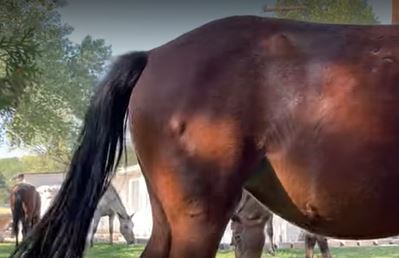
If you think about what happens to the mares, you’ll realize that the sperm-blocking theory can’t be true.
Then you’ll understand why the Assateague herd has not grown seven years after the darting program was shut off, and what’s in store for other herds subject to the Montana Solution.
For a review of the literature and the adverse effects of PZP, go to page 30 in this report by ISPMB.
If you can’t access the file, click here.
RELATED: Foal-Free Friday, Broken Record Edition.
 Western Horse Watchers Association